
Rinda is a hybrid cabbage variety popular with gardeners due to its high yield, excellent flavor, and ability to be transported without losing its marketable appearance. It produces round, spherical heads, each weighing 3-7 kg, with a delicate dark green color, thin leaves, and a short stalk. This versatile cabbage can be eaten fresh or processed.

Rinda cabbage seeds
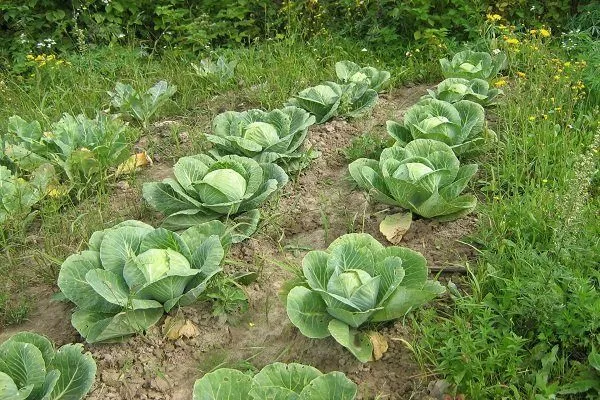
The Rinda variety is distinguished by its unpretentiousness
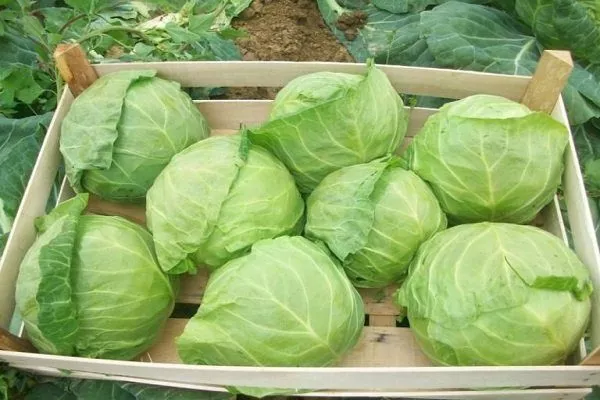
Harvesting Rinda's cabbage
Breeding history
Rinda F1 is a mid-season white cabbage hybrid (Brassica oleracea var. capitata). It was developed by Dutch breeders at Seminis Vegetable Seeds. Until 2005, the company was one of the largest producers and growers in the world, with a market share of over 20%. The company's main products are hybrid fruit and vegetable seeds.
In 2005, Seminis became part of a larger entity, Monsanto Company. This Missouri-based company is renowned for producing the globally popular herbicide Roundup.
In 1993, Rinda was included in the State Register of the Russian Federation for cultivation in two regions—Central and Vyatka. When grown in other regions, it may not display all its positive qualities.
Description of Rinda F1
The hybrid is suitable for growing outdoors in spring-summer and summer-fall. Let's take a closer look at its yield.
Appearance
To describe the appearance of heads of cabbage, it is worth paying attention to the following characteristics:
- weight – on average 3-7 kg, but sometimes gardeners manage to get specimens weighing up to 8-10 kg;
- form – rounded-spherical;
- color - light green, quite uniform, and when cut the color is yellow-white;
- leaves – juicy and tender, but at the same time dense and elastic, with thin veins;
- outer stalk - short;
- socket – compact, half-raised, medium spreading, with a beautiful internal structure.
The variety has strong growth and a compact, uniform size, and compares favorably with its peers due to its high resistance to cracking when fully ripe.
You can see the Rindy F1 cabbage variety in action in the following video:
General characteristics
The key characteristics of the hybrid can be found below:
| Parameter | Description |
| Ripening period | Rinda is a mid-season hybrid, meaning it matures 75-85 days after the first shoots emerge. Overall, the period from sowing to technical maturity is 120-130 days. |
| Productivity | This variety is very productive, yielding 10 kg of cabbage heads per square meter, and up to 900-115 centners per hectare. They ripen evenly, significantly simplifying the harvesting process. |
| Features of cultivation | The plant is easy to grow, tolerates temperature fluctuations, grows in a variety of climates, and is undemanding regarding soil conditions. Furthermore, Rinda is resistant to diseases and pests. |
| Ease | Cabbage heads can be stored on the vine for a long time, but the harvested crop can be stored for up to 4-5 months. However, some gardeners note that, if the optimal temperature and humidity conditions are maintained, cabbage will be stored without deterioration until April. |
| Transportability | This variety tolerates long-distance transportation well without losing its appearance or flavor. Therefore, Rinda is suitable for cultivation for commercial sale. |
| Purpose | Cabbage is suitable for eating fresh and for cooking, especially cabbage rolls, as the thin, flexible leaves don't break during cooking, resulting in a delicious dish. Cabbage can also be pickled and fermented. |
Pickling is considered the best way to process this cabbage, as it produces a juicy and flavorful result. However, it should be pickled fresh, not after several months of storage in the cellar, as this will result in a small amount of juice being released, and the resulting sauerkraut will be tasteless.
Agricultural technology
To obtain a good early harvest, the following agricultural practices should be considered when growing Rinda:
- There are two ways to grow cabbage: using seedlings or direct sowing. Planting should be done from late April to mid-May.
- Grow this vegetable in well-lit, wind-free areas, as insufficient light will negatively impact yield. Furthermore, low-lying and high-lying areas are undesirable for this crop, as it does not tolerate both stagnant and dehydrated areas. Ideally, the groundwater level should be 1-1.5 meters above the surface.
The area where cabbage is grown should be exposed to sunlight from morning to evening, with no shade from nearby trees, bushes, fences, or tall crops. In the shade, Rinda will not form heads, but will instead produce a lush rosette of leaves.
- When choosing a site, follow crop rotation rules. Cabbage can be replanted in the same location only after 3-4 years. Also, poor predecessors include tomatoes, beets, turnips, mustard, watercress, radishes, and radishes. The best predecessors include:
- cereals;
- legumes (beans, peas);
- potato;
- eggplant;
- zucchini;
- squash;
- pumpkin;
- cucumbers;
- carrot;
- turnip;
- garlic;
- onion.
- The plot should be prepared for planting cabbage in advance. To do this, dig the soil a spade deep in the fall and add 30-35 g of double superphosphate, 40-50 g of potassium sulfate, 1-2 cups of wood ash, and 1.5 buckets of rotted manure or humus per square meter. To reduce soil acidity, add slaked lime, crushed chalk, or dolomite flour at a rate of 1-2 cups per square meter. Rake the plot in early spring. If the plot isn't prepared in the fall, add 45 g of urea or 1.5 buckets of humus per square meter when digging.
- Rinda is undemanding regarding soil type, but it thrives in neutral to slightly acidic soils (pH 6.5-7.5). Litmus paper (available at chemical supply stores) can be used to determine acidity. Nine-percent vinegar can also be used for this purpose. A handful of soil, taken from a depth of 35 cm, should be placed on a glass or board and lightly sprinkled with vinegar. If the soil is alkaline, the reaction will be vigorous (with hissing and numerous bubbles), while if it is neutral, it will be moderately foamy. If no reaction is observed, the soil is acidic.
- ✓ The soil pH level should be strictly within 6.5-7.5 for optimal nutrient absorption.
- ✓ The depth of groundwater is at least 1-1.5 m from the surface to prevent moisture stagnation.
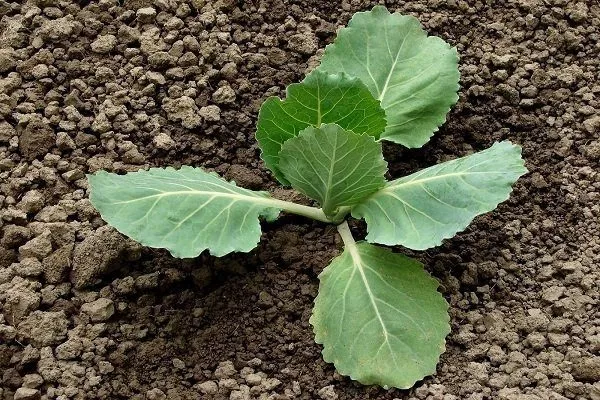
If soil fertility is maintained annually, mineral fertilizer rates can be reduced by half, as cabbage absorbs them poorly and even accumulates harmful nitrates. When using organic matter, mineral fertilizers can be eliminated altogether.
Plant at a moderate density, and ensure regular watering and loosening of the soil. It is equally important to adhere to all preventative measures to protect it from cabbage diseases and pests.
Seed preparation
If the seeds aren't brightly colored and haven't been treated by the manufacturer, you'll need to disinfect them yourself, regardless of how you grow the cabbage. To do this, follow these steps:
- Select viable seeds. To do this, soak the seeds in a salt solution (40 g per 10 liters of water). Discard any that float to the surface, as they are either empty or damaged.
- The seeds remaining at the bottom should be calibrated, that is, medium and large specimens measuring 1.5-2.5 m should be selected from among them.
- Soak the selected seeds in hot water (50°C) for 20 minutes and then in cold water for 5 minutes. Then, lay them out on a towel and dry. To speed up germination, soak them in room-temperature water for 12 hours, but change the water every 4 hours. To harden, soak the soaked seeds for 24 hours in a cool place (1-2°C), for example, on the bottom shelf of the refrigerator. Afterward, dry them to remove any stickiness.
To increase germination, seeds can be additionally treated in a solution of humates or EM preparations.
How to plant without seedlings?
This method of growing cabbage is optimal when all the necessary conditions for preparing seedlings are unavailable. If kept in the shade or in a poorly heated room, the plants will stretch too much, and when transplanted to a permanent location, they will become diseased. Therefore, in this case, it is better to sow the seeds directly into the ground.
Planting takes place in the spring, when the soil becomes moist after rainfall. The most favorable period is late April to early May.
If you sow in May, the Rinda heads will reach technical maturity by the end of August – beginning of September.
Prepared seeds should be sown in open ground in the following sequence:
- Prepare small holes 2-3 cm deep with an interval of 25-30 cm. The optimal distance between rows is 80-100 cm.
- Moisten the furrows with water so that the soil is moist to a depth of 20 cm.
- Place 3-5 seeds in each hole and sprinkle with the remaining soil (sawdust or humus).
- Cover each hole with a plastic bottle with the bottom cut off, pushing it deep into the soil. To allow air to circulate, unscrew the bottle cap for a few hours daily. Once the first shoots appear, remove the cap completely. The greenhouse can be removed only after the threat of frost has completely passed and the plant has grown enough to touch the sides of the bottle.
- When several seedlings emerge in each hole, leave one of the strongest and most robust shoots, 15 cm long, and pinch off the rest or carefully trim them with scissors. Avoid pulling out excess shoots, as this can damage the plant's fragile root system.
When grown without seedlings, the growing season will be reduced by 15-18 days, and the cabbage yield will increase due to the formation of a powerful root system capable of drawing moisture from deep layers of soil.
Growing from seedlings
In Russia, Rinda is most often grown from seedlings. The planting time varies by region, but often falls in early April, as the seeds need to be sown 30-35 days before transplanting them outdoors.
Preparing seedlings
Growing strong seedlings is carried out in several stages:
- Substrate preparationA suitable potting mix can be purchased at a gardening store. It should be nutritious and lightweight, with good drainage and aeration. Of course, you can make your own by combining the following ingredients:
- 1 part turf soil;
- 1 part perlite, sawdust, river sand for greater soil looseness;
- 2 parts humus, peat or vermicompost.
Add wood ash to the mixture at a rate of 10 tablespoons per 10 kg of soil. The ash will enhance the substrate's antiseptic properties and enrich it with macro- and microelements. The prepared mixture should be disinfected by placing it in the freezer or a preheated oven for a few minutes. Alternatively, you can simply water it with a solution of Fitosporin, which has antiseptic properties.
- SowingPour the substrate into a container with drainage holes. This can be a wooden box or tray, a tray, or individual 5x5 cm cups. Make 1-1.5 cm deep holes in the soil surface, place the prepared seeds (2 seeds per hole), cover with soil, and water. When planting in a common container, use a 2x3 cm pattern. If all the seeds in one hole sprout, leave only the strongest sprout and pinch off or trim the rest with scissors.
- Organization of optimal temperature and lighting conditionsImmediately after sowing, the room temperature should be maintained at +20…+22°C. In addition, the seedlings need to be provided with good lighting (12 hours a day) using lampsWhen the first shoots appear, lower the room temperature to +15…+17°C during the day and to +8…+10°C at night, otherwise the sprouts will stretch excessively.
- WateringIt should be moderate but regular, preventing the soil from drying out. However, it should not be overwatered, as this can cause the seedlings to become diseased. If the soil is excessively wet, it's best to loosen it superficially. The plant should also be watered before each feeding, otherwise the fragile roots of young seedlings can be burned.
- PickingOn the 14th day after planting, the seedlings need to be dive In separate cups if the seeds were planted in a common container. Water each seedling generously before transplanting.

- Top dressingSeedlings need to be fed 3 times according to the following schedule:
- a week after picking, fertilize with a solution prepared from 4 g of superphosphate, 2 g of potassium fertilizers and ammonium nitrate per 1 liter of water (a liter of this composition is enough to treat 50-60 seedlings);
- After another 2 weeks, feed the seedlings with the same composition, but with double the amount of ingredients per 1 liter of water;
- 2 days before planting in a permanent location, feed the seedlings with a composition for better rooting of sprouts, using a solution of 3 g of ammonium nitrate, 5 g of superphosphate and 8 g of potassium fertilizers per 1 liter of water.
The composition of the fertilizer can be replaced with a complex fertilizer in ready-made liquid form.
- HardeningThis procedure will promote plant establishment in the new location and better root development. It should be done 10 days after transplanting. Initially, open the windows indoors for 3-4 hours for 2 days. Over the next few days, it's best to take the seedlings out onto the balcony or outside for 2 hours, but avoid exposing them to sunburn. After 6-8 days, the seedlings can be moved to an open balcony and watering frequency reduced.
Seedlings with 6-8 true leaves and a height of 15-20 cm can be transplanted to a permanent location.
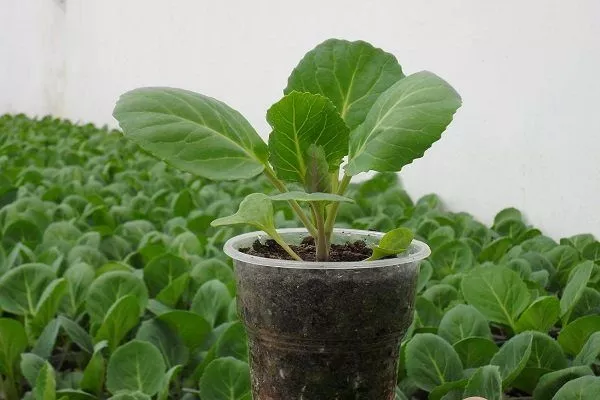
Transplantation into open ground
Seedlings can be transplanted outdoors at 30-45 days old. This typically occurs between late May and mid-June. This work is carried out on a cloudy, rainy day, preferably in the morning or evening, to protect the plants from sun damage.
Place holes in the bed every 30-40 cm, ensuring no more than 3-4 plants per square meter. If planted too densely, Rinda will not be able to fully develop.
Add a handful of peat moss and sand, two handfuls of compost, and wood ash to each hole. Transfer the seedlings to the holes with the root ball intact to protect the roots. Then, cover them with soil, compact it lightly, and water thoroughly.
It's advisable to mulch the soil under the seedlings with peat or rotted sawdust to prevent moisture loss. If the weather is sunny, shade the seedlings for the first few days to help them establish better.
Caring for seedlings
The white cabbage hybrid is quite unpretentious in care, but requires timely implementation of all agricultural practices.
Watering
Rinda loves moisture, so seedlings need to be watered regularly and generously with warm, settled water. Cold water from a hose can lead to various diseases and stunted growth.
Seedlings should be watered in the evening every 3-4 days, applying 8-10 liters of water per square meter. As the cabbage develops, reduce the frequency of watering to once every 7-9 days, but increase the amount of water to 12-14 liters per square meter. Stop watering completely two weeks before the heads are fully ripe.
Loosening and hilling
After each watering, the soil should be loosened to a depth of 8-10 cm to prevent a crust from forming on the surface. At the same time, it's also worth removing all weeds.
Cabbage also requires hilling, as this technique strengthens the stem and develops roots, which provide additional strength. Hill the cabbage on a windless day, creating a new layer of soil 25-30 cm deep. Hill the cabbage twice during the growing season:
- for the first time – 10-15 days after planting in open ground;
- for the second time – 45-40 days after the first hilling.
To maintain optimal moisture levels in the soil, cabbage should be mulch (using peat, rotted sawdust, or mown grass). The optimal mulch layer height is 8-10 cm.
Top dressing
Cabbage is fertilized while still a seedling. After transplanting to its permanent location, two more fertilizers are applied:
- During the active leaf growth stage, water the plant with an ammonium nitrate solution (20 g per 10 liters of water). Add 0.5 liters of fertilizer under each bush.
- At the stage of head formation, carry out complex feeding by preparing a solution of 8 g of potassium sulfate, 10 g of superphosphate and 4 g of urea per bucket of water.
- 10 days after transplanting, add a solution of ammonium nitrate (20 g per 10 l of water) to stimulate leaf growth.
- During the period of head formation, use complex fertilizer (8 g of potassium sulfate, 10 g of superphosphate and 4 g of urea per bucket of water) to improve the quality of the crop.
Protection from diseases and pests
Rinda is resistant to many diseases, but it can still be threatened by:
- BlacklegThis fungal disease attacks the stem and root system of the plant, causing stunted growth and death. It manifests as black rot at the affected areas. Affected plants should be removed, as blackleg is incurable. To prevent it, disinfect seeds and soil, and practice crop rotation.
- Downy mildew (peronosporosis)It manifests as large gray or yellow spots on the leaves, which gradually dry out and die. During the seedling stage, affected plants can be sprayed with a 1% solution of Bordeaux mixture, Fitosporin, or the fungicide Tsenitel.
- KilaThe fungus attacks the plant's root system, causing white growths that impede nutrient absorption. As a result, the leaves turn yellow and wilt, and the heads are underdeveloped. Affected plants should be destroyed by digging them up with the soil. As a preventative measure, the area should be limed in the fall (200 g of lime per square meter), and in the spring, the seedlings should be watered with a 3% Bordeaux mixture solution.
- Leaf mosaicA common viral disease that causes a mosaic-like network to appear on the plant's tops. The leaves wrinkle, their edges darken, and die. The disease is incurable, and damaged cabbage heads are inedible and must be destroyed. Prevention requires prompt weed removal and extermination of insects that transmit the mosaic virus, such as mites and aphids.
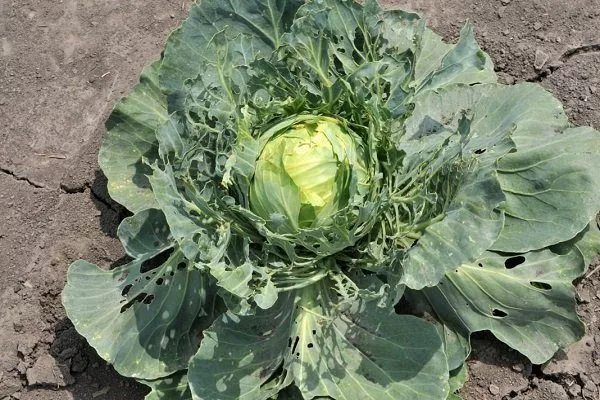
Unfortunately, the hybrid may be attacked by pests such as:
- AphidThey suck all the juices and nutrients from cabbage, causing the leaves to become deformed, curl, and dry out. Aphids resemble ash and primarily infest the undersides of leaves. Affected plants should be treated with an insecticide or a solution of laundry soap (40 g per 10 liters of water). Folk remedies that can help include infusions of tobacco, potato, or tomato tops.
- Flea beetle. It attacks the plant in early spring, gnawing holes in the tops, which leads to the drying out and death of young shoots. fight against fleas Pollinating them with a 1:1 mixture of ash and tobacco (30 g per 1 sq. m) will help. Three to four treatments should be carried out at weekly intervals.
- Leaf beetleThese are beetles that settle on leaves, sucking out the nutrients, causing the plant to dry out and die. To combat leaf beetles, dust with a mixture of tobacco and ash (20-40 g per square meter) and spray the plant with a solution of Actellic insecticide (20 ml per 10 liters of water).
- owlA voracious caterpillar that chews through the cabbage head to the center. Affected specimens should be destroyed, as they are unsuitable for consumption or storage. At the first sign of caterpillar appearance, the plant should be treated with an insecticide.
- Cruciferous bugA beetle with a black pattern on a yellow or red background that chews through leaves and leaves behind equally dangerous larvae. It causes the leaves to weaken and gradually die. If the pest appears, the planting should be treated with an insecticide.
To protect cabbage from the above-mentioned pests, promptly remove and destroy any remaining cabbage stalks after harvesting, weed, and thoroughly dig the plot in the fall. Additionally, water the cabbage with a watering can and dust it with ash, tobacco, or shag.
If cabbage is infested with pests, a new broad-spectrum biological product, Fitoverm, can be used against them. During the growing season, spray the plant twice with a solution prepared from 4 ml of the product per 1 liter of water. The treated vegetable can be eaten within two days.
Harvesting and storage
Rinda cabbage ripens uniformly in late August to early September, which is when it's time to harvest. In dry weather, ripe heads should be cut with a sharp knife and stored in a cool, dark place, such as a cellar or basement. The optimal storage temperature is -1 to +2°C, with a humidity of 80-85%.
The room needs to be ventilated 1-2 times a month to prevent the cabbage from becoming moldy or turning yellow.
To store cabbage heads until the next planting, they can be placed in canvas bags or wooden or plastic boxes. If space is limited, the heads can be hung by the stalks with twine or strong rope. The advantage of this method is that the cabbage is less likely to rot and will keep better.
Heads of cabbage can also be stored on shelves, wrapped in sheets of paper to retain moisture. It's also advisable to dust them to prevent early rot.
Pros and cons
Rinda F1 is popular due to the following advantages:
- has a high yield (10 kg of heads of cabbage per 1 sq. m);
- is distinguished by the uniform ripening of the heads, which facilitates the harvesting process;
- undemanding to weather conditions and soil conditions;
- rarely gets sick or is attacked by pests;
- tolerates long-distance transportation well (does not crack);
- produces sweet leaves that can be used in salads, pickling and stewing.
Rinda F1 cabbage is a hybrid with a maturity period of 75-85 days, producing abundant, spherical heads weighing 3-7 kg. These heads can be stored for 4-5 months and used for processing or fresh consumption. Growing techniques are simple, but strict adherence to all guidelines is essential for a healthy and abundant harvest.