
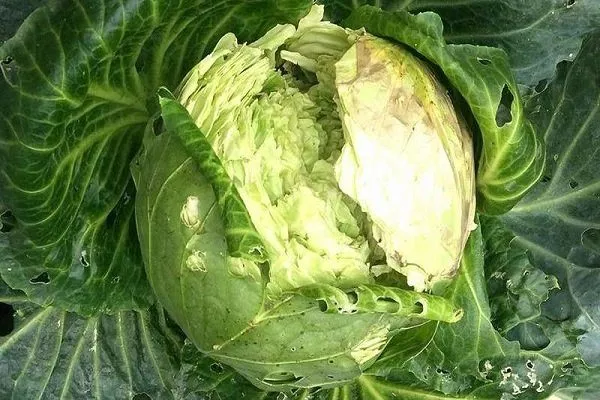
If cabbage is overgrowing, it indicates a violation of agricultural practices, from the preparation of the planting material to the development of the vegetable in the beds. Overgrowing most often occurs in seedlings; in very rare cases, it can occur in mature plants.
Reasons why cabbage seedlings overgrow
When sowing seeds, it's important to disinfect them to prevent the development of various diseases. It's also important to adhere to the requirements for placing planting material in containers—a certain distance must be maintained between elements, depending on the variety.
Failure to comply with sowing dates
It's no coincidence that agronomists and scientists create cabbage seed sowing schedules for specific varieties and regions. Because seedlings are transplanted into open ground at strictly designated times and under specific conditions:
- on average, seedlings should be kept indoors for 30 to 45 days;
- the height of the plants should reach sizes from 18 to 15 cm (depending on the variety);
- The weather outside should stabilize with thermometer readings at least 13-15°C.
If one of these parameters is not met, the cabbage cannot be replanted, so it is forced to outgrow, which in turn leads to a host of unpleasant consequences – reduced yield, weakened immunity, etc.
Insufficient lighting
Cabbage, regardless of variety or cultivar, prefers abundant light. Insufficient light causes rapid elongation, regardless of the plant's developmental stage.
- ✓ Light intensity should be at least 6000 lux to prevent seedlings from stretching.
- ✓ The distance from the lamp to the plants should be 15-20 cm for optimal lighting.
Daylight hours should be at least 12-14 hours. Since seeds are planted for seedlings in early spring, and in some regions as late as February, supplemental lighting is necessary. Fluorescent lamps or phytolamps are best for this purpose.
Incorrect temperature conditions
Inexperienced gardeners mistakenly believe that the warmer the room with seedlings, the faster and better they will grow. However, cabbage is a crop that prefers cool conditions, and during extreme heat, its development stops.
If the air is warm, but above the standard, the stem elongation process intensifies. The same applies to planting material—seeds also don't tolerate elevated temperatures.
Optimal regime depending on the stage of vegetation:
- immediately after sowing and before the first “loops” appear – from +18 to +20°C;
- after the formation of sprouts – from +10 to +12°С;
- after picking – from +15 to +17°C.
Untimely watering
Avoid overwatering or overdrying the soil. In the former case, too much water will restrict oxygen supply to the root system. In the latter case, it will prevent the roots from receiving nutrients. Both situations lead to seedling stretching.
Nutrient deficiencies
In depleted soil, the plant grows only upward. However, the foliage doesn't increase, and the trunk doesn't strengthen. Consequently, fruit set shouldn't be expected. There are signs indicating inadequate nutrition, or micronutrient deficiency:
- plant stretching;
- blanching of leaves;
- stem thinning;
- weakened root system.
To remedy the situation, change the substrate. Make it from the following components:
- turf soil and humus (compost) – 5 kg each;
- wood ash – 400 g;
- Superphosphate – 2 tbsp. l.
If there is no possibility of replacement, simply fertilize the soil with the following composition:
- water – 5 l;
- chicken manure – 200 g;
- wood ash – 100 g.
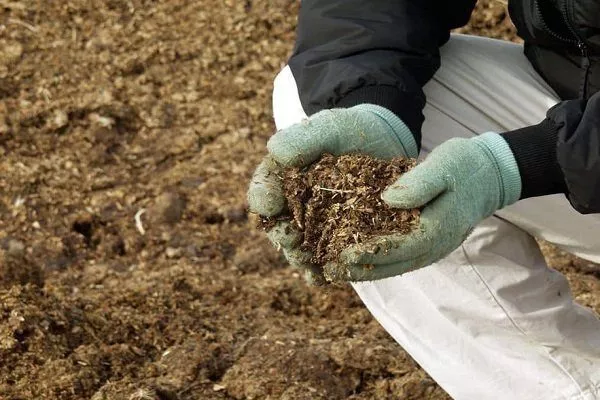
Sandy and clayey soils are considered particularly depleted. Moreover, clayey soils are not loose, so they don't allow oxygen to pass through. In this situation, it's recommended to add peat and sand.
- ✓ The absence of earthworms in the soil indicates low biological activity of the soil.
- ✓ Rapid drying of the soil surface after watering indicates a lack of organic matter.
Thickening of plantings
Insufficient space for cabbage leads to overgrowth, as the root system is unable to branch out fully. To resolve this, thin the seedlings. Leave at least 10 cm between sprouts, and 50-70 cm between mature plants in the bed.
What to do and how to save cabbage seedlings if they have become very elongated?
If your cabbage has already stretched out, experienced gardeners recommend using one of several methods. Each is designed for a specific situation.
Cold therapy
Used when bushes are stretching due to excessively warm air and soil temperatures. What to do:
- Instantly (sharply) lower the thermometer reading by 6-7°C – take it outside, onto a balcony, etc.
- Leave it like this for 5 days.
- At the specified time, restore the previous temperature regime, but make sure that it does not exceed +15°C.
Picking
Transplant young seedlings into individual pots no earlier than after three true leaves have formed. Sometimes, elongation occurs after just one leaf has formed. In this case, perform an emergency transplant, which stimulates root growth and slows elongation.
How to do it right:
- Prepare separate containers (volume depends on the cabbage variety).
- Place expanded clay, pebbles, and similar materials on the bottom to create a drainage system.
- Fill halfway with the same substrate as when sowing (alternatively, make a new fertile one).
- Moisten with a spray bottle.
- Using a garden trowel, remove the seedlings from their previous location and carefully transfer them to a new container.
- Pinch off the main root by 1/3.
- Holding the stem with one hand, insert it into the center of the glass up to the border with the first cotyledon leaves, and sprinkle it with substrate with the other hand.
- Compact lightly and moisten again.
Adding substrate to containers with seedlings
If the soil is fertile and there is enough space, but the plants are stretching, use a simple “old-fashioned” method - add soil to the container up to the level of the lower leaves.
Treatment with hormonal growth stimulants
There are products that stimulate the development of not just the stem, but the green mass and root system. These include products such as Athlete, Obereg, Stoprost, and others. Solutions are used to moisten the soil or spray the plants. They are most effective in the initial stages of cabbage elongation.
The main and additional effects of the drugs:
- improving the quality of future forks;
- stopping the upward growth of the seedling;
- growth of roots and new foliage;
- increasing the amount of future harvest;
- prevention of infectious diseases of cabbage;
- stem thickening;
- increase in the size of leaf blades.
How to dilute and use for root watering using the Athlete product as an example:
- mix 1 ampoule with 1 liter of water;
- treat 1 sq. m with the resulting volume;
- carry out 3 procedures with a difference of 7 days.
Leaf picking
It's primitive, but effective method, which is used exclusively after pruning—if upward growth has not stopped. To do this, simply pluck off the bottom two leaves. If necessary, repeat the procedure after 1-2 weeks.
Forming a loop
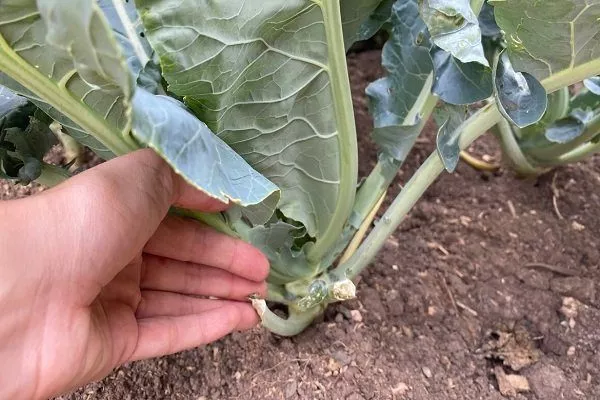
The stem bending method is used for transplanting or when transplanting seedlings into open ground. This method is especially effective when stems are falling en masse due to elongated stems. This stimulates root development and foliar growth.
How to do it:
- Three to four days before the procedure, move the seedlings to a cool location, down to a temperature of 5°C. This will soften the stems. Avoid watering the cabbage during this period.
- Now take the seedling out of the container, twist it into a loop and place it in the substrate up to the lower leaves.
- Moisten and compact slightly.
Prevention of overgrowth
It's always easier to prevent a problem than to solve it. So, be sure to heed the advice of experienced gardeners:
- do not ignore the exact timing of sowing planting material and transferring plants to open ground;
- Monitor the humidity level – do not allow water to stagnate and a dry crust to form on the soil surface;
- If the cabbage in the garden is stretching, you can prevent it from drying out by mulching (lay a layer of peat, leaves, grass or straw around the bush, covering the root zone);
- Apply fertilizers in a timely manner so that the crop does not experience micronutrient deficiencies;
- disinfect seeds;
- disinfect the soil before sowing (place the garden soil in the oven for 30-40 minutes at 200°C);
- pay attention to the length of daylight hours - for cabbage, the longer, the better;
- do not plant too densely, maintain the distance recommended for the type and variety of cabbage;
- Loosen and hill up the soil more often, which will encourage the growth of lateral root shoots.
If you're just starting out in gardening and your cabbage keeps outgrowing, try choosing less demanding varieties that adapt easily to any conditions. These are often the fruits of selective breeding, or hybrids labeled F1.
This article was very relevant. We planted cabbage seedlings in the spring, and they started to stretch out significantly. After analyzing all the growing conditions and our actions, I realized the soil wasn't suitable. I replaced it with what you recommended (humus with soil, ash, and superphosphate), but the plants were already stretched out, and something had to be done. I read that cold therapy helps a lot. To be honest, I was skeptical about the idea, but after talking to a neighbor (who convinced me), I decided to give it a try. I was pleasantly surprised that this stress was completely justified. Now I'll know what to do with stretched seedlings. Thank you so much! You saved us money, energy, and stress.