
Chinese cabbage (Pak Choy) is widespread in Eastern countries, Europe, and North America, but is virtually unknown in our country. What's so special about this vegetable, why it's worth growing in your own garden, and how difficult it is to do so—read on in this article.
What is Pak Choy?
Chinese cabbage (Pak choy, or bok choy) (Brassica rapa chinensis) is a leafy annual plant in the cruciferous family. It is particularly popular among residents of Southeast Asia and southern China, and is increasingly capturing markets in Europe and the United States.
In our country, the plant isn't very popular. It's often called petiole cabbage, Chinese leaf cabbage, or simply Chinese cabbage. The latter name isn't entirely accurate, as Chinese cabbage is commonly referred to as Peking cabbage.
Botanical description
Pak choy is an early-ripening variety. A mature plant does not form a head, but rather a lush rosette of leaves, reaching 20 to 60 cm in height and 40 to 45 cm in diameter. It resembles lettuce rather than cabbage. The leaves are arranged on thick, fleshy petioles with an external convexity, tightly pressed together. The leaves are large, delicate, and slightly corrugated. Three main varieties are distinguished based on the color of the leaf blade and petioles:
- Joi Choi. Bright dark green leaves grow on white petioles.
- Shanghai Green. Both the leaves and petioles are light green. The leaves are slightly darker.
- Red Choi. The petioles are green, and the leaves are green below and red-purple above.
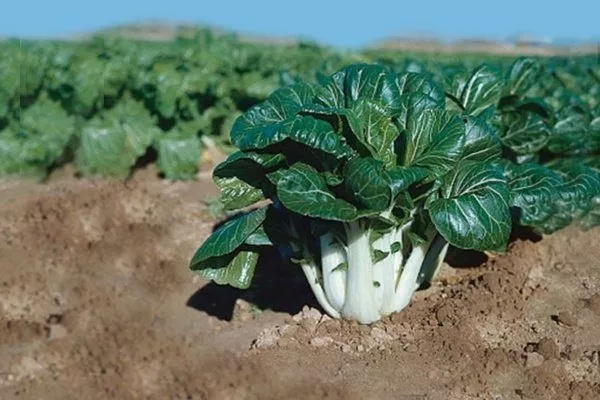
Joi Choi variety
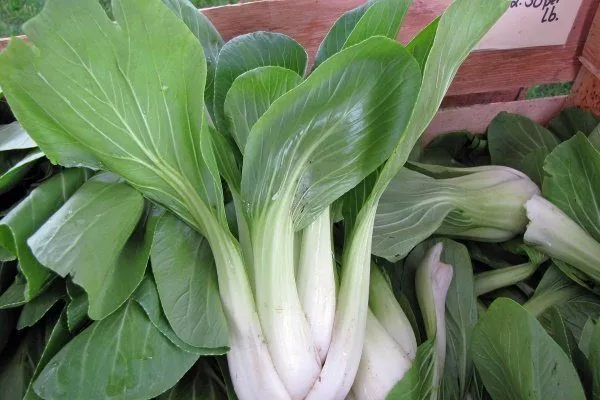
Shanghai Green Pak Choy Cabbage
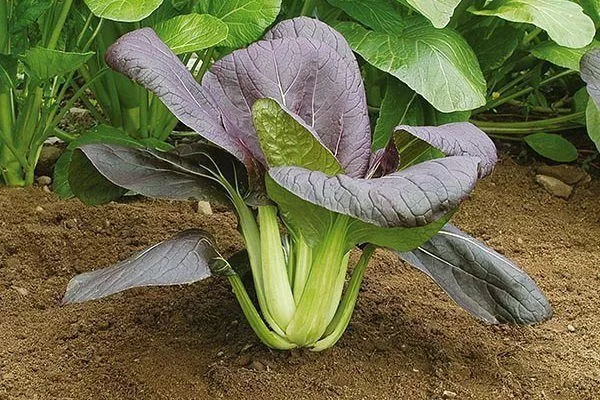
Red Choi variety
After sprouting, cabbage forms a rosette of leaves, and once fully mature, it produces a stalk with flowers. Once the flower stalk of varietal cabbage has matured, the seeds can be harvested.
Pak choy has a branched, fine, shallow root system, which grows to a depth of no more than 15 cm.
Historical information
Pak choy is known as one of the first vegetable crops to be grown in China, where it still occupies a special place in national cuisine and medicine.
In the 19th century it was brought to Europe, where it was popular and successfully grown.
Popular varieties
Many varieties of Pak Choy are included in the State Register of Breeding Achievements. All are recommended for cultivation in private farms and for consumption.
Table of varieties of Pak Choy cabbage:
| Name of the variety | Growing season, days | Yield, kg/sq.m | Plant weight, g | Description |
| Alyonushka | 45 | 9 | 1800 | A semi-spreading rosette. Small, dark green leaves with a grayish tint; the petiole is fleshy. |
| Vesnyanka | 25-35 | 2.7 | 250 | The rosette is semi-raised. The leaf is light or green, slightly wavy along the edge, and the central vein is fleshy and juicy. |
| Vitavir | 25-35 | 6.2 | 500-700 | A low, semi-spreading rosette. The leaf is short, somewhat pubescent, with a wavy edge. The petiole is medium thick, short, and green. |
| Goluba | 25-35 | 6 | 600-900 | The rosette is 40 cm in diameter. The leaf is medium-sized, light green, and smooth. The petiole is medium thick, wide, and short. |
| Corolla | 50-60 | 5 | 1000 | The rosette is spreading and small. The leaves are rounded, smooth at the edges, and dark green. The petiole is narrow, short, and white. |
| Beauty of the East | 35-45 | 6 | 700 | The rosette is vertical and medium-sized. The leaf is smooth, with smooth edges, and green. The petiole is medium-sized and light green. |
| Martin | 35-45 | 10 | 1500-3000 | Semi-erect rosette. Leaves are smooth and green. Petioles are fleshy, juicy, and green. |
| Swan | 50-60 | 5-7.5 | 1100-1500 | The rosette grows horizontally. The leaves are oval and entire. The petiole is fleshy, white, and long. |
| Peahen | 50-60 | 10 | 1000-2000 | Semi-erect rosette. Leaves are oval, smooth, green. Petiole is fleshy, without fibers, crunchy. |
| In memory of Popova | 35-45 | 10 | 800 | A medium-sized, semi-spreading rosette. The leaves are green, smooth, with a slightly wavy edge. The petioles are white, flat, and medium-sized. |
| Chilly | 50-60 | 6.5 | 1500 | The rosette is semi-spreading and medium-sized. The leaves are light green and smooth. The petioles are the same color as the leaves and are flat. |
| Four seasons | 35-45 | 7.5 | 1350 | A medium-sized, semi-spreading rosette. The leaves are green and smooth. The petioles are lighter in color, thick, and wide. |
| Chingensai | 35-45 | 3 | 120 | The rosette is compact. The leaves are smooth, even-edged, and green. The petioles are medium-thick, lighter than the base color, and short. |
| Yuna | 50-60
| 5 | 800-1000 | Semi-spreading rosette. Leaves are medium-sized, dark green, dissected, and wavy at the edges. Petioles are narrow and green. |
The beneficial properties and harm of Pak Choi
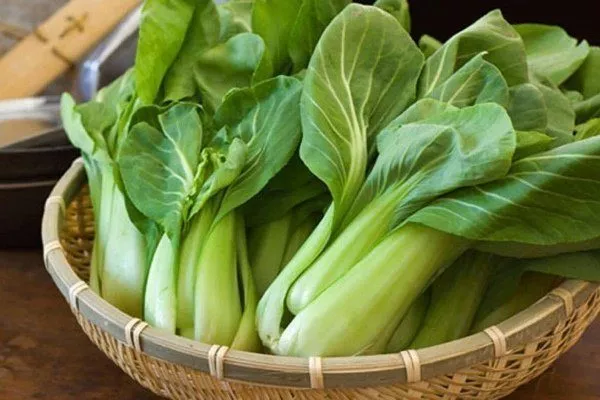
Pak choy cabbage is 95% water and is also rich in vitamins (A, C, K, PP, B1, B2, B9) and minerals (potassium, calcium, magnesium, manganese, iron, sodium, phosphorus, and zinc). It is a dietary product, containing only 13 kcal per 100 g.
Beneficial effect on the body:
- cleanses from toxins and harmful cholesterol;
- improves vascular elasticity, normalizes blood pressure, supports the heart;
- promotes skin cell renewal;
- helps wound healing, improves blood clotting and hematopoiesis;
- used as a preventative measure against cancer;
- improves immunity.
But there are also some precautions in use:
- the vegetable contains glucosinolates, which are harmful to the body when consumed in excess;
- the enzyme myrosinase, which is present in all cruciferous vegetables, negatively affects the functioning of the thyroid gland and prevents the absorption of iodine;
To prevent the negative effects of the enzyme, cabbage is heat treated.
- For those who suffer from thick blood and take blood thinning medications, the use of Pak Choy is contraindicated;
- People with allergies to any type of cabbage should consume with caution.
Preparatory activities before planting
Pak choy cabbage can be grown year-round in a greenhouse or outdoors during warmer months. The plant is undemanding regarding soil composition and requires little attention or gardening skills.
- ✓ The optimal depth of the root system does not exceed 15 cm, which requires special attention to the top layer of soil.
- ✓ Pak Choi prefers soil with a pH of 5.5-7, but can adapt to slightly acidic conditions with proper care.
Location and climate
When choosing a location for a garden bed, consider the following features:
- Good heating properties. Cabbage loves a well-lit area or partial shade.
- Soil moisture. Do not plant cabbage in an area where water will stagnate after rain.
- Soil acidity. Cabbage will feel best in soil with medium acidity pH=5.5-7.
- Daylight hours. The best growing period is considered to be early spring or midsummer/fall. Long daylight hours in late May, June, and July can trigger the plant to flower. Under such conditions, a good harvest will be unattainable.
Pak-choi cabbage produces shoots and flowers as daylight hours increase.
- Frost resistance. The seedlings are not afraid of short-term temperature drops to -4 °C.
- Predecessors. Before cabbage, legumes, grains, pumpkins, nightshades, and onions can grow in the garden bed.
Any type of cabbage, turnip, radish, rutabaga will be a bad predecessor.
Preparing the land
Preparing the soil for planting Pak Choi begins in the fall.
Stages of work implementation:
- Autumn digging. Dig the bed thoroughly and remove plant roots.
- Fertilizer. Add organic fertilizer (10 kg) and superphosphate (1 tablespoon) per 1 sq. m.
- Soil deoxidation. If your region has acidic soil, add 1 tablespoon of lime or 200 g of ash per 1 sq. m.
- Heavy soil. To correct the situation, add coarse sand or rotted sawdust to the area and dig it up.
- Spring digging. In spring, dig the soil to a depth of 15 cm.
- Fertilization. Add 1 teaspoon of urea per 1 sq. m.
Preparing the seed
Seed preparation does not require any specific actions and consists of:
- Calibration. Sort through the seeds and select the largest ones. If there aren't many, medium-sized ones will also work.
- Checking for germination. Prepare a 3% salt solution and soak the seeds in it for 5 minutes. Collect those that float to the surface, and those that sink to the bottom are ready for sowing. Immediately rinse the salt off under running water and then dry them to avoid premature germination.
- Disinfection. Dip the seeds in a potassium permanganate solution, then rinse with water. This will protect the plants from fungal and bacterial diseases.
Another method involves heating. For this, hot water (48-50°C) is prepared. The seeds are placed in a gauze bag and immersed in the water for 20 minutes. The difficulty with this method lies in controlling the water temperature.If the temperature is above 50°C, the seeds will lose their germination capacity; if below 48°C, there will be no disinfecting effect.
- Acceleration of germination. Place the seeds in a container and add enough water to cover them. Change the water every 4 hours, and continue the process at room temperature for 12 hours.
You can use a solution of Nitrofoska (dissolve 1 teaspoon in 1 liter of water). Soak the seeds for 12 hours. - Hardening. The seeds are placed in the lower section of the refrigerator and kept for 24 hours.
- Check the seeds for germination in a 3% salt solution, rinse and dry.
- Disinfect the seeds by heating them in water at 48-50°C for 20 minutes.
- Harden the seeds by placing them in the refrigerator for 24 hours before planting.
After this, the seeds are dried so that they stop sticking to your fingers and sowing begins.
How to plant Chinese cabbage?
There are two ways to plant Pak Choy cabbage, which will be discussed below.
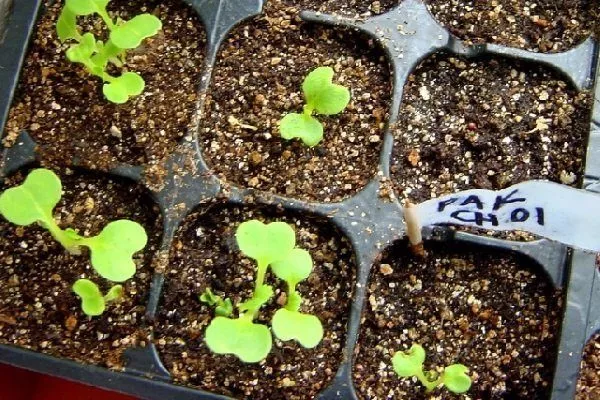
Seedling method
Seeds are sown for seedlings in late March or early April. This method is advantageous because it allows for an early harvest.
Sequence of work:
- Container for seedlings. Prepare the required number of peat pots. It is recommended to sow the seeds directly into them to avoid damaging the delicate root system during transplantation. Peat pellets can also be used.
- Priming. Fill the pots with a gurnto mixture; coconut substrate works well.
- Sowing seeds. You can place several seeds in each pot. After germination, remove the weak ones.
- Sealing. The seeds are covered with soil to a depth of 1 cm.
- Place for germination. It should be warm, well heated by the sun.
The first sprouts will appear 3-5 days after sowing.
To ensure a consistent harvest for a long time, you can sow small amounts of seeds for seedlings every 7-10 days.
The seedlings can be transplanted to a garden bed or greenhouse after 3 weeks. Follow this procedure:
- 40-50 cm – between rows;
- 20-35 cm – the distance between plants in a row, depending on the size of the variety’s rosette.
Seeds in open ground
Seeds can be sown in open ground starting in April, when the soil warms up to +3-4 °C, or in July.
Sowing order:
- Method. There are 2 methods of planting in the ground:
- Tape-line. When seeds are glued to tape and laid in rows, or a furrow is made in the ground and the seeds are sown into it.
- Into the holes. The bed is divided into rows, and holes 2 cm deep are made in each row every 30 cm. 2-3 seeds are placed in each hole.
- Sealing. Cover the seeds with soil.
- Shelter. Cover the rows with plastic film to retain heat and moisture. This will promote rapid germination.
- Shoots. The first plants will sprout in 1-1.5 weeks.
Diseases and pests, control and prevention
Cabbage has good resistance to most diseases. Pests that may affect it include:
- Cruciferous flea beetle. The pest chews large holes in the leaves. Control can be achieved by sprinkling the soil with ash or ash and tobacco dust (1:1). Another method is to cover young shoots with agrofibre.
- Cabbage white butterfly. It's not the butterflies themselves that are dangerous to cabbage, but their caterpillars. Tobacco dust can be used for control. Leaves containing the pest's eggs should be removed.
- Slugs and snails. They are removed either manually or using special baits, which can be purchased in the store and placed between the rows.
When using chemicals, follow the instructions and do not use them during the harvest period.
Caring for Pak Choy
Caring for Chinese cabbage involves:
- Thinning. Required for row-and-strip sowing. Perform the first thinning after true leaves appear. Remove weak plants, leaving 10 cm between them. After the rosettes have grown and the rows have closed, perform a second thinning, leaving 20 cm between plants.
- Top dressing. This is only necessary if fertilizers were not applied at planting. Apply organic fertilizer at the beginning of the growing season. A solution of mullein (1:10) or bird droppings (1:20) is suitable for this purpose.
The use of mineral fertilizers is not recommended, as Pak Choi cabbage quickly accumulates nitrates.
- Watering. Cabbage thrives on ample watering. You can use sprinkler irrigation, but remember that standing water can lead to fungal diseases.
- Weeding. Remove weeds from the garden bed in a timely manner; this will help in the fight against pests.
When and how to harvest?
You can try your first harvest three weeks after planting. Cut young leaves, leaving 2-3 cm at the base, and more mature leaves even higher. This will allow you to re-harvest the cut rosettes, as cabbage quickly grows new shoots.
Cut leaves don't keep for long, so harvest as needed. If necessary, wrap the leaves in a damp towel and store them in the refrigerator door for up to 2 days.
If the plant was cut at the initial stage of arrow formation, it can be consumed, since the leaf has not yet lost its juiciness.
Leaves older than 50 days, for early varieties, are considered overripe, become coarse and unfit for consumption.
You can see what pak choy cabbage looks like in the video. It also covers growing, care, harvesting, and cooking tips.
Reviews
Pak choi cabbage is rich in nutrients, is easy to grow, and requires little care. Being an early-ripening crop, it yields several harvests per season. However, it disappoints some gardeners because it bolts and is severely damaged by flea beetles.