
Many gardeners wonder whether removing the lower leaves is beneficial for a better cabbage harvest. To answer this question, it's worth understanding the main reasons for this practice and the correct procedure. You can learn more by reading this article.
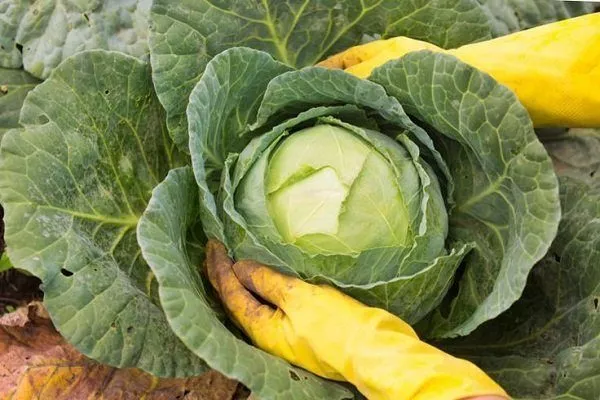
The role of lower leaves in head formation
Proper ripening of the cabbage head occurs due to the nutrients contained in the lower leaves. After being picked, the cabbage head begins to regrow these leaves, which temporarily halts its growth. Furthermore, the waxy coating on the outer surface of the leaves provides a protective layer against diseases and harmful microorganisms.
- ✓ Check leaves for signs of disease or pests before removing.
- ✓ Make sure that removing leaves does not expose the head of cabbage, which may increase its vulnerability to sunburn.
Why are they deleting?
Below is a list of reasons why cabbage leaves are commonly removed. It explains when removal is advisable and when it's possible to avoid it.
Prevention and treatment of diseases
The process of plant death from vascular bacterial blight begins with the lower leaves. Some gardeners mistakenly believe that removing the lower part of the cabbage will stop the disease. But this is not true. Moreover, the disease can spread to nearby heads of cabbage. Therefore, the affected plant must be destroyed.
Removing leaves as a preventative measure can make healthy cabbage heads more vulnerable.
Preventing pest proliferation
Cabbage fly or cutworm pests attach their eggs to the outer surface of leaves. If a pest is detected, it's best to remove and destroy the affected parts of the plant. However, this measure alone won't be enough; additional pest control sprays should be applied. Agrofit is an excellent choice.
It is not worth getting rid of the leaves in advance, since then the pest can lay eggs on another part of the cabbage head.
In a similar way, heads of cabbage are protected from aphid infestations.
- ✓ Use nets or covering material to protect against pests instead of removing leaves.
- ✓ Use of biological preparations for disease prevention without the need to remove leaves.
Extending the ripening period of early varieties
Inexperienced gardeners try to delay the ripening of early varieties by removing the lower leaves. However, this method is incorrect, as the cabbage stops growing, loses nutrients, and becomes more vulnerable to diseases and pests.
It's best to simply grab a head of cabbage, pull it toward you, and then twist it clockwise. This will cut off moisture but will still preserve its quality in the garden for a long time.
You should pull carefully so as not to pull the roots out of the ground.
Prevention of rot
If the soil around the cabbage head becomes excessively wet, the lower leaves may begin to rot. To prevent the rot from spreading to the entire cabbage head, it's best to remove the lower leaves.
Prevention of cracking
To prevent the cabbage from becoming overripe and splitting, you can trim off the lower leaves once it reaches optimal ripeness. However, this will only slow down the process for a short time.
With a loose structure of the head of cabbage
Cabbage heads become loose if the plant lacks nutrients and continues to accumulate them in the lower leaves. In this case, plucking the cabbage can help ensure proper distribution of nutrients. However, timely removal is more beneficial. fertilization.
To gain weight
Another partially misconception is that removing the lower leaves can increase the size of the cabbage head. Conversely, if you remove the cabbage head along with the lower leaves shortly before full maturity, it will continue to grow and develop thanks to the accumulated nutrients even after harvesting. You can expect a mass gain of up to 15%. This rule only applies once the cabbage head reaches full maturity.
In some species, the lower leaves use up accumulated nutrients, thereby depleting reserves. The head structure becomes less dense, and the leaves are less crisp.
You can find out whether it's worth removing the bottom leaves of cabbage to increase the head's weight by watching the video below:
With a tight fit
If cabbage heads are planted too close together, the growth of lower leaves can interfere with the normal growth and maintenance of neighboring plants. In this case, the largest lower leaves can be removed.
When to delete?
It's best to remove the outer leaves no earlier than the end of August. At this time, they are no longer as important for proper growth and development of the cabbage head.
If signs of pest infestation have been noticed, the procedure can be carried out earlier.
This should be done in dry and sunny weather so that the removal site can dry out.
Removal rules
There are 2 main rules:
- Gradualism. Don't remove all the leaves at once, as this can negatively impact the plant. It's best to remove one leaf per week, once the cut area has dried out.
You don't have to remove the entire leaf, just half of it. This is done if they interfere with plant care.
- Accuracy. It's not recommended to pluck the leaves; they should be cut carefully to avoid damaging the plant. The cut area should be thoroughly disinfected and then treated with wood ash. This will protect against disease.
If you remove leaves incorrectly, you may attract pests.
Using plucked leaves
If the trimmed leaves are healthy and not wilted, they can be used as livestock feed. They contain many beneficial vitamins, which are essential in the fall, when food becomes increasingly scarce. They are suitable for feeding goats, birds, and rabbits.
Should I remove the leaves from cauliflower and Chinese cabbage?
A common misconception is that trimming the lower leaves improves cauliflower head formation. However, without them, the vegetable's growth slows down due to a lack of nutrients, which are abundant in the lower part. Leaf removal can also be done to protect the cauliflower head from the bright sun during the formation period. An alternative is to use rhubarb or burdock leaves.
The outer leaves of Chinese cabbage are as delicate as the rest of the head. The nutrients they contain help the plant grow and develop. Removing them is only important if they begin to wilt or rot. However, this is rare. Chinese cabbage heads typically grow well without extreme measures and produce several harvests per season.
Advantages and disadvantages of the procedure
To sum it up, there are several positive aspects to highlight:
- Protection. This procedure helps protect crops from damage by harmful insects.
- Extending life. As soon as the lower leaves begin to rot and wilt, trimming them helps extend the vegetable's shelf life. It also improves its marketability.
- Compaction. After removing the leaves, the heads become firmer. However, this procedure should be carried out 2-4 weeks before harvest, depending on the cabbage variety.
But one should also pay attention to the disadvantages of the procedure:
- Loss of thermoregulation. The lower leaves control temperature and maintain optimal humidity levels. Their loss makes the cabbage head more susceptible to adverse factors.
- Vulnerability to external influences. The outer leaves protect the head from sun and pollution.
- Disruption of natural development. Normally, the lower leaves are necessary for the head to mature. If this process is disrupted, nutrients may be improperly distributed or completely lost. The plant dies or does not reach its optimal size.
Whether it's worth removing the bottom leaves from cabbage, their role in head formation, and their impact on shelf life and nutrient retention can be found in the video:
Reviews from experienced gardeners
Gardeners' opinions on trimming the lower leaves are mixed. Some say it helps protect the plant, while others believe it makes the heads more vulnerable. It's clear that removing the lower leaves is not necessary if the plant is growing normally and is not damaged by pests.