
Megaton F1 cabbage is one of the best mid-late hybrids. It's considered the most productive and is actively grown by our gardeners. Let's learn about this hybrid's characteristics, how to plant and grow it, and how to get a good harvest.
Description of the hybrid variety
| Name | Ripening period | Productivity | Disease resistance |
|---|---|---|---|
| Megaton F1 | Mid-late | High | Resistant to clubroot, fusarium wilt, and gray mold |
Appearance of cabbage:
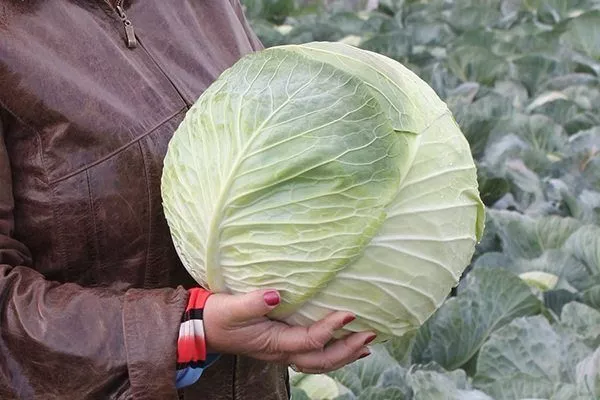
- Leaves. Large, semi-erect, they are gathered in horizontal or slightly raised rosettes. The leaves are oval, waxy, and wrinkled. They are light green. The margins are slightly concave and wavy. The inner leaves are snow-white.
- Heads of cabbage. Large, dense, round.
- Stalk. Small in size. Length – up to 14-15 cm.
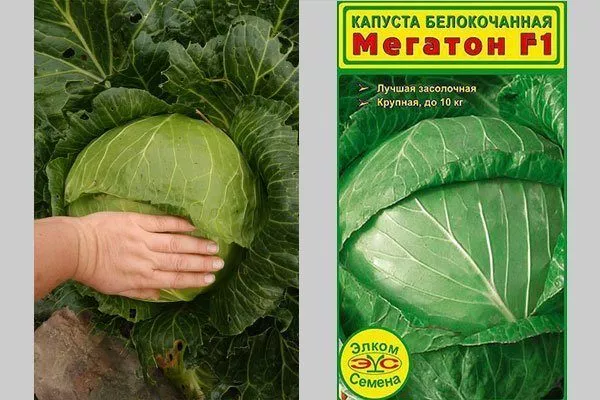
Megaton cabbage seeds
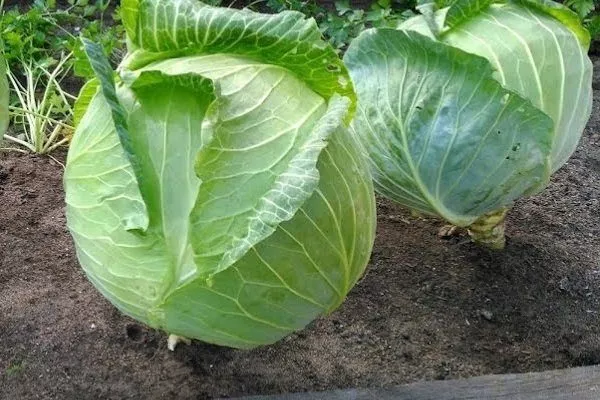
To grow large heads of cabbage, you need to add a sufficient amount of mineral fertilizers, otherwise the harvest will not be gigantic in size.
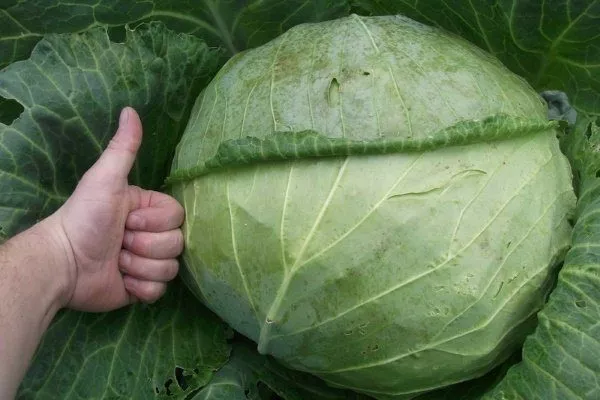
The heads of cabbage grow large, dense, and round in shape.
History of selection
Megaton F1 was developed by Dutch breeders. This hybrid variety was developed by Bejo Zader, a seed production company. In Russia, the hybrid is grown almost everywhere, depending on the climate. Megaton was added to the State Register in 1996.
There are regions where growing Megaton F1 is not recommended: Tatarstan, Mordovia, Penza, Samara and Ulyanovsk regions.
Varietal characteristics
| Name | Ripening period | Weight of the head of cabbage | Sugar content |
|---|---|---|---|
| Megaton F1 | 136-168 days | 3.5-4 kg | 3.9-4.9% |
Characteristics of Megaton cabbage:
- A mid-season variety. From germination to harvest is 4.5-5.5 months (136-168 days).
- Heads of cabbage weigh 3.5-4 kg at the technical maturity stage. If you create the most favorable conditions for cabbage, heads can grow to 12-15 kg.
- The heads of cabbage contain 3.9-4.9% sugar, up to 43.5 mg ascorbic acid (vitamin C), 3% protein, and 8-8.8% dry matter.
- The flavor profile is excellent. The leaves are juicy, crisp, slightly sweet, and have a pleasant aroma and flavor.
- Purpose: pickling and salting.
- Resistant to clubroot, fusarium wilt, and gray mold.
- Productivity: 650-850 centners per 1 ha, 9 kg per 1 sq. m.
Advantages and disadvantages of the variety
Advantages of the Megaton variety:
- High yield.
- Excellent taste.
- There is no tendency for heads of cabbage to crack due to temperature changes.
- Tolerates transportation well.
- Resistance to many cabbage diseases.
Megaton has few disadvantages:
- Short-term storage – from 1 to 3 months.
- Freshly harvested heads of cabbage have tough leaves.
- It's important to carefully select a planting site—the hybrid thrives in moderate partial shade. Cabbage doesn't grow well in direct sunlight.
Preparing for landing
Before planting, prepare the site and seed. Soil preparation begins in the fall:
- The soil is dug over. Any remaining weeds and rhizomes found in the soil are removed.
- Apply organic fertilizer before the first frost. It's best to add humus or well-rotted manure—these organics are excellent for stimulating cabbage head growth. The recommended rate is 10-12 kg per square meter.
- Add mineral fertilizers at a rate of 30 g per 1 sq. m.
- In spring, the soil is dug up again, adding urea and potassium sulfate - 40 g per 1 sq. m.
In highly acidic soils, crop yields drop by 20-30%. Lime, wood ash, and dolomite flour are added to acidic soils.
Megaton is planted in open ground as seedlings or seeds. Seeds are prepared for sowing as follows:
- Hardening. The seeds are immersed in warm water (50-55°C) for 20 minutes. Then they are immersed in cool water for 5 minutes.
- Growth stimulation. They are immersed in special growth stimulants for 12 hours. The most popular ones are Epin and Zircon. Alternatively, you can prepare a nitrophoska solution: add 1 teaspoon to 1 liter of water. The seeds treated with the stimulant are rinsed and slightly dried.
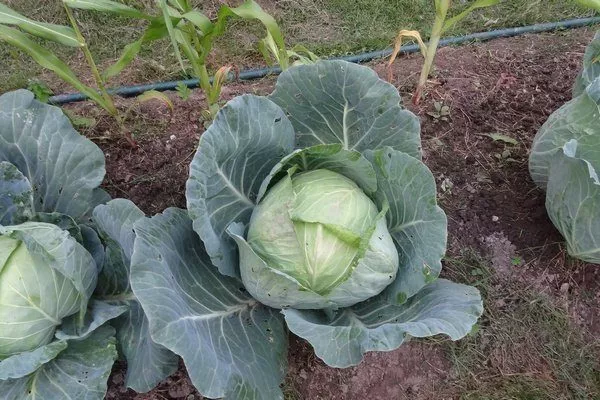
Site selection, soil and conditions
How to choose a site:
- Soil. It requires well-drained and breathable soils. Acidic soils are unsuitable, as they can cause clubroot. The best options are chernozem and cultivated loams. Areas prone to flooding after precipitation are unsuitable, as Megaton dislikes overly wet soils.
- Lighting. This hybrid doesn't tolerate direct sunlight well. On the other hand, constant shade is also harmful. To create ideal conditions for cabbage, it's recommended to plant sunflowers or corn between the rows. Plant every 3-4 rows of cabbage. Megaton grows best in partial shade. Avoid planting it near evergreen shrubs and trees, as insufficient light will reduce yield.
- Predecessors. Suitable plots are those where cabbage and other cruciferous vegetables (radishes, radishes, turnips, etc.) haven't been grown for at least 3-4 years. Megaton is best planted after potatoes and tomatoes. Rotating the growing location each year is recommended to reduce the risk of cabbage diseases affecting the hybrid.
- ✓ The optimal soil pH level should be within 6.0-7.5 to prevent the development of clubroot.
- ✓ The soil should have a high water-holding capacity, but without stagnant water.
Planting without seedlings
When planting cabbage seeds directly in open ground, their roots grow deeper than when grown from seedlings. This increases drought resistance but delays maturation by approximately 2-3 weeks. Growing by sowing seeds directly into the ground is easier than using seedlings, but does not guarantee 100% germination.
Features of seedless cultivation:
- Seeds are sown in late April or early May. The exact timing varies by region. Sow seeds in warm soil, and the outdoor temperature should be 15°C (59°F). Seeds take a long time to germinate in cold soil; they swell at temperatures starting at 5°C (41°F). The higher the temperature, the faster the seeds will germinate: at 20°C (68°F), seeds germinate in 4-5 days, and at 10°C, in 2 weeks.
- Dig holes in the soil at intervals of 40-45 cm. The depth of the holes is 3-4 cm. Pour 0.5 liters of water into them.
- The seeds are planted at a depth of 1 cm. Three to four seeds are placed per hole. The distance between rows is 60-70 cm. The seeds are covered with soil on top.
- Sprinkle the crops with sawdust or humus to prevent the formation of a crust that would hinder the development of seedlings.
- The crops are covered with plastic film stretched over arches. Cut-off plastic bottles and jars can also be used for insulation. When the outside temperature rises, the cover is removed for ventilation. Until the seedlings emerge, the soil is moistened with a sprinkler.
- Thinning of seedlings occurs after two leaves have formed, leaving two shoots. When three leaves appear, thin the plantings again, leaving only one shoot.
Planting with seedlings
Growing from seedlings takes 115 days. This method requires some effort – you have to grow the seedlings, carry out a picking and transplantation into open ground.
Watch the video below to learn how to transplant Megaton cabbage seedlings into open ground:
How to sow seeds for seedlings?
Cabbage seedlings should be sown from mid-March until the third ten days of April. Seedlings should be grown in individual cups, which means skipping the transplanting step. If seedlings are grown in containers, they should be transplanted into pots after a certain time.
Seeds are prepared for sowing in the usual way – hardened and disinfected. Sowing procedure:
- The seeds are sown in containers filled with a potting mix—you can buy it or make your own. The soil mixture is prepared by mixing equal parts humus, sand, and turf. The resulting mixture is disinfected with Fitosporin.
- Place two or three seeds in one cup. Sow the seeds in rows at intervals of 1 cm (this is for sowing in boxes). Space the seeds 3 cm between rows.
- Cover with soil, moisten with a spray bottle, and cover with plastic wrap. Until seedlings appear, keep the containers warm – at 20-25°C.
- Sprouts will appear in 4-5 days. If the seedlings are grown in containers, thin them out, increasing the distance between adjacent seedlings to 2 cm. If the seedlings are grown in cups, leave only one sprout—the healthiest and strongest one.
- The seedlings are watered with warm water as soon as the top layer dries out.
- Thinned seedlings are placed indoors or in a greenhouse. The temperature there should be maintained at 18 to 20°C during the day and 12 to 15°C at night. These temperature fluctuations are necessary for hardening off the seedlings.
- If necessary, add supplemental lighting to extend daylight hours. Insufficient light causes seedlings to stretch and weaken.
It is recommended to sow seeds for seedlings several times so that newly growing seedlings can replace those that fail to take root in the beds.
How to transplant seedlings?
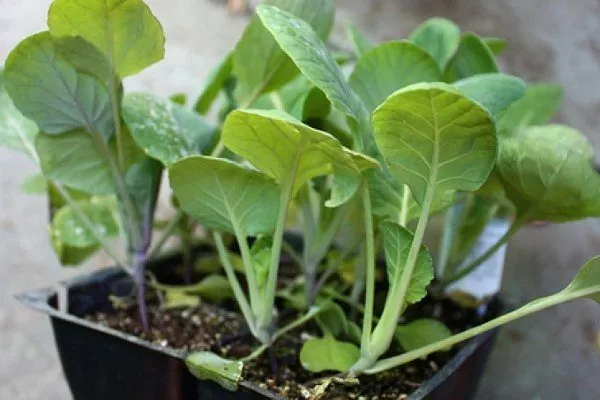
Pricking out occurs after the third true leaf appears. The seedlings are transplanted from the box into cups. First, the soil is watered to make removal easier. The seedlings are planted in pots, deepening them to the level of the cotyledon leaves.
How to feed seedlings?
While the seedlings are growing – until they are transplanted into open ground – fertilizing is carried out three times.
Frequency and composition of fertilizers for seedlings:
| Period of implementation | Composition of the fertilizer |
| After the first leaf appears | Add ammonium nitrate (12 g), superphosphate (20 g), and potassium salt (5 g), diluted in water. The dosage is given per 5 liters of water. |
| A week after the first feeding | Water with a mullein solution. Ammonium nitrate is also suitable (dissolve 15 g in 5 liters). |
| A couple of days before transplanting into the ground | Ammonium nitrate (15 g), potassium salt (10 g) and superphosphate (40 g) are diluted in 5 liters. |
How to harden seedlings?
A week before planting, the seedlings are subjected to temperature tests:
- Ventilate periodically.
- The seedlings are taken outside, and the duration of these "walks" is gradually increased. After hardening off, the cabbage better tolerates sudden cold snaps.
How to transplant seedlings?
Plant seedlings on a cloudy day to prevent wilting. Here's the procedure for planting seedlings in the ground:
- Seedlings are ready for transplanting at 45-50 days old. They should have three pairs of true leaves, reaching 10-12 cm in length.
- Cabbage is planted in prepared and fertilized beds. Mineral fertilizers are added to the holes at the appropriate dosage.
- The root system is dipped in a slurry of mullein.
- The seedlings are carefully placed in the holes, deepening them to the first leaf—do not cover it with soil. The planting pattern is 45 x 60 cm. The distance between adjacent plants is 45 cm, and the row spacing is 60 cm.
- ✓ The presence of three pairs of true leaves 10-12 cm long.
- ✓ No signs of diseases or pests on leaves and stems.
Immediately after planting, it's advisable to cover the seedlings with plastic film—it will protect the young plants from the bright daytime sun and cold nighttime temperatures. Strong seedlings quickly take root and adapt to their new location.
Caring for cabbage in open ground
Megaton cabbage is cared for throughout the growing season. It requires regular watering, hilling, and loosening.
Watering
How to water Megaton:
- The water temperature is +18-22°C.
- Water the seedlings in the morning or evening.
- If it rains, stop watering until the soil dries out.
- At first, seedlings are watered once every 2-3 days in hot weather. In cloudy weather, watering is reduced to once every 5-6 days.
- Watering is stopped 2-3 weeks before cutting the heads of cabbage.
Five to six hours after watering, loosen the soil to prevent the formation of a thick, air- and water-impermeable crust. Loosen the soil to a depth of 5-6 cm to avoid damaging the roots.
Watering methods:
- Furrows. The most convenient method of watering is to make furrows 10-12 cm deep between rows. This method is only effective on flat surfaces.
- Sprinkling. Water with a watering can or a hose with a sprayer. This option is good for sloping terrain.
- Drip irrigation system. Water is supplied through plastic pipes laid along the rows. This method is applicable to any terrain and allows for maximum water efficiency. The downside is the cost of setting up the irrigation system.
Hilling
This agricultural technique is necessary to strengthen the roots and increase yield. Twenty-five to twenty-five days after planting, when small heads of cabbage have formed, the soil is raked up toward the plant. After 15 to 20 days, the cabbage is hilled again.
Hilling is best done after rain or watering. But first, remove any leaves lying on the ground. Spread a thin layer of wood ash between the rows.
For details on growing Megaton cabbage, watch the video below:
Top dressing
After the seedlings are planted in the ground, they are fertilized three times – for high yields and to improve the taste of the heads of cabbage.
Frequency and composition of Megaton cabbage fertilizing:
| Period of contribution | Composition of the fertilizer |
| 2 weeks after planting the seedlings | For 10 liters of water – 1 liter of liquid mullein. For one plant – 0.5 liters. |
| 2 weeks after the first feeding | Similar to the first feeding |
| During the period of formation of heads of cabbage | For 10 liters of water – 10 g each of potassium sulfate and urea. For one plant – 0.5 liters. |
Pest and disease control
The Megaton F1 hybrid is resistant to many common diseases. However, there are some diseases that can affect this variety. The best way to avoid them is damage by diseases and pests – prevention, but if the cabbage is still subject to their attacks, appropriate fungicides and insecticides are used.
Common cabbage diseases and how to control them:
| Disease | Symptoms | How to treat? | Preventive measures |
| Peronosporosis | The tops of the leaves have round spots. The lower leaves have a purple, gray, or white coating. The heads of cabbage take on an irregular shape. | During the fruiting period, spray with 1% Bordeaux mixture. Spray weekly. Stop spraying one week before harvest. | Remove plant debris. Crop rotation rules are observed. |
| Yellowness of the cabbage head | The leaves turn green-yellow. | Spray with copper sulfate (5 g per bucket of water). | Timely burning of affected residues. |
| Blackleg | The stem at the base is dark, watery, and rotting. The plant dies. | Chlorinated lime is added to the soil - 20 g per 1 sq. m. | Preventing excess moisture. |
| White rot | The leaves are covered in slime. They are covered in a white fungus that looks like a fluffy coating. | Maintain temperature conditions during storage. | Observe crop rotation and harvest cabbage heads before the autumn rains begin. |
| Vascular bacteriosis | The leaves turn yellow at the edges. The veins in the affected areas turn black. The heads of cabbage stop growing. | Apply Planriz twice (10 ml per bucket of water). The interval between sprays is 10 days. | Compliance with crop rotation rules.
|
Cabbage pests and control measures:
| Pests | Signs | How to fight? | Preventive measures |
| Aphid | They suck the juice out of the leaves, which weakens the plants and reduces yields. | Spray with infusions of wormwood, chamomile, nettle, and ash. Add 300 g of ash to 10 liters of water. Add 400 g of liquid soap. Treat with Actellic or Intavir according to the instructions. | Sprinkle irrigation. Don't plant cabbage near viburnum, as it's often infested with aphids. |
| Cruciferous flea beetle | They primarily affect young cabbage and can completely destroy the crop. | Spray with a garlic-soap infusion (100 g of soap and 300 g of the infusion per bucket of water). Spray with Karate and Actellic 2-3 times every week. | Spraying with water is especially useful in extreme heat. Dusting the soil and plants with ash. |
| Cabbage white butterfly | Caterpillars eat leaves, but can also eat the inside of a cabbage head. | Spray with Fitoverm and Intavir. Repeat treatments at 10-day intervals. | Remove butterfly eggs in a timely manner, before they develop into caterpillars. |
Tips from experienced gardeners:
- To prevent cabbage roots from being damaged by cabbage flies, thin non-woven material is placed under the plants.
- When butterflies appear, cover the cabbage with non-woven material on top.
- If caterpillars appear on cabbage leaves, they should be collected immediately—before the leaves curl into heads. If you wait too long, it will be impossible to remove the pests from the heads.
- Cabbage pests dislike the presence of mint, wormwood, and marigolds. These are planted near cabbage beds.
- Pests can't stand the smell of vinegar. Dissolve 1 tablespoon of 70% vinegar in a bucket of water. Spray the cabbage with this solution.
- Ants, mole crickets, flies and slugs can be scared away with ammonia.
How to harvest and store crops?
The heads are harvested after the first frost, as soon as the temperature drops to -2°C. The outer leaves are not removed until harvesting to avoid reducing the yield. The heads are so heavy when ready for harvest that they barely hang on to the stalks. To prevent them from touching the soil, they are supported with stakes.
How to harvest Megaton cabbage:
- After picking off the leaves, the heads of cabbage are laid out to dry.
- After drying in the sun, the heads of cabbage are stored in a room protected from frost and precipitation until processing.
- The leaves are somewhat tough after being cut. When it's time to pickle, they take on the perfect shape for pickling.
- It is important to harvest the heads of cabbage on time; if you delay harvesting, they will not be stored for long.
- Cabbage heads are dug up by the roots. Those infested with caterpillars are used as food – they should be used first.
High-quality, pest-free heads of cabbage are stored. Before storing, they are kept outdoors for 24 hours. Then the roots are trimmed off, but a few outer leaves are left.
Storage conditions:
- The harvest is stored at a temperature of +4-5°C. However, it can also be stored at lower temperatures – down to -1°C.
- Humidity – 90-98%.
- Good ventilation inside the room.
- The heads of cabbage are placed in boxes with the stalks facing up, or hung from the ceiling.
Who can I buy Megaton seeds from?
When choosing seeds, gardeners and large vegetable farms choose well-known, proven brands. Today, as seed producers compete with each other, they strive to sell the highest quality material possible—they disinfect, test for germination, and boost immunity.
Who to buy seeds from:
- In the agricultural company "Gavrish". The company has been on the Russian market for more than two decades and has a good reputation.
- At the Sedek company. One of the most established companies, it has been in the market since 1995. Its field of activity is varietal selection and seed production. This company's seeds are in demand not only in Russia but also abroad.
- At the Prestige company. This is a supplier of seed material from the best foreign producers.
Reviews from gardeners
They are practically disease-free; to prevent diseases and pests, environmentally friendly means are sufficient - ash, herbal infusions, etc.
Megaton F1 is remarkable not only for its low maintenance and high yield, but also for its excellent flavor. If you love sauerkraut, plant Megaton – you'll make excellent preserves. And any extra heads can be sold at market – thanks to its excellent commercial qualities, this cabbage is in demand among consumers.