
Cabbage is often attacked by various microorganisms, one of which is flea beetles – tiny jumping bugs that feed on the sap of the vegetable. They are especially active in dry and hot weather, so to protect the crop, it's necessary to increase air humidity, including through sprinkler irrigation. But how to recognize these microscopic pests early and get rid of them quickly? Let's look further.
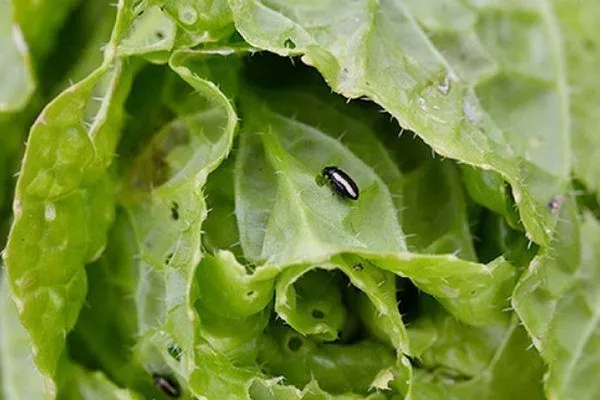
How to recognize a flea beetle?
If small spots and holes appear on cabbage leaves, you may suspect the vegetable is infested with cruciferous flea beetles. However, before choosing chemicals or folk remedies, it's important to accurately identify the pest type; otherwise, you won't be able to get rid of them, and the plant could suffer.
You can recognize cruciferous flea beetles by the following characteristics:
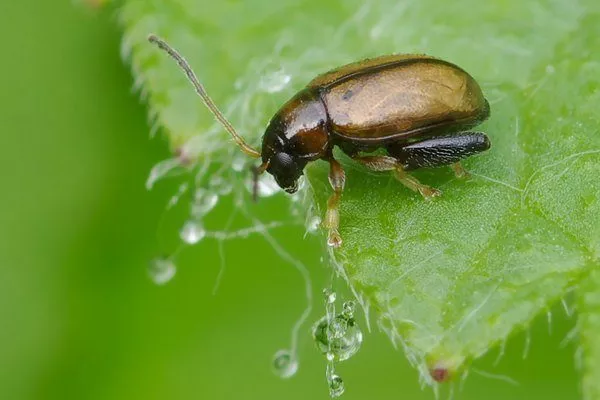
- These are small bugs, the size of which often does not exceed 3 mm;
- the body of insects is short, sometimes slightly elongated;
- the upper side of the body is smooth, not covered with hairs;
- the length of the antennae is usually no more than half of the body;
- Insects are distinguished by their jumping ability thanks to their strong hind legs.
These flea beetles lay small, light-colored eggs, which hatch into microscopic, thin, yellowish larvae with three pairs of legs. They develop in the soil and feed on plant roots, primarily weeds. The larvae mature into adults within 2-4 weeks.
As they develop, the color of the skin may change. Generally, the color can be used to accurately identify the species of cruciferous flea beetle. The most common varieties are:
- WavyIt is common in the Far East, Siberia, the Middle Urals, and the northern European part of Russia. It can be distinguished from other species by the yellow, notched stripes on its elytra. The larvae feed on the lateral roots of cruciferous plants, while the beetles eat the leaves, leaving only the veins intact.
- NotchedThis species has become a favorite in southern Yakutia, the Amur Region, and Primorye. It also has yellow stripes on its elytra, but these stripes are deeply notched on the outside.
- Light-leggedFound in large numbers in the southern forested areas. This is a larger member of the leaf beetle family, reaching 3.5 mm in size. The head and the upper half of the first thoracic segment are black with a greenish or bluish tint. The tibiae and tarsi are yellow.
- Southern or blackThe most harmful insect, common throughout the Russian Federation, with the exception of the Far North. The insect is black, but sometimes a metallic sheen is visible. On the elytra, dots arranged in regular rows can be seen.
- BlueIt is distributed throughout Russia. It can be distinguished from other types of flea beetles by its blue or green coloration with a silky sheen.
- ✓ Wavy flea beetle: yellow notched stripes on the elytra, prefers to feed on lateral roots.
- ✓ Notched flea beetle: yellow stripes on the elytra with a deep semicircular notch, lives in the southern regions.
The closer to the south, the more species of flea beetles gardeners encounter in their plots.
Interestingly, the cruciferous flea beetle is so named because it prefers to feed on plants of the cruciferous family. Among vegetables, it eagerly consumes:
- cabbage of different types (white cabbage, cauliflower, broccoli and others);
- turnip, daikon, radish;
- turnip, rutabaga;
- mustard greens;
- horseradish;
- radish;
- spinach;
- arugula.
From wild plants, fleas choose shepherd's purse, common rapeseed, field pennycress, wild radish, and from flowers - roses, chrysanthemums, alyssum, matthiola and stocks.
When and how do flea beetles attack cabbage?
Beetles overwinter in the soil or in greenhouse structures. In cold weather, they can also hide in piles of last year's fallen leaves. In spring, as soon as the air temperature reaches 15°C, they awaken and feed on wild cruciferous weeds. As soon as seedlings are planted in the area or the first shoots of crops of the same family appear, flea beetles immediately move onto them.
Pests are most active during hot times of the day.
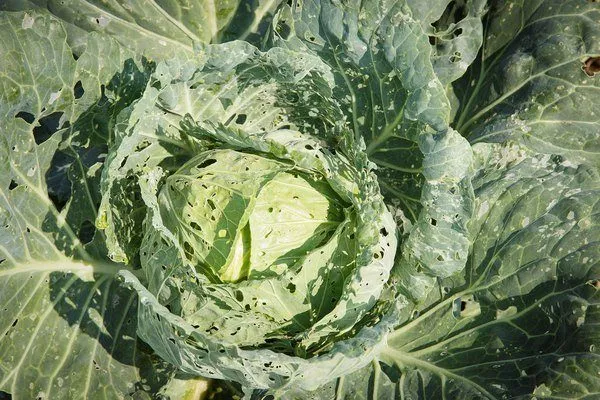
You can tell if a cabbage flea beetle has appeared by observing changes in the vegetable's appearance:
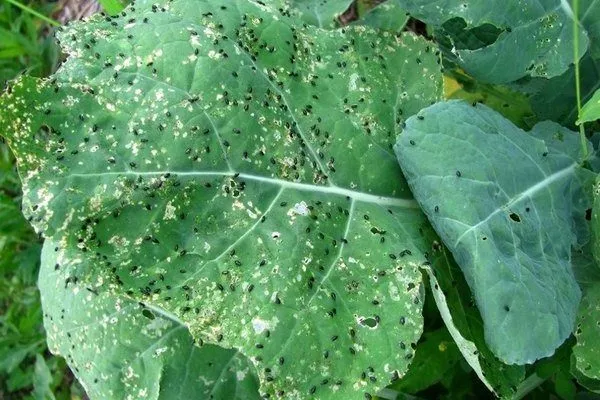
- small holes form on the leaf blade as insects eat away its top layer;
- cabbage leaves become riddled with holes, and the area around the holes turns yellow (this sign is often observed during a large pest infestation);
- Young plants become weak, lose turgor and dry out even with abundant watering, since the larvae develop on the roots and often damage the root collar of the seedlings.
Flea beetles are easily visible to the naked eye. Touch a bush and they start jumping out in all directions.
Why are fleas dangerous?
These bugs are serious agricultural pests that can cause significant damage to gardeners in just a few days. During a massive infestation, a single plant can harbor between 50 and 200 voracious insects, capable of destroying entire cabbage seedlings, radish, turnip, or turnip sprouts in just a few days.
It's important to remember that flea beetles reproduce very quickly in dry and hot weather—up to three generations of insects can appear during a single growing season. Therefore, to prevent your crops from drying out and perishing within days from a massive flea infestation, you'll need to begin controlling them immediately.
Agrotechnical measures against fleas
A number of agricultural measures can help prevent the emergence and proliferation of microscopic insects. Each requires individual consideration.
Compliance with sowing dates
Planting cabbage seedlings before and after the main stages of insect development helps prevent widespread leaf damage. The best option is to sow early varieties in April and late varieties in July. In the first case, by the time the insects appear, the cabbage has time to root and develop, and the leaves become rough, preventing the insects from chewing through them and losing interest. In the second case, the bugs don't have time to cause extensive damage to the plants.
Use of covering material
In areas with hot summers, the simplest and most effective method is to cover the seedlings with a special covering material immediately after planting them in their permanent location in open ground. Special mesh, spunbond, lutrasil, and non-woven fabric are used for this purpose.
Planting phytoncidal plants around the perimeter of the plot
Plants rich in essential oils and with a strong scent will help repel fleas from cabbage. These include:
- marigold;
- calendula;
- fennel;
- dill;
- nasturtium;
- caraway;
- coriander.
They should be planted around the perimeter of cabbage beds.
- ✓ The optimal time for sprinkling is early morning or late evening to avoid rapid evaporation of water.
- ✓ The temperature of the water for sprinkling should be close to the ambient temperature so as not to cause stress to the plants.
Increasing air humidity (watering)
These insects prefer dry air, so creating more humid conditions can help curb their reproduction and population. This can be achieved by watering the cabbage more frequently using a sprinkler.
Weeding
If weeds are not removed promptly, the conditions for flea beetles to thrive and reproduce are unfavorable. Therefore, in the fall, after the vegetable harvest, it's important to thoroughly clear the area of plant debris.
Folk remedies for removing fleas
Folk remedies are most effective at the very beginning of the pest season, as they help prevent massive flea infestations. They can also be used when the pest population is small.
Learn how to control fleas on cabbage using flea shampoo in this video:
Ash dusting
Experienced vegetable growers have noted that flea beetles do not settle in areas dusted with wood ash. It is placed in each hole when planting cabbage seedlings in their permanent location, and then sprinkled between the rows after planting.
To prevent bugs from liking the leaves, they are treated with:
- tobacco dust;
- a mixture of furnace ash and slaked lime (fluff).
Spraying with infusions and solutions
To get rid of cruciferous flea beetles, cabbage can be sprayed with various products. The following recipes have proven effective:
- Tomato-garlic infusionChop 250 g of fresh tomato tops, and mince 10 cloves of garlic with a meat grinder or garlic press. Add 10 liters of warm water to the herbal ingredients and let steep for a day. Strain the infusion, then dissolve 50 ml of liquid soap in it to improve adhesion of the liquid to the leaves.
- Dandelion infusionChop 500 g of fresh dandelion leaves and flowers and add 10 liters of water. Let it steep for 3 days, then strain and add 50 ml of liquid soap.
- Ash-soap solutionPour 1 g of crushed ash into 3 liters of boiling water and let it steep for 2 days. Then add 1/4 of a bar of soap to this mixture—laundry soap, green potassium soap, or tar soap.
- Chicken manure infusionChicken manure is diluted in water at a ratio of 1:20. The mixture is left to ferment in the open air and then used as directed.
- Tobacco infusionIt is prepared from 200 g of tobacco and 10 liters of water with the addition of a small amount of soap.
- Wormwood infusion1 kg of fresh plant material is crushed and poured with 10 liters of boiling water. It is infused for 24 hours, covered with a lid.
Freshly picked sprigs of wormwood or tansy can be placed between the rows of cabbage beds, as they contain many essential oils, have a pungent smell, and have a repellent effect.
A video about simple and reliable methods for combating cruciferous flea beetles:
Using adhesive tape
This method helps reduce pest infestations. To do this, apply a layer of some sticky substance—resin, tar, or natural honey—to both sides of thick cardboard or plywood.
Then, waving this device, they pass it between the rows several times. The disturbed fleas begin to jump and stick to the sticky layer. Afterwards, the cardboard with the stuck insects is burned.
Using motor oil
Some vegetable growers and car owners have noticed that fleas are attracted to the smell of used motor oil. To repel some of the pests from cabbage, you can lay rags soaked in oil around the garden bed at a distance of 3-4 meters.
How to fight fleas with special preparations?
If the flea beetle population is very large and there is a risk of destroying the entire crop, then chemical or biological preparations are used.
Biological insecticides
They are characterized by low toxicity, so they do not cause any harm to either humans or beneficial insects. One such insecticide is Actofit, which is used according to the following recommendations:
- The solution is prepared from 4 ml of the preparation and 10 liters of water and is used immediately by spraying the plants, since after a few hours its effectiveness decreases;
- treatment is carried out at the first signs of flea beetles appearing in dry, windless weather and at an air temperature of +16…+28°C, since at lower temperatures its properties also deteriorate;
- repeat treatment is carried out after 2-3 weeks.
12-18 hours after treating cabbage with Actofit, insects stop moving and die within 2-3 days.
Chemicals
They help quickly kill insects, but they are harmful to all living things—humans, animals, birds, and pollinators. When using these products, remember to take personal protective equipment. Treatment should be carried out in dry, windless weather, preferably in the evening, when fleas are less active.
Here are the most effective drugs:
- AktaraThis is a stomach-and-contact insecticide whose main ingredient is thiamethoxam. The solution is diluted in warm water (25°C) at a rate of 3 g per 10 liters of water. The solution is used immediately as directed—spraying the leaves or pouring it under the bush. Any remaining solution should be discarded rather than stored. The product should not be washed off with water. It begins to work 30 minutes after application and remains effective for 3-5 weeks. To get rid of all fleas, do not use the solution 1-2 hours before precipitation.
Aktara does not accumulate in fruits and plants, and does not cause addiction in parasites; however, it is toxic to pollinating insects, so it is not used during flowering.
- ActellicA contact and stomach insecticide that targets the digestive and nervous systems of pests. To spray cabbage, dissolve 2 ml of the product in 2 liters of water. This amount is sufficient for treating 20 square meters of garden beds. When using this product, keep the following points in mind:
- Plants are not treated with a weakly concentrated solution, since it causes the death of only weak individuals, while strong imagoes become resistant to the product;
- You cannot process cabbage after dew, rain, or 2 hours before precipitation:
- It is not recommended to spray the prepared solution in strong winds;
- Insects become accustomed to this drug, so its use is prohibited for several years in a row.
Actellic is a highly toxic product not only for pollinating insects (bees and wasps), but also for fish, so its use near bodies of water is prohibited.
- DecisA contact and stomach insecticide that is dangerous to bees and fish. Its use is prohibited during flowering periods and near fisheries. A significant advantage of this product is that its effect is not interrupted by precipitation and is not washed away by water.
 The protective effect lasts for 15 days. Treatment is carried out in dry weather in the evening. A maximum of two sprayings per season is recommended. To control cabbage flea beetles, prepare a solution of 0.35-0.5 g per 5 liters of water. This amount is sufficient to treat an area of 100 square meters.
 - ImidaliteA systemic insecticide with contact and stomach action, used to prevent flea beetles. Cabbage seeds are treated with it before planting. The product is a flowable paste that easily adheres to the seeds, so it is used sparingly. It provides protection for up to six weeks from sowing. Seeds are treated 2-7 months before sowing or immediately before planting, preferably 1-2 weeks before.
- KarateThis is a contact insecticide that penetrates the insect within an hour and immediately stops its digestion. It is lethal to both adults and larvae. The working solution is prepared in two stages: first, mix the product with a small amount of water until smooth, then dilute it to the desired concentration.
To spray cabbage against flea beetles, simply add 1 ml of the product per 10 liters of water. Spray twice during the growing season. This treatment is contraindicated during the flowering period, as it has a negative effect on bees. It should also not be sprayed near water bodies. - TabazoleThis is a flea beetle repellent. It's a tobacco ash dust. Besides repelling insects, it's also used as an ash fertilizer, as it's rich in calcium, potassium, phosphorus, and other micronutrients that improve plant nutrition. Cabbage crops are dusted with this product in dry, windless weather. Apply 10-20 g of the product per square meter.
- LightningA contact and stomach insecticide with a broad-spectrum acaricidal effect. It inhibits the activity of both adults and larvae. After treatment, most pests die within 30 minutes. Lightning has a long period of protective action – over 3 weeks. Prepare a working solution of 1-2 ml of the substance and 10 liters of water. Spray cabbage seedlings when pests appear, but no later than 20 days before harvest.
- AtomA highly effective insecticide from the synthetic pyrethroid group. It is available as an emulsifiable concentrate with a long-lasting protective effect—at least 3 weeks, depending on weather conditions. After spraying, fleas begin to die within 1-3 hours, but mass mortality occurs within 3-12 hours. This product is hazardous to bees and wasps.
- InitiativeA soil insecticide against wireworms and other soil-dwelling insect pests, including cruciferous flea beetles. The product comes in the form of microgranules that are evenly mixed with soil or sand. This creates a protective zone around the plant, preventing pests from penetrating, as they die from direct contact with the substance. The product is applied when planting seedlings, and its protective effect lasts throughout the summer.
When preparing any mixture, use the dosage recommended by the manufacturer.
Prevention
To avoid wasting energy on pest control and risking your harvest during the growing season, preventative measures should be taken annually. These include:
- In the fall, dig the soil deeply in the garden beds. Insects prefer to overwinter in the soil, so digging will disrupt their comfortable conditions. As a result, most pests will die during the winter.
- Maintain crop rotation. Cabbage should not be planted after related plants, that is, after members of the same family (turnips, radishes, or rutabaga). It is best grown in areas where cucumbers, garlic, onions, beets, potatoes, and tomatoes were grown last year.
- Weed the beds regularly and remove weeds, especially those from the cruciferous family. Don't leave collected weeds near the beds. They will attract flea beetles and become a breeding ground. It's best to put them in a compost bin or remove them a good distance away from the plot.
Read about other cabbage pests and common diseases. here.
Cruciferous flea beetles are insects of the leaf beetle family that can cause significant damage to crops. Early detection and removal will not only save the affected plants but also protect those that haven't yet been attacked.