
The Kolobok F1 white cabbage has long been a favorite among our gardeners and farmers. This variety is easy to grow and produces high yields, and its round, juicy and crisp heads are delicious fresh or pickled, and they also store well until spring.
Description of Kolobok cabbage
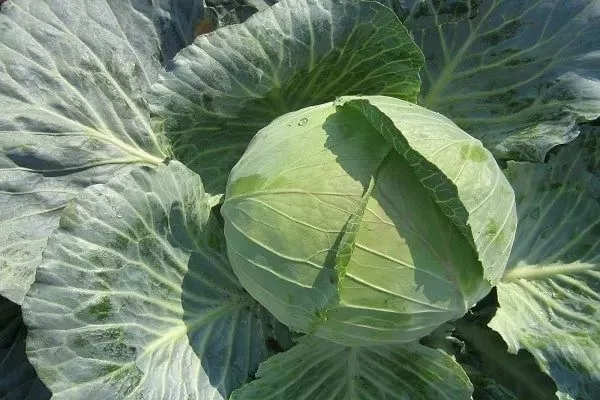
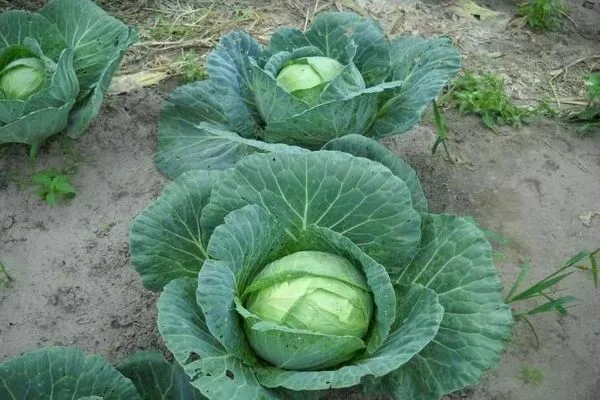
The variety has a semi-erect rosette about 30-35 cm high. Its diameter can reach 50-55 cm. The leaves are dark green, obovate, smooth, with slightly wavy edges.
- ✓ The heads have a high density, which makes them ideal for long-term storage.
- ✓ The variety demonstrates resistance to cracking even with uneven watering.
The outer stalks are medium-length, while the inner ones are short. The spherical heads weigh an average of 4.2 kg. They are green on the outside and firm and whitish on the inside. Kolobok cabbage has a very good taste.
General information
The Kolobok F1 hybrid variety is a late-ripening white cabbage suitable for outdoor cultivation. This hybrid cabbage has a high marketability (98%) and transports and stores well.
Productivity
The variety is considered high-yielding. When grown on a large scale, it yields between 860 and 1010 centners per hectare. Gardeners harvest approximately 10 kg of cabbage per square meter.
Ripening time
This variety belongs to the late-ripening group. At least 160 days pass from germination to technical maturity. After planting the seedlings, harvesting of the mature heads takes approximately 140-145 days.
Breeding history
The Kolobok variety was developed by Moscow breeders in the 1990s. It was officially added to the Russian State Register in 1994. This cabbage is grown not only in Russia but also in neighboring republics. Interestingly, the popularity of this variety, with such a simple and memorable name, has not only remained stable over the years but has even grown. Over the past 20 years, producers have sold 40 tons of Kolobok seeds.
Pros and cons
Before planting Kolobok cabbage in your garden, it's worth not only familiarizing yourself with its description and characteristics, but also evaluating all its advantages and disadvantages.
Taste and application
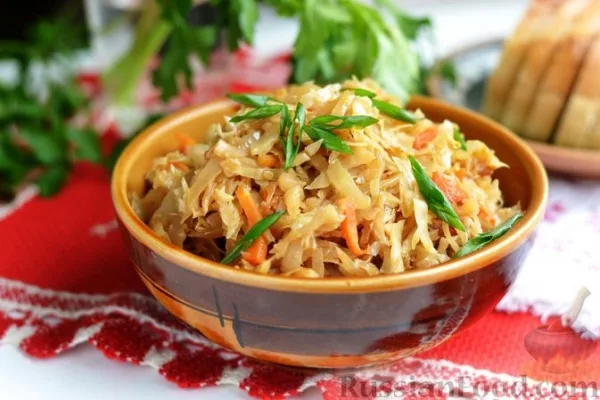
Kolobok cabbage heads are suitable for any purpose. This cabbage can be used to make a wide variety of salads, summer or winter, with vegetables and spices. It tastes excellent in any form: fresh, pickled, fermented, or cooked. The Kolobok variety is suitable for winter preserves. This white cabbage can be salted, fermented, stewed, or used in pies, first and second courses.
Landing features
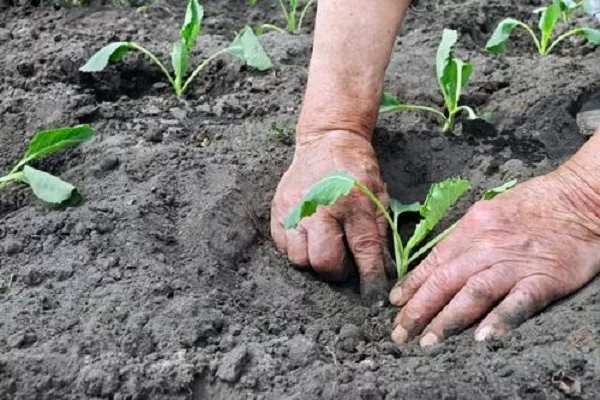
Kolobok cabbage is grown in sunny areas. Planting occurs early in the morning or in the evening, after sunset. This variety can be grown in two ways: by sowing directly into the ground or from seedlings. The first method is used only in southern regions, where summers are long and warm, allowing the cabbage time to sprout, form heads, and ripen in the open ground.
Seedling cultivation is more popular among gardeners and vegetable growers. It's practiced in regions with a wide range of climates, as it's more efficient and increases the chances of a good harvest. The non-seedling method requires more seed (some seedlings must be uprooted) and often requires the use of plastic covers.
- ✓ The soil pH level should be between 6.0-7.5 for optimal growth of Kolobok cabbage.
- ✓ The soil must be well-drained to avoid waterlogging and root rot.
Features of planting cabbage Kolobok:
- Seeds for seedlings are sown around mid-April, 50 days before planting. The seeds are pre-hardened and disinfected by soaking them in water heated to 50°C for 20 minutes. They are then immersed in cold water and laid out on a napkin to dry.
- Seeds are sown in peat pots and cups filled with soil. The soil is made from peat, humus, turf, and cow manure in a ratio of 7:2:1:1.
- Before sowing cabbage seeds, the soil must be irrigated with boiling water containing potassium permanganate. The solution should be a rich dark pink color to be effective. It is recommended to add wood ash to it—this fertilizer will enrich the soil with micronutrients and prevent blackleg.
- The seeds are planted no more than 1 cm deep, otherwise you'll have to wait too long for germination. The seeds are carefully watered with warm, settled water from a spray bottle. The container or pots are covered with transparent film or glass.
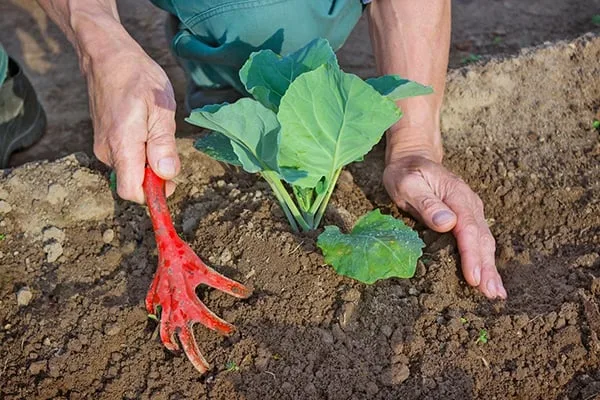
- Seedling care involves watering and maintaining favorable growing conditions—a temperature of 20°C, moderate humidity, and good lighting. When the seedlings develop 2-3 true leaves, they are pricked out—planted at 6 cm intervals or in individual pots. A couple of weeks before planting, the seedlings are hardened off by taking them outside daily—short periods at first, gradually increasing the time spent outdoors.
- It is best to prepare the beds for planting in the fall, carefully digging and fertilizing the soil, as well as adjusting its acidity, adding lime or wood ash if necessary.
When planting cabbage, it's important to consider the previous crops in the area. This helps prevent various diseases that can be transmitted from the soil.
Cabbage grows best after cucumbers, onions, potatoes, rye, carrots, and legumes. Don't plant cabbage immediately after tomatoes, beets, radishes, or radishes. At least four years must pass after cruciferous vegetables before you can plant cabbage in their original location.
Care
To ensure large, juicy "balls" grow in your garden beds, you need to take care of the cabbage - water it, feed it, and spray it on time.
Nuances of caring for the Kolobok variety:
- Watering. Cabbage is watered regularly, preventing it from drying out or becoming overwatered. The weather and soil conditions should be slightly moist. After watering, the beds are carefully loosened and weeded. Young seedlings are watered every two days at a rate of 2-3 liters per plant. The frequency of watering is then reduced to once every three days. Mature seedlings are watered approximately twice a week, with 5 liters per plant. Once the heads begin to form, the watering rate is increased to 10 liters per plant. Watering is stopped two weeks before harvest.
- Loosening. After watering, the beds are loosened to prevent the development of fungal infections and to ensure oxygen access to the roots.
- Top dressing. Three weeks after planting, begin feeding the cabbage, alternating organic and mineral fertilizers. Manure is recommended, as are magnesium-containing fertilizers, which support plant growth. Fertilizing Kolobok cabbage is recommended about four times (per 10 liters of water):
First feeding (2 weeks after planting) - add mullein (500 ml), saltpeter (20 g) and urea (3 g).
Second feeding (after another 2 weeks) - consists of urea (30 g), wood ash (200 g) and chicken manure.
Third feeding (after another 2 weeks) - add superphosphate (30 g), mullein (500 g), and saltpeter (20 g).
Three weeks before harvesting the heads of cabbage, the last feeding is carried out by adding wood ash (200 g) and potassium sulfate (40 g).
The quality and quantity of the harvest directly depend on proper and regular care. It's also important to promptly detect signs of pest and disease infestation and take prompt action to address the problem.
Diseases and pests
The Kolobok variety has fairly good immunity, but under unfavorable circumstances it can be affected by various diseases, most often fungal ones.
Cabbage Kolobok can get sick:
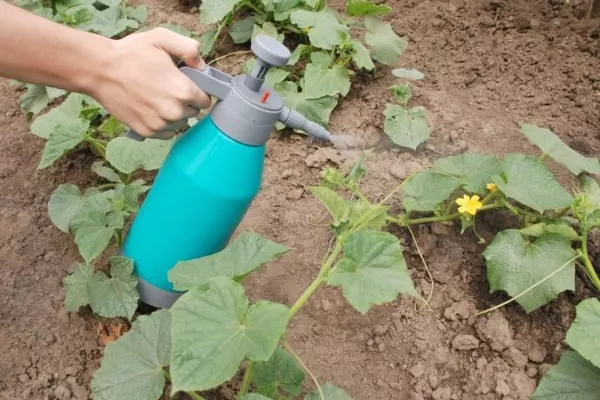
- Gray rot. A brown coating appears on the heads of cabbage. Diseased leaves must be removed before harvesting. Preventative spraying of seedlings with Fitosporin-M is recommended.
- With a black leg. It causes darkening of the stem at the root and death of young seedlings. Seedlings should be treated with a 1% solution of Bordeaux mixture, potassium permanganate (5 g per 10 liters of water), or copper sulfate.
- Mucous bacteriosis. It is accompanied by rotting of the lower leaves and heads of cabbage. Maintaining a proper watering schedule can help prevent the problem.
Kolobok cabbage can be attacked by pests, so it is important to detect them in time and take appropriate measures.
Most often, the Kolobok variety is affected by:
- Cabbage moth. It eats away the rosette, depriving gardeners of their harvest. Spraying with Bitoxibacillin is recommended.
- Cabbage fly. This pest (its larvae) damages roots. It can be controlled with chlorophos or thiophos emulsion.
- Cruciferous flea beetle. These small jumping insects are repelled by dusting plants with wood dust; you can also use the insecticidal preparation Bankol or its analogues.
- Slugs. They are collected by hand, and the plantings and soil are treated with Karat and Decis.
Cleaning and storage
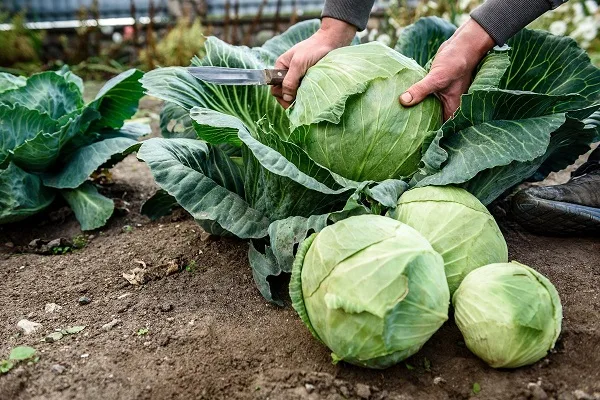
The heads of cabbage are harvested in dry weather. Ripeness is determined not only by size but also by touch—they should be firm and elastic, and their lower leaves should have a yellowish tint. First, trim off the spreading side foliage, and only then harvest the cabbage.
Place the heads of cabbage on boards or other dry material to dry slightly. They can then be stored or used for preserves. Store the heads in a cellar or basement, where they keep well for 6-8 months without losing their flavor or appearance. This variety is ideal for pickling, fermenting, and marinating.
Reviews
The Kolobok variety is attractive to gardeners in every way. This late-ripening cabbage will satisfy all vegetable lovers' needs—it'll always have firm heads on hand for borscht or stew, and it's also ideal for preparing traditional winter preserves.