
Cabbage, like other crops, is susceptible to a wide range of diseases and pests. These attack the plant in different ways, requiring specific control measures. Regular preventative measures play a key role in ensuring a bountiful harvest and preventing disease and pest infestations.
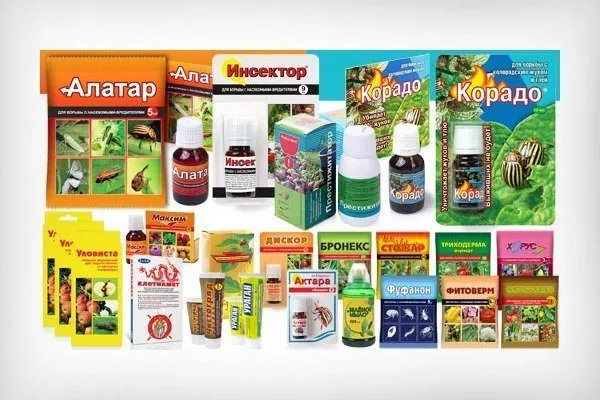
Typical cabbage diseases
Cabbage often suffers from bacterial and fungal spores. They can become infected at any stage, even during storage. If a gardener notices the problem early, it can be resolved in just a week, and most of the harvest will be preserved.
The use of any type of product is prohibited 30 days before harvesting cabbage.
Blackleg
Black spots appear on the stems of young plants. This condition is more common in greenhouses and is caused by poor conditions such as low temperatures and poor lighting.
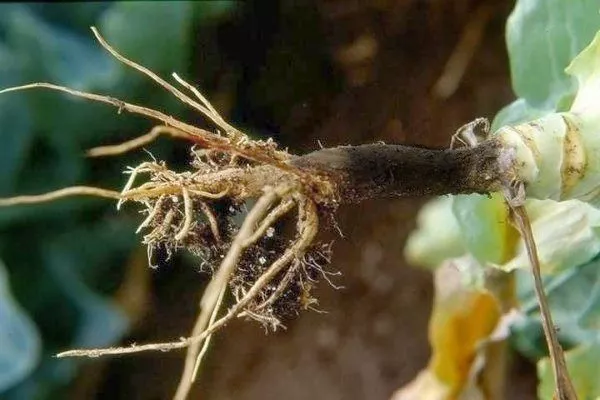
Methods of control: Use a solution containing copper oxychloride or mancozeb (0.2%).
Downy mildew (peronosporosis)
It's considered an enemy not only of cabbage but also of many other varieties of cruciferous plants. It often appears on crops grown in heavy, overly acidic soils.
Downy mildew spores can live in the soil for about 6 years, so it is very difficult to get rid of them and detect them in time.
Symptoms: Barely visible yellow spots begin to appear on the cabbage, then they cover the entire plant with a pink layer. The spots change color and turn red. The affected foliage dies.
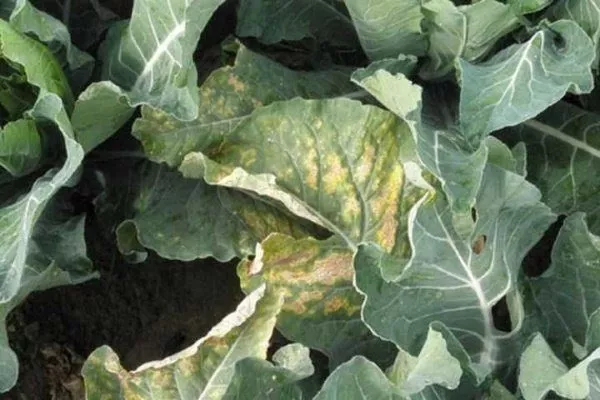
Methods of control: When using any chemicals, Impact, Vectra, and Skor have shown excellent results. As a preventative measure, before planting cabbage seeds, soak them in hot water for about 20 minutes, then quickly transfer them to cold water for a couple of minutes.
Alternaria (black spot)
Spores of the disease appear on cabbage due to water droplets or wind. The disease develops rapidly during drought and frequent rainfall. It affects the crop at all stages of growth and development.
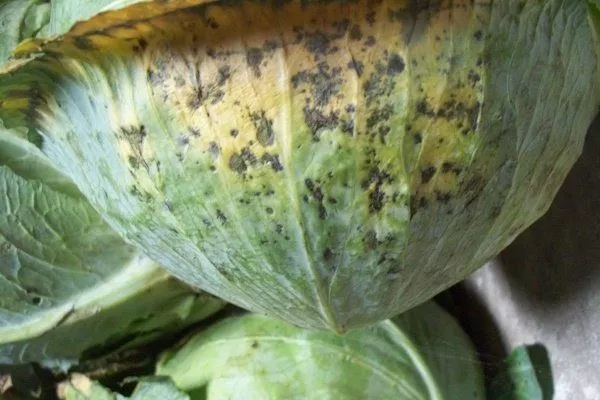
Symptoms: Small black streaks appear on the leaves, which over time develop into spots with a yellow coating. A coating is also observed.
This disease causes massive rotting of cabbage leaves.
- ✓ Use only hardwood ash, excluding oak, due to its high tannin content.
- ✓ Ash must be sifted through a sieve with cells no larger than 1 mm for uniform distribution.
Methods of control: Use Abiga-Peak, Bravo, Skor, and Quadris. Cabbage is treated every 14 days until all signs of the disease disappear. As a preventative measure, Trichoderma granules are placed at the bottom of the planting holes; wood ash can be used instead.
Spray cabbage with a copper sulfate solution once every two weeks. To prevent the disease from developing during storage, the crop is provided with excellent conditions: an air temperature of 3 degrees Celsius, 75% humidity, good ventilation, and no light.
Before placing the cabbage heads in the cellar, they are treated with water and slaked lime. You can also burn a piece of sulfur candle in the cellar beforehand. The cabbage is inspected, dusted with chalk, and hung on ropes so that they do not touch each other.
Sclerotinia (white rot)
This disease affects cabbage heads during storage, but there are also other cases where rot appears at the end of the growing season. The foliage becomes covered with a white, cotton-like coating. The plant tissues become wet and rot.
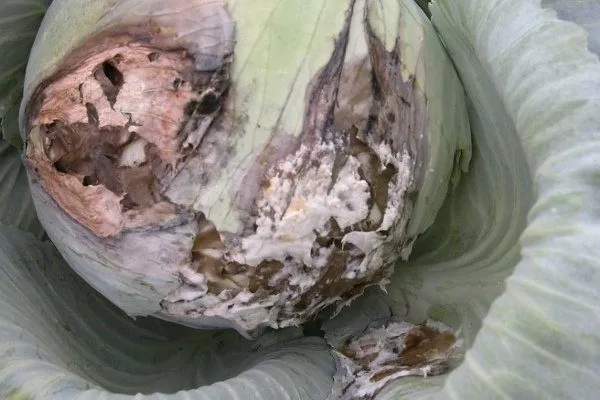
Methods of control: Sclerotinia is very difficult to combat because it spreads very quickly through cabbage heads. If a gardener notices the disease in its early stages, it is necessary to destroy all affected tissue, including healthy tissue. Wounds on cabbage can be treated with a mixture of activated charcoal or cinnamon.
To prevent the disease, it's important to carefully select cabbage heads for storage. Avoid storing frozen or overripe cabbages over the winter, as they are more susceptible to white rot. During the summer, apply foliar feeding once every two weeks; these should contain boric acid and zinc sulfate.
Phoma (dry rot)
Phoma blight harms not only domesticated crops but all wild plants as well. The disease progresses in high humidity and warm weather. Fungal spores enter the plant through mechanical damage. The fungus spends the winter in plant debris, living for approximately five years.
The main symptom of the disease – a reddish-purple coloration of the leaves, uncharacteristic for the plant. After this, the injured cabbage leaves become thin and lifeless, and black spots form on them. Over time, these develop into "ulcers."
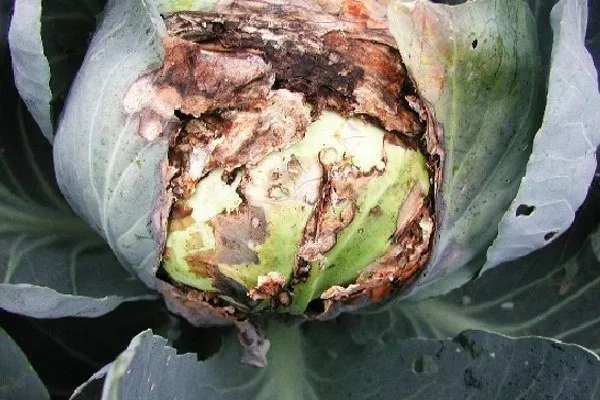
Methods of controlIt's better to use folk remedies; they don't cause much harm to the plant. An excellent option is an infusion of onion or garlic pulp. Fitocide and Trichodermin are also helpful; to help the products adhere better to the cabbage heads, add a small amount of liquid soap.
If the disease is detected at an early stage, any chemicals can be used; often, after two treatments, the fungus disappears completely.
Botrytis (gray rot)
It attacks cabbage heads during storage. Plants that have previously been diseased or mechanically damaged are most often affected. The cabbage becomes covered with very slimy spots that eventually turn dark brown, and an ashy coating appears on the leaves.
To prevent the disease from destroying the entire crop, it is necessary to constantly inspect the heads of cabbage during storage.
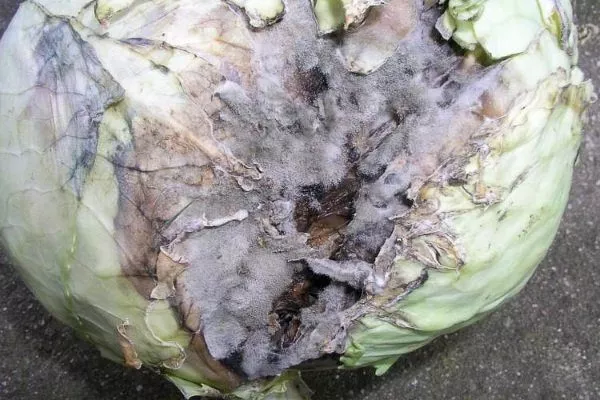
Methods of control: Even experienced gardeners can't find suitable treatments. Conquering the disease is nearly impossible. The key is to take preventative measures, preserve the important outer leaves of the cabbage heads, handle the plant with care and gentleness, and avoid significant mechanical damage.
All infected plants are discarded. If the disease is detected in its early stages, it must be treated in the same way as sclerotinia.
Fusarium
The disease develops rapidly, making it difficult to save the cabbage harvest. Cabbage heads suffer from fusarium wilt within 30 days of planting in open soil. Within a week, the cabbage wilts completely. Fungal spores penetrate the plant through the roots, and the disease remains undetected for a long time before instantly destroying the heads.
Fusarium develops deep underground, so you can only tell if your cabbage is infected by digging up the head.
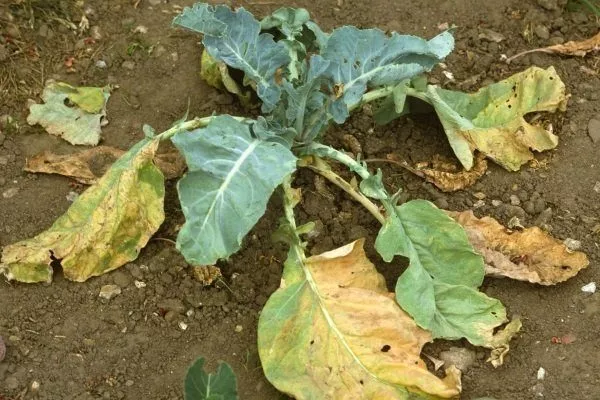
Methods of control: They don't exist. Affected specimens are pulled out of the ground and burned. The soil in the area is treated with a solution of potassium permanganate or copper sulfate. As a preventative measure, the soil can be watered with Fundazol. Cabbage is sprayed with various preparations to prevent the disease.
- ✓ The presence of genetic marking of resistance to fusarium in the variety description.
- ✓ The thickness of the wax coating on the leaves is an indicator of resistance to some pests.
The only surefire way to protect cabbage from fusarium is to plant only disease-resistant varieties, such as Kolobok, Karamba, Amazon, or Satellite.
Slimy bacteriosis (black rot)
The disease develops due to hot climates, high humidity, and a lack of potassium or phosphorus in the soil. Excessive nitrogen levels can also be a cause. Cabbage heads often suffer from bacterial slime disease in late August.
The plant's leaves rot, and an unpleasant odor can be detected. The cabbage initially turns yellow, then gray and brown. The veins turn black, and the soil becomes moldy.
Even surviving leaves from the bacterial slime disease should not be added to food, as this can cause poisoning, which often leads to death.
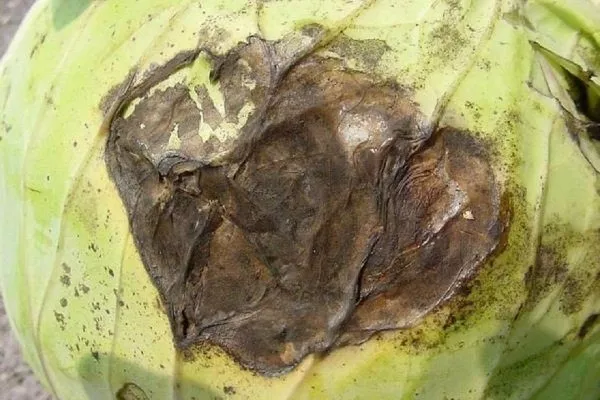
Methods of control: As a preventative measure, the soil is sprayed once a week with a 1% copper sulfate mixture. Planrizim can be used. The soil is dusted with crushed chalk. Seeds are thoroughly treated before planting. Bacterial slime spores attack more than just cabbage, so it's important to inspect all vegetable crops in your garden.
Disease-resistant cabbage varieties: Monarch, Valentina, Kolobok and Monterrey.
Kila
An extremely dangerous disease, it affects all types of cabbage. If clubroot is detected, cabbage should not be planted in infected soil for at least another eight years. Looking at the plant, it appears as if the head is wilting for no apparent reason. When digging it up, growths of varying sizes, resembling neoplasms, can be seen. The cabbage will not produce any further leaves.
When planting, pay special attention to the root system of the seedlings, and discard any seedlings with unidentifiable growths. The disease only spreads in acidic soil; to reduce the acidity, add dolomite flour to the soil.
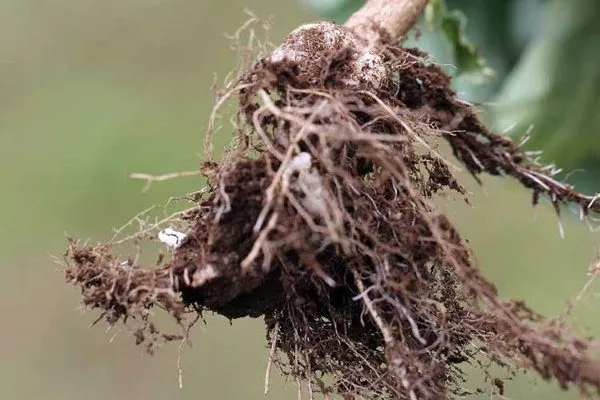
Methods of control: It's impossible to get rid of clubroot. Pull out the cabbage and burn it. Cultivate the soil in the area. It's best to grow disease-resistant varieties: Nadezhda, Kiloton, Tekina, and Ramkila.
Gardeners have discovered that certain crops can clear the soil of disease spores. If planted in an infested area over several summers, cabbage can be restored much more quickly. These crops include spinach, beets, onions, and garlic.
Mosaic virus
Cabbage leaves develop yellow spots between the veins. They then curl, dry out, and eventually the plant dies.
Even experienced gardeners cannot cure the cabbage mosaic virus.
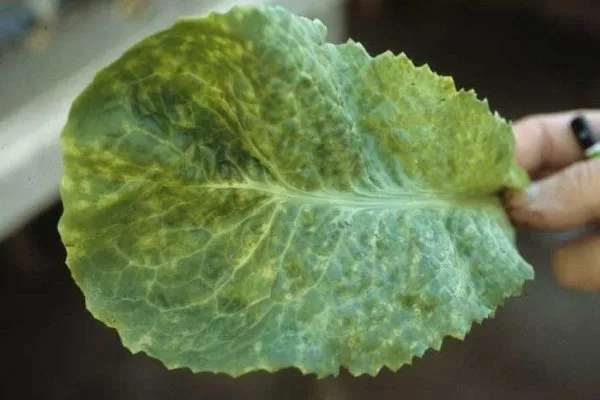
Methods of control: The only solution is to plant varieties resistant to this disease. Also, take preventative measures. Aphids spread the disease spores, so they must be controlled first.
General methods of disease prevention
Prevent cabbage diseases before planting the seeds. Chemicals should only be used at this stage. However, the best options for combating diseases are considered folk remedies that do not contain strong pesticides. Often, there is no cure for cabbage; the only option is to uproot it and burn it to prevent other crops and heads from becoming infected.
Dangerous pests
There are many insects that damage the plant. They are attracted to the tasty and nutritious cabbage leaves. They pose a danger not only because they eat the plants but also because they are considered the main carriers of diseases, viruses, and fungi.
Cabbage aphid
Small, green-tinted pests completely cover cabbage leaves. The insects feed on the sap of the cabbage heads, causing translucent patches to appear in the affected areas. Over time, the leaves change color, dry out, and die.
Aphids are the most common harmful insect and pose a danger to all types of cabbage.
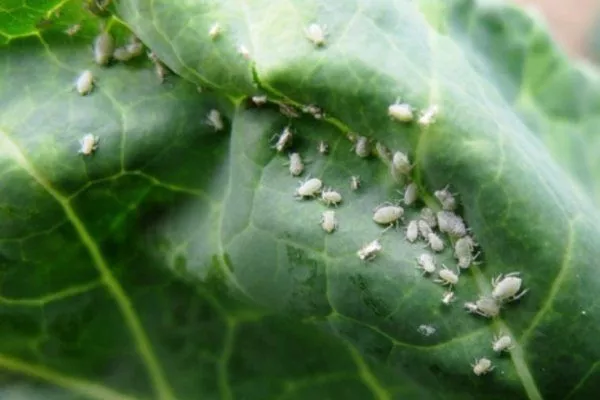
Methods of control: Pests dislike strong odors and don't attack crops grown near marigolds, basil, lavender, and other aromatic plants. Carrots, dill, parsley, and garlic produce the best results. These herbs can be used to create infusions. Tobacco, hot peppers, and tomatoes can be used as sprays.
The pests' only enemies are birds, especially sparrows and tits; earwigs also pose a threat. Birds are attracted to feeders and waterers.
If there aren't many aphids on the cabbage heads, you can use soap suds or a solution of soda ash. If the desired result isn't achieved, try chemical treatments such as Fitoverm, Iskra-Bio, Korado, or Komandor. Often, a couple of treatments are enough to completely eradicate the aphids.
Cruciferous bug
The pests suck the sap from the cabbage, causing it to dry out and stop growing. Early cabbage varieties are almost never affected by the cabbage bug—by the time the pest becomes active, the plant has already grown enough green mass, and the bug can no longer cause any damage.
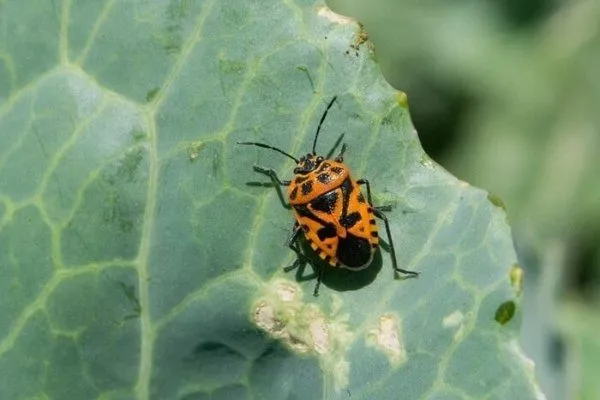
Methods of control: The soil is treated with Fosbecid, Actellic, or Belofos. If the bugs have invaded all the plants, the soil is treated with double the concentration of the treatment. As a preventative measure, cabbage is treated with chamomile infusions, potato tops, or tomato broth.
Cruciferous flea beetle
A special pest capable of turning a plant into a sieve in a couple of days. They can consume seedlings in two hours. These insects cause the most damage in the spring, when temperatures reach 15 degrees Celsius.
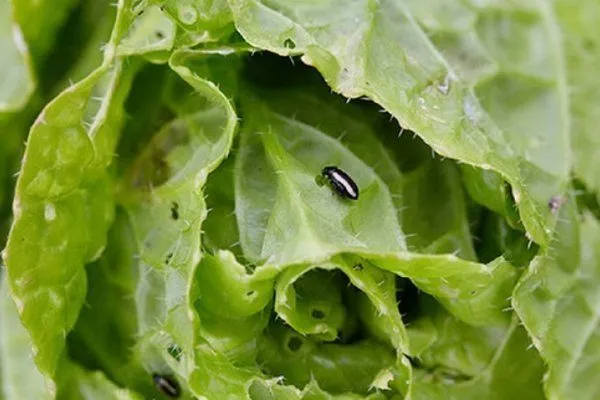
Methods of control: If insects are detected, use Decis, Karate, Aktara or Bankop.
Experienced gardeners claim that a solution of water (10 l) and flea shampoo for animals (100 ml) brings excellent results.
Slugs
These nasty creatures climb onto the leaves and eat them, leaving a slimy coating on the greenery. The cabbage heads don't last long, and their presentable appearance is significantly diminished.
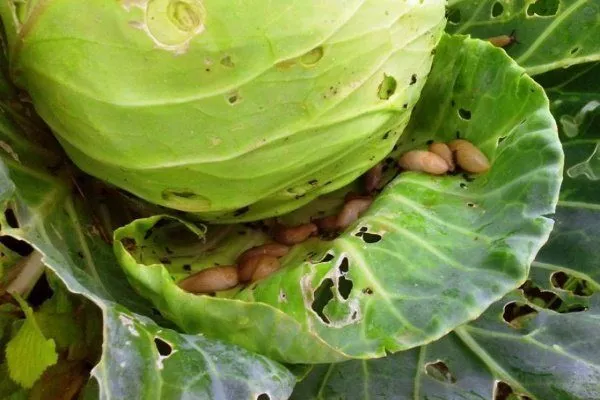
Methods of control: Slugs are collected manually; their slow movement makes this very easy, albeit unpleasant. Numerous folk remedies can be used, for example, burying a container of beer, sugar syrup, or jam in the soil; the slugs will crawl into it and be unable to escape.
The main enemies of these pests are hedgehogs, starlings and toads, so try to attract your saviors to the garden.
It is better to use chemicals only in case of a long-term and massive pest attack; the best of them are considered to be Groza, Meta and Slizneed.
Cabbage moth
The caterpillars become active during prolonged heat waves. Affected cabbage plants stop growing, dry up, and stop developing. Adult moths pose no threat to plants, but the caterpillars are a concern.
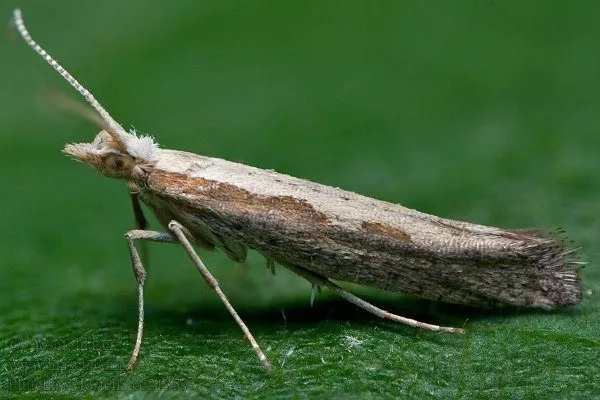
Methods of control: Use a decoction of tomato tops, mustard, and ground pepper. Plant a couple of tobacco plants around the garden; its scent will repel the pests. Also, create a barrier of mustard, cilantro, and clover. Spray the cabbage heads with any chemicals against caterpillars.
Cabbage white butterfly
Many gardeners know this pest as the cabbage white butterfly. It lays about 200 eggs, which hatch and consume the entire crop within a couple of days.
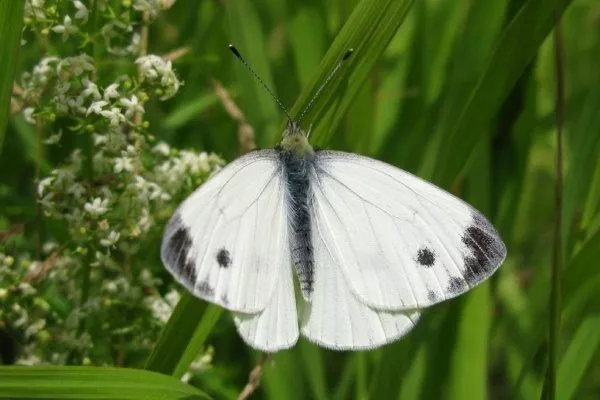
Methods of control: Inspect the plant from all sides and destroy any eggs immediately. Control cabbage whites in the same way as cabbage moths. Use Kinmix or Fitoverm as pesticides.
Cabbage moth
They are caterpillars that make tunnels in cabbage.
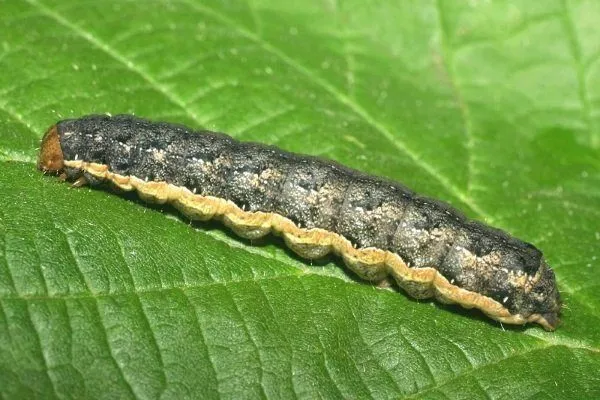
Methods of controlCollect eggs and insects by hand, and spray the cabbage heads with a solution of pepper and water. You can try specialized products that produce good results: Inta-Vir, Sherpa, and Karate.
The pest does not attack en masse, so they are disposed of quickly.
Rape sawfly
The pest larvae destroy the stems and leaves of cabbage from the inside. In addition to cabbage heads, the pests also attack carrots, parsley, and cilantro, so they should be planted farther apart to prevent the insects from spreading from one crop to another.
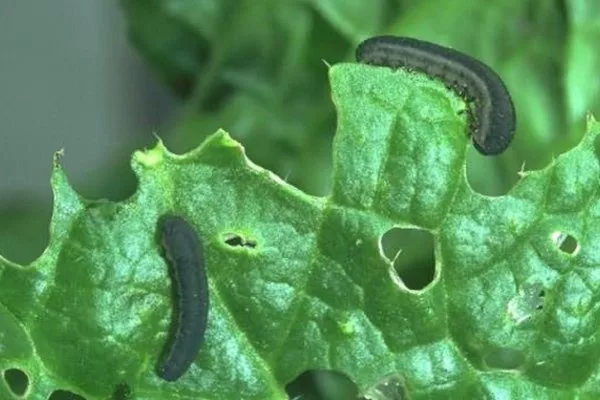
Methods of control: Spray the cabbage heads with an infusion of wormwood, chamomile, or aconite. Alternatively, use a mixture of soda ash (10 liters of water + 70 g of the solution). Effective remedies include Arrivo, Aktaroy, Metaphos, and Fosfamide.
Cabbage fly
Adult pests lay eggs in the soil; the larvae burrow into the root system and destroy the plant invisibly. The heads of cabbage slow down in development and dry out completely.
In May, the cabbage fly is most noticeable.
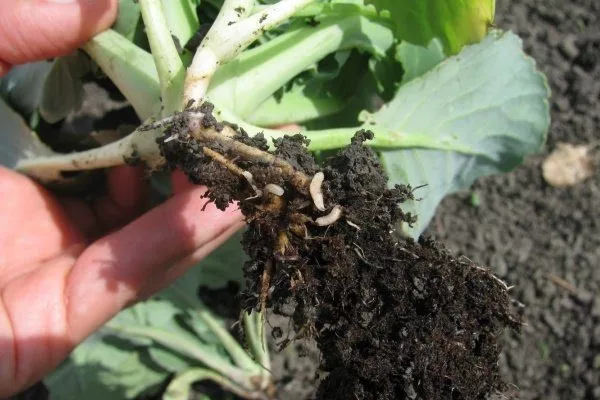
Methods of control: When planting seedlings in the soil, add Pochina, Zemlina, or Bazudina. When loosening the soil, add a mixture of mustard or wood ash. If you notice insects, kill them with Rovikurt or Trichlormetaphos.
Whitefly
The insects are easy to spot; they are white and resemble moths. The larvae and adults feed on cabbage sap and thrive in high temperatures and humidity.
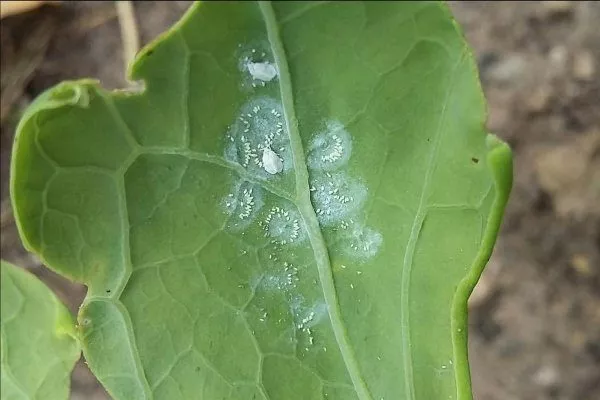
When making traps, rely on the fact that adult pests like yellow, and larvae like blue.
Methods of control: Repel insects with a solution of yarrow, garlic, or laundry soap. If folk remedies prove ineffective, try products such as Inta-Vir, Talstar, and Fitoverm.
Watch a video about cabbage pests – how to combat them (primarily with folk remedies), and you'll also learn about the dreaded clubroot disease and how to avoid it:
General pest prevention
Every gardener knows that it is better to take care of a problem in time than to think about how to get rid of it later.
Preventive actions:
- Dig over the garden bed in the fall. This will help destroy all fungal larvae and spores.
- Do not apply manure in spring, as many pests overwinter in it.
- Throughout the summer season, weed and loosen the soil.
- Remember crop rotation. Ideally, replant cabbage in a new location each year. Good predecessors include beets and aromatic herbs.
- Maintain distance between seedlings. Planting too close together will cause insects to spread more quickly.
- Don't delay planting cabbage in open soil - the crop has a weak immune system.
- Inspect the planting material carefully.
- Don't hesitate to throw away or burn a diseased plant.
- Once a disease or pest is detected, treat the soil.
Cabbage has a weak immune system, so it's often attacked by diseases and pests. However, proper preventative measures can reduce the risk of infection, allowing gardeners to count on a bountiful harvest.