
Kale is an almost exotic vegetable for our gardeners. It's not only tasty and healthy, but also exceptionally beautiful – it's often used in landscape design. Let's learn how to plant and grow this unusual cabbage in your garden.
Appearance and characteristics of kale
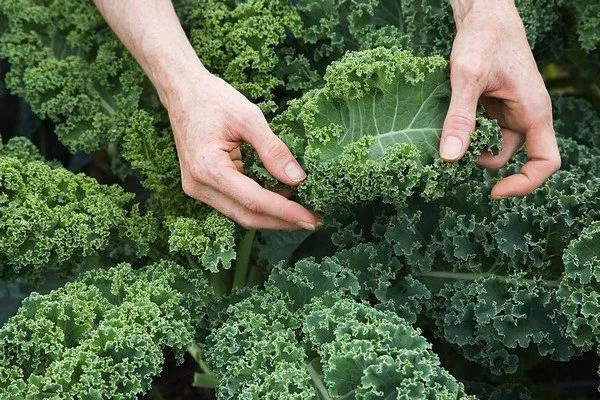
Kale is easy to distinguish from other cabbages—it doesn't have a head. Its curly leaves resemble lettuce in appearance. It's best known as an ornamental vegetable, with gardeners drawn to its unusual curly leaves. Kale has many other names, including brunkol and grunkol.
Brief botanical description:
- Belongs to the cruciferous family.
- The leaves are corrugated or serrated along the edges, gathered in a rosette. Depending on the variety, they are evenly distributed across the stalk or concentrated at the tip. Leaf color varies from shades of green to purple and red. The surface ranges from smooth to bubbly.
- The stalk is unusually tall – it grows more than 1 m.
Kale leaves curl as soon as they appear – this feature makes it easy to distinguish this type of seedling from other types of cabbage.
Plant characteristics
Characteristics of kale:
- The leaves themselves are edible, but the stalk is hard and tasteless.
- The harvest is collected several times per season – some leaves are torn off, and others grow in their place.
- In southern regions, it can be grown in the same plot for several years in a row. After overwintering under cover, it produces an early harvest of vitamin-rich leaves.
- Collard greens are popular in cooking. The leaves are eaten fresh, used in salads, and used in a variety of dishes, from braised cabbage to chips.
- 100 g contains 3.3 g of protein (1/2 the daily value), 8 g of carbohydrates, and 0.7 g of fat. Caloric value: 50 kcal per 100 g.
- High frost resistance – the plant can withstand frosts down to minus 15°C.
Origin
It's unknown exactly where kale was first cultivated. According to scientists, it's the oldest variety of wild cabbage, but our gardeners have only recently become interested in kale.
Kale is known to have been cultivated as early as the 4th century BC in Ancient Greece. Today, it is grown everywhere, including in Holland, Turkey, Japan, and other countries.
Diversity of species
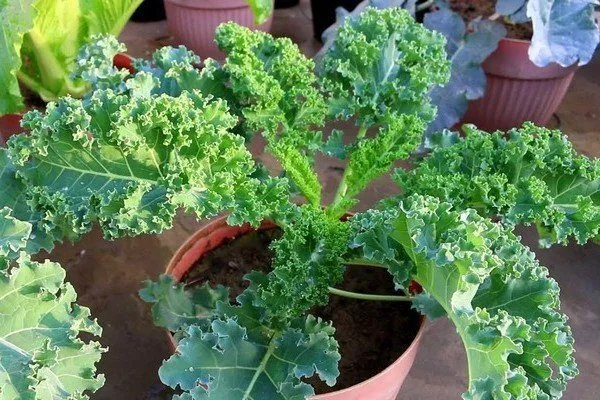
Kale leaf cabbage is divided into types according to the following characteristics:
- Leaf structure:
- curly;
- wavy;
- fringed.
- Cabbage height:
- low-growing – up to 40 cm;
- medium-sized – 40-60 cm;
- tall – up to 1 m or more.
- Ripening period:
- early ripening;
- mid-season;
- late-ripening.
Many kale varieties are ornamental—the result of the work of breeders from Holland and Japan. The Dutch were the first to develop kale with red and pink leaves, and then the Japanese developed a spherical shape. Today, a huge number of varieties have been developed, including kale for both eating and garden decoration.
| Name | Ripening period | Plant height | Leaf color |
|---|---|---|---|
| Reflex F1 | 80 days | 90 cm | dark green |
| Tuscany | 60 days | 60 cm | dark green with a bluish tint |
| Red Russian Kale | No data | No data | intense green with scarlet veins |
| Redbor F1 | No data | 80 cm | dark purple |
| Cane kale | No data | 1.9-2 m | rich green |
| Scottish kale | 80 days | 90 cm | bright green |
Leafy cabbage Reflex F1
A popular hybrid for dietary use. It boasts excellent flavor. Plants reach a height of 90 cm.
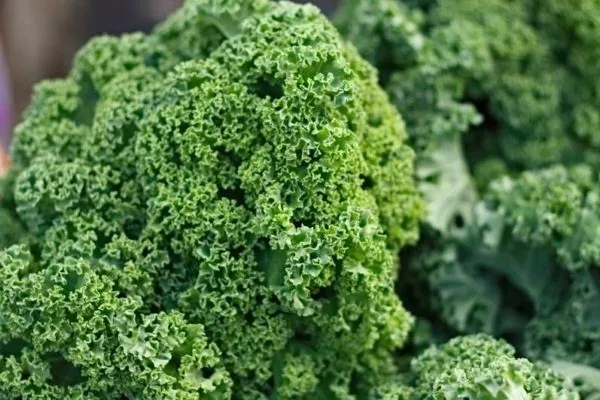
The growing season is 80 days. The leaves are dark green, corrugated, and arranged in a semi-upright rosette. Fruiting continues until late autumn. This hybrid is easy to grow and produces a high yield.
Tuscany (Italian Black Kale)
The leaves are dense and elastic, oblong, long, dark green, with a bluish tint. The surface is blistered. The leaves are slightly curly, reminiscent of Savoy cabbage in appearance, but the leaf shape of these varieties differs.
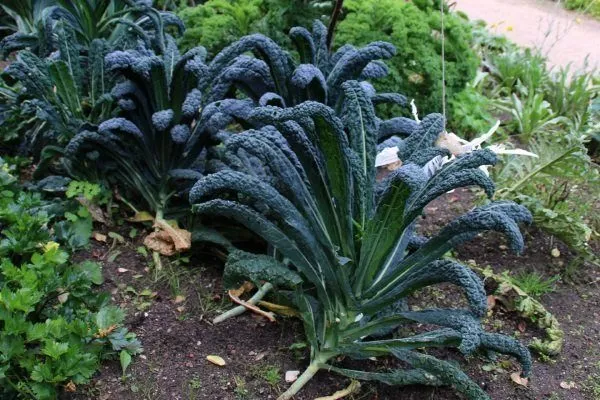
This frost-hardy variety tolerates temperatures down to -15°C. Its leaves are 60 cm long and ripen in 60 days after planting. Harvesting begins two months before frost. Tuscan kale has almost no odor, with only a hint of the aroma of regular white cabbage. It contains a lot of omega-3 fatty acids, vitamin C, and lutein.
Red Russian Kale
The leaves are deep green, lacy, and distinctly wrinkled. Their surface is streaked with scarlet veins. In frost, these veins turn purple. This variety is very frost-hardy, withstanding temperatures down to -18°C.
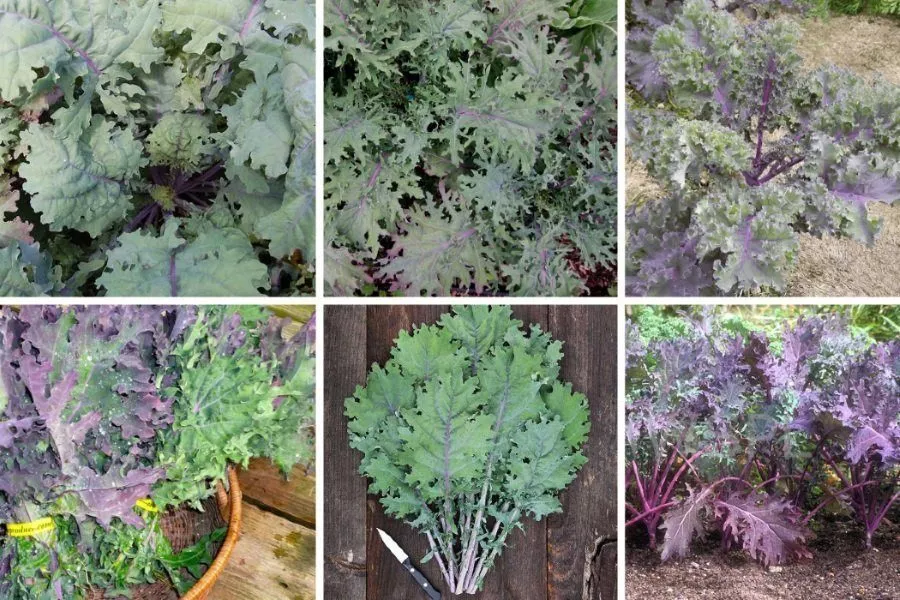
This undemanding variety is excellent as a vegetable and garden crop. The leaves of red Russian kale are tender, slightly sweet, and have a spicy flavor.
Redbor F1 leaf cabbage
One of the most popular hybrid varieties. The leaves are dense and curly. The stem height is up to 80 cm. It belongs to the late-ripening group. Plant weight is 0.2-0.7 kg. With excellent flavor, this variety is used for ornamental and culinary purposes.
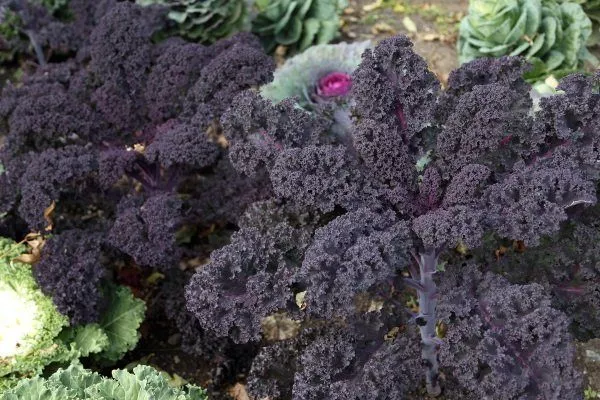
The rosette is semi-upright, with dark purple leaves. It is very frost-hardy, surviving temperatures down to -18°C. After frost, the leaves become juicy and soft. This beautiful plant is often used as a garnish. Redbor F1's appearance is influenced by sun exposure and soil moisture.
Cane kale
One of the tallest varieties, cane kale reaches a height of 1.9-2 m. Its stem is tough and strong. It is said that it can be used to make real canes.
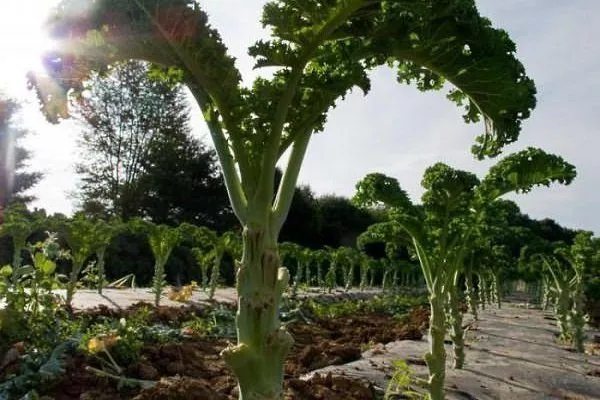
The rosette, concentrated at the top, is made up of long, corrugated leaves of a rich green colour.
Scottish Kale (or Curly Blue)
In England, kale is known as Scottish or Siberian kale. The leaves of Scottish kale are not as wavy and curly as those of other varieties. It is distinguished by its increased frost resistance. It is suitable for growing in northern regions, where the crop reaches maturity in 80 days.
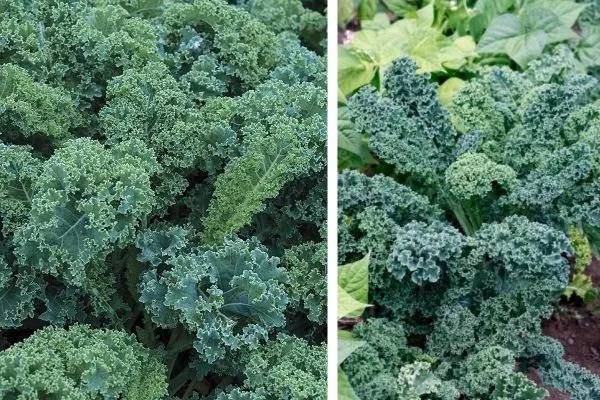
This is an early-ripening hybrid variety. The plant is compact, reaching a height of 90 cm. The leaves are bright green. It is a high yielder. It is excellent in salads and is suitable for long-term storage. It can be frozen. Growing from seedlings is recommended.
Other varieties
There are dozens of other interesting varieties of kale, including:
- Tintoreto. Of all the varieties, this one has the lightest leaves—a delicate light green. It's used for ornamental purposes.
- Scarlett. A mid-early cabbage variety. It features an interesting color transition in its leaves. They start out green, then purple, and after frost, turn violet-blue.
- Green. Similar to Red Kale, but with dark green leaves covered in a waxy coating. The bush is large and versatile.
- Cadet. A mid-season variety, it tolerates frosts down to -15 degrees Celsius. The leaves are curly, delicate, and numerous on the bush. The leaf color is green.
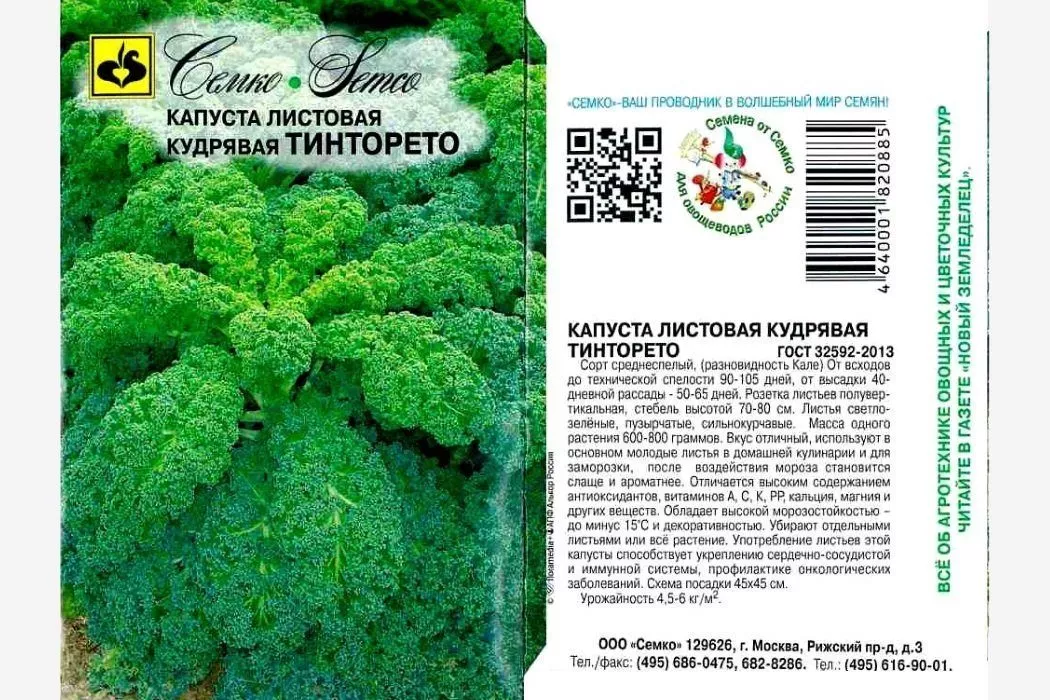
Kale "Tintoreto"
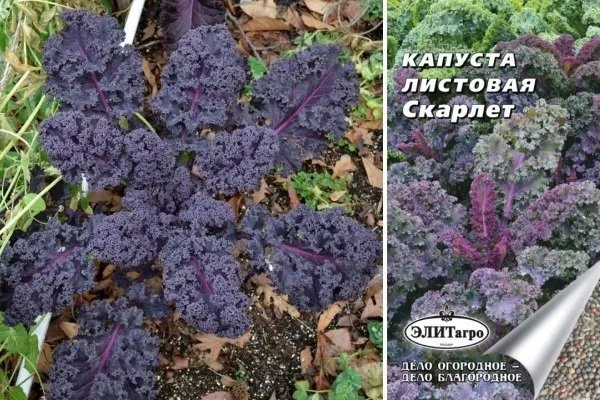
Kale "Scarlet"
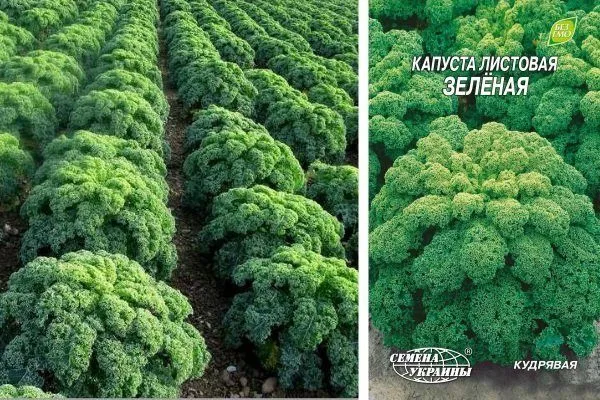
Green Kale
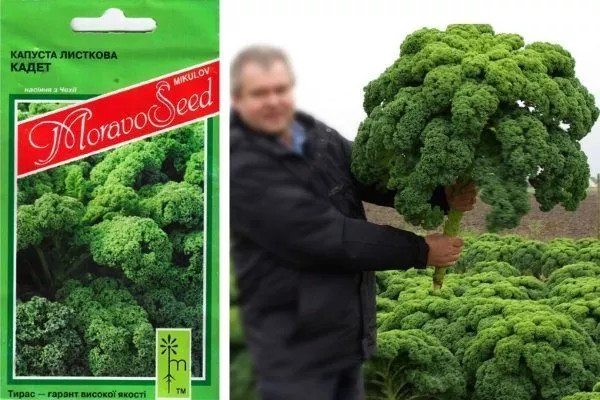
Kale "Cadet"
Pros and cons of growing
Benefits of Kale:
- Undemanding to growing conditions and care.
- It can withstand temperature changes, heat, cold, and frost.
- Unique composition, many vitamins and nutrients.
- High yield.
- A large number of varieties.
- Decorativeness.
- Disease resistance.
- The leaves grow quickly – you don’t have to wait long for the harvest.
Flaws:
- Needs frequent watering.
- Does not take root well after transplantation.
- It has a number of contraindications for people with kidney disease.
- Increased light-lovingness.
Benefits and harms
Kale is a unique source of nutrients. It's low in calories and easily digestible, and its consumption:
- strengthens the immune system;
- improves overall well-being;
- has anti-inflammatory and antioxidant effects;
- lowers blood cholesterol levels;
- removes waste and toxins;
- improves vision – strengthens the retina, is a preventative measure against cataracts;
- strengthens teeth;
- improves skin condition;
- slows down the aging process.
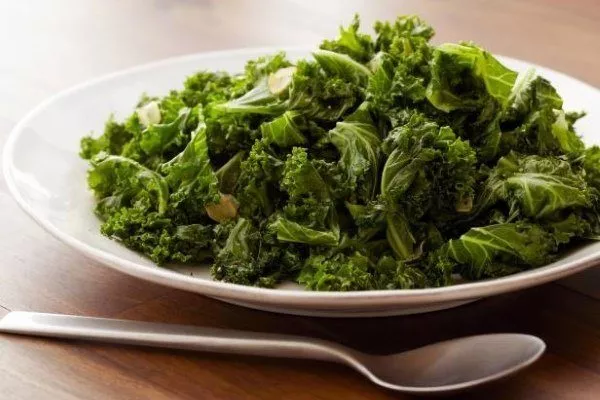
Despite its health benefits, kale can be harmful to those with stomach issues. Kale can trigger an exacerbation of gastritis, chronic diarrhea, flatulence, peptic ulcers, and dysbiosis. It can also negatively impact the thyroid gland if you have a chronic thyroid condition.
Planting dates
Kale, like white cabbage, can be grown in two ways: from seedlings and by direct sowing. The seedling method yields an early harvest.
Planting times:
- Seeds are sown in open ground at the end of April or in the first ten days of May – the exact timing depends on the climatic characteristics of the region.
- For seedlings, seeds are sown at the end of March or in the first ten days of April.
- Planting of seedlings in open ground is carried out in the second half of May.
Planting seedlings
Kale, like all cabbage, lags behind in growth after transplanting and takes a long time to establish itself, so it's preferred to sow it directly into the ground. However, seedlings also have their advantages—you can harvest a month earlier.
Sowing seeds for seedlings
Sow seeds 1.5 months before transplanting into the ground. Seedling trays or containers are used for growing. The best option is to sow the seeds in individual cups, which eliminates the need to transplant the seedlings. Pricking out the seeds is unnecessary fuss and replanting, which adversely affects the growth and development of the cabbage.
Seed preparation:
- Soak for 20 minutes in heated water (45-50°C).
- Immersion in cold water for 5 minutes.
- Soak in a weak (1%) solution of potassium permanganate for 20 minutes.
- Place the seeds in a damp cloth for 2-3 days. Germinate in a warm place.
- When the seeds sprout, they are sown in containers or glasses filled with soil mixture.
To grow seedlings, use a commercial substrate or prepare your own potting mix of fertile soil and sand. Another option is to use two parts peat, one part humus, one part fertile soil, and half part sand. Add 3 tablespoons of wood ash to a bucket of potting mix.
Sowing order:
- The seeds are carefully spread over the moistened substrate, in rows or holes made. The spacing between seeds is 5 to 8 cm. The seeding depth is 1.5 cm.
- The seeds are sprinkled with soil and compacted slightly by hand.
- The crops are covered with transparent film or glass.
- Place the crops in a warm place. Remove the film for a couple of hours every day to allow the crops to air out.
- When seedlings appear, containers are placed closer to sunlight.
For information on planting kale in seedling trays, watch the video:
Caring for seedlings
Kale seedlings are cared for in the same way as any other cabbage seedlings:
- Water regularly - as the substrate dries out.
- Ventilate the room where the seedlings are located, but ensure that the young shoots are not exposed to drafts.
- If the seeds were sown in boxes or containers, then the cabbage is transplanted into separate cups when the seedlings have a pair of true leaves.
- A week before planting, hardening is carried out - the seedlings are taken outside.
How to prepare a site for planting?
The best place to grow kale is a flat area or a slightly elevated site. Preparing the site for kale:
- Soil. The crop grows well in neutral, humus-rich soils. The main requirement is that the soil should not be acidic. The planting site is prepared in the fall, with slaked lime or dolomite flour added to counteract acidity. Humus is added during tillage (3-4 kg per square meter), and in the spring, before planting the seedlings, complex mineral fertilizers are applied (100 g per square meter).
- Lighting. Sunny or slightly shaded areas are suitable.
- Predecessors. Good neighbors: potatoes, onions, cucumbers. Bad neighbors: radishes and other cruciferous vegetables. Favorable neighbors: dill., celery, spinach, beets, beans, sage, potatoes, garlic, peas.
- ✓ Soil pH should be between 6.0-7.5 for optimal growth.
- ✓ The soil should be rich in organic matter, with good drainage.
In acidic and poor soils, kale becomes bitter and its leaves become small. Dolomite flour is best added to the soil to reduce acidity—500 g per square meter.
Transplanting
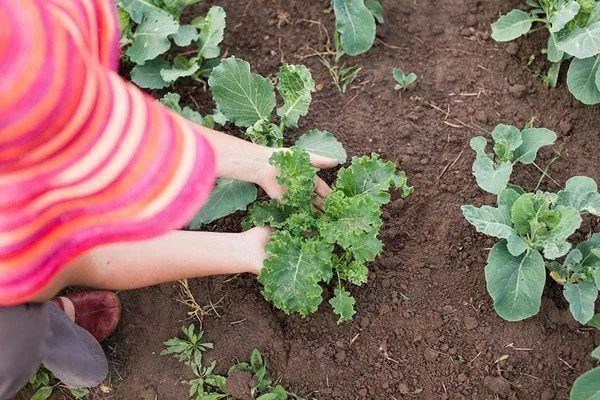
Seedlings are planted in open ground at 45 days of age. By this time, they should have developed four leaves. The seedlings should be 8 to 10 cm tall. The optimal temperature for planting is between +5°C and +35°C.
Once the danger of frost has passed, the seedlings can be planted in the ground. Planting procedure:
- In pre-prepared beds, dig holes at intervals of 30-40 cm. Leave 50-60 cm between rows. Dwarf varieties can be planted more densely.
- The hole is deep enough to comfortably accommodate the seedlings' root system. The roots are covered with soil up to the first leaves.
- Before planting, the roots of the plants are dipped in a mixture made from ash and clay.
Sowing in the ground
To plant seeds in open ground, prepare the soil in the same way as for seedlings: dig the soil with compost in the fall, and then dig again with mineral fertilizer in the spring. Sowing begins when the soil warms to 5°C. In temperate climates, these conditions typically occur by April or early May; the exact timing varies by region.
Features of sowing kale seeds in open ground:
- Dig holes for the seeds and add humus and wood ash. Space adjacent holes 45 cm apart. Plant the seeds in rows, leaving 50 cm between them.
- The seeds are planted 1.5 cm deep, no more. I place 3-4 seeds in each hole. The crops are watered and covered with soil.
- The sown cabbage is covered with film to protect it from night cold spells and recurrent frosts.
- Once the cabbage sprouts—usually after 5-7 days—the plastic or spunbond is removed. The seedlings are thinned out, leaving only one, the strongest, sprout in each hole.
The earlier you plant tall varieties of kale, the taller the cabbage will grow.
Caring for plants in the ground
The optimal temperature for kale growth and development is between 10 and 20°C. Kale is cared for in much the same way as other types of cabbage:
- Watering. To use water as economically as possible, circular furrows are dug around the plants. Water poured into the furrows does not spread, but flows directly to the roots. During dry periods, watering frequency is increased. The soil should always be slightly moist. In hot weather, kale needs to be watered daily. The main thing is to prevent stagnant water.
- Top dressing. Apply organic fertilizer every 3-4 weeks. It's important not to exceed the recommended dosage, as too much fertilizer can cause leaf rot.
- Hilling. The agronomic technique involves raking the soil down to the roots. Cabbage is hilled when the plants reach a height of 20 cm.
- Weeding and loosening. Weeds are removed as needed, if any appear, and the soil is loosened. To reduce the need for loosening and watering, the soil is mulched.
- Mulching. To prevent weed growth and retain moisture, the soil is mulched – best with humus or compost. Mulching prevents root rot.
Frequency and composition of kale feeding:
| Period | Compound |
| Immediately after landing | At intervals of one week, 4 applications of humic fertilizers are carried out. |
| When the cabbage has gained green mass | Add mullein – dissolve 1 liter in a bucket of water. Chicken manure can also be used, diluted according to requirements. |
| 2 months after the first feeding | Repeat the previous feeding. |
- After 2 weeks of planting, apply nitrogen fertilizer to stimulate leaf growth.
- During the period of active leaf growth, add potassium fertilizers to improve their quality.
- Before the onset of cold weather, apply phosphorus fertilizers to strengthen the root system.
It's beneficial to water cabbage with an herbal infusion. It's prepared like this:
- The barrel is filled with water to 25%.
- Place fresh grass and weeds in a barrel – 10 kg per 100 liters of water.
- Add dried chicken manure – 2-3 kg per 100 l.
- Once foam appears, the infusion begins to be stirred every day – this stimulates fermentation.
This manure-grass fertilizer is left to steep for 1-3 weeks, depending on weather conditions. When foam stops appearing on the surface, dilute it 50/50 with water and water the cabbage.
Learn more about growing kale from this video:
Pest and disease control
The culture can be affected various cabbage diseases Powdery mildew, clubroot, gray mold, and grey rot, etc. Among the most common pests are aphids and cabbage flies. Weevils and slugs can also cause significant damage. To minimize the risk of disease, it is recommended not to plant cabbage after unfavorable preceding crops.
Hybrids are quite resistant to most diseases, but they also require preventative measures:
- Regular loosening of the soil to improve its air permeability.
- Dusting with ash and tobacco dust protects against cruciferous flea beetles. The procedure must be repeated because rain washes away the protective layer.
- Spraying with an infusion of onion peel or wormwood helps against many pests.
- Planting pest-repellent flowers near kale beds – mint, marigolds, and saffron are good choices.
Spraying kale with chemicals is not recommended. It's better to use safe, natural remedies. However, if pests persist, you can use fungicides such as Hom, Topsin-M, and others, and insecticides such as Kemifos, Alit, and the like.
Harvesting and storage
When the plant reaches 20 cm in height, the harvest is ready. The harvesting time depends on the variety; from germination to harvesting can take anywhere from 55 to 90 days. Harvesting can be done in one of two ways:
- Partial cleaning. The young leaves are picked off. The process is similar to that of salad leaves—the larger ones are picked off, leaving the smaller ones. They soon grow back, and the harvesting process is repeated. Gradually, the trunk becomes bare, and the plant begins to resemble a small palm tree.
- Full cleaning. The entire plant is pruned at once, leaving a stump 4-6 cm high. Over time, new leaves will appear on the stump.
In regions with warm winters, trimmed kale, having successfully survived the winter, produces early greens in the spring. Leaves not harvested promptly become bitter and tough. Only the leaves are edible; the stalks, or cores, can be used as livestock feed.
After cutting, store the leaves in the refrigerator if eating fresh, or in the freezer if storing for a long time. Freezing kale gives it a special flavor—the leaves become fragrant, and the bitterness completely disappears. Store the leaves in the refrigerator for no more than seven days, preferably in a container of water.
Where and for how much can I purchase seed material?
Kale seeds are widely available at seed stores. They can also be ordered online from specialized online retailers.
Choose a trusted producer, variety, and order. You'll be offered not only Russian seeds but also imported ones—they're purchased directly from international producers. The price per package is determined by the number of seeds. 6-10 seeds cost around 50 rubles.
Reviews
Growing kale requires only basic care—it's truly an undemanding vegetable, and most importantly, it's frost-resistant. And if you don't like the taste of this unusual cabbage, you can always appreciate its beauty.