
Red cabbage (also known as kale or blue cabbage) is less popular among gardeners than regular white cabbage, although it's just as tasty and even contains more nutrients. Let's find out what makes this cabbage variety special and how to plant and grow it in your garden.
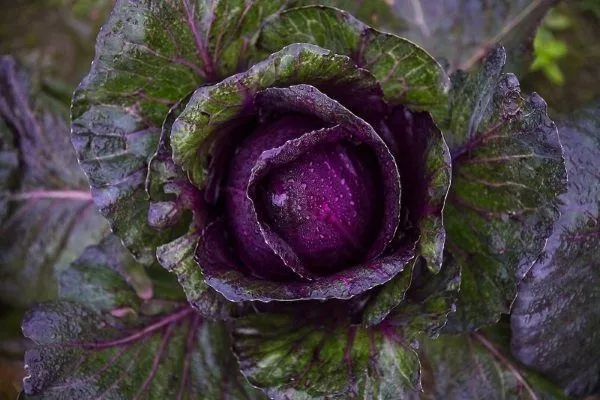
Description of the culture
This variety of cabbage is characterized by a red-violet, bluish coloration of the outer and inner leaves, which is caused by the presence of plant pigments - anthocyanins.
The leaves are large, with wavy or smooth edges and a smooth surface. The root system is sparsely branched and fibrous.
A biennial plant in the cabbage family, it produces a head of cabbage in the first year and a robust flowering stem the following year. This stem is where the seeds are formed. The crop is cross-pollinated. The head forms from an enlarged apical bud.
The fruit is tightly twisted and, depending on the variety, can be oval, round, or even teardrop-shaped, such as the Kalibos variety.
Origin
The Mediterranean is considered the homeland of this vegetable crop. It then appeared in Western Europe (16th century) and was subsequently brought to Russia (17th century), but did not become widespread there.
Red cabbage varieties and their characteristics
| Name | Ripening period | Weight of the head of cabbage | Disease resistance |
|---|---|---|---|
| Vorox F1 | 95 days | 3.5 kg | High |
| Example F1 | 80-90 days | 3-4 kg | High |
| Gako 741 | 130-160 days | 3 kg | High |
| Rubin MS | 120-130 days | 1-2 kg | High |
| Mikhnevskaya | 90-105 days | 2.5-4.3 kg | Relative |
Red cabbage varieties have different ripening times. Mid-season varieties are predominantly grown.
Popular varieties and hybrids of red cabbage:
- Vorox F1. A mid-early Dutch hybrid (95 days from germination to harvest). Dense, purple heads weigh up to 3.5 kg. This hybrid is disease and cold resistant. Yields up to 9 kg per square meter.
- Example F1. An early hybrid of Dutch selection (80-90 days). Heads are dense, round, purple, weighing 3-4 kg. Transports well. Resistant to cracking, cold, and disease.
- Gako 741. A mid-late variety (from germination to harvest – 130-160 days). Heads weigh up to 3 kg, are flat-round, and purple-blue in color. It is characterized by high cold tolerance, resistance to cracking, diseases, and pests. Suitable for long-term storage.
- Rubin MS. A mid-season variety (120-130 days) bred in the Czech Republic. The head is dense, dark purple, round and flat, weighing 1-2 kg. This variety is highly productive – up to 10 kg per square meter.
- Mikhnevskaya. A mid-season variety with a growing season of 90-105 days. The head is dense, round or slightly elongated, and purple with a slight reddish tint. It weighs 2.5-4.3 kg. Yields 29-34 tons per hectare, and in home gardens, 4-5 to 6.5 kg per square meter. Good transportability, with a medium shelf life. The variety is relatively resistant to disease, drought, and cold.
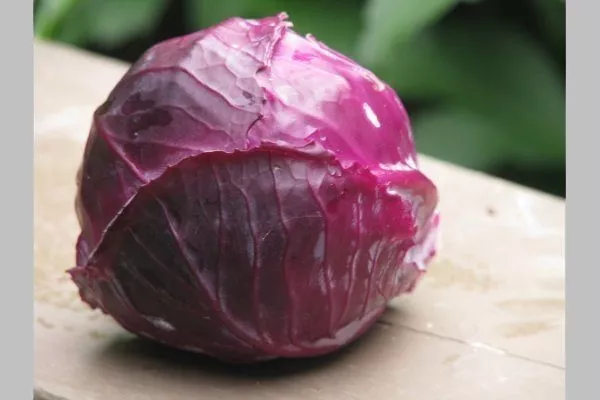
Red cabbage Vorox F1
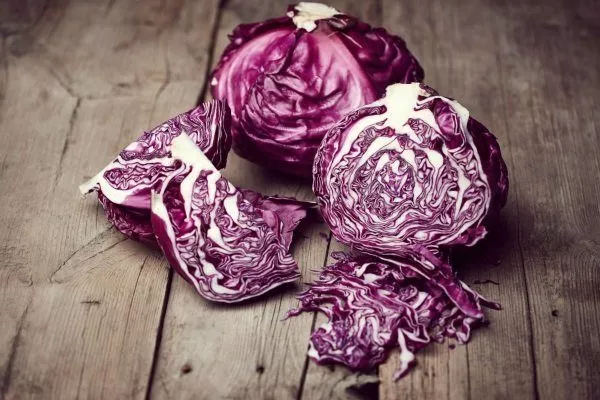
Red cabbage Primero F1
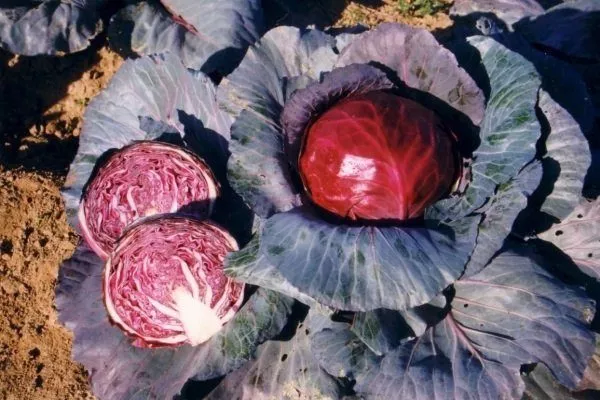
Red Cabbage Gako 741
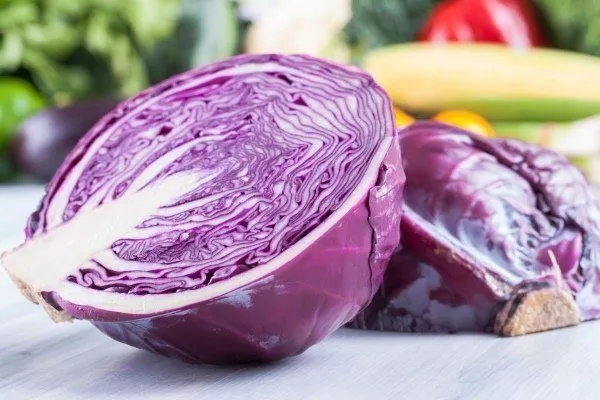
Red cabbage Rubin MS
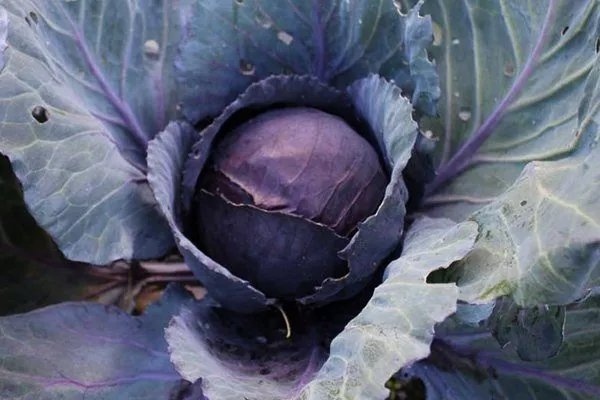
Red cabbage Mikhnevskaya
Advantages and disadvantages of growing
The main advantages of this vegetable crop include the following:
- Red cabbage has a higher cold resistance compared to white cabbage;
- is resistant to adverse climatic conditions, diseases and pests;
- Red cabbage suffers from drought less than other varieties due to its developed root system;
- high taste and nutritional properties;
- long-term preservation of commercial qualities (until spring - summer of the following year);
- high transportability.
The disadvantages include:
- the head is smaller in size than that of white cabbage;
- slow rate of fork formation;
- There are a limited number of cooking methods: red cabbage is eaten only fresh, in salads, and pickled.
Growing conditions
The culture cannot be called capricious, but it is demanding in terms of its growing location, soil composition and care.
Selecting a site and preparing the soil
Cabbage dislikes shade; it's a long-day plant. If there's insufficient light, the lower leaves stop developing, and the head of cabbage fails to form. Choose sunnier spots for planting.
Suitable predecessors for cabbage include cucumbers, tomatoes, onions, legumes, potatoes, and beets. The crop should not be returned to its original location for at least three years.
A smart solution is to grow sage, celery, anise, and thyme near cabbage plantings. These plants repel cabbage root flies.
The best soils for cabbage are loamy ones, which retain moisture well, but peaty soils are also suitable. The crop grows well in alkaline and slightly acidic soils. If the soil pH is below 5.5, lime is applied in the fall.
- ✓ The optimal soil pH level should be between 6.0 and 7.5 to ensure nutrient availability.
- ✓ The soil should have a high water-holding capacity, but at the same time be well-drained.
Red cabbage has a longer growing season than other varieties of this crop, so the soil requires fairly generous amounts of fertilizer. For every square meter, add a bucket of rotted compost or manure, and plenty of ash—2-3 liters. To save money, apply ash only to the planting holes—1 tablespoon at a time.
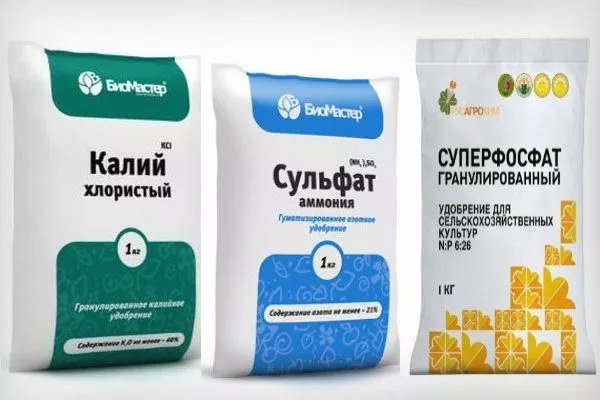
In the absence of ash, mineral fertilizers are added to the organic matter:
- potassium chloride – 1 tbsp;
- ammonium sulfate – 1.5 tbsp;
- superphosphate – 2 tbsp. l.
Fertilizers are applied a week before planting.
Temperature and lighting conditions
Red cabbage seeds germinate slowly, even at temperatures of 2-3ºC. At 11ºC, sprouts can be expected in 10-12 days, and at 20ºC and above, seedlings will appear in 3-4 days. The crop can withstand short-term frosts down to -6ºC, and in the fall, during the head stage, down to -8ºC.
Prolonged exposure to temperatures above 25ºC negatively impacts head formation. Furthermore, hot, dry weather promotes increased nitrate accumulation. The optimal temperature for crop growth is 15 to 18ºC.
Cabbage requires good lighting at all stages of development. Daylight hours, especially for early varieties, should be at least 12-14 hours. Seedlings are supplemented with fluorescent or special phytolamps.
Planting red cabbage
The crop is most often grown using seedlings. In the central region and southern Russia, a non-seedling method can be used.
Deadlines
Sowing time depends on the cabbage variety and growing region. On average, the period from sowing seeds to transplanting seedlings into their permanent location should be 40-50 days. In cold nurseries and greenhouses, cabbage is sown around March 15-20.
When grown in a greenhouse or on a windowsill, early varieties are sown in early April, and late varieties in early March. They are planted outdoors at 45-50 days old, from late April to the first ten days of June.
Direct seeding technology
Direct sowing of seeds is primarily used when growing early and mid-season cabbage varieties and hybrids. The advantage of this method is that the plant's root system is not damaged, as is the case with transplanting seedlings and planting them in their permanent location.
The seeds are treated in advance. They are treated in a strong solution of potassium permanganate, then washed. Alternatively, they are disinfected using another method: soaked in hot water (45-50ºC) for 20-30 minutes, then cooled in cold water. To harden, the seeds are wrapped in cloth and placed in the refrigerator for 24 hours.
Soaking seeds in an ash infusion accelerates germination. Add 2 tablespoons of ash to a liter of warm water. Let it steep for 24 hours and strain. Soak the seeds in the infusion for 3 hours, then rinse with clean water.
Sow in well-dug, loosened, moist and fertilized soil:
- Make shallow holes 60 cm apart from each other.
- Place 3-4 seeds in each and cover with soil or a mixture of peat and humus.
- Cover the seedlings with plastic film. Be sure to remove it when they reach the first true leaf stage. Failure to do so will cause the stems to bend and the seedlings to stretch.
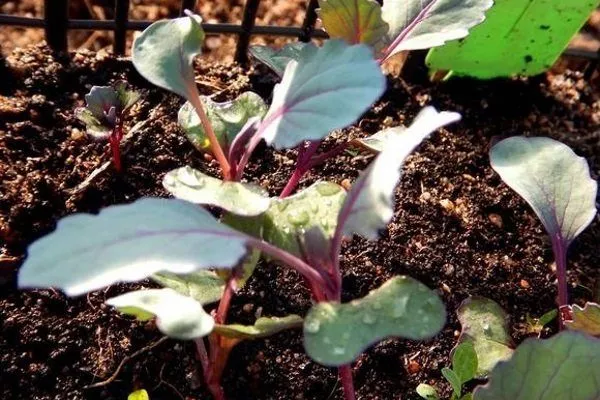
- When the seedlings grow a little and have 2-3 true leaves, thin out the seedlings, remove the weak shoots, and leave the strongest ones.
Sowing and caring for seedlings
It's important to sow red cabbage seedlings early. The seeds are treated in the same way as for direct sowing. A universal growing medium is considered to be one that includes:
- humus – 50%;
- turf soil – 25%;
- lowland peat with neutral acidity – 25%.
Using high-moor peat is not recommended. It is too acidic, and cabbage does not tolerate acidic soil.
The soil should be breathable, nutritious, and light. Add 100 g of ash and 1 tablespoon of azophoska to a bucket of potting mix, mix well, and water with a Fitosporin solution. Leave the soil in a tied bag for two weeks at a temperature of 15 to 20 degrees Celsius, after which it is ready for use.
Sowing seeds to obtain seedlings consists of the following stages:
- Place a drainage layer (fine charcoal or expanded clay) at the bottom of the seedling container to a depth of at least 7 cm.
- Fill the containers with prepared soil, moisten it thoroughly, avoiding excess moisture.
- Spread the seeds over the surface of moistened soil, leaving 2-3 cm between them. Then press the seeds into the soil to a depth of about 1 cm.
- Spray lightly with the solution from a spray bottle potassium or sodium humate, and sprinkle dry soil on top (0.5 cm layer). Gently compact with your palm.
- Cover the containers with film and place in a warm place.
Don't water the dry top layer of soil after sowing. Water will pull the seeds down, preventing them from germinating through the thick soil layer and causing them to die.
When the seedlings emerge, remove the film. Maintain a temperature of 15-17ºC during the day and 8-10ºC at night. Water the seedlings regularly, keeping the soil moderately moist at all times.
When the seedlings have two true leaves, they are picking In larger containers. About a week before planting, harden off the seedlings by placing them outdoors for several hours (at 4-5ºC), gradually increasing the time. If the thermometer reads 8ºC, you can leave the seedlings outside for the entire day.
Landing at a permanent location
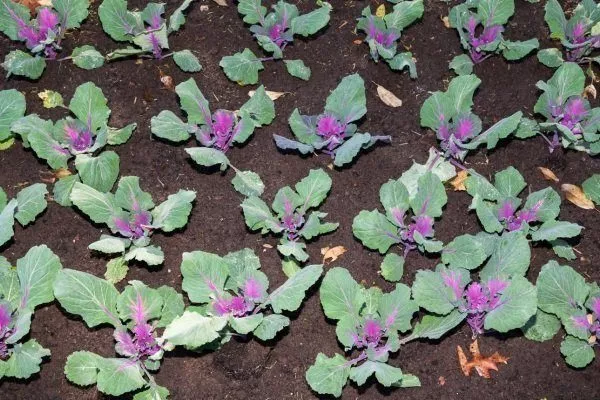
Seedlings 16-20 cm tall, with no damage to the root system and 4-6 leaves, are planted in open ground. Red cabbage forms a relatively small rosette of leaves, but it should not be planted too densely, so a pattern of 60x50 cm for late varieties and 50x50 cm for early varieties is recommended.
Seedlings must be planted in the afternoon.
Sequence of actions:
- Water the seedlings generously a few hours before planting. This will make it easier to remove the plant from the container without damaging the roots. To stimulate root formation, use a heteroauxin solution instead of water (2 tablets per 10 liters of water).
- Before planting, water the holes with warm water containing Fitosporin or Trichodermin. Wait until the water is completely absorbed into the soil.
- Plant each plant in the prepared hole along with the root ball, deepening it to the cotyledon leaves, and press it tightly with soil.
- Make sure that the apical bud is not covered with soil under any circumstances.
- After compacting the soil, water the holes with warm water from a watering can using a nozzle to prevent the root ball from being washed away. Use 1-1.5 liters of water per plant.
- A couple of hours after watering, mulch the plantings with dry soil.
- To repel cabbage flies, flea beetles, and other pests, sprinkle the soil around plants with ash or tobacco dust, 20 g per square meter.
- Shade the area where the cabbage is planted with a thin covering material for a few days.
Care instructions
After planting in open ground, the crop is provided with the necessary care, including timely removal of weeds, watering, loosening the soil, hilling and fertilizing.
Watering
For the first 5-6 days after planting, water the plants daily until they become established. Although red cabbage is a moisture-loving crop, avoid overwatering the soil, either during the seedling stage or after planting in the open ground. The soil beneath the plants should always be moist.
Use only settled, warm water (20-25ºC) for watering. Using cold water increases the risk of bacterial and fungal diseases. It's best to water in the evening.
Alternating long periods of "drought" with heavy and infrequent watering is unacceptable. This will inevitably lead to splitting of the heads.
Moisture requirements increase during periods of intensive leaf rosette growth and during the crown formation phase. During this time, water the plant so that the soil is moistened throughout the entire depth of the main root mass.
Mulching Mulch will make caring for cabbage much easier. Moisture is retained well under the mulch, and the soil is kept loose.
Watering is stopped 2-3 weeks before harvest. This will prevent the cabbage heads from rotting during storage.
You can read more about the rules for watering cabbage in open ground in in our other article.
Hilling and loosening
Regular loosening of the soil is necessary. The first one is done a week after planting to remove the soil crust. This should be done carefully, being careful not to cover the apical buds.
To accelerate leaf growth, root development, and to straighten the stem, lightly earth up each plant. If the variety has a tall outer stalk, earth up deeply.
Top dressing
When the seedlings take root and start growing, add 1/3-1/2 tbsp under each plant. urea or ammonium nitrateThey are fed with manure infusion, diluted in a ratio of 1:5, and bird droppings – 1:10.
- Two weeks after planting the seedlings, apply nitrogen fertilizer to stimulate leaf growth.
- At the beginning of head formation, add potassium-phosphorus fertilizers to improve the quality and size of the head.
- Stop applying nitrogen fertilizers one month before harvest to avoid nitrate buildup.
One and a half to two months after planting, when the cabbage head begins to curl, add 1 tablespoon of nitrophoska to each plant, or replace it with a concentrated infusion of manure and ash. Green manure also enriches the soil well.
Excessive nitrogen fertilization can result in poor head formation and increased susceptibility to bacterial diseases. Nitrogen fertilizers should be applied in combination with potassium fertilizers, but not exceeding the recommended dose.
Major diseases and pests
This variety of cabbage is much less susceptible to diseases and pests than white cabbage. The main pests that threaten red cabbage include:
- slugs;
- cabbage moth;
- cabbage white butterfly and cabbage moth caterpillars;
- cruciferous flea beetles.
To combat pests, well-proven biological preparations are used: Agravertin, Fitoverm, etc.
Folk remedies are also used to repel insects. Cabbage is treated with infusions of red pepper, potato tops, and tomato leaves.
There is an article on our website that we recommend you read: How to get rid of cabbage flea beetles and prevent them from spreading.
To repel slugs, use the following mixture: mix 0.5 liters of wood ash with 1 tablespoon each of dry mustard, salt, and ground pepper. In sunny weather, dust the soil between plants with this mixture and immediately loosen it to a depth of 3-5 cm. In the evening, dust the plants with the same mixture, but without the salt, through a cheesecloth bag.
The most common cabbage disease is clubroot; less commonly, plants are affected by vascular or mucous bacteriosis, black leg, and powdery mildew.
Don't wait until diseases attack cabbage. As a preventative measure, water the plants with a Fitosporin solution every 2-3 weeks. The same applies to all other crops in the garden. The product is safe; vegetables and fruits can be eaten on the day of treatment, after washing with water.
The biological product Zircon effectively combats all fungal and bacterial diseases. Crop rotation, seed disinfection, and timely weed removal can help reduce the risk of disease development.
Also read about pest and disease control of cabbage. Here.
Harvesting and storage of crops
The heads of cabbage begin to ripen in August, and ripening accelerates in September. The fully ripened cabbage is harvested in mid-October. The heads are harvested in cool, dry weather. It's important to do this before frost sets in.
Although red cabbage is not afraid of frost, when exposed to sub-zero temperatures, its shelf life is reduced and the outer leaves rot.
After cutting, the head of cabbage is peeled, leaving 2-3 outer leaves. The vegetables, dried under a canopy and sorted, are stored, free of any signs of disease or pests.
For long-term storage, select the densest specimens, weighing 2-3 kg, with a stalk length of at least 2 cm. Heads of cabbage with roots, suspended from the ceiling of the storage facility, preserve well.
Early varieties, which ripen in less than 70-100 days, are not suitable for long-term storage. They are intended for summer and fall consumption and can be stored for no more than three months. Mid-season (120-150 days) and late-ripening (150-180 days) varieties can be stored until spring, and sometimes until summer, without any loss.
Chemical composition, beneficial properties and contraindications
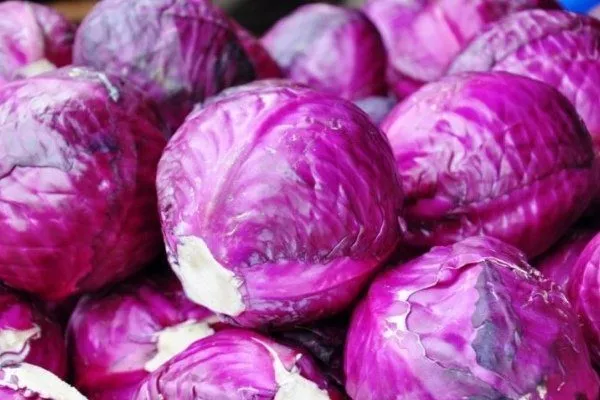
Red cabbage is rich in vitamins, containing four and two times more vitamins A and C than white cabbage. In addition to vitamins B1, B2, B6, PP, H, K, and U, it also contains iron, potassium, and magnesium salts.
It's a source of biologically active components. The presence of folic acid promotes normal hematopoiesis. Phytoncides help with tuberculosis, and anthocyanins improve capillary elasticity, which is useful in the prevention of vascular diseases. They also neutralize the effects of radiation and prevent the development of leukemia.
There are some restrictions on the consumption of this vegetable. If you have digestive diseases (gastritis, stomach ulcers), it is not recommended to use this product, as the coarse, difficult-to-digest fiber can irritate the stomach lining.
Where is the vegetable used?
Red cabbage is used primarily fresh in salads and pickled. It is not suitable for pickling, making cabbage soup, or making pie fillings with it.
Reviews
Red cabbage's frost resistance makes it suitable for cultivation in many regions of Russia, and even a novice gardener can handle it. It's important to choose the right variety and follow all the necessary cultivation guidelines.