
Cabbage is one of the most cold-hardy vegetable crops. Thanks to its frost resistance and undemanding nature, it can be successfully grown even in regions with short, cool summers. Let's learn about cabbage growing methods based on ripening time and climate conditions.
Growing conditions
To get a decent cabbage harvest, favorable conditions are essential. This crop is very responsive to fertilizing and watering. Growing conditions determine not only the number of kilograms harvested per square meter, but also the taste, structure, and density of the cabbage heads.
- ✓ Soil pH should be between 6.5-7.5 for optimal cabbage growth.
- ✓ The soil should be rich in organic matter, with compost or humus added before planting.
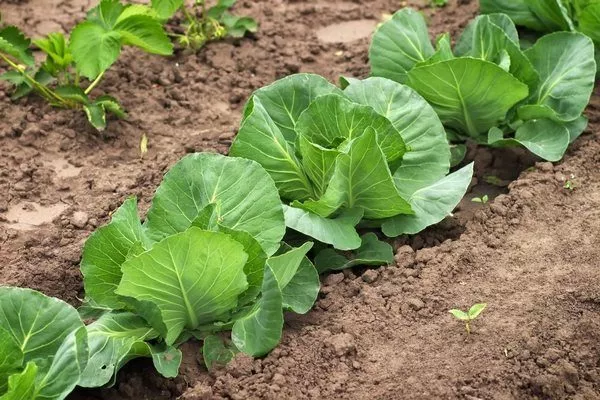
| Name | Disease resistance | Soil requirements | Ripening period |
|---|---|---|---|
| White cabbage | High | Neutral | 70-110 days |
| Red cabbage | Average | Neutral | 100-145 days |
| Brussels sprouts | High | Subacidic | 145-210 days |
Temperature
Cabbage is a cold-hardy crop—it can withstand short-term temperature drops down to -5°C. In autumn, cabbage can withstand even more severe frosts without harming its harvest.
The optimal temperature for cabbage development is between 15 and 18 degrees Celsius. This crop doesn't like heat; it grows well in cool weather. Temperatures above 25°C negatively affect head formation. Heat promotes increased nitrate accumulation.
Humidity
Cabbage loves moisture—the size and flavor of its heads depend on regular watering. However, overwatering should be avoided, as it can promote various diseases. If the soil is constantly soggy, the cabbage's roots gradually die off, and the leaves turn purple and die—a sign of bacterial blight.
Illumination
Cabbage doesn't grow well in shaded areas. To form large, dense heads of cabbage that are juicy and rich in flavor, it requires plenty of sun. This crop is a long-day plant—the longer the daylight hours, the faster its development.
Consequences of light deficiency:
- normal plant development is disrupted;
- nitrates actively accumulate in cabbage heads;
- the lower leaves stop growing and, turning yellow, die prematurely;
- The apical bud, continuing to grow, produces more and more new leaves, but heads of cabbage do not form.
Predecessors
It is not recommended to plant cabbage in areas previously planted with cabbage of any kind, onions, carrots, peas, turnips, radishes, and any cruciferous vegetables. White cabbage grows best after:
- legumes;
- green manure and annual forage crops;
- cucumbers;
- potatoes;
- beets;
- tomatoes.
To maintain healthy phytosanitary conditions of the soil, cabbage is replanted in the area no earlier than after 5 years.
Planting and care features
The growing season for early cabbage is 50-110 days, while for late and mid-season varieties it's 100-200 days. Growing seedlings reduces the crop's time in the open ground by 60-70 days.
Seedlings are a bit more complicated than direct sowing, but they yield a faster harvest. Let's learn the best time to sow seeds, how to grow, and transplant seedlings.
Optimal sowing time
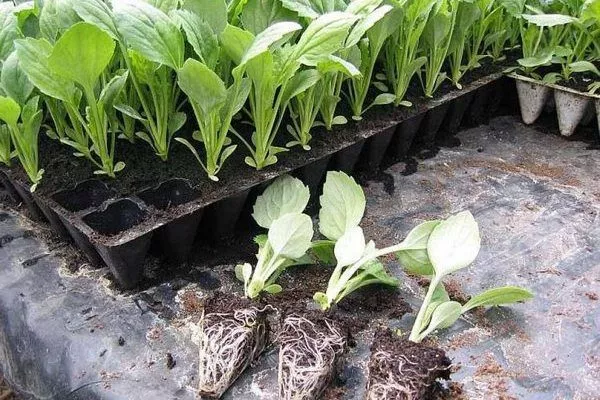
Seedlings grown at different times vary in growth rates, strength, and vigor. The better the temperature and light conditions, the faster the seedlings grow.
To calculate the sowing time for seedlings, it's important to consider the growing conditions. Sowing too early requires additional artificial lighting, and if the seedlings will be grown in a greenhouse, optimal temperature conditions must be created.
The sowing time depends on the climatic conditions in the growing region, as well as on cabbage varieties:
- early varieties are sown from February 15-25 until March 5-15;
- average - from about April 10 to 20;
- late – from approximately April 1 to April 15.
Growing seedlings
The procedure for growing cabbage seedlings:
- Seed preparation. There are several processing options:
- Disinfection. The first option is immersion in a weak solution of potassium permanganate for 15-20 minutes. The second option is immersion in hot water (45-50°C) for half an hour. After removing the seeds from the hot water, immediately place them in cold water for 2-3 minutes.
- Stimulating growth. The seeds are soaked, according to the instructions, in a biological activator - for example, in Zircon or Albit.
- Preparing the soil. Use a special substrate for growing seedlings or prepare a soil mixture yourself from the following components:
- turf soil – 1 part;
- peat – 1 part;
- humus – 1 part;
- wood ash – 10 tbsp. l. for 10 kg of mixture.
- Sowing seeds. Sow seeds in boxes or individual cups. Seedlings are especially conveniently grown in cassettes with 4.5 x 4.5 x 3 cm pots. Each pot holds 65 cubic centimeters. Seedlings grown in cassettes thrive better and are less susceptible to disease. Seed sowing tips:
- In boxes. Fill them with approximately 5 cm of potting soil. Make small furrows, about 1 cm deep, with 3 cm between adjacent furrows. Water the furrows with a weak solution of potassium permanganate. Plant the seeds in the furrows at 2 cm intervals. Cover the seeds with soil and compact gently.
- In separate glasses. Sow 2-3 seeds in each cup, placing them in separate holes. Otherwise, the cultivation techniques are the same as for sowing in boxes.
- Care. Daytime temperatures are maintained between 15 and 18°C, and nighttime temperatures between 8 and 10°C. Water the emerging seedlings with room-temperature water. Prepare a 0.015% sodium humate solution and water the seedlings 10 days after sowing and 5-6 days before transplanting into open ground. Feed the seedlings with a solution of urea, superphosphate, and potassium chloride. Use 15, 30, and 30 g of each solution per 10 liters, respectively.
- in the phase of 2-3 leaves – 150 ml per plant;
- 4-5 days before transplanting – 500 ml per plant.
- Hardening. A week before planting, tighten the growing conditions: lower the temperature, increase ventilation, reduce the frequency of watering, and take the seedlings outside. Initially, the seedlings are taken outside for short periods, gradually increasing the time spent outside.
In the 6-8 leaf phase, cabbage is sprayed with "Silk" to increase yield, as well as to increase the content of sugars and vitamin C.
The soil for seedlings must be deacidified with wood ash, slaked lime, and dolomite flour. Excessive acidity is the main cause of many cabbage diseases.
Picking
Gardeners usually understand pricking out seedlings—transplanting them from large containers into individual cups. However, in agricultural technology, pricking out is a process that involves replanting and pinching back the root tip by a third or a quarter.
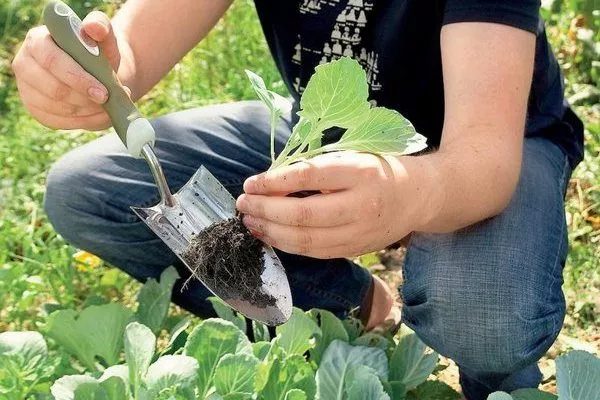
The purpose of pricking out is to stimulate root branching. This procedure is necessary for tomatoes, but pinching the roots is unacceptable for cabbage. Therefore, in the case of cabbage, pricking out is essentially the process of replanting densely packed seedlings.
- ✓ The presence of 4-6 true leaves before transplanting into open ground.
- ✓ No signs of leaf elongation or yellowing.
If the cabbage is sown in individual 200-300 ml cups, no pricking is necessary. The finished seedlings are immediately planted outdoors.
Features of picking:
- The seedlings are planted 1-2 weeks after sowing the seeds.
- Typically, seedlings are transplanted after two true leaves appear. However, cabbage can be transplanted earlier—as soon as the cotyledons form and the first true leaf emerges. If the cotyledons are well developed, transplanting can begin even before the true leaves appear.
- Only strong seedlings are pricked out; if they are weak and elongated, they will most likely not take root.
- You shouldn’t delay picking – it’s harder for overgrown plants to take root.
Early transplanting of cabbage is associated with the vulnerability of the root system - the earlier the seedlings are planted, the less likely the plants are to catch disease.
Seating order:
- Preparing the soil. The same soil in which the seeds were sown will do—no need to invent anything new. The soil should be loose and neutral—6.5-7 pH. It's best to disinfect it by baking it in the oven and watering it with Fitosporin. The easiest way is to buy ready-made substrate at a local grocery store.
- Preparing containers. Seedlings are planted in separate 200-300 ml containers. These can be cassettes or plastic cups. The container should have drainage holes. If there are none, create a drainage layer by adding pebbles or expanded clay to the bottom. Both drainage methods can be used simultaneously, but this is not necessary. Table 1 shows the calculation of cassette requirements.
- Transplantation into separate containers. Weak seedlings are rejected; only strong and healthy specimens are taken.
- 2 hours before picking or 6 hours after, plants are sprayed with a growth stimulant - usually "Zircon" or "Epin" are used.
- 3-4 hours before transplanting, seedlings are watered with warm water to prevent soil from falling off the roots during transshipment.
- In containers filled 2/3 full with soil, make holes in the ground into which the plant is carefully transplanted, along with a clod of soil. The seedling is buried almost to the cotyledon leaves and watered with warm water. It's recommended to water with a nutrient solution such as Fitosporin or Kornesil. After watering, add a little more soil on top to prevent a crust from forming.
- Further care. The transplanted seedlings are moved to a warmer location; the optimal temperature during this period is between 18 and 22°C. After a few days, the plantings can be returned to their normal conditions.
Table 1
| Variety category | Number of seedlings, thousand pcs/ha | Number of cells, pcs. | Cell capacity, cubic cm | Duration of cultivation, days | Quantity of standard seedlings, pcs/sq.m | You will need cassettes, pcs. |
| Late | 40-50 | 144 | 18 | 35-40 | 864 | 276-347 |
| Early | 55-60 | 64 | 65 | 30-35 | 400 | 860-940 |
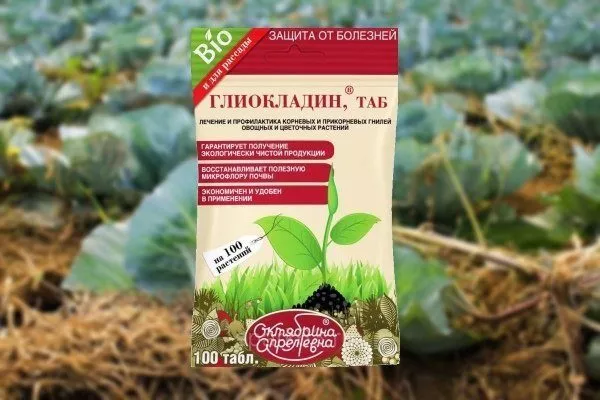
Experienced gardeners dip the roots of transplanted seedlings in a solution of Fitosporin and Kornesil. Fitosporin protects plants from fungal diseases, while Kornesil stimulates root formation. If Fitosporin wasn't used, it's recommended to add a Gliocladin tablet to each cup to prevent fungal diseases.
Transplantation into open ground
Cabbage is planted in a well-lit area. If there is no risk of overwatering, the plants are grown on a level surface; otherwise, narrow beds are created.
Features of transplanting cabbage into open ground:
- Deadlines. The timing of transplanting cabbage into open ground is influenced by several factors, including climate conditions, seedling readiness, and variety category. The relationship between planting timing and ripening time is shown in Table 2.
Early cabbage is typically planted in mid-April, covered with plastic to protect against frost. Planting is completed between May 5 and 20. Mid-season varieties are planted around the same time, but later is also possible. - Soil. The soil is prepared in the fall. It is dug over, and fertilizer is added as it is dug. Cabbage requires large amounts of nitrogen, potassium, and calcium, so organic matter such as manure or compost is added in the fall. A combination of organic matter (40-50 kg per 10 square meters) and mineral fertilizers (100 g nitrogen, 60 g potassium, and 90 g phosphorus) is optimal for cabbage. Immediately before planting:
- If the area hasn't been dug since autumn, it's time to dig it up. Add 1-2 grams of boron per square meter during digging.
- The soil is loosened with a rake.
- They water the soil, and when the moisture is absorbed, they form beds.
- Mineral fertilizers are applied—all the phosphorus, two-thirds of the potassium, and half the nitrogen. The remaining fertilizers are applied later, once the rows have closed and the heads have curled.
- Planting diagram. Skimping on space will reduce the vitamin content of the cabbage heads and reduce the yield. Planting patterns depend on the variety, but the following are recommended:
- Plant early varieties at intervals of 30-35 cm, leaving 70 cm between rows.
- Mid-season cabbage is planted at intervals of 50-70 cm, between rows – 70-80 cm. The size of the heads of cabbage must be taken into account.
- Late-ripening varieties are planted at least 70 cm apart, and 80-90 cm between rows. If the distances are too small, the heads will not store well.
- Shelter. The temperature under the covering material increases by 2-5°C, accelerating cabbage ripening by approximately 10 days, and increasing yield by 2-5 times. The covering must be removed promptly to prevent overheating, which leads to distortion and stretching of the plants.
During the first month of growth in open ground, greens can be planted between the rows of cabbage.
Table 2
| Category of varieties by ripening time | Duration of vegetation, days | Age of planted seedlings, days |
| Early | 70-110 | 45-60 |
| Average | 110-145 | 35-45 |
| Late | 145-210 | 30-35 |
If too much nitrogen is applied, the quality of the heads of cabbage deteriorates – they contain more nitrates and less sugar.
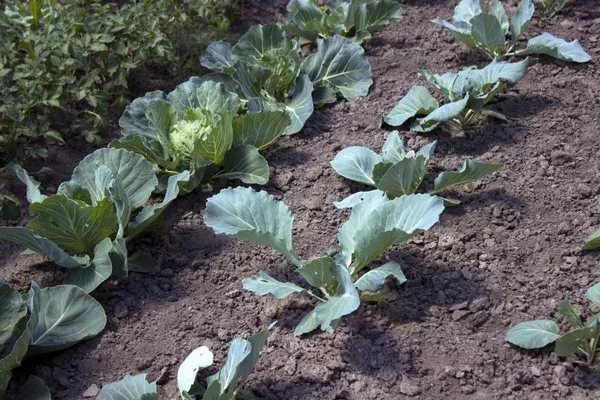
Seedlings are best planted in the afternoon or on cloudy days. Here's a step-by-step guide to planting cabbage seedlings in open ground:
- Water the area a day before planting.
- Water the seedlings 2-3 hours before transplanting – this will minimize the risk of root damage. Instead of water, you can use a heteroauxin solution (2 tablets per bucket of water) to stimulate root formation.
- Place the roots of the seedlings, removed from the cassettes along with the soil lump, in a clay slurry - add a solution of Fitolavin-300 (0.3-0.4%) to it, which prevents black leg and bacteriosis.
- Add a handful of compost and a spoonful of chalk to each hole. Add a suspension of Nemabakt—this product helps kill cabbage root flies.
- Place the seedling deep enough in the hole to cover it with soil up to the cotyledons. The apical bud must be above ground—don't cover it. When placing the roots in the hole, make sure they don't bend or bunch up—they should be evenly distributed in all directions.
- Water the planted cabbage. The recommended watering rate is 0.5 liters per plant. Be careful not to let any water drip onto the leaves.
- After 1-2 hours, when the moisture has been absorbed, sprinkle the wet soil with dry soil - this will prevent moisture evaporation and crust formation.
- A day after planting, scatter tobacco dust around the plants at a distance of 5-6 cm. You can also use a mixture of ash and freshly slaked lime, taken in equal parts. You will need 20 g of the mixture per square meter. These measures will repel cabbage flies.
How does cabbage reproduce?
Seeds taken from any random stalk may not retain the varietal characteristics. Moreover, they may not even produce heads. To obtain high-quality seeds, they must be grown in a specific manner.
How to get seeds?
It's easier to buy ready-made seeds—they're readily available at any seed store. For large-scale cultivation, it makes sense to grow your own seeds.
Features of seed production:
- Seeds are collected in the second year of cabbage's life.
- The best heads of cabbage are selected to serve as mother plants.
- Before frost, the selected plants are taken out of the ground along with the roots and soil.
- Before storing the mother plants, they are dusted with wood ash, and the roots are dipped in a clay slurry. The outer leaves are removed, leaving only 2-3. The mother plants are stored at a temperature of 1 to 2°C.
- In March-April, the stalk is trimmed, giving it a cone shape and preserving the terminal bud. The petioles on the stalk should be 2-3 cm long.
- The finished stalks are placed in moistened peat or humus.
- In April-May, the cabbage stalks are planted in the ground, positioned at an angle and pushed down to the base of the heads. A distance of 500-600 meters is maintained between the mother plants of different varieties to prevent cross-pollination.
- Care for the mother plants is standard: watering, loosening, weeding, and two applications of nitrogen fertilizer.
- Once the pods are ripe and dry, the seeds can be collected.
How to grow cabbage from a stalk?
Cabbage stumps can be used to produce not only seeds but also new heads of cabbage. However, this requires certain conditions:
- Two harvests from one plant can only be obtained in regions with a warm climate.
- Having harvested the heads of early cabbage at the beginning of July, the stalks are not removed from the ground.
- Soon, small heads of cabbage will begin to form between the leaves.
- Small heads of cabbage are thinned out - only two pieces are left on one stalk.
- The leaves at the bottom are from the previous head of cabbage and are not torn off so that the plant retains moisture better.
- Cabbage plants producing a second harvest are cared for in the standard way: watered, fertilized, and fertilized. I harvest the second crop around mid-September. However, the heads will be smaller than the first, weighing about 0.5-0.7 kg.
Seedless cultivation method
Being a frost-hardy crop, cabbage can be grown directly in the ground. The advantage of this method is the elimination of transplanting, which cabbage does not tolerate well. Early and mid-season varieties are typically grown this way.
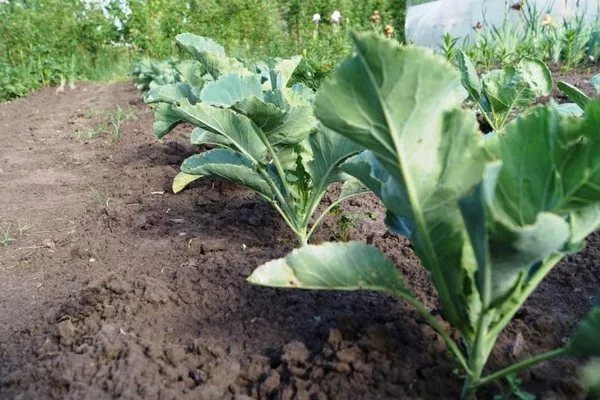
Features of the seedless method:
- Cabbage is sown in late April-early May.
- The soil is thoroughly dug and fertilized. Holes are prepared using the same pattern as for planting seedlings. For example, 30 x 40 cm. Space adjacent plants 30 cm apart, and between rows 40 cm apart. The distance is chosen depending on the variety and ripening time.
- Fertilize each hole with half a bucket of compost or humus, plus 0.5 liters of ash. Place 5-6 seeds per hole. If there are any doubts about germination, add a dozen seeds. Cover the seeds with a soil mixture of fertile soil, peat, and humus.
- The plants are watered and, to speed up germination, covered with a double layer of non-woven fabric or film. The covering material is removed no later than the second true leaf appears. If the film is not removed in time, the cabbage will stretch and its stems will become twisted.
- It will take about a month for the seedlings to grow and strengthen, developing 3-4 true leaves. During this time, careful care is required, including weeding and treatment with preventatives.
- When the seedlings have 4-6 true leaves, they are thinned out, leaving the strongest shoots; only one plant per hole.
Caring for cabbage
Cabbage is a crop that requires moderate but constant attention. To produce large, juicy, and delicious heads, regular watering and fertilizing are essential. The plants also require loosening, weeding, and preventative treatment.
Loosening
The purpose of loosening is to prevent crust formation, which prevents oxygen from reaching the roots. If the soil is heavy, four loosening cycles are performed:
- The first time the soil is loosened is immediately after the seedlings have taken root. Loosening depth is 4-5 cm.
- The second loosening is done a week after the first. The depth is 6-8 cm.
- Then the soil is loosened after each watering - if it is not sprinkled with mulch.
- After the leaves close, loosening is stopped so as not to damage the heads of cabbage.
Along with loosening, the following agricultural techniques are recommended:
- Hilling – to form additional roots and improve the nutrition of heads of cabbage.
- Mulching – to retain moisture and prevent weed growth.
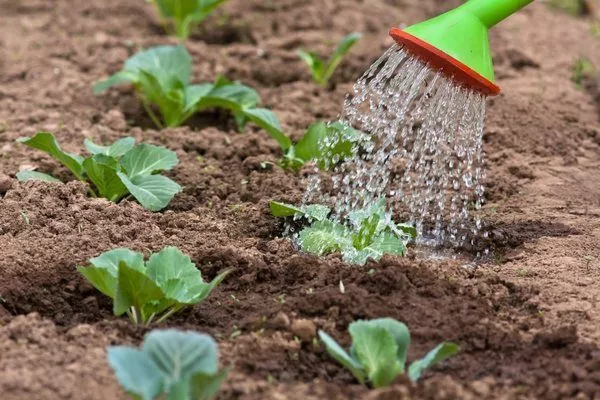
Watering
Features of watering cabbage:
- The frequency and rate of watering depends on the growing season and precipitation.
- Cabbage receives moisture from the upper layers of soil, so it is their moisture that is maintained.
- The minimum interval between waterings for young cabbage is 2-3 days. Once the seedlings have taken root and heads begin to form, the frequency of watering is reduced to once a week.
- The optimal watering method is drip irrigation. It is recommended to sprinkle only in the morning to prevent sunburn on the leaves.
- Overwatering should be avoided, as this will cause fungal diseases to develop and the roots to rot.
Top dressing
Cabbage requires micronutrients. Besides boron, copper and manganese are essential for cabbage and are applied as foliar fertilizers. Spraying with micronutrients increases the yield of early varieties by 20-30%, and late varieties by 10%.
The frequency of fertilizing depends on the ripening time:
- early cabbage is fed 1-2 times per season;
- mid-season and late varieties – 3-4 times.
Cabbage needs more nitrogen at the beginning of the growing season, and potassium and phosphorus when the head is forming. Potassium should be 1.5-2 times higher than nitrogen, as this will improve the storage quality of the cabbage heads. Application timing and fertilizer composition are listed in Table 3.
Table 3
| Feeding period | Compound |
| The beginning of the formation of heads of cabbage | add urea (10-15 g), superphosphate (30 g), potassium chloride (15-20 g) per 10 liters of water (0.5 l per plant) |
| 2-3 weeks after the first | similarly |
| Late varieties are fed two more times with an interval of 2-3 weeks. | increase the dose of potassium chloride to 15 g per 1 sq. m |
Late-ripening varieties—if the plants are underdeveloped—need foliar feeding. For 10 liters, use 40 g of potassium chloride, 150 g of double superphosphate, and 25 g of molybdenum. If the cabbage is yellowish-green, add 1% urea to the solution.
Protection from diseases and pests
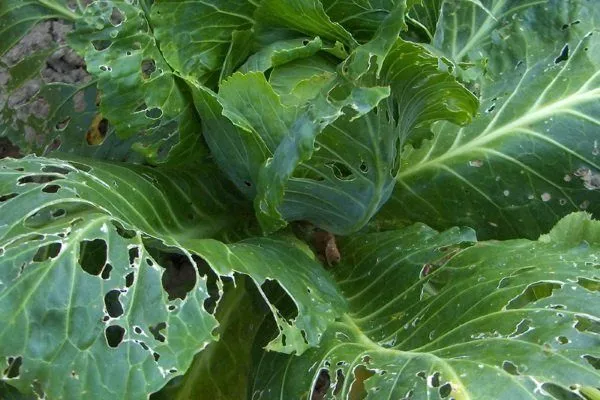
Diseases usually arise due to worsening weather conditions, waterlogged soil, and irregular fertilizing schedules. The most common cabbage diseases and pests, as well as methods of combating them, are presented in Table 4.
Table 4
| Diseases/pests | Symptoms and signs of damage | How to fight? |
| Blackleg | Root collar depletion and rot can destroy 100% of the crop. | Remove damaged plants. Spray the soil with 1% Bordeaux mixture. Apply biological products such as Trichodermin or Planriz. |
| Kila | Growths form on the roots. Plant growth slows, and eventually, the plant dies. | There are virtually no control methods. Damaged plants are removed, and the soil is disinfected with a bright pink solution of potassium permanganate. |
| Powdery mildew | Spots appear on the leaves—yellow, gray, and white. A coating forms on the spots. The leaves die. | To prevent the disease, water the cabbage with lukewarm water. If the disease appears, spray with downy mildew, phytosporin, or a 1% Bordeaux mixture. |
| White rot | Leaves become covered with slime and black spots. This occurs during the growing season and during storage. | It is important to avoid excessive humidity in the soil and in the room. |
| Cabbage fly | The larvae destroy the root system. | The plantings are sprinkled with naphthalene and tobacco dust. |
| Cabbage aphid | Small insects, clinging to the leaves, suck out the plant's sap. The plant weakens, becomes deformed, and often dies. | Dill, parsley, and garlic are planted near the cabbage. They are sprayed with a tobacco-ash solution. Dissolve 0.2 kg of ash and tobacco in a bucket of water. |
| Cruciferous flea beetle | Beetles eat young leaves. | Dust with tobacco and ash. Planting strongly scented plants helps. |
Alternative ways to grow cabbage
Gardeners and professional vegetable growers are constantly searching for solutions to simplify the cultivation and care of cabbage. Achieving a good yield with limited resources is also crucial.
Is it possible to grow cabbage without watering?
Water shortages can pose challenges when growing cabbage, one of the most moisture-loving vegetables. Growing one head of late cabbage requires 200 liters of water. Growing this crop without water is impossible. However, there are agricultural practices that conserve soil moisture and reduce water consumption.
Measures aimed at reducing irrigation:
- Autumn tillage and formation of high ridges – to retain snow.
- Loosening the soil in early spring prevents moisture evaporation.
- Deep cultivation is avoided. Surface loosening is practiced to prevent crust formation.
- Growing without seedlings allows plants to develop strong roots that absorb moisture better.
- Selecting drought-resistant cabbage varieties.
How to grow cabbage under plastic bottles?
A plastic bottle can serve as a personal shelter. The advantages of this method:
- Seedlings appear faster under bottles.
- Bottles protect young plants from pests.
- Heat and moisture are retained under the plastic container.
To use plastic bottles for growing cabbage, cut off the bottoms. Do not unscrew the lids. After sowing the seeds, cover the holes with the bottles, pushing the cut ends deeper into the soil. Water the seedlings through the neck, unscrewing the lids. Temporarily unscrewing the lids allows the seedlings to air out. Once the leaves reach the sides of the plastic containers, remove the temporary cover.
Growing under mulching film
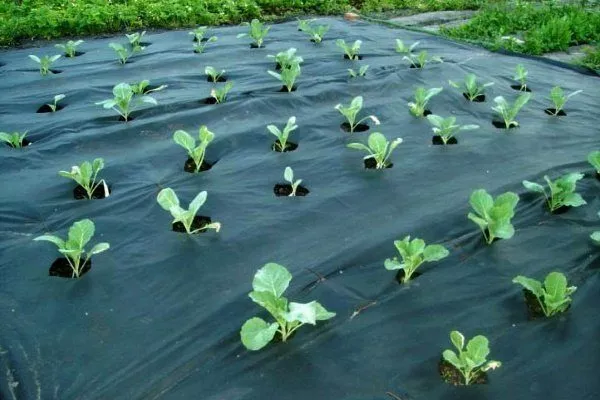
Beds can be mulched with more than just loose materials. Black or transparent film can be used instead, depending on the season. It's laid over the cabbage beds a month before planting to allow the soil to warm up. According to the planting plan, holes are cut in the film, making crisscross cuts. Plant care is standard: watering, fertilizing, and preventative treatment.
Advantages of using film:
- soil warming;
- weed death;
- moisture retention.
In spring, black film is used; in summer, transparent and perforated film is laid out – it is placed between the rows and secured.
Growing characteristics in different regions of Russia
Experienced vegetable growers can grow cabbage in the most unfavorable conditions. For harsh conditions, they use universal varieties such as Moskovskaya Pozdnyaya 15, Kryumon F1, and Iyunskaya. However, it's best to plant regionalized varieties, which are specific to each region.
Siberia and the Urals
A characteristic feature of these regions is the late warming of the soil. Summer arrives late and passes quickly. Varieties that tolerate variable cold weather are needed here.
Suitable varieties:
- For Siberia – Vyuga, Tochka, Nadezhda, Final, Sibiryachka 60, Talisman F1. Only seedlings are used here. Varieties with a short growing season are needed; zoned mid-season and mid-late cabbage varieties are planted. Planting takes place after May 15th. The beds are initially covered, and the harvest is in September.
- For the Urals – Nadezhda, Vyuga, Atria, Megaton, Agressor hybrids, and others. The Urals are characterized by temperature fluctuations; frosts can occur even in May. Snow falls as early as October. They use seedlings, covering the plantings with spunbond, and mulching with black film.
Central Russia and the Moscow region
In temperate climates, cabbage varieties that are resilient to temperature fluctuations and humidity changes are grown. It's important to harvest the cabbage before frost—by the end of September.
If the growing season is less than 90 days, cabbage is planted in the ground under cover at the end of April. In the central region, it is recommended to plant Moscow Late Cabbage, as well as Solo, Podarok, Zarya, and other varieties.
Southern region
In southern Russia, cabbage can be grown both from seedlings and by direct sowing. Here, with long, early, and warm summers, early maturing varieties are preferred.
Popular cabbage varieties for the southern region include Quartet, Milana F1, Kubanochka, and others.
Ripening time and storage of the crop
Early and mid-season cabbage is harvested in July-August. The cores can be used to grow a second crop, so there's no need to rush their removal. Late cabbage ripens in September-October. The heads are harvested when they feel firm.
It's best to harvest late cabbage in cool weather. Gardeners have noticed that heads of cabbage harvested at temperatures between 3 and 8°C have a better shelf life.
How to harvest and store late cabbage:
- The heads of cabbage are pulled out together with the stalks.
- To let the outer leaves of the cabbage dry out, it is left to lie directly in the field for several days.
- Once the heads have matured, trim off the stalks, leaving 2-3 cm. The outer leaves are not removed. Heads of cabbage with stalks can withstand temperatures as low as -7°C, but without the stalks, they will spoil at such temperatures. Therefore, it's best not to trim cabbage during frosts; wait until the weather warms up.
- The trimmed heads are sorted. The looser ones are sent for processing – salting and fermentation. The firmer heads are stored in the basement.
- Don't store cabbage on concrete floors—only on wooden shelves or in boxes. You can also hang it from the ceiling, as long as the stalks aren't cut off. The optimal storage temperature for cabbage is between -1°C and +5°C.
Mistakes when growing cabbage
The biggest problem when growing cabbage is poor head formation. The plants stretch upward, the leaves grow, but there are no heads. The causes of this condition are:
- The seeds were sown late. They must be sown according to the schedule.
- The plantings have become dense. It's important to maintain the planting pattern to conserve space.
- Incorrect watering—either too frequently or too little. A sprinkler system can be used to control soil moisture.
- Overdosing on nitrogen fertilizers. When heads are forming, nitrogen fertilizers should not be applied at all; only potassium and phosphorus should be applied.
Growing cabbage requires responsibility from the gardener – neglect even one factor, and high-quality heads will be lost. Watering, preventative treatments, and fertilizers significantly influence the size, density, juiciness, flavor, and shelf life of cabbage. By following all the proper agricultural practices, you can achieve high yields of cabbage at various ripening times.