
Ornamental kale is no different in care than regular table kale, and it can be eaten. Its main distinguishing feature is its vibrant, unusually colored leaves and rosettes resembling large flowers or ornamental trees. Learn more about the varieties and growing methods of ornamental kale in this article.
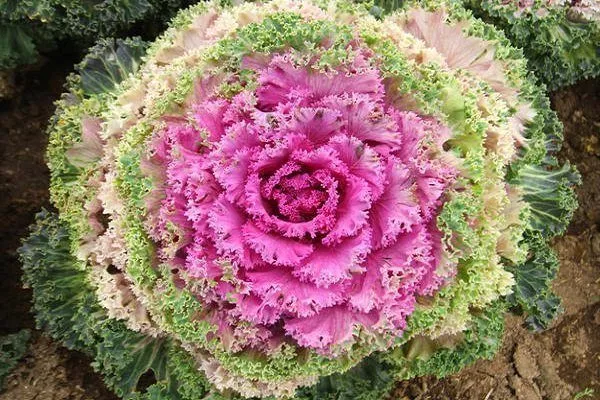
Ornamental cabbage
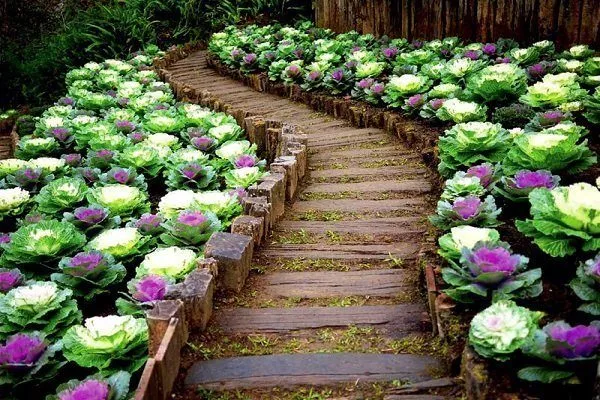
Ornamental cabbage is a biennial plant.
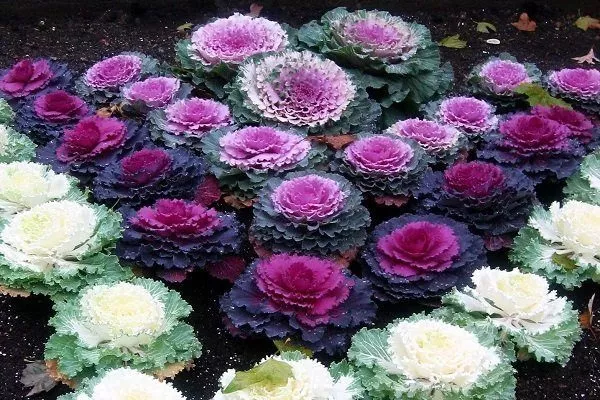
Ornamental cabbage blooms until frost.
Botanical description
Ornamental kale is classified as acephala kale (Brassica oleracea var. Acephala), also known as brassica. It belongs to the cruciferous family and is a biennial plant. In the first year, the leaves develop, forming a loose head or rosette; in the second year, the plant flowers and bears fruit.
The shape of ornamental cabbage leaves can be:
- solid and flat;
- pinnately dissected;
- corrugated;
- with a fringed edge;
- with a curly edge.
The plant takes on color:
- green on the lower leaves and white on the central ones;
- green on the lower ones and red-purple on the central ones;
- bright outer edge of the leaf and green in its central part;
- purple, pink, white center and green edge of leaves;
- multi-colored leaves with contrasting veins.
The plant acquires a bright color when the temperature drops below +10 °C.
Cabbage can “bloom” in open ground until frosts of -12 °C, and after being transferred to an unheated room – until mid-winter.
Historical data
Ancient Greece is considered the historical homeland of this cabbage variety. There, the plant held a special place, as it was believed that the vegetable's growth was triggered by the sweat of the god Jupiter.
Japanese breeders contributed significantly to the diversity of this ornamental plant's appearance. By the mid-18th century, more than 200 varieties had been developed there. This unusual-looking cabbage adorned the gardens of wealthy Japanese. Ornamental cabbage is widespread in Europe. In our country, however, it is only just beginning to gain the attention of gardeners.
Where is it used and can it be eaten?
Ornamental cabbage is used in landscape design.
It can be planted:
- as part of compositions with flower plants - they form a contrasting spot against the background of other flowers and tall plants;
- as living borders – planted along paths and used to enclose flower beds;
- in flowerpots and hanging planters – you can grow both individual plants and groups;
- as a single plant – the space is completely planted with only ornamental cabbage;
- as part of compositions from different varieties - creating multi-colored patterns;
- In alpine gardens, both tall and low varieties can be used.
Brassica flowers can be used to create unique bouquets. To do this, cut them at the base and place them in a vase with a small amount of water. To make the bouquet last longer, add a few crystals of potassium permanganate or 1 teaspoon of sugar and a pinch of salt per liter of water. Change the water twice a week, and the bouquet will last for about a month.
In floristry, ornamental cabbage is used to create vegetable bouquets.
Ornamental kale is most often grown as a forage plant, but it is quite edible, like cabbage or cauliflower. The leaves are rich in vitamins and can be a good source of them during the winter.
A characteristic feature of ornamental cabbage is the loss of its bitter taste in the leaves after the first frost.
Popular varieties
| Name | Disease resistance | Soil requirements | Ripening period |
|---|---|---|---|
| Kai and Gerda | High | Loam | Average |
| Lark's tongue | Average | Sandy loam | Late |
| Red Tall | High | Loam | Average |
| Red Bor | Average | Sandy loam | Late |
| Robin | High | Loam | Average |
| Colors of the East | Average | Sandy loam | Late |
| Green branched | High | Loam | Average |
| Tokyo | Average | Sandy loam | Late |
| Osaka | High | Loam | Average |
| Nagoya | Average | Sandy loam | Late |
| Piglon | High | Loam | Average |
| Princess | Average | Sandy loam | Late |
| Prince | High | Loam | Average |
| Victoria the Dove | Average | Sandy loam | Late |
| Peacock | High | Loam | Average |
| Heron | Average | Sandy loam | Late |
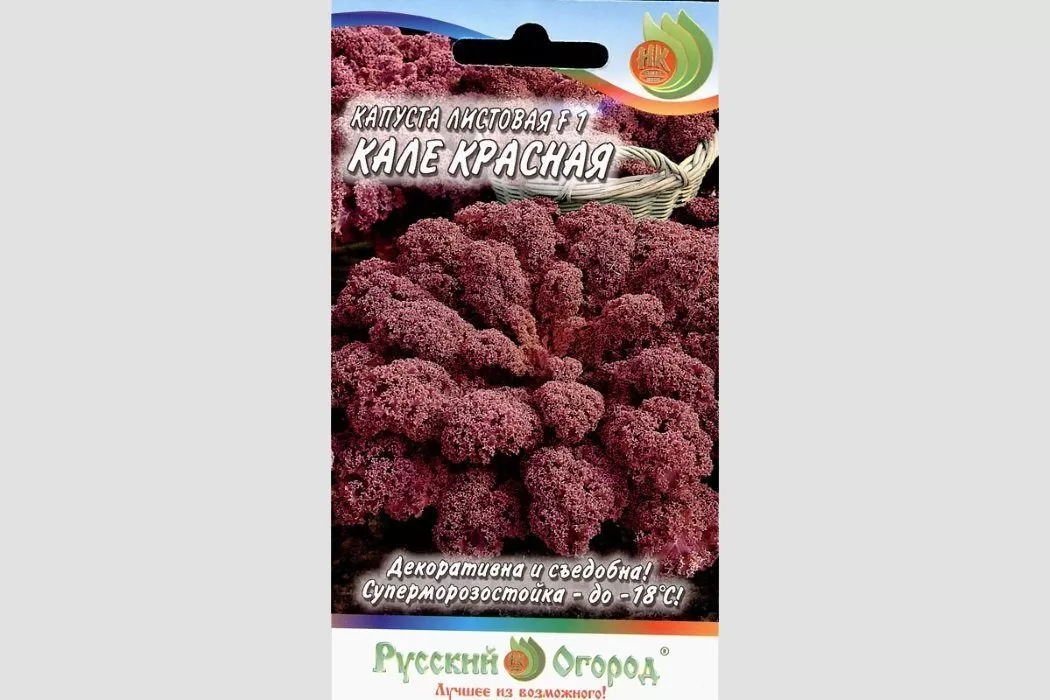
| Red Kale | High | Loam | Average |
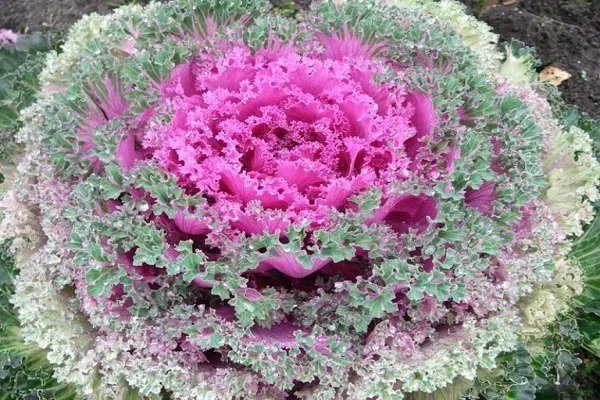
| Bright autumn | Average | Sandy loam | Late |
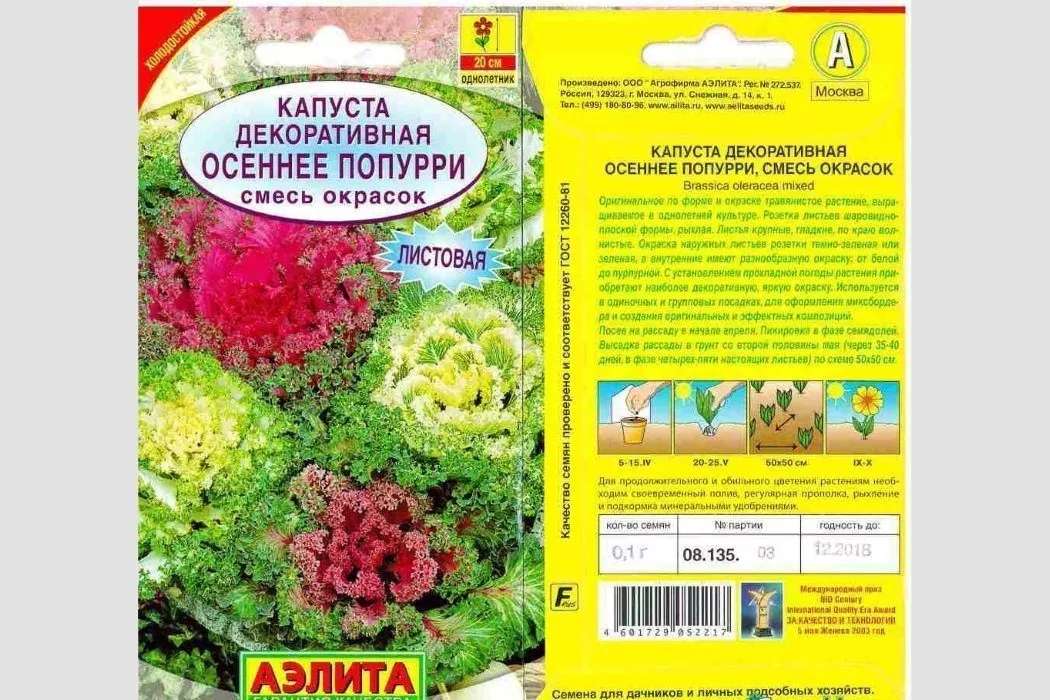
| Autumn Potpourri | High | Loam | Average |
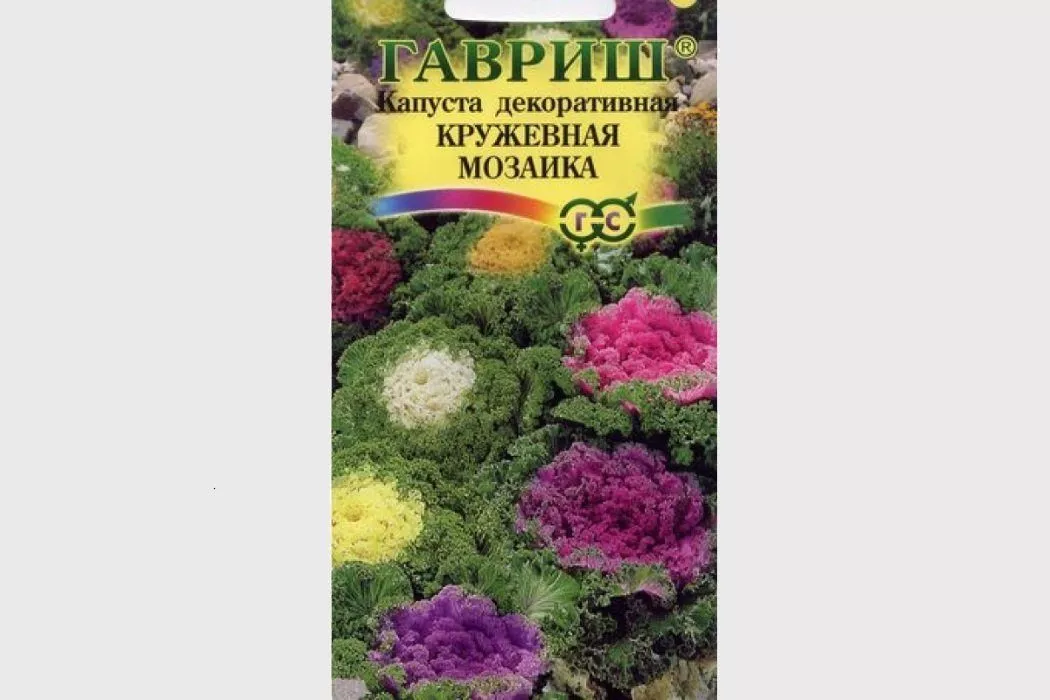
| Lace mosaic | Average | Sandy loam | Late |
| Sunrise | High | Loam | Average |
| Russian circle | Average | Sandy loam | Late |
| Lace jabot | High | Loam | Average |
Ornamental cabbage varieties are divided into:
- Tall. There can be 2 types:
- Plants with stems 50-120 cm long. Large leaves of a wide variety of colors with double edges hang from long stems. The plants resemble exotic trees. These varieties are perfect for decorating terraces, arbors, and mixed borders.
- They have stems up to 70-80 cm long and a small, loose head. The shape and color of the leaves can vary greatly. Their outline resembles small palm trees.
- SocketsThey have a short stem. The leaves form a loose, large rosette (up to 80 cm), reminiscent of a rose, peony, or chrysanthemum. The leaves can have a variety of colors. They can be used in vertical arrangements.
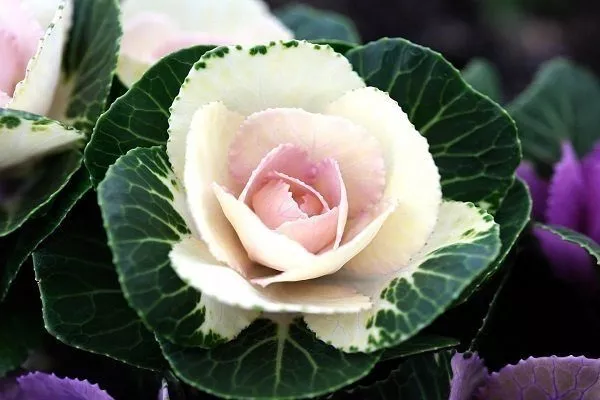
Table of the main characteristics of the most common varieties of ornamental cabbage
| Name of the variety | Stem height, cm | Plant diameter, cm | Description of leaves |
| Kai and Gerda | 50 | 60-70 | For sale is a combination of 2 plants with elongated lacy leaves in emerald and dark lilac colors. |
| Lark's tongue | 130 | 100-140 | Mostly in dark shades, the curly, long leaves with jagged edges are attached to the stem by long petioles. |
| Red Tall | 120 | 70-100 | The leaves are located along the entire length of the tall stem and are purple or red in color. |
| Red Bor | 80 | 60-70 | Bright red leaves with lacy cream, the lower ones with a green border. |
| Robin | 150 | 40 | Leaves are red to purple in color with corrugated edges. |
| Colors of the East | 25-40 | 40-60 | With a transition from gray-green to purple, the leaves are rounded with slightly wavy edges and contrasting veins. |
| Green branched | 70 | 50-70 | Purple, pink, blue, violet, white leaves with serrated edges, rosette shape - very different from round to flattened. |
| Tokyo | 20 | 30 | Dark green lower leaves and bright pink, purple, yellow, red upper leaves of a round shape with a wavy edge. |
| Osaka | 30 | 30-35 | Green lower leaves, white or pink upper leaves. |
| Nagoya | 45 | 60 | Red and white leaves with double, lacy edges. |
| Piglon | 40-50 | 20-30 | The leaves are a delicate creamy, pink shade, reminiscent of a rose. |
| Princess | 40 | 40 | The flowers come in white, pink, yellow, red, and purple. All leaves are corrugated and have green edges. |
| Prince | 30 | 30 | The serrated leaves are white-green in summer and bright red with the onset of cold weather. |
| Victoria the Dove | 30-35 | 30-40 | The rosette is soft cream with a pink center, the lower leaves are dark green with white veins. |
| Peacock | 30 | 30 | The leaves are completely lacy, elongated, and brightly colored. |
| Heron | 60-90 | 30-40 | They resemble roses, the center is light pink, the lower leaves are green. |
| Red Kale | 100 | 80-100 | Small leaves in shades of red develop into a lush rosette in the form of a palm tree. |
| Bright autumn | 20 | 30 | A variety of colours in the middle, edged with a corrugated green margin. |
| Autumn Potpourri | 20 | 20-40 | The rosette is green at the edges, with various shades of red and yellow in the center. The leaves are smooth with wavy edges. |
| Lace mosaic | 60 | 50-60 | Curly leaves with corrugated edges, the lower leaves are green, in the middle they are red, yellow or blue with contrasting inclusions. |
| Sunrise | 45-90 | 25-35 | Several stems grow from one stalk, each of which has leaves that resemble a rose, two or three colors (green, cream, pink). |
| Russian circle | 30 | 40-50 | The leaves are round with smooth edges, green, yellow, red, white with contrasting veins, reminiscent of roses. |
| Lace jabot | 50 | 60-70 | A tri-color variety with lacy leaves that resemble a frill. |
- ✓ 'Kai and Gerda' is a combination of two plants with different leaf colours.
- ✓ 'Lark's Tongue' - long, curly leaves attached by long petioles.
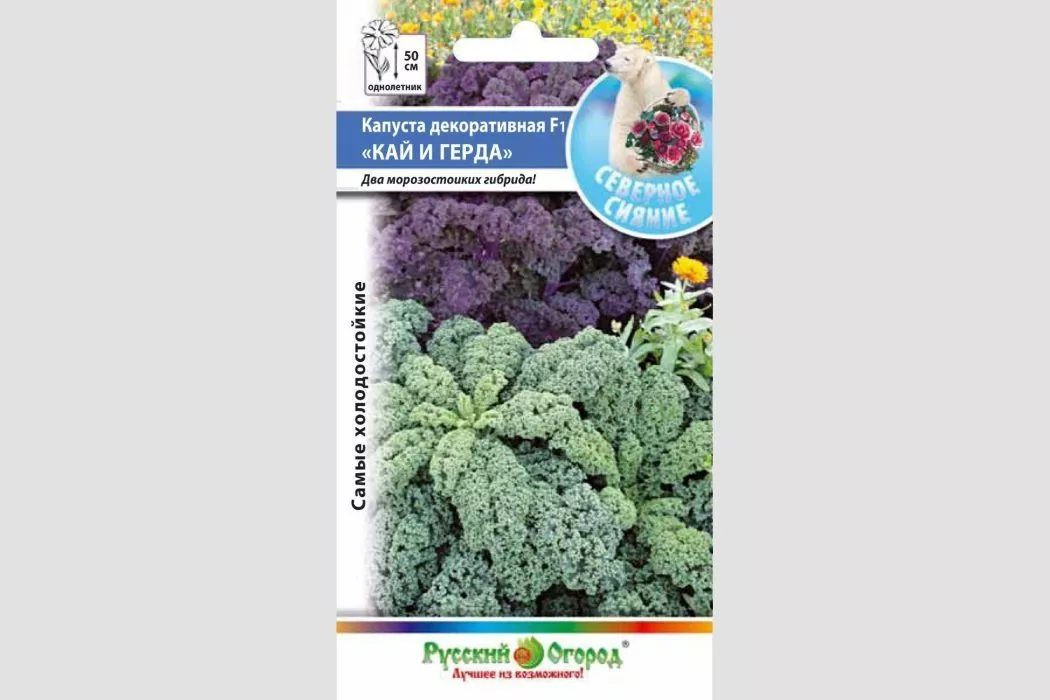
Kai and Gerda
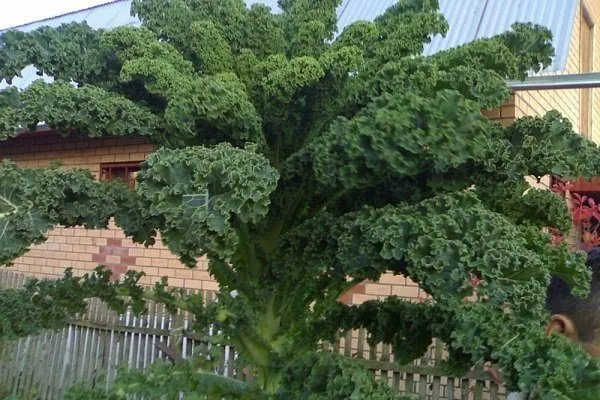
Lark's tongue
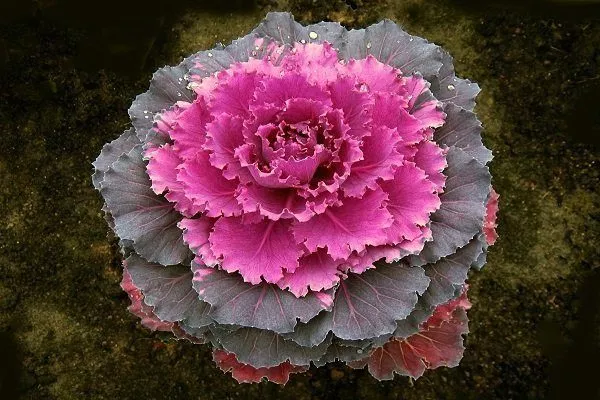
Red Tall
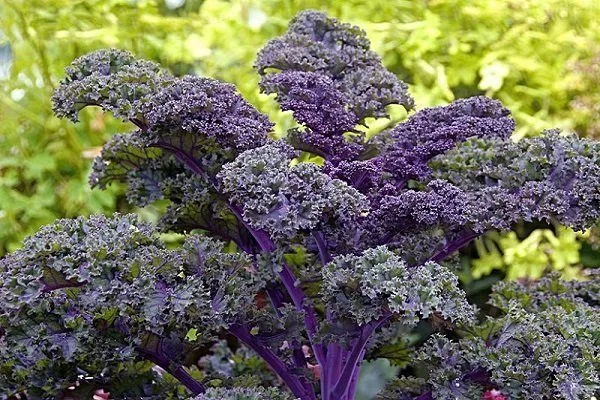
Red Bor
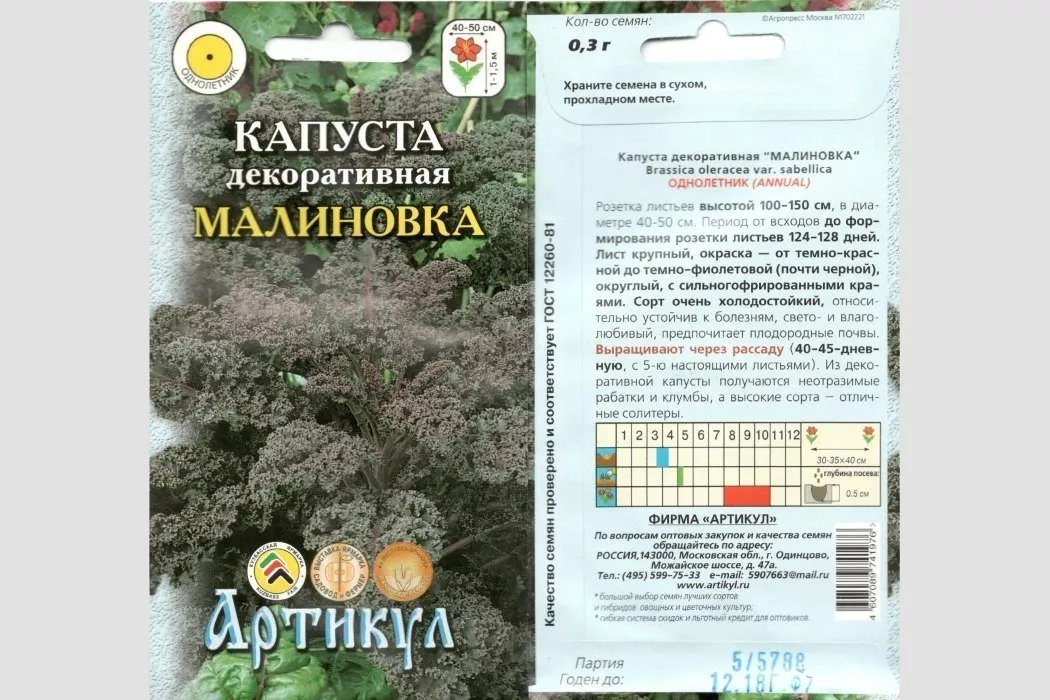
Robin
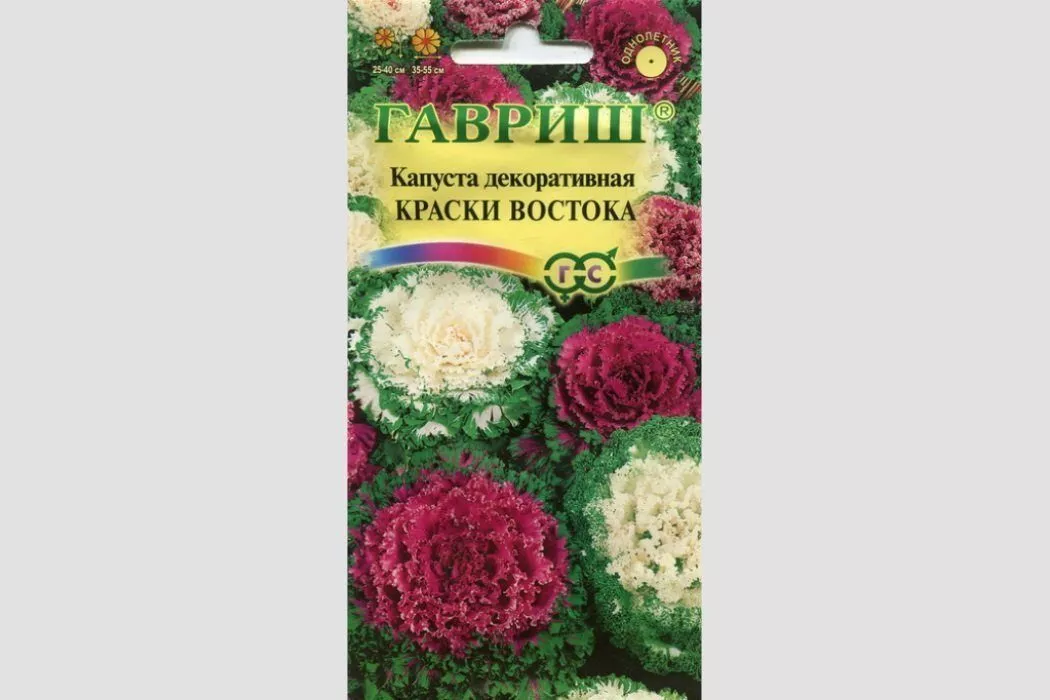
Colors of the East
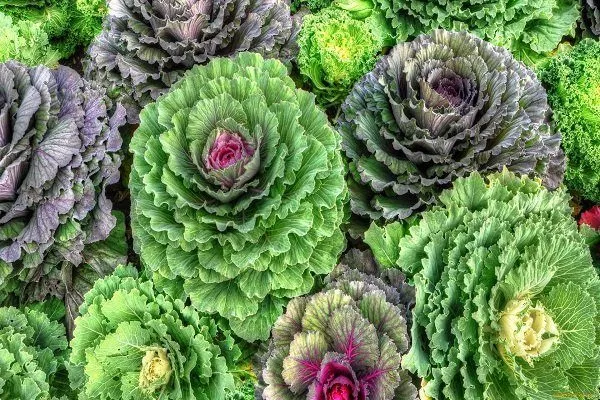
Green branched
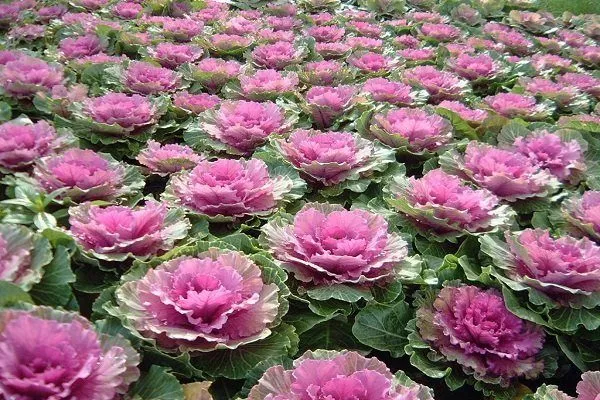
Tokyo
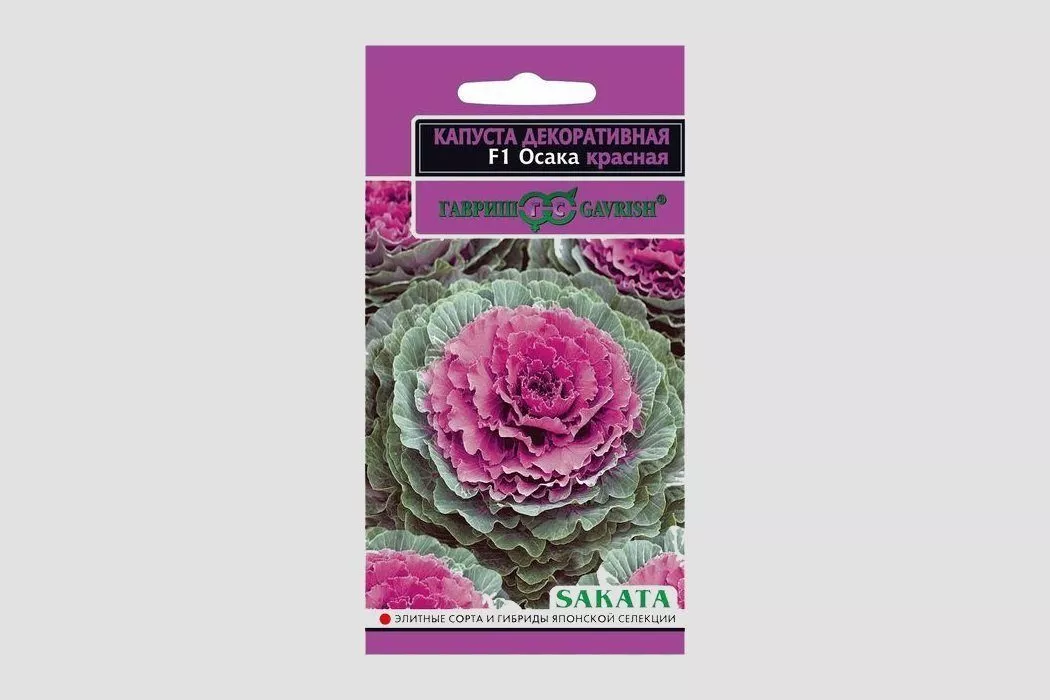
Osaka variety
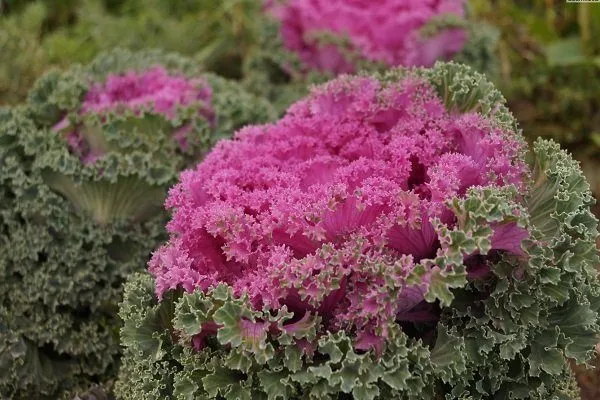
Nagoya
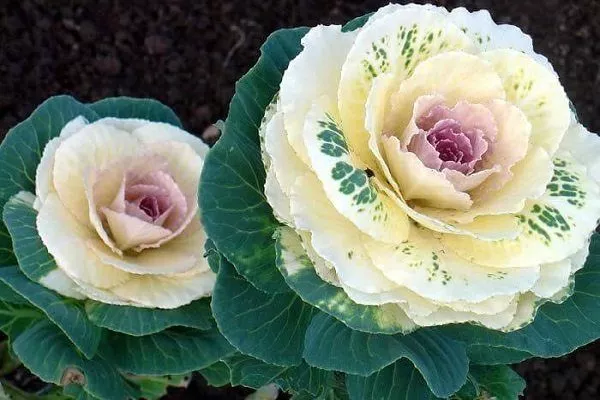
Piglon variety
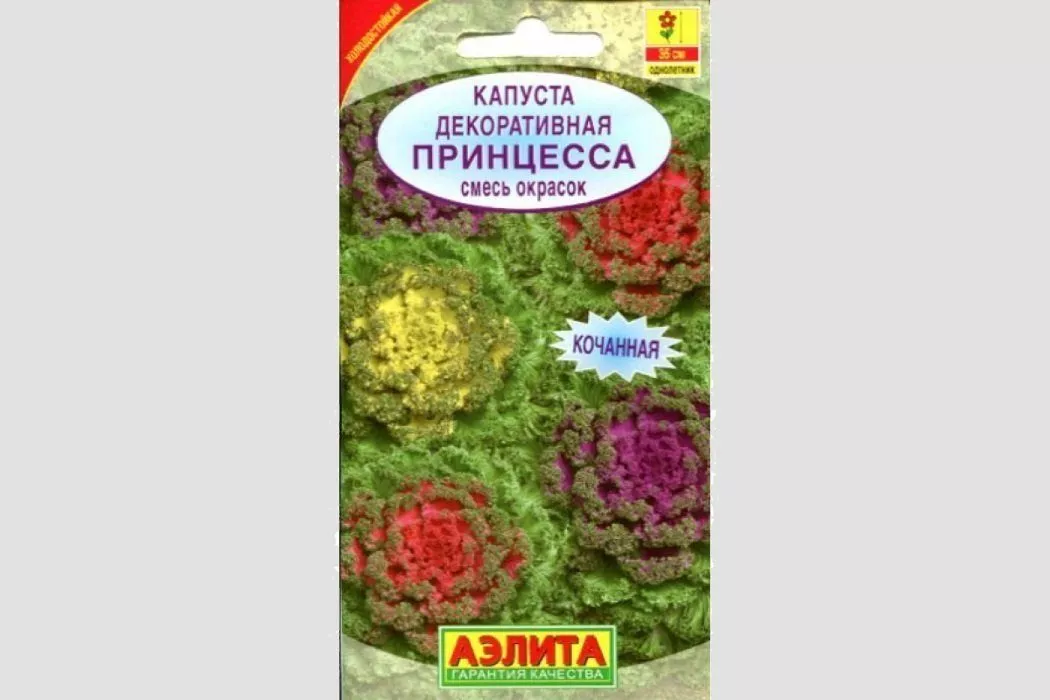
Princess
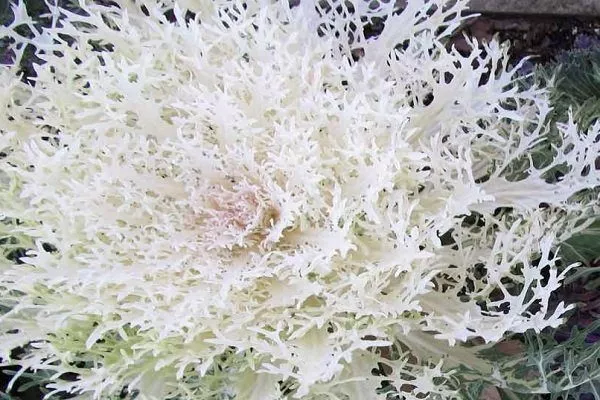
Prince
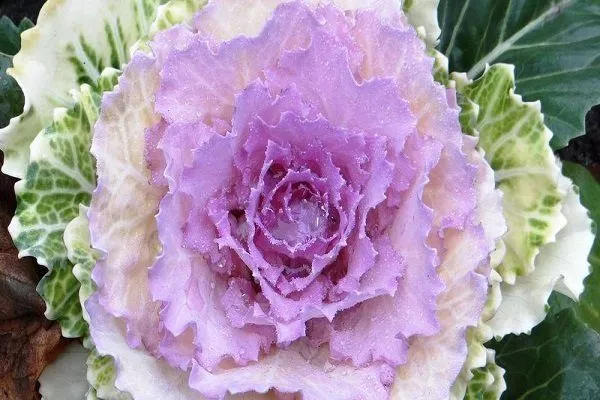
Victoria the Dove
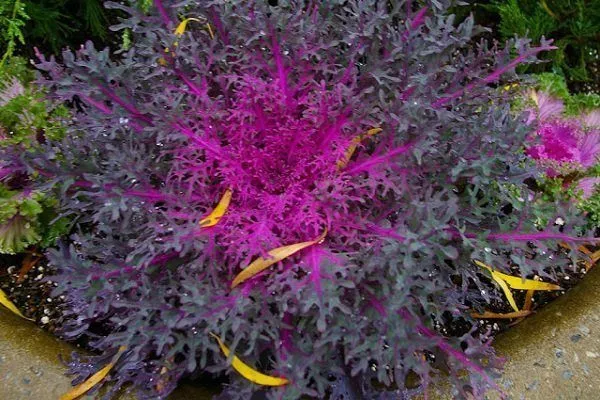
Peacock
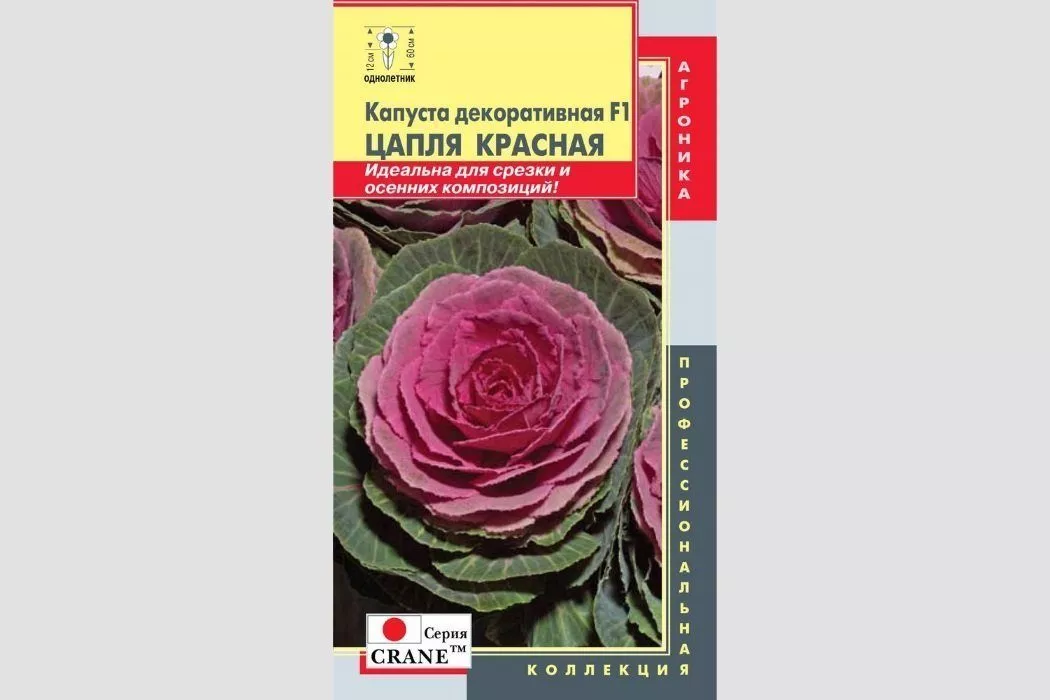
Heron
Red Kale
Bright autumn
Autumn Potpourri
Lace mosaic
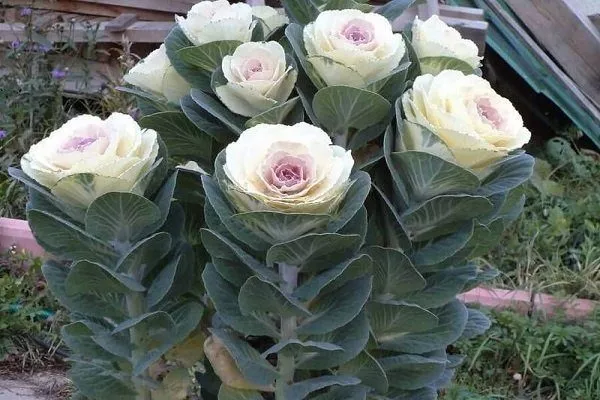
Sunrise

Russian circle
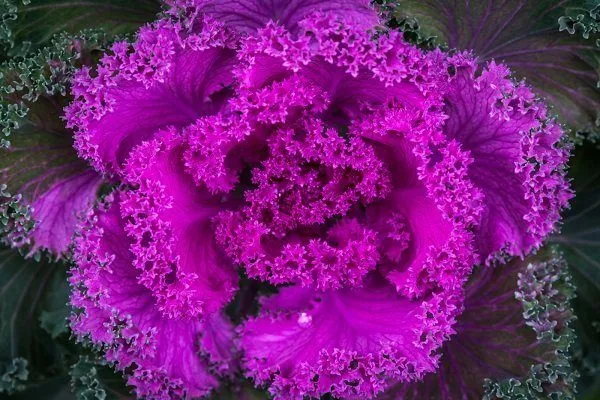
Lace jabot
Landing dates, location and conditions
Ornamental kale belongs to the mid-season and late-season groups of plants. The growing season lasts from 140 to 160 days. Rosettes of colorful leaves form in August and persist until October, and for some varieties, until November.
- ✓ The soil temperature for sowing should not be below +8 °C.
- ✓ The optimal air temperature for seedling growth is +14-+18 °C.
The planting site should be chosen with the late blooming period in mind. Early and annual flowers should finish blooming first, and the cabbage should not obscure them. It can be planted along a fence or left in pots and then moved to a flowerbed.
Brassica thrives in open and semi-shaded areas. It prefers loam and sandy loam soil. Like any cabbage, ornamental varieties don't like acidic soil.
When growing in open ground, the area should be prepared in the fall:
- Application of fertilizer. 3 kg of compost, 50 g of superphosphate, 20 g of ammonium sulfate, and 20 g of potassium chloride. Spread the mixture over 1 square meter of soil.
- Digging. Dig up the flowerbed.
- Watering. Moisturize well.
- Shelter. Cover the area with polyethylene or other insulating material so that the applied fertilizers rot well.
In spring, remove the covering material and thoroughly dig and loosen the soil.
Sowing ornamental cabbage seedlings
There are two methods for growing cabbage seedlings. Whichever you choose, you'll need to consider a few nuances.
Tips for growing seedlings
Being a cold-hardy plant, cabbage is more likely to react negatively to heat than to cold. Keep this in mind if you want to grow seedlings in a hot apartment. In such conditions, it's best to wait until April or May. Seedlings can still be grown during these periods, although March or April is considered the ideal time.
After the first shoots emerge, around day five, the container with the seedlings should be moved to a cool place and provided with good light for 12-15 hours a day. Otherwise, the plants will become very tall. Grow lights are used to provide illumination for the seedlings. If providing light is not possible, it's best to wait until the natural daylight hours increase.
Ornamental cabbage seedlings are often affected by fungal diseases, so disinfect the seed and soil before planting:
- the soil is baked in the oven;
- after cooling, treat with Fitosporin;
- in a damp-wet state the soil is left for several hours;
- The seeds are soaked for 3-4 hours in a solution of Fitosporin or kept for 20 minutes in water at a temperature of 50 °C, and then in a solution of potassium permanganate.
After these steps, you can begin sowing. Pelleted, store-bought seeds can be planted directly without any additional treatment.
With a pick
This method is used if you need to grow a large amount of seedling material.
Sequence of work:
- Fill the containers with soil to a depth of at least 5 cm. Tamp it down lightly.
- Make grooves 0.5-1 cm deep. There should be a distance of 3 cm between the grooves.
- Place the seeds in furrows, 1 cm apart. A match or toothpick is helpful for this.
- Fill the furrows with soil and compact it lightly so that there are no air pockets left inside.
- Moisten the soil. Keep it moist, but avoid puddles.
- Create a greenhouse. To do this, cover the container with plastic and secure it with a rubber band around the perimeter.
- Place the seedlings in a warm location. The temperature should be between 18 and 24°C. Light is not very important at this stage.
If done correctly, there's no need to water the cabbage before transplanting. After the first true leaves appear, approximately 8-12 days later, the cabbage is transplanted:
- Prepare the required number of 250 ml pots and fill them with soil mixture treated with Fitosporin.
- Holes 2-3 cm deep are made in the soil.
- Each sprout is dug up with a small shovel, along with a lump of earth, and transferred into pots.
- The plants are planted deep up to the cotyledon leaves. The soil around them is compacted.
- Plants are watered by spraying with warm water.
- Before transplanting, seedlings should be fed with liquid vermicompost or Agricola fertilizer. This procedure is performed:
- on the 14th day after sowing;
- on the 28th day;
- before planting in the ground.
- Ten days before planting in the flowerbed, harden off the seedlings. First, open a window, then take them outside or onto a balcony. Start with 30 minutes, gradually increasing this time to a full day.
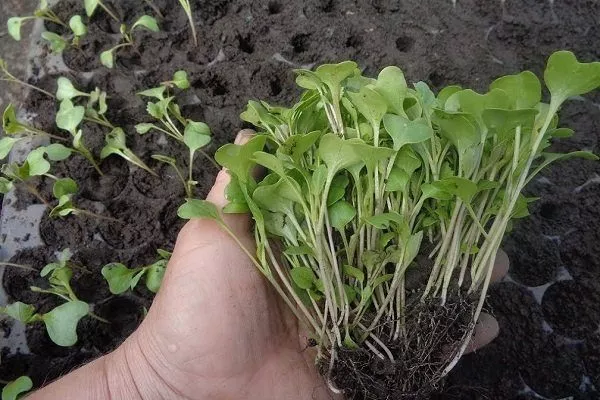
Without picking
Involves sowing seeds directly into individual pots:
- Prepare the required number of pots and fill them with prepared soil.
- Holes up to 1 cm deep are made in the soil (1 pot – 1 hole).
- Place 2-5 seeds in each hole and cover with soil.
- The pots are covered with polyethylene, creating greenhouse conditions.
- After germination, remove the weak shoots by cutting them off at the ground level with sharp, thin scissors (you can use manicure scissors), leaving only the healthiest seedling.
Planting ornamental cabbage in open ground
The optimal temperature for replanting is considered to be +14-+18 °C. The soil should warm up to +8-+10 °C.
Cabbage can withstand night frosts down to -4°C without harm.
By the time the seedling is transplanted into the ground, it should have developed 2-3 pairs of true leaves. Transplanting should be done with the root ball still attached to the seedling to ensure better establishment.
Procedure for carrying out work:
- Prepare the holesPlanting pattern: 25x40 cm. Add 1 teaspoon of complex fertilizer and ash to each hole.
- Transfer. Transfer each seedling to a separate hole. Plant it deep down to the cotyledons and fill with soil, compacting it lightly.
- Shelter. The seedlings are covered with agrofibre until the plant takes root.
Planting cabbage from seeds
Ornamental cabbage seeds can be purchased at a specialty store or collected from your own garden.
How to collect seeds?
Cabbage produces a stalk, where the seeds ripen, in its second year of life. Only the best rosettes are selected for seed. To harvest them:
- in autumn, dig up the cabbage with roots from the garden bed;
- remove the lower leaves;
- bury in a container with wet sand up to the leaves;
- Store in this condition until spring in a well-ventilated, cool and dry place;
- in spring, transplant the rosette into the ground;
To improve pollination, plant cabbages close together.
- in June, cabbage will begin to produce shoots;
- the seeds in the pods will ripen by November;
- When they are well dried, cut them off and thresh them.
To prevent birds from eating the seeds, the shoots are tied with cloth.
Sowing in greenhouse conditions
Before sowing seedlings in a greenhouse, first prepare the soil:
- mix soil from the site, peat and sand so that the layer thickness is 10 cm;
- Disinfect this substrate.
Next, sow the seeds:
- moisten the soil well, but do not overwater;
- make small indentations in the ground;
- Place 2-3 seeds in each hole;
- cover them with earth;
- You can cover the bed with polyethylene to increase the temperature;
- after the seedlings appear, remove the covering;
- Loosen the soil and water it.
When the plants have 2-3 true leaves, the seedlings can be transferred to open ground.

Sowing in open ground
Brassica can be sown directly into open ground. This is best done in late April or early May. In unfavorable weather conditions, temporary shelter should be provided.
Work order:
- Preparation. Loosen the soil well.
- Watering. Moisten the soil with hot water with the addition of potassium permanganate, this will also serve as a disinfectant;
- Holes or furrows. Make small holes up to 1.5 cm deep at a distance of 15 cm from each other; you can make furrows of the same depth.
- Sowing. Place seeds in each furrow at a distance of 5 cm from each other, or 1-3 seeds in each hole and cover with soil.
- Shelter. Cover each hole with a cut-off bottle. Install arches along the rows and stretch film over them.
In cold weather, seedlings can take up to 2-3 weeks to emerge.
- Removing the cover. When the sprouts appear, the covering needs to be removed.
- Watering. Begin watering after the true leaves appear. Alternate between a solution of Fitosporin and a complex fertilizer.
- Thinning. Thin out the seedlings as they grow, leaving the strongest ones.
- Transfer. After 2-3 true leaves appear, the plants can be transferred to a permanent location.
How to care for ornamental cabbage?
Even a novice gardener can handle caring for ornamental cabbage.
Watering
Ornamental cabbage varieties require regular watering. Apply 10 liters of water per square meter of soil. During persistently hot weather, water daily in the morning or evening.
Cabbage grown in containers is watered generously in the morning or evening and also sprayed to reduce evaporation.
Loosening
After watering, loosen the soil to improve air circulation in the root zone and roots. Repeat this procedure once every 7 days.
In addition to loosening the soil, hill it up. Rake the soil under each plant. This will prevent the cabbage rosette from collapsing as it grows, becoming too heavy to support itself.
Weeding
Weed your ornamental kale beds regularly. It's best to combine this with watering and loosening the soil—it's easier to remove weeds and roots from moist, loose soil.
The flowerbed can be mulched with any suitable material: sawdust, straw, wood shavings, grass clippings, or dried weeds. This will reduce the amount of watering, weeding, and loosening.
Fertilizer
Ornamental cabbage needs to be fed 3 times per season:
- Two weeks after planting, apply a urea solution (30 g per square meter) or mullein (diluted in water 1 to 10). Use nitrogen fertilizers with caution, as they promote foliage growth but reduce the plant's decorative appeal.
- After 3-4 weeks, apply nitroammophoska (10 g per plant) or a solution of azofoska (30 g diluted in 0.5 l of water) to the soil.
- After another 3-4 weeks, repeat the 2nd feeding.
On poor soils, fertilizer is applied 4-5 times per season.
Diseases, pests and prevention
Brassica can be affected by diseases and pests, just like cabbage.
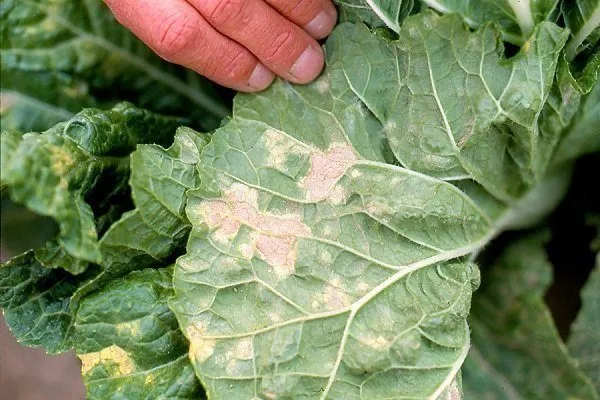
The most common diseases can be triggered by:
- Excessive watering. Never overwater the soil or use cold water. Otherwise, there is a risk of powdery mildew and root rot.
- Excessive nitrogen fertilization. Increases susceptibility to disease.
- Acidic soil. This causes clubroot. If necessary, deacidify the soil with lime or dolomite flour.
If infection could not be avoided:
- at the initial stage, you can use fungicides Fundazol, Quadris, Thiovit Jet;
- In case of severe damage, the rosettes should be removed from the garden bed.
Ornamental cabbage is most often affected by pests:
- butterflies and caterpillars of cutworms and white butterflies;
- cruciferous flea beetle;
- aphids;
- slugs.
You can use the following tools and methods:
- insecticides Aktara, Bicol, Decis Profi;
- spraying the planting every 10-14 days with an infusion of tobacco dust (2 cups per 5 liters of water, leave for 24 hours) with the addition of a few spoons of liquid soap;
- pollinate plants with ash with the addition of tobacco dust;
- plant the flowerbed with marigolds or other strong-smelling plants;
- mulch with pine needles;
- Collect slugs and caterpillars by hand or set out special traps.
Reproduction
Ornamental kale is propagated only by seed, but the plant should not be a hybrid. Hybrid seeds collected at home do not retain their color or ornamental characteristics. Stored seeds can be stored for up to 5 years.
High-quality seed material for hybrids can be purchased from the following companies:
- Gavrish;
- Russian vegetable garden;
- Aelita;
- Search;
- SeDek.
You can learn about ornamental cabbage and how to care for it by watching this video:
Reviews
Growing and caring for ornamental kale is no different from regular kale. You'll need to grow seedlings, monitor soil moisture, weed, and control pests and diseases. But with a little patience and the right location, you can enjoy the vibrant colors of its luxurious rosettes from early autumn until frost.