
Brussels sprouts are easily recognized by their miniature heads growing on a single stalk. This unusual vegetable is prized by health food enthusiasts – it's not only delicious but also healthy. Let's learn about the varieties of "small-headed" cabbage, how to plant and grow them in the Russian climate.
History of the spread of culture
Brussels sprouts are the result of selection by Belgian vegetable growers; they do not grow wild. This cultivated crop traces its origins to wild kale, which once grew abundantly in the Mediterranean region and was domesticated in ancient times.
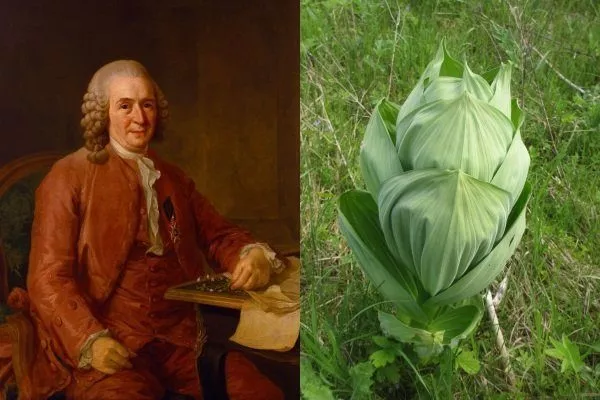
Brussels sprouts are believed to have been developed in the 13th century. Renowned scientist and naturalist Carl Linnaeus was the first to describe the new crop, naming it "Brussels sprouts." Large-scale cultivation of this unusual cabbage began in the 18th century. It appeared in Russia in the mid-19th century, but never achieved widespread popularity. The Russian climate is not particularly suited to this crop, so its cultivation in Russia is limited.
Botanical description
Brussels sprouts (Brássica oleracea) are a vegetable crop and a type of leafy cabbage belonging to the cruciferous family. This biennial, cross-pollinated plant is strikingly different from all other members of the cabbage family.
What do Brussels sprouts look like?
- In the 1st year. The thick stem bears small to medium-sized leaves with thin petioles. The stem height is 20-60 cm. The slightly lyrate leaves are 15-35 cm long. The leaves are green or gray-green, with a faint waxy coating on the surface. Small walnut-sized heads of cabbage grow in the leaf axils at the tops of the short stems. One plant produces 20-40 miniature heads of cabbage, each weighing about 10 g.
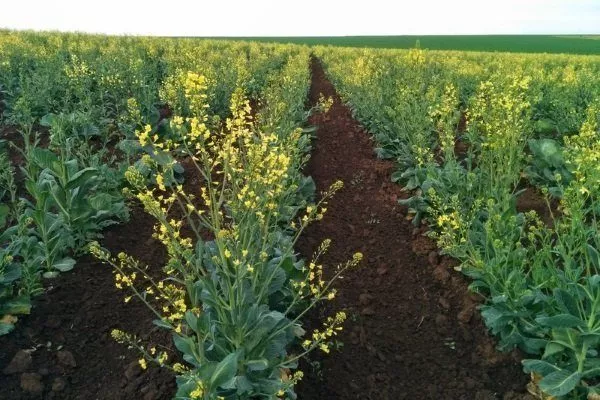
- In the 2nd year. Branched flowering shoots develop. The plant blooms and then produces fruits filled with seeds. The flowers are yellow and clustered in inflorescences. The fruit is a multi-seeded pod.
Seed production
The agricultural technology for growing Brussels sprouts is the same as for white cabbage and includes three stages:
- Growing mother plants. Sow seeds at the same time as when growing for harvest. Harvest the mother plants before frost. Choose well-developed and properly formed plants. The heads should be firm and fairly large.
- Winter storage. Before storing, cut off the leaves, leaving the apical bud a couple of centimeters above the heads. The mother plants are placed in rows in piles or cold storage areas and covered with sand. Storage temperature is 0 to 1°C, humidity 90-95%. Petioles are removed as they dry out.
- Growing seeds. In the spring, the mother plants are grown on – 2-3 weeks before planting, they are dug into the open ground. They are then planted at 70 cm intervals, with a 70 cm distance between rows. Planting occurs when the soil is ready.
The seed plants are cared for—weeding, fertilizing, pest control, watering, hilling, and tying. When the seeds reach a milky-waxy stage of ripeness, the shoots are cut and stored under a canopy. Or they are gathered into small sheaves to ripen the fruit.
What varieties and hybrids are there?
Breeders have developed dozens of varieties—high-yielding, disease-resistant, and with excellent flavor. All varieties and hybrids of this crop are divided into three groups:
- early – 120-150 days;
- mid-early – 150-180 days;
- late – more than 200 days.
Varieties differ from each other in various characteristics – stem height, head shape and size, yield, early maturity, and immunity.
The most profitable for cultivation are low-growing and medium-growing varieties and hybrids – they are easy to harvest mechanically.
Main characteristics of Brussels sprouts varieties and hybrids:
| Varieties and hybrids | Ripening period (from germination to harvest), days | Number of heads of cabbage on one plant, pieces | Total weight of heads of cabbage on one plant, kg | Yield, kg/1 sq.m | Note |
| Early | |||||
| Rosella F1 | 160-165 | 80-100 | 2 | 1.1-1.7 | Slight waxy coating on leaves. Freezing-safe. |
| Long Island | 150-160 | 50-80 | 0.8 | 0.8-1.2 | The leaves are blistered, the heads are dense and green. The taste is excellent. |
| Franklin F1 | 150-160 | 70 | 1 | 2.8 | The leaves are blistered, the heads are spherical, large, with an excellent taste. |
| Mid-season | |||||
| Hercules | 145-160 | 20-30 | 0.2-0.3 | 2-2.4 | The heads of cabbage have a loose structure due to the corrugated leaves. |
| Garnet Bracelet F1 | 120-125 | 30-40 | 0.4-0.5 | 15-20 | The leaves are purple-violet |
| A cheerful company | 160-170 | 60 | 0.6 | 2.4 | Suitable for freezing. Moderately dense head structure. |
| Late-ripening | |||||
| Commander | 120-150 | 20-40 | 0.55-0.6 | 2.3 | Excellent taste, heads are used for salads and other purposes. |
| Curl | 170-180 | 50-70 | 0.5-0.7 | 2 | The heads are the same size, round. |
| Sanda | 170-175 | 20-40 | 0.3-0.6 | 2 | The heads of cabbage are used for fresh eating, pickling and freezing. |
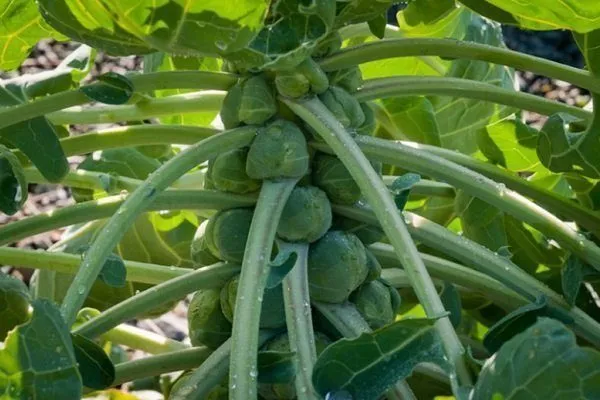
Brussels sprouts, Rosella variety
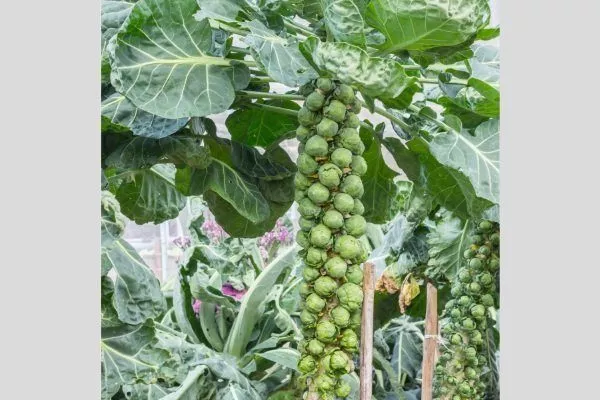
Long Island Brussels sprouts
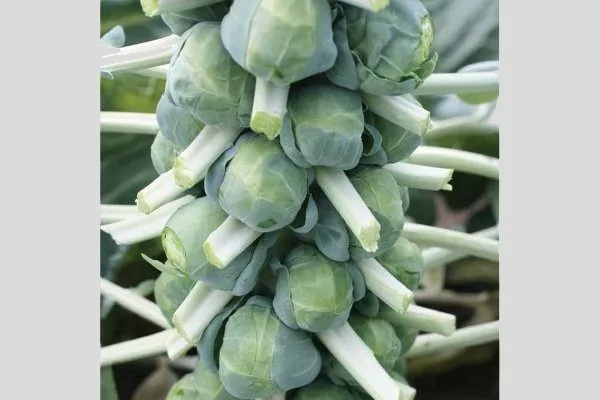
Brussels sprouts variety Franklin
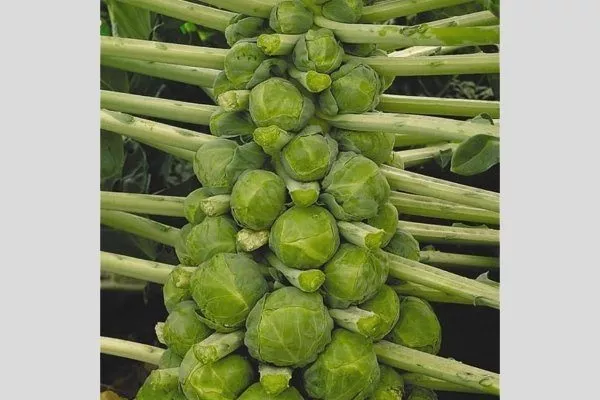
Brussels sprouts, Hercules variety
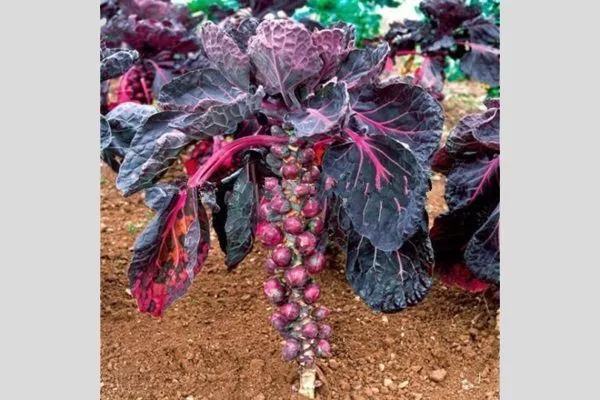
Brussels sprouts variety Garnet Bracelet
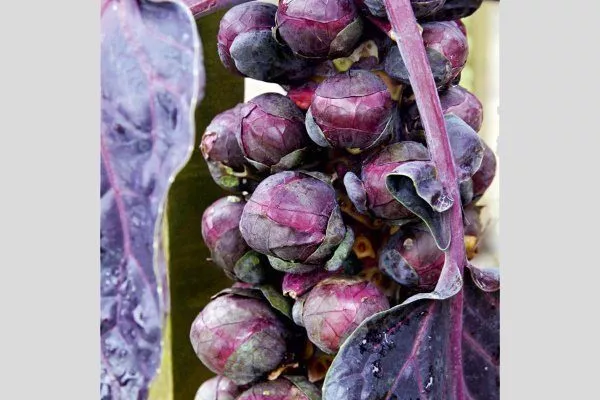
Brussels sprouts, variety "Veselaya Kompaniya"
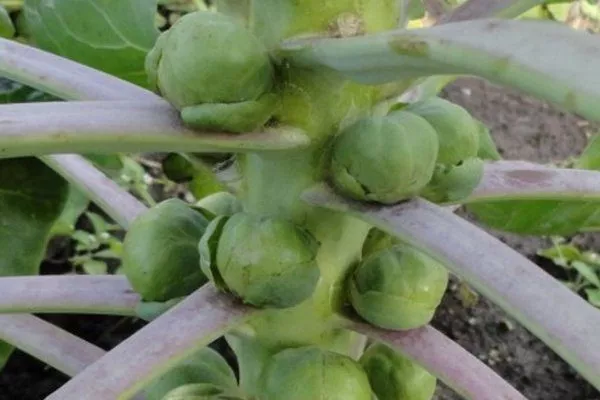
Brussels sprouts variety Commander
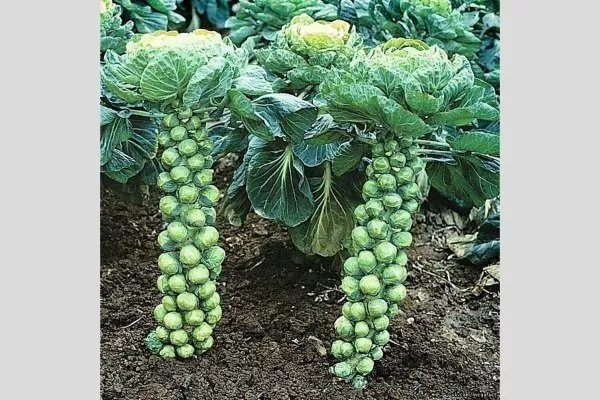
Brussels sprouts variety Zavitka
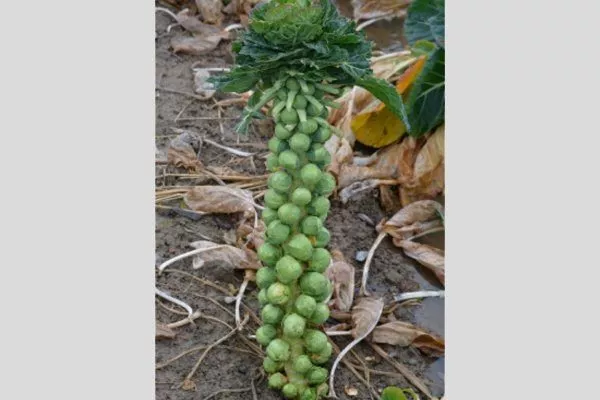
Brussels sprouts variety Sanda
Taste characteristics and food value
Brussels sprouts taste unlike any other cabbage. They combine sweet and bitter notes, with a subtle nutty flavor. Describing the flavor profile of Brussels sprouts is difficult—it's best to try them for yourself.
100 grams of Brussels sprouts contain 43 kcal, 4.8 g of protein, 0.3 g of fat, and 8 g of carbohydrates. This vegetable is the leader in protein content. For comparison, white cabbage contains 1.8 g of protein, Napa cabbage contains 1.2 g, and broccoli contains 3 g.
Benefits and harms
Brussels sprouts contain a large amount of vitamins, minerals, and many other beneficial substances that have a beneficial effect on the body.
Benefits of Brussels sprouts:
- It contains a lot of carotenoids – these elements have a beneficial effect on the retina.
- Regular use reduces the risk of developing asthma and increases immunity to viral infections.
- Thanks to the fiber contained in the vegetable, waste and toxins are removed, stomach acidity is reduced, and constipation and heartburn are prevented.
- Reduces cholesterol levels in the blood, has a choleretic effect, and restores liver function.
- Strengthens the walls of blood vessels and normalizes cardiac activity.
- Contains a lot of calcium, which is necessary for healthy hair, bones and nails.
- Inhibits the development of breast cancer.
- Contains folic acid, which is essential for women during pregnancy.
- Restores pancreatic function, recommended for diabetes.
Brussels sprouts are contraindicated for people:
- with individual intolerance to the product – strong allergic reactions may occur;
- with a tendency to heartburn and flatulence - cabbage can provoke an exacerbation.
Climate and soil requirements
Cabbage, bred in Belgium, prefers moderate weather conditions—it dislikes heat and humidity, requiring favorable, moderate weather in all respects. The best climate for growing Brussels sprouts is in climate zones characterized by long, warm autumns.
In countries with a favorable climate for Brussels sprouts, such as the Netherlands, they are grown even in winter. However, the largest harvests are obtained in the United States, Canada, and the United Kingdom.
To grow successfully and accumulate a full range of vitamins in the required quantities, Brussels sprouts require the following conditions:
- the optimal growing temperature is from +18 to +22°C;
- temperatures of +25°C and above are unacceptable – crop growth stops and yields drop;
- during the period of intensive growth - sunny days predominate over cloudy ones, with the latter being in minimal quantity;
- absence of nitrogen fertilizers, which lead to the accumulation of nitrates in vegetables;
- The crop is extremely cold-resistant – seeds begin to grow at +2°C, and adult plants can withstand frosts down to -10°C.
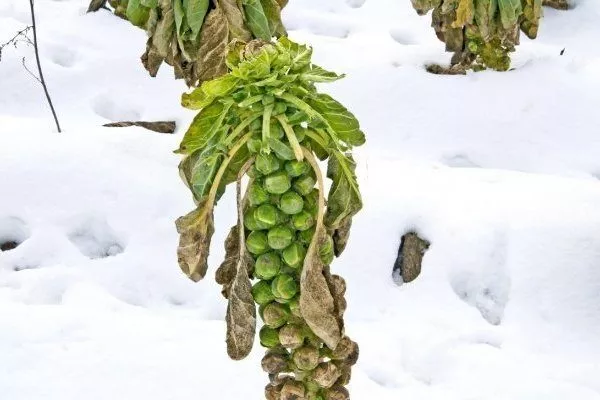
The crop is cold-hardy. It tolerates frosts that would be detrimental to most plants without significant impact on growth or yield. Mature cabbage tolerates frosts particularly well, down to -5-7°C. After the frosts subside, the cabbage thaws and resumes growth. Moreover, frost is believed to be beneficial for Brussels sprouts, as the flavor of their "micro-heads" improves even further.
Brussels sprouts, compared to white cabbage, are not as demanding to soil:
- can grow on light soils that are not highly fertile;
- prefers soils with a high calcium content;
- recommended acidity pH – 6.0-7.0.
- ✓ The optimal soil pH level should be between 6.0 and 7.0.
- ✓ The soil must be rich in calcium, which is critical for the formation of dense heads of cabbage.
Crop rotation
Brussels sprouts should not be planted for four years in a plot previously occupied by cruciferous vegetables, beets, and tomatoes. Crop rotation rules prohibit planting cruciferous vegetables in the same spot for several years. Violating this principle leads to Brussels sprouts becoming susceptible to cabbage diseases.
Preparing for landing
To ensure Brussels sprouts produce the required number of tasty and nutritious heads, they must be planted correctly and at the right time. Gardeners prepare the soil and seeds in advance, as the future harvest depends on their quality.
Terms and conditions
The timing of planting seeds depends on several factors:
- climatic features of the region;
- current weather - this is especially important when growing seedlings;
- varieties of Brussels sprouts.
For central Russia, the optimal time for sowing seeds is the second or third week of April. Early varieties are sown in late March, and late varieties after April 10th. Seedlings are planted much later—in early June, but no later than the 10th.
Soil preparation
Brussels sprouts grow in any soil, even slightly acidic ones. However, to get a good harvest, they need dense yet breathable soil rich in organic matter. If the soil is poor and infertile, the sprouts will grow, but very slowly.
When planting a crop in a new, unfertilized place, the soil is prepared by adding the following to each square meter:
- humus – 1 bucket;
- nitrophoska – 1/2 cup;
- lime or wood ash – 2 cups.
You can also add urea (14 g), potassium chloride (4 g), superphosphate (30 g), and when planting seedlings, add 1/2 teaspoon of nitroammophoska to each hole.
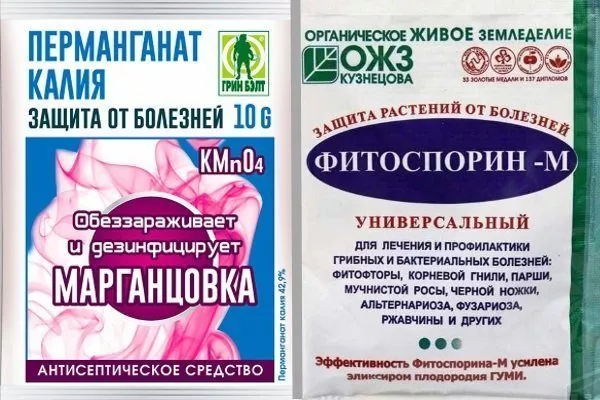
After spreading fertilizer over the area, it is dug up, leveled and watered with potassium permanganate – for soil disinfectionAdd 1.5 g of potassium permanganate per 10 liters of water. Watering rate: 3 liters per 1 square meter. Fitosporin can be used instead of potassium permanganate; it is applied 1-2 weeks before planting.
Brussels sprouts for growing season It requires a lot of nitrogen and potassium. The crop responds well to organic fertilizers. Using fresh manure as a fertilizer is not recommended, as it delays formation and reduces the marketability of the heads, making them loose and difficult to store.
When planting cabbage seedlings in a plot where beans, tomatoes, or cucumbers were previously grown, you can do without adding fertilizer if organic matter was already added before planting.
Seed preparation
If you're buying a small quantity of seeds—just to try them out—you can use those that have already undergone industrial processing. If you're planning to plant a large amount of cabbage, it's more cost-effective to buy unprocessed seeds—they're cheaper. However, you'll need to treat them yourself with a stimulator and disinfectant.
- Immerse seeds in water at 50°C for 20 minutes for disinfection.
- Rinse the seeds in running water for 1-2 minutes.
- Soaking seeds in a growth stimulator for 12 hours.
- Hardening seeds in the refrigerator at -1°C for 24 hours.
Seed treatment procedure:
- immersion in water at a temperature of 50°C – for 20 minutes;
- After removing the seeds from the hot water, rinse them in running water for 1-2 minutes;
- kept for 12 hours in "Kornevin" or "Epin";
- wash and put in the refrigerator for 24 hours - in the bottom drawer intended for vegetables;
- Dry the seeds so that they don’t stick to your hands during sowing.
Hardening seeds in the refrigerator at minus 1˚C increases the frost resistance of plants, their resistance to diseases and pests.
How to plant Brussels sprouts?
Brussels sprouts can be grown in two ways: from seedlings or by sowing seeds in open ground. Each method has its pros and cons, and the choice should be made based on the region's climate and personal preferences.
Seeds
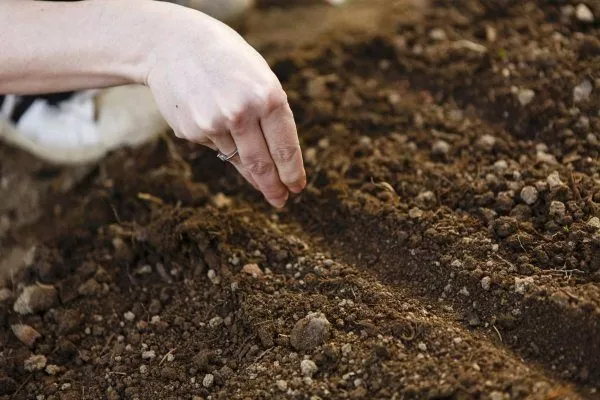
Sowing seeds in open ground is used less frequently than seedlings. It is advantageous for large-scale cultivation, as it eliminates two steps: picks and transplanting into open ground. However, with this method, the harvest is delayed.
Sow seeds fairly early – in March-April. Soil temperature should reach 10-15°C. The following is a guide for sowing seeds in open ground:
- In prepared beds, make shallow rows or holes for nest planting. Plant no more than 1.2 cm deep. Space adjacent seeds 15 cm apart.
- Cover the crops with film to help the seeds develop faster.
- Once the seeds have sprouted, thin them out, selecting the strongest seedling. Pull out the rest to give the cabbage room to develop. Leave 50 cm between adjacent plants.
Early and mid-season varieties with a growing season of no more than 120 days are sown in open ground.
Seedlings
Any cabbage variety doesn't transplant well, and Brussels sprouts are no exception. Therefore, seedlings are grown in individual cups so that when planting, the root ball can be easily transferred into the prepared hole. This reduces stress on the plant.
For growing seedlings, use special trays or cups. The capacity of one container for one seedling is 200 ml. The procedure for growing seedlings is as follows:
- Fill any chosen container—cassettes, cups, or seedling trays—with growing medium. If using trays, make furrows in the soil for the seeds. Make the rows or holes 1 cm deep.
- Water the soil with warm water.
- Sow the seeds, spacing them 0.5-1 cm apart.
- Cover the seeds with soil and compact it gently.
- Cover the crops with a transparent material - glass or film.
- Place the containers with the seeds in a warm place to ensure faster germination.
- Once the seedlings emerge, remove the plastic or glass. Move the seedlings closer to the light. The optimal daytime temperature is 20°C, and the nighttime temperature should not fall below 16-18°C. This temperature regime will prevent the seedlings from stretching excessively.
- Care for the seedlings according to the following plan:
- Water as the soil dries out. Avoid overwatering Brussels sprouts. Check the moisture at a depth of 1-1.5 cm. It's best to water the seedlings through a strainer to prevent soil erosion.
- To prevent blackleg, water the seedlings with Fitosporin or a pink solution of potassium permanganate. You can also sprinkle the soil with wood ash with colloidal sulfur added.
- If you sowed the seeds in large containers rather than individual cups, there's another step—pricking out. This involves transplanting the seeds into individual containers. Pricking out the seedlings after the first true leaves appear. You'll need a small stake—use it to lift the grown seedlings out, along with a clod of soil, and pinch off the root.
Plant the seedlings deeper until they reach the first true leaves – if you plant them deeper, the stems may rot. - Water the transplanted seedlings thoroughly and place them in the shade. The optimal air temperature is 20°C. Once the seedlings begin to grow, move them into the light. However, the temperature should be cool – no more than 16-18°C. These conditions promote the development of a strong root system.
- When daytime temperatures reach +10°C, begin hardening the seedlings for 5-10 minutes, taking them outside at midday. Once the seedlings are acclimated to the sun, you can take them outside in the morning and keep them there until 4-5 PM.
Don't over-plant seedlings—overly large seedlings root poorly, grow more slowly, and produce smaller yields. Seedlings are planted when they have three or four true leaves. They should be perfectly healthy and dark green.
After 2-3 true leaves appear, feed the seedlings with a solution of Kemira-Lux (dissolve 1-2 grams in 1 liter of water). Avoid getting the liquid on the leaves. Feed the seedlings a second time 1.5-2 weeks before planting outdoors. Apply a solution of boric acid and copper sulfate (use a knife tip of each per 10 liters of water).
The procedure for planting seedlings in open ground:
- Stop watering the seedlings 4-5 days before.
- When the soil warms to 10°C, plant the seedlings in prepared holes. Plant according to a 60 x 40-50 cm pattern (60 cm between rows, 40-50 cm between plants).
- Transplant the seedlings into the holes using the transshipment method - remove the roots along with the lump of earth.
- Place the seedlings in the holes so that the roots can comfortably fit. The hole should be slightly deeper than the roots. It's better for the stems to be slightly buried than for the roots to be exposed to the surface.
- Compact the soil thoroughly to ensure there is no air left between the roots.
- Water the seedlings generously.
We invite you to watch a video story by a gardener about how she grew Brussels sprouts using seedlings:
Care Features
Caring for Brussels sprouts is straightforward—standard farming techniques are used. However, there are some differences from white cabbage: hilling and pinching are recommended for Brussels sprouts.
How to water?
Maintain soil moisture at 80%. Brussels sprouts watering guidelines:
- Water the plantings little by little, trying not to flood the growth point.
- Once the planted seedlings have taken root and begun to grow, the plants are watered at a rate of 30 liters per 1 square meter.
- To water the cabbage, furrows are made between the rows; water is poured into them, and when the water is absorbed, they are covered with soil.
- During the growing season, the plants are watered several times. Moisture is especially important during the head formation period. During high temperatures, watering frequency increases, with cabbage watered every 10 days.
- Overwatering cabbage is unacceptable, as it may cause root rot.
Watering rates for Brussels sprouts:
- before the heads appear – 30-35 liters per 1 sq. m;
- after the heads appear – 40-45 liters per 1 sq. m.
What and when to feed?
If the necessary fertilizers are applied before planting, there's no need to feed the cabbage while the fruit is growing and developing. However, if the soil is poor or sandy, a couple of maintenance applications are recommended.
Composition and timing of fertilizer application:
| Fertilizer application period | Composition of fertilizers |
| Half a month after planting, the plant begins to grow, and a new leaf appears. | Nitroammophoska. Per plant – 1/2 teaspoon. |
| Heads of cabbage began to form. | In a bucket of water, dissolve potassium sulfate and superphosphate - 25 g each, and nitroammophoska - one tablespoon. |
Fertilizers are applied to moist soil to avoid burning the leaves and root system. After fertilizing, the soil is slightly moistened.
Topping
This simple agricultural technique increases the size and weight of Brussels sprouts. It involves shortening the shoots. The tips are pinched when the stem reaches 60-70 cm. Pinching stimulates the flow of nutrients to the growing sprouts, accelerating their growth and development.
Topping is carried out no later than August. Only late-ripening varieties and hybrids undergo this process.
Hilling and loosening the soil
Once the water has been absorbed, the soil is loosened to prevent a crust from forming, which can impede air flow to the root system. It is recommended to hill the cabbage several times during the growing season – rake the soil in a thin layer, being careful not to cover the cabbage heads below.
Planting Brussels sprouts is recommended mulch This agricultural technique prevents weed growth and moisture evaporation from the soil. Grass, straw, or black film are used as mulch.
Pre-harvest care
About a week before harvest, remove all the leaves from the cabbage. If the plants ripen evenly, the leaves are picked at the same time. When removing the leaves, take care not to damage the mini-heads. If the plants ripen unevenly, the process is repeated 2-3 times, removing the leaves only from those plants that are ready for harvest.
Major diseases and pests of Brussels sprouts
Brussels sprouts are susceptible to the same diseases as other cruciferous vegetables. The most common diseases are:
- white and dry rot;
- keel;
- blackleg;
- black spot and ring spot;
- mucous and vascular bacteriosis;
- mosaic;
- downy mildew.
Most often, Brussels sprouts are affected by aphids, moths, cabbage flies, and also:
- cruciferous flea beetle;
- cabbage leaf beetle;
- flea - wavy and black;
- cabbage white butterfly;
- firefly;
- rape and cabbage bug;
- mole cricket
- scoop;
- wireworm;
- rapeseed blossom weevil.
Read on to learn how to combat cabbage diseases and pests. Here.
The listed diseases and pests can significantly reduce the yield of Brussels sprouts. If left untreated, you could be left with no harvest at all. To prevent these diseases, cabbage can be treated with folk remedies. If this doesn't work, chemical pesticides and disease control agents are used.
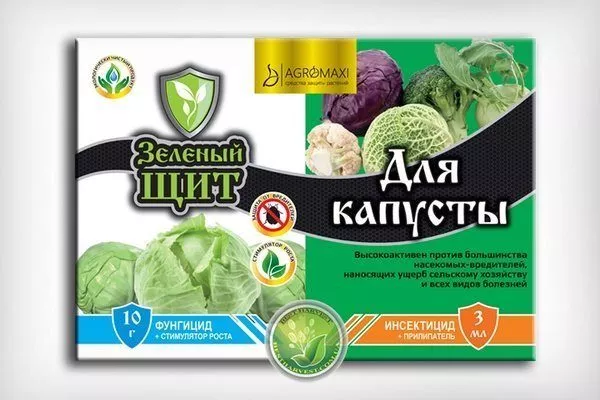
Prevention is cheaper than dealing with the consequences, so it makes sense to take preventative measures. Brussels sprout protection strategy:
- Compliance crop rotation.
- Removing plant debris from the beds.
- Regular removal of weeds.
- Use a combination of organic and mineral fertilizers. Don't neglect the latter, relying solely on organics.
- At the first signs of disease, the plant is pulled out and the soil is watered with a solution of potassium permanganate.
- Sprinkling the beds with tobacco grass and wood sap.
- If pest attacks are observed, spray with Decis, Karate, Korsar, Rovikurt, Ambush and others.
- If fungal diseases appear, cabbage is sprayed with Fundazol, Quadris, Skor, Topaz and others.
Diseased plants should not be placed in compost; they must be burned immediately.
When to start harvesting?
Harvesting begins when the small Brussels sprouts are fully mature. Maturity is determined by the following signs:
- the size reaches its maximum – 1.8-2 cm in diameter;
- the heads of cabbage acquire the shine characteristic of ripe fruits;
- the leaf turns yellow at the base.
Features of harvesting early and late varieties:
- Early and early middle. They are harvested in September and October. They are harvested in one go, as the heads ripen at the same time. The stems can be cut at the base and stored for later picking.
- Mid-late and late. This category of varieties is harvested in two or three stages. Before harvesting, the leaves are removed from the plants, only from the side where the heads will be harvested. When harvesting in several stages, the heads are cut starting from the bottom of the stem.
Storing Brussels Sprouts
Brussels sprouts can be stored whole, using the heads as needed. The plants should be dug up before frost sets in and covered with sand in a basement or greenhouse. The sprouts should be buried at a slight angle. The stems and fruit can also be stored in plastic bags in the refrigerator.
Frozen Brussels sprouts will keep for 3-4 months.
After placing the harvested crop in boxes, store them in a cool place. If kept at a temperature of 0°C, they will stay fresh for up to 1.5 months. If frozen, they will retain their quality all winter. Brussels sprouts are recommended to be stored at 0°C and with 95% humidity. Under these conditions, the cabbage will last for 2-2.5 months.
Due to the specifics of cultivation, Brussels sprouts have not yet gained widespread popularity among our vegetable and garden growers. But with the emergence of new varieties and hybrids—more productive and less demanding—demand for this crop will grow. This vegetable has so many advantages that it would be unforgivable to neglect it.