
Green cabbage, with cauliflower-like florets, is becoming very popular these days. This is broccoli. It's a very healthy vegetable that can be grown in any type of soil. We'll discuss how to achieve a good harvest and the characteristics of this type of cabbage further in this article.
What is broccoli?
Broccoli is a vegetable crop belonging to the Brassicaceae family. It is commonly known as broccoli, asparagus cabbage, and sprout cabbage.
Botanical description
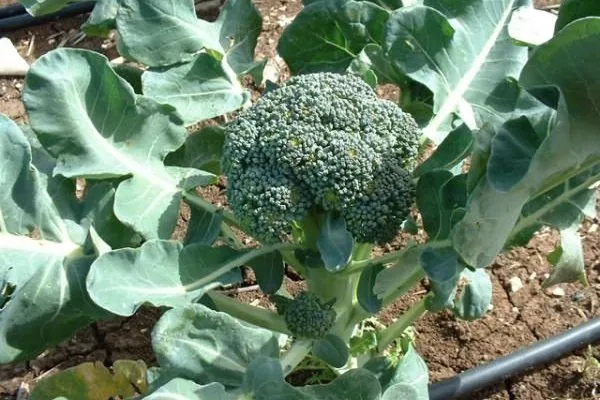
Broccoli is an annual herbaceous plant growing up to 1 m tall. It has a branched root and a cylindrical stem with wide, large, dark green leaves, often upward-facing, on a long petiole. The shape of the leaf blade depends on the cultivar. It can be smooth and shiny or have a deformed surface with curly edges.
The taproot stem develops into a densely packed head of inflorescences. Removing the apical inflorescence will stimulate the development of peripheral and lateral heads, resulting in an increased overall yield.
During flowering, which occurs in early to mid-autumn, cabbage produces small yellow, or rarely white, flowers. These flowers produce fruits in the form of two-celled pods. The seeds are large and round, varying in shades of brown-black. The yield of this crop reaches 12-15 kg/10 sq. m.
Characteristics
Broccoli is mentioned in ancient Roman culture, but Asia Minor and the Mediterranean region are considered its origins. It only gained recognition in Europe in the 16th century. Americans began cultivating this cabbage on a large scale in the 20th century. Broccoli has only recently gained popularity in Russia. Thanks to favorable growing conditions, it has become widespread in the central part of the country.
Broccoli resembles cauliflower, being its ancestor. However, while they differ in appearance, they also differ in taste and chemical composition. Broccoli comes in two varieties:
- It develops as a single head consisting of compactly located inflorescences.
- They consist of many individual flower stalks, not collected into a single head (asparagus hybrids).
The unblown, green or purple florets are eaten, containing a large amount of nutrients and beneficial elements. Broccoli contains:
- Vitamins: groups B, E, A, PP, K, U, C. Thanks to them, the condition of hair and nails improves, visual acuity improves, the nervous system is balanced, and immunity is increased.
- Minerals: K, Mg, Ca, Na, Fe, Zn, Mg, Se, Cu. They remove excess fluid from the body, facilitating kidney function, have a beneficial effect on cardiac function and blood composition, and stimulate bile production.
- Fiber, stimulating intestinal function, is useful in dietary and healthy eating.
In some respects, this cabbage is similar to egg whites, but instead of accumulating cholesterol, it helps lower its levels and eliminate it from the body. Eating broccoli promotes faster wound healing, restores cartilage, and reduces the risk of heart attacks and strokes.
According to scientists, this type of cabbage can help fight cancer cells thanks to the substance sulforaphane, and also prevent the occurrence of stomach ulcers by killing the bacteria in it that cause this disease.
Once the flowers turn yellow, the cabbage is no longer fit for consumption. Broccoli is used in many dishes, including canning and pickling.
Advantages and disadvantages of growing
The benefits of growing broccoli include:
- resistance to temporary temperature drops;
- regular stable demand for broccoli;
- resistance of hybrids to diseases and pests;
- possibility of growing on a balcony or loggia;
- does not require special conditions for growing.
The disadvantages of growing this type of cabbage include:
- The use of greenhouses and hothouses is essential in northern climates, as even the slightest frost can ruin a crop if it hits a plant during germination or seedling growth.
- Some varieties of broccoli tend to over-ripen very quickly.
- The yield depends on the quality of the agricultural practices performed.
Varieties and hybrids
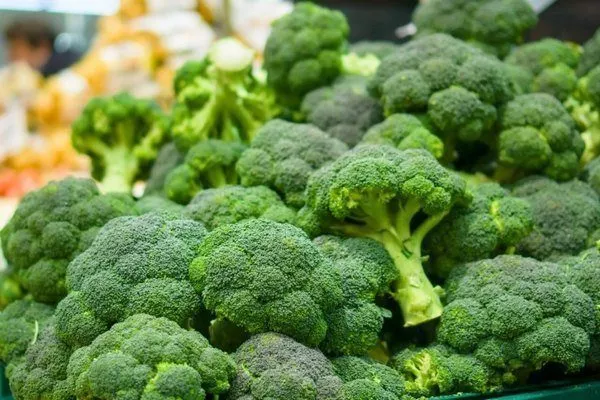
Broccoli has a wide variety of varieties and hybrids, so it is possible to make a choice for a wide variety of conditions and climates.
| Name | Growing season, days | Head weight, g | Yield, kg/sq.m | Peculiarities |
| Linda | 75-80 | 350-400 | 3-4 |
|
| Dwarf | 110-120 | 400-600 | 4-5 |
|
| Fortune | 85-90 | 150 | 2-2.5 | afraid of the cold |
| Tone | 72-77 | 200 | 2.5 |
|
| Emperor | 80 | up to 500 | 3-5 |
|
| Lucky | 68-72 | 900 | 5-7 | resistant to diseases |
| Vitamin | 85-90 | 300 | 3-4 |
|
| Fiesta | 80 | up to 1500 | 4.5-6 |
|
| Monton | 87-93 | up to 1000 | 4-5 |
|
| Caesar | 115 | 500 | 3-4 |
|
Regionality and climate
Broccoli thrives in the temperate climate of Russia's mid-latitudes. Seeds germinate at temperatures of 6-8°C, but prolonged periods of such warmth significantly inhibit further plant development and growth. The optimal temperature range is considered to be 16-18°C.
When the temperature rises above 25 degrees for a long period of time, heads of unmarketable appearance are formed, which quickly move into the flowering phase.
In areas characterized by strong temperature fluctuations with poor soil composition, broccoli often does not produce fruit, but becomes “empty flowers”, with the head developing deformed, unsuitable for consumption.
Where and for how much is seed material sold?
Broccoli seeds are sold in specialty stores and online markets. They can also be ordered by mail. The price depends on the variety, the number of seeds per package, the wholesale price, the region of origin, and the distance between seeding points. For example:
- Flapru online store, Yekaterinburg: broccoli seeds "Tonus" 0.5 g (set of 20 packs) costs 180 rubles;
- Online store "High Germination Seeds" in Ryazan: broccoli seeds "Lord F1" 12 pcs. - 48.6 rubles;
- SemenaOpt online store, Rostov-on-Don: Fiesta F1 broccoli seeds from Holland, 2,500 pcs. — 1,590 rubles.
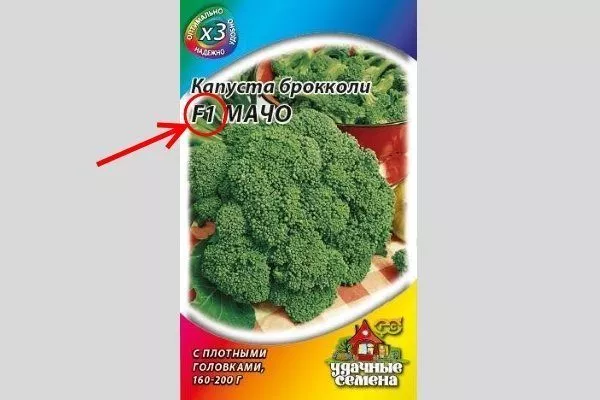
When purchasing seeds, carefully read the information on the packaging. If you sow a hybrid marked "F1" after the variety name, the seeds collected from it will not possess the qualities of the parent broccoli. Hybrid seeds will need to be purchased annually.
Preparing for landing
Planting and growing broccoli is easy, even for novice gardeners. However, each step requires careful and responsible attention.
- ✓ Optimum soil temperature for seed germination: 16-18 °C.
- ✓ The need to maintain soil moisture at a level of 70-75% of the total moisture capacity.
Conditions
For active growth, broccoli requires temperatures of at least 10°C and no higher than 25°C. Most varieties and hybrids prefer sunny beds. It's best to keep the vegetable away from drafts and strong winds.
Follow the rule crop rotation When planting, consider the proximity of broccoli to other plants. It is not recommended to grow cabbage in areas where Brassicaceae (Cruciferae) crops were grown last season.
Broccoli is best planted after legumes, squash, potatoes, onions, carrots, and tomatoes. Place nearby beds of potatoes, onions, lettuce, carrots, parsley, sage, and cucumbers. Avoid planting tomatoes, beans, strawberries, and strawberries near broccoli.
Planting site and soil
The chosen site for planting broccoli should be prepared in advance, beginning in the fall. To do this, thoroughly clear the bed of all plant debris from previous crops and weeds. The best way to destroy these debris is by burning them, especially if there have been any cases of fungal diseases in the area.
Next, dig the soil, using organic fertilizer to replenish its nutrients. Humus or compost is suitable, at a rate of 3.5-5 kg per square meter. If the soil is acidic, lime it with chalk or limestone.
More information about soil disinfection before planting seedlings is available here. Here.
Seeds
Before planting, seeds need to be prepared:
- Calibration. Sort out the seeds, leaving the largest specimens.
- Disinfection. Prepare a light pink solution of potassium permanganate and soak the seeds in it for 15-20 minutes, then rinse with water. Avoid prolonged disinfection to avoid chemical burns to the broccoli buds.
- Growth activation. To increase germination and harden the seeds, soak them in Epin growth activator for 12-15 hours. Another option is to keep the seedlings near a heating source for 1-2 days or in the refrigerator for 24 hours. Make sure the seeds are not exposed to temperatures below 3°C or above 50°C.
- Drying seeds. Facilitates sowing work by restoring the seed material's flowability.
After these procedures, the seeds are completely ready for sowing in open ground or for seedlings at home.
Growing instructions
In southern climates, gardeners prefer to sow broccoli seeds directly into the ground. Although broccoli has a long growing season, lasting 3 to 4 months, the heads have time to mature. Growing from seedlings shortens the growing season and increases the overall yield.
By seedling method
To grow seedlings, you'll need wide, shallow containers. These can be wooden boxes of various sizes, about 25 cm high. Other containers, such as cut-up plastic canisters or 5-liter PET bottles, are also suitable.
Some of the subtleties and peculiarities of sowing broccoli when growing from seedlings are described in the video below:
Purchase potting soil from a specialty store, a supermarket, or prepare it yourself. To create the potting mix, you'll need equal amounts of:
- soil from the garden;
- humus;
- peat;
- sand.
A simpler option is to mix garden soil with wood ash (300 g of organic matter per bucket of soil).
It's recommended to bake homemade planting soil on a baking sheet in the oven for 20 minutes at 150-200°C 10 days before use. After cooling, water the soil with a weak solution of potassium permanganate. This will kill any pest larvae and fungal spores present.
Now you can proceed directly to the seed sowing activities:
- Place a drainage layer of expanded clay, gravel or broken brick on the bottom of the container.
- Fill the top with soil, leaving at least 1.5-2 cm of space above the top edge. This is necessary to prevent water from spilling over the edge when watering.
- Make 1.5 cm deep holes all over the surface, keeping a distance of 2.5-3 cm between them. Place the seeds in them and cover with soil, compacting it slightly.
If you maintain a temperature of 16-25 °C and regularly provide moderate soil moisture, seedlings will not be long in coming.
Another method for growing seedlings is sowing the seeds in any containers, fairly close together. Two weeks after germination, be sure to transplant each broccoli plant into separate, more spacious containers or a greenhouse, placing the seedlings in the soil at the first cotyledon leaves.
In addition, picking is necessary when:
- dense planting in deep boxes;
- insufficient warming of the soil and air when the seedlings are ready for planting in open ground.
Broccoli does not tolerate transplanting well, so if possible, follow the seeding schedule from the very beginning, so that you only disturb the cabbage when planting the seedlings in an open area.
After 4.5-5.5 weeks from germination, when 4-5 leaves have formed on the young cabbage plants and the roots have become sufficiently strong, transplant the seedlings:
- Divide the selected area into holes, leaving a gap of 30-50 cm between each hole. Leave at least 50 cm between rows. Water the planting holes.
- Carefully remove the seedlings from the containers, along with the root ball of soil. Don't pull them by the stems, as this could damage the plant. Instead, gently shake them as you release them from the containers.
- Place the plant in the hole and cover the seedling with soil. The optimal planting depth is one where the soil level reaches the first leaves without covering them.
- Water the area.
Don't pinch the broccoli root when transplanting or picking seedlings. This helps the root system develop. other types of cabbageIn this case, this will lead to the death of the plants.
Now all that remains is to monitor the condition of the young cabbage, carrying out agricultural work in a timely manner.
Planting directly into the soil
When growing broccoli without seedlings, the seeds are sown directly into the ground. Be sure to prepare the soil and seeds before planting, using the same methods as for seedlings.
Once favorable conditions have arrived, sow the seeds in moist soil, following the planting pattern on the package. When the seedlings have developed 2-3 leaves, thin them out, leaving 35-40 cm between plants. This distance may be greater or less depending on the variety and size of the mature broccoli.
The following video explains how to plant broccoli in open ground:
Afternoon time in cloudy weather is considered favorable for transplanting.
How to care for crops?
Plant care measures for this type of cabbage do not change depending on the planting method and include a standard set of procedures:
- watering;
- weeding and loosening;
- top dressing.
- Loosen the soil after each watering or rain to prevent crust formation.
- Remove weeds by hand or by mulching to reduce competition for nutrients.
- Fertilize every 2 weeks, starting from the moment the second leaf appears.
Watering broccoli
Moisten the soil depending on weather conditions. In dry weather and hot weather, water broccoli at least 4-5 times a week. Loosen the soil after watering to prevent a dense layer from forming on the surface, which would prevent air from penetrating and promote rapid drainage of moisture into the deeper soil layers.
Broccoli responds well to air humidification and misting the planting area with a spray bottle. If the broccoli doesn't receive enough moisture, its heads will be small and its flavor will deteriorate.
Fertilizing broccoli
The first feeding is only possible after the plant's second leaf appears. If the seedlings' development has slowed, they can be fertilized by dissolving the following ingredients in 10 liters of water:
- potassium chloride - 20 g;
- superphosphate - 20 g;
- ammonium nitrate or urea - 20 g.
The second feeding is done 7-10 days after planting the seedlings (for direct-seeding cultivation, when the plant has 4-6 leaves). Use a urea solution (20-25 g per bucket of water) or an organic solution. Mix water and manure or compost in a 4:1 ratio. Pour 150-200 ml of fertilizer under each plant.
The third feeding of broccoli occurs when the inflorescences are forming. Use superphosphate (20 g per 10 liters of water).
The final feeding, designed to stimulate the formation of side heads, should be done after the main head of broccoli has been cut. The fertilizer composition is the same as the third feeding.
Diseases and pests
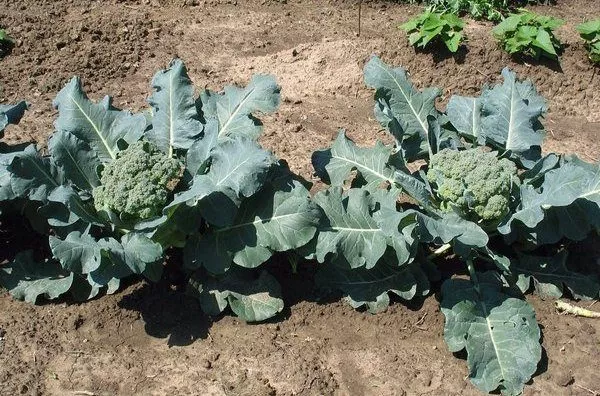
The main disease of broccoli is considered to be blackleg — a disease that causes gradual root rot. It can be recognized by the broccoli foliage becoming paler, wilted, and stunted. When pulled from the soil, the root reveals sunken, dark, rotting lesions.
There's no point in trying to treat the problem, as it's usually diagnosed late in the process, when the fungal infection has already progressed to its peak. Therefore, preventative measures are considered the primary means of combating blackleg:
- disinfection of seeds and soil;
- loosening the soil and destroying weeds;
- moderate watering;
- crop rotation;
- thinning the plantings to ventilate the root part of the broccoli.
Slugs and caterpillars are considered the main insect pests of broccoli. To combat them, choose traditional methods:
- Infusion of potato or tomato tops. Pour 1/5 of a bucket of chopped plant material with 4/5 parts water. Bring to a boil, simmer for 3-5 minutes, and set aside in a warm place to infuse for 24 hours.
- A solution based on tobacco dust, red hot pepper and laundry soap.Mix a tablespoon of pepper, a handful of tobacco, 40 grams of soap, and 10 liters of water. Let it steep for 2-4 hours. Strain and spray the broccoli. Remember to rinse the mixture thoroughly with running water before eating.
- Crushed eggshells repels slugs well.
Plant peppermint or marigolds next to broccoli—caterpillars dislike the smell of their essential oils, which will protect the cabbage from attack.
Chemical agents such as Actellic, Groza, and Foxim are helpful. Their use is possible only if the instructions and rules are strictly followed.
More information about cabbage diseases and pests is available in this article.
Harvesting
Depending on the variety, the first broccoli harvest occurs 12-16 weeks after sowing. The variety determines whether a single head will mature or whether additional side heads will also delight with their flavor.
Don't wait until the head reaches its full size, as this can cause it to overripe and lose flavor. Cut broccoli in the morning to ensure maximum juice absorption.
Loose heads contain fewer nutrients, but their cooking time is significantly shorter. Firm broccoli florets require longer cooking times, but they are also much richer in vitamins and minerals.
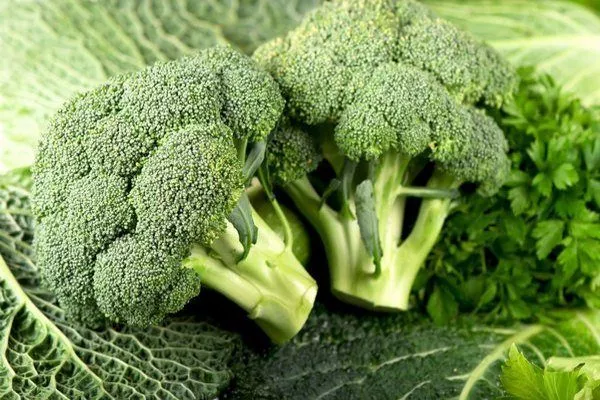
The first cut heads will keep in the refrigerator for about a week. They can be frozen for the winter, separated into florets. Side heads and late-ripening varieties of this cabbage are best for canning and storing in a cellar at around 0°C (32°F).
To clean the garden bed after harvesting, leave the uprooted plant debris on the surface. After a few weeks, small heads of broccoli will form on them, which are edible and delicious.
Growing broccoli is easy and doesn't require any specialized equipment or knowledge. With minimal material investment and a little time to carefully perform the necessary agricultural work, you'll reap the rewards of a bountiful harvest of healthy and delicious cabbage.