
Amager cabbage is characterized by late ripening, allowing heads to be stored for up to six months. It is grown exclusively in open ground, but in northern regions, greenhouse cultivation is also possible. In this case, it is important to monitor humidity levels under cover. Amager cabbage has excellent characteristics.
History of selection
This is a fairly old variety, dating back to 1943. It was developed by breeders from the All-Russian Research Institute of Crops and Vegetables (VNIISSOK). Foreign varieties were used as parents, but which ones remains a mystery.
The history of selection is multifaceted:
- Breeders began experimenting in 1927;
- but only in 1943 the variety was entered into the State Register and allowed for cultivation;
- initially, Amager had a prefix meaning - 611;
- The numbers were removed after several years, as the plant's characteristics changed significantly when cultivated in a hot climate – they began to withstand drought and high air temperatures.
Description of the plant
This variety is absolutely not suitable for the Urals and Siberia, even if grown in a greenhouse – the heads will not have enough time to fully ripen.
How to distinguish it from other varieties?
Amager has a fairly spreading rosette of leaves, which remain in an elevated position as the bush grows. But the variety also has other unique characteristics:
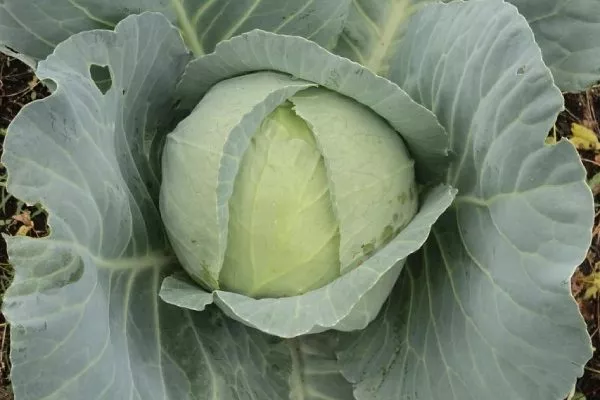
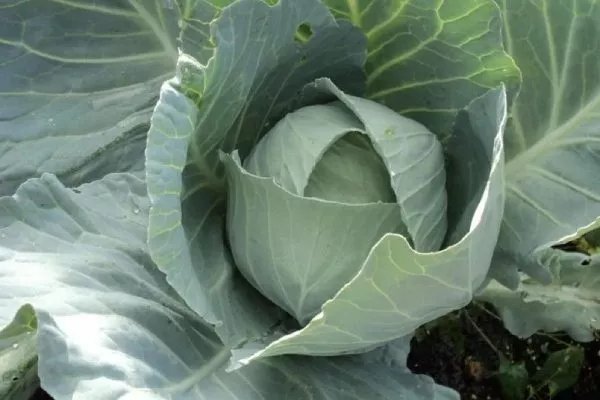
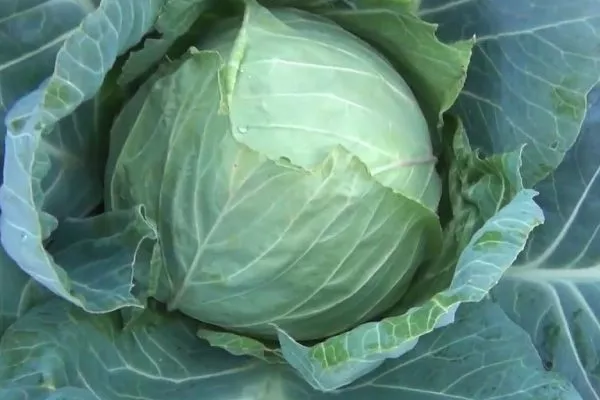
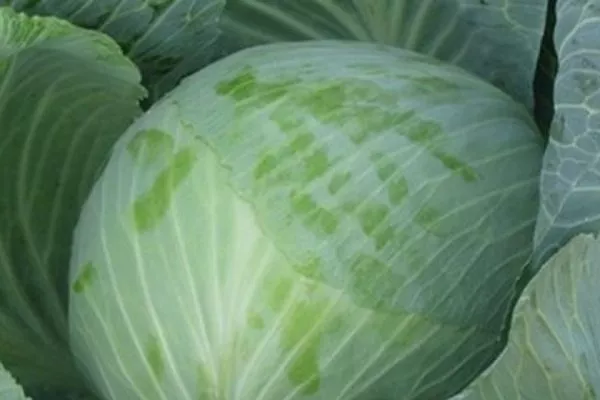
- Heads of cabbage. The shape is slightly flattened and rounded, quite large—one cabbage head weighs from 2.5 to 4-4.5 kg. The outer color is gray-green, the inner color is whitish. The surface has a light waxy coating that is washed off before use and simultaneously protects the coils from pathogens. The cross-section of the head is very dense.
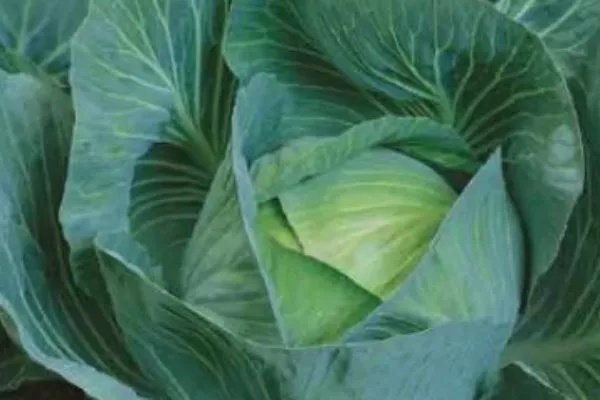
- Leaves. They are characterized by a semi-concave shape and a smooth surface with slight wrinkles. Their average width ranges from 35 to 45 cm, and their length from 40 to 50 cm. The venation is semi-fan-shaped.
The truncated shape resembles a circle and is ovoid. It tapers at the base and is rarely considered flat. The edges have large wavy edges. - Leaf rosette. It reaches 65-85 cm in length.
- Stalk. The inner one is of medium length (from 20 to 25 cm), and the outer one is quite tall (from 15 to 30 cm).
- Taste and aroma. Cabbage has an intense aroma, without any off-flavors. Its flavor depends on the head's development stage and storage period. During harvest, the flavor is considered satisfactory due to the presence of a slight spiciness, and after a couple of weeks, it improves.
- ✓ The heads of cabbage have a specific waxy coating, which not only protects against pathogens, but also requires a special cleaning method before consumption.
- ✓ The taste of cabbage improves significantly after 2-3 weeks of storage, which is unique to this variety.
Chemical composition, trace elements and vitamins, beneficial properties
Cabbage is a rich source of fiber, which is essential for proper digestive function. It is considered a dietary food, containing only 27 kcal per 100 g.
Among the minerals present are:
- potassium;
- silicon;
- manganese;
- boron;
- cobalt;
- chromium.
The B vitamins contained in Amager activate metabolism, while folic acid is involved in the production of hemoglobin and enrichment of the blood with oxygen.
Purpose of use
The Amager cabbage variety is considered particularly valuable. Its flavor improves over time: the initial bitterness fades, giving way to a clean and pleasant flavor. This variety keeps well until late spring, making it ideal for preparing fresh dishes.
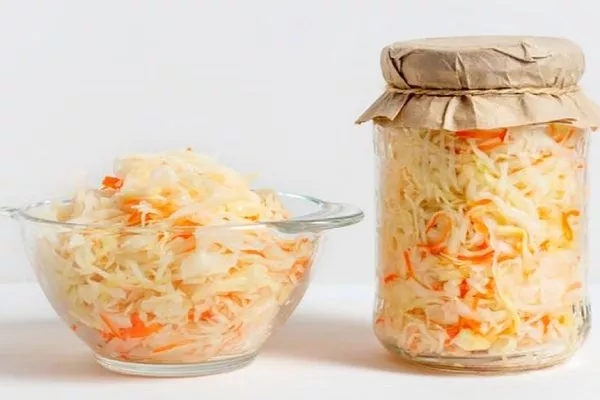
Amager cabbage is best used for pickling and fermenting in late autumn, when it accumulates vitamins and nutrients. Features:
- Sauerkraut produces lactic acid during the fermentation process, which has a positive effect on its taste and health benefits.
- Salting, thanks to the addition of salt, helps to destroy unwanted bacteria, and salted cabbage becomes especially useful during periods of epidemics, strengthening the immune system.
Ripening period
The Amager cabbage variety, bred in Russia, is a late-ripening variety. It takes 115 to 150 days from germination to reach technical maturity. However, biological maturity is reached in 150 to 170 days.
To achieve optimal taste, the harvest must be allowed to rest so that the leaves lose their bitter taste and become juicier.
Productivity
Over many years of cultivation, Amager cabbage has proven itself to be a successful variety for both private farmers and industrial production. Adherence to proper agricultural practices allows for yields of up to 6-8 kg of vegetables per square meter, and up to 65 tons per hectare.
Disease resistance
Resistance to diseases and pests is low. Regular preventative treatments are necessary to prevent fungal diseases.
Resistance to cold and drought
The Amager variety is characterized by high cold tolerance. Seeds and seedlings can be planted before the last spring frosts, and the mature heads can withstand temperatures as low as -3 degrees Celsius.
Despite its relative drought resistance, the variety requires adherence to a watering schedule, especially during the active head formation phase.
Growing regions and climate requirements
The Amager variety is suitable for cultivation in various regions of Russia, including the Northwestern, Central, Volga-Vyatka, Central Black Earth, North Caucasian, Middle Volga, Lower Volga, Ural, West Siberian and Far Eastern regions.
Pros and cons
Amager has gained popularity among gardeners and consumers due to its many positive qualities:
Despite the many advantages, the variety also has disadvantages:
Similar varieties
| Name | Ripening period (days) | Disease resistance | Cold resistance |
|---|---|---|---|
| Amager | 115-150 | Low | High |
| Moscow late | 120-160 | Average | High |
| Valentina F1 | 110-140 | High | Average |
| Extra F1 | 100-130 | High | Low |
Among the many late varieties of cabbage, there are several that are similar to Amager in their characteristics:
- Moscow late - An old, proven variety, bred in 1937, known for its frost resistance. Its heads are large (up to 5 kg), firm, and store well, making them ideal for pickling.

- Valentina F1 — A popular new late variety with juicy, sweet leaves without bitterness, it forms heads of cabbage up to 4 kg, which are stored well until mid-summer.
- Extra F1 - A late-ripening hybrid variety, resistant to various diseases, with heads of cabbage up to 2.8 kg, which can also be stored for a very long time - until the end of spring.
Growing and care
Amager cabbage is grown primarily from seedlings, beginning in late February or before March 15. In warmer regions, direct seeding is possible starting around May 5. Other features:
- To successfully grow Amager, fertile soil with a neutral pH (6.2-7.5) is required.
- Good predecessors for cabbage are legumes, potatoes, zucchini, tomatoes and melons.
- In autumn, peat, humus, ash and mineral fertilizers are added to the soil to enrich it with nutrients.
- ✓ The soil pH level should be strictly within the range of 6.2-7.5 for optimal nutrient absorption.
- ✓ The soil should be rich in organic matter, with an annual addition of humus or compost in the amount of 5-7 kg per square meter.
Before planting, you should prepare the seed material:
- Selection of seeds. Sort out the large and whole seeds. You can use water to speed up the process: seeds that float to the surface are not suitable for planting, as they are empty.
- Disinfection. The seeds are kept in a special solution that increases their immunity.
- Processing. Additionally, seeds are stimulated to grow using specialized growth stimulants.
Planting pattern:
- The distance between rows should be 70-85 cm.
- The distance between plants in a row is up to 50-55 cm.
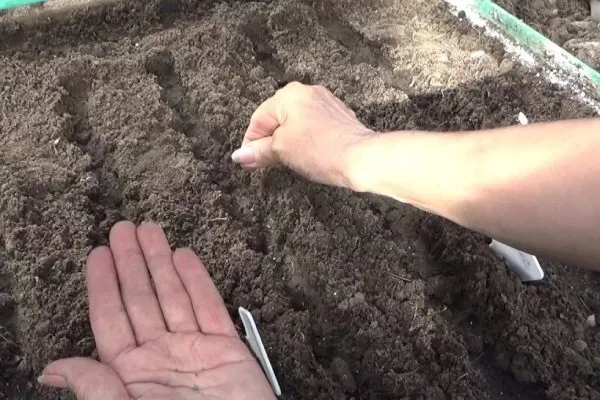
- The maximum depth for planting seeds is 1.5-2 cm; when planting seedlings, the stem is buried to the beginning of the leaves.
Caring for cabbage includes the following steps:
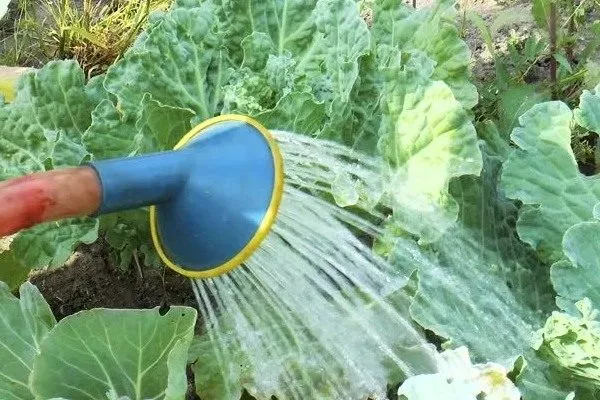
- Watering. Initially, cabbage requires generous watering every two days for the first two weeks. This can then be reduced to 1-3 times a week, depending on weather conditions. Water should only be warm, otherwise growth will be stunted.
It's recommended to water in the morning or evening to avoid sunburn from dripping water on the leaves. Watering should be stopped 20 days before harvest. - Weeding and loosening. These measures are carried out after each watering, which helps to avoid the development of diseases and pests, and also promotes better nutrition of the roots.
- Top dressing. Fertilize the seedlings for the first time immediately after planting, using organic matter. Nitrogen-containing fertilizers may be needed to stimulate leaf growth. When heads are forming, feed them with mineral fertilizers.
What to do to increase the yield?
The Amager variety is popular among farmers due to its consistently high yields and low maintenance requirements. To obtain large, juicy heads, follow these farming practices:
- It is recommended to plant through seedlings for an earlier harvest;
- It is necessary to ensure regular watering, loosening of the soil and hilling of plants;
- It is important to apply fertilizers that correspond to the current stage of plant development;
- Preventive measures should be taken to protect against diseases and pests.
During the final soil moisture application, it's helpful to use fertilizers such as Zdraven, Bud, and Effekton, which help increase yields. Treating the soil with boric acid will help preserve vegetables better over the winter.
Pest and disease control
If agricultural practices are violated, the following may occur:
- Fusarium wilt. Characterized by yellowing and wilting of leaves, requires treatment with fungicides - Immunocytophyte, Agat-25.
- Vascular bacteriosis. It manifests itself as blackening of the veins and yellowing of the leaves; plants should be treated with Fitolavin-300 and Planriz.
- Pinpoint necrosis. It causes the formation of dark spots on the leaves; affected plants are destroyed.
Difficulties in growing
Amager is undemanding, but for successful growth it is necessary to provide sufficient watering and plenty of light, and to prevent fungal diseases.
Harvesting and storage
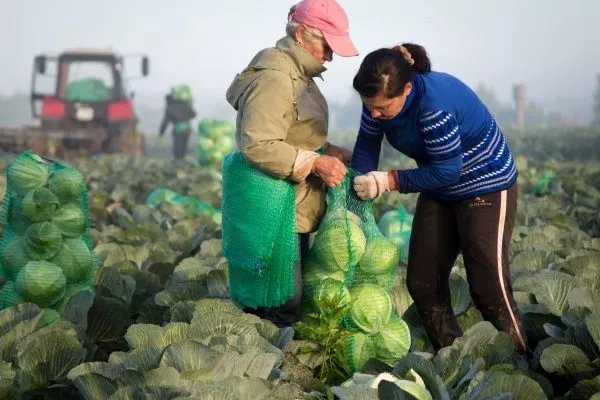
The harvest should be done after nighttime temperatures drop to -3 degrees Celsius to avoid freezing. Harvesting should be done in dry, sunny weather, preferably using automated methods or by hand, preserving the protective outer leaves.
Cabbage is stored in a well-ventilated cellar at a temperature of +1 to -1 degrees and a humidity of 90-95%.
Reviews from experienced gardeners
IN
Amager cabbage is a high-yielding and versatile variety, ideal for long-term storage and long-distance transportation. Consumers prefer this variety for its impeccable flavor and juicy leaves, while gardeners appreciate it for its low maintenance.