
The Zebra variety belongs to the zucchini family, characterized by green striped fruits. Zebra is a cultivar, not a hybrid, allowing you to use your own seeds for planting in future seasons (the parent plant's qualities are fully preserved). The variety produces a high yield, and its flavor is delicate and slightly sweet.
Who developed the variety and when?
Zucchini Zebra is a domestically bred variety developed in the early 2000s. In 2008, this variety was officially registered in the country's State Register. The team of breeders responsible for its creation included G. I. Tarakanova, V. A. Rakipova, A. M. Gusev, T. V. Novikova, S. A. Andrievskaya, and V. P. Yanatyev.
Zebra squash: variety description
Zebra is a large-fruited variety with sparsely branched bushes. It is popular among consumers due to its excellent taste and versatility.
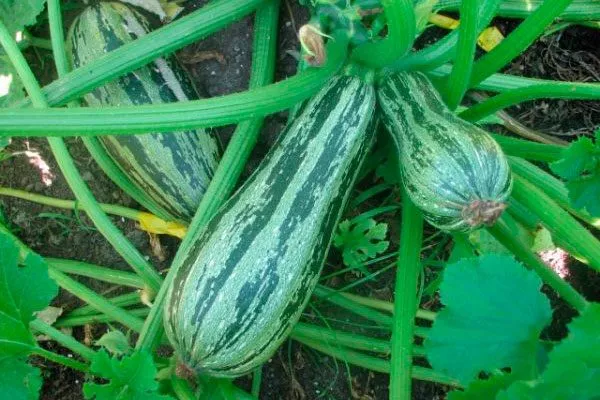
Bushes
The plant is quite compact, so it doesn't take up much space in the garden. It has the following characteristic features:
- leaves - medium in size, dissected type with a smooth surface;
- leaf blade color – rich emerald;
- foliage cover – monochromatic (usually with inclusions);
- number of stems – insignificant;
- main whip type – shortened;
- spreading - weak;
- flowers – large in size;
- type of buds – mostly female, since very few male ones are formed;
- shade of petals – pale yellow.
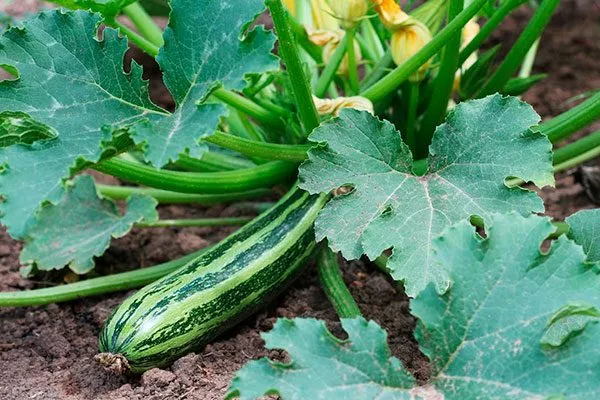
The variety is self-pollinating, but the presence of pollinating insects is essential for increased yields. To attract them, experienced gardeners spray the flowers with sugar water.
Fruit
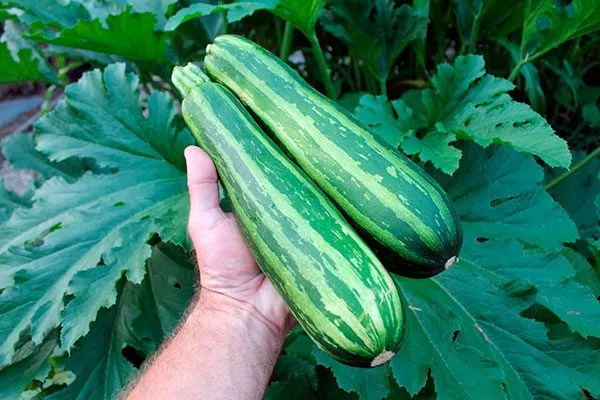
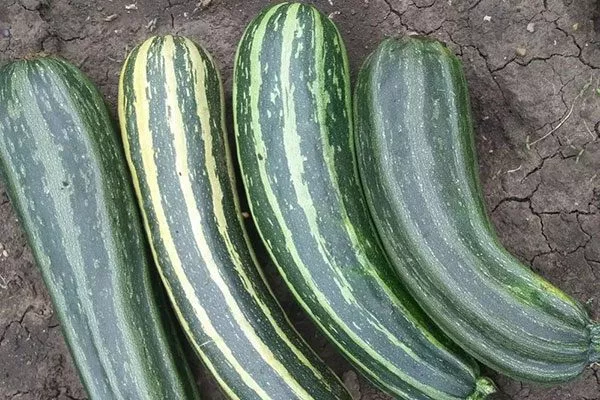
Zebra pumpkins are impressive in size – they weigh between 800 and 1100 grams, with some specimens even larger. The fruits reach a maximum length of 30-35 cm. Other characteristics:
- form - more cylindrical, elongated, the end has a slight thickening (sometimes non-standard zucchini grow, the shape of which is more spherical, with a diameter of 15 cm);
- peel – thin but durable, so it is not subject to mechanical stress;
- surface structure – slightly ribbed;
- surface type – brilliant;
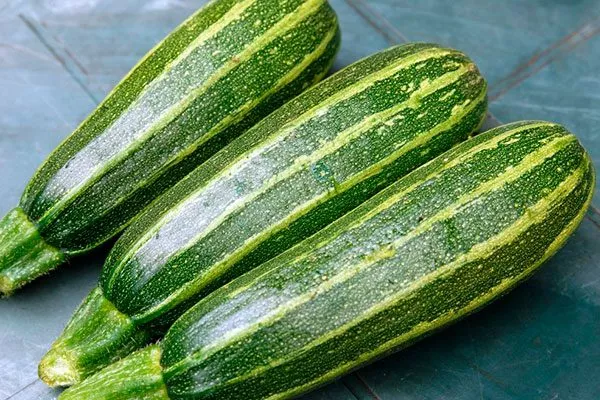
- skin color – dark green, stripes and spots are lighter in tone;
- pulp – juicy, sweetish;
- pulp shade – light yellow;
- seeds – medium in size, elliptical in shape, white in color.
Culinary uses
The fruits can be eaten fresh, stewed, fried, pickled, or frozen. Zucchini caviar is especially delicious, as are various canned products. The fruits are rich in vitamins B, A, and C, and contain folate, making them a healthy choice for enriching the diet.
Characteristics of the variety
The characteristic qualities of a zucchini variety are a crucial aspect when growing the crop. They allow you to choose the right variety for your specific climate and soil type.
Drought resistance
Zebra has low tolerance to periods of drought, which can negatively affect plant growth rate and fruit quality.
Productivity, ripening time and fruiting
This variety is characterized by early ripening (40-50 days from planting) and a long fruiting period, which can last from 45 to 60 days. The plants require regular harvesting: every 2-3 days, with the optimal fruit weight considered to be 600-900 g – the pulp will be the most tender.
Under favorable growing conditions and fertile soil, 10-12 kg of zucchini can be harvested from 1 square meter, and with mass cultivation, the yield can reach 700-750 centners per hectare.
- ✓ The pH level must be strictly within 6.0-7.0 for optimal absorption of nutrients.
- ✓ Drainage is required to prevent water stagnation and root rot.
Soil requirements
Zucchini prefers loose, well-drained, and rich soil with a neutral pH. To adjust the acidity, add dolomite flour, chalk, slaked lime, or wood ash. The soil should be enriched with compost.
Zebra squash grows especially well in raised beds created from layers of branches, grass, and garden soil. A nutrient-rich mixture of dry manure, crushed eggshells, and ash is added to the holes. These beds require no tilling, weeding, or additional fertilizing, as the plants obtain all the necessary nutrients from decaying organic matter.
Cultivation regions
The Zebra variety is adapted for cultivation in the Central Black Earth region of Russia and is suitable for both outdoor cultivation and under plastic covers or greenhouses. Despite its regionalization, Zebra is cultivated throughout the country.
Resistance to diseases and pests
This zucchini variety is highly resistant to most diseases typical for this crop. However, under certain climatic conditions, the following diseases may be observed:
- powdery mildew;
- downy mildew;
- gray mold;
- anthracnose.
Systemic fungicides are used for treatment.
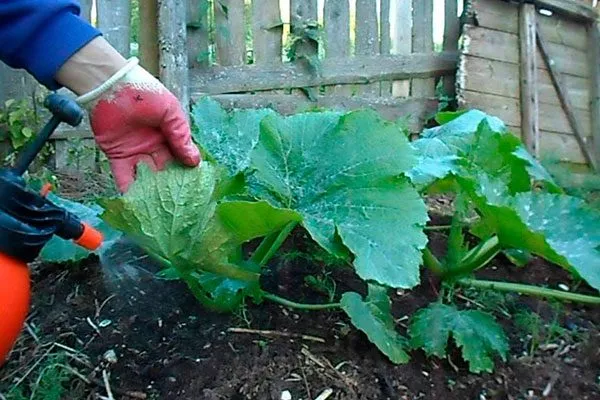
Pests that may appear on bushes include spider mites and aphids. For small infestations, folk remedies such as soapy water can be used. Large infestations require the use of specialized insecticides.
Advantages and disadvantages of the variety
Zebras have both positive and negative qualities that should be recognized in advance. Advantages:
- Versatility in growing conditions. Zucchini easily adapts to different climate conditions and soils.
- Growing methods. Suitable for open ground, greenhouses and even indoor cultivation in winter due to the plant's compact size.
- Resistance to weather conditions. It tolerates both heat and slight cold spells well.
- Early ripening. The fruits reach maturity quickly.
- Productivity. Excellent yield figures both in private gardens and on an industrial scale.
- Taste. Preservation of pleasant taste qualities during heat treatment.
- Appearance. The bushes have a compact and attractive appearance. Ripe zucchini have good commercial qualities.
- Storage. The fruits can be stored for up to 6 months and tolerate transportation well.
Flaws:
- Demanding to soil type. Optimal development is observed only on certain soil compositions.
- Susceptibility to excess moisture. Excess moisture can provoke the development of pathogenic microorganisms and rot.
Features of growing in open ground
Zebra is usually grown from seedlings. The seeds are first germinated indoors, and then, once the plants have established themselves, they are transplanted outdoors. This is for a reason: the variety is heat-loving and can be damaged by spring frosts. Therefore, the plants are only brought outdoors after the weather has become consistently warm.
Landing
Zebra zucchini seedlings are best grown in half-liter cups filled with special soil supplemented with superphosphate. The first shoots usually appear within 5 days.
Sowing process:
- Fill containers with drainage holes at the bottom with substrate, leaving a space of 1-2 cm at the top.
- Moisten the soil mixture and allow the water to soak in completely.
- Plant the seeds 2 centimeters deep and lightly moisten the soil again. It's best to plant 2 seeds per hole.
- Cover with plastic wrap or an upside-down plastic cup to create a greenhouse effect. Continue caring for the plant as usual.
Zebra zucchini seedlings are undemanding in terms of long-term lighting, hardening off, and fertilizing; however, germination of seeds at home is necessary, except in warm regions.
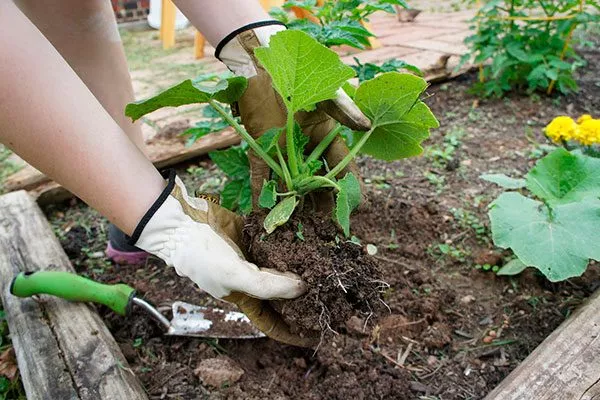
Features of the transplant:
- Selecting a location. Before planting, choose a location sheltered from the wind and well-drained. Good predecessors for zucchini include annual grasses, potatoes, cabbage, beets, and onions. Keep in mind that growing zucchini in the same location two years in a row will reduce yield.
- Landing. Make planting holes according to the 70x70 cm pattern, moisten the soil slightly and plant the seedlings together with the root ball, deepening the roots by 2.5-3.5 cm.
- Planting diagram. The distance between plants is 70-80 cm on all sides.
Caring for bushes
Care procedures are simple and standard, but there are some varietal features:
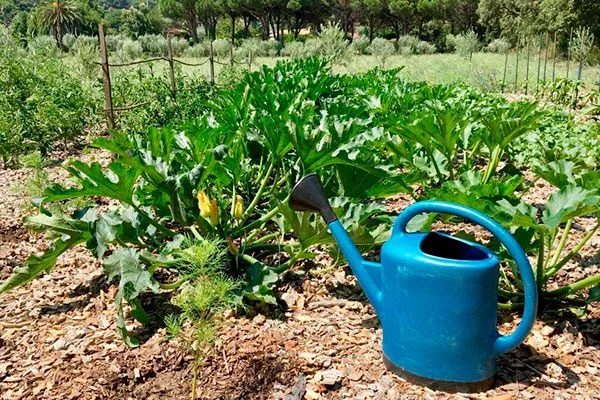
- Watering the bushes. Water them once every 3-4 days when the top layer of soil dries out, but avoid standing water. After watering, loosen the soil in the root zone and remove weeds. To conserve moisture, mulch the root zone with compost or grass clippings.
- Top dressing. For best fruiting, apply fertilizer three times per season: when transplanting seedlings, before budding, and before fruiting begins. Use well-rotted compost, humus, and charcoal.
To stimulate the growth and quality of ovaries, use foliar feeding, for example, a solution of potassium salt, superphosphate, saltpeter, or organic fertilizers from cow manure and bird droppings.
- First feeding: 10 days after transplanting the seedlings, use a complex mineral fertilizer.
- Second feeding: at the beginning of flowering, preferably potassium-phosphorus fertilizers.
- Third feeding: during the period of active fruiting, use organic fertilizers.
Features of greenhouse agricultural technology
Zebra is a heat-loving zucchini variety, so it thrives in warm climates with plenty of sunlight. However, it can also be grown in colder regions such as the Urals or Siberia.
For this purpose, it is recommended to use seedlings planted in greenhouses. Not only does this maintain the required temperature and humidity, but it also accelerates the fruit ripening process, which contributes to increased yields.
Peculiarities:
- Zebra takes up little space, making it ideal for small greenhouse spaces.
- It is recommended to plant seedlings at a distance of 45-55 cm from each other, but for ease of processing the bushes, this distance can be increased to 65 cm.
- When growing zucchini in a greenhouse, it is important to ensure regular watering every 5 days, as well as to monitor the ventilation of the room.
- It is necessary to maintain humidity at 65-70%.
- Given the planting density, harvest carefully to avoid damaging the fruit and nearby plants.
Storage
Zebra fruits are resistant to transportation and retain their freshness and nutritional value for up to four months at room temperature (18-20°C and 50% humidity). At temperatures of 4-5°C, the shelf life increases to six months.
Storage and collection rules:
- Store zucchini in a cool, dry place.
- Medium-sized fruits with undamaged skin are considered best for storage.
- Before storing, pumpkins should be dried in a bright place for 10 hours.
- The fruits should not be washed before storage, but only carefully cleaned of soil.
Reviews
Zebra squash is a striking example of the zucchini family, considered easy to grow, high-yielding, and self-pollinating. It can be grown both in open beds and in greenhouses, which is ideal for northern Russia. It can be cultivated for both commercial and personal use, as it has one of the longest shelf lives.