
The zucchini with the culinary name "Zapekanka" is characterized by early maturity, high yields, and excellent flavor. This round variety is convenient for baking and stuffing whole, as the fruits are relatively small. It can be grown in regions with cool climates.
Characteristics of the appearance of the plant and fruits
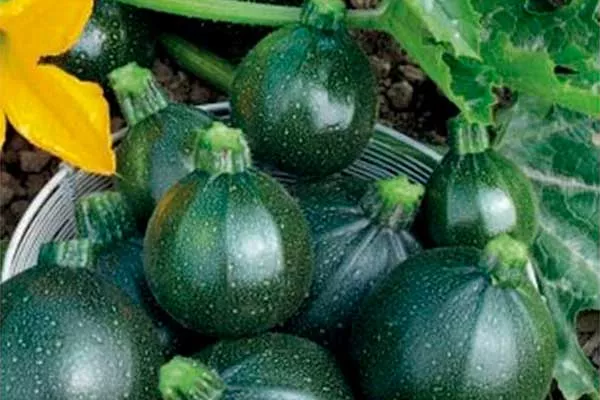
The plant is considered compact and bushy, and differs from other varieties in the following external characteristics:
- leaves - bright green hue;
- weight of fruits – 450-500 g;
- pumpkin color – dark green;
- pulp – dense and tender, with a specific crunch;
- juiciness – increased.
Purpose and taste
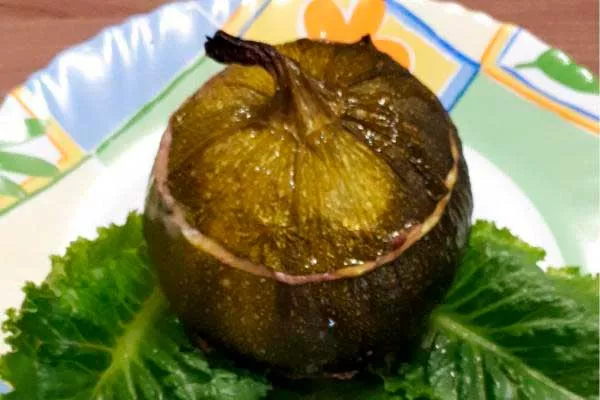
Suitable for baking and other cooking methods. Its dense texture makes for a beautiful vegetable stew. Zucchini can be fried and canned for winter. It has a slightly sweet flavor.
Fruit harvesting period, yield
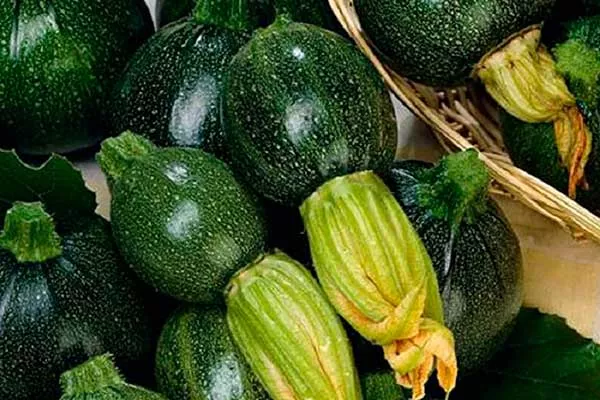
This variety is considered high-yielding, yielding 4 to 6 kg or more per square meter. Harvest time depends on planting date, but full consumer maturity is reached 45 days after sprouting.
Soil requirements
Like any crop, Zapekanka prefers abundant fertility, but for normal development, germination, and growth, special attention must be paid to the composition of the substrate when sowing seeds and to the soil in open beds after transplanting seedlings.
- ✓ Check the soil pH level before planting, the optimal range is 6.0-7.5.
- ✓ Make sure there is no stagnant water; zucchini does not tolerate over-watering.
For sowing seeds
To successfully sow zucchini seeds, you need to prepare specialized soil. The soil mixture for seedlings should have a neutral or slightly alkaline reaction and should be composed of the following:
- peat soil – 5 parts;
- humus – 2 parts;
- sod soil – 2 parts;
- sawdust – Part 1.
For growing seedlings after transplanting
After replanting, it's important to select the appropriate soil type. Zucchini grows poorly in acidic soils with high groundwater levels. Light, sandy loam or loamy soils that warm well throughout the growing season are ideal.
Choosing a location
When choosing a site for planting zucchini, it's important to consider that, as a southern crop, they require ample sunlight. As the plant grows, thin it regularly, removing two or three large leaves to improve the sun exposure of the core.
There are good and bad predecessors for zucchini:
- To the good ones These include green manure, parsley, beans, peas, cabbage, potatoes, onions, carrots, radishes, horseradish, turnips, and tomatoes.
- Bad predecessors are the zucchini, cucumbers, squash, and pumpkins themselves.
Planting, growing and transplanting seedlings
For an early zucchini harvest, use the seedling method. The seeds are pre-soaked in warm water and germinated until they sprout. Next steps:
- Distribute the soil into pots (8-12 cm in diameter).
- Place the seeds at a depth of 3-4 cm.
- Cover the containers with plastic wrap or glass.
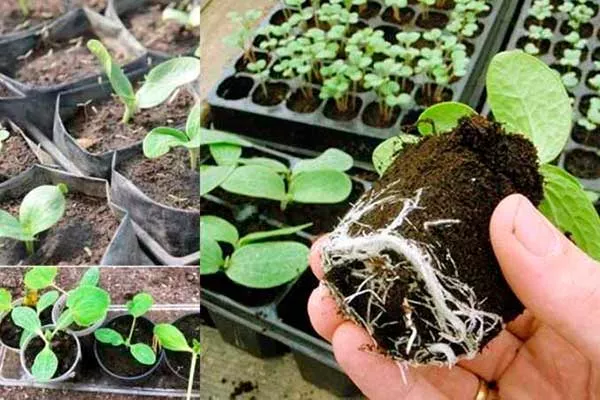
Features of the transplant:
- Before transplanting into the garden beds, the seedlings need to be hardened off by taking them out onto the balcony and gradually increasing the time they spend outdoors.
- The distance between plants when planting is 70x50 cm; it is recommended to grow no more than three plants per 1 square meter.
- Ash and humus are added to each planting hole, after which the seedlings are planted and watered.
It's best to carry out the work in warm, cloudy weather. If frost is likely to return, use plastic bottles or plastic sheeting to cover the plants. It's recommended to loosen the soil the day after planting.
Rules for caring for a new variety
To ensure a healthy bush and abundant fruiting, learn how to properly care for Zapekanka.
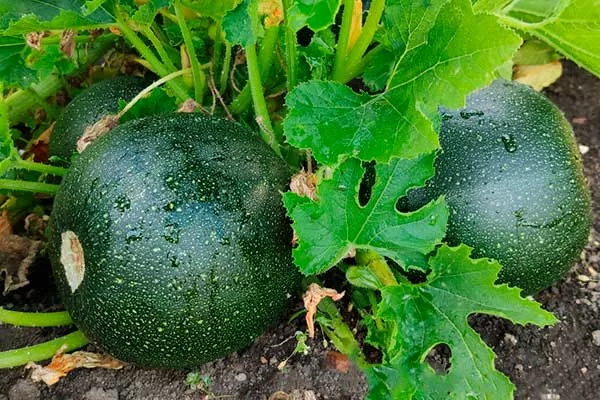
Watering and maintaining the necessary humidity
Zucchini should be watered in the evening, using water that has been warmed by the sun during the day. Instructions:
- In warm and sunny weather, before the leaves begin to cover the soil, watering is carried out daily.
- Once the leaves have created sufficient cover for the soil, you can switch to a watering regimen of once every 5-6 days in cool and cloudy weather, or once every 2-3 days in hot weather.
- When watering, direct water directly to the roots of the plant.
- To prevent the zucchini from rotting, you can place a waterproof material underneath them, such as a board or a piece of slate.
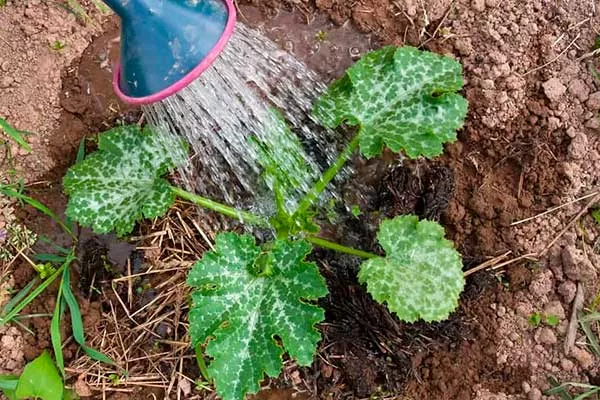
Top dressing
Zucchini prefer organic fertilizers. Fertilizing is done in several stages, observing the following nuances:
- Fertilize the seedlings for the first time 15 days after transplanting. To make an herbal infusion, take freshly picked herbs and fill a barrel almost to the top. Add water and stir daily for a week. Then strain the infusion, dilute it with water 1:9, and use it to water the zucchini.
Be careful not to let the infusion come into contact with the leaves or stems of plants. - A week after the first feeding, repeat the fertilization with herbal infusion.
- You can alternate herbal fertilizer with slurry. To do this, dilute the manure with water at a ratio of 1:10 and let it sit in the sun for three days. Then, apply the resulting mixture to the roots of the plant, avoiding the leaves and stems.
- Fertilize for the third time when ovaries begin to appear. Add 2 tablespoons of regular superphosphate and 200 g of sifted wood ash to 10 liters of grass or manure fertilizer.
- The first feeding should be carried out 15 days after transplanting, using a herbal infusion.
- Carry out the second feeding a week after the first, also using herbal infusion.
- The third feeding should be carried out when the ovaries appear, adding superphosphate and ash to the infusion.
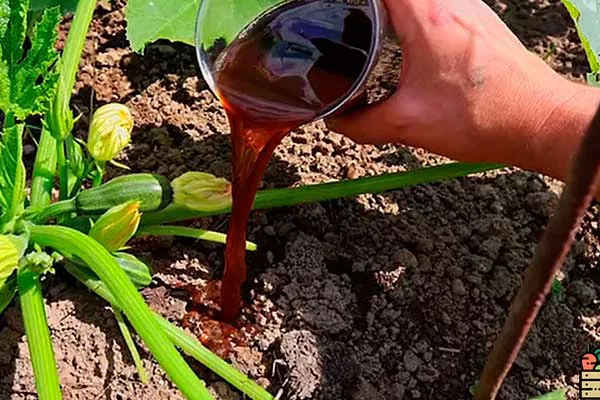
"Zapekanka" zucchini is popular among gardeners. It's grown in all regions of the country, not only in garden plots but also on an industrial scale. This variety is also loved by consumers for its compact pumpkin size, delicate sweet flavor, and firm flesh.