
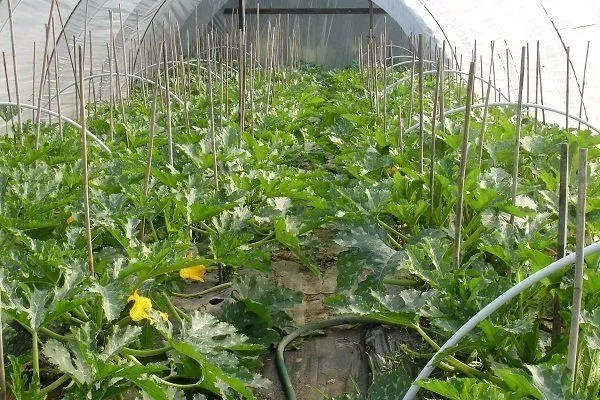
Zucchini is a low-maintenance crop, so it's most often grown outdoors. However, this doesn't mean they can't be grown in greenhouses. On the contrary, it will yield a more abundant harvest—an average of up to 30 kg per square meter. What should you consider when growing this vegetable in a greenhouse and how to properly care for it? Let's explore further.
Benefits of growing indoors
Zucchini is rarely grown in greenhouses, as they produce a good harvest even in the garden. Moreover, they are resistant to nighttime frosts and require little care. However, even with this in mind, growing them in a greenhouse makes sense, as it offers the following advantages:
- the fruits ripen several times faster, which has a positive effect on the amount of harvested crop;
- When formed, zucchini acquires a more delicate and delicious taste;
- hybrids intended for cultivation under film conditions do not require increased attention in care;
- seedlings are not subject to pest attacks and are practically disease-free;
- Early varieties can be grown profitably for sale on an industrial scale.
Zucchini doesn't require any special soil composition or temperature conditions, so growing it indoors is inexpensive.
Selecting a variety
| Name | Ripening period | Productivity | Fruit weight |
|---|---|---|---|
| Kuand F1 | 52-61 days | 20-25 kg/sq.m | 1.1-1.5 kg |
| Kavili | 45-50 day | 10-60 t/ha | 16-22 cm |
| Nemchinovsky | Day 38-48 | Friendly giving | 610-770 g |
| Aral F1 | Day 35 | More than 500 kg/ha | 0.5 kg |
| Daredevil | 35-50 day | High | 0.5-1 kg |
For growing in limited space, it's best to choose compact, bushy F1 hybrids, as they meet several important requirements: they take up minimal space, have high yields and a long fruiting period, and possess excellent taste. If you also choose early hybrids, they can be grown in a greenhouse all year round.
Small-fruited varieties with light or medium-colored zucchini are preferred for sale. It's important that the plant itself is free of growths on the petioles to make harvesting the abundant crop easier and safer.
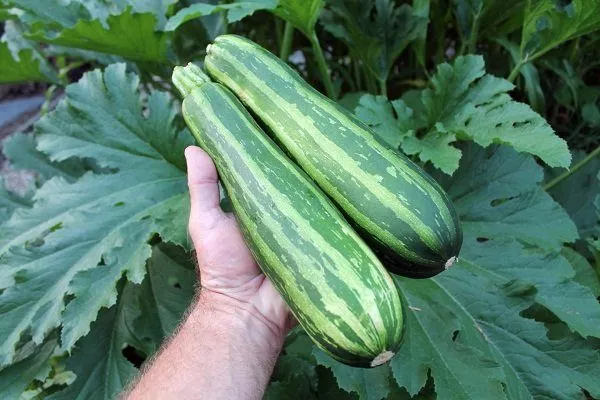
Taking into account the listed requirements, it is best to cultivate the following varieties and hybrids in closed ground:
- Kuand F1An early-ripening variety bred at the Kuban Experimental Station of the All-Russian Research Institute of Plant Growing. Recommended for growing in protected soil under compact film shelters in the Northern, Volga-Vyatka, Lower Volga, Ural, and West Siberian regions. Fruiting begins 52-61 days after full germination. Yields 20-25 kg per square meter. Fruits weigh 1.1-1.5 kg and measure 21-28 cm in length, making them ideal for processing and canning.

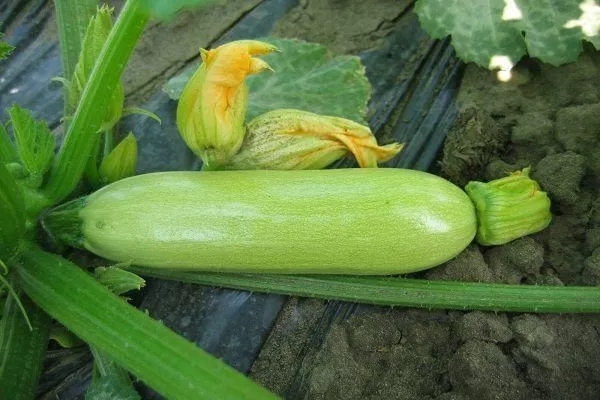
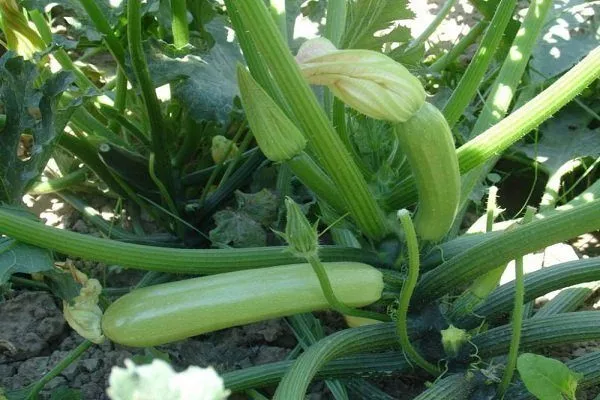
- KaviliA Dutch-bred hybrid with a long fruiting period (over two months). Typically, straight zucchini is harvested 45-50 days after emergence, when the seedlings reach 16-22 cm in length. Only 8-12 plants are needed per 10 square meters of greenhouse. Yield: 10-60 tons/ha.
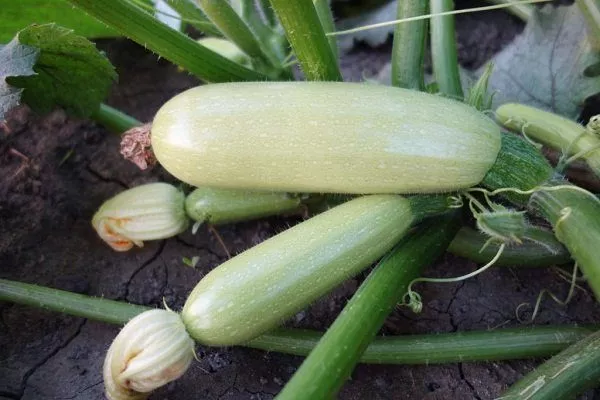
- NemchinovskyA compact hybrid variety that doesn't form long vines and produces pale green zucchini weighing 610-770 g. The plant is early maturing, so it begins bearing fruit in 38-48 days. It produces fruit uniformly.
- Aral F1This is one of the earliest-fruiting early zucchini varieties—the first fruits can be harvested as early as 35 days. At technical maturity, zucchini weigh approximately 0.5 kg and reach 16-18 cm in length. Yields are high—over 500 kg/ha. When grown in a greenhouse, the fruits should be harvested every 3-4 days to promote the formation of new ovaries.
- DaredevilAnother early-ripening zucchini variety, reaching technical maturity in 35-50 days. The fruits average 0.5 to 1 kg in weight and are excellent for transport.

Greenhouse requirements
Zucchini grows well in both polycarbonate greenhouses and simple plastic covers. In any case, to ensure a good harvest, consider a number of greenhouse requirements:
- Even to achieve a good harvest, the greenhouse area can be small – about 45-50 square meters. Its height isn't particularly important, but for ease of care and harvesting, it's worth leaving a wide passage between the bushes.
- If you plan to grow vegetables during the winter, the greenhouse should be built on a foundation, and the wooden or metal frames should be covered with glass or polycarbonate. Additionally, it should be equipped with vents for ventilation and a heating system using an electric boiler or wood-burning stove. If the greenhouse is simply covered with plastic, household heaters can be used. More expensive greenhouses can be equipped with an automatic drip irrigation system and climate control.
- For zucchini, it's advisable to provide a biofuel bed that will warm the plant roots rather than the air. This bed is prepared by mixing equal parts straw and rotted manure (pig, goat, or cow). The resulting pile should be piled up, watered thoroughly, and left under plastic wrap for 3-4 days. Next, remove the top layer of soil in the greenhouse, evenly distribute the biofuel, and cover with a layer of nutrient-rich substrate.
This type of cushion also serves as an excellent fertilizer for seedlings during the period of active growth, as it releases carbon dioxide, which promotes rapid ripening of the fruit and improves its taste.
- For zucchini in a greenhouse, prepare light, well-aerated soil with a slightly alkaline or neutral pH. Before planting, you can fertilize it with ash or mineral fertilizers. Keep in mind that zucchini doesn't like to grow in the same spot year after year. It's best to alternate its planting with the following crops:
- onions;
- cabbage;
- garlic;
- legumes;
- carrots;
- tomatoes;
- potatoes.
To enrich and improve the soil structure, it is recommended to plant green manure.
- After spring treatment of the greenhouse, the soil should be mulched with sawdust or other organic matter. This fertilizer will also be useful during the plant growth period.
- It's important to maintain an optimal temperature in the greenhouse. It should be maintained at 23°C during the day and not drop below 14°C at night. The soil itself should be warmed to 20–25°C.
- ✓ Soil pH should be between 6.0-7.5 for optimal zucchini growth.
- ✓ The soil must be well drained to avoid waterlogging and root rot.
Method and timing of planting
Zucchini can be grown outdoors using either seedlings or seeds, but in a greenhouse, seedlings are much more effective. This can be done year-round, but is best done in late winter or early spring, as autumn-grown zucchini have the best shelf life (2-4 months). Furthermore, it's during spring that the body's vitamin needs are greatest.
If you start growing seedlings at the end of February or in early March, the first harvest can be collected around the beginning of April.
Experienced gardeners have noted that the exact timing of transplanting seedlings into a greenhouse depends on their growing location. In Moscow, transplanting them into the ground should be done between May 5-10, in Siberia between May 15-20, and in the Krasnodar Krai between April 10-15.
Growing seedlings
To get a good zucchini harvest, you need to grow strong seedlings in early March. This process can be roughly divided into several stages, each requiring separate consideration.
Seed preparation
Even seeds stored for 6-8 years germinate fairly readily. However, to achieve this, they must be properly prepared, following these instructions:
- Pour hot water (45–52°C) over the seeds and leave for 5–7 hours. Any seeds that float to the surface within the first few minutes are hollow and should be removed and discarded.
- To reduce the risk of fungal diseases, place the remaining seeds in ice water for 2 minutes.
- Wrap the seed in a damp cloth and store in a room with a temperature of at least 23°C for 2 days. Keep the cloth moist during this time.
Immediately before planting, the seeds can be soaked for several minutes in a solution of a stimulant or potassium permanganate.
Planting seeds
Zucchini seeds are large, so they should be grown in individual containers. Since zucchini doesn't transplant well, it's best to use individual peat pots with a diameter of at least 10 cm. If these are unavailable, plastic or wooden ones can be used.
You can buy soil for seedlings at a gardening store or prepare it yourself by mixing:
- 7 parts garden soil;
- 5 parts peat;
- 3 parts mullein;
- 150-200 g of ash;
- 30-40 g of superphosphate;
- 25-40 g of ammonium nitrate.
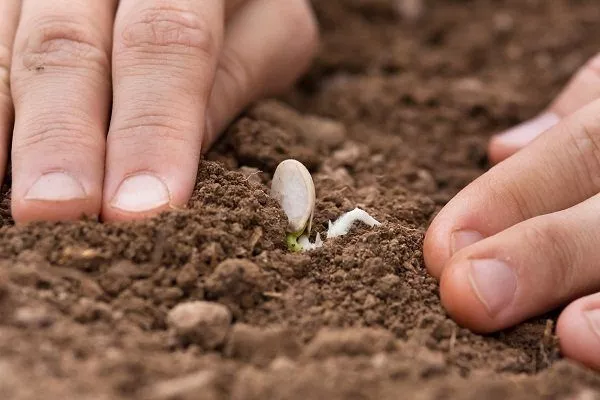
Fill the pots halfway with this nutrient solution. It should be thoroughly moistened the day before sowing. When planting, the seeds should be buried 1.5-3 cm deep. If they have sprouts, they should be planted with the sprouted seedlings facing down. Place two seeds in each hole. After sowing, water the soil lightly and then cover with plastic wrap or glass.
Most of the seeds will germinate within 3-5 days, but only the strongest seedlings should be left in the pots. The rest should be carefully cut off above ground level. Pulling them out under no circumstances can damage the plant's entire root system.
Caring for seedlings
After sowing the seeds, it remains to provide proper care for the seedlings, which requires following these rules:
- Until the first shoots appear, keep the pots at a temperature of 26 to 28°C. Once the first shoots appear, lower the temperature to 17-18°C during the day and 12 to 14°C at night. This temperature should be maintained for four days and then adjusted according to weather conditions and time of day. On cloudy days, the optimal temperature is 21-22°C, and on sunny days, 26 to 28°C. At night, it should be maintained at 17-18°C.
- Avoid overwatering or allowing the soil surface to crust over. This can lead to stem and root rot. To prevent this, water the seedlings with warm water as the soil dries out.
- When growing seedlings on a south-facing windowsill, the sprouts don't require additional lighting. On an east or west-facing window, daylight lasts at least 11 hours, so incandescent lamps are also unnecessary. However, they will be needed if growing seedlings on a north-facing windowsill.
At 20-25 days old, the seedlings will develop 3-4 true leaves. At this stage, they can be transplanted to a permanent location.
- ✓ The presence of 3-4 true leaves indicates that the seedlings are ready for transplantation.
- ✓ The root system must be well developed, without signs of rot.
Planting seedlings in a greenhouse
The soil in the greenhouse where the zucchini will be planted must be well prepared. To achieve this, it's best to add rotted manure in the fall at a rate of 10 kg per square meter and dig it in thoroughly. Mineral fertilizers can be applied directly to the holes before planting, at a rate of 30-40 g of nitrophoska per plant. After application, mix the fertilizer with the soil in the hole.
Seedlings are often transplanted to their permanent location in early May or a little earlier. Before transplanting, the soil should be warmed using a stove or electric boiler. To maintain normal moisture levels and ensure rapid ripening, mulch with sawdust, sunflower husks, or other organic matter.
Pricking out should be done in the morning, evening, or on a cloudy day. This should be done using the square-nest method, following this pattern:
- distance between holes – 0.7-0.8 m;
- row spacing – from 0.8 to 1.5 m.
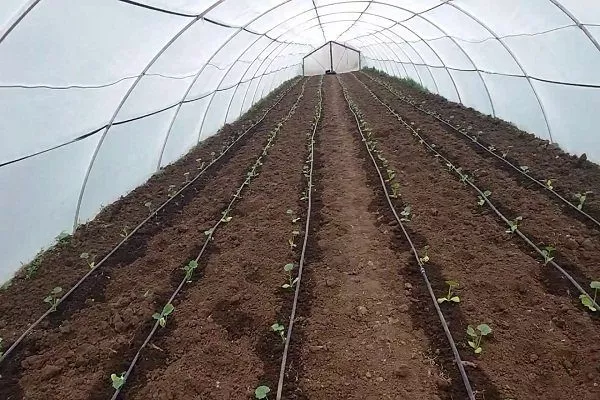
The seedlings should be transplanted into the holes along with the root ball and buried 5 cm into the soil. Then, cover with soil up to the first leaves, lightly compact, and water. At this stage, the greenhouse temperature should be maintained at 14-15°C. Ventilation should be maintained so as not to drop the temperature too much. The plantings can be covered with plastic film, with holes punched for each plant. Watering should be done through these holes.
Caring for zucchini in a greenhouse
This vegetable crop is unpretentious even in open ground, so caring for it is quite simple, especially if you know the secrets of carrying out the necessary agricultural practices:
- Creating an optimal microclimateThe plant does not grow well in greenhouses that are too hot and humid. The ideal temperature for full seedling development is 24°C during the day and 18°C at night. Zucchini does not tolerate stuffiness, so the greenhouse needs to be ventilated daily to maintain humidity at 60-70%. In late April and early May, the frequency of ventilation should be increased.
- Watering and looseningWater the seedlings generously but infrequently with warm, settled water (19…24°C). Once the first buds appear on the bushes, increase watering to three times a week. During this period, pour 4 liters of water under each bush. A few hours after watering, loosen the soil slightly and remove all weeds. To reduce moisture evaporation, mulch the soil surface with sawdust or peat. Before flowering, avoid watering and allow the greenhouse air to dry slightly. This will promote the formation of more female buds.
Watering should be stopped completely 7 days before harvesting, otherwise the fruits will be excessively watery.
- Top dressingZucchini plants grow rapidly, so adding additional nutrients can lead to excessive growth of shoots and leaves. This, in turn, can negatively impact fruit set and fruit growth. Therefore, zucchini plants do not require additional feeding during the growing season; the fertilizer applied before planting is sufficient.
- Bush formationZucchini doesn't need to be pinched or trained. However, if planted densely, it's worth removing the lower central leaves of a bushy plant to improve air circulation and increase light exposure for the fruit. It's important to have at least 15 leaves per bush. A neat plant makes it easier to see the male and female flowers. The former have a slight widening at the base and a fairly short petiole. The male flowers have a longer, straighter petiole.
- PollinationDuring warm spring and summer days, the greenhouse should be ventilated to speed up the ripening of the zucchini and attract pollinating insects, such as bees or bumblebees. For this purpose, the plants can also be sprayed with sugar syrup dissolved in water. If possible, it's worth installing a beehive in the greenhouse at a rate of one per 500 square meters. It's advisable to plant a small number of honey plants between the bushes. If pollinating insects are unavailable, this procedure can be performed manually using a male flower with stamens. This will be enough to pollinate 5-6 female flowers.
If zucchini are grown in winter, pollination will have to be accomplished only using male buds. These ripen 7-10 days later than female buds, so to avoid wasting a full week, experienced gardeners sow the seeds for seedlings in two stages: sown one portion (10%) 10 days earlier than the rest.
Harvesting
During the active fruiting period, zucchini should be harvested every other day and at least three times a week, as overripening will degrade the fruit's flavor and delay the formation of other ovaries, negatively impacting the variety's yield. The following recommendations should be followed:
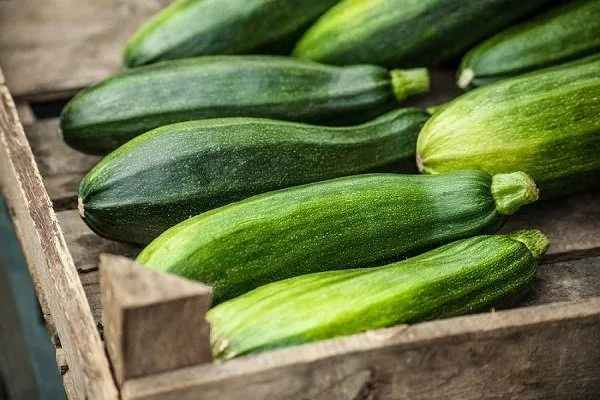
- Zucchini should be harvested when they reach 10 to 25 cm in length and 8 to 10 cm in diameter. Many reach this size 45 to 50 days after planting. Don't wait until the fruit gets too large, as it will become tasteless and the skin will lose its softness and shine.
- To check if the fruit is ripe, simply tap it lightly. If you hear a dull sound, it's ready to pick.
- It's best to cut the fruit with scissors, including part of the stem, as this will act as a barrier against pests and infectious diseases. Harvested zucchini should be handled carefully, as mechanical damage will impair their appearance and shorten their shelf life.
- Zucchini should be harvested carefully to avoid damaging the tops of the plants and any vines that have formed. Damaged plants recover poorly and may stop producing new fruit.
- When harvesting, remove both beautiful, healthy fruits and deformed ones. Leaving them on the plant branches will delay the development of new ovaries and reduce the bush's yield.
- If the zucchini are intended for long-term storage in the cellar, there is no need to wash them beforehand after harvesting.
Even a novice gardener can grow zucchini in a greenhouse, as this vegetable doesn't require any special conditions or significant investment. However, to obtain a good harvest, it's essential to properly prepare strong seedlings, which require careful care after transplanting them indoors. Mastering this technology will allow a grower to grow zucchini year-round under plastic and successfully market them.
Thank you!