
Gardeners have varying opinions about the Spaghetti squash, but they agree that it's a unique variety worth growing at least once. Harvesting the spaghetti squash is easy, as it's grown in the same way as other squash varieties.
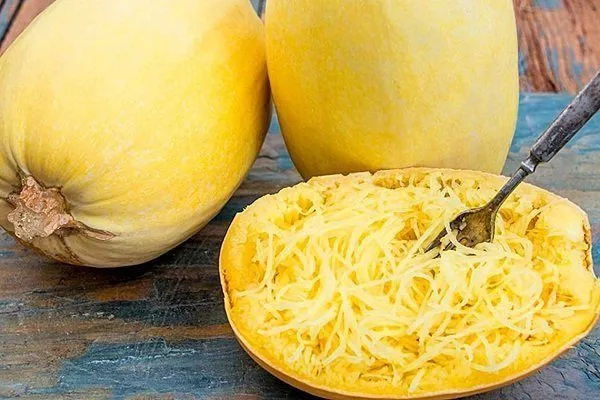
Spaghetti Zucchini
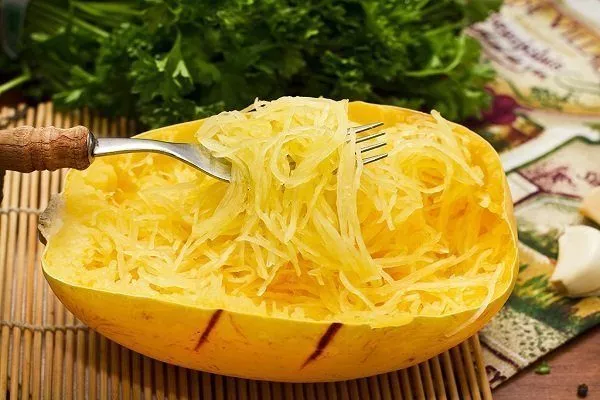
Spaghetti squash can be eaten fresh.
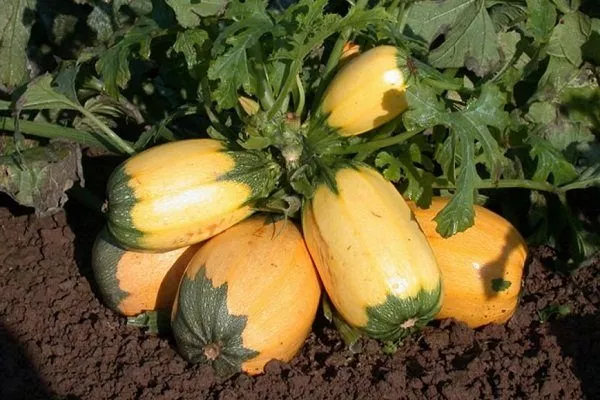
Spaghetti squash tolerates drought well.
Description of the variety
Gardeners who enjoy growing unusual crops have recently been increasingly turning their attention to the Spaghetti squash, the characteristics of which can be found below:
| Parameter | Description |
| Ripening period | A variety with a medium ripening period – from emergence to the beginning of fruiting it takes 120-130 days. |
| Plant characteristics | Spaghetti is a bushy, long-vine plant with a powerful root system. Each bush is covered in large emerald leaves and forms long vines that need to be pinched periodically to encourage fruiting. The bush itself is compact and grows up to 40 cm. |
| Appearance of fruits | The fruits are cylindrical, elongated, or oval in shape, reminiscent of elongated and pot-bellied melons. They can reach 20-30 cm in length and weigh from 700 g to 1.3 kg.
The fruits are covered with a thick, pumpkin-like skin. As they ripen, the skin changes color from green to yellow, although whitish varieties are also available. This skin allows the fruits to keep well—they can be stored until spring. |
| Features of the pulp | The flesh is thick and dense, creamy-orange in color. In young fruits, it's no different from other zucchini—firm and uniform in consistency.
When Spaghetti matures to biological maturity, the pulp acquires a fibrous structure and turns into “pasta”. |
| Scope of application | Spaghetti squash is a versatile variety that can be eaten fresh (added to salads), canned, or used to prepare warm dishes.
If you place the whole fruit in boiling water for 30 minutes, then cut it in half and remove the seeds, you can get vegetable "noodles". The fact is that under high temperature pressure, the fruit's interior disintegrates into fibers that resemble pasta. This pulp can be served with a sweet or sour sauce. |
| Representatives of Spaghetti squash | There are several varieties of squash classified as spaghetti squash. All resemble oblong pumpkins and turn various shades of yellow when ripe.
The fruits have a hard skin, making them suitable for long-term storage and transportation. The plants themselves have long stems but are easy to care for. The most delicious zucchini with these characteristics are:
|
| Productivity | Spaghetti squash isn't a high-yielding variety, but it produces fruit reliably. On average, 1 square meter of garden bed yields 5-7 kg of fruit. |
| Resistance to environmental conditions and diseases | This variety tolerates drought and minor temperature fluctuations. It has weak immunity to powdery mildew and bacterial blight, and moderate resistance to fruit rot. Plantings should be regularly inspected to detect diseases early. |
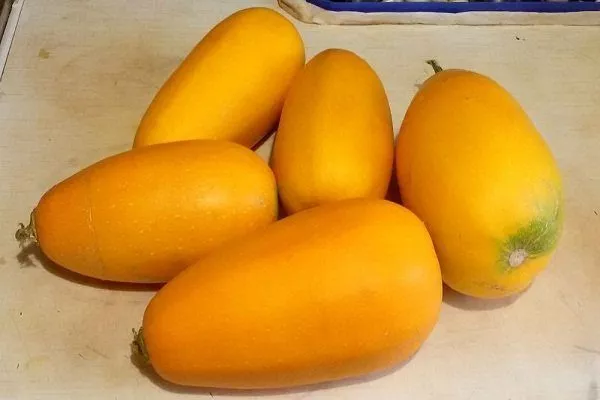
In terms of cultivation, the vegetable is ideal for the middle and southern regions.
Agricultural technology
To successfully grow vegetables, you need to know a number of agricultural rules:
- Planting datesSowing should begin after the danger of frost has passed. By this time, daytime temperatures should reach 25–27°C, and the soil should warm to 15°C. If using seedlings, sow the seeds in April and transplant the seedlings to their permanent location in May or June. If you plan to sow zucchini directly into the ground, sow between late May and early June.
To obtain an early harvest, seeds can be planted in a greenhouse and then transplanted as seedlings, or the film can be opened to allow the vegetable to develop in natural conditions.
- Selecting a site. Squash should be planted in well-lit areas that are well protected from winds and drafts. This can be done in the shade of barren flowers. If the area is open, a "wall" of corn should be planted around the perimeter of the bed to protect the squash. Its best predecessors are nightshade crops, onions, garlic, and cabbage. As for soil, Spaghetti prefers fertile sandy loam and loamy soils, howevergrow zucchini It is also possible on black soil or clay.
To make heavy soil more crumbly, add sand or peat in a ratio of 2:1.
- Soil preparationIt's advisable to dig the soil to the depth of a spade in the fall and add organic matter (compost, humus) at a rate of 6-8 kg per square meter. It's also worth adding 0.5 liters of wood ash during the fall digging. If you prepare the soil in the spring, you should do the same, but only two weeks before planting the zucchini.
- Seed treatmentTo disinfect the seeds, soak them in a potassium permanganate solution for 20-30 minutes. Then, soak them in a growth stimulant (such as Epine) for 2-3 days. Alternatively, place the seeds in a damp cloth and keep them in a warm place for 3-4 days to allow them to germinate. Keep the cloth moist during these days.
Sowing Spaghetti Squash
The planting technology depends on the method by which the crop is cultivated.
Through seedlings
This method involves growing strong seedlings. It is carried out using standard technology and adhering to the following rules:
- For sowing, use separate containers—peat cups—that can be placed into the holes along with the plant's root ball. Place 1-2 seeds in each cup filled with substrate, water thoroughly, and cover with plastic wrap until the first shoots appear.
- Keep the seed pots at a temperature of 22-23°C until the first shoots appear. Then, lower the temperature to 16-17°C for 7-10 days to prevent the seedlings from becoming too tall. After these days, the temperature can be raised again to 25°C.
- Water the seedlings as the top layer of the substrate dries out. Use warm, settled water.
- Provide the seedlings with 10-14 hours of daylight. This will require additional use of fluorescent lamps in the morning and evening.
At 25-30 days old, the seedlings will have 2-3 true leaves and are ready for transplanting to their permanent location. A week beforehand, it's advisable to harden them off by placing them outside for several hours each day, gradually increasing the duration of this period. Plant the seedlings in the ground using a 70x70 or 70x100 cm pattern.
Direct sowing of seeds into the ground
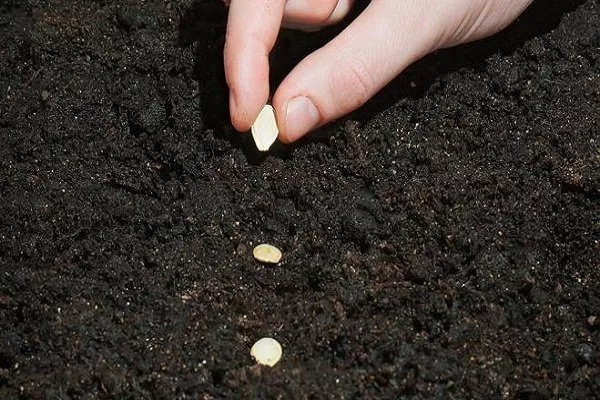
Planting holes for seeds should be spaced 0.7-1 m apart to allow the long-vineed plant to develop freely. Dry, sprouted seeds should be planted 2-3 at a time in moistened holes at a depth of 2-6 cm, then covered with soil. In light soils (sand, loam), the planting depth can be increased, while in heavier soils (clay, black soil), the planting depth can be decreased.
After sowing, the bed should be watered again and then covered with plastic wrap or agrofibre until the first shoots emerge. If several seeds sprout in each hole, only the strongest shoot should be left. The remaining seedlings should be pinched above ground level rather than pulled out, to avoid damaging the plant's overall root system.
Planting care
Spaghetti squash requires standard care, which involves a number of agricultural practices. These include:
- WateringIt should be regular but moderate. It's best to water the bushes once every 7-10 days at a rate of 5-7 liters per plant. During the ripening period, the amount of water should be reduced by half, otherwise the fruit will become too watery. Water the roots with warm water in the morning or evening. Watering during the day can cause sunburn.
The soil should not be over-watered, as this will promote the growth of tops rather than the ripening of fruits.
- Loosening and weedingA few hours after watering, the soil should be lightly loosened to allow better air access to the plant's roots. At this point, remove all weeds. Once the bushes have grown, weeding will no longer be necessary, as weeds usually don't grow under them.
- HillingTo strengthen the root system, prevent root washout, and support proper fruit growth, bushes should be hilled 2-3 times per season using the following procedure:
- with the appearance of 4-5 leaves;
- 30 days after the first;
- 20-30 days after the second.
- ToppingSpaghetti squash plants have long vines and grow vigorously. To limit their growth and create a neat bush, pinch off the top of the plant when 4-5 leaves appear.
- Top dressingThe plant needs to be fertilized at least twice a season, following this schedule:
- The first feeding should be done when new growth (2 true leaves) appears. Feed the plant with organic matter that has fermented for 4-6 days. A good option is a solution of mullein (1:10) or chicken manure (1:10). Mineral fertilizers that can be used include nitrophoska and urea (30 g each per 10 liters of water). Consumption rate is 1 liter per plant.
- The second feeding is before fruit formation. You can use the same organic or mineral fertilizer: 40 g of superphosphate, 20 g each of potassium nitrate and ammonium sulfate per 10 liters of water. The solution consumption is 3-4 liters per bush.
- Protection from diseasesSpaghetti squash can be susceptible to powdery mildew. The disease often affects the plant's leaves and appears as white spots (powdery coating) that gradually expand and cause the plant's death. To protect the plant, spray it with a colloidal sulfur solution (100 g per 10 liters of water) or a mullein infusion (1:3).
Harvesting and storage
The fruit is harvested between August and September. Young, white-fleshed zucchini can be harvested at various times throughout the season. The first harvest is 25-30 days after flowering.
- ✓ A dull sound when tapping the fruit indicates that biological maturity has been reached.
- ✓ A change in skin color from green to yellow is a visual indication of ripeness.
If you intend to harvest ripe zucchini with pasta-shaped flesh, you'll need to wait 2.5-3 months. After this time, the zucchini will have developed a hard skin, and a hollow sound will be heard when tapped. They should be cut with a sharp knife with a long stem.
Fruits collected in late summer and early autumn can be placed on shelves and stored in a dry basement for 6-9 months.
Pros and cons
The following are some of the strengths of the Spaghetti variety:
- drought resistance;
- unpretentiousness to cultivation and care;
- the possibility of eating both young and ripe fruits;
- unusual appearance of the pulp when the fruit reaches biological maturity;
- good keeping quality and transportability.
Gardeners also note the disadvantages of Spaghetti:
- in regions with short summers it does not have time to ripen to the “pasta” stage;
- The bushes are constantly growing, so you need to regularly pinch the shoots or grow the vegetable at a height;
- does not produce an abundant harvest.
Reviews
A review of this unique vegetable crop is provided in the video below:
One of the most unique varieties of zucchini is Spaghetti. In its youth, it's indistinguishable from its relatives, but as it matures, it develops a yellow hue and, most importantly, distinctive flesh in the form of long, delicious "macaroni." These fruits make an excellent ingredient for a unique dish.