
The Solnechny (Sunny) zucchini is an early-ripening zucchini variety that was approved for cultivation only recently, in 2020. A team of breeders consisting of O. A. Karmanova, M. N. Gulkin, and V. G. Kachainik worked on developing this variety (not a hybrid). It is specially grown in greenhouse conditions.
Description of appearance, taste and use
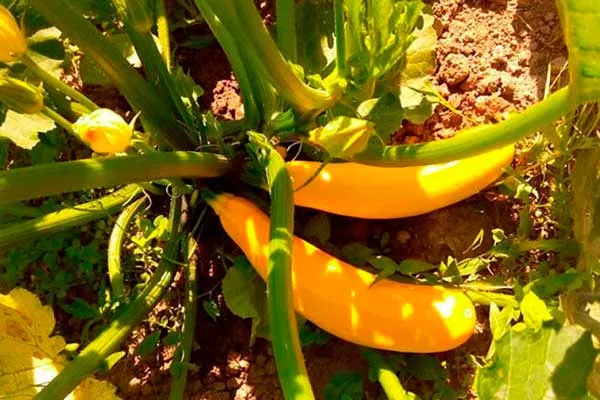
This variety is characterized by a compact bush with large leaves. Other characteristics:
- foliage – strong;
- leaf blade – with strongly dissected forms, white in color and white spotting on the surface;
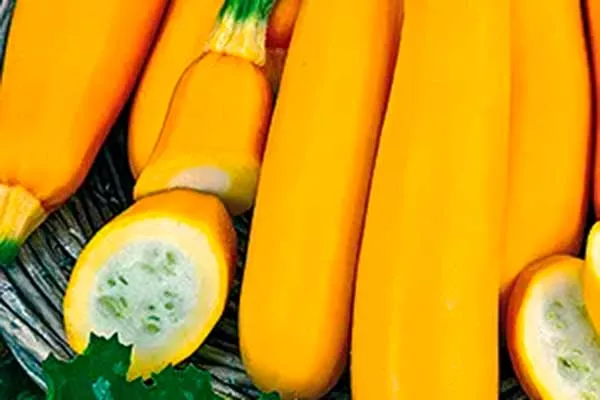
- pumpkin shape – resembles a cylinder;
- skin color – dark yellow with increased brightness;
- pulp shade – cream;
- weight - 800-1000 g;
- skin – shiny, smooth;
- pulp type – tender, dense, but juicy of medium intensity;
- seeds – cream-colored, medium-sized, elliptical shape.
- ✓ The ability to withstand temporary cold spells, which makes it suitable for planting in open ground in regions with an unstable climate.
- ✓ High seed germination rate (almost 99%), which allows you to collect your own seeds for subsequent plantings.
Characteristics
The Solnechny zucchini variety is prized for its high yields—7 to 7.5 kg per square meter, on average. It has good resistance to diseases, particularly powdery mildew. Ripening time varies depending on the region and current weather, ranging from 45 to 55 days from the formation of the first shoots.
Advantages and disadvantages
The Solnechny zucchini's positive qualities stem from its cultivar, which allows you to collect your own seeds for planting next season. But the variety also has other advantages:
The only downside is that it is very demanding regarding soil composition.
Landing
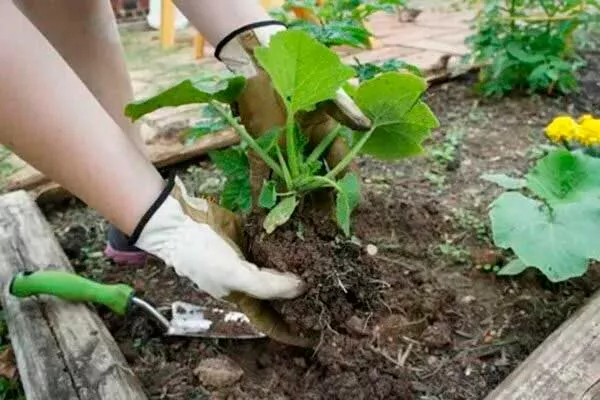
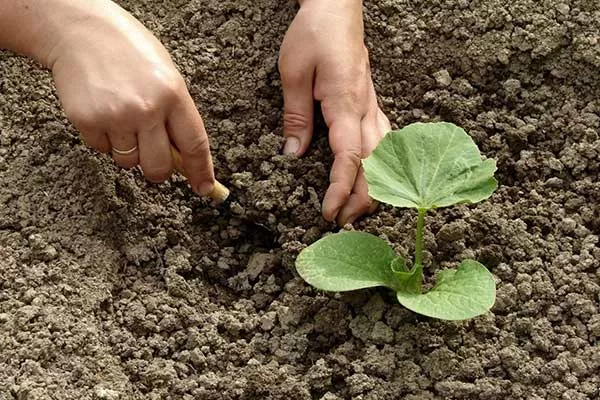
Planting occurs when the threat of last frost has passed, and the soil temperature reaches at least 12-14 degrees Celsius during the day and at least 8-10 degrees Celsius at night. This variety is intended for greenhouse cultivation, but it easily tolerates temporary cold spells, so it can be planted directly in the garden.
- ✓ The soil temperature for planting should be at least +12-14°C during the day and +8-10°C at night.
- ✓ Mandatory application of organic matter in the fall and mineral complexes during planting.
Calendar for sowing seeds in open ground in spring, depending on the region:
- south of the country – from April 15-20 to May 15-20;
- Central Russia – mid-May;
- Siberia, Urals – from May 20-25 to June 5-10.
Planting time for seeds for seedlings in different regions:
- south of the country – the last days of March;
- Central Russia – mid-April;
- Siberia, Urals – first days of May.
Sowing is done in the standard manner. Seedlings are planted in open ground 3-4 weeks after sowing. Based on the climate of their region, each gardener can plan the appropriate time for planting zucchini and transplanting them into the garden.
Growing and care
The care procedures are simple and include the following steps:
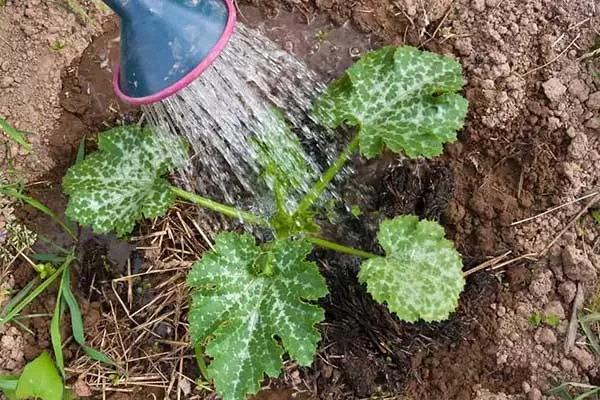
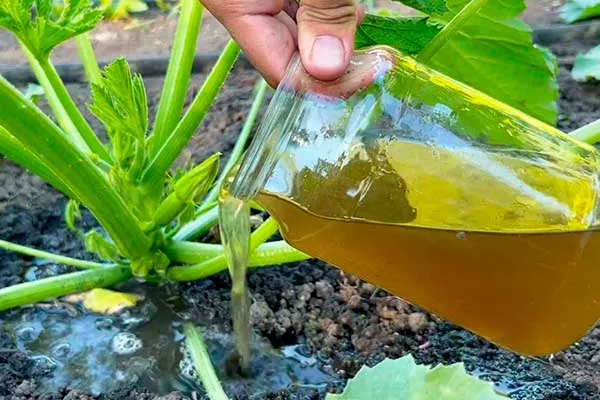
- Watering. Zucchini require ample watering, especially warm water. You can place a barrel of water in the garden to warm it in the sun during the day. Before flowering, water the zucchini once a week, and during the fruiting season, water 2-3 times a week.

- Loosening and weeding. After irrigation or precipitation, it is necessary to loosen the soil to prevent crust formation and at the same time remove weeds. It is advisable to do this manually so as not to damage the root system with a hoe.
- Top dressing. These are essential for a good harvest. Before budding, infusions of rotted manure with added nitrophoska can be used. During flowering, a solution of Effekton with charcoal is suitable. During fruiting, various complex fertilizer mixtures are used. Foliar feeding is applied if necessary.
Reviews
The Solnechny (Sunny) zucchini variety is a successful new variety that has become popular among gardeners and summer residents. It's easy to care for, produces good yields, and the fruits grow to a versatile size. It boasts excellent germination rates—almost 99%—and seeds can be collected from seed instead of purchasing them from the store each year.