
It's recommended to harvest zucchini from the garden in a timely manner, as this not only prevents overripening but also increases yield and extends storage during the fall and winter. Harvesting timing depends on various factors, including region, variety, maturity, and intended use.
How do you know when zucchini is ripe?
Experienced gardeners easily determine the ripeness of zucchini. There are two main methods:
- Visualization.Carefully examine the vegetable – pay attention to the color, pattern and size.
- Tactility.Be sure to feel the fruit to determine the hardness of the skin and tap it to see if it makes a dull sound.
The first method is relevant if the gardener knows the external characteristics and features of the variety, and the second can be used even by a beginner.
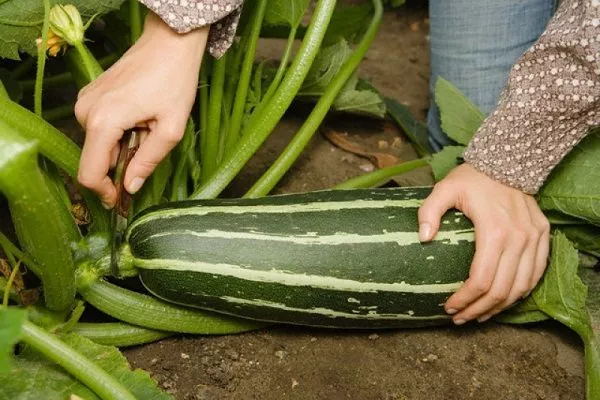
The level of ripeness depends on the intended use of the zucchini. If they are used for cooking, they can be picked when young and tender. Full maturity is required in the following cases:
- for livestock feed (overripe stage is acceptable);
- for seeds;
- for long-term storage;
- for preservation.
Ripe zucchini have the following characteristics:
- rich shade along the entire length of the vegetable;
- zucchini length – from 15 to 25 cm;
- the stalk is hard (woody) and dark;
- the fruit is hard to the touch;
- in appearance - slightly glossy;
- if you knock on the surface, a muffled sound will be heard;
- the skin is thick;
- if you cut it, the fibers in the core become visible;
- the pulp is soft and tender;
- The seeds have a dense shell.
How does variety affect harvesting time?
| Name | Ripening period (days) | Shelf life (months) | Disease resistance |
|---|---|---|---|
| F1 Festival | 60-80 | 9 | High |
| Arlik hybrid | 60-80 | 9 | Average |
| Watermelon F1 | 60-80 | 9 | High |
| Gribovsky | 45-60 | until February | Average |
| Golden Cup | 45-60 | until February | High |
| Kuand | 45-60 | until February | Average |
| Kavili F1 | 35-45 | 4 | High |
| Iskander | 35-45 | 4 | Average |
| Tsukesha | 35-45 | 4 | High |
| Aeronaut | 35-45 | 4 | Average |
For winter storage of zucchini, choose varieties with good shelf life and that retain their nutritional value and flavor. Therefore, the choice of variety directly impacts the longevity of the product.
For these purposes, the best option is late-ripening varieties, which ripen in 60 to 80 days. The most well-known and popular varieties are Festival F1, Arlik hybrid, and Arbuz F1. The shelf life is approximately 9 months.
Features of other varieties:
- Mid-season varieties.They can also be grown for long-term storage. They ripen in 45-60 days and can be stored until February. Varieties include Gribovsky, Zolotoy Kubok, and Kuand.
- Early varieties.They ripen in 35-45 days and can be stored for a maximum of 4 months. They are not suitable for winter storage. Popular varieties include Kavili F1, Iskander, Tsukesha, and Aeronaut.
Regardless of the variety, consider the intended purpose: if grown for forage, do not pick the fruits until they have reached their maximum weight. If grown for cooking or canning, harvesting at semi-ripe stage is acceptable. If grown for storage, harvest at technical maturity.
Cleaning times
If you can't wait until harvest time, feel free to pick zucchini from the garden, as they can ripen during storage. If the vegetables are fully ripe, their flesh will become soft over time.
Ripe zucchini
Full maturity of zucchini occurs within the time period specified by the manufacturer on the seed packaging, as this period varies depending on the variety and specific type of vegetable. This time period is determined individually, based on visual and tactile ripeness assessment.
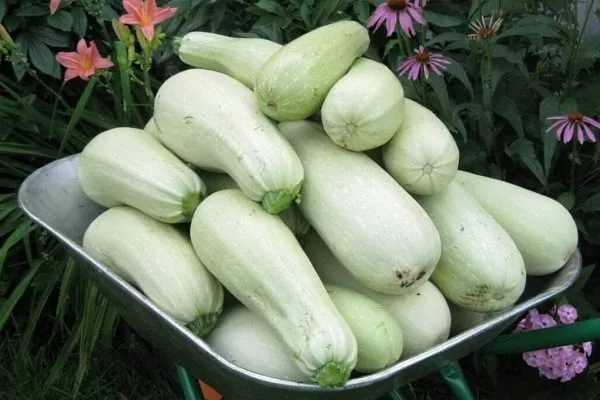
Young zucchini
Zucchini are considered young when their length does not exceed 15 cm, depending on the variety. The maximum width is 8 cm, and the period after flowering is 15 to 20 days. They are easy to identify – they have a juicy, tender rind and a light skin color.
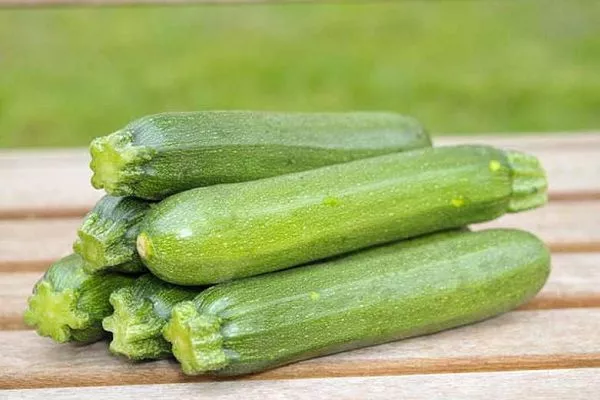
When to harvest depending on the region?
Be sure to consider the growing region. For example, in cold climates, the ripening period can be extended by several days. However, there are average harvest times for zucchini depending on the region and variety (early varieties are earlier, late varieties are later):
- Moscow region, Central Russia– from June 20 to September 20-25;
- southern regions– from May 20 to August 10;
- Siberia and the Urals– from July 10 to August 30.
Lunar calendar
Many amateur gardeners focus on harvesting by Lunar calendarFavorable days change every year, but there is one important rule: harvest zucchini for storage only during the waning moon, when the planet is 3/4 of the way before the new moon.
Collection rules
It's strictly forbidden to pluck zucchini from the bush with sudden movements, as this will deform the green mass and root system, preventing new ovaries from forming. Follow these simple rules:
- use a sharp knife for collection;
- cut the stalk so that there are no torn areas;
- stalk length – from 4 to 5 cm;
- weather - only dry;
- time - early morning.
Immediately after harvesting, spread the fruit out on a clean surface to dry. If indoors, ensure adequate ventilation. Wipe away any dirt with a dry cloth; do not rinse the zucchini with water.
How to collect seeds at home?
Immediately after harvesting the zucchini, move the vegetables indoors and keep them there for about 30 days. This time is necessary for the planting material to fully ripen. Next, proceed as follows:
- Cut the fruit into 2 pieces lengthwise.
- Carefully remove the spermatic cord along with the placenta.
- Carry out the fermentation procedure by soaking the seeds in water for 24-48 hours.
- Separate the fibers that begin to rise to the surface of the water after soaking.
- Rinse the grains with clean water, spread them on a cloth and dry.
If the crop has been slightly affected by diseases or pests, be sure to place the planting material in a light pink solution of potassium permanganate for 30-40 minutes, then rinse and dry again.
Features of harvest storage
To ensure your harvest lasts as long as possible, be sure to follow the basic rules and conditions for storing zucchini:
- optimal indoor air temperature– from 0 to +5-7ºC;
- humidity– from 80 to 85%;
- lighting- complete darkness;
- drafts– should be absent, but ventilate the room;
- neighborhood– is excluded, since zucchini absorbs other odors, but it is permissible to store it next to squash and zucchini.
- ✓ Avoid direct sunlight to prevent premature germination of seeds.
- ✓ Maintaining a constant temperature without sudden changes to avoid moisture condensation on the fruit.
What and where to store:
- Wooden boxes.Straw or sawdust is placed in the container.
- Cardboard boxes.Place in layers, alternating each tier with paper.
- Grids.Wrap each vegetable in paper and hang in a dark place.
- Shelves.You can't lay them on the surface of the shelves, it's better to put some straw underneath.
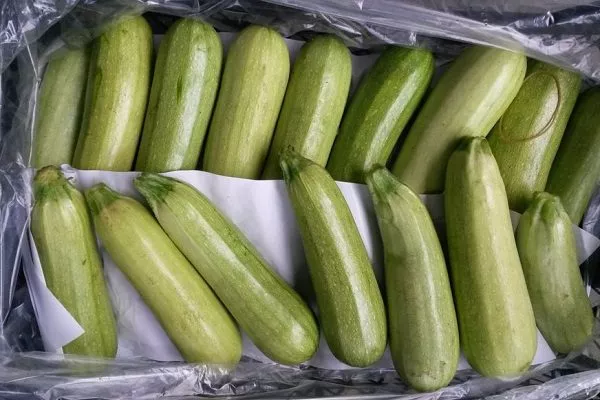
Keeping zucchini in a basement is prohibited, as it's too damp for the vegetable. This reduces its shelf life. In a house or apartment, use cabinets, pantries, or under-bed storage. Other options include:
- freezing– necessarily without seeds, which give off bitterness under the influence of cold;
- conservation– there are many recipes;
- drying– can then be used to prepare soups and sauces.
Why do zucchini need to be harvested regularly?
Zucchini is a crop that produces multiple crops in a single season. If the fruits are not harvested as they ripen, new ovaries will not form due to a lack of nutrients and light.
Zucchini harvesting occurs over many days, but to maximize fruit production, harvest the vegetables 1-2 times every 7 days during the growing season. When fruit production declines (the last 2-3 weeks), harvest the fruits once every 10 days.
Thanks for your help! I grew zucchini for the first time and had a huge harvest. You helped me determine the right time to harvest and store them. Thank you!