
Unpretentious zucchini can be grown in all regions, whether in open ground or greenhouse conditions. However, their fruits sometimes develop into irregular shapes during development. This usually doesn't affect the taste or quality, but it can be a significant issue for those growing vegetables for sale.
Varieties of irregular shape
Zucchini can develop irregularities in several ways. These changes occur for various reasons, and the corrective measures depend on these factors.
| Name | Type of deformation | Cause of deformation | Methods of correction |
|---|---|---|---|
| Curves | Curved shape | Low light and mineral elements | Select a sunny location, fertilize |
| Pear-shaped | Pear shape | Potassium deficiency | Application of potassium fertilizers |
| Thin tip | Thinning of the tip | Nitrogen deficiency | Application of nitrogen fertilizers |
- ✓ The optimal soil pH for zucchini should be between 6.0 and 7.5. Testing the soil's acidity before planting is essential.
- ✓ The distance between zucchini bushes should be at least 70-100 cm to ensure sufficient lighting and air circulation.
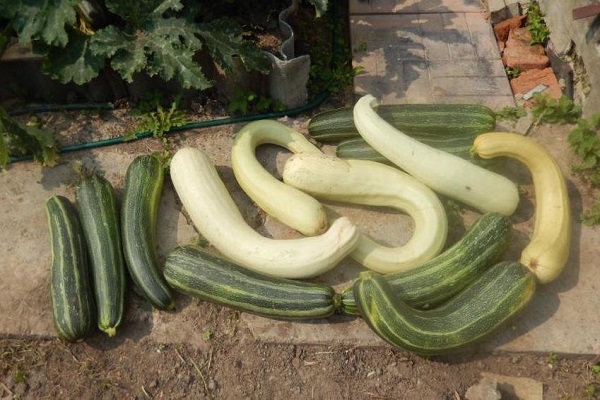
Curves
Even with good growth and development, the fruit may develop a crooked shape, although they should be almost straight, cylindrical, and smooth. There may be several reasons for this, but they are all related to errors in preparing the crop for planting.
Zucchini bending occurs due to insufficient light in the garden bed, coupled with low mineral content. Therefore, choose a sunny, well-fertilized planting site.
The soil is thoroughly dug over 2-3 weeks before planting, simultaneously adding a mineral-organic fertilizer. Adding ash and cow manure to each bush will also help.
Pear-shaped
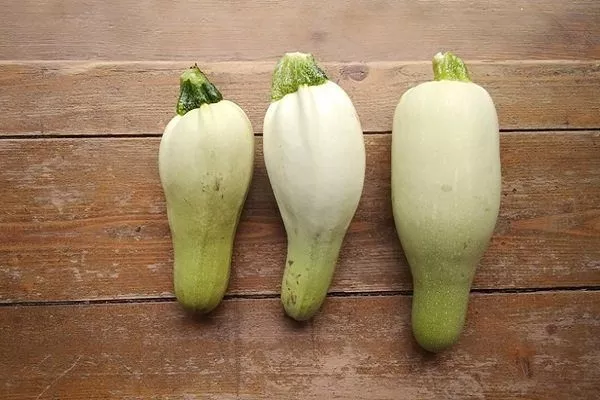
If zucchini fruits are pear-shaped, the vegetable lacks potassium. Commercial fertilizers containing this nutrient can help balance the plant's nutrition. One such fertilizer is Uniflor-Bud; apply it according to the instructions.
A folk remedy that will enrich zucchini with potassium is wood ash. It can be used in two ways:
- sprinkle a thin layer of the soil under the bushes after watering;
- Pour 0.5 liters of the substance under each bush at a time.
Thin tip
The tip of the fruit becomes thinner relative to the rest of the fruit and takes on a lighter color—a symptom of nitrogen deficiency in the soil. There are several ways to correct this:
- introduction of any organic fertilizer;
- watering with nettle infusion;
- treatment with a solution of rotted weeds.
It's important to identify the problem early and address it quickly. The plant will need time to absorb the micronutrients.
The main reasons for the appearance of abnormal fruits
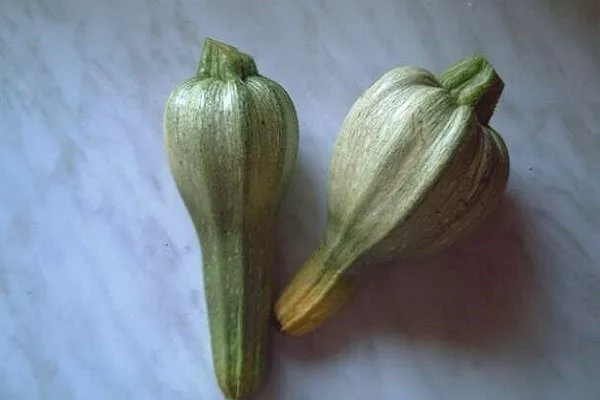
There are several reasons why zucchini may become misshapen while growing. These can happen all at once, rather than one at a time, so it's best to sort them all out at once—in case several plants are producing fruit with different types of irregularities:
- Lack of minerals of different groups. You can use industrially produced elements and compounds, or replace them with organic materials and various herbal infusions.
For example, you can soak nettles or rotted leaves in water for several days and then pour the resulting infusion onto the soil around the bushes. This treatment will saturate the soil with nitrogen minerals. - Poor seed material. It's important to carefully inspect seeds before sowing. Their expiration date (using expired seeds can result in no harvest at all), quality, and processing can directly impact fruit growth and shape.
- Incorrectly selected landing site. The location where zucchini grows also directly affects how they develop as they mature. It should be well-lit, not overwatered, and free of dense shrubs and trees planted close together. The location where zucchini grows should be rotated at least every two years.
Tips for fertilizing zucchini
To prevent zucchini from becoming crooked or to correct the situation at the first sign of malformation, provide them with nutrition. Fertilizing is carried out in several stages:
- Heavy soils with high acidity are not recommended for zucchini. To make the soil close to neutral, add a mixture of quicklime and sifted river sand (in a 1:1 ratio) to it for deoxidation during preliminary digging.
- When preparing a place for a garden bed, fill the soil with a nutrient solution. The following composition is recommended per 1 m²: 5 kg of compost or rotted manure, 300 g of wood ash, and 200 g of superphosphate. This fertilizer will eliminate the need for additional fertilizers until the first set of fruits is harvested.
If the growth of the entire bush and fruits slows down, apply the same fertilizer composition that was used when planting the plants. - Overwatering zucchini is not recommended. Especially if the weather is not dry and hot, it can lead to fruit tip rot and stem fungal infections.
- However, a lack of moisture can cause growth to slow and deformation to occur. Therefore, regularly loosen the soil and mulch between the rows—this will help retain moisture in the required amounts.
- Do the second feeding immediately after the fruits of the first ovary have been harvested. Use potassium-phosphorus fertilizers for this, unless the zucchini tip is thinning. In this case, organic matter or nitrogen fertilizers will be needed.
- If the zucchini becomes spherical, feed them with potassium. To do this, use a solution of Uniform-bud at a rate of 2 teaspoons per 10 liters of water.
Here are some helpful tips to help you harvest and know what healthy zucchini should look like:
- It is better not to pick small zucchini that have not yet entered the ripening stage - they contain a lot of nitrates and harmful substances that were obtained from the soil, but have not yet had time to decompose and come out of the pulp;
- Pay attention to the color of the fruit during ripening - dark zucchini contains more vitamins, yellowed ones - carotene (this depends on the variety, for example, zucchini);
- Collect zucchini in the morning, preferably at dawn, so the vegetables stay fresh longer.
- ✓ Healthy zucchini have a uniform color without spots or damage to the skin.
- ✓ The fruits should be firm to the touch, without soft areas indicating the onset of rot.
Growing zucchini doesn't require much effort. But they do require certain conditions for proper growth, especially fruit development. If you want your vegetable harvest to be not only abundant, but also marketable and shelf-stable, monitor watering the crop, illumination of the area, soil conditions and timeliness of feeding in the required quantities.