
The Kudesnik zucchini variety is a modern hybrid developed by Anatoly Vasilyevich Medvedev and Semyon Viktorovich Kuzmin. Officially registered in 2019, it is characterized by abundant yields, good marketability, versatility, and early ripening.
Description of the variety
Kudesnik is zoned for the Lower Volga and Central Black Earth regions of our country and is distinguished by the following characteristics and features:
- yield level – the minimum yield from 1 hectare is 520, the maximum is 850 centners, and from 1 square meter you can harvest from 6 to 10 kg;
- degree of marketability – estimated from 91 to 100%;
- resistance to diseases and pests – excellent and comprehensive (against all);
- harvest time – from the appearance of the first shoots it takes from 35 to 47 days, depending on the region;
- application – for consumption in salads and thermal processing;
- requirements - Mineral complexes are needed during the formation of ovaries and fruiting.
- ✓ Soil pH should be between 6.0-6.8 for optimal nutrient absorption.
- ✓ The soil must be well-drained to avoid waterlogging and root rot.
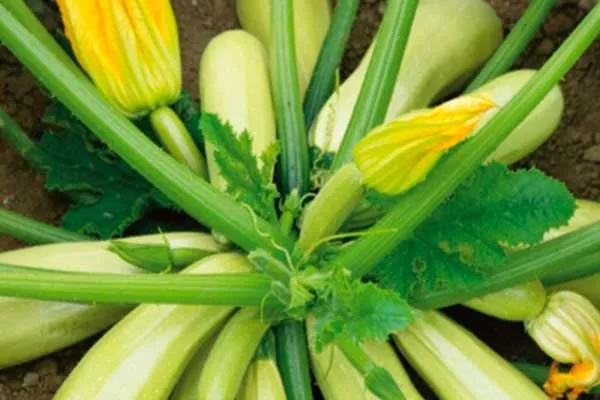
What do the plants and fruits look like?
The Kudesnik zucchini bush is quite compact and has the following characteristic features:
- Leaves. They have weak dissection and are large in size. The surface is slightly mottled, and the density of distribution is moderate.
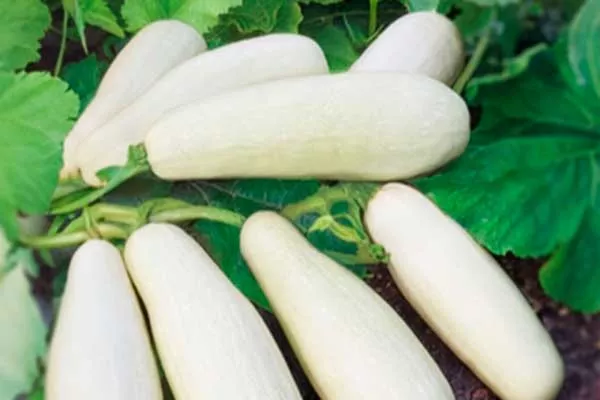
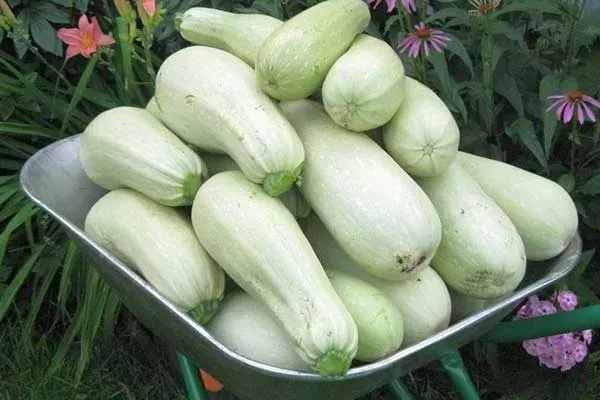
- Fruit. They reach a maximum length of 18-20 cm and weigh between 500 and 800 g. Their skin is almost white, with a slight silvery sheen and tiny dots. They are cylindrical in shape. The flesh is also white, characterized by medium juiciness and firmness. The seeds are medium in size, creamy in color, and elliptical in shape.
Purpose and taste
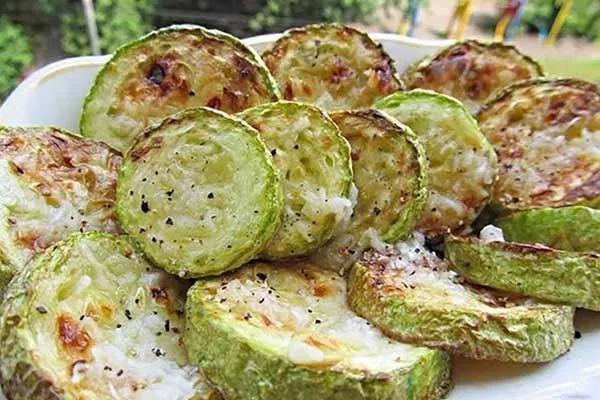
This hybrid is delicious and aromatic, making it versatile—for baking and frying, boiling and pickling, canning, and dyeing. Thanks to its delicate texture, these zucchinis can even be eaten fresh.
Growing and care
Differences in zucchini planting methods are reflected in the spacing between plants: for compact varieties like Kudesnik, a 50x50 cm pattern is recommended. White-fruited zucchini can be grown using seedlings or by direct sowing into beds.
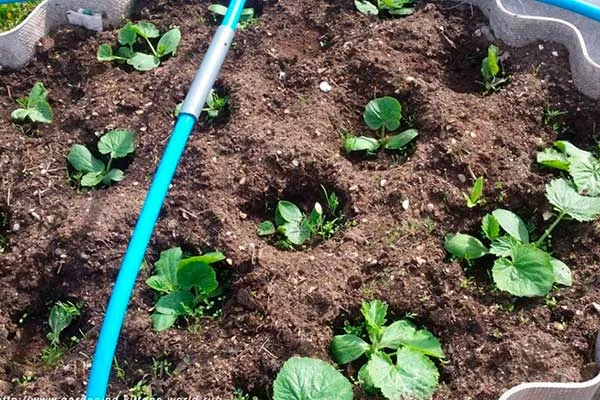
Keep in mind that zucchini are sensitive to frost: so planting should begin no earlier than the end of May in the central part of the country. Accordingly, earlier in the south, and later in the central part of the country. Before planting, add 15 kg of humus or compost to the soil per square meter.
Sowing seeds in open ground is carried out as follows:
- Form holes with a diameter of 30-50 cm and a side height of 7-10 cm.
- Sow 2-3 seeds in each hole to prevent germination if poor-quality seeds are used. Sow at a depth of 3-4 cm.
- Water the holes and sprinkle with loose soil or mulch.
- Sprouted seeds germinate in 3-6 days, dry seeds – in a maximum of 9-11 days.
Leave only one strong sprout in each hole; the rest can be removed or replanted.
Sowing seedlings involves the following steps:
- Sow 1-2 seeds into zucchini potting mix at a depth of 2-3 cm.
- Moisten the soil slightly and cover the container with seedlings with plastic wrap.
- Place it in a warm room with a temperature of 25-27 degrees.
- After the seedlings appear, remove the cover and transfer the seedlings for 3 days to a room with a temperature of about 14-15 degrees at night and 16-18 during the day.
Subsequently, return the seedlings to their original conditions, water them regularly with warm water, and fertilize them every 7-9 days. After 30-35 days, transplant the seedlings into the ground.
Caring for zucchini includes:
- Use mulch to retain soil moisture, especially around the trunks.
- Regular watering and fertilizing during the period of budding, flowering and fruiting:
- top dressing should include alternating mineral and organic fertilizers;
- Watering is done 1-2 times a week depending on weather conditions.
Reviews
The Kudesnik zucchini is grown both in private gardens and on a large scale. This variety is prized for its consistently high yields, low maintenance, and easy transportability, which is especially important for sales. It can be cultivated in all regions of Russia using various methods.