
The hybrid zucchini variety Kavili F1 is among the world's leading cultivars, attracting gardeners with several characteristics: ultra-early ripening, high yields, drought resistance, and delicate flavor. Read on for more information on the characteristics and cultivation of this hybrid.
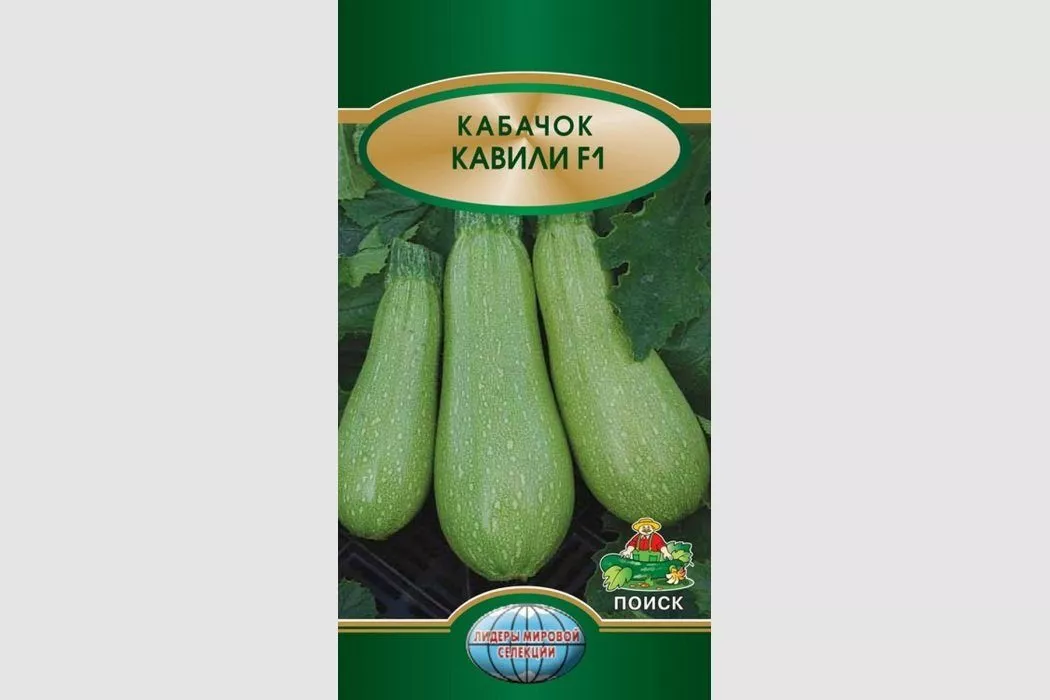
Zucchini Kavili
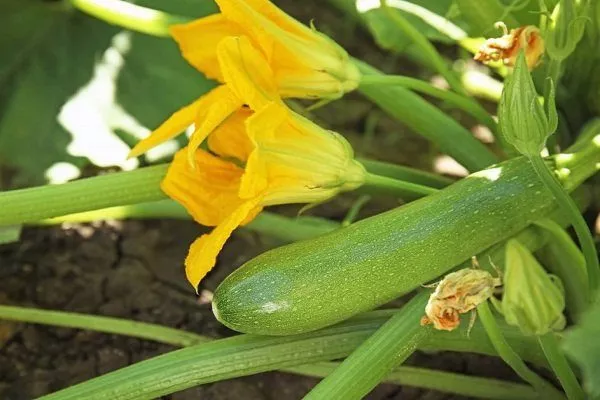
Kavili zucchini is resistant to over-ripening
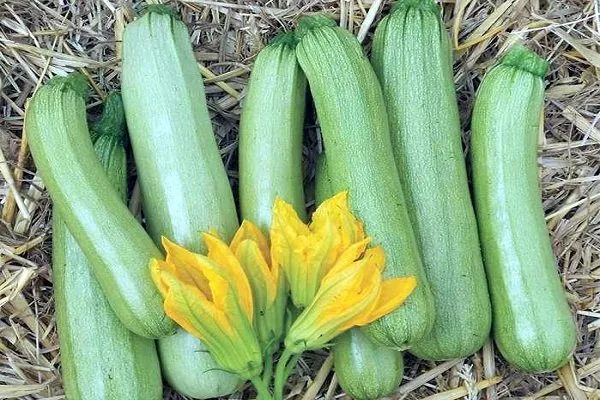
The Kavili zucchini has juicy flesh.
Description of the variety
The Cavili F1 zucchini is a Dutch hybrid from Nunhems, suitable for both open-field and greenhouse cultivation. Its characteristics are presented in the following table:
| Parameter | Description |
| Ripening period | Hydride is an ultra-early variety. This means that ripe fruits can be harvested as early as 40-45 days after the first shoots emerge. |
| Pollination | Zucchini belongs to a group of plants known as parthenocarpic, meaning it is self-pollinating—it can produce fruit without pollination (the help of pollinating insects). This trait is especially beneficial when grown early in a greenhouse or outdoors during the rainy season, when bees and other insects are no longer flying. |
| Bush characteristics | This squash variety is a bush plant with short internodes. The bushes are compact, so they can be grown in small spaces. Their roots are close to the soil surface and occupy more space than the above-ground portion of the plant. The bushes are covered with dark green leaves with whitish spots. Like the petioles, they have a prickly pubescence. The orange flowers are large and bloom within 24 hours. Both male and female flowers bloom on the same bush. |
| Fruit characteristics | The average fruit weighs 280-320 g, but some specimens weigh up to 500 g. They grow up to 16-22 cm in length. These uniform zucchini are characterized by a regular cylindrical shape and thin, light-green skin. The flesh itself is white, has a tender and juicy texture, and is high in sugars. It can be used in cooking even raw. The fruits are also suitable for canning. |
| Benefit | The fruits are rich in vitamins (B, A, C, E), biotin, niacin, and minerals (zinc, magnesium, potassium, and phosphorus). Due to this, they have a positive effect on the human body – they normalize water-salt balance, improve digestive function, have a diuretic and choleretic effect, lower cholesterol, and improve skin condition. Thus, they are an excellent product for a balanced diet. |
| Productivity | Despite the compact size of the bushes, with proper care, the yield is at least 7-9 kg per square meter. The first harvest can be collected 1.5 months after germination. This variety is distinguished by its long-lasting fruiting period – fruit can be harvested throughout almost July and half of August, and in some cases, the plant produces fruit right up until frost.
A distinctive characteristic of the Kavili variety is its resistance to overripening. This allows untimely harvesting of zucchini, which can reach 1.5 kg in weight, to retain all their flavor. |
| Features of cultivation | The Kavili squash is easy to grow, but requires light and warmth. If stressful conditions prevail during growth (frequent rainfall, heat), the fruit may form without pollination. The plant itself is resistant to powdery mildew. The variety is labeled F1, meaning it's a hybrid, so gardeners won't be able to collect seeds for planting next season. Approximately 8,000-10,000 seeds are required per hectare of land. The guaranteed germination rate is 85-93%. |
Briefly about the characteristics of the Kavili hybrid is described as follows:
Planting methods and timing
Dutch zucchini can be grown in two ways, which will determine the optimal timing for planting:
- Through direct sowing into open groundIn warm regions the culture can be easily grow in open ground By planting seeds in cultivated soil. Sowing can begin in early May if the air temperature has reached 18°C and the soil has warmed to 12°C at a depth of 5-7 cm. Depending on weather conditions, planting can continue until early June.
- By seedling methodGrowing zucchini using this method will yield an early harvest. In this case, seeds can be sown for seedlings in late April or early May. When temperatures are consistently above 18°C, seedlings with 2-3 leaves can be transplanted to their permanent location at a rate of 3 plants per square meter.
- ✓ The soil temperature for sowing should not be below +12°C at a depth of 5-7 cm.
- ✓ The distance between plants should be at least 70-80 cm to ensure sufficient space for growth.
Regardless of the cultivation method, zucchini seeds or seedlings can be planted in 2 or 3 stages to maximize fruiting, every 2-3 weeks.
Where to plant zucchini?
The crop will bear fruit well only if grown in a suitable place, prepared in accordance with a number of rules.
Choosing a location
The site for growing zucchini should be level, well-drained, and protected from winds. It's best to avoid flooded or swampy areas; that is, it's best to keep groundwater away from the surface.
In terms of soil texture, it should be light and neutral (pH 6.5-7). Therefore, fertile sandy and loamy soils are the best options. If necessary, its acidity can be reduced by adding powdered chalk or dolomite flour. The crop will bear fruit poorly in heavy, compact, depleted, and cold soils.
It is equally important when choosing a location for growing zucchini to consider crop rotation rules, according to which the best predecessors for it are the following crops:
- potato;
- onion;
- cabbage;
- legumes;
- peas;
- tomato;
- winter wheat.
Unacceptable predecessors include:
- zucchini of any variety;
- squash;
- cucumbers;
- pumpkins, etc.
Violation of crop rotation rules will lead to the emergence of diseases and a decrease in yields.
Soil preparation
Having selected a site taking into account all the above recommendations, you can begin preparing the soil, which should be done in the fall to better saturate the soil with organic and mineral fertilizers. To do this, dig the site to a depth of 30-35 cm, removing all plant debris and weeds. Avoid breaking up clods. For each square meter of fertile soil, apply the following fertilizers:
- 6-8 kg of compost or rotted manure;
- 50-60 g of superphosphate;
- 50-60 g of potassium salt.
- In autumn, dig up the area to a depth of 30-35 cm, removing plant debris.
- Add organic and mineral fertilizers: 6-8 kg of compost or rotted manure, 50-60 g of superphosphate, 50-60 g of potassium salt per 1 sq. m.
- In spring, 7 days before sowing, dig the soil to a depth of 25-27 cm, adding 50-60 g of ammonium nitrate per 1 sq. m.
Many gardeners prefer to sow green manure after harvesting. After harvesting, the green manure rots under a layer of snow and enriches the soil, so re-fertilizing is no longer necessary in the spring.
In the spring, seven days before sowing, dig the soil again to a depth of 25-27 cm, adding nitrogen-rich fertilizer – 50-60 g of ammonium nitrate per square meter. To confirm the soil is ready for planting zucchini, take a small amount of soil in your fist, lightly squeeze it, and toss it in. If the lump crumbles, the soil is well prepared and you can begin sowing. If the overwatered soil only flattens when dropped, planting should be postponed.

The low-lying area needs to be dug to a depth of 15 cm and beds formed with the following parameters:
- height – 20-30 cm;
- width – 100 cm;
- slope - to the south for better soil warming.
Zucchini will grow well in insulated beds. To prepare them, dig furrows 30 cm deep, add compost, and cover with a 20 cm layer of soil.
If the area was not properly cultivated in the fall, it should be fertilized in the spring according to the soil type:
| Soil type | Fertilizer application per 1 sq.m. |
| Peat | Three days before planting, add 2 kg of compost, a bucket of turf, 1 g of superphosphate, 20 g of potassium sulfate, and 8 g of ash. Dig over the area and water with copper sulfate (5 g per 200 ml of chicken manure infusion and 10 liters of water) at a rate of 3 liters per 1 square meter. Finally, cover the bed with plastic wrap. |
| Clayey | Add 3 kg of sand, sawdust, peat, and humus. Add 20 g of superphosphate, 18 g of nitrophoska, and 8 g of wood ash. |
| Light loamy | Apply the same fertilizers as for clay soil, but exclude sand. |
| Sandy | Add 3 kg of wood sawdust and humus, as well as 2 buckets of turf and peat for moisture retention. Use the same mineral fertilizers as for clay soil. |
| Black Earth | It is enough to fertilize with 3 buckets of turf, 0.5 buckets of sawdust, 40 g of superphosphate and 16 g of ash. |
Pre-sowing seed treatment
To grow Kavili zucchini in their gardens, gardeners can use only store-bought hybrid seeds, which are often sold pre-treated. Therefore, no special preparation is required. However, some prefer to treat the seeds with a special nutrient solution called Tyramine before planting. In this case, there's no need to pre-soak them, as this will only help wash off the solution.
Sowing seeds in open ground
To get a good harvest, you don't need to plant many plants. It's enough to grow a few healthy, strong specimens in your garden. The key is to avoid planting too densely, as this will prevent fruit set, which will negatively impact your Dutch zucchini's yield. The plant will thrive if you plant three plants per square meter.
The optimal scheme for planting seeds in pre-prepared soil is as follows:
- depth of holes – 5-6 cm;
- the distance between holes is 70-80 cm;
- row spacing – 130-140 cm.
This planting pattern will allow the bushes to develop fully. Place 3-4 seeds, pointed end down, in each hole. Water them thoroughly, cover with soil, and compact them lightly. It's advisable to mulch the bed with a layer of sawdust, peat, or chopped hay. You can also protect the planting from possible recurring frosts with a plastic cover.
The first shoots will appear in just 7 days. If several seeds sprout in each hole, leave the strongest shoot and cut the rest off above ground level rather than pulling them out, to avoid damaging the plant's sensitive nervous system.
You can see how to sow seeds in open ground in this video:
Growing Kavili using seedlings
This technology involves preparing seedlings in a greenhouse or apartment, which will then need to be transplanted to a permanent location. We'll look at each step separately.
Preparing seedlings
Seedlings don't tolerate transplanting well, as this procedure significantly weakens their root system. It's best to grow them in individual containers—plastic or peat pots at least 20 cm in diameter. As for the nutrient mix, you can purchase it at a garden store or prepare it yourself using loose, nutritious soil from your own garden.
Growing seedlings is carried out according to the following instructions:
- Pour the soil mixture for seedlings into the pots and prepare holes to a depth of 3-4 cm.
- Place one seed into each hole, point down.
- Moisten the soil with a spray bottle and cover with glass or film, then move the pots to a sunny windowsill.
- Until the first shoots appear, keep the seedlings at a temperature of 25 to 28°C. After 4 to 5 days, when the first shoots appear, remove the protective covering and lower the temperature by a few degrees. It's important to water the soil regularly to prevent a dry crust from forming on the surface.
- Once the first sprouts appear, move the zucchini to a brighter location, otherwise they will become too elongated. They don't require additional lighting.
- A week before transplanting outdoors, the seedlings need to be hardened off. To do this, move the pots to a cool room (balcony or veranda) where daytime temperatures remain between 16 and 18°C and nighttime temperatures are no lower than 13°C. Cold winds and drafts are avoided.
Transplantation into open ground
At 20 days old, seedlings with 2-3 true leaves can be transplanted to their permanent location. Before planting, water the area thoroughly and prepare holes measuring 70 x 140 cm. Plant the young plants deep enough to reach the cotyledons.
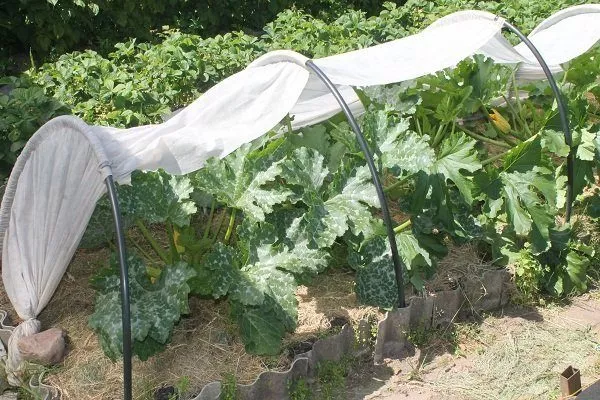
After planting, cover the seedlings with a protective covering, stretching thick transparent film over wire arches. On sunny days, lift the film regularly, gradually preparing the young plant for the new growing conditions.
Features of growing zucchini in a greenhouse
In cool climates, it's best to plant seeds in a greenhouse. This can be done using either seedlings or direct sowing. The former method is more attractive, as it reduces the ripening period by almost two weeks. In either case, seeds and seedlings should be planted using the same method as in open ground. To increase yields, consider the following recommendations:
- The soil in the greenhouse for zucchini should be prepared in the fall. To do this, dig it up and add fertilizers—nitroammophoska, superphosphate, and manure—to a depth of 8 cm. If mineral fertilizers weren't applied in the fall, they can be applied directly to the holes and then mixed with the soil. 30-40 grams of nitroammophoska is sufficient per plant. Manure should only be added in advance.
- At the time of planting, the soil temperature should be maintained within the range of +20…+25°C, and the air temperature should be +23°C during the day and not lower than +14°C at night.
- During the development period, the plant does not require additional feeding if all nutrients have been added to the soil. This is because the above-ground portion of zucchini plants develops rapidly in greenhouse conditions, and additional stimulation will only lead to the growth of leaves and shoots. This, in turn, will negatively impact fruit set and the variety's yield.
How to grow Kavili in warm beds
In regions with cool climates, structures such as heated garden beds have become increasingly popular. Their advantages include:
- allow you to get an early harvest;
- do not require fertilization during the plant's development period;
- make caring for bushes much easier;
- protect crops from the threat of freezing;
- involve planting both seeds and seedlings.
A disadvantage of this method is the labor-intensive nature of preparing the bed. This is done in the following order:
- Build a wooden box 50 cm high and 50 cm wide. Place it in a well-lit area.
- Place a fine-mesh mesh on the bottom of the box as a drainage layer, then add large organic waste that decomposes over a long period of time. This could include branches, rotten boards, cardboard, or paper.
- Fill the box with soil to a depth of approximately 3 cm.
- Throw plant waste such as weeds, grass clippings, rotted vegetables, or other food scraps onto the ground. The optimal height of this layer is 10-15 cm.
- Fill with soil again, but this time in a 10 cm layer.
- Spread manure in a layer up to 10 cm thick. It can also be replaced with plant waste.
- At the end, add a layer of soil at least 20 cm thick.
This bed should be prepared in the fall to allow organic waste to decompose properly. In the spring, you can plant the Kavili squash using the methods described earlier.
Planting care
The Kavili hybrid is easy to care for, but requires a number of timely agricultural practices. We'll discuss each of these separately.
Watering
The soil under the plants should always be moderately moist, but avoid allowing it to become damp, as this can lead to the development of fungal diseases. Before fruiting, zucchini should be watered once a week at a rate of 10-12 liters per square meter. Once the fruit begins to set, water every 2-3 days at a rate of up to 15 liters per square meter. The soil should be kept moist to a depth of 20 cm.
When watering zucchini, use warm, settled water (25°C). To prevent the young buds from rotting, apply the water only at the roots.
Watering should be done in the evening, when solar activity decreases.
Loosening and mulching
The soil should be loosened for the first time after germination or 2-3 days after planting the seedlings. Subsequently, this procedure should be repeated after watering or rain. Loosening should be light and shallow to prevent crusting. The soil between rows should be loosened to a depth of 14 cm, and under bushes, 5 cm, as this can damage the delicate roots located close to the soil surface.
During the process of loosening, it is also necessary to weed the area, destroying all weeds.
To prevent rapid moisture evaporation, mulch the bed. To do this, sprinkle the soil with crushed hay, peat chips, or sawdust, then lightly compact it.
Thinning
If your zucchini is growing in a shaded area, it's worth thinning the plants to allow sunlight to reach the entire planting. To do this, simply remove a few of the largest leaves. This procedure is especially important during flowering and root formation.
To prevent zucchini from rotting, place pieces of film or slate underneath them.
Top dressing
The Kavili variety only requires three feedings: during bud formation, flowering, and fruit set. If the soil has been properly cultivated, organic fertilizer alone may be sufficient.
To prepare green fertilizer, fill half a barrel with mown grass or weeds, top up with water, and let sit for a week, stirring daily. Strain this mixture and dilute it with water at a ratio of 1:8. Water the plant at a rate of up to 1 liter per bush.
This fertilizer can be alternated with slurry, diluted with water at a ratio of 1:10. Water the plant at a rate of up to 1 liter per bush.
Apply fertilizer only after watering the zucchini and at the roots. Never allow droplets of the solution to come into contact with the plant's tops, as this will cause burns that can be dangerous to the entire plant.
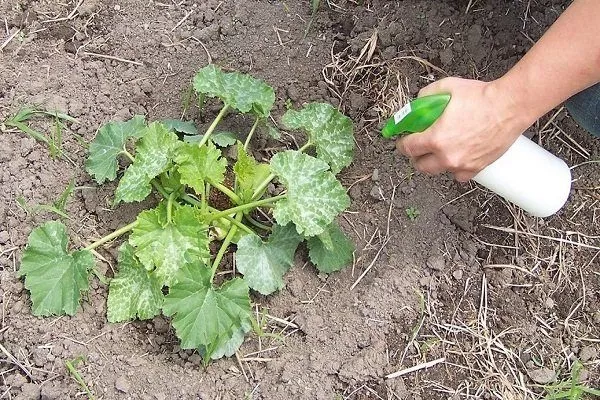
Protection from diseases and pests
To protect zucchini from pests and diseases, avoid crop rotation, dense plantings, and overwatering. However, even with proper cultivation practices, the plant may appear unhealthy. It can be affected by the following diseases:
- PeronosporosisRound or angular white spots appear on the leaves, gradually expanding and turning brown. The undersides become coated with a grayish-olive bloom. Over time, the foliage crumbles, leaving only the stalks. To combat the disease, spray the plant with a 0.2% suspension of Zineb. Other useful treatments include Zaslon and Oxychom.
- AnthracnoseIt affects all above-ground parts of the squash. It leaves sunken, pale pink spots on the fruit. Yellow-brown spots appear on the leaves, which gradually expand, causing the leaf blades to curl and die. To prevent anthracnose, squash should be sprayed with a 1% solution of Bordeaux mixture or a 0.4% copper oxychloride suspension.
As for pests, the following insects pose a danger to Kavili:
- Spider miteThey suck the plant's nutrients, which can lead to its complete death. They appear as small white dots and a slight webbing on the leaves, especially on the underside. In severe infestations, the plant turns white due to multiple damage. Mites can be controlled with a number of products, including Iskra, Confidor, or Fosbecid. For severe infestations, Karbofos can be effective. To repel mites, plant marigolds near the squash planting. A folk remedy that works well is a mixture of 1 cup of chopped onion, 1 tablespoon of hot red pepper, and the shavings of 1 bar of laundry soap per 10 liters of water.
- Melon aphidPest colonies are found on the underside of foliage, stems, and ovaries. Aphids suck the plant's sap, causing foliage to curl and ovaries to fall off. If these signs are ignored, the plant may wither. To combat pests during the growing season, spray the bushes with a solution of Malathion (60 g per bucket of water).
To protect your zucchini planting from various pests, the area should be thoroughly cleared of plant debris in the fall.
Harvesting and storage
Fruit should be picked when they reach 22 cm in length. Overgrown specimens, while not detrimental to flavor, will stunt the growth and development of the bush, draining the plant's energy. This, in turn, will negatively impact yield.
If zucchini are intended for immediate consumption or processing, they should be harvested young, cut right at the base. Store this harvest for no longer than 14 days at temperatures below 2°C. After this period, the fruit will lose its flavor, become tough, and rot.
If you plan to store zucchini for a long time, cut them when they're ripe, with the stems still attached. They can be stored in a cellar for up to two months if laid out in a single layer on a wooden platform with dry straw between them. Zucchini can also be stored indoors, but wrap each zucchini in paper and keep it on the balcony or in a cool, dark place, away from a heating vent. They can last up to a month in the refrigerator.
Pros and cons of Kavili
The advantages of this hybrid zucchini variety are as follows:
- is ultra-early maturing;
- It has compact dimensions, so it does not take up much space in the garden bed;
- gives a bountiful harvest;
- is distinguished by a long fruiting period;
- not afraid of many fungal diseases, including powdery mildew;
- has a universal purpose.
Reviews
The video below describes the experience of growing the Kavili variety:
Kavili F1 is a popular Dutch variety, designed for ultra-early mass production. This hybrid boasts many attractive characteristics, particularly parthenocarpy, high productivity, marketable fruit, and a long fruiting period. This squash can be grown in a greenhouse or in the open field, requiring minimal maintenance.
The Kavili hybrid is complete junk. Advertising on review sites and forums is apparently included in the price of the seeds. I bought it myself.