
The Karina variety is a striking example of the zucchini family, prized by zucchini lovers for its exceptionally soft and tender flesh. This variety attracts zucchini lovers with its unusually long fruits, which reach truly incredible sizes.
What does the Karina variety look like?
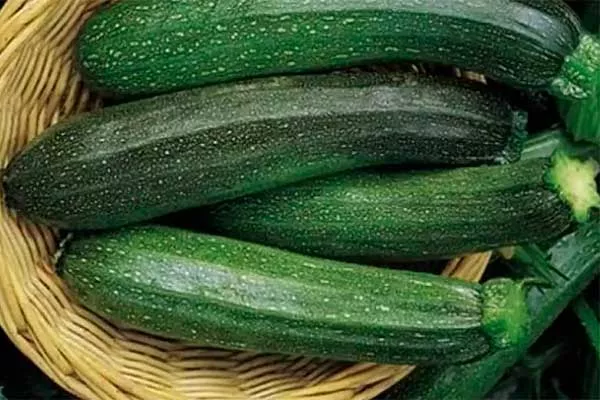
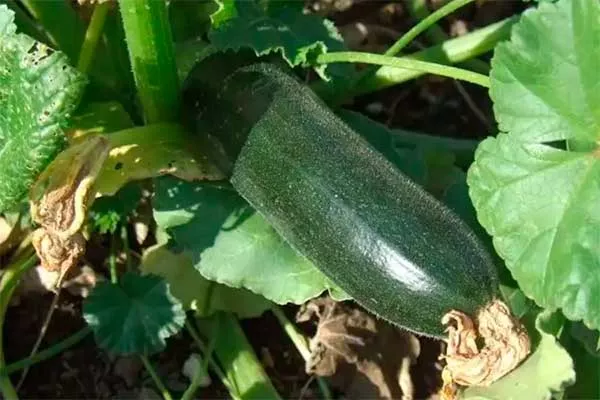
This zucchini variety is a bush variety, making it a very compact plant that doesn't take up much space. It has medium-sized, dark green, moderately dissected leaves. The fruits are long and cylindrical, and can grow up to 80 cm.
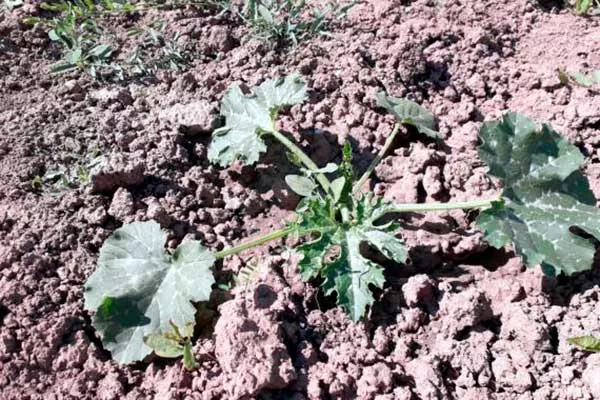
- ✓ Fruits can reach a length of up to 80 cm, which requires additional space for growth.
- ✓ The thin bark of the fruits makes them more susceptible to mechanical damage.
The fruits weigh 3-5 kg. The diameter is up to 5 cm. The flesh is white, dense, tender, and sweet. Striped zucchini are dark green with light green stripes. They are gently ribbed and have a thin rind. The medium-sized seeds are elliptical and cream-colored.

History of creation
Karina Zucchini is a zucchini variety developed by Russian breeders. Its authors are S. V. Dubinin, I. N. Dubinina, and A. N. Lukyanenko. Originator: Agrofirma SEDEK LLC. The variety was added to the State Register in 2009.
Taste and application
Karina zucchini is a versatile variety suitable for a variety of culinary dishes and all types of processing. It is also used for various preserves. Karina has a good flavor and a dry matter content of 4.6-5.2%.

Ripening period and yield
The Karina variety is early maturing, with the period from germination to harvest taking approximately 45 days. This squash is known for its abundant fruiting. Yields are 6.5 kg per square meter. In commercial cultivation, 400-615 centners are harvested per hectare.
Pros and cons
Before planting Karina zucchini in your garden, consider all its pros and cons. This variety may not be suitable for you for other reasons.
Pros:
This variety has no particular drawbacks, except that its yield is not the highest.
How to plant correctly?
To get a good zucchini harvest, you need to plant them correctly. It's important to choose a good location and plant according to the recommended planting method.
- ✓ Soil acidity levels should be between pH 6.0-6.8 for optimal growth.
- ✓ The soil must be well drained to avoid water stagnation.
Landing features:
- The Karina variety, as befits zucchini, prefers well-lit areas with diffused sunlight.
- The variety prefers loose, sandy loam soils with normal acidity. In the fall, it is recommended to dig the soil, adding well-rotted manure, superphosphate, and wood ash.
- The best predecessors for zucchini are considered to be legumes, different types of cabbage, tomatoes, potatoes and other nightshades.
- In the spring, shortly before planting, the soil is leveled with a rake and watered with ammonium nitrate. It is also recommended to water the soil with a solution of potassium permanganate.
- In the south and central regions, sowing can be done directly into open ground. Planting begins around mid-May, but the exact timing varies depending on the local climate and weather conditions.
- Before planting, seeds are soaked in water—they are kept in a wet cloth for two days, then for about a day. The swollen seeds are hardened by cooling them to 0°C and keeping them at that temperature for two days.
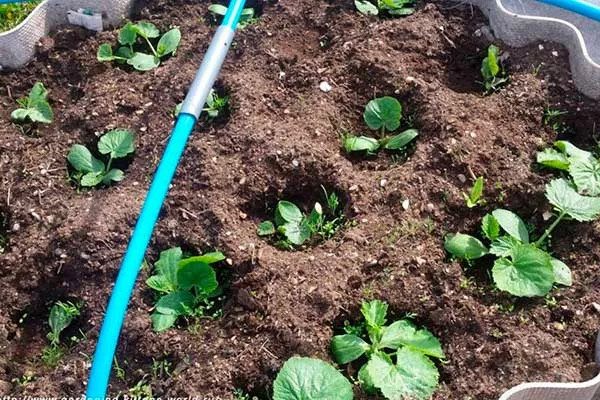
- The distance between the dug holes should be approximately 50 cm. A handful of humus mixed with fertile soil and wood ash is thrown into them.
- The holes are watered, and then the seeds are placed in them—two at a time—to ensure germination. The seeding depth is 2-3 cm. In heavy soils, the seeding depth is less—about 1-2 cm. The crops can be mulched with a thin layer of humus or peat.
How to care?
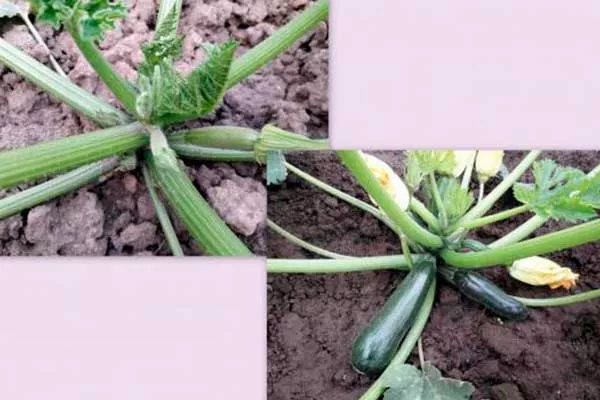
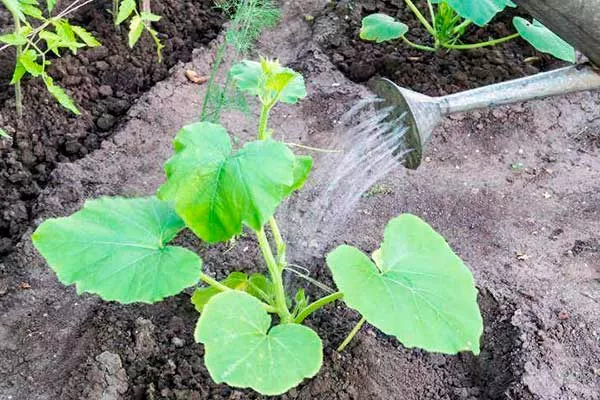
The Karina zucchini requires basic care, including weeding, loosening the soil, and regular watering, which ensures the fruits will be tasty and juicy.
Care features:
- Watering. They should be moderately watered, but not overwatered, which leads to the development of fungal diseases and various types of rot. The optimal water temperature for irrigation is 22°C.
- Top dressingBefore flowering, it is recommended to water plants with liquid mullein, and during fruit formation, they should be fed with liquid phosphorus-potassium compounds.
Calcium deficiency is often the cause of zucchini fruit rot. To prevent this, water the beds with a calcium nitrate solution (1 teaspoon per 10 liters of water). The crop also requires boron, which is supplied using Bor-Active (1/2 teaspoon per 10 liters of water).
Diseases and pests
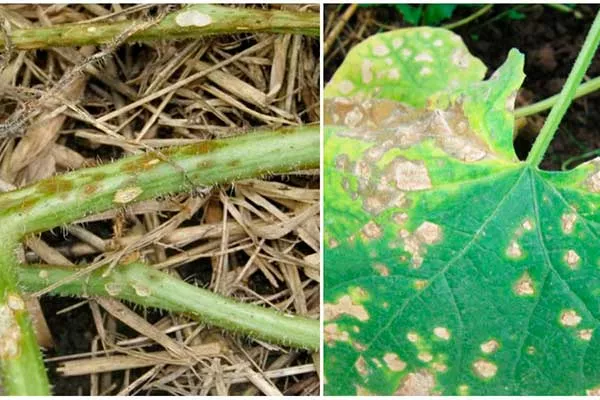
Under unfavorable conditions, the Karina zucchini can be affected by powdery mildew, white rot, and mosaic. Colloidal sulfur or a copper-soap solution prepared from a mixture of liquid soap (100 g) and copper sulfate (7 g) diluted in 10 liters of water can be used against these diseases. For severe infestations, use fungicides such as Kratan or Figon.
Zucchini can also be attacked by a variety of pests, including spider mites, shoot flies, mole crickets, and aphids, but the most dangerous pests are cutworm larvae, which burrow through the stems and feed on their sap. Pests are controlled with various biological and chemical pesticides, taking into account the harvest time—poisons should not be applied later than a few weeks before harvesting.
Harvesting
Zucchini squash is harvested at the milky stage of ripeness. The optimal weight for picking is 0.5 kg. It's also possible to pick unripe squash that has already reached a significant weight—these squash ripen well during storage. It's recommended to harvest zucchini every two days, at least.
The Karina variety undoubtedly deserves the closest attention from zucchini lovers. This variety has everything that makes this crop so beloved: productivity, ease of care, and, what's more, compact bushes and stunningly long fruits.