
The Yakor zucchini is a variety renowned for its many advantages, including its visual characteristics. To ensure a good harvest, it's important to know how to properly sow the seeds for seedlings and then plant them outdoors. This article covers the specifics of planting, growing, and care.
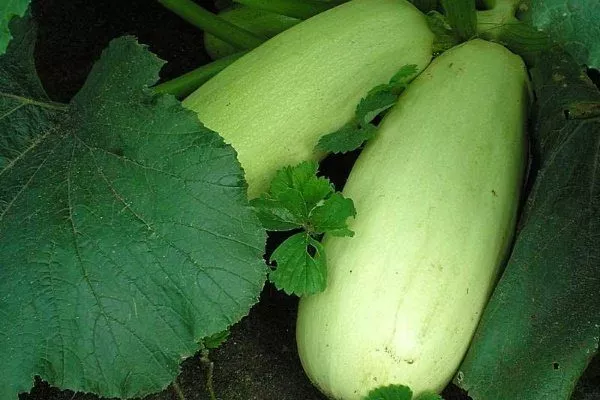
Zucchini "Anchor"
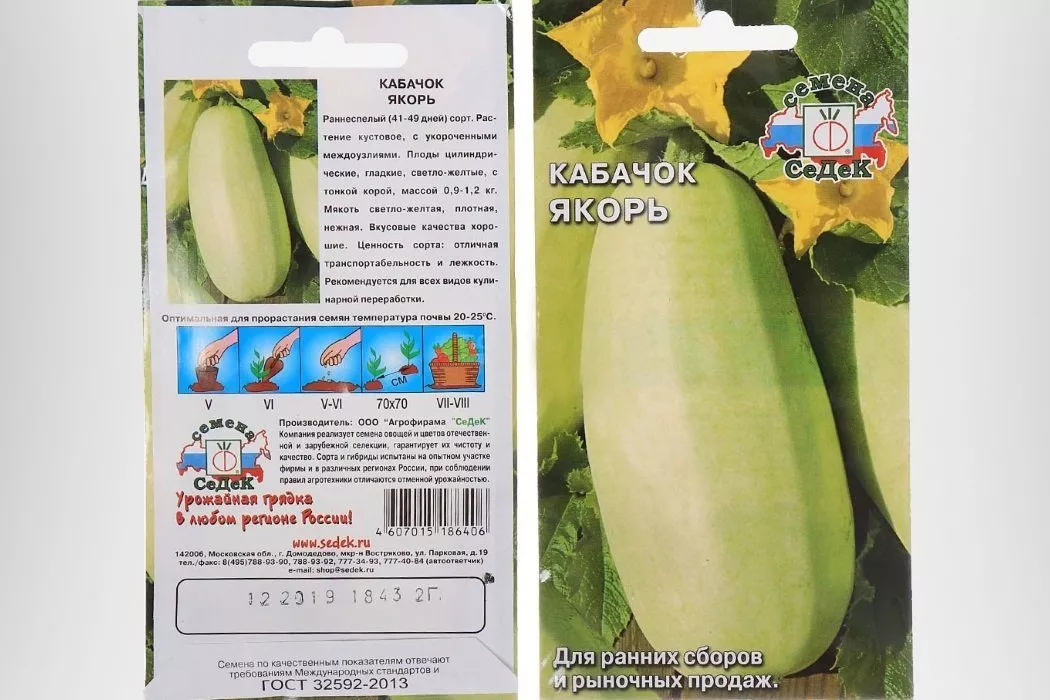
A pack of "Anchor" zucchini seeds with a brief description of the variety and growing recommendations
Description of the variety and distinctive characteristics
An ultra-early, cold-resistant variety. Characterized by vigorous growth, it takes 40-50 days from germination to technical fruit ripeness. The plant is bushy, typically female-flowering, with sparse foliage.
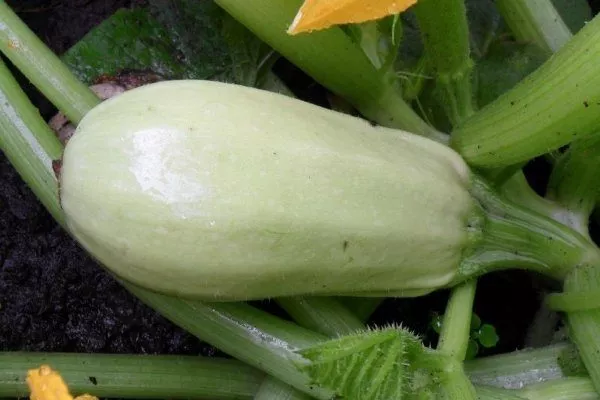
The fruits are cylindrical in shape. The zucchini has a thin, fragile, light green skin. If left unharvested for a long time, the skin takes on a light yellow hue. The flesh is soft, dense, and tender, with a pleasant, non-bitter flavor and a light yellow color. Each zucchini weighs between 500 and 900 g. It contains minerals such as iron, phosphorus, calcium, and potassium.
How to grow seedlings from seeds?
To grow seedlings, sow zucchini seeds in mid-April or May. It's recommended to grow seedlings in sunny greenhouses to maximize their sun exposure. For this purpose, use special 300-500 ml cups. It's best to keep the seedlings until they're 25-30 days old, but planting them in the garden as early as two weeks is acceptable.
- ✓ Optimum temperature for seed germination: 25-30°C during the day, not lower than 18°C at night.
- ✓ The need to use warm water for irrigation to avoid stress on plants.
Sowing seeds is easy: plant them 3-4 cm deep, then plant the sprouted seeds individually, and plant several dry ones in groups (once seedlings appear, select the best plants and remove the rest). Water the soil generously with warm water, and store the seedlings in a warm place at 25-30 degrees Celsius.
In a few days, seedlings will begin to emerge, and the growth process will accelerate. During this period, the containers should be moved to a well-lit area where the temperature is around 18 degrees Celsius. Otherwise, the seedlings will immediately begin to stretch, and within a couple of days they will be unsuitable for planting in the ground.
Caring for Yakor zucchini seedlings is straightforward. These vegetables begin to grow vigorously from the very first days and are rarely susceptible to disease, as long as temperature and watering guidelines are followed. Within a month, a fully viable plant will emerge.
Techniques for planting seedlings in open ground
Yakor zucchini prefers moist soil, so allowing the roots to dry out can negatively impact yield. Before planting, water the plant, mulch the soil around the planting holes, and loosen the dried soil. This prevents moisture evaporation from the root zones.
A week before planting outdoors, acclimate the plant to outdoor life: take it outside in the morning and bring it back indoors in the evening. Follow the weather forecast and plant when it's warm but cloudy. This should be done in the evening or early morning, but be sure to protect the plants from direct sunlight.
Dig holes about 10 cm deep and water them thoroughly with warm water. Add a little compost and ash to each hole and mix it with the soil. Zucchini roots are slow to recover, so remove the seedlings from the container carefully to avoid damaging the root ball.
Place the seedlings in the holes, cover with soil up to the cotyledons, and lightly compact the soil. After planting, water the soil around the roots at a rate of 1 liter per seedling. Cover the plants with plastic or non-woven fabric at night until they become established.
For helpful tips on planting, growing, and caring for zucchini, regardless of variety, watch the following video:
How to properly care for zucchini?
If the plants become overgrown, pluck out some of the foliage, especially under the vegetables. This procedure, while reducing yield, promotes rapid zucchini set.
Care instructions:
- Plants are watered as needed when the soil dries out; do not allow it to dry out completely. However, excess moisture can also cause a decrease in yield and the development of fungal diseases, which zucchini are susceptible to.
- Seedlings will need to be fed twice: when the third leaf appears and 10 days after the first feeding. Mature plants are fed three times per season: after rooting, before flowering, and before fruiting. However, plant needs vary significantly depending on the stage of development.
- The plant's large leaves require large amounts of nitrogen, especially during the growing season. Manure, ash, and compost contain a lot of nitrogen. Ammonium nitrate, urea, superphosphate, and other mineral fertilizers will also provide the plant with this nutrient.
- Phosphorus fertilizers help promote fruit and seed formation, so they are applied during the flowering period. The simplest and most effective organic fertilizer is considered to be 300 g of frozen fish, minced and diluted in 10 liters of water.
- A potassium deficiency not only causes leaves to turn yellow and dry out, but also makes it difficult for plants to absorb nutrients and moisture, and makes them poorly adapted to drought and cold weather. Mineral fertilizers such as potassium nitrate, nitrophoska, and ammophoska can help remedy this problem. Ash is a recommended natural fertilizer.
- Zucchini often suffers from micronutrient deficiencies, especially boron. For this reason, foliar feeding with a boric acid solution is essential during cold temperatures. This treatment accelerates fruit set and increases resistance to fungal diseases.
- To use zucchini for cooking or canning every couple of days, you need to not only water the plants in the evening but also feed them with mineral fertilizer solutions diluted with water. You'll also need to apply mullein infusions every 20 days.
Only at temperatures between 11 and 30 degrees Celsius can zucchini form fruit. A characteristic feature of this vegetable is that growth and flowering slow down once the first fruit appears. Because of this, the mature zucchini plants need to be harvested every few days. This stimulates flowering and new fruit set, and also extends the plant's fruiting period by three months. As the seedlings grow, the soil around them is carefully loosened and lightly hilled.
- ✓ Temperature range for fruit setting: from +11°C to +30°C.
- ✓ The need for regular harvesting to stimulate new ovaries.
When growing zucchini, it's essential to strictly adhere to crop rotation. It's best to plant this vegetable in beds previously planted with legumes, potatoes, onions, and cabbage.
When to harvest?
Cold dew in August slows the growth of zucchini fruits. Careful attention must be given to the zucchini to preserve the harvest. Place strips of non-woven fabric or a handful of pine needles under zucchini fruits lying on the ground to prevent rotting.
If the vegetables are not eaten immediately, they need to be ripened until they are fully ripe. Their skin becomes firm and tough, and at this stage, they reach 30-50 cm in length and weigh 1.5-2.5 kg. At this stage, the Yakor root vegetables can be stored in a cool, dark place for up to a month. Harvesting takes place from July to the end of September. Gardeners can harvest up to 12 kg of ripe zucchini per square meter.
Advantages and disadvantages of the variety
The advantages of this variety include:
- Root crops are resistant to short-term temperature drops in late spring and early fall. This significantly simplifies plant care, extending the growing season and fruiting. In central Russia, seedlings are planted under plastic covers starting in early May.
- Drought resistance, which is especially convenient for those gardeners who can only visit their plot on weekends. Zucchini is also undemanding in terms of growing conditions, but if the plant is not properly cared for, the fruit may not only take a long time to ripen, but also become deformed and taste worse.
Reviews from vegetable growers
Reviews of the Yakor variety are generally positive. There are various reviews online from gardeners who have tried planting and growing the root vegetables.
I make zucchini hamburgers, as strange as it may sound. I place a peppered chicken fillet between two zucchini slices, sprinkle with herbs and garlic, and wrap it in a lettuce leaf. Everyone in my family loves it.
The Yakor zucchini variety has gained popularity among many gardeners. Knowing how to properly sow seeds for seedlings and then plant them outdoors will ensure a bountiful harvest. Proper care, including timely watering and fertilizing, will ensure high quality and unique flavor.