
Hybrid squashes are always in demand among gardeners due to their selectively enhanced qualities. Read about one of the most common varieties in our article.
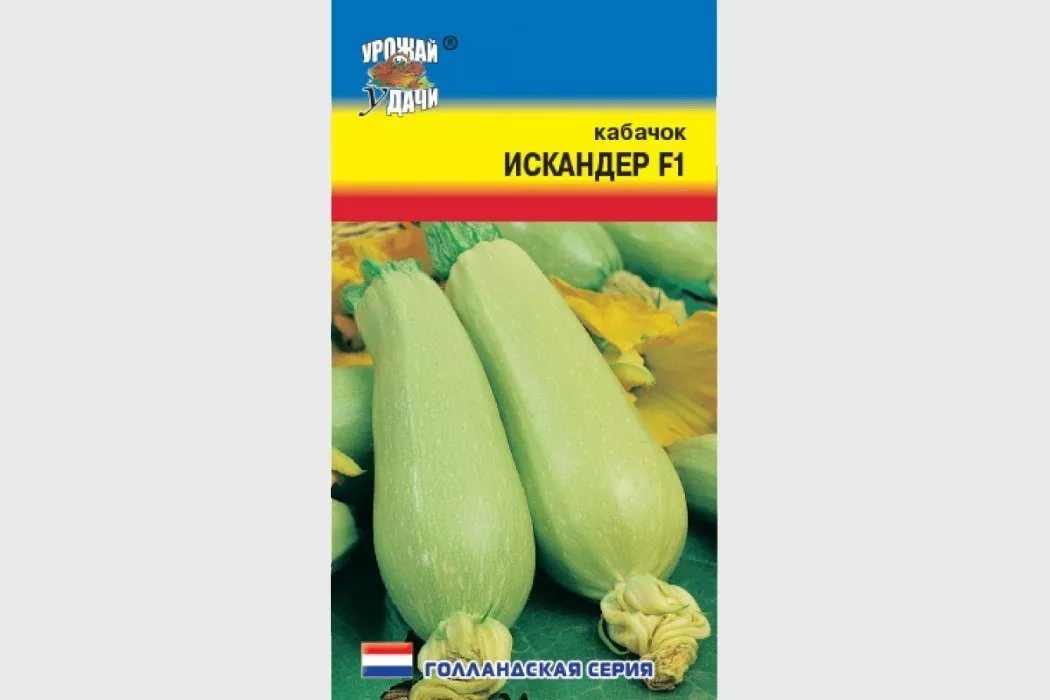
Zucchini variety Iskander
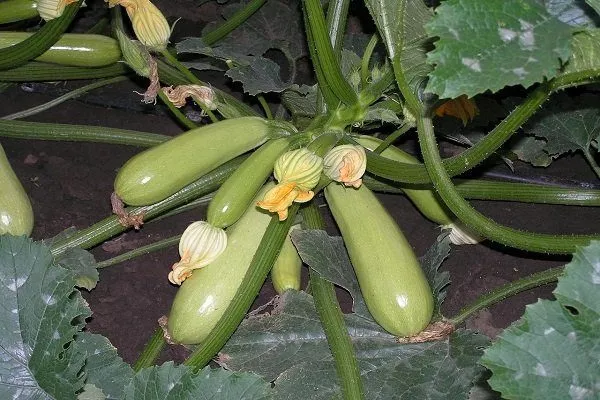
The leaves of the Iskander squash are spotted.
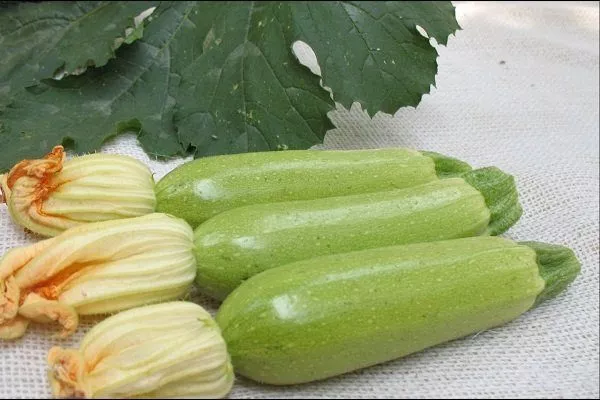
The zucchini fruits are soft green in color
Description and characteristics of the Iskander F1 variety
In recent years, the Dutch hybrid Iskander F1 has become increasingly popular. Its excellent yield, low maintenance, and early maturity make it a leader among zucchini varieties.
Growing region
The result of modern breeding expands the geographic range of squash plantings. Iskander thrives in both central Russia and the Far East, withstands the short Siberian summer, and will delight the Urals and Volga regions with its fruits. It was originally included in the State Register of Breeding Achievements of Russia for the Lower Volga region for open-ground cultivation.
Appearance
The plant is compact, vigorous, and bushy. The green leaves, prominently spotted, are large and medium-dissected.
Iskander F1 fruits are delicate green with fine light speckles. They are small, club-shaped, and taper toward the stem. Marketable weight ranges from 500-700 g, and the squash rarely exceeds 20 cm in length. The thin skin, with a barely noticeable waxy coating, is easily removed with a knife.
Productivity and application of fruits
Iskander F1 is renowned for its high productivity: maximum yields reach 916 c/ha or up to 17 kg from one bush.
The yield of this variety is almost 2 times higher than the standard zucchini Gribovskie 37!
The variety's early maturity allows for excellent harvests within 40-50 days of planting. Greenhouses and covered beds will allow the vegetables to ripen even faster. Fruiting ends only with the first frost. Thanks to its excellent yield and low maintenance, this zucchini is recommended for commercial cultivation.
Iskander's unrivaled flavor remains throughout the season. The flesh is creamy white, firm, and tender. This variety is suitable for table use and retains its flavor when frozen or canned.
Watch the following video review of the Iskander zucchini variety:
Resistance to diseases and pests
This variety is characterized by good resistance to common squash diseases. To maintain disease resistance, prevention is best: crop rotation, maintaining optimal moisture levels, regular weeding, and loosening the soil. Avoid replanting or planting after or near cucurbits.
Planting and growing zucchini Iskander F1
There are two main ways to plant zucchini:
- seedling;
- planting seeds in the ground.
Let's look at each of them in more detail.
Seedling method
The seedling method is more labor-intensive and expensive, but you'll enjoy your first harvest 2-3 weeks earlier. Sowing for seedlings begins about a month before active gardening.
Seed preparation
Preparation of seeds for seedlings is carried out in the following order:
- soaking in a growth-stimulating solution for up to 24 hours;
- storing seeds in a wet cloth for 24-48 hours at a temperature of 22-24 degrees.
For hybrid varieties, collecting seeds yourself is not possible. It's best to purchase high-quality seed from trusted suppliers.
Sowing seeds for seedlings
For vigorous plant growth, it's advisable to use fertilized soil. Peat, manure, and humus are suitable additives.
You can prepare your own nutrient medium for seedlings. To do this, you will need:
- sawdust 1 part;
- peat 5 parts;
- humus 5 parts;
- 0.5 cups of ash and 5 g of ammonium nitrate per 10 liters of mixture.
It's best to plant seeds in peat molds, as young zucchini don't like being transplanted. Or, when planting outdoors, transfer the plants along with the soil to avoid damaging the roots.
The planting containers are filled with prepared soil and watered; the seeds are placed at a depth of 3-4 cm.
Caring for seedlings
Seedling care includes watering, fertilizing, and maintaining a favorable temperature. The ideal temperature before sprouts emerge is 18-25 degrees Celsius, followed by 17-20 degrees Celsius during the day and 13-15 degrees Celsius at night. Water the seedlings exclusively with warm water every 5-7 days.
During the plant's growth period, two additional feedings can be performed: one week after germination, and then again after the same amount of time. The first time, prepare a solution of 0.5 teaspoons of urea per liter of water, using 0.5 cups per plant. The second time, use 1 teaspoon of nitrophoska per liter, using 200-250 ml per seedling.
Transplanting seedlings into the ground occurs after the end of frosts, when the plant has already grown 2-3 true leaves.
Planting seeds in the ground
Prepared seeds are planted directly into the soil, but only in well-warmed soil—the temperature at a depth of 5-6 cm should be no lower than 8-10 degrees Celsius. Germination will largely depend on the location and soil quality.
- ✓ The optimal soil temperature for planting seeds in the ground should be at least 12°C, and not 8-10°C, as stated in the article, to ensure better germination.
- ✓ For watering seedlings and adult plants, use water at a temperature of at least 20°C to avoid stressing the plants.

Choosing a location
The main factor when choosing a planting site is the quality of the soil. Ideally, light, neutral soil with a sunny location is ideal. The groundwater table shouldn't be too close, and the soil needs to be well-warmed throughout the plant's growth period.
Ideally, sowing should take place after potatoes, onions, nightshades or legumes.
Soil preparation
Zucchini, like any vegetable, thrives in fertile soil, so fertilizing is crucial for a bountiful harvest. However, before fertilizing, it's important to consider the soil type. For example, acidic soil should be alkalized, while neutral soil requires only fertilizer.
For maximum effect, alkalization is carried out in the fall.
Soil fertilization options in the table:
| Soil type | Type of fertilizer per 1 sq.m. |
| Sandy | Peat or turf 10 kg and 2 kg of sawdust or compost, a handful of ash |
| Clay/loam | 2-3 kg of peat or turf and compost or sawdust, a handful of ash |
| Peat | 10 kg of turf or compost, a handful of ash, 15-20 g of potassium sulfate and superphosphate |
Planting diagram
To ensure adequate nutrition of plants, it is recommended to follow a planting pattern of 150-200×60-70 cm.
For seedlings, prepare holes 15-20 cm deep and about 30 cm wide, and plant the seeds at a depth of 4-6 cm. They are watered generously and fertilized with a mixture of humic fertilizer and azophoska.
The seedlings are transplanted into open ground in the evening or in cloudy weather.
Care for the Iskander F1 zucchini
Iskander F1 is a very unpretentious variety, but with proper care and attention it will yield a maximum yield of excellent quality.
Watering
Zucchini tolerates dry weather well, but for full growth and development, watering of about 20 liters per plant is required. This is especially important at the beginning of the growing season, when the plant is just gaining strength.
When watering, make sure the soil dries out; on average, 1-2 times a week is sufficient. Apply warm water directly to the soil at the roots to prevent leaf and fruit rot.
Top dressing
Regular fertilization increases yield by 40-50%. Three applications per season are considered optimal:
- in the presence of 3-4 true leaves;
- at the beginning of the ovary appearance:
- during fruiting.
- Two weeks before planting, add compost or humus to the soil at a rate of 5 kg per 1 m² to improve the soil structure.
- 10 days after planting the seedlings or the emergence of shoots, carry out the first feeding with a solution of mullein (1:10) or chicken manure (1:20).
- During the flowering period, apply phosphorus-potassium fertilizers to stimulate the formation of ovaries.
The first application of fertilizer is made with the following mixture: 20 g each of ammonium nitrate, potassium nitrate, and 40 g of superphosphate per bucket of water. A good option would be to apply a solution of chicken manure (1:20) or mullein (1:10) at a rate of 2 liters per plant.
For the second and third feedings, the nutrient composition is prepared from 50 g of superphosphate and 50 g of potassium nitrate per bucket of water.
Zucchini does not like chlorine-containing fertilizers.
Spraying
Spraying zucchini has two purposes:
- increasing resistance to pests and diseases;
- attracting insects for better pollination.
To boost the plant's immunity, folk remedies can be used for spraying: infusions of onion and garlic peels, tobacco infusion, or a solution of ash and soap.
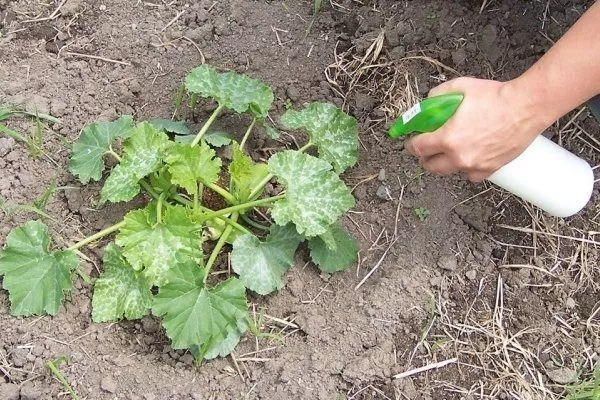
To attract pollinators, use a sweetened solution: dissolve 5 g of boric acid in a bucket of water and add sugar. This option is suitable for greenhouse zucchini.
Loosening, weeding and mulching
Loosening the soil will increase its capacity for moisture, air, and heat. However, special care will be required due to the squash's close-lying roots. Mulching with peat and compost will make this task easier.
Weeding is carried out as the weeds grow. Particular attention should be paid to weeding during the plant's active growth period. Afterward, the large zucchini leaves will begin to overwhelm other plants, leaving the bed virtually bare.
Harvesting and storage
Iskander's early maturity allows for the first harvest of zucchini just 40-45 days after germination. The zucchini are harvested from the bush in dry weather 2-3 times a week. A unique feature of the variety is that the higher the yield, the more new ovaries are produced.
Well-ripened vegetables can be stored in a cellar for up to 6 months at temperatures up to 10 degrees Celsius. Ripeness is easy to check: the skin becomes firmer and scratch-resistant, and the sound is dull when tapped.
The taste qualities of Iskander F1 are preserved during canning and freezing.
Pests and diseases
Zucchini can be susceptible to disease or pests. The main signs of damage and control methods are listed in the table:
| Disease/pest | Signs of defeat | Treatment |
| Anthracnose | Growing light spots on the leaves, the foliage turns brown and dries out. | Removing diseased parts, spraying with Bordeaux mixture. |
| Powdery mildew | Powdery white coating with a tendency to increase the affected area. | Treatment with infusion of mullein or hay. |
| Gray mold | Growing areas of rot on ovaries and flowers. | Soil replacement, phosphorus fertilizers, removal of affected areas, reasonable crop rotation. |
| Peronosporosis | Light spots on leaves leading to browning and drying out. | Removing diseased parts, spraying with Bordeaux mixture. |
| Spider mite | Numerous light spots, the leaf turns yellow and dies. | Removing diseased leaves, spraying with hot pepper tincture. |
| Melon aphid | Affected flowers, ovaries and leaves dry up and die. | Removal and burning of diseased parts of the bush, treatment with malathion. |
| Whitefly | Sooty mold infestation, leaves die. | Treatment with Confidor or Fosbecid. |
Advantages and disadvantages of the variety
The undoubted advantages of Iskander F1 include:
- early ripening;
- high yield;
- long fruiting period;
- wide geography of plantings;
- long-term storage;
- resistance to pests and diseases.
Reviews of Iskander F1 zucchini
High-yielding, early-ripening, easy-to-grow, tender, and resilient—the Iskander F1 hybrid zucchini has it all. Treat yourself to delicious vitamins from your garden without much effort.
This year I tried planting it, but I didn't get along with this hybrid. I planted it early, straight into the ground, and covered it with lutrasil. The seeds took three weeks to germinate, and I thought they wouldn't. So I planted at least one indoors, though I'm not particularly fond of zucchini anyway. It grew faster indoors than outside. In short, it definitely outpaced them. I looked at the forecast and thought the weather was fine. I planted the one that had been a seedling indoors. Literally the next day, late in the evening, there was a strong wind and hail. And this beautiful indoor plant broke in half. I dug it in. And lo and behold! The ones that took three weeks to germinate are still growing. And this one, with its broken roots, is sticking out of the ground and isn't wilting or growing. Well, I planted another one at home, I don't know... 🤦♀️ We had such a June this year that the old people don't remember anything like it... Nothing but rain and cold. But there were no frosts.