
Zucchini is an easy-to-grow and productive crop, but it does have one major problem. In adverse weather conditions and when agricultural practices are not followed, zucchini begins to rot rapidly. Preventative measures aimed at preventing conditions that cause fruit and above-ground plant parts to rot can help avoid crop losses.
Why do zucchini rot in the garden and how can you preserve the harvest?
Zucchini grows quickly and can produce huge harvests. Planting just a few plants is enough to provide a large family with fresh zucchini and make plenty of preserves. However, this crop is very sensitive to growing conditions; if they are unfavorable, the plants will rot.
- ✓ The optimal temperature for growing zucchini: during the day +22…+25°C, at night not lower than +15°C.
- ✓ The soil moisture level should be maintained within 70-75% of the total moisture capacity.
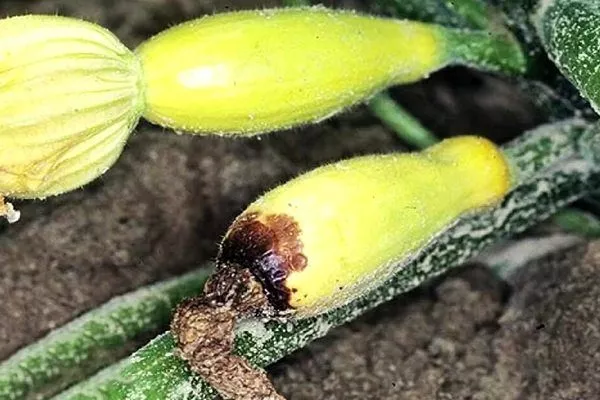
Bad weather
Zucchini thrive in warm, moderately humid weather. They require plenty of sun, air, and nutrients to thrive. If it's cloudy outside and there's prolonged rain, problems are inevitable—the fruit begins to rot, as the plants become susceptible to various fungal infections and rots.
Lack of sun and cool temperatures are the main factors causing zucchini rot, as the plant weakens under these conditions, receives insufficient nutrients, and photosynthesizes poorly. This causes the plants to become diseased, rot, and drop fruit.
The most severe consequences for zucchini occur after sudden temperature changes - if the daytime heat reaches +30°C or more, and at night it drops to +10…+15°C.
How to prevent zucchini from rotting:
- provide shelter from the rain;
- Place ripening fruits on wooden planks or straw so that they do not come into contact with damp soil;
- sprinkle the soil around the bushes and between the beds with mulch - straw, peat, humus, etc.;
- Place plastic bottles of water or bricks around the zucchini beds - they will release the heat stored during the day at night.
If the summer is damp and cold, it's recommended to install hoops over the zucchini beds and cover them with covering material before the fruit rots. If the weather is extremely hot, it's best to protect the zucchini from the scorching sun.
How to cover zucchini:
- on rainy days — film;
- in the heat - light, breathable lutrasil or spunbond.
Deficiency or excess of micronutrients
Both poor and overly fertile soils are harmful to zucchini. Most crops produce well in loose, fertile soils. Zucchini in such soils experience uncontrolled foliar growth.
Small bushes grow and become overly dense. The sun barely penetrates beneath the leaves, causing dampness and dew to accumulate, causing the fruit to rot.
If only the ends of zucchini are rotting, they are cut off to the healthy flesh and burned. The cut area takes on a corky, dense texture, and the fruit continues to grow.
How to deal with nutritional problems:
- Boron deficiency. It is recommended to spray the beds with a solution of boric acid - 2 g per 10 liters of water.
- Iodine deficiency. To replenish this deficiency, bushes are treated with potassium iodide diluted in water—2 g per 10 liters of water. Alternatively, bushes are sprayed with iodine tincture diluted in water—30 drops per 10 liters. Deficiencies are usually caused by excessively hard water, which contains too much iron.
- Micronutrient deficiency. The easiest way to replenish this is by applying complex fertilizers. Ten days after germination, the zucchini are fertilized with a nutrient solution: 20 g of urea and 50 g of superphosphate diluted in 10 liters of water. The fertilizing is repeated after a week.
Strict adherence to dosages and frequency of fertilizer application will help prevent excess nutrition, and additional feeding will help prevent deficiency.
Unsuitable site
The development, health and yield of zucchini largely depend on the characteristics of the site where the crop is planted.
Requirements for the planting site of zucchini:
- Lighting. The area should have plenty of sunlight; in the shade the crop grows and bears fruit poorly, gets sick and rots.
- Air. Zucchini doesn't tolerate strong winds and drafts. It's best to plant them near a wall or fence, otherwise they'll be susceptible to diseases that can cause fruit rot.
To ensure that your zucchini produce a good harvest and don't rot, plant them on the north or east side of your potato rows.
Dense plantings
In any soil, whether open or closed, zucchini rot occurs due to close planting. In densely packed beds, even in good weather, the fruit rots and part of the harvest is lost. Broad leaves block light and oxygen from reaching the ovaries and fruits, causing them to rot.
How to solve the thickening problem:
- cut off excess leaves periodically - those that cover the central part of the bush or cover neighboring bushes;
- If cutting off the leaves doesn't solve the problem, thin out the bed. — It is better to sacrifice individual bushes than to lose the entire harvest.
To prevent overcrowding, it's important to maintain the recommended spacing between plants and rows. With a square-nest planting pattern, the distance between plants should be at least 0.5-0.7 m.
Violation of crop rotation rules
Zucchini shouldn't be planted after related crops. They draw the same nutrients from the soil and are susceptible to the same diseases. It's not recommended to plant zucchini in the same location for more than four years in a row.
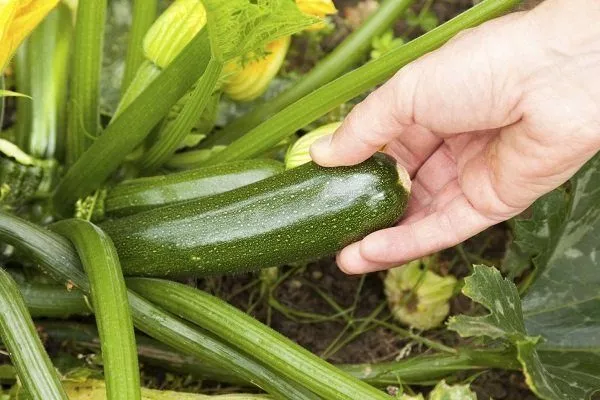
If you want to plant a crop in a convenient and familiar place, you should periodically sow green manure there - wheat or oats, which effectively cleanse the soil of harmful elements left by plants.
Crops after which it is not recommended to plant zucchini:
- watermelons;
- melons;
- cucumbers;
- pumpkins.
Good predecessors for zucchini include nightshade crops such as tomatoes, eggplants or potatoes, onions, root vegetables such as carrots or beets, as well as all kinds of greens such as lettuce, spinach, dill, and others.
Violation of the watering regime
Excessive humidity is the most common cause of zucchini rot. If the weather is rainy, any part of the plant is at risk of rotting. A similar situation occurs with over-watering. Fruit rot is especially common in over-watered beds.
How to properly water zucchini and what to do to prevent rotting:
- water the beds on time, preventing the soil from drying out or becoming too wet;
- After watering, the soil should be moistened to a depth of 40 cm;
- the average watering rate is 20 liters of water per adult bush;
- standard watering frequency - in normal weather conditions, once a week;
- Use only warm, sun-heated, and settled water for watering - cold water provokes diseases;
- water the bushes only at the roots, do not pour water from above;
- Pour water carefully, as a strong stream will wash away the soil above the roots;
- Thin out your beds and plants to avoid creating a greenhouse effect.
If the soil is too wet due to prolonged rains, it's recommended to quickly loosen it or even lightly dig it with a shovel. This will allow the moisture to evaporate faster, and the roots to receive the necessary amount of oxygen. If there are weeds, it's recommended to leave them alone until the soil dries out.
Insufficient pollination
Poor pollination of flowers can also cause zucchini rot, primarily affecting the ovaries and fruits. During rainy summers, artificial pollination is extremely necessary.
How to solve the problem:
- Pick a male flower and tear off its petals.
- Make sure the pollen is ripe - it should be fluffy.
- Use a cotton swab or brush to collect pollen from the male flower.
- Transfer the collected mixture to the stigmas of female buds.
If the procedure is performed correctly, the ovaries will begin to grow. One male flower is enough to pollinate 3-4 female flowers.
It is recommended to plant flowers with bright and fragrant buds near zucchini beds so that they attract bees, bumblebees, and other pollinating insects.
Fungal diseases
Rotting of zucchini, fruit, and other plant parts is usually caused by fungal diseases such as downy mildew, bacterial blight, anthracnose, fusarium, and mosaic. However, powdery mildew or blossom-end rot are the most common causes of zucchini rot.
Blossom end rot
This disease primarily affects the leaves and then the ovaries. Affected plant parts are deformed, shrivel, rot, and fall off. The main cause of blossom-end rot is potassium deficiency.
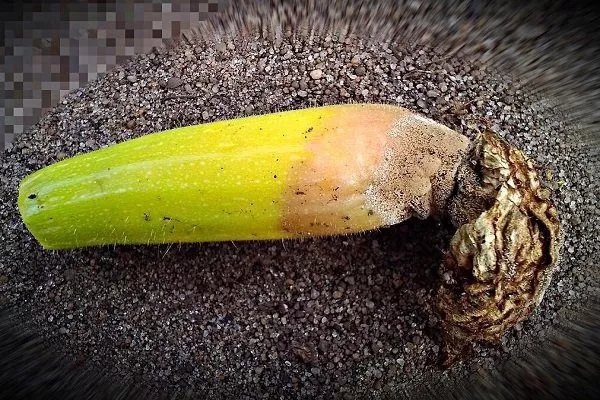
How to fight:
- To replenish the lack of potassium. The bushes are fed with potassium nitrate or another fertilizer containing this element;
- For preventive purposes. To boost immunity against blossom-end rot, plants are watered with a weak iodine solution—3 drops per 10 liters of water is sufficient. The solution can be applied not only to the roots but also used for foliar feeding (spraying).
Powdery mildew
The main symptom of powdery mildew is a dirty white coating on various parts of the plant—leaves, flowers, and stems. Small round spots first appear, merging to cover the entire surface of the leaf blades.
- ✓ First signs: small white spots on the leaves, which quickly increase in size.
- ✓ Affected leaves become brittle and break easily.
The leaves turn red over time, then black, dry up and die. If the infection is severe, the disease spreads to the ovaries and fruits. The latter develop sunken, softened areas.
Causes of powdery mildew:
- high humidity;
- prolonged rains;
- watering with cold water;
- temperature changes.
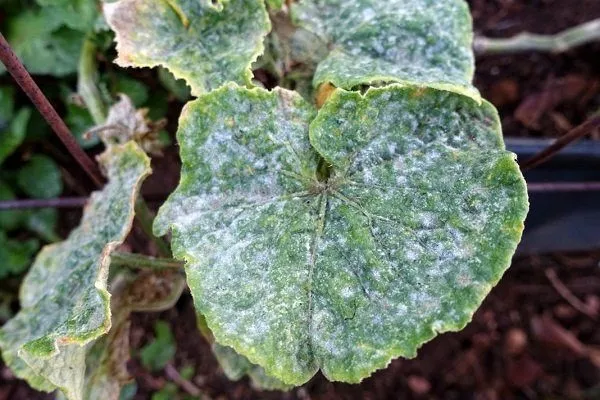
How to combat powdery mildew:
- Garlic infusion. It's made from chopped garlic steeped in water. Four medium heads per 10 liters (3.5 gal) are used. The resulting infusion is then sprayed on crops.
- Nitrogen exclusion. Instead of ammonium nitrate, phosphorus and potassium are added to zucchini plants, as nitrogen promotes fungal diseases. It is recommended to apply it in moderation in the fall and early spring.
- Resistant varieties. This is the simplest and most reliable way to prevent fungal diseases in general and powdery mildew in particular.
- Destruction. Heavily affected bushes are uprooted and destroyed. It's best to burn them to kill the fungus and its spores.
- Spraying. Plants with minor damage can be saved. The sooner treatment is started, the greater the chance of saving the bushes. Spray the plants with copper-containing products, such as Bordeaux mixture and copper sulfate solution.
Before spraying, remove affected plant parts. Treatment should be carried out at least one month before harvesting. If the damage is severe, treat the bushes with powerful fungicides such as Topaz, Ridomil, or similar products.
Peronosporosis
Another name for this fungal disease is downy mildew. Downy mildew begins with the appearance of oily, greenish-yellow spots. Over time, these turn gray-brown, often with a dirty white coating. Affected leaves appear scorched and eventually dry out.
How to fight:
- the plantings are treated once with sulfur- and copper-containing preparations - Thiovit Jet and Bordeaux mixture, respectively;
- the second time, other preparations are used, since the fungus quickly gets used to sulfur and copper; you can spray the zucchini with HOM, Trichoderma Veride or similar products;
- Zucchini can be sprayed with a simple folk remedy - soda ash, diluted in water - 2 tablespoons per 10 liters.
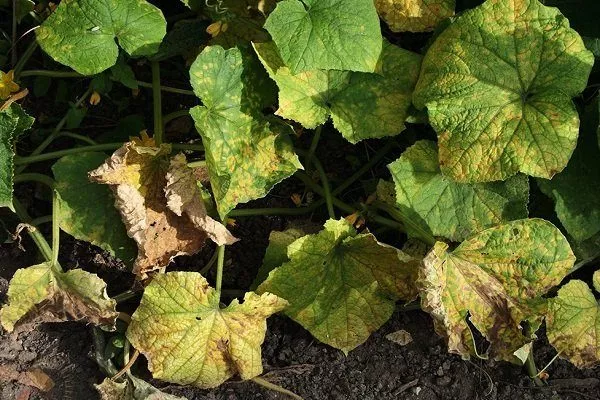
Why are small zucchini plants rotting on a bush in a greenhouse?
In a greenhouse, zucchini rots for the same reasons as in the open ground. However, maintaining favorable conditions for zucchini is much more difficult here.
Reasons for zucchini rotting in greenhouses:
- Untimely ventilation. In greenhouses and hothouses there is often not enough fresh air and it becomes too humid and there is not enough fresh air.
- Lack of nutrients. Rotting of small fruits in a greenhouse often occurs due to nutrient deficiency. Potassium and phosphorus fertilizers are especially important during the fruit set stage—if not fed promptly, zucchini plants are prone to rotting.
- Lack of sun. This situation can occur if the greenhouse is incorrectly positioned or if the plantings are too dense.
- Excess of organic matter in the soil. If a gardener overdoes it with adding manure or humus, the plants will grow green mass and rot.
- Diseases. Indoor cultivation often creates a favorable environment for the development of fungal diseases. Zucchini in greenhouses and hotbeds can be affected by powdery mildew, downy mildew, white blossom-end rot, and other diseases.
- Incorrect watering. Over-watering of the soil, leading to water stagnation.
- Lack of pollination. Greenhouses are always prone to pollen transfer issues. If insects don't fly in, flowers rot and contribute to the spread of rot. Planting self-pollinating varieties or artificial pollination can help avoid this problem.
If agricultural errors aren't corrected promptly, the bushes risk dying. If fruit rot begins, the chances of saving the plants and the harvest are drastically reduced.
Rotting of ovaries
There are situations where rot begins even before the fruit appears—the ovaries don't grow, but simply turn yellow and rot immediately after the flowers die. Ovaries rot primarily for the same reasons as the fruit—irrigation and nutritional deficiencies.
But there are several other factors that cause ovary rot:
- The flowers did not have time to be pollinated. This situation often occurs during inclement weather, which prevents bees from arriving in the garden beds. If the gardener doesn't pollinate the flowers artificially, the ovaries die and fall off.
- Yellowing and dying of leaves. They rot, and the fungal infection quickly spreads to the ovaries, causing them to rot. Removing the lower leaves that touch the ground weekly helps prevent this problem. Trim them off with pruning shears or a sharp knife.
- Rotting flowers. Flower buds that have finished blooming often remain on the "noses" of young fruits. If rain begins, the wilted petals absorb water like a sponge, rot, and infect the small zucchini.
Flower buds that have finished blooming should be picked promptly, sprinkling the areas where they are picked with ash—this promotes the formation of a protective film that prevents excess moisture from reaching the fruit. When removing buds, it's important not to break off living inflorescences—the ovaries may not have pollinated yet, so there's no need to rush.
Zucchini is rotting on the vine – what to do?
If the zucchini ovaries are rotting or even fruits, the situation is fixable - by removing the rotting parts and treating the bush with appropriate solutions, you can hope for a harvest.
Bush rot is a different matter. If the roots and stems are affected, there's nothing you can do to help the plant. The only option is to uproot the diseased bushes and destroy them as quickly as possible to prevent the infection from spreading to healthy ones.
Preventive measures
Rotting processes always lead to crop losses. Sometimes a gardener loses only a portion of the harvest, but sometimes 100%. If the pathological processes are advanced, it's impossible to avoid losses. Therefore, it's recommended to take preventative measures rather than trying to deal with the consequences of improper agricultural practices and other negative factors.
Preventive measures:
- Ventilate the plantings. Pluck off lower leaves touching the ground promptly. Before they rot, cut them off with a knife. Leave petioles 4 cm long.
- Spray the bushes. 24 hours after pruning the leaves, treat the beds with brilliant green diluted in water - 1 teaspoon per 10 liters.
- Rejuvenate the bushes. Throughout the growing season, thin out the plants, removing old leaves - this will not only prevent rot, but also prolong fruiting.
- Protect. In rainy and cool weather, cover the beds. You can stretch plastic over stakes or use another method. A canopy will protect the plants from moisture while maintaining air circulation.
Helpful tips
Experienced gardeners know all the weak points of zucchini, so they can easily avoid rot of the bushes, ovaries, and fruits. By following their advice, novices can also protect the crop from rot and get a good harvest.
Tips from experienced gardeners:
- Zucchini pollinates poorly if the central leaves of the bush are closed. The solution to this problem is simple: remove the leaves that are interfering with pollination and sunlight penetration.
- When using fungicides, strictly follow the instructions. And also the dosage, otherwise you can harm the leaves - they will get chemical burns.
- Don't be lazy and loosen the space between the rows after watering. This simple agricultural measure ensures oxygen flow to plant roots and even reduces the frequency of watering. It also eliminates weeds, which not only harbor diseases and pests but also rob the plant of nutrients.
- Fight insects. Their activity can also cause rot. This problem, in particular, arises from an infestation of slugs, which crawl on the leaves and fruit of zucchini at night.
To repel voracious pests, plant fragrant plants near your zucchini beds:- mustard;
- lavender;
- sage;
- garlic;
- hot pepper.
- Pick fruits from the bushes in time. Don't wait until they overgrow and rot. Furthermore, overgrown fruits lose their flavor.
The main cause of zucchini rot is high humidity. It is this humidity that most often triggers fungal diseases and initiates putrefaction. With timely prevention and corrective action, the harvest can be saved in most cases.