
The Diamant zucchini opens a world of possibilities and culinary delights for gardeners in our country. It is characterized by its attractive appearance and excellent taste. To realize its full potential and enjoy a bountiful harvest, it is important to ensure timely adherence to agricultural practices.
Description
Diamant was developed in Germany in 2010. The hybrid is characterized by high yields and is recommended for growing in a greenhouse or open garden bed.
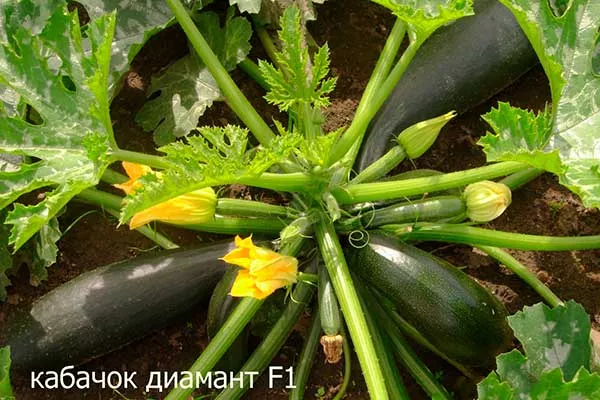
Distinctive characteristics of the variety:
- The plant has a semi-climbing form with strong, dark green leaves that are free of pronounced spots.
- The leaf blades are characterized by strong dissections on the sides.
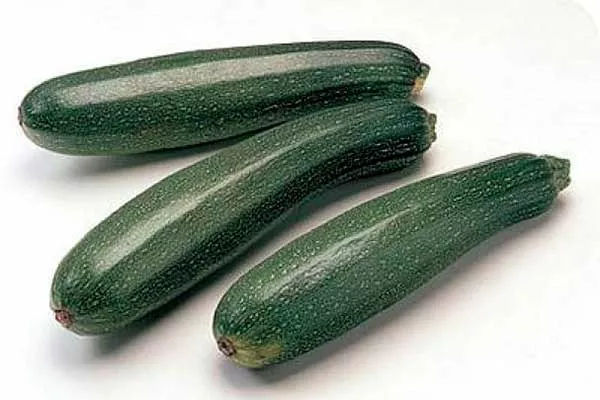
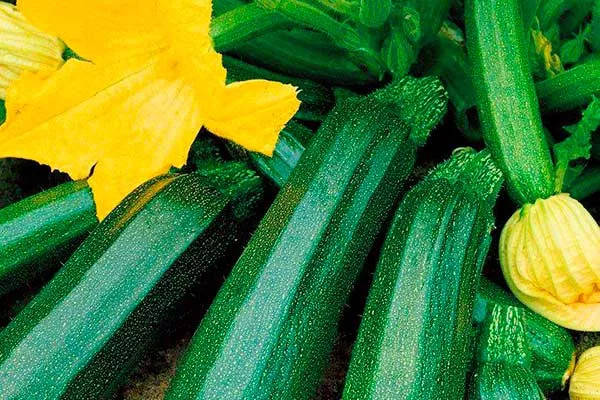
- The fruits have a curved-cylindrical shape and an average length of about 18-20 cm, but under favorable conditions can reach up to 30 cm.
- The diameter of the zucchini is approximately 6-8 cm, and the weight is from 600 to 900 g.
- The skin is dark green with white spots and dots, a ribbed surface and white dense flesh.
Purpose and taste
Zucchini is ideal for eating fresh, even when early ripening. These tender-fleshed vegetables are often used in cooking for a variety of dishes.
They are perfect for frying, stewing, baking, making salads, soups, and other culinary delights. The fruits are rich in vitamins and minerals, making them a healthy and nutritious addition to a healthy diet.
Characteristics
The Diamant zucchini is a widespread variety in our country. Its popularity is due to its high tolerance to both excess and insufficient soil moisture and its excellent commercial qualities.
Ripening time
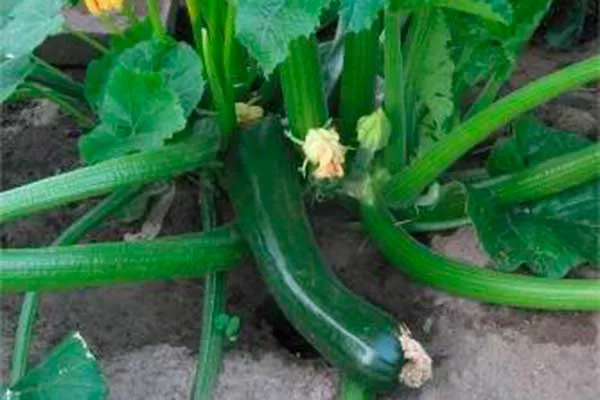
This is an early-ripening variety. In many regions, fruits begin to form as early as 40 days after germination.
Productivity
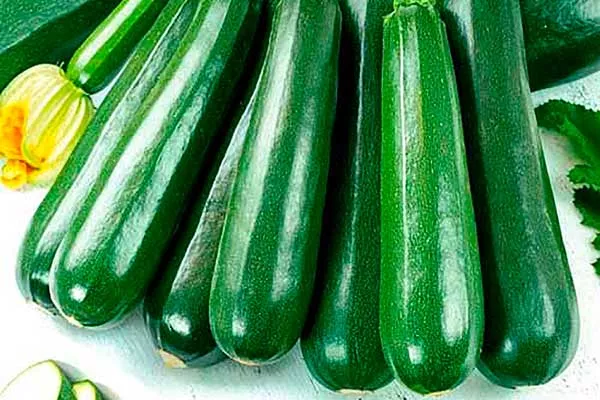
This variety is renowned for its high yield: on average, one plant can produce up to 20 zucchini per season, and on an industrial scale, this figure ranges from 650 to 716 centners per hectare. These vegetables withstand long-distance transportation well.
Growing seedlings
Many gardeners recommend pre-growing seedlings before planting them in the ground. This saves time and effort. Follow these guidelines when growing plants:
- Lighting. Before the seeds begin to germinate, maintain the room temperature between 25-30°C. As soon as the first shoots appear, carefully remove the covers from the pots and move them to a location with bright, indirect light and cooler temperatures, such as a glazed balcony or loggia.
This will help prevent the seedlings from becoming stretched. Ensure sufficient light in the room where the zucchini are growing to ensure they develop healthy and strong. - Soil for sowing. For seedlings, use soil with a neutral or slightly alkaline reaction. The soil mixture can consist of 50% peat soil, 20% humus, 20% sod soil, and 10% sawdust. If you need to reduce the soil acidity, add ash or lime.
- Sowing seeds. If you're aiming for an early harvest, seed propagation from seedlings is the best option. Pre-treatment involves soaking the seeds in warm water, then germinating them until sprouts appear.
Prepare 8-10 cm diameter pots, distribute the soil mixture among them, then sow the seeds, plant them to a depth of 3-4 cm, and cover the containers with plastic wrap or glass. Plant the seedlings 3-4 weeks before planting them outdoors. - Hardening. To ensure successful adaptation, begin hardening off the seedlings two weeks before planting. This can be done by gradually increasing the time spent on the balcony or outdoor terrace.
- ✓ The soil should be light, breathable, with a neutral or slightly alkaline pH of 6.5-7.5.
- ✓ The composition must contain vermicompost or humus (at least 20%) to ensure nutritional value.
Agricultural technology
To obtain a bountiful harvest, it's necessary to water the plants regularly, loosen the soil in the garden bed, remove weeds promptly, and apply fertilizer. This variety requires good soil fertility and does not tolerate fertilizers with high chlorine content.
Planting seedlings: features
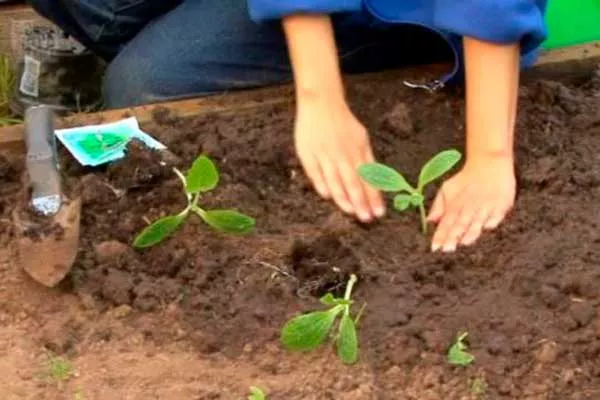
Before planting, prepare each hole by adding a little ash and compost to the soil, mixing thoroughly. Plant the zucchini seedlings with a lump of soil, pressing it deep enough to reach the cotyledon leaves. Then, add soil to the hole, compact it, and water.
It's best to plant zucchini seedlings outdoors in warm, cloudy weather. If there's a risk of frost returning, each seedling can be covered with a plastic bottle or metal arches covered with plastic. The day after planting, loosen the soil in the area.
Water in the evening using warm water. In hot weather, water daily. Once the leaves cover the soil, switch to watering every 5-6 days in cool and cloudy weather, and every 2-3 days in hot weather. Water at the roots, and place a board under the ripening zucchini to prevent rotting.
Fertilizers and dressings
Zucchini respond well to organic nutrition. Prepare an herbal infusion for seedlings:
- After weeding or mowing, fill the barrel almost to the top with weeds.
- Add water and stir the contents daily, letting it steep for a week.
- Strain the infusion, dilute it with water in a ratio of 1:8 and water the zucchini two weeks after transplanting into open ground.
- Try to avoid getting the infusion on the leaves and stems of plants.
- After another week, fertilize the seedlings again with herbal infusion.
- ✓ The infusion acquires a dark color and the characteristic smell of fermented grass.
- ✓ The release of gas bubbles when stirring stops, which indicates the completion of fermentation.
You can alternate green manure with slurry. To do this, dilute the manure with water 1:10, let it sit in the sun for three days, then water the soil around the plant's roots with this mixture, avoiding contact with the leaves and stems.
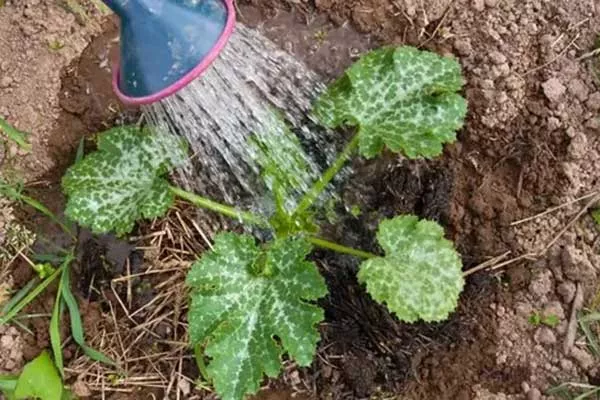
Apply the third feeding when ovaries begin to appear: add 20 g of double superphosphate and 200 g of sifted wood ash to 10 liters of grass or manure fertilizer. Water the plants thoroughly before feeding.
Reviews
The Diamant zucchini is a popular variety chosen by both novice and experienced gardeners. It withstands droughts, is rarely affected by diseases and pests, and is easy to transport. Following proper cultivation practices guarantees bountiful harvests throughout the season.