
Zucchini and squash can be affected by various diseases, which not only adversely affect their appearance but also significantly reduce their yield. Certain pests are equally dangerous. To protect your crop from such threats, it's important to be aware of them in advance.
List of zucchini diseases
Depending on the pathogen, squash diseases can be fungal, viral, or bacterial. These infections attack not only the leaf surface and stem but also the fruit itself, causing it to lose its nutritional value. Let's look at which diseases you need to protect your crop from separately.
| Name | Type of disease | Symptoms | Control measures |
|---|---|---|---|
| Anthracnose | Fungal | Spots on leaves and fruits | Treatment with sulfur or Bordeaux mixture |
| Ascochytosis | Fungal | Black spots on the stems | Dusting with copper-chalk powder |
| Bacteriosis | Bacterial | Spots and ulcers on fruits | Seed treatment before planting |
| White rot | Fungal | White bloom on plants | Dusting with a mixture of chalk and copper sulfate |
| Root rot | Fungal | Root rot | Soil cultivation before planting |
| Yellow mosaic | Viral | Yellow spots on leaves | Destruction of diseased plants |
| Fusarium wilt | Fungal | Yellowing of the upper leaves | Soil improvement |
| White powdery mildew | Fungal | White coating on leaves | Colloidal sulfur treatment |
| Downy mildew | Fungal | Yellow-green spots on leaves | Treatment with Bordeaux mixture |
| Black rot | Fungal | Black spots on plants | Destruction of diseased plants |
| Gray mold | Fungal | Gray coating on plants | Treatment with a mixture of copper sulfate and chalk |
| Olive spot | Fungal | Brown spots on leaves | Treatment with Bordeaux mixture |
- ✓ The water temperature for irrigation should not be lower than 20°C to avoid stress on plants.
- ✓ The optimal time for treating plants is early morning or late evening to avoid leaf burns.
Anthracnose (scarden)
Why does it arise?This fungal disease is caused by a fungus of the genus Colletotrichum. It primarily attacks weak and mechanically damaged plants at any stage of development. Copperhead is most commonly seen in greenhouse and hothouse crops, but also affects open-ground zucchini. Favorable conditions for its development include:
- soil with high acidity, which is fertilized with insufficient amounts of potassium and phosphorus fertilizers;
- watering in hot weather;
- high humidity of air and soil;
- poor cleaning of the area from crop residues.
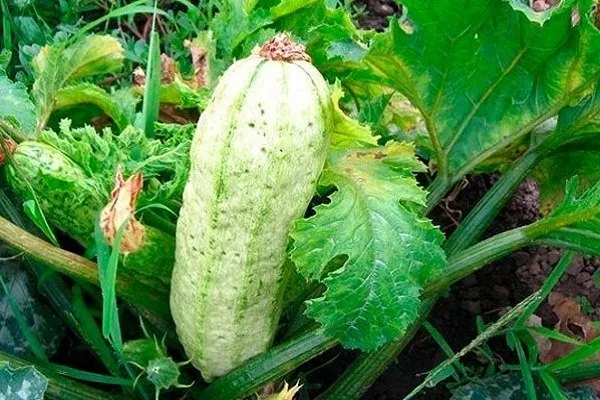
SignsAnthracnose attacks all parts of the vegetable:
- The leaf blade becomes covered with rounded yellow or brown spots bordered by dark brown or purple. Over time, these spots grow and spread to other parts of the plant, causing the leaves to curl and become mottled.
- Brown depressions with a pink bloom form on the stems, flowers and fruits.
- The lesions gradually penetrate deeper into the plant, blocking the flow of water and nutrients. As a result, the fruits gradually shrivel, develop a bitter taste, and begin to rot.
- If the disease affects the root part of the seedlings, they will most likely die.
Control measuresAt the initial stage of copperhead development, the leaves can be sprayed with a 35% colloidal sulfur solution (40-100 g per 10 liters of water) or a 1% Bordeaux mixture solution (100 g each of copper sulfate and quicklime per 10 liters). For severe infestations, the leaves should be watered once every two weeks with biopreparations for zucchini or other cucurbits (such as Fitosporin). In case of widespread infestation, the plants will have to be destroyed. If the seedlings are growing in a greenhouse, it will need to be disinfected with bleach (200 g per 10 liters of water) after harvesting.
Anthracnose can be transmitted through seeds, so carefully select seedlings before planting. The seeds themselves can be treated with a 0.2% solution of boron, copper, and manganese. It's equally important to reduce soil acidity, if necessary, by tilling it with wood ash, dolomite flour, or lime, and by adding fertilizers containing phosphorus and potassium.
Ascochytosis
Why does it arise?Ascochyta leaf spot is a consequence of excess soil and air moisture in low temperatures. It is caused by fungi of the genus Ascochyta. The infection persists even on crop residue, causing the zucchini to rot.
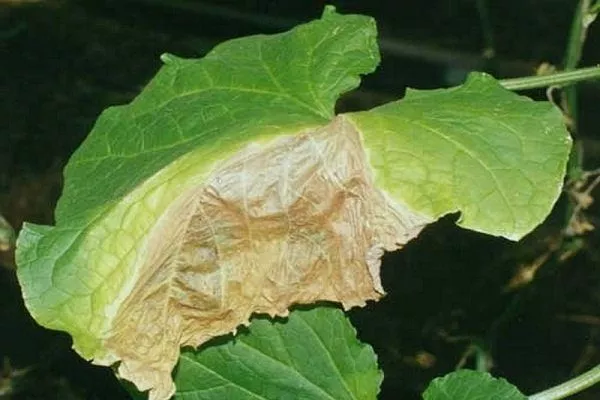
SignsThis fungal disease affects all above-ground parts of the plant. Light-black spots with distinct black specks—the fungal pycnidia—appear on the stems and leaf blades. The affected areas quickly turn black, become soft, and dry out, resulting in the plant's death. Ascochyta blight typically attacks the base and branches of the stems, causing them to lose their elasticity and break. Infection of the root zone of the vegetable can occur in conditions of excessive soil moisture.
Control measuresAffected areas should be dusted with copper-chalk powder (a 1:1 mixture of chalk and copper sulfate). Additionally, they should be treated with crushed charcoal to dry the affected tissue and prevent the spread of infection.
Bacteriosis
Why does it arise?It's considered the greatest threat to zucchini and other cucurbits, as it irreversibly affects not only plant parts but also the roots themselves. The pathogen is transmitted by insects, water droplets, and plant debris. The infection persists on seeds and plant tissue. The following conditions favor the development of bacterial blight:
- sharp temperature changes during the day and night;
- high soil and air humidity;
- planting seeds without pre-treatment;
- poor cleaning of the area after harvesting.
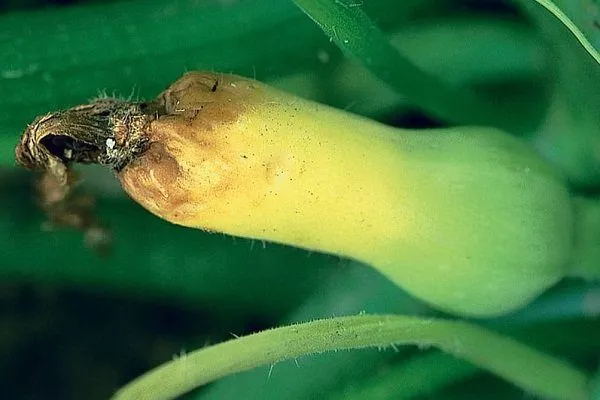
Signs. Depends on the type of bacteriosis:
- Angular leaf spotIt makes its presence known as early as the cotyledon stage. The spots on the leaves undergo a transformation—they turn dark green, then brown, dry out, and collapse, forming angular holes between the veins. The fruits, meanwhile, become covered with blistering, water-soaked ulcers, causing them to become deformed.
- Bacterial blossom end disease of fruitsThe tips of the zucchini first turn yellow, then become covered with brown spots. The base continues to grow. Eventually, the roots become glassy and rot.
Control measuresBefore planting, seeds must be soaked for 24 hours in a 0.2% zinc sulfate solution and then thoroughly dried. They can be treated with Fitosporin-M or another fungicide. This solution should also be applied to the bed 5 days before planting seeds or seedlings. As a preventative measure and at the slightest suspicion of bacterial blight, shoots should be treated with a 1% Bordeaux mixture or a 0.4% copper oxychloride solution. However, it is important to discontinue spraying the fruit 15 days before harvest. If severe damage is present, the plant cannot be helped, so it will have to be uprooted and destroyed.
White rot (sclerotinia)
Why does it arise?The source of infection is sclerotia, which fall from plants and overwinter in the soil, then attack the plant in the spring. The plant is especially susceptible to the disease during the fruiting stage. The following factors contribute to infection:
- excess nitrogen in the soil combined with low ambient temperatures;
- overly dense plantings;
- sudden changes in temperature;
- excess of nitrogen fertilizers.
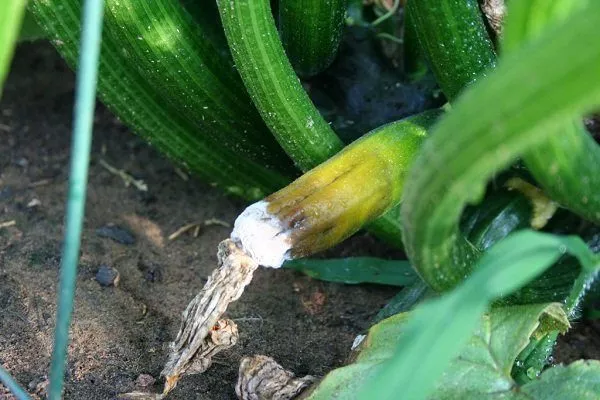
Squash can become infected with sclerotinia through air currents, as well as due to pieces of mycelium getting into stomata and mechanically damaged areas.
SignsThe fungus attacks all parts of the plant—fruit, tendrils, leaves and their petioles, stems, and roots. Initially, a flaky white coating forms, followed by the appearance of black spots—fungal spores. The affected parts become soft, covered in slime, become mushy, rot, and die. Ultimately, the plant's fruiting is disrupted.
Control measuresIf your bushes show symptoms of white rot, specifically a white coating on the leaves, it's time to begin combating the pathogen. The following measures will help:
- powder the affected areas with a mixture of crushed chalk and copper sulfate powder (1:1);
- Sprinkle the affected areas with crushed charcoal to dry them out and stop the spread of infection;
- If zucchini in a greenhouse becomes infected, reduce air humidity and regularly ventilate the room to prevent the mass spread of sclerotia;
- If white rot is widespread in dry and hot weather, remove the plant leaves and sprinkle the cut areas with crushed charcoal or wipe with a 0.5% solution of copper sulfate;
- water the plant with warm water;
- apply root feeding (1 g of zinc sulfate, 2 g of copper sulfate and 10 g of urea per 10 liters of water), and also add phosphorus fertilizers and calcium-containing fertilizers (ground chicken eggshells or wood ash at the rate of 200 g per 1 sq. m of the plot);
- Water the soil with a solution of Fitolavin and add compost to maintain microflora.
If the fruit is covered with a white coating, it is not edible. It should be separated from the rest of the crop and destroyed to prevent the sclerotia from spreading to healthy areas.
To prevent white rot, bushes can be sprayed with a mixture of 1 g of copper sulfate, 1 g of zinc sulfate and 0.5 tbsp. of urea per 10 liters of water.
Root rot
Why does it arise?This is a consequence of over-fertilization. It can also occur due to sudden temperature fluctuations, weakened vegetable crops, watering with cold water (up to 20°C), or a weedy bed.
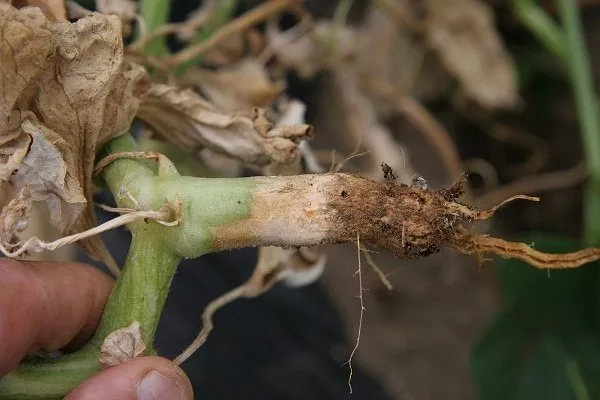
SignsThe disease attacks the plant during the fruiting stage. The root system, stems, and necks rot, and the affected tissues darken and turn brown, becoming rotten and soft. The lower leaf blades turn yellow. All this stunts the plant's growth, it wilts, and eventually dies.
Control measuresAs a preventative measure, seeds can be treated with Thiram (5-7 g per 1 kg of seed) three weeks before planting. If root rot is suspected, add soil to the stem to encourage new root formation. Additionally, water the plant with a 0.1% solution of Previcur (200-300 ml per plant). Solutions containing metalaxyl (mefenoxam) can also be used. Infected plants should be removed from the garden bed and burned, and the soil treated with copper sulfate.
Yellow mosaic
Why does it arise?This is not a fungal disease, but a dangerous viral one, which is extremely resistant to the environment and easily spreads throughout a garden bed. The virus is transmitted by pests such as aphids, thrips, and whiteflies. The disease is also transmitted through contaminated seeds, soil, and plant debris. Mosaic pathogens can persist in the soil for several years.
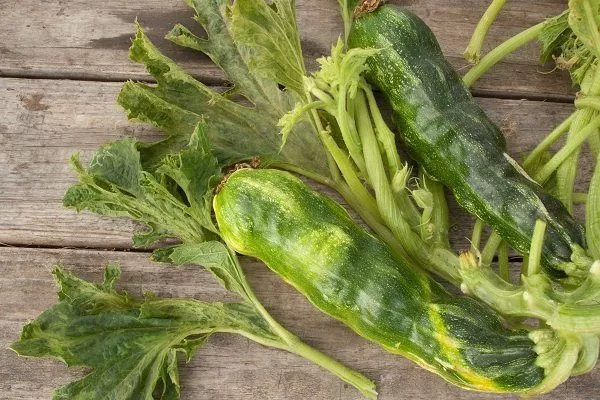
SignsAs mosaic disease develops, star-shaped white-yellow spots appear on the leaves, gradually expanding, causing curling of the young upper leaves first, and then the lower ones. White and yellow stripes appear on affected fruits.
Methods of controlThe disease is incurable, so the entire planting must be uprooted and burned, and the contaminated soil replaced with fresh soil to eliminate the pathogens. To prevent its development, use only seeds from uninfected plants, and disinfect them before planting by soaking them for 60 minutes in a 15% trisodium phosphate solution.
Fusarium wilt (Fusarium)
Why does it arise?It's caused by soil-borne fungi that can attack the plant at any stage of development. The pathogens penetrate the vegetable's root system from the soil, thrive in the root vessels, and gradually grow.
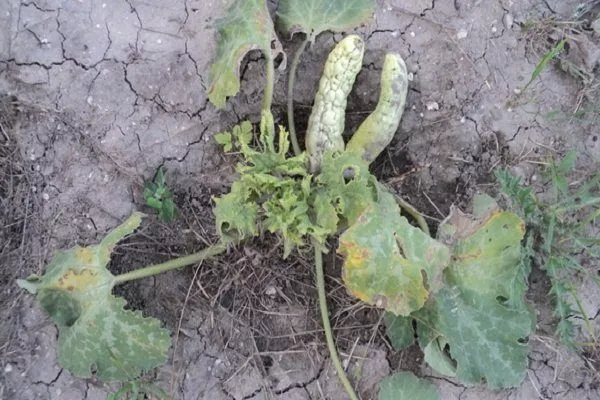
SignsFusarium wilt is primarily indicated by yellowing and weakening of the upper leaves of the bush. The basal stems turn brown, become covered with a pink or orange coating, and rot. A cross-section of the stems reveals brown veins. The disease also attacks the root system, causing the plant to dry out and die within a few days.
Control measuresIf the disease is detected at an early stage of development, the bush and the surrounding soil should be dusted with wood ash. However, this won't be enough. To truly eliminate fusarium, you need to improve the soil by planting green manure, applying organic and mineral fertilizers, removing weeds, and applying EM agents and calcium supplements.
White powdery mildew
Why does it arise?A fungal disease caused by pathogens that overwinter on the plant debris of weeds such as plantain, sow thistle, etc. During the growing season, they spread to vegetable crops, especially under the influence of wind, high humidity, infrequent watering, and excessive nitrogen fertilization.
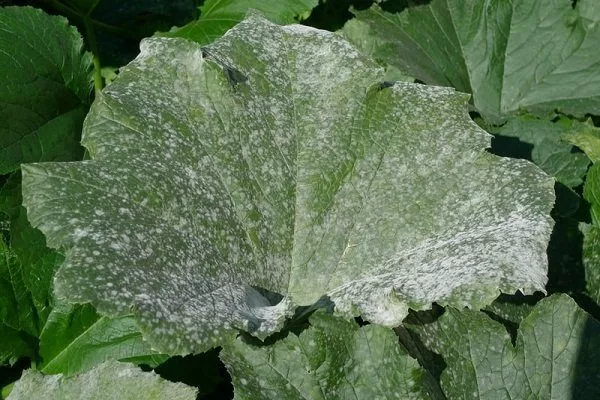
SignsThey often appear on leaves and, to a lesser extent, on stems and petioles. Powdery mildew appears as small, round white spots called powdery bloom. These gradually increase in size, covering the entire leaf blade with a powdery white coating, which subsequently turns yellow and dries. The tops themselves curl and dry out due to a disruption of photosynthesis. This is the sporulation of the fungus, which absorbs all the nutrients from the plant and prevents the formation of full-fledged, tasty fruits.
Fruiting bodies (cleistocarps) form on heavily affected foliage, which infect the plant the following year.
Control measuresTo prevent powdery mildew from ruining your entire harvest and threatening future crops, spray the crop with the following solution at the first sign of infection:
- 35% colloidal sulfur solution;
- 0.5% sodium phosphate solution;
- 10% solution of isophrene.
Plantings can be treated every 10 days with 80% sulfur powder (400 g per 100 sq. m) or dusted with ground sulfur (300 g per 100 sq. m), which should be applied to the affected areas with a cotton swab. The final treatment should be performed 10 days before harvest. If there are severely damaged plants, they should be cut down immediately on a sunny day (at temperatures not below 23°C) and the plant dusted with ground sulfur. If the weather is cloudy, it is better to use the same colloidal sulfur solution (40 g per 10 liters of water).
To protect zucchini from powdery mildew, you can spray it with a mullein infusion. To prepare it, pour 1 kg of the infusion into 3 liters of water, let it sit for 3 days, strain, and dilute with water at a ratio of 1 liter of infusion to 3 liters of water.
Downy mildew (peronosporosis)
Why does it arise?? It affects zucchini at all stages of their growth cycle, also due to fungal activity. It has the same description as white powdery mildew.
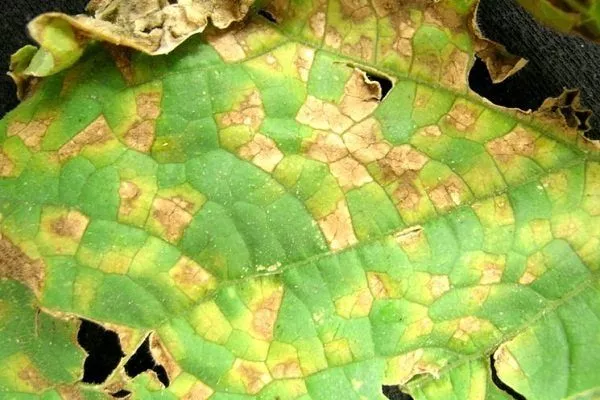
SignsThe leaves become covered with yellow-green spots on the outer surface, and gray-purple fungal spores on the underside. The spots gradually expand and merge, causing the foliage to brown and dry out. In some cases, the outer surface of the leaf blade also becomes covered with a white coating. The disease progresses quite rapidly.
Control measuresTo disinfect, soak seeds in a 1% potassium permanganate solution for 20 minutes before planting, or in hot water (50°C) for 15 minutes. If disease has already occurred, stop watering the plant for the duration of treatment. Diseased plants can be treated with 1% Bordeaux mixture, Topaz, or Oxychom. Healthy leaves should be fed with a tank mix, copper oxychloride solution, and a mixture of fungicides and growth stimulants.
Black rot (mold)
Why does it arise?? Caused by spores of the Aspergillus fungus. The development of black rot is promoted by poor agricultural practices, high humidity, and extreme temperature fluctuations.
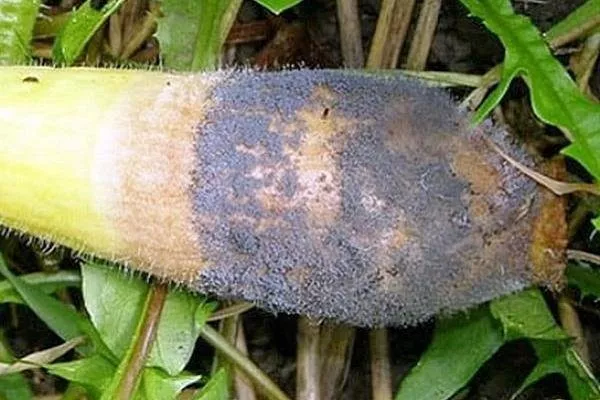
SignsThe disease manifests itself on the leaves and other above-ground parts of zucchini. The plant becomes covered with small, light-brown spots that can coalesce and form necrotic lesions. These lesions eventually become coated with a black coating of fungal spores. This causes the tops to yellow and dry out, and the fruit to lag behind in development, shrivel, and rot.
Control measuresIf black rot isn't detected promptly, all the zucchini in the garden may soon become infected. Affected plants should be removed from the garden and burned.
Gray mold (botrytis)
Why does it arise?It's a type of putrefactive mycosis. The fungal spores that cause it can be found on weed foliage and transferred from one flower to another by insect pollination, increasing the spread of the disease. The following factors also contribute to this:
- unfavorable weather conditions – sudden temperature changes, excessive air and soil humidity;
- poor care (irregular watering, using cold water from a well or tap, watering after sunset, excess nitrogen fertilizers or lack of microelements).
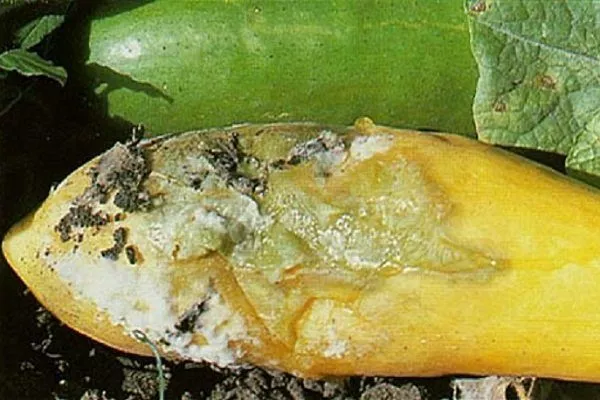
SignsBotrytis often affects young zucchini. It affects the leaves and fruit ovaries. They become watery, turn brown, and gradually become covered with a gray coating. Black spots—fungal spores—also appear on them, and they can survive in the soil for up to two years.
Control measuresSulfur rot will not occur if you promptly remove weeds near the vegetable, follow proper cultivation practices, apply phosphorus fertilizers and foliar feeding, and inspect the zucchini every 10 days. If affected areas are found, dust them with a mixture of copper sulfate and crushed chalk (1:2). The plants should also be sprayed with a solution of 10 g of urea, 2 g of copper sulfate, and 1 g of zinc sulfate per 10 liters of water. It is advisable to remove and then destroy any diseased ovaries and fruits.
Olive spot
Why does it arise?A fungal disease that attacks seedlings, leaves, and stems due to high humidity. In hot weather, it appears toward the end of the zucchini growing season, when cool nights with significant dew fall. In greenhouses, the pathogen spreads through droplets of condensed moisture, and in open ground, by wind, watering, or rain. The infection persists for a long time in the soil and on plant debris.
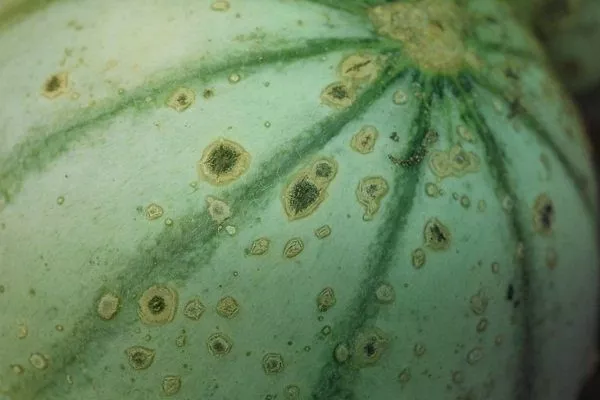
Olive leaf spot progresses rapidly in conditions of sudden temperature changes and cool, rainy summers.
SignsThe disease affects all above-ground parts of the plant. Brownish spots of varying shapes with a lighter border and a lighter center appear on the leaves. Ulcers form on the petioles and shoots, which become covered with an olive-colored coating. Small, water-soaked ulcers also appear on the fruit, rapidly expanding and causing the skin to crack. As a result, the squash becomes distorted, and young ovaries die.
Control measuresWhen olive spot develops, the planting should be treated with 1% Bordska solution (100 g of copper sulfate and the same amount of lime), a suspension of 80% Kuprozan.
List of zucchini pests
Vegetable crops are threatened not only by the diseases listed above, but also by certain pests. Let's explore why they attack crops and how to get rid of them.
- ✓ Slugs leave behind characteristic slimy marks on plants and soil.
- ✓ Melon aphids form colonies on the underside of leaves, causing them to curl and turn yellow.
Slugs and garden snails
DescriptionThese are gastropods, ranging in length from 2-3 cm to 10 cm. Their bodies are thick, worm-like, and completely covered in mucus. Snails have a similar description, except their bodies are located under the shell. These pests hide in damp and secluded places during sunny, dry weather, but with the onset of darkness, they emerge and attack vegetable crops in the garden.
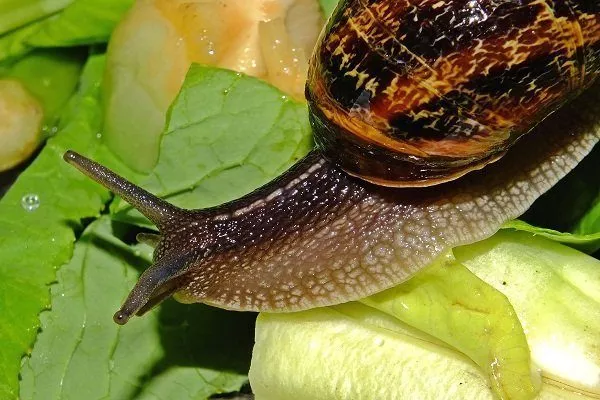
Signs of defeatThe mollusks chew out the embryos in seeds, consume the leaves on the seedlings, and chew through the stems, causing the death of the entire plant. When young zucchini plants emerge, they also consume the flesh and even tunnel inside. They not only reduce yield but also spoil the appearance of the vegetables, leaving behind slime and other secretions.
Control measuresMechanical control is considered a primitive method of mollusc control. This involves collecting the mollusks manually or using special traps made from pieces of burlap or plywood and placed around the perimeter of the plot. Protective trenches up to 30 cm wide can also be dug around the plantings and filled with pine needles, sand, or sawdust to prevent the pests from advancing. Metaldehyde granules (4 g per square meter), a solution of copper or iron sulfate, and lime can also be used against them.
Sprout fly
DescriptionThese are small gray flies with a dark longitudinal line on their abdomen. They reach 3-5 mm in length. The flies lay eggs under clods of soil. After 5-10 days, white larvae emerge. They are tapered at the front, have serrated ends, and are up to 7 mm long. These larvae can destroy entire crops in two weeks, especially in cold summer conditions. The larvae then pupate. Two to three generations of insects may emerge during the warm season.
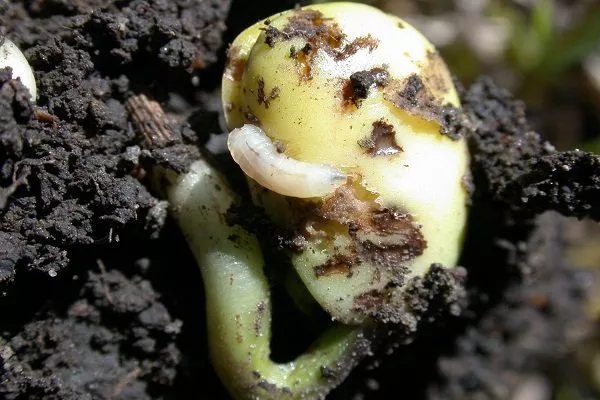
Signs of defeatPests can be found on plant seedlings. The larvae destroy the germinating seeds, burrow through the hypocotyl, and penetrate the stem. As a result, the young plant may die.
Control measuresDeep soil cultivation in the fall, adding and thoroughly incorporating manure, will be an excellent fly preventative. In the spring, before the summer season begins, it's worth adding Karbofos or Fufanon to the soil. Seedlings can be pollinated with wood ash, ground black pepper, or tobacco dust. A saline solution (200 g per 10 liters of water) is suitable for watering.
Melon aphid
DescriptionAphids are small insects (3 mm) that not only gnaw on leaves, young shoots, and buds but also transmit dangerous diseases. Female aphids are wingless, have an oval body 1.25-2.1 mm long, and are dark green or black. Larvae are yellow or green, with or without wings. These insects reproduce asexually and produce 14-20 generations per season.
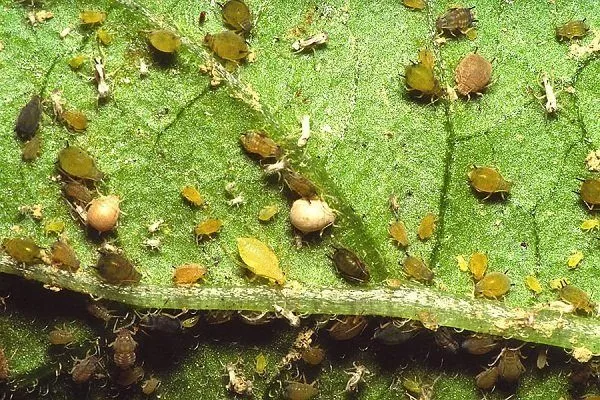
Aphids develop on weeds where they overwinter, but with the arrival of spring and warming temperatures to 12°C, they migrate to cucurbits, including zucchini. The optimal temperature for their growth is 16 to 22°C. Colonies of adult pests and their larvae settle on the undersides of leaves, shoots, ovaries, and flowers.
Signs of defeatMelon aphids feed on the green tops of the plants, causing shoots, leaves, and flowers to turn yellow and curl, then dry up and fall off. In severe infestations, flowers fall off the bush. The plant stunts and eventually dies.
Control measuresTo prevent aphid infestations, plant the following crops near your zucchini beds:
- spicy plants (mint, coriander, fennel);
- flowers (lavender, marigolds);
- garlic, onion, mustard, basil.
You can also repel pests from zucchini using a soap solution (100 g per 10 liters of water) and dusting with powdered sulfur.
If a plant is already infested with a small number of pests, you can use gentle folk remedies to combat them:
- Tobacco infusionTo prepare it, add 1 part raw material to 10 parts water and leave for 24 hours. Dilute the mixture with water in a 1:3 ratio and use it to treat the leaves.
- Yarrow infusionInfuse 1 kg of raw material in 10 liters of water for 2 weeks, then use as directed.
Diseased plants can be treated with an effective microbiological agent called Bitoxibacillin. It should be prepared a few minutes before use. To do this, dilute the solution with water at a ratio of 80-100 g per 10 liters of water. This solution can be used every 10 days. Other recommended treatments include a 10% solution of Karbofos (60 g per 10 liters of water) or Trichlormetaphos-3 (50-100 g per 10 liters of water).
Whitefly
DescriptionThis is a small, polyphagous insect, white or slightly yellowish in color, whose body is covered in powdery pollen and measures up to 2 mm in length. It resembles a moth in appearance. Adults and larvae attack zucchini plants in June, settling on the underside of the leaves. They consume the leaves and young shoots, sucking out their nutrients and infecting them with various diseases.
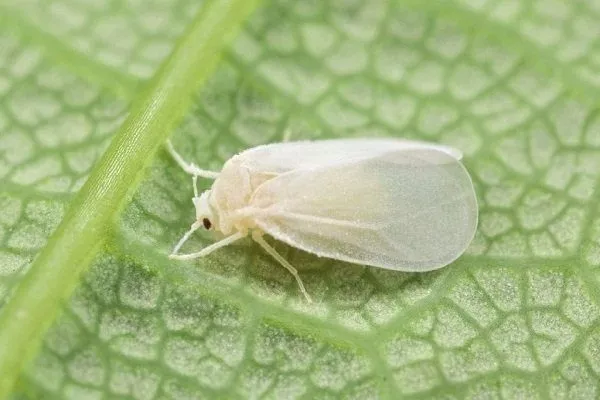
Signs of defeatThe insects first attack young shoots (leaves). They are easily recognized by the light spots that appear on the surface of the foliage. During their life cycle, the larvae secrete a sticky substance that causes the leaves to tighten, preventing their development, and provides a favorable environment for fungal growth. Adult insects eat the plant and leave behind feces, causing black spots to appear. As a result, the affected plants become discolored, curl, and gradually wither. Flower buds also become deformed, dry out, and fall off.
Control measuresTo prevent the plant from dying, you can spray it with a garlic or tobacco infusion (you can also add liquid soap) every 3 days. The leaves should also be sprayed with settled water. If the whitefly infestation is severe, the bushes and the surrounding soil can be treated with insecticide solutions. The following products are effective:
- Aktara;
- Actellic;
- Double effect;
- Commander;
- Tanrek;
- Oberon.
After watering, it is worth loosening the soil.
Spider mite
DescriptionThis is a sucking pest with an oval-elongated body 0.3-0.4 mm long. The eggs are spherical, initially greenish-transparent, but later become cloudy. The mites overwinter in groups under plant debris, trash, and even in the surface soil at a depth of 30-60 mm. They most often emerge in June and settle on the underside of pumpkin leaves. Larvae hatch from the eggs within 5-7 days. During the season, the mites produce up to 15 generations, with each generation requiring 10-28 days to develop.
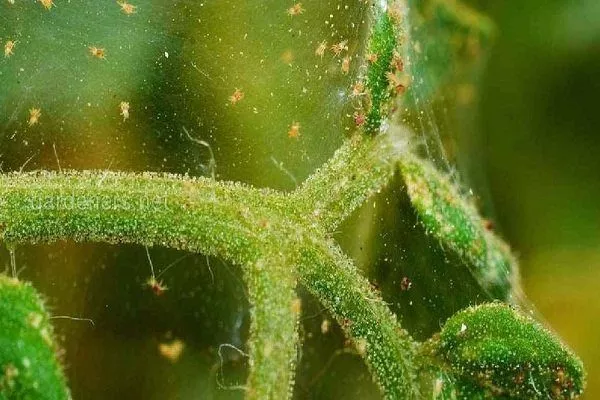
Signs of defeatThe mites attack the undersides of leaves, leaving behind a fine web. Yellow spots appear at the affected areas, which gradually spread to all leaves and cause them to wither. In severe cases, the zucchini plants die.
Control measuresTo get rid of spider mites, you can use the following measures:
- spray the leaves in hot weather with an infusion of garlic or onion peel (pour 200 g of raw material into 10 liters of water and leave for 2 days);
- spray with black pepper infusion (grind capsicum, pour 50 g into 10 liters of water) with the addition of liquid soap (1 tbsp.) and wood ash (3 tbsp.);
The mixture should be left to infuse for 24 hours, then strained and used to treat zucchini every 7-10 days.
- spray with a 20% solution of Chloroethanol (20 g per 10 l of water) or irrigate with a 10% solution of Isophen (60 g per 10 l of water);
- Spray ground sulfur at a rate of 300 g per 100 sq. m.
To improve the adhesive properties of any solution, you can add 30 g of grated laundry soap to it.
Protecting zucchini from diseases and pests
To protect zucchini from all of the above threats, it is important to adhere to the following preventative measures:
- observe crop rotation (do not plant zucchini in a plot where related pumpkin crops grew last season);
Zucchini can be sown in the same place once every 3-4 years.
- promptly remove garbage, weeds and plant debris from the area;
- replace contaminated soil in greenhouses;
- Before planting, thoroughly prepare the soil so that it is enriched with all the nutrients (humus, peat, wood ash, compost, etc.);
- carefully select seedlings for planting in the ground;
- inspect crops from time to time and promptly destroy affected parts of the plant, as well as remove diseased specimens from the garden bed;
- water the crop in a timely manner with settled water at a comfortable temperature;
- introduce fertilizers and supplements to support the plant's immunity.
For information on the causes of yellowing and rotting zucchini, as well as how to combat the disease, watch the following video:
Proper agricultural practices and preventative measures will allow you to harvest zucchini right up until the coldest weather. If your plants show signs of damage, you need to respond promptly and take all necessary steps to restore your garden.