
The early-ripening Aeronaut zucchini is characterized by its compact plant size, tasty flesh, and the ability to bear fruit for two months. It can be grown outdoors, in a greenhouse, or in a hotbed, not only in a backyard but also on an industrial scale. What you need to know about this variety and how to properly cultivate it for a good harvest is what we'll find out below.
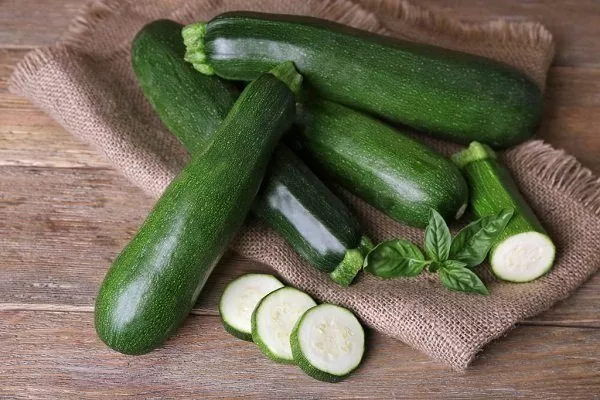
Aeronaut Zucchini
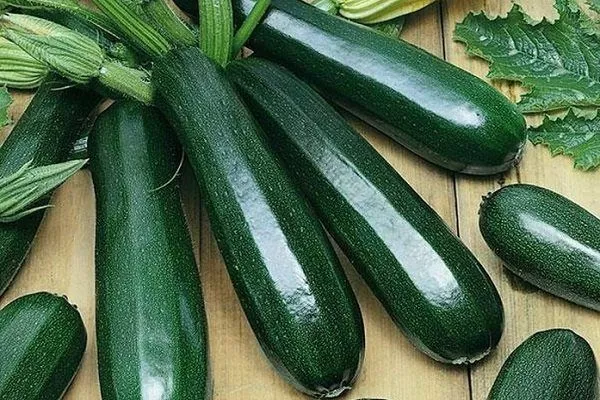
The Aeronaut squash is easily transported over long distances.
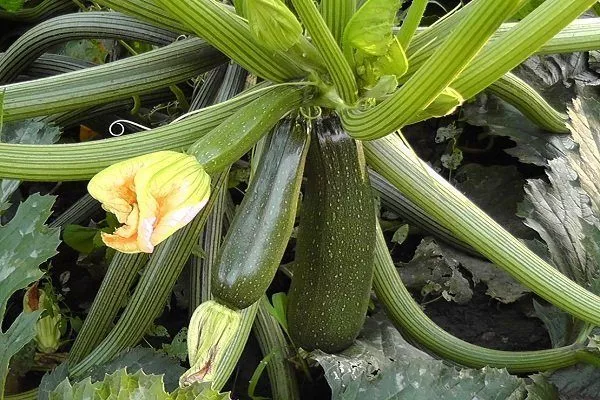
The Aeronaut squash is not afraid of the cold.
Description of the variety
The Aeronaut zucchini squash originated in the Americas about 3,000 years ago. The fruit was mistakenly considered poisonous, so only the seeds were eaten. In the mid-16th century, zucchini arrived in Europe, where it was grown as an ornamental plant for flower beds. Only the flowers were eaten.
In the early 18th century, the Aeronauta arrived in Italy, where it began to be used as a staple in everyday dishes. It remains one of the most popular zucchini varieties, so its characteristics deserve special attention:
| Parameter | Description |
| Ripening time | Aeronaut is an early-ripening variety, so the harvest can be completed 40-45 days after the first shoots emerge. The fruiting period lasts from late July to early August. |
| Pollination | This zucchini is a self-pollinating variety, so it continues to actively bear fruit even during periods of prolonged rain and in the absence of pollinating bees. |
| Plant characteristics | This squash is a bush variety, so it grows as bushes, which, when planted correctly, are low-growing and compact. They can reach a height of 1 m. The bushes have a relatively short main shoot and a small number of runners. They are covered with beautiful yellow flowers, predominantly female, and large, prickly leaves with a slight pubescence, beneath which are sharp growths. This should be taken into account when harvesting to avoid injury. |
| Fruiting method | Fruiting occurs within the bush, in a profuse cluster. Aeronaut's distinctive feature is the vertical growth of the fruit, which seems to reach for the sun and only sinks to the ground under its own weight when it reaches biological maturity. This development also protects the fruit from slug infestation, as these pests are unable to reach it via the rough stems. |
| Fruit characteristics | The plant produces fruits with the following characteristics:
Fruits with such characteristics are not afraid of cold and tolerate long-distance transportation well. |
| Composition and benefits of fruits | Zucchini flesh contains approximately 5.2-7.0% dry matter and 2.5-5.4% sugar. This means it's beneficial for diabetics and those on a diet. Thanks to its high fiber and carotene content, as well as vitamins A, B, and C, it offers the following benefits:
|
| Scope of application | Aeronaut squash is often eaten fresh, added to vegetable salads. It's also used to make pancakes or stir-fries with tomatoes, and served as a side dish. The fruit is suitable for canning only if chopped. Pickling doesn't do well, as it develops a grassy flavor, pronounced coarse fibers, and a sticky texture. Biologically overripe squash is only suitable for use as pet food. |
| Resistance to diseases and pests | The variety has high immunity to powdery mildew. In cool summers with little rainfall, the fruits require no additional treatment against diseases and pests. |
| Productivity | With proper cultivation techniques, you can harvest up to 7-7.8 kg of fruit per square meter of garden bed over the entire fruiting season. A single plant can yield 25-30 zucchini per season. |
| Features of cultivation | Aeronaut is fit for open-ground cultivation and a greenhouse. The standard planting pattern is 40x50 to 50x70 cm. The recommended planting intervals should not be reduced, as this will lead to reduced fruiting, despite the compact size of the bushes. The plant is not frost-hardy, so its seedlings are sensitive to frost. However, they do not require high temperatures for vigorous growth. |

Aeronaut squash seeds meet all international standards and Russian GOST 12260-81, as they do not contain genetically modified organisms.
Agricultural technology
To ensure a bountiful zucchini harvest, consider the following agricultural practices before growing Aeronaut:
- Planting methodZucchini can be grown in two ways. The first involves germinating the seeds and then transplanting the seedlings into open ground, while the second involves sowing them directly into the soil. It's best to grow the crop by sowing seeds directly into the soil if the soil temperature is between 10°C and 13°C. Propagation by seedlings is appropriate in regions where frosts are common in late May and early June, and where the summers themselves are cool.
- Planting datesSeeds can be sown from April to May, but for a faster harvest and greenhouse cultivation, sowing can be done in March. If the variety is grown from seedlings, the seeds can be sown in early May, and the seedlings, with 2-4 leaves, can be transplanted to their permanent location in early June.
- Selecting a site and soilSunny, windless sites with fertile, loose soils characterized by neutral pH are considered the best for growing this crop. Zucchini grows well in loamy and moderately fertilized soils. A good harvest can also be obtained on structured chernozem soils. Aeronaut does not tolerate floodplain and moderately saline soils, but does not grow well in acidic soils.
- Crop rotationThe best predecessors for zucchini are:
- root vegetables (beets, celery, radishes, carrots);
- cabbage;
- onion;
- potato;
- corn or annual grasses.
Critical soil parameters for successful cultivation- ✓ Soil pH should be between 6.0-7.5 for optimal zucchini growth.
- ✓ The soil must have good drainage to avoid water stagnation.
Aeronaut should not be planted after other squash varieties for two years. Its predecessors also cannot be other members of the pumpkin family or beans.
It is not recommended to grow zucchini near pumpkins, as cross-pollination can lead to deterioration in the quality of the seed material.
Preparatory activities and planting of zucchini
The Aeronaut variety is undemanding to growing conditions, but to obtain a good harvest, it is important to properly prepare the seeds and soil for planting, as well as carefully place the bushes on your plot.
Soil enrichment
The area should be cultivated in the fall and spring, as well as immediately before planting the zucchini. This is essential for significantly reducing weed and pest populations. Here's what needs to be done:
- In mid-autumn, dig up or plow the soil: light sandy soils to a depth of 21-25 cm, loams to 24-26 cm, and chernozems and floodplain soils to 25-27 cm.
- Before cultivation, add fermented animal manure to the soil at a rate of 4-6 kg per square meter. This can be replaced with vegetable compost in the same quantities. Of the mineral fertilizers, fertilizers containing nitrogen and potassium are preferred (up to 60-80 g per square meter). In areas with overly acidic soils, such fertilizers are not necessary, but artificial liming with wood ash or ashes is essential.
- In the spring, loosen the soil again, but to a depth of no more than 15 cm. If fertilizer was not added to the soil during autumn cultivation, then in the second quarter the area should be fertilized at a rate of 10-15 g of superphosphate, 5-7 g of potassium salt, and 7 g of ammonium sulfate per 1 sq. m.
- Harrow the fallow land with a rake to a depth of 10 cm. This procedure should be repeated twice: once the soil has dried out and once before planting. This accomplishes several goals at once: destroying the root systems of weeds that survived the winter, retaining moisture in the soil, and thoroughly warming it.
- Add compost or well-rotted manure in the fall to improve soil structure.
- Before planting, add a small amount of ash to the holes to enrich the soil with potassium.
Light soils can be cultivated once before sowing and to a depth of no more than 6 cm.
Seed preparation
Before planting, it's important to properly prepare the seedlings to check their germination and stimulate vigorous growth. The following methods can be used for this:
- select large and full-bodied seeds, soak them in warm water for a day and dry;
- germinate 10-20 seeds on a damp cloth, and when microscopic sprouts appear after 3-5 days, transplant them into the soil;
- Soak the seeds for 24 hours in a 0.05-0.1% solution of potassium permanganate or a 0.05% solution of boric acid to develop immunity to fungal and bacterial infections during germination.
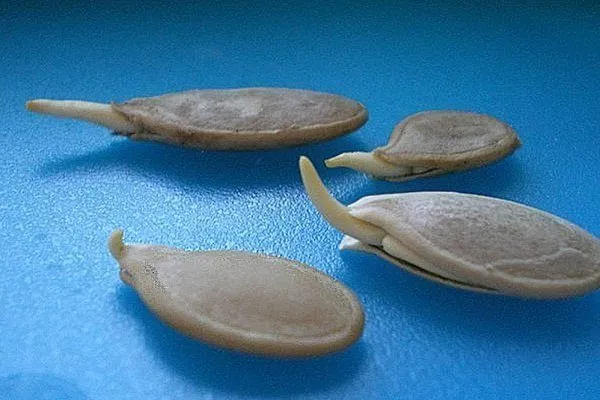
Planting seeds
If you're growing zucchini from seedlings, sow the seeds in individual pots, as this crop doesn't tolerate transplanting well. A mixture of humus and peat can be used as a nutrient solution. Before planting, water the pot with warm water (20°C). Place one seed in each pot, and after planting, cover the soil with plastic wrap or glass until the first shoots emerge.
During cultivation, the seedlings need to be regularly watered and kept in a warm, bright location. After 20 days, they can be transplanted to their permanent location, with a maximum of 13 plants per 10 square meters. It's best to plant the variety in a square pattern, with 40-50 cm between holes and 50-70 cm between rows.
If the seeds are sown directly into open ground, the planting pattern remains the same, but they should be planted 5-7 cm deep in light soil and 3-5 cm deep in dense soil. The optimal soil temperature is 20°C. If the soil is not sufficiently moist, you can water it first with warm water at a rate of 200-300 ml per hole. The seed rate is 4-6 g per 10 sq. m, or 3 seeds per furrow. After planting, fill the hole with soil and compact it lightly.
Planting care
Zucchini requires proper care, which involves a number of agricultural practices. Particular attention should be paid to them from the moment the first shoots appear. Typically, the plant produces shoots 7-10 days after planting.
Watering
Aeronaut zucchini is a moisture-loving plant, so drying out the soil negatively impacts its yield. At the same time, avoid allowing the fruit to accumulate excess moisture, as this will negatively impact its quality and shorten its shelf life.
During the growing season, the plant needs to be watered three times: before flowering, during the initial fruit formation phase, and during fruiting. Use warm, settled water, pouring it under the plant's roots during irrigation. The plant grows in bushes, so this shouldn't be a problem. Watering is best done in the evening or morning.
Soil treatment
Throughout the growing season, weed the area 3-4 times to eliminate weeds. Weed control will be much easier once the bushes have fully formed.
The first hilling should be done 10-15 days after planting to ensure active root development. It's equally important to lightly loosen the soil every 10 days. This procedure is best performed a few hours after watering or rain.
When weeding and cultivating, you need to act extremely carefully so as not to damage the plant's roots, which are located almost on the soil surface.
Fertilizing and insulation
During the growing season, zucchini should be fertilized several times using nitrogen-containing fertilizers and organic fertilizers. The optimal fertilizing schedule is presented in the table:
| Feeding No. | Period of contribution | Compound |
| 1 | In the phase of appearance of 2 true leaves | Apply an infusion of cow dung (4 kg per 10 liters of water, leave for 10 days) under the roots of the plant at a rate of 0.5-1 per bush. |
| 2 | Primary formation of the bush | The same infusion is used as for the first feeding, but the solution can be fresh. |
| 3 | Bud formation and flowering | Mix 10-15 g of ammonium sulfate, 10-20 g of superphosphate, and 5-10 g of potassium salt per 1 square meter of bed. This mixture can be used with watering or sprayed around the plant. |
| 4 | Fruiting | Mix 15 g of superphosphate and 30 g of potassium sulfate in 10 liters of water. Apply during watering or after rain. |
When growing zucchini, do not add fresh manure to the holes, as this will lead to excessive growth of green mass on the plant and the development of numerous root diseases.
Temperature is also important to consider. The optimal temperature for fruit development is between 18°C and 22°C. If it drops below 10°C, cover the planting with plastic film or the tops of plastic bottles to prevent damage to the seedlings and leaves.
Thinning
When the first two true leaves emerge, thinning should be done, leaving the strongest shoots. Excess shoots should be carefully trimmed off above ground level, but not pulled out, to avoid damaging the plant's overall root system. Don't spare weaker specimens, as a stronger plant will stunt their development as it grows.
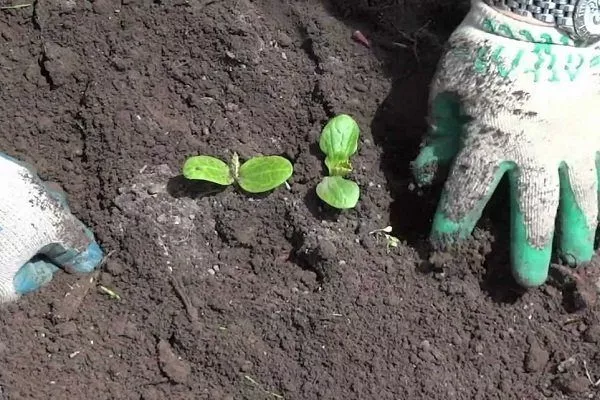
As for pinching, Aeronaut squash doesn't require it, as the fruit forms on the central stem. Large leaves don't need to be removed, as they effectively control weeds, provide shade for the roots, and prevent them from drying out. The only permissible intervention is removing any leaves that are beginning to rot during watering.
Protection from diseases and pests
In mild summers with moderate rainfall, the plant doesn't require preventative chemical treatment. However, in damp weather, the fruit can be attacked by various pests, which will damage their thin skin, break their integrity, and cause rot. Metaldehyde granules, spread around the bushes, will help eliminate these pests.
In damp weather, the plant can be attacked by fungi. Fitosporin can help combat this. This biological fungicide is completely safe for humans and livestock.
To prevent the development of fungal diseases, unpollinated, rotten ovaries should be promptly removed in cloudy weather.
Harvesting
The fruits are considered edible when they reach a weight of approximately 1-1.3 kg and a length of 13-16 cm. As they develop further, they begin to lose their flavor, so they must either be discarded or fed to livestock. Therefore, zucchini should be harvested before they become overripe and collapse under their own weight. They should be harvested regularly, every 2-3 days.
Pros and cons of the variety
The positive properties of the Aeronaut zucchini include:
- early ripening;
- active fruiting even in cool summers;
- relative frost resistance;
- compactness of bushes;
- possibility of cultivation in open ground and greenhouses;
- excellent taste and commercial qualities;
- high transportability.
Reviews
The video below describes the characteristics and experience of growing Aeronaut:
The Aeronaut squash is a compact and fruitful, vine-free variety that, thanks to its small size, can even be grown on a balcony. With proper planting and care, a single plant can yield approximately 30 fruits. They are cold-hardy and disease-resistant, and they transport well.