
This article examines the best varieties of spring garlic. Before choosing the right variety, however, it's important to study its characteristics and growing guidelines. If the climate is favorable, the harvest will be good.
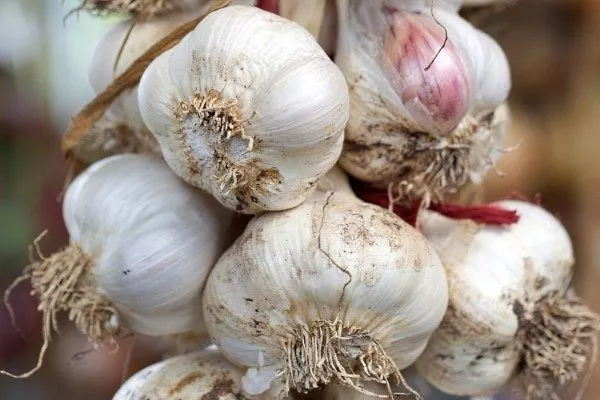
Varieties for northern regions
In northern regions, where cold temperatures prevail throughout the year, varieties with a shorter than average ripening period are suitable for growing spring garlic.
| Name | Ripening period | Head weight | Number of teeth | Productivity per 1 sq. m | Shelf life |
|---|---|---|---|---|---|
| Perm resident | Mid-season | 37 g | 14-17 | 280-320 g | 10 months |
| Porechye | Mid-season | 25 g | 15-20 | up to 900 g | more than six months |
| Nugget | Mid-season | 67 g | 19-23 | up to 500 g | 10 months |
| Uralets | Mid-season | 36 g | 19-21 | up to 300 g | 10 months |
| Shunut | Mid-season | 48 g | 13-16 | 400 g | 10 months |
Perm resident
This variety of spring garlic was specifically bred for cultivation in northern climates. It is a mid-season variety. The leaves are a dull green and grow up to 2.6 cm wide. The top of the garlic is 30-35 cm long. The head is oval, slightly elongated at the top.
The bulb is covered with light-white scales on top. It weighs up to 37 g. The flesh is light-colored, and the inner skin covering the clove is pink. Each bulb consists of 14-17 cloves. The flavor is semi-sharp, and the plant contains increased amounts of essential oils. The yield per square meter is 280-320 g. It can be stored for up to 10 months.
Porechye
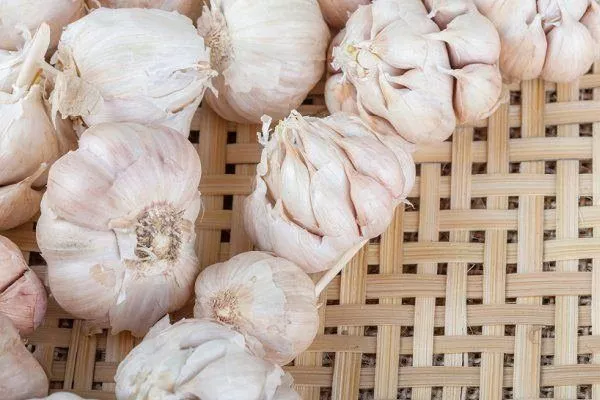
This mid-season variety is characterized by fairly tall leaves, up to 49 cm, with a spread of up to 1.7 cm. Each head weighs up to 25 g and consists of 15-20 cloves. The outer surface is covered with light scales, and the garlic interior is light and semi-sharp in flavor. Garlic yields up to 900 g per square meter. It has a shelf life of over six months.
Nugget
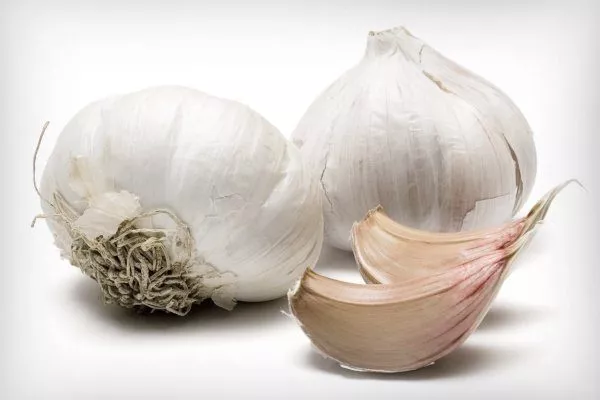
It grows up to 48-50 cm tall, with leaves up to 1.6 cm across. The bulb is pear-shaped, weighing up to 67 kg, and has 19-23 cloves. The bulb is covered with light-colored scales, and the scales covering the cloves are cream-colored. The interior is light and semi-sharp in flavor. Harvest up to 500 g per square meter, with a shelf life of up to 10 months.
Uralets
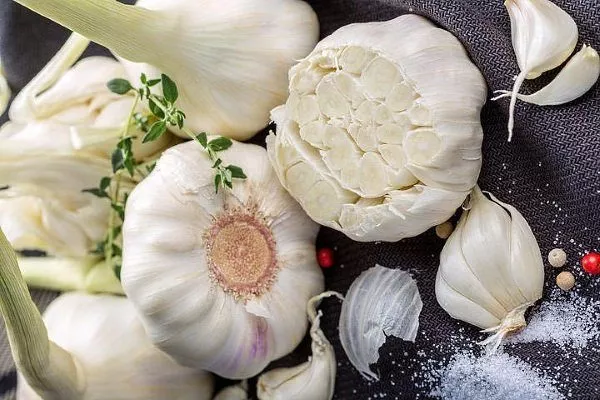
Mid-season. Leaves are pale green. They grow up to 38 cm tall, with a transverse spread of only 1.1 cm. The bulb is slightly flattened and oval. Weighing up to 36 g, it consists primarily of 19-21 segments. The scales covering the head are light-colored, with frequent longitudinal stripes, and a purple hue.
The inner surface of the cloves has peach-colored scales. The garlic is dense, light in color, and has a semi-sharp flavor. The yield of ripe bulbs is up to 300 g per square meter. The shelf life is up to 10 months.
Shunut
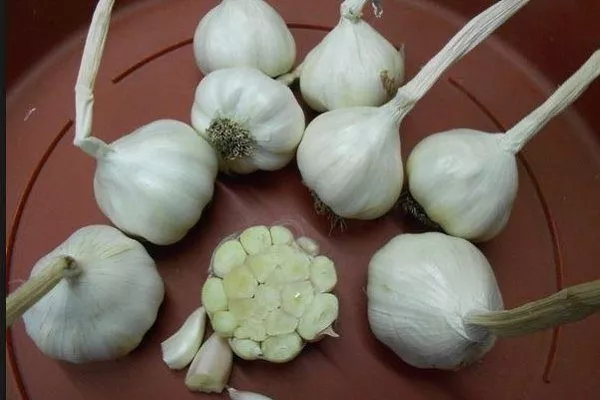
The head of garlic is spherical, slightly flattened. When weighed, it weighs up to 48 g and consists of 13-16 cloves. The dry scales are light in color with purple streaks of a bluish tint, and the inner scales of the cloves are light in color.
The garlic has a medium-dense texture and a light color, with a semi-sharp flavor. The yield of ripe bulbs is 400 g per square meter. The shelf life is up to 10 months.
Varieties for southern regions
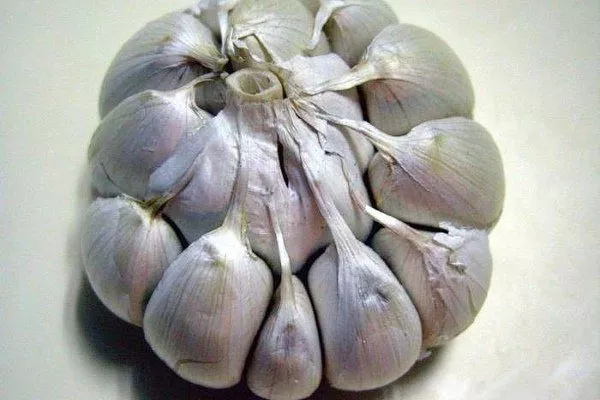
All varieties of this plant grow well in warm climates. However, the highest yields come from early-ripening and mid-late varieties, which allow them to reach their maximum size in these conditions.
| Name | Ripening period | Head weight | Number of teeth | Productivity per 1 sq. m | Shelf life |
|---|---|---|---|---|---|
| Victorio | Mid-season | 38-40 g | 13-15 | up to 1000 g | 8 months |
| Gulliver | Mid-late | 95-120 g | up to 12 | up to 1000 g | 8 months |
| Sochi 56 | Early maturing | 45-55 g | 15-29 | up to 900 g | up to one and a half years |
Victorio
A mid-season variety that produces good yields. The green part of the plant is small, growing up to 26 cm. The garlic head is spherical and slightly flattened. The scales are light with a pale brown tint. The garlic tastes medium-hot.
When weighed, the garlic plant weighs 38-40 g and consists of 13-15 cloves. The garlic has a light texture. The yield per square meter can reach up to 1000 g. It has a shelf life of up to 8 months. It is highly resistant to pathogenic fungi.
Gulliver
A mid-late variety, characterized by the collection of a large amount of garlic, compared to other types.
Garlic is listed by its breeder as a universal, bolting variety. However, in Russia, it is considered a spring variety because the yield of this garlic variety when planted in spring is almost the same as when planted in winter.
The upper part of the plant is a rich green, covered with a thick layer of cere. The aboveground part reaches just over half a meter in height, characterized by a wide cross-section of greenery up to 5 cm.
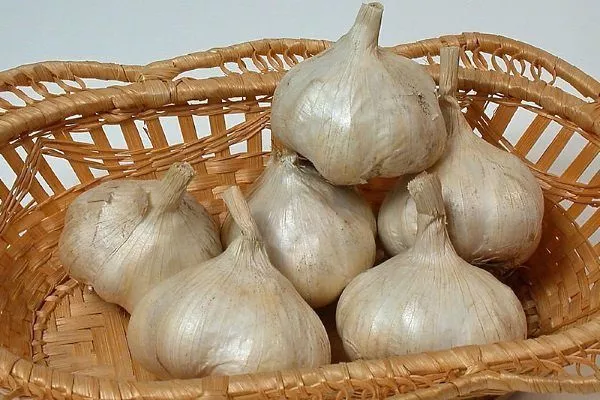
The garlic head is spherical, slightly flattened. When weighed, the plant weighs between 95 and 120 grams or more. The outer scales are light gray. The cloves are quite large and few in number, up to 12. Upon tasting, the garlic is rich and quite pungent. It has good resistance to pathogens.
It matures in 3 months. The yield of ripe garlic is average – up to 1000 g can be harvested from 1 square meter. It has a shelf life of up to 8 months. Gulliver is characterized by a high vitamin C content.
Sochi 56
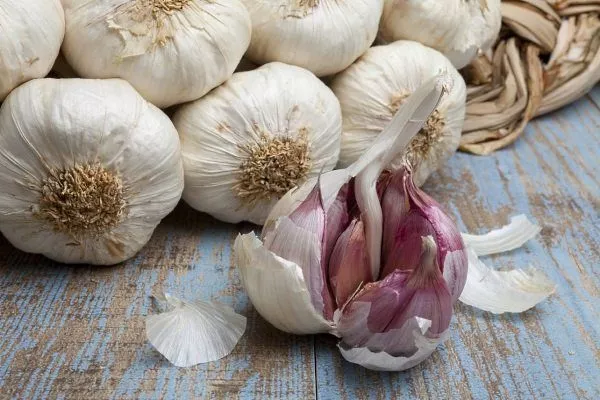
An early, early-ripening variety. Grows in large quantities from a single plot. The head of garlic is oval and perfectly round. The outer scales are light with purple flecks. The cloves are covered with dark cream scales. Weighing up to 45-55 g, the scales consist of 15-29 cloves.
Garlic has a semi-sharp flavor. It is resistant to pathogens and fungi, and its shelf life is quite long, up to a year and a half. It ripens three months after planting. The harvest yield of ready-to-eat garlic ranges from 1 square meter to 900 g.
Universal varieties of spring garlic
This includes plant species that produce a consistent and abundant harvest. Garlic has a fairly strong internal structure, with a spherical to oval shape. Typically, the scales covering the head are light-colored, while the lobular scales are creamy pink. This plant is highly resistant to various types of diseases and fungi.
| Name | Ripening period | Head weight | Number of teeth | Productivity per 1 sq. m | Shelf life |
|---|---|---|---|---|---|
| Moscow | Mid-season | 14 g | numerous | up to 300 g | not specified |
| Abrek | Mid-season | 30 g | 15 | up to 100 g | more than six months |
| Yershovsky | Mid-season | more than 35 g | 16-25 | up to 700 g | more than six months |
| Aleysky | Mid-season | 17-35 g | 13-19 | up to 800 g | more than six months |
| Elenovsky | Mid-season | 45 g | 13-16 | up to 1000 g | up to two years |
| Gafuriysky | Mid-early | 38-42 g | 16-18 | up to 850 g | not specified |
| Degtyarsky | Mid-season | 38 g | 17-18 | up to 300 g | from six months to a year |
| Demidovsky | Mid-season | 47 g | 14-16 | up to 400 g | almost a year |
| Fellow countryman | Mid-season | 29 g | up to 16 | up to 300 g | up to a year |
Moscow
A mid-season variety. Spherical and slightly flattened in appearance, it consists of numerous closely spaced cloves. The cloves are small and arranged in a circle, slightly enlarged at the edges. They weigh up to 14 g when weighed. When tasted, they have a mildly pungent flavor. Harvesting of ripe garlic is consistent, ranging from 1 square meter to 300 g. Garlic has good resistance to rot and viral diseases.
Abrek
This is a mid-season variety. The upper green part is covered with a thin cere. It grows up to half a meter tall, with leaves up to 2 cm in cross-section. It has a spherical and slightly flattened shape.
When weighed, it reaches up to 30 g. The head consists of 15 cloves. The outer scales are light in color. The internal structure is dense. The garlic has a rich pungency. The plant is susceptible to fusarium. The yield per square meter is up to 100 g. It has a shelf life of more than six months.
Yershovsky
A mid-season variety. The upper green part of the plant reaches half a meter. The leaf cross-section is up to 1.5 cm. The greens have a medium-thick layer of cere. Weighs over 35 g.
The cloves are arranged closely together and number 16-25. The garlic's flesh is light-colored and covered with pale scales. When tasted, the garlic is moderately pungent. The yield of a ripe plant ranges from 1 square meter to 700 g. Its shelf life is over six months.
Aleysky
A mid-season variety. The upper green part of the plant is up to 30-35 cm, the longitudinal leaf size is up to 1.5 cm. When weighed, the weight is 17-35 g. The head is spherical, slightly flattened. The surface scales are light.
Contains 13 to 19 segments, each weighing 2 grams. They are closely packed together. The internal structure is dense and sharp when tasting. The yield ranges from 1 square meter to 800 grams. Moderately susceptible to rot and other diseases. Stores for more than six months.
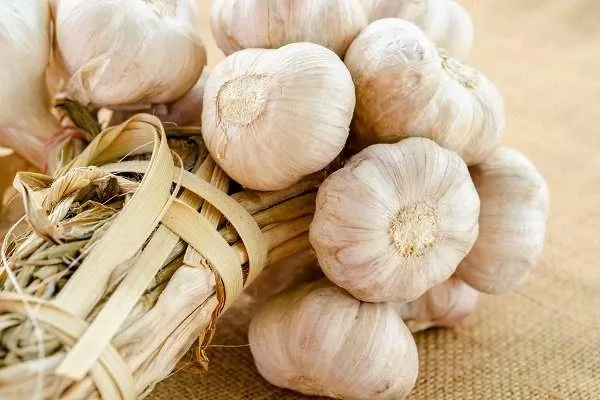
Elenovsky
A mid-season variety. The upper green part is covered with a moderate layer of cere and reaches a height of up to 1/3 of a meter. The leaf cross-section is up to 1.3 cm. The bulb is spherical and slightly flattened. When weighing up to 45 g, the outer scales are light, while the inner scales covering the segments are light cream.
The head consists of 13-16 segments. The internal structure of the segment is dense with a pale peach hue. When tasting, it reveals a spicy and semi-sharp flavor. The plant is characterized by consistently high yields and a long shelf life of up to two years. The Elenovsky variety is resistant to major diseases and produces large yields of up to 1,000 g per square meter.
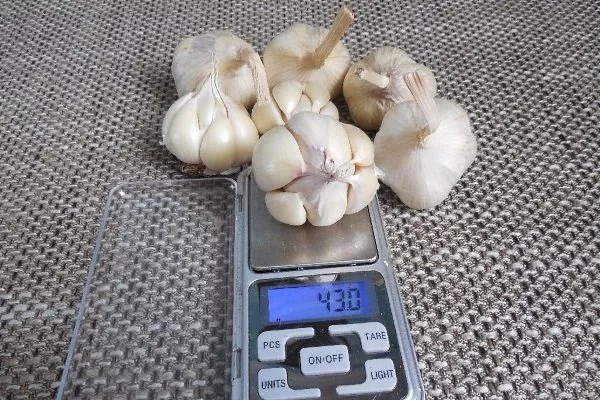
Gafuriysky
A mid-early variety. The light green part of the plant reaches up to 1/3 meter in height, and the leaf cross-section is 2 cm. The leaves have a bluish-white tint. The head is spherical, slightly flattened. Weight up to 38-42 g. The surface scales are light, with a pink tint. The inner scales are pinkish, with light veins at the base and pink veins toward the bottom.
A head of garlic consists of 16-18 cloves. The internal structure of each clove is complex and fairly dense. Each clove weighs 2-4 g. It has a pungent taste when tasted. Ripening takes up to three months. The yield of a mature plant is up to 850 g per square meter. It is quite resistant to most diseases, but has insufficient resistance to downy mildew.
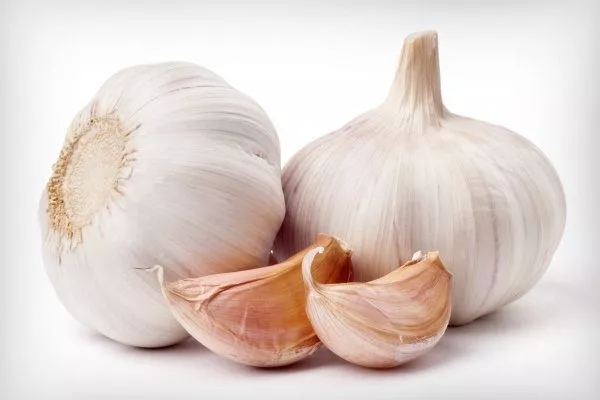
Degtyarsky
The green leaves are light in color and covered with a barely noticeable cere. The above-ground portion reaches a height of just over 1/3 of a meter, and the leaf is up to 1.7 cm in cross-section. When weighed, the head weighs up to 38 g. The shape is oval to pear-shaped. A head of garlic contains 17-18 cloves. The surface is covered with rich pink scales with purple streaks.
The cloves are covered with creamy scales. The clove texture is light in color. The garlic tastes semi-sharp when tasted. The harvest yield of ripe garlic ranges from 1 square meter to 300 g. The shelf life is six months to a year. It is grown for both personal use and commercial production.
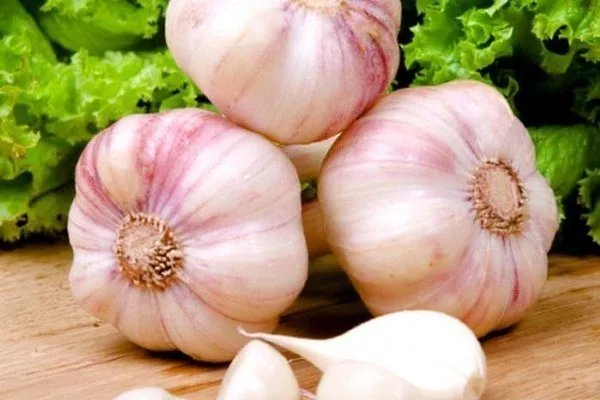
Demidovsky
The upper part of the plant is green, covered with a thin film of cere. It grows almost half a meter in height, and the leaves are up to 2.1 cm in cross-section. They have a spherical, slightly flattened shape. They weigh up to 47 g. The head contains 14-16 segments.
The surface is made up of light scales with purple streaks, and a pale beige scale is located above the cloves. The garlic's interior is light in color. It tastes semi-sharp. The yield of ripe bulbs ranges from 1 square meter to 400 g. Garlic can be stored for almost a year.
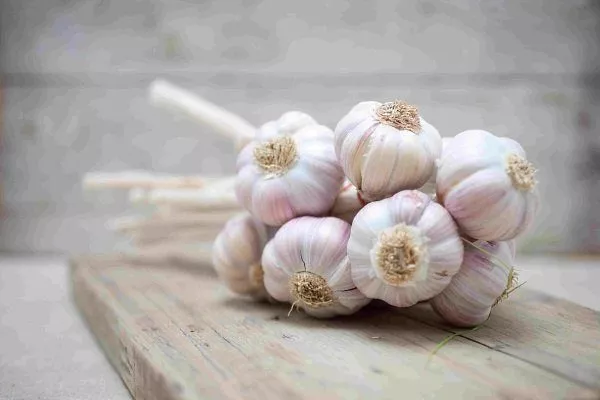
Fellow countryman
A mid-season variety. The above-ground part is almost half a meter long. A head of garlic weighs up to 29 g and contains up to 16 cloves. The bulb's surface is covered with light scales, and the cloves are light pink. The internal structure is light. It tastes semi-sharp. Garlic is harvested in quantities of up to 300 g per square meter. It can be stored without losing its beneficial properties for up to a year.
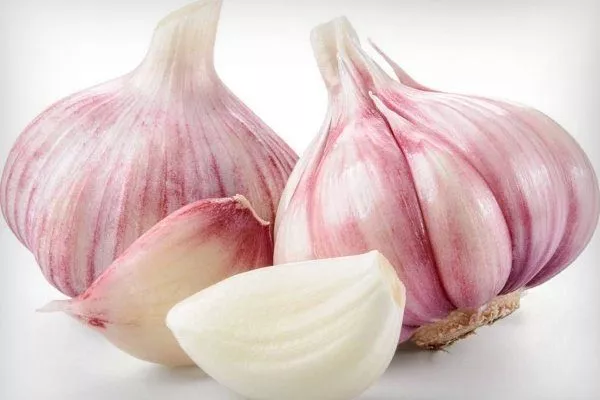
French varieties
Garlic, originally from France, has become widespread in our country. It thrives in our climate and is prized for its aromatic and vibrant flavor.
We also recommend reading the article about spring planting of spring garlic.
| Name | Ripening period | Head weight | Number of teeth | Productivity per 1 sq. m | Shelf life |
|---|---|---|---|---|---|
| Kledor | Average | not specified | 20 or more | not specified | up to a year |
| Printanor | Mid-late | 80-130 g | 12-18 | not specified | more than a year |
| Flavor | Mid-season | up to 80 g | 15-20 | not specified | almost a year |
Kledor
A scientific approach was used to develop this type of garlic. The result is a high-quality variety that has become widely used in the culinary arts in many countries.
The ripening period is average. It doesn't tolerate cold very well, and sometimes doesn't ripen fully in temperate climates. It's better suited for growing in the moderately warm climate of Russia.
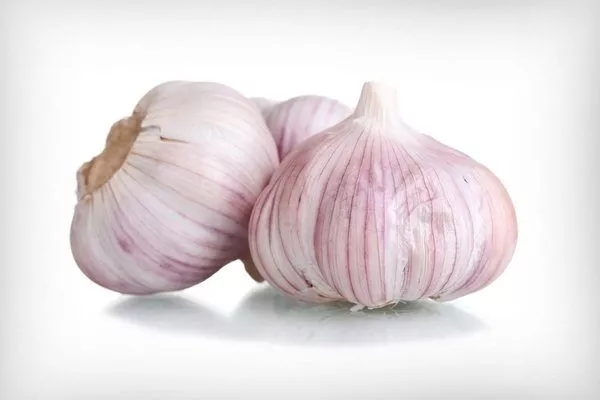
Kledor garlic bulbs are large, measuring 6 cm in diameter. They contain 20 or more cloves. The outer scales covering the bulb are light gray, while the clove scales are creamy. The cloves are large. The interior is dense and pinkish in color. They have a pleasant, delicately pungent flavor. Harvested garlic can be stored for up to a year. It has good immunity to viruses and pathogenic fungi.
Printanor
A French variety of spring garlic. The bulb is large (up to 85 cm in diameter) and weighs from 80 to 130 g. The bulb contains large cloves (12-18) tightly packed together. It has a distinct flavor and a tart aroma. The outer scales are light in color, while the inner scales have a pinkish tint. It can be stored for over a year without losing its beneficial properties.
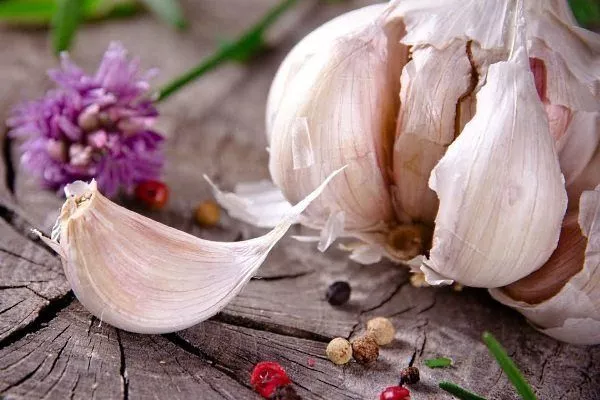
Printanor garlic is considered the best variety in Australia! It's hardy, easy to grow, high-yielding, large, and delicious.
Flavor
This garlic variety was first grown in France. It has long been cultivated in European agricultural complexes. In our country, it grows well in the northern and central regions.
A head of garlic is larger than average, up to 5 cm in circumference. It weighs up to 80 g and consists of 15-20 cloves. The outer scales of the bulb are pale cream. The internal structure is light in color, dense, and rich in moisture. It tastes semi-sharp. It has a shelf life of almost a year.
Division of spring garlic by climatic zones
Spring garlic includes species that are well adapted to different climatic conditions.
- ✓ Resistance to low temperatures below -25°C.
- ✓ The growing season is no more than 90 days for guaranteed ripening.
The table shows the climate zones and the species that grow well in them:
| Terrain and climate | Recommended varieties |
| Northern District | Permyak, Victorio, Gulliver, Sochinsky 56. |
| Southern District | Arbek, Ershovsky, Aleysky, Elenovsky, Gafuriysky, Dyagtersky, Demidovsky. |
| Temperate climate (with possible fluctuations) | Moscow |
- ✓ Additional cover is required during spring frosts.
- ✓ Optimal soil acidity pH 6.5-7.0 to prevent diseases.
We examined 20 varieties of spring garlic. All of them boast the best qualities: a dense structure, a spicy and rich flavor, a high concentration of vitamins and nutrients compared to other garlic varieties, low susceptibility to viral diseases and rot, and the ability to retain their beneficial properties during long-term storage.
Good afternoon! First, a note: the last table is incorrect. Now the question: how to reproduce varieties without bulblets? I'd appreciate some helpful advice. I'm also unclear about storage: what's the point of spring varieties with a shelf life of 6-8 months if winter varieties with double the yield can be stored for the same amount of time?
Thanks for your question, Alexander! The table has been updated. Regarding storage, it all depends on the gardener's preferences. There are many varieties, each with its pros and cons. Some gardeners prefer spring garlic varieties and don't care about the timing. However, I haven't encountered any problems with reproducing varieties without bulblets.
I accidentally got some spring garlic inflorescences. I didn't dig this garlic up for three years. I don't know the variety. Every spring it would sprout, but someone would inevitably weed it out, thinking it was grass. There were only a few growing at the edge of the bed. So, in the third year, it bloomed. And then they mowed it down again. So I don't know if it would have produced bulblets or not. I'll see what happens next year. I'll fence it in.
Hello! I'm here to provide you with helpful advice on your questions, as you requested.
You asked:
1. How to reproduce varieties in the absence of bulblets?
2. What's the point of spring crops with a shelf life of 6-8 months if winter crops with double the yield are stored for the same amount of time?
I answer:
1. Spring garlic does not bolt. Non-bolting garlic is propagated by cloves. A head of this type of garlic has up to 30 cloves.
2. Winter garlic does produce a higher yield. However, I disagree that winter garlic has the same shelf life as spring garlic. Winter garlic is not suitable for long-term storage. The advantages of spring garlic are that it is more drought-resistant, less demanding on soil, and stores very well for a long time (right up until the next harvest).
Spring garlic makes sense. Growing winter garlic requires a mild, snowy winter (knee-deep or more). Therefore, in regions with frosty winters and no snow, planting winter garlic is unwise, as it will freeze. Planting winter garlic (even if it's high-yielding) in the spring is risky, as it requires vernalization (exposure to cold, not frost!), and for successful growth, it requires plenty of moisture, especially since it doesn't tolerate extreme heat. Otherwise, the bulb may fail to set and ripen.
Thank you for your reply. By "reproduction of a variety," I meant preserving and restoring varietal traits, as well as preventing degeneration while consistently using your own planting material. If you have any information, please share it. I'd be grateful. I'd like to try it in the southern Astrakhan region. Winter varieties are grown without any problems, although they require cover, as there's no snow and the ground freezes well. This isn't a problem on a private farm, but covering the field, and ensuring it can withstand winter storms, is a real challenge.
If we look at the issue from this perspective, then, of course, over time, the varietal qualities of garlic grown from cloves deteriorate. This is due to the "average" gardener's lack of interest in investing time and effort into cultivating spring garlic while maintaining its varietal qualities. Let me explain my point.
A few years ago, I came across a scientific paper on seed production by an agricultural science professor. He outlined the causes of variety degeneration in any crop: changes in environmental conditions, mutations (the use of mutagenic pesticides, etc.), the influence of pathogenic microorganisms, and so on. All of these factors disrupt the variety's structure. Therefore, to preserve varietal qualities, he recommended carefully selecting seed for planting (only healthy and strong ones), providing the plant with optimal soil and climate conditions for the particular variety, preventing the development of diseases, and so on.
At first glance, winter garlic seems simpler in this regard. You can "refresh" the varietal characteristics of winter garlic by planting aerial bulblets (bulbs), and then single-clove garlic. But even this has its pitfalls. A friend's personal experience showed that out of 100 bulblets, only 45% pass the selection process (only large bulblets are selected and then hydrosorted). The germination rate of the bulblets is generally low. Of the selected number, about three dozen bulblets sprouted. Of these, small and medium-sized single-clove garlic bulblets (about 50%) are discarded. This yields about 15 "varietal" single-clove garlic bulblets. However, only a couple of large garlic heads, valuable for cultivar reproduction, will grow, and then only the following year.
So, to be honest... obtaining material valuable for breeding is a labor-intensive and time-consuming process. If the goal is to cultivate varietal garlic for sale, then care must be taken with soil quality, temperature control, disease prevention, and so on. For personal consumption, it's easier to grow spring garlic as is... accepting that its varietal qualities will deteriorate over time (how soon is impossible to say definitively, since everything depends, so to speak, on the initial potential, the quality of care, the accumulation of diseases, weather conditions, and so on). Alternatively (if the climate permits), you can immediately select winter varieties and "rejuvenate" them over time by planting bulblets, keeping in mind that full-fledged garlic will only be obtained in the second year (if the weather and the seed are favorable).
In short, I think degeneration can't be stopped. But it's possible to cultivate spring garlic while preserving its varietal characteristics. I conclude that the deterioration of varietal traits will be subtle (negligible) if the garlic is properly cared for, as the professor recommended in his scientific paper. This is confirmed by other sources... I've come across a lot of information about degeneration in various crops, but the causes were always various agricultural errors and diseases.
Focus on optimal growing conditions for spring garlic, and you'll achieve everything you desire! Plant in early spring, but avoid overwatered soil, otherwise the plants will rot. Plant at a depth of approximately 7-8 cm. Use a 10 x 10 cm planting pattern. The area where garlic grows should not be flooded. Garlic thrives in well-fertilized, organically rich, loose (sandy with a small amount of clay) soil with an alkaline reaction (pH above 7) and a sunny location. Garlic is particularly susceptible to bacterial diseases (be sure to disinfect the soil beforehand and apply subsequent treatments, if necessary). As soon as the lower leaves begin to yellow and dry out, dig up the garlic to prevent the bulbs from disintegrating and getting lost in the soil. Proper storage of the seeds is also important to ensure a good harvest next year.
And another interesting point: if you plant spring garlic in the fall, like winter garlic, there will be fewer cloves, but they will be larger.
Finally, I'd like to analyze the conditions you'll need to grow spring garlic in. The southern regions of the Astrakhan region have brown semi-desert soils. These soils are characterized by low moisture (aridity) and low levels of nutrients essential for healthy plant growth. Spring garlic is generally drought-resistant, has a suitable soil pH, and light to medium loamy soil is also suitable for growing spring garlic (winter garlic doesn't like such soil). Fertilization will still be necessary (phosphorus and nitrogen containing potassium and magnesium), and irrigation is essential.
Good luck in your new endeavors!
Thank you very much for your answers.
The information is very useful for understanding the process and developing a technology. I received much more than I expected, for which I am very grateful. Perhaps you know anything about agricultural practices or varieties for winter crop production during snowless winters? Life goes on.
Glad to be of help!
In regions with snowless winters, preference should be given to varieties with high winter hardiness and tolerance to temperature fluctuations. These may include the following varieties:
The variety "Shirokolistny 220" is non-bolting, early maturing, with high winter hardiness, and a yield of 0.4 kg/sq. m.
The 'Lekar' variety is non-bolting, early maturing, with high winter hardiness and a yield of 1.1 kg/sq.m. (This can be increased by fertilizing and watering).
The Triumph variety is a bolting, mid-season variety with high winter hardiness and a yield of 0.7 kg/sq. m.
The Tien Shan 320 variety is a bolting, late-ripening, winter-hardy variety with a long shelf life and a yield of 1.2 kg/sq.m.
There are many varieties of winter garlic... I've highlighted the most popular options. There are no varieties specifically designed for snowless winters. The choice is yours, of course, but keep in mind that bolting varieties require removing the bolting stem. Delaying this process can reduce the yield (by up to 30%).
Moreover, harvested garlic begins to sprout quickly under favorable conditions. The harvest's shelf life can be extended by storing it at low humidity (50%) and temperatures between 10 and 15°C, or in a refrigerator at 0 to 1°C.
Non-bolting varieties of winter garlic have a shorter growing season by about a month (meaning you'll get a harvest faster) and a longer storage life.
Regarding agricultural practices that help winter garlic survive snowless winters, the most important is the use of covering material during cold periods, specifically white agrofibre with a density of 50-60 g/m2. It effectively protects the plant from frosts down to -10°C (with a single layer of cover), hail, and strong winds. It can be reused (with careful handling, it will last for 3-4 seasons). Manufacturers recommend stretching the agrofibre over arches in two or three layers to protect against frosts below -20°C. This cover accelerates crop ripening by maintaining an optimal microclimate under this "sheet."
In the spring, plants are gradually uncovered to prevent leaves from getting burned by direct sunlight.
Why is agrofibre better than film? Agrofibre allows not only light but also water and air to pass through.
There's also black agrofibre, but it's used as a soil mulch (to protect against weeds) because it blocks the light needed for plant growth. Therefore, it's purchased for other purposes.
And I would like to mention some other important agricultural practices:
1. Soil preparation. To retain moisture in arid areas, it is recommended to use bare fallow. This will result in a high yield of winter crops. A bare fallow is a field that remains free of plants (including weeds) from spring to fall, and on which soil fertility and moisture retention are improved (repeated tilling, often with the addition of organic matter before sowing).
2. Seed treatment. Garlic is very susceptible to fungal diseases, so to ensure a good harvest and maintain a beautiful marketable appearance, it is recommended to treat the garlic cloves (and single cloves) with copper sulfate, potassium permanganate, ash solution, Fitosporin-M, Maxim, or other disinfectants just before planting.
3. Timing and planting schedule (I discussed planting depth in the previous letter). Garlic needs to be well established before the onset of consistent frosts, so it's important to focus on prevailing weather conditions rather than the standard winter garlic planting dates (October 5-20). Therefore, planting should be done 35-45 days before the onset of consistent frosts (or when the soil temperature drops to 10-12°C at a depth of 5 centimeters).
If you plant late, the garlic may not have time to take root before frost sets in. This will result in the loss of some of the harvest. Furthermore, poorly rooted garlic will yield a smaller harvest.
If you plant garlic too early, it may sprout during a warm autumn, and then its frost tolerance will also decrease.
However, using agrofibre prevents garlic from freezing if the planting time is chosen incorrectly. The main thing to remember is that roots stop growing at temperatures below 1-3°C. Poor rooting also occurs due to dry soil in the fall, so soil preparation and artificial watering are important measures.
As for the planting pattern, 45 x 7 cm is considered suitable in most cases. Reducing the feeding area can lead to the growth of small bulbs.
When planting garlic by hand, the cloves should be held vertically to promote rooting. In the fields, a planter is used, so I don't consider this rule mandatory, but it is recommended for hand planting.
4. Fertilizing and watering. Winter crops need to establish good roots in the fall, so they require phosphorus nutrition, which promotes more vigorous root development. Before sowing winter crops, organic fertilizers, such as humus (but not fresh manure!), are added under plowing. At planting time or 2-3 weeks before, 50% mineral phosphorus fertilizer (superphosphate) is applied. The remaining phosphorus fertilizer is applied as top dressing. Nitrogen fertilizers are not recommended in the fall. Nitrogen should be applied in early spring (and again when 6-9 green leaves appear) to improve the growth of the aboveground foliage (it is more economical to apply locally in a row rather than irrigate the entire field). It is believed that the denser the foliage, the larger the head.
Regarding irrigation, observations by the International Center for Agricultural Research in the Dry Areas show that artificial irrigation doubles garlic yield. Although this study was conducted in Ethiopia, the connection is undeniable! During the first two weeks after planting, cloves germinate and roots grow rapidly, so garlic should be watered well, but not excessively (otherwise it will rot!). The recommended watering frequency is once a week, in the morning (provided the average daily temperature the previous day is at least 15°C and there has been no rain). The moisture control depth is approximately 0.25 m. Drip irrigation is typically used in the fields. Insufficient watering causes the bulbs to shrink.
Violation of agricultural technology leads to drying out of cloves (when planted in dry soil), freezing (if planting dates are violated and there is no cover), drying out of roots and “sticking out” of cloves (if planting depth is shallow), damage to cloves and roots (if the wrong attachments are selected for machine planting and hilling of garlic).
The winter, though snowless, was relatively mild, but in the spring, real frosts arrived. The plants on the left responded with developmental delays (yellowing of the lower leaves and severely stunted growth; some garlic didn't survive at all). The garlic under cover produced an exceptionally good harvest.
I have a question. I've been growing one variety of garlic in my garden for about twenty years. The outer scales are lilac, and the heads are small. It has multiple rows, a semi-sharp taste, and a good aroma. I propagated it only by cloves, selecting large heads and large cloves. Then I bought a different variety. It had a large head, white outer scales, 4-5 large cloves per head, and was spicy. I lost both varieties. Instead, pink garlic started growing, with a head slightly smaller than the white one. The cloves are arranged in either one or two rows, and have a spicy taste. How did they manage to cross when propagated by cloves?
They most likely didn't crossbreed. Every variety has the potential to degenerate and mutate.