
Garlic comes in a wide variety of varieties, to suit every taste and color. It is divided into two types: winter and spring. Winter garlic is planted in winter and produces a higher yield, making it a much more popular choice among gardeners. But to choose which winter garlic variety to plant, you first need to understand a little about them.
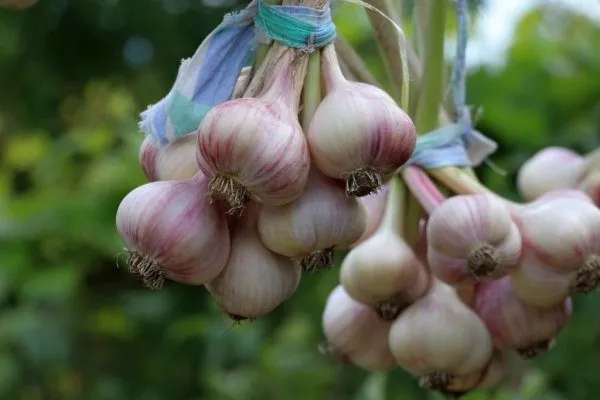
General information about winter garlic varieties
When choosing winter garlic varieties, you should know several signs by which you can identify them:
- in the center of the head there is a rod with teeth located around it;
- the cloves are arranged in one row;
- all the teeth are the same;
- winter varieties produce a large harvest;
- There are arrows on which bulbs can later form.
Winter garlic is divided into two types:
- shooting – a head of garlic consists of a ring of large cloves;
- non-shooting – consists of a large number of small teeth, which are arranged in a spiral.
To ensure a bountiful harvest, you should carefully select your starting material. This should be done taking into account certain factors:
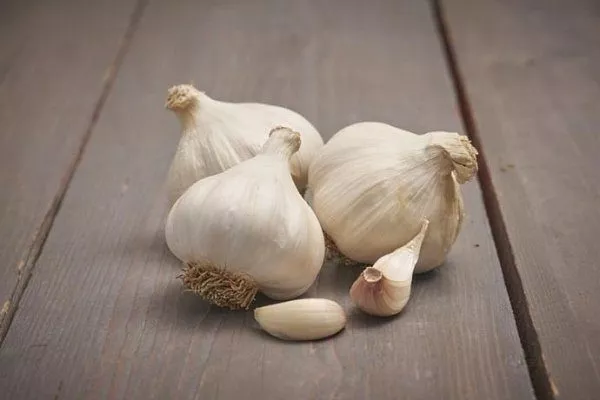
- The presence of a root system at the bottom of the bulb, which should not crumble if pressed.
- The bulb should be closed, with tightly closed teeth and covered with dry scales.
- The bottom must be firm.
| Name | Yield (t/ha) | Growing season (days) | Number of cloves | Weight (grams) |
|---|---|---|---|---|
| Alcor | 3-3.4 | 85-95 | 4-6 | 20-35 |
| Sofievsky | 1.1 | 110 | 8-10 | 80-120 |
| Lyubasha | 3.5 | 100-109 | 4-7 | 120-200 |
| Dubkovsky | 0.14-0.5 | 98-114 | 10-12 | 28-32 |
| Dobrynya | 2-2.5 | 123-129 | 10-12 | 55 |
| Rocambole | 1.1 | 87-99 | 4-6 | 100-300 |
| baby bison | 1.1 | 87-99 | 4-7 | 50-70 |
| Komsomolets | 1.9 | 110-120 | 6-10 | 30-50 |
| Sail | 1-1.5 | 100-109 | 6-8 | 40 |
| Doctor | 1.9 | 100-109 | 11-18 | 36-65 |
| Bashkir 85 | 0.7 | 85-91 | 4-5 | 64 |
| Moscow region | 1.9 | 112 | 5-7 | 60 |
| Azure | 0.7 | 105-115 | 5-6 | 60 |
| Losevsky | 1.3-2.5 | 105-115 | 4-5 | 75 |
| Saved | 4 | 110 | 7-10 | 60-100 |
| Chechen | 3-4 | 80-85 | 4-8 | 50-120 |
| Rusich | 2.5 | 110 | 5-7 | 70-100 |
| Stallion | 1.3 | 99-122 | 5-6 | 20 |
| Reliable | 1.3 | 99-122 | 4-7 | 55-75 |
| Sagittarius | 2 | 110 | 5-7 | 65 |
| Caesar | 0.9 | 105-115 | 4-5 | 39-54 |
| In memory of Ershov | 1.9 | 100-109 | 20 | 55 |
| Titanium | 1.9 | 100-115 | 6 | 150 |
| Moskal | 1.1 | 110 | 4-5 | 80-100 |
| Alekseevsky giant | 3.5 | 100-109 | 4-5 | 180 |
| Casablanca | 55-60 | 110 | 8-12 | 200 |
| Broadleaf 220 | 0.35 | 97-118 | 8-10 | 60 |
| Messidor | 1.9 | 110 | 6-10 | 60 |
| Tien Shan | 3-4 | 110 | 5-10 | 120 |
Alcor
Alcor was developed by Russian breeders. It is considered the highest-yielding variety. With proper planting and care, the yield is 3-3.4 tons per hectare. The growing season lasts 85-95 days.
Specifications:
- number of cloves – from 4 to 6;
- taste – sharp, without a strong aroma;
- weight – from 20 to 35 grams;
- planted from mid-September to early October;
- water abundantly, 2-3 times a week.
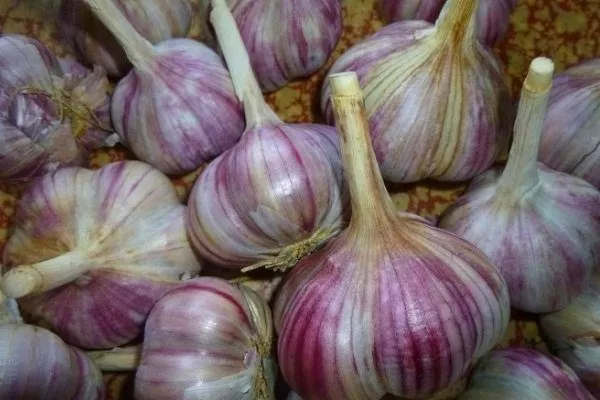
This variety isn't pest-prone, but 'Alcor' can be susceptible to yellow stunting, which causes yellow stripes and deformation on the leaves, and slow growth. Affected plants should be removed.
Sofievsky
This variety was bred in Ukraine. It is sown both in spring and fall. It is considered frost-resistant and grows in moist loamy soils. The growing season lasts 110 days.
Specifications:
- number of cloves – from 8 to 10 pieces;
- taste – spicy;
- weight – from 80 to 120 grams;
- can be stored for a long time if dried properly;
- mineral fertilizers are needed.
Lyubasha
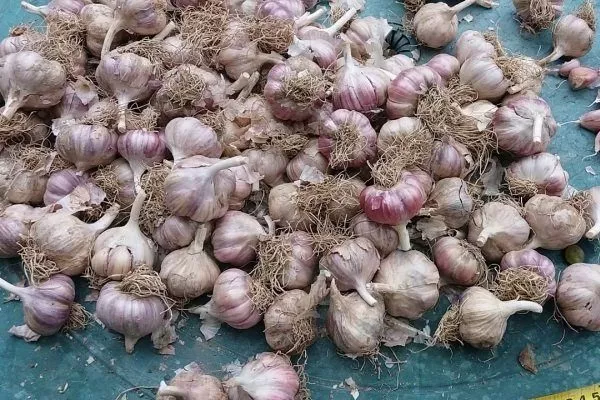
This is a Ukrainian early-ripening variety with a high yield—up to 3.5 kg per square meter. It tolerates cold weather well. The plant can reach a height of up to 1.5 meters.
Specifications:
- weight – from 120 to 200 grams;
- number of cloves – from 4 to 7;
- taste – spicy;
- can be stored for 10 to 12 months in a dark place;
- planted in late September – early October;
- Propagated by cloves, single-clove bulbs or air seeds.
Dubkovsky
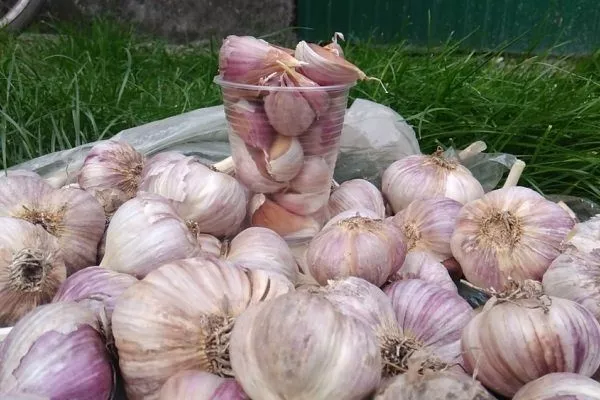
Developed by Russian breeders, this variety bolts and propagates via aerial bulbs. The growing season lasts from 98 to 114 days. It is susceptible to white rot and nematodes.
Specifications:
- number of cloves – 10-12;
- weight – from 28 to 32 grams;
- taste – spicy;
- the pulp is dense;
- color – cream;
- yield – 0.14-0.5 kg/sq. m.
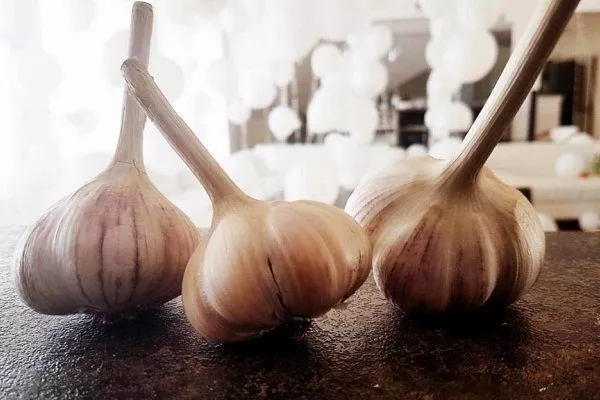
Dobrynya
It has good shelf life, high yields (2-2.5 kg), exhibits good cold tolerance, and is resistant to fusarium. The growing season lasts from 123 to 129 days. It thrives in fertile, loamy soil with neutral pH.
Specifications:
- number of cloves – from 10 to 12 pieces
- weight – about 55 grams;
- taste – mildly spicy;
- can be stored for up to six months;
- watering – 2-3 times a week.
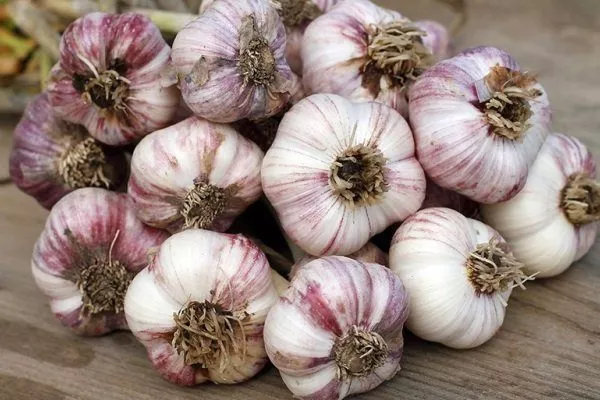
Rocambole
Rocambole Belongs to the lily family. It has several names: garlic chives, garlic chives, Spanish chives, Egyptian chives, and white elephant chives. The soil for planting should be loose and fertile and located at an elevated position to prevent waterlogging. Propagation occurs through cloves. Store indoors at room temperature.
Specifications:
- number of cloves – from 4 to 6 pieces;
- weight – from 100 to 300 grams;
- height – from 80 to 120 cm;
- taste - less pungent;
- the pulp is juicy.
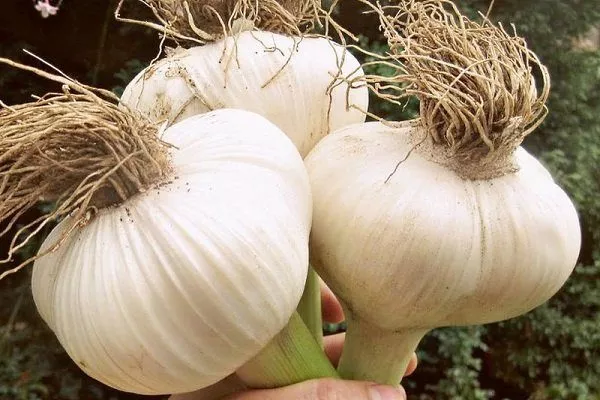
baby bison
It boasts a high yield of 1.1 kg per square meter. It is resistant to fusarium. It is grown outdoors in fertile, loamy soil. It is easy to care for, but requires occasional sun exposure. Fertilize during the active growth period. The growing season lasts 87 to 99 days.
Specifications:
- number of cloves – from 4 to 7 pieces;
- weight – from 50 to 70 grams;
- taste – spicy;
- pulp color – white-pink;
- is considered mid-season.
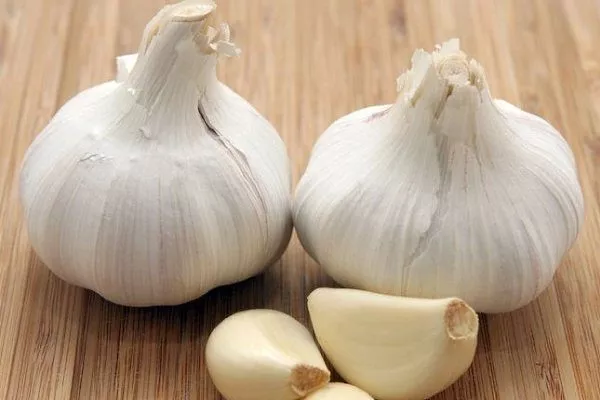
Komsomolets
It is a member of the Allium family and can be grown as both a spring and winter variety. Its growing season lasts 110 to 120 days. It should be planted in sunny areas, as it does not thrive in shade and grows small. The soil should be well-drained; sandy loam or loamy soil is suitable.
Characteristic:
- number of cloves – from 6 to 10 pieces;
- weight – from 30 to 50 grams;
- taste – sharp, with a pungent smell;
- resistant to both heat and cold;
- the color of the teeth is purple;
- leaf size – from 30 to 40 cm;
- Propagated by bulbs or aerial bulblets.
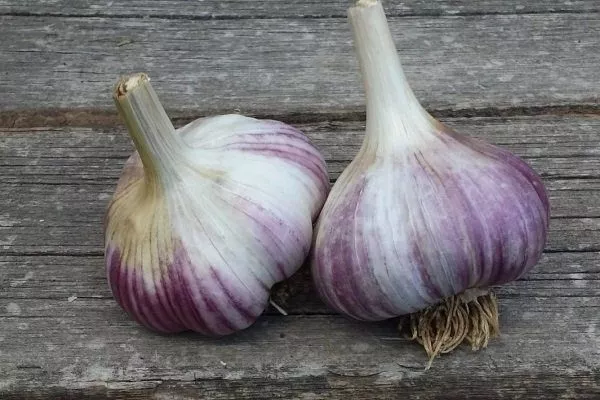
Sail
This is a high-yielding and frost-resistant variety. Planting guidelines are standard. "Parus" is an early-ripening variety, and harvesting begins as early as June. The yield is 1-1.5 kg per square meter.
Specifications:
- number of cloves – from 6 to 8 pieces;
- weight – about 40 grams;
- taste – sharp, with a pungent smell;
- the pulp is juicy and dense;
- leaves length – 50 cm;
- stored for 6-8 months.
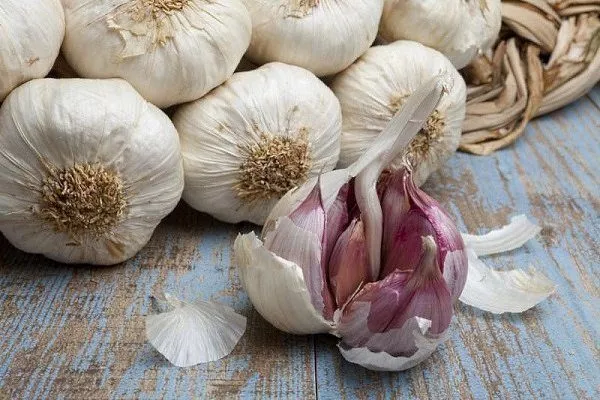
Doctor
It was added to the Russian Register in 2002. It is considered a winter variety, early maturing and resistant to bolting. Its growing season lasts from 100 to 109 days. It is distinguished by good winter hardiness and always produces a stable harvest.
Specifications:
- number of cloves – from 11 to 18;
- weight – from 36 to 65 grams;
- taste – mildly spicy;
- can be stored for about 7 months;
- the color of dry scales is white, the color of fleshy scales is pale pink and pale purple;
- planted in the third ten days of December.
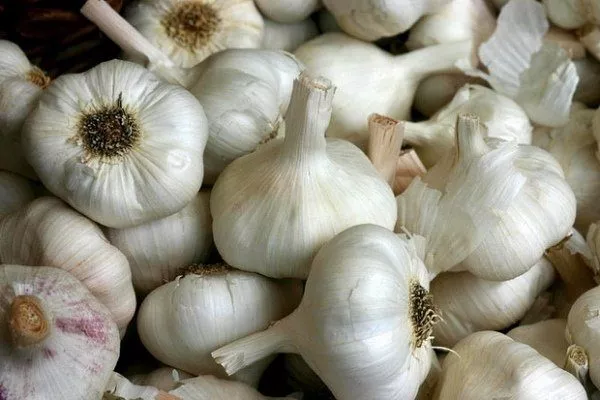
Bashkir 85
It was developed by scientists from the Bashkir Research Institute and the Ufa branch of the All-Russian Research Institute. It is grown as cloves and bulblets. The variety bolts. The growing season lasts 85 to 91 days. Yields 0.7 kg per square meter.
Specifications:
- number of cloves – from 4 to 5 pieces;
- weight – 64 grams;
- taste – spicy;
- dense pulp;
- color – purple;
- resistant to bacterial rot and downy mildew.
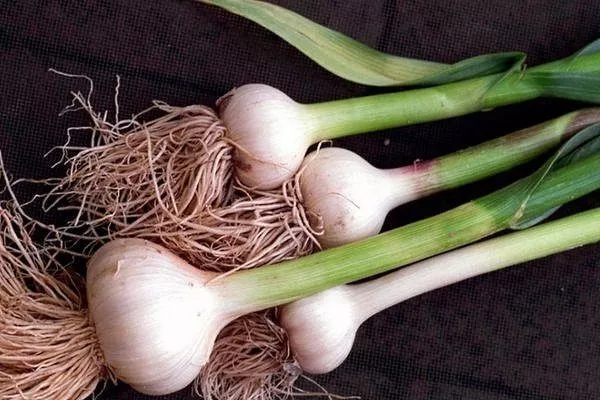
Moscow region
It is cold- and disease-resistant. This mid-season, bolting variety is propagated by cloves, single-cloves, and seeds. The growing season is 112 days. Yields up to 1.9 kg per square meter. Requires nitrogen fertilizer.
Specifications:
- number of cloves – from 5 to 7 pieces;
- weight – up to 60 grams;
- taste - very spicy;
- can be stored for a long time;
- cream-colored flesh;
- watering – weekly.
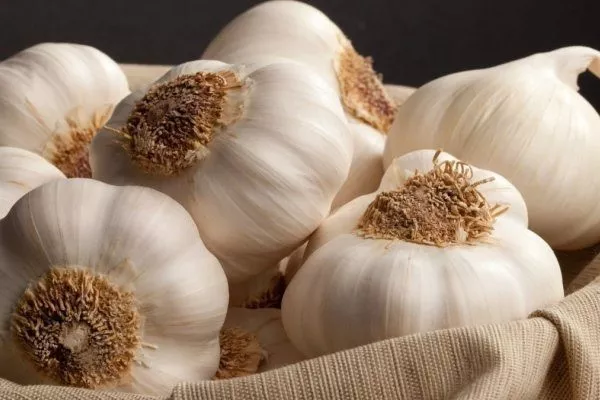
Azure
It's grown in garden plots and is considered a mid-season, bolting variety. The yield is low—0.7 kg per square meter. Before planting, the soil must be thoroughly prepared by digging and adding compost, phosphate, and potassium fertilizers.
Specifications:
- number of cloves – 5-6 pieces;
- weight – up to 60 grams;
- taste - very spicy;
- pulp is white;
- shelf life – 6 months;
- stable harvest;
- ease of care.
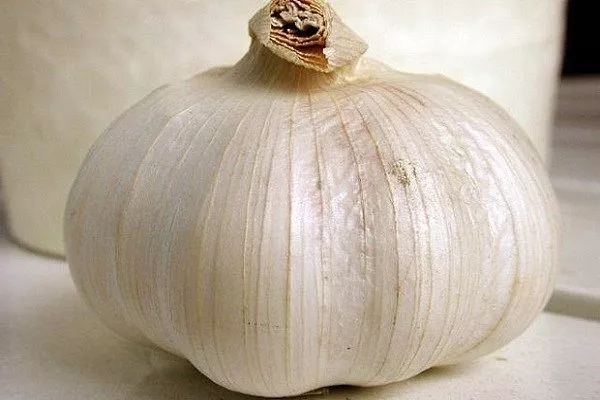
Losevsky
Intended for planting in vegetable gardens. It is a mid-season, non-competitive variety with good frost resistance. The growing season lasts from 105 to 115 days. Yields can range from 1.3 kg to 2.5 kg per square meter.
Specifications:
- number of cloves – 4-5 pieces;
- weight – up to 75 grams;
- taste – quite spicy;
- shelf life – no more than six months.
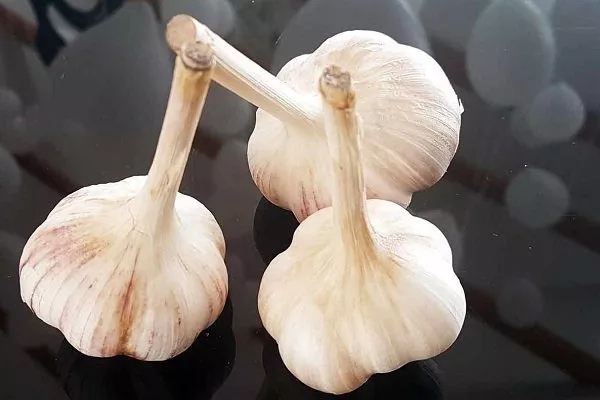
Saved
This variety is also native to Ukraine. It is resistant to low temperatures and diseases and adapts to any soil and climate conditions. Yields up to 4 kg per square meter.
Specifications:
- number of cloves – from 7 to 10;
- onion weight – from 60 to 100 grams;
- taste – spicy;
- the pulp is creamy and juicy;
- should be stored in a cool place.
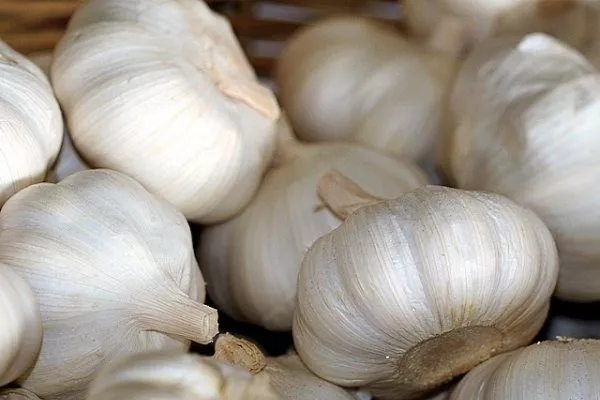
Chechen
Medium ripening period. The growing season is 80 to 85 days. Before frost, the soil should be fertilized with peat or humus, and stored in a well-ventilated area.
Specifications:
- number of cloves – from 4 to 8 pieces;
- weight – from 50 to 120 grams;
- taste – spicy;
- shape – round and round-flat;
- high resistance to rot.
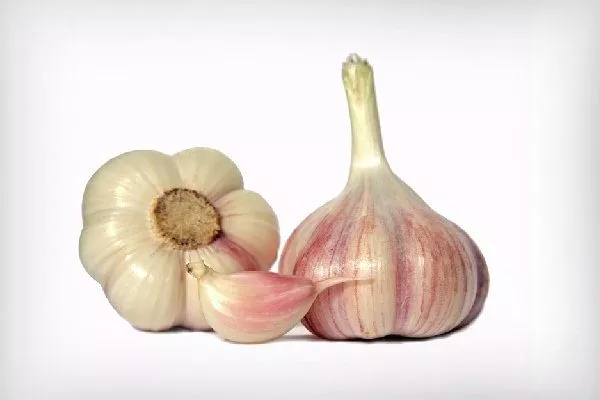
Rusich
A winter-hardy variety with a mid-season ripening period. Considered an easy-to-grow variety, it yields up to 2.5 kg per square meter under favorable conditions.
Specifications:
- number of cloves – from 5 to 7 pieces;
- weight – from 70 to 100 grams;
- taste – semi-sharp;
- the pulp is aromatic, creamy and juicy;
- The outer scales are white-yellow, the inner ones are brown.
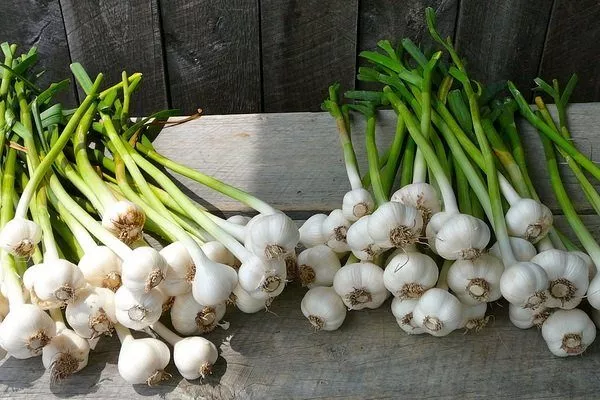
Stallion
This garlic variety is not listed in the state registry; it is grown only by amateurs, and its name reflects its characteristics: it is hardy, tolerant, and productive. Its ripening time is average.
Specifications:
- number of cloves – 5-6 pieces;
- weight – up to 20 grams;
- taste – spicy;
- color - white with purple;
- Stores well until January without losing weight.
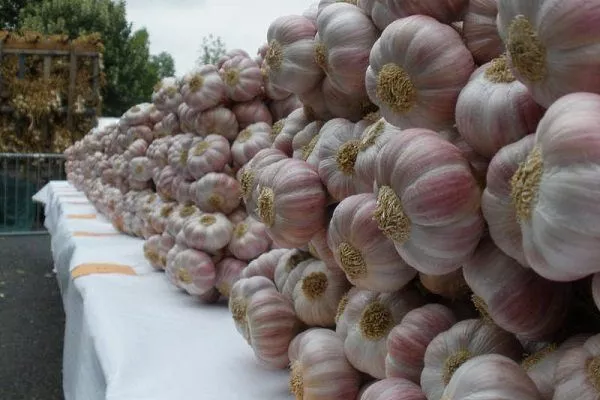
Reliable
A versatile winter variety, it is frost-resistant. It is considered mid-season, with a growing season lasting from 99 to 122 days.
Specifications:
- number of cloves – from 4 to 7 pieces;
- weight – from 55 to 75 grams;
- taste - rich and spicy;
- can be stored for a long time;
- yield – 1.3 kg;
- resistant to diseases.
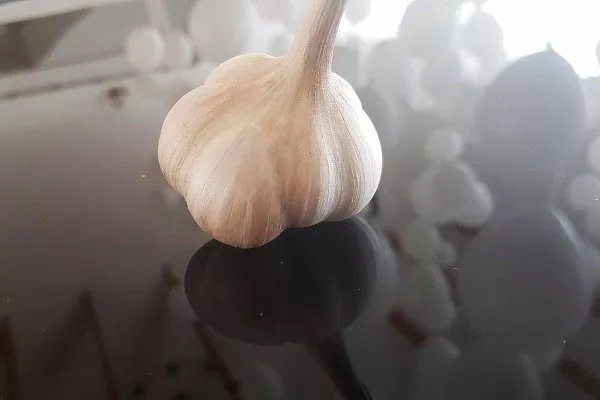
Sagittarius
This is a mid-season bolting variety. It is cold-resistant and yields up to 2.0 kg per square meter. It has a long shelf life, but begins to dry out over time.
Specifications:
- number of cloves – from 5 to 7;
- weight – up to 65 grams;
- taste – spicy;
- shape – round-flat;
- pulp – white;
- dry scales are lilac-violet, leathery ones are brown;
- storage period – six months.
Caesar
A mid-season, bolting plant. Low yield – 0.9 kg per square meter. Resistant to bottom rot. Bulbs vary greatly in weight. The growing season is 105 to 115 days.
Specifications:
- number of cloves – 4-5 pieces;
- weight – from 39 to 54 grams;
- taste – semi-sharp;
- shelf life – six months;
- the shape of the bulb is round and flat;
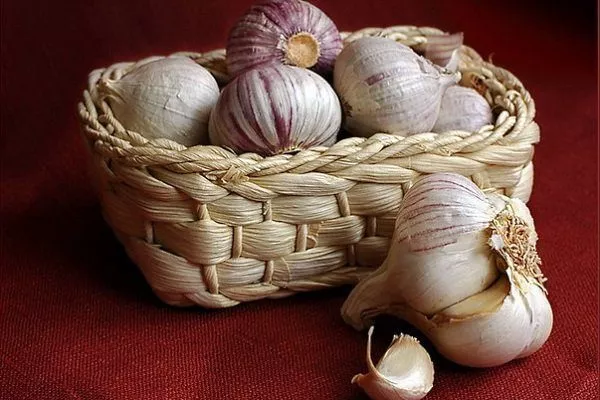
- The integumentary scales are dirty gray with purple stripes.
In memory of Ershov
Added to the state register in 2006. This mid-season variety does not bolt. It is considered productive (yields 1.9 kg per square meter). It is cold-resistant.
Characteristic:
- number of cloves – up to 20 pieces;
- weight – 55 grams;
- taste – semi-sharp;
- short shelf life – up to 5 months.
- the pulp is white;
- leathery scales - white.
Titanium
This is a large-fruited, mid-late, bolting variety. It is grown outdoors in temperate climates. The growing season lasts 100 to 115 days. Yields up to 1.9 kg, and the shelf life is 5-6 months. The variety can be replanted by sowing new bulblets every 3-5 years. For best yields, the soil should be enriched with potassium fertilizer.
Specifications:
- number of cloves – about 6;
- weight – up to 150 grams;
- taste – spicy;
- the pulp is juicy;
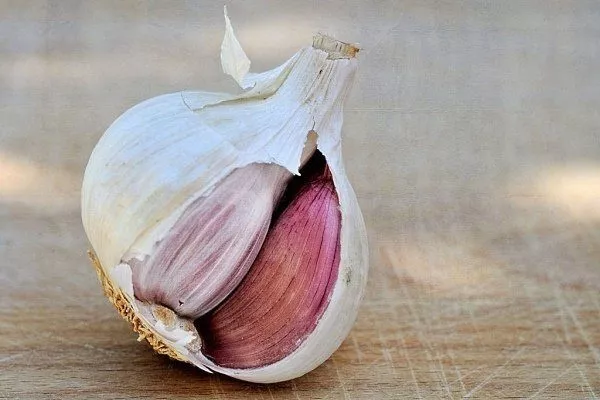
- the color of the integumentary scales is violet-lilac;
- planted from the end of September to the beginning of November.
Moskal
It was bred in Ukraine. It is considered a high-yielding variety, but has a short shelf life.
Specifications:
- number of cloves – 4-5 pieces;
- weight – lot 80 to 100 grams;
- taste – spicy;
- the pulp is white and juicy;
- the color of the husk is lilac-white;
- shelf life – 5-6 months.
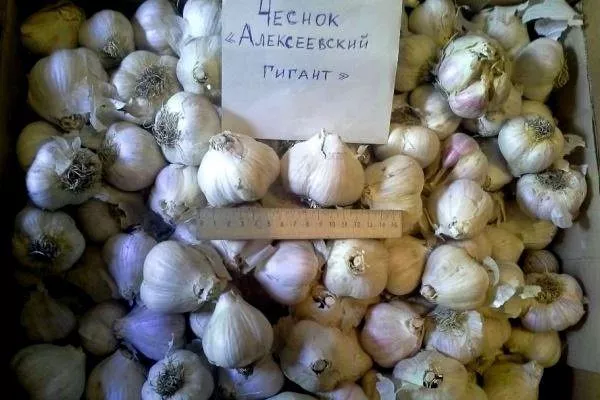
Alekseevsky giant
Considered one of the best, it was bred in 1998. It produces record yields and is resistant to diseases, particularly fusarium. The bulblets, cloves, and bulblets persist through the winter.
Specifications:
- number of cloves – 4-5 pieces;
- weight – up to 180 grams;
- taste - spicy, but sweet;
- oblong shape;
- outer scales are grey-white.
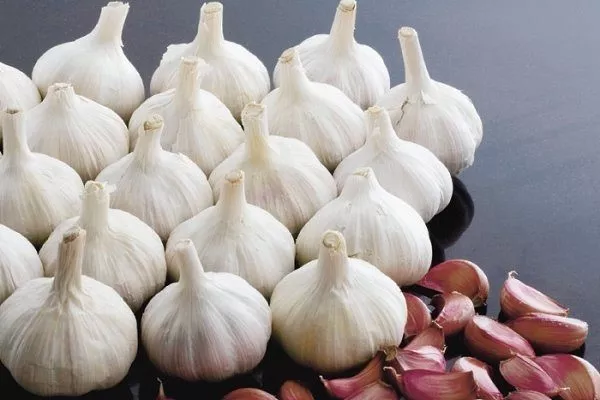
Casablanca
Developed in Holland, this garlic variety is a large variety. Its advantages include long shelf life, high commercial quality, and yields of up to 55-60 tons per hectare, as well as resistance to certain diseases.
Specifications:
- number of cloves – from 8 to 12 pieces;
- weight – up to 200 grams;
- scales are white.
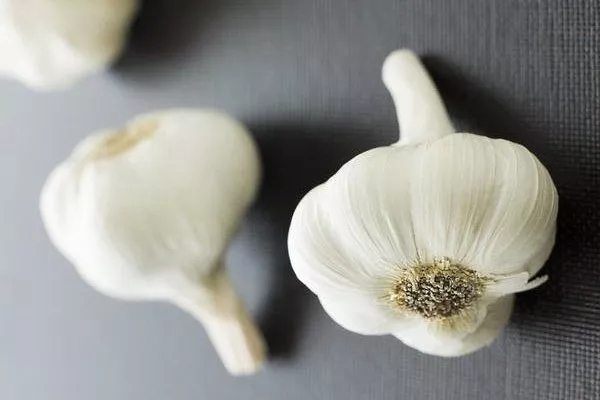
Broadleaf 220
The variety was developed at the Krasnodar Research Institute and approved for use in 1962. It is an early-ripening, non-bolting variety prized for its high cold-weather tolerance. Its growing season lasts from 97 to 118 days. Yields are low, at 0.35 kg per square meter.
Specifications:
- number of cloves – from 8 to 10 pieces;
- taste – semi-sharp;
- color - white, on the sides - pale pink or yellow;
- the variety is resistant to fusarium and susceptible to rust;
- shape - pointed.
Messidor
Messidor was developed by Dutch collectors. It's considered a standard, early-ripening variety that's prone to bolting and disease-resistant. It's a high-yielding variety, but depending on the soil and planting location, it's best to choose a sunny location with fertile, well-drained loamy or sandy loam soil.
Specifications:
- number of cloves - from 6 to 10 pieces;
- color – white, with a pinkish tint;
- you need to water it twice a month;
- leaf height – up to 40 cm;
- taste – spicy.
Tien Shan
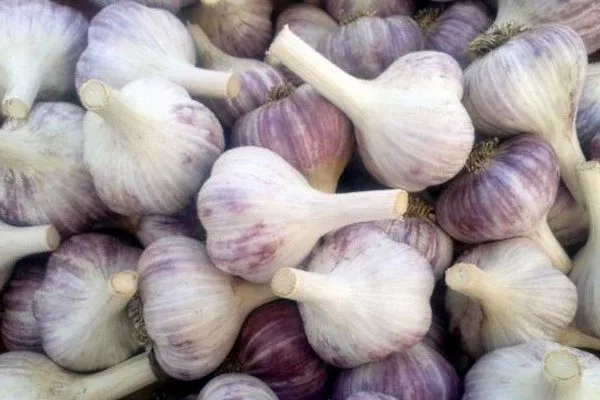
A rare, large-toothed variety. It bolts and ripens late. It has a high shelf life. The growing season is approximately 110 days. It can be propagated by aerial bulblets. Yields from 3 to 4 kg per square meter. This variety was sectioned at the Krasnodar vegetable station.
Specifications:
- number of cloves – from 5 to 10 pieces;
- weight – up to 120 grams;
- shape – round-flat;
- coating - purple-beige or brown shade.
- Planting takes place from mid-October to early November.
Vegetable growers prefer to plant several varieties of winter garlic, as each has its own advantages and disadvantages. If you're just starting out, it's best to choose varieties that are easy to care for, which will help you avoid losing your harvest when it's time to harvest.