
"Solo" garlic is increasingly appearing in Russian supermarkets. Unlike regular garlic, this Chinese variety produces whole heads consisting of a single clove. This garlic is not cheap, so let's find out if you can grow "Solo" in your own garden.
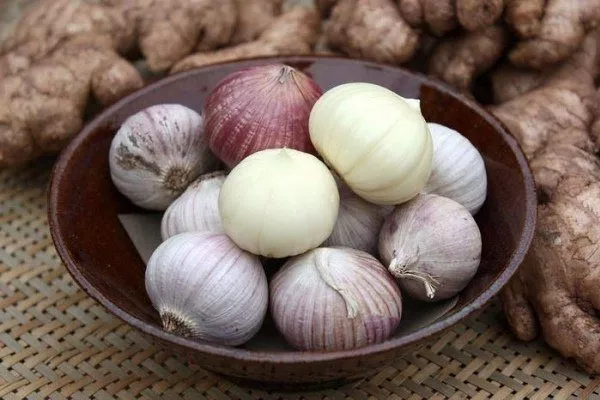
Chinese garlic "Solo"
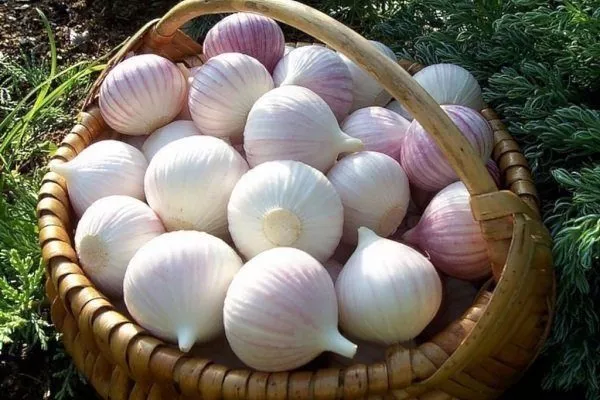
single-clove garlic "Solo"
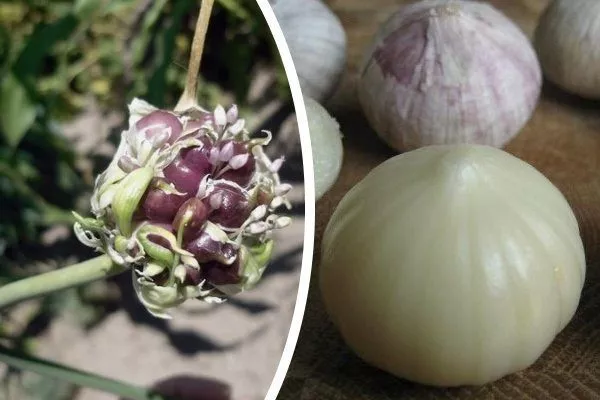
"Solo" garlic grown from an air bulb (a large bulb, the size of a pea)
Description of Solo garlic
Solo garlic is often called Chinese garlic. China produces more garlic than anywhere else. Therefore, most of the garlic on Russian shelves comes from China. In addition to Chinese farmers, Indian and Peruvian farmers are also engaged in the mass cultivation of single-clove garlic.
The crop in question cannot be called a "variety." Garlic bulbs, in the form of single-clove bulbs, are produced by creating specific growing conditions. To grow "Solo," as opposed to the usual multi-clove garlic, you need:
- soils of a certain composition and fertility;
- high-tech care of plantings.
- ✓ Soil should have a pH of 6.0-6.5 for optimal growth.
- ✓ The soil temperature during planting should not be below +5°C to ensure rooting.
Garlic "Solo" is not a variety, but a product of special agricultural technologies.
The bulbs of 'Solo' garlic are covered with a thin white skin. They may have purple veins. The diameter of a single bulb is 25-50 mm.
The main advantages of the solo version:
- easy to clean;
- excellent garlic flavor.
The price of 1 kg of "Solo" garlic is 800-1200 rubles. Single-clove heads are sold in attractive packaging—small rectangular baskets.
Features of planting Chinese garlic
Our gardeners have mastered growing a wide variety of exotic crops. It's no surprise that many are wondering whether it's possible to grow Solo-Garlic at home. Given the market price of this product, the question takes on a commercial aspect. Let's try to understand the matter.
In China, winter garlic is grown in provinces where winter temperatures do not drop below 5°C. Rice straw is used as insulation. Of the harvested garlic, only 70% are single bulbs, while 30% are regular multi-clove bulbs.
So, solo garlic is simply large, single-clove garlic grown from aerial bulblets. These bulblets are harvested from the spherical inflorescence that forms at the end of garlic scapes. Incidentally, this method of growing garlic is no secret to many of our gardeners. These bulblets are often used to renew varieties, restoring their varietal characteristics.
So, to get pure garlic, you only need to grow large, single-clove garlic cloves. These bulbs are typically grown in regions with mild winters, planted from the bulbs:
- In autumn. The bulblets are planted about 10 days before the usual garlic planting time. This allows them time to root securely, and in the spring they grow quickly, forming large, single-clove bulbs.
- In the spring. If you can't plant bulblets in the fall, sowing should be done in the spring. However, air bulblets should be planted as early as possible. The yield from spring sowing is always lower than from autumn sowing.
To ensure a harvest of large, single-clove bulblets (over 1.5 cm in diameter), select bulblets 5 mm or larger in diameter for planting. If you plant bulblets 2-3 mm in diameter, the resulting single-clove bulblets will be small.
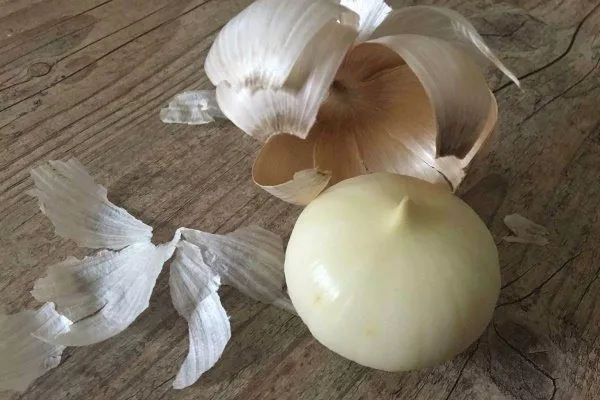
The dependence of the size of single-clove on the diameter of the aerial bulbs:
| Diameter of bulbs (bulbs), mm | Yield, t/ha | Output of single-tooth heads of different sizes, % | ||
| more than 1.5 cm | 1-1.5 cm | less than 1 cm | ||
| 5 or more | 2.15 | 72 | 26 | 2 |
| 3-5 | 1.05 | 64 | 24 | 12 |
| 2-3 | 0.74 | — | 46 | 54 |
Bulb sowing patterns:
- In vegetable gardens, the row method is used. The spaces between rows are 20-25 cm.
- For large-scale cultivation, the wide-row or strip method is used. The distance between strips/rows is determined individually by the farmer.
The seeding rate for 3-5 mm bulbils is 100-200 kg per hectare, and for 5 mm bulbils – 300-500 kg per hectare. 40-50 bulbils grow per linear meter.
The bulblets are planted 4-5 cm deep. Be sure to cover the planting area with peat or humus. Apply a 2-3 cm layer of mulch.
Proper care
To obtain solo garlic in a temperate climate, it is necessary to create special conditions for the crop:
- the soil must be fertile;
- Regular fertilizing, loosening and watering are required.
Caring for bulb crops:
- Loosening. The space between the rows is carefully loosened, simultaneously destroying weeds.
- Watering. Without them, you won't get large single-clove cloves. It's especially important to water the plantings in May—once or twice.
- Top dressing. The first is at the end of March, the second in early May. The doses are standard for winter garlic. It's advisable to improve the soil quality by adding wood ash – 0.5 cups per square meter.
- At the end of March, apply nitrogen fertilizer to stimulate growth.
- In the first days of May, add potassium-phosphorus fertilizers to maintain the health of the bulbs.
Collection and storage
It's important to remove single-clove garlic cloves promptly. The leaves of garlic grown from bulblets dry out and die quickly, and if harvesting is delayed, the bulb begins to sink deeper, making harvesting difficult. Furthermore, losses increase.
The procedure for harvesting "solo-bulbs":
- Extracting single-clove cloves from the soil. The plant roots are trimmed with staples.
- After removing the garlic from the soil, leave it in place to dry. It is laid directly along the rows.
- Dry the harvest completely. If it's raining, dry the garlic by storing it under a canopy, in the attic, or in a plastic greenhouse.
- The stems and roots are removed from the dried bulbs.
- After shaking the single-clove bulbs from the soil, they are hidden for storage in a dark, dry, well-ventilated room.
Why is "Solo" so little in demand on the Russian market?
"Solo" is marketed as a Chinese product, and Russian consumers' reactions to Chinese goods are well known, especially when it comes to food products. Solo garlic has proven itself to be an excellent choice for home cooks – it stores well, doesn't sprout or dry out for a long time, is easy to peel, and has excellent flavor.
An overview of this garlic variety can be seen in the video below:
Experts and consumers suspect that the reason for the unprecedented shelf life of raw garlic is chemical treatment. Chinese producers have long been known for their reliance on treating vegetables with various chemicals to preserve their appearance. Russians, heeding nutritionists, prefer seasonal vegetables to Chinese produce.
It’s a different matter when you grow such garlic yourself and then propagate it using your own material, rather than purchased ones.
Truth and Myths About Chinese Garlic
When it comes to growing Chinese garlic varieties specifically, there's no consensus among gardeners. There are many myths surrounding this crop, for example:
- Chinese varieties of garlic are not suitable for growing in Russia. Even if they do produce heads, they won't be tasty. In fact, research has shown that most varieties from China grow well in our gardens.
- All garlic from China – GMO. The fact that garlic is made in China is no reason to believe it's genetically modified. Today, any product on store shelves could be GMO, and this poses no health risk. It's simply that the genetic code of plants is artificially altered, for example, to make them resistant to insects or herbicides. Human genetics cannot be altered by consuming such products, just as eating raw fish won't cause gills. The problem lies in consumers' lack of knowledge about genetics.
We discovered that solo garlic is not a cultivar. To grow whole, single-clove garlic bulbs, use the bulblets from the inflorescences, not the cloves, as seed. The single-clove bulbs can be used for food and for planting, to renew the cultivar.
Genetically modified garlic, like most other crops, doesn't exist. Successful genetic modifications have been made to about half a dozen plants, and their seeds are still not sold to gardeners.