
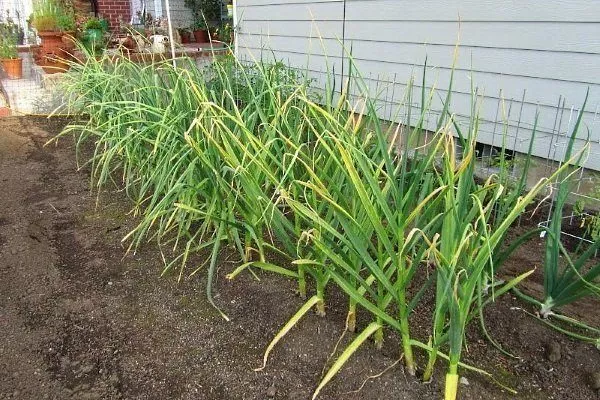
Yellowing of garlic leaves is a common occurrence in spring. Depending on the cause of the yellowing, there are effective methods for preventing and treating this condition.
Main causes, signs and what to do
Garlic tops first turn yellow at the tips, then the yellowing spreads, slowing the plant's growth and development. Let's look at the main causes of this process.
| Name | Disease resistance | Ripening period | Productivity |
|---|---|---|---|
| Nitrogen deficiency | Low | Early | Average |
| Low temperatures in spring | Average | Average | Low |
| Potassium deficiency | High | Late | High |
| Insufficient watering | Average | Early | Low |
| Unsuitable soil | Low | Average | Average |
| Garlic diseases | Very low | Different | Different |
| Landing errors | Average | Different | Different |
| Pests | Low | Different | Different |
Nitrogen deficiency
In early spring, the soil is still cold, which affects mineral formation. Nitrogen deficiency manifests itself early in plant development. Symptoms that indicate nitrogen deficiency in garlic include:
- yellowish and pale green color of leaves;
- small and wilted shoots of the plant.
Nitrogen deficiency is replenished with fertilizers that contain nitrate or ammonium nitrogen:
- potassium nitrate;
- sodium nitrate;
- ammonium nitrate;
- ammonium sulfate;
- urea.
If the soil acidity is high, nitrate nitrogen (sodium, potassium, ammonium nitrate) is more effective; if the acidity is neutral or alkaline, ammonia nitrogen (urea, ammonium sulfate) is used.
Low temperatures in spring
Unpredictable spring weather is one possible cause of garlic yellowing. Young, fragile leaves are damaged by sudden spring frosts.
To protect seedlings from spring frosts, they are covered with plastic film. Damaged seedlings are treated with stimulating agents (Epina, Zircon).
Potassium deficiency
Potassium maintains water balance, promotes plant resistance to disease, and boosts immunity. A deficiency of this element in garlic, in addition to yellowing, causes the following changes:
- the leaf blade acquires a bluish tint;
- the edges of the leaves turn brown (marginal burn occurs);
- plant growth will slow down.
To improve health, garlic is fertilized with potassium sulfate, potassium magnesium sulfate, and wood ash.
Insufficient watering
Garlic prefers moderate watering. Insufficient moisture causes the upper and lower leaves to dry out. Water garlic as needed:
- in April-May no more than three times a month;
- Watering is stopped a month before harvesting.
To determine if the soil is sufficiently moist, loosen the soil around the garlic. This also allows air to reach the roots.
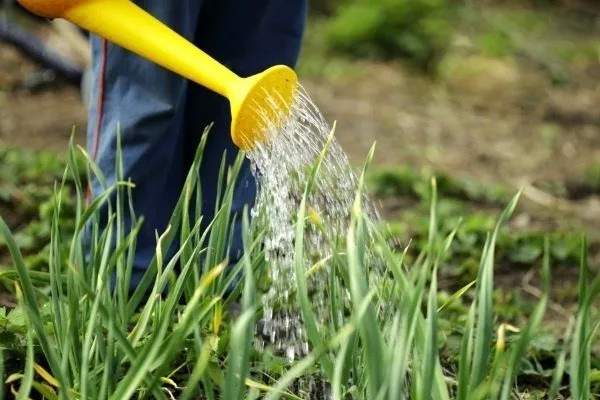
Overwatering garlic is worse than underwatering! If the spring is dry, water the garlic more frequently (once a week); if it's rainy, don't water it.
Unsuitable soil
Excessive soil acidity is another cause of yellowing garlic leaves. Suitable soil for this crop is neutral to slightly acidic.
Garlic loves:
- even, illuminated beds (without depressions where water stagnates);
- loamy (for spring) and sandy loam (for winter variety of garlic) soil;
- soil well fertilized with organic fertilizers.
To deoxidize the soil, fertilizers containing lime are used.
Garlic diseases
Leaves may turn yellow due to disease. The most common diseases are:
- Downy mildew (peronosporosis)Light green, fuzzy spots appear on the leaves, followed by a gray coating that causes the garlic to turn yellow. It is transmitted from infected vegetable crops through the air or soil.
- FusariumIt occurs due to excess moisture and a lack of nutrients. The tips of the leaves turn yellow and die.
- Black moldIt appears on the upper layers of scales, softens them, and penetrates further. The cause of the disease is sudden temperature changes.
- White rotWhite mold attacks the bulbs, causing the garlic to rot and the leaves to turn yellow. Drought and nitrogen deficiency cause this disease.
- Green and blue mold (penicillosis)Garlic clove rot occurs due to improper harvesting. The pathogen persists in the soil and causes infection, especially in high-humidity conditions.
- RustYellowish-rusty spots are visible on the leaves, caused by microscopic fungi that cause the disease. Improper planting (in the same spot every year or in the same area where onions are planted) and post-harvest vegetation residues can trigger rust infection.
- MosaicThis disease is caused by viruses. The leaves become yellow-orange, wrinkled, and corrugated.
To prevent infection, garlic is disinfected with a weak solution of potassium permanganate or other means (Fitosporin, fungicide Maxim) before planting.
Landing errors
Winter garlic is planted in winter, and spring garlic in spring. Failure to properly rotate crops can cause yellowing in spring in both winter and spring garlic. Common planting mistakes:
- the timing does not correspond to the temperature regime: in warm weather, garlic sprouts before the first cold snap and does not have time to adapt to low temperatures;
- planting at a depth of less than or more than 5-7 cm;
- planting garlic in a place where onions grew and in the same place for several years in a row.
Read the article about spring planting of spring garlic.
The following video explains the causes of yellowing garlic leaves:
The optimal planting time is three to four weeks before the first frost. When planted at a depth of 5-6 cm, garlic can withstand temperatures as low as -25°C.
Pests
They weaken the plant, cause bulb rot, yellowing of feathers and parasitic pests:
- NematodesSmall worms parasitize the bulb.
- Onion fly. Lays eggs in garlic, from which voracious larvae hatch.
- Garlic miteIt lives in the soil and feeds on root vegetables, spreading viral diseases. A characteristic symptom of garlic damage is yellow spots on the cloves.
- Tobacco thripsThis winged, brown-yellow insect feeds on garlic juice. The white spots on its feathers are thrips markings.
To repel pests, some gardeners plant calendula or marigolds between the beds.
Health improvement methods
Nitrogen deficiency is replenished by:
- A solution of urea or ammonium nitrate (1 tablespoon per 10 liters of water) is used to water the garlic roots or spray the tops.
- Organic fertilizers include slurry. Water the plant (1 part slurry per 8 liters of water) at the beginning of the growing season and two weeks after the first watering.
In case of potassium deficiency use:
- Potassium magnesium sulfate (10 g per 10 liters of water). Apply both foliar (on the tops) and root watering once a week until symptoms disappear.
- Superphosphate (25 g per 10 liters of water). Spray the tops with a spray bottle or water the garlic at the root.
- Ash (2 cups per 10 liters of water). The two-day infusion is poured onto the garlic roots.
If you are unsure what mineral deficiency is causing your garlic to turn yellow, use complex fertilizers, such as nitroammophoska.
High soil acidity is neutralized by mixing limestone with the soil. High acidity requires 55-70 kg of lime, moderate acidity requires 35-45 kg, and low acidity requires 30-25 kg.
In cases of severe pest infestation, insecticides are used, but only if other control methods are ineffective. The harmful substances contained in these chemicals accumulate in the plants.
To begin with, you can try less harmful and folk remedies:
- Tansy decoction (3 kg of flowers per 10 liters of water). Spray the tops with the boiled and cooled decoction.
- Nettle decoction (1 kg of leaves per bucket of water). After the decoction ferments for 4-5 days, strain it, dilute it (1 part to 50 parts water), and spray it on garlic tops.
- Ammonia solution (20-25 g per 10 l of water).
- Salt water (200 g per bucket of water). Sprinkle the garlic leaves with the salt solution to combat onion flies. The next day, water the garlic with clean water.
All of these remedies repel pests. Decoctions of other plants are also used: chamomile, potato tops, yarrow, and shag.
The following chemical preparations are used:
- insecticide "Actellic" (2 ml per 2 liters of water) against ticks;
- insecticide "Dachnik" (1 ml per 1 liter of water) against onion fly;
- the drug "Carbation" (200 ml per square meter), "Vidat" (2 g per well) against nematodes.
The soil is treated with Karbation in August, and with Vidat during planting.
Garlic diseases are treated using the following remedies:
- Use the fungicide "Hom" and copper sulfate against rust. Spray the stems once every 14 days, stopping irrigation one month before harvest.
- The preparations "Fentiuram" (3 kg per bucket of water), "Polycarbocin" (40 g per bucket of water), "Arcerida" (30 g per bucket of water) help against downy mildew.
- The preparations "Agat-25K", "Previkur" (1.5 ml per liter of water), "Fundazol" (1 g per liter of water) are used against fusarium and rot.
- The insecticide "Karbofos" is used against mosaic (the affected tops are sprayed).
A gardener shares his experience dealing with garlic diseases and yellowing leaves in the video below:
It is necessary to observe safety precautions when working with chemicals and use insecticides according to the instructions.
Preventive measures
To prevent garlic from turning yellow in the garden and to ensure a good harvest, preventative measures are taken:
- In the central regions of Russia, winter garlic is usually planted before the end of October, and in the southern regions – before the end of November.
- Before planting, the soil is dug deeply and fertilized with compost or fertilizers (superphosphate, potassium sulfate).
- Garlic heads are treated with a weak solution of potassium permanganate or copper sulfate. They can also be treated with "Maxim" (1 ampoule per liter of water), which protects against bacteria.
- Carefully inspect the garlic before planting, selecting only large and undamaged ones.
- To adapt plants to temperature fluctuations, biostimulants are used, for example, "Epin".
- The same place for garlic beds is used for no more than two years.
- Garlic is planted where pumpkin, squash, and cabbage used to grow.
To prevent garlic from becoming infected with pests, bacteria, and fungal diseases, carry out the following procedures:
- If hot and humid weather persists for several days, loosen the soil to reduce moisture. This prevents certain types of rot, fusarium, and powdery mildew, which prefer warm, humid conditions.
- Plants are treated with a solution of ammonium carbonate to combat onion fly, yellow spot, and powdery mildew.
- Disinfect areas where garlic is stored with bleach or formalin to prevent pest infestation.
- Dolomite flour is added to deacidify the soil. Nematodes move poorly and become dormant in neutral soil.
- Garlic is planted away from onion beds and bulbous flowers.
- After harvesting and digging the beds, plant residues are burned.
- Garlic is carefully inspected for damage and signs of disease, and dried for about three weeks before being stored.
Following preventative care measures will positively impact yield and protect the plant from diseases and other problems. If yellowing persists, the following recommendations will help identify the cause and choose the right treatment method.