
The typical ripening period for winter garlic varieties is 100 days, and it's important not to miss the harvesting period. However, harvesting times vary depending on the region and other factors. Below are detailed timelines and popular harvesting methods for winter garlic.
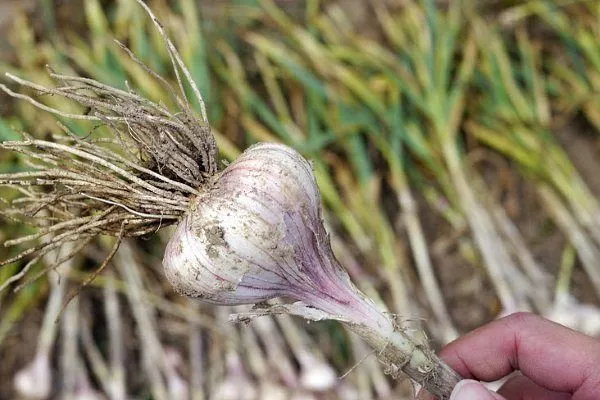
Determining when garlic is fully ripe
Garlic harvesting begins at the end of July, until approximately the beginning of August. (We're talking about winter varieties.) Before harvesting, gardeners should ensure that the garlic is ripe and ready to be dug up and stored. This ensures not only the excellent taste of future dishes but also the shelf life of the product (i.e., its long-term storage in its best condition, preserving all its nutritional properties and appearance). It's especially important not to miss the ripening period if the crop is being grown on a large scale for subsequent sale.
- ✓ The presence of three or more dry leaves at the bottom of the plant indicates maturity.
- ✓ The bulbs should have at least two dense scaly layers that can be easily separated from each other.
How can you tell when the garlic is ripe and ready to be harvested? You need to closely monitor the plant's appearance, both above-ground and in the bulbs. Ripening is indicated by:
- Air sacs or inflorescencesOn the upwardly stretching stalks, the outer shells of the inflorescences burst, and the seeds, or, as they are called, bulblets, begin to appear.
- Leaves. The lower shoots of the plant appear drier and yellow, while the upper shoots also take on a yellow tint. If most of the leaves look this way, it means the plant has stopped photosynthesizing and growing. It's time to harvest. When the leaves have wilted and fallen to the ground, it's too late to harvest.
- Bulbs. To test, pull out a couple of heads or dig them up halfway, preferably from opposite sides of the bed. Mature specimens should be firm, separate easily, and covered with two or more easily peeled scaly layers. The scales have a purple tint. The cloves of unripe winter varieties are soft, while those of overripe varieties are cracked.
Gardeners often prune the bolting variety during the growing season, preventing them from determining ripeness by the stems. However, experienced gardeners recommend leaving at least a few stems uncut to determine the ripeness of the entire crop. Furthermore, the stems will then be used for planting, and each one will sprout.
Collection times vary by region
Gardeners in Russia typically harvest garlic in midsummer. Early-ripening varieties are ready 10-14 days earlier than late-ripening varieties. However, climate conditions, depending on the region where the crop is planted, can impact ripening. Early or late spring, hot or humid summer months, and other factors can impact ripening. The usual harvest time can shift by a week or more depending on weather conditions.
The growing season is shortened if the summer is rainy. Heat and dryness delay ripening.
Approximate harvest times depending on the region are as follows:
- In Crimea, the Caucasus region, and other southern regions, the dacha season begins early.varieties of winter garlic ripen by July 5-10.
- In Central Russia—the Black Earth Region and the Volga Region—the first harvest is dug up from July 10th onward. In the Moscow Region, it's a little later: from July 12th until the end of the month.
- In Siberia and the Far East, winter varieties ripen in the last ten days of July, and if the summer is cool, the harvest is collected in early August.
- Garlic is harvested in the northern regions closer to the beginning of August.
Features of harvesting according to the lunar calendar
Some gardeners harvest garlic according to the lunar calendar, as it's believed that digging up the bulbs on specific days prolongs their shelf life. Based on the moon's movement, they perform all necessary manipulations: hilling, pruning, loosening the soil, etc.
The harvest is harvested during the waning moon. Once the garlic is technically ripe, it can be harvested at any convenient time, excluding the days of the full moon and new moon.
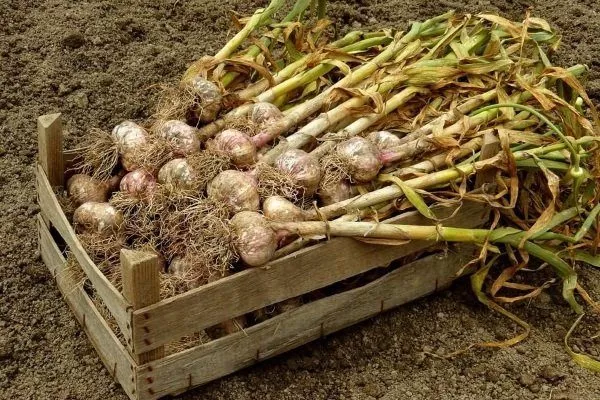
According to the 2019 lunar calendar, favorable periods for harvesting winter varieties are:
- from July 18 to July 31;
- from August 16 to 29.
As soon as clear signs of ripeness appear, the harvest should be completed within one week. Harvesting too early will result in loose garlic, overripe bulbs that may regrow and store poorly. Inexperienced gardeners may end up with a lower-quality product.
How to properly harvest winter garlic?
Proper garlic harvesting ensures long-term storage. Preparation begins 2-3 weeks before the expected harvesting date, which means:
- reduce the number of waterings, preventing root rot;
- 7-10 days before digging, stop watering completely;
- 2-3 days before harvesting, loosen and weed the beds;
- If necessary, cut off yellowing leaves.
When and how to harvest winter garlic?
The harvesting schedule for winter and summer garlic varieties (that is, winter and spring varieties) is the same. Harvest in clear, dry weather, early in the morning or late in the evening, after the summer heat has subsided. The harvesting procedure is as follows:
- The heads are dug up with a shovel, pitchfork, or a special tool—a garden fork. They are carefully removed from the ground, without tugging, so as not to damage the fragile roots.
- Clean off any soil stuck to the roots. Don't beat it off, but shake it off, otherwise the cloves will be damaged and rot.
- The dug up garlic cloves are placed in rows along the beds to dry.
- It's best to eat damaged bulbs immediately rather than storing them for a long time. Throw away any rotten or moldy bulbs.
A specialist will explain how to check the ripeness of garlic bulbs and properly remove them from the ground. Watch the video:
Preparation and storage
After winter garlic is dug from the garden bed, the cloves are dried for a week or slightly longer (7 to 10 days) without removing the roots and leaves. Some leave the harvest directly in the garden bed, but this should only be done in dry weather. It's important to keep in mind that dew falls at night, soaking the harvested bunches. While the garlic is drying, all the nutrients from the tops of the garlic are transferred to the bulbs.
Garlic is usually dried in a sheltered area protected from rain: on a summer veranda, under a shed, in a shed, or in an attic. The chosen location should have good ventilation. The bulbs are laid out on a wooden table or on the floor, covered with newspaper. Washing them beforehand is not necessary, although some people do.
After 1-2 weeks, the stored cloves are trimmed, including the roots, tops, and leaves. This is done with special pruning shears to avoid damaging the mature bulbs. If stored in a warm room, especially in a city apartment, improperly trimmed cloves may sprout. The roots are trimmed as follows:
- If the garlic cloves are to be sold, a minimal beard of 1-3 mm is left on the base, or the roots are cut off completely, leaving a depression.
- Otherwise, you can trim the roots, leaving about 3-5 mm in length. This garlic stores well.
- When planning to use part of the harvest for further planting, the acceptable root size is 5-10 mm.
An effective, albeit time-consuming, way to prevent cloves from sprouting is to seal the roots and base with hot wax. These garlic cloves are not suitable for subsequent planting, but they keep well and will overwinter well even in less-than-ideal conditions.
Should the arrows be removed?
Before long-term storage, remove dried garlic stems—the shoots that have grown upward. The optimal neck cut length is 6-10 cm, depending on the storage method chosen:
- If you plan to store the harvest in bunches, leave the stalks 10 to 15 cm long. This makes it easier to tie several heads together.
- A short stem no longer than 3 cm is convenient when storing the harvest in a hanging net, crate, or box. However, the outer scale should be below the cut line to prevent rot.
- The old method of storing garlic cloves in braided plaits requires the presence of almost the entire stem – both the stem and the leaves.
After processing each head, the harvested garlic is ready for long-term storage. Before storing, it's recommended to sort the heads by size and ensure the containers are clean: sterilize glass containers, sprinkle the bags with table salt (if you plan to store the harvest in a damp area such as a cellar or basement), etc.
- ✓ Storage temperature should be between +1°C and +3°C to prevent germination.
- ✓ Relative air humidity should not exceed 70% to avoid rotting.
Small garlic cloves are often preserved in oil and refrigerated. This garlic is convenient for salad dressings.
An experienced gardener will demonstrate how to braid garlic. Watch the video for more details:
By properly harvesting and storing garlic, you can make the most of your harvest—selling it, using it to prepare fresh dishes, or canning it. Harvesting garlic is easy, and even novice gardeners attempting it for the first time won't suffer any losses.