
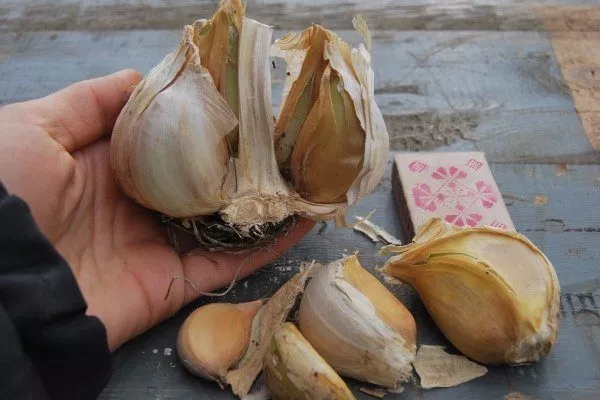
Rocambole garlic is a vegetable crop that, unlike more common varieties, has a pleasant taste and aroma. But its main distinguishing feature, as gardeners often call it, is its unusually large size.
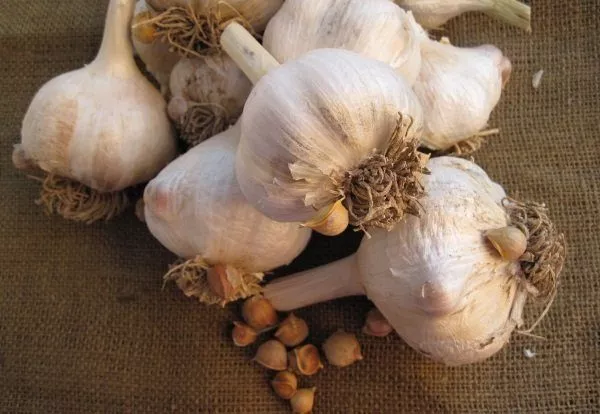
The garlic head produces baby garlic, which can also be used for planting.
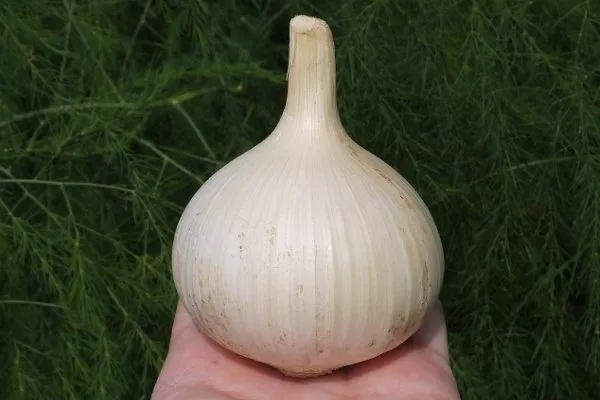
Rocambole garlic
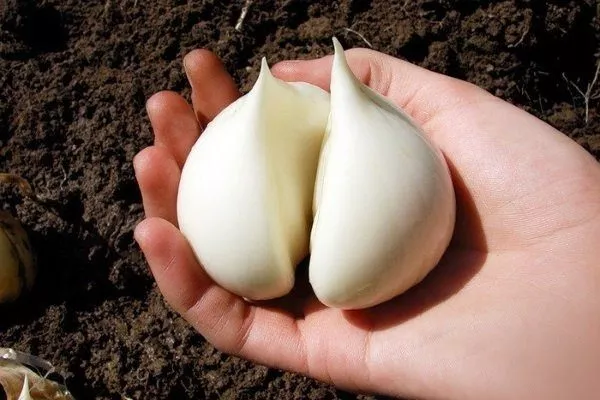
Rocambole's Elephant Garlic
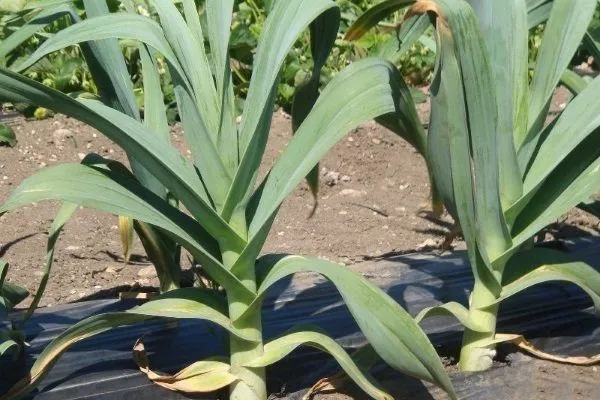
Garlic tops "Rocambole"
This variety has many names: “elephant garlic,” Egyptian onion, Spanish garlic, garlic onion, giant garlic onion.
Description of the Rocambole variety
Rocambole is a perennial plant belonging to the lily family. Its above-ground part is very similar to the common leek, as it is a hybrid of the latter and garlic. This is why it is often called "onion" or "garlic."
Key features of Rocambole garlic:
- Both first- and second-year mushrooms are edible. Although first-year mushrooms are small, they are just as tasty as the larger second-year mushrooms.
- One first-year bulb is larger than the largest heads of garlic.
- Average yield is 3 kg per 1 sq. m.
In the first year, the plant produces large bulbs consisting of a single clove. They weigh 45-50 g. If the climate is warm enough, in the second year, the plant produces bulbs much larger than before, with a single clove weighing up to 80 g. This is a heat-loving plant; under favorable conditions, the bulb can grow up to 500 g.
Description of the culture:
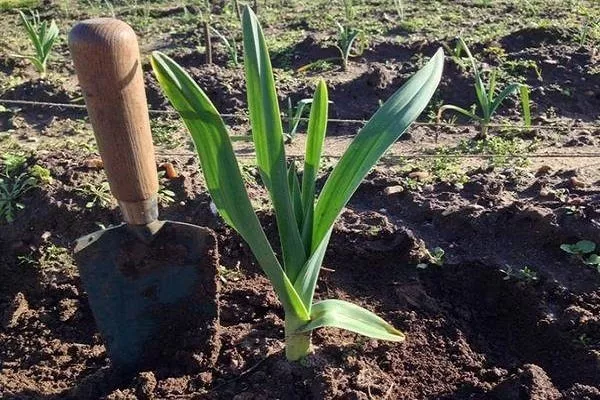
- Trunk. Thick, dense. Height 80-120 cm, depending on soil fertility.
- Leaves. Dense and wide, pale green in color, with a silvery, waxy coating. Each stem bears 6-9 leaves, 30-60 cm long and 3-6 cm wide. The leaf blades are flat, with longitudinal stripes, tapering toward the apex. The leaves have a slight fold down the center.
- Inflorescences. Large and attractive, the plant is often used as an ornamental. The inflorescence is spherical, composed of small purple flowers. The inflorescences do not produce seeds.
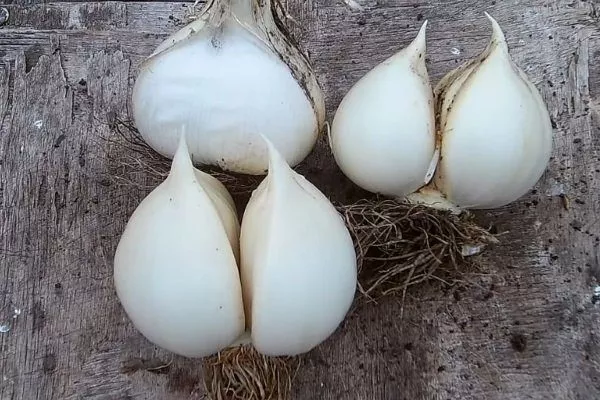
- Bulb. By the third year, it typically has 4 to 6 cloves. The head diameter is 6-10 cm. The length of a single clove can reach 15 cm.
Allium garlic blooms in July. The plant produces a 1-meter-long flower stalk. Two-year-old garlic plants develop stolons with small bulblets weighing 1.5–4 grams each. These bulblets have a yellow-brown husk, unlike the white husk of the larger bulb. If the stolons are short, the bulblets are tightly pressed against the cloves and covered by the white husk of the mother bulb.
Spreading
Garlic is widespread throughout the world, but is most common in Europe—in the south and west. Other growing regions include Crimea, the Caucasus, and Central Asia. Garlic is very popular in the East, where it has long been used in cooking and medicinal potions. Giant garlic is popular in Siberia, but it's rarely found in gardens in the central part of the country. And that's a shame—this vegetable is tasty, healthy, and productive.
What types and varieties are there?
There are two types of garlic:
- in the selection of which garlic onions were used.
- in the selection of which grape onions were used.
In the Russian Federation, only two varieties of onion garlic are officially recognized:
- Pearl. A frost-resistant variety developed by Moscow breeders. This mid-season crop is suitable for cultivation in all regions of the Russian Federation. It is cultivated similarly to winter garlic. It has long stalks—up to 60 cm—and wide leaves—3 cm. The heads are flattened, with white scales. It weighs 50-55 g and has 4-6 cloves. The flesh is yellowish and has a pungent flavor. Up to 2 kg of garlic can be harvested per square meter.
- Janissary. A new winter-hardy variety. Suitable for all regions of Russia. Leaves are 40 cm long and 3.5 cm wide. Weight: 95 g. Number of cloves: 6. The bulb scales are creamy, and the flesh is yellowish.
Our gardeners grow another variety of Belarusian origin –white elephantIt was bred specifically for regions with harsh winters. It has no flower stalks. The bulb weighs 150-200 g. It has 6-7 cloves. The flesh is yellowish when cut. The variety is resistant to fusarium. Yields 3 kg per square meter.
Value and benefit
The greens and bulb of giant garlic are rich in minerals and vitamins. Rocambole's flavor harmoniously combines notes of onion and garlic. The bulbous garlic does not produce a characteristic garlic odor after consumption. It is rich in vitamins A, C, and E. The vegetable is rich in carotene and iron. It contains antiseptics and essential oils. The energy value is 150 kcal per 100 g.
Benefits of Rocambole:
- acts as a natural antibiotic;
- tones blood vessels, dilates them, makes them more elastic, improves blood flow;
- prevents the formation of blood clots;
- reduces the level of harmful cholesterol;
- improves the functioning of the digestive system;
- strengthens the immune system;
- restores a weakened body;
- cleanses the body of toxins;
- improves appetite, activates the production of gastric juice;
- strengthens gums;
- strengthens hair and promotes its growth – when applied externally;
- relieves nasal congestion thanks to the essential oils it releases.
Rocambole, while helpful for various ailments, cannot be used as a primary remedy. Due to its spiciness, this vegetable should be consumed in moderation. Possible side effects:
- headache;
- deterioration of vision;
- diarrhea;
- skin irritations;
- vascular spasms.
Contraindicated:
- children under 3 years of age;
- pregnant women;
- people with kidney, stomach, and gallbladder diseases;
- in case of internal bleeding.
Preparing for landing
Rocambole is grown like regular garlic. Before planting, the soil and planting material must be prepared. It's best to buy domestic planting material, as it tolerates frost better. Foreign varieties are only suitable for regions with warm climates.
Soil
In temperate climates and more northern regions, Rocambole is planted in areas with full sun exposure throughout the day. Shade reduces the number of cloves per bulb and increases the risk of disease.
- ✓ Soil pH level should be strictly between 6.0-6.5 for optimal growth.
- ✓ The soil must have high drainage capacity to avoid water stagnation.
Features of site preparation for planting Rocambole:
- Neutral soils are the best option. If the soil is acidic, it should be alkalized during autumn tilling.
- When digging, add humus or compost to the soil – 5-6 kg per 1 sq. m, wood ash (500 g) and bone meal (150-200 g).
- The soil in the beds is loosened to a depth of 20-25 cm. Giant garlic produces good yields in raised beds.
- The crop is demanding of its predecessors. It prefers legumes, melons, cabbage, and cucumbers. Garlic, onions, and potatoes are undesirable predecessors, as pests remaining in the soil after these crops will actively attack Rocambole.
Planting material
For planting, prepare corms, cloves, or one-year-old bulblets. Typically, up to 15 corms grow on a single bulblet. The planting material is refrigerated for a month. After hardening, the material is disinfected by placing the cloves in a potassium permanganate solution for 20 minutes. Instead of potassium permanganate, you can use boiled ash: one cup of ash per 1 liter of boiling water. Boil for 10 minutes. Once the solution has cooled, place the cloves in it.
Landing requirements
Rocambole can be planted at any time—spring or fall. If your region experiences very harsh winters, spring planting is best, as garlic planted in the fall is at risk of freezing. If planting garlic in the fall, it's important to insulate the area.
Landing requirements:
- Pre-winter. Planting should be done three weeks before the first frost. During this time, the garlic will take root but will not have time to sprout. For temperate climates, the first half of October is a good time to plant.
- Spring. Planting time: Plant as early as possible, just long enough for the soil to warm to +6°C. Short-term frosts are not a problem for allium garlic; it will root well at +3 to +5°C. The recommended planting time for temperate climates is mid-April to early May.
Step-by-step planting instructions
Step-by-step instructions for autumn (pre-winter) planting:
- The planting scheme depending on the choice of planting material is shown in Table 1.
- After planting, the bed is covered with mulch, such as straw or sawdust. Mulching protects the garlic from freezing temperatures and retains moisture.
- Winter Rocambole is ready for harvesting in the first half of August.
- When preparing the beds, the furrows are made deeper than for spring planting.
- Unlike spring planting, planting material can do without disinfection;
- 6-8 cm of humus is placed on the bottom of the beds.
In this video, you can see how to properly plant Rocambole garlic:
Table 1
| Planting material | Planting depth, cm | Distance between adjacent rows | Spacing between adjacent plants | What will grow next year? |
| Kids or teeth | 8-10 | 25 | 15-20 | single-clove bulbs |
| Single-clove bulbs | 4 | 20 | 25 | a ripe fruit with several cloves |
Step-by-step instructions for spring (spring) planting:
- A month before planting, the seeds are hardened and disinfected. Planting is done in a 20 x 25 pattern, with the distance between the seedlings and the rows correspondingly.
- If the weather is dry, the beds are watered.
- Spring Rocambole is harvested in the second half of September.
How to care?
Rocambole resembles garlic not only in appearance but also in its cultivation. Growing allium garlic is relatively straightforward. Care consists of watering, fertilizing, and loosening the soil.
Top dressing
The crop responds well to fertilizing. Vegetable growers' goal is to grow large, tasty bulbs, and this requires fertilizer. Recommended fertilizing:
- Immediately after germination, apply nitrogen fertilizers. For example, ammonium nitrate – 10-20 g per 1 sq. m.
- When 4 leaves have formed, dissolve bird droppings (1 cup) and urea (1 tablespoon) in a bucket of water (10 liters). Apply 3 liters of this mixture per 1 square meter.
- Two to three weeks after the second feeding, fertilize the planting with a nitrophoska solution. Two tablespoons are diluted in a bucket of water – this amount is applied per square meter.
- During the fruiting period, apply phosphorus-potassium fertilizers. A wood ash solution is suitable for this purpose: dilute 1 cup in 10 liters of water. Apply 5 liters of the solution per 1 square meter of area.
- The first feeding should be carried out 2 weeks after the emergence of seedlings, using nitrogen fertilizers.
- The second feeding should be carried out in the 4-6 leaf phase, using complex fertilizer.
- The third feeding should be carried out at the beginning of the bulb formation, using phosphorus-potassium fertilizers.
Watering
Rocambole thrives on moisture. Young plants especially need watering. With ample moisture, the plant develops a full bulb. Rocambole beds are watered 1-2 times a week. The frequency of watering depends on weather conditions. If it's cloudy, watering once a week is sufficient. Drip irrigation is the best method for irrigating this plant.
Weeding
Weeding and loosening the soil are essential when growing Rocambole. The soil is loosened as soon as the seedlings emerge. This is done carefully, being careful not to damage the fragile shoots and their roots. Loosening the soil enriches the roots with oxygen, which is essential for the roots, and simultaneously eliminates weeds. Loosen the soil after rainfall or watering, not only between the rows but also directly around the plant necks.
The flower stalks are removed—this helps the bulb grow larger. There are still no seeds in the inflorescence.
How does Rocambole reproduce?
Rocambole is propagated by the offshoots that form at the base of a two-year-old bulb. Offshoots planted in April will grow into single-clove bulbs by fall. The size of the bulbs depends on the planting material. If you plant a single clove from a bulb, you'll get a garlic bulb weighing 250-300 g; if you plant a one-year-old bulb, you'll get 400-600 g.
Diseases, pests and prevention
Garlic is susceptible to common onion and garlic diseases and pests:
- Fusarium wilt. It especially often affects areas where potatoes are the previous crop. If fusarium wilt appears, the affected plants are removed, and Rocambole is not planted in that area for 3-4 years.
- White rot. To prevent rot, acidic soils are limed, reducing nitrogen fertilizer doses.
- Rust. Prevention is similar to fusarium.
- Onion moth, onion fly, nematodes, root mites, thrips.
Methods of combating diseases and pests are presented in Table 2.
Table 2
| Pest control measures | Disease control measures |
| Processing:
|
General preventive measures for plant protection:
- Selection of healthy planting material.
- Cleaning and burning of plant residues.
- Replanting in the same area only after 4 years.
- Disinfection of planting material in a fungicide with a concentration of 2-3%.
- Thoroughly dry the baby plants after harvesting – sun rays kill fungal spores.
- Before planting, the soil is treated with 1% Bordeaux mixture or 15% Fitosporin.
Fungicide treatment is stopped 3 weeks before harvest.
Harvesting and storage
Harvesting giant garlic begins when the lower leaves dry out and the upper leaves turn yellow and wilt—this occurs in September. Storage considerations:
- Garlic pulled from the ground is tied into bunches and dried, hanging upside down.
- Shake off the dried soil, cut off the leaves, leaving a small tail, and put them away for storage.
- Store onion garlic in a dry place at a temperature of 9 °C.
Rocambole has a good shelf life - if you provide it with the right conditions, it retains its marketable qualities until February, and then begins to sprout.
Rocambole's garlic is eaten not only as one-year-old bulbs and two-year-old heads—they are eaten fresh, dried, salted, and pickled—but also as young leaves. Allium chinensis is widely used in cooking.
Reviews from gardeners
Rocambole is almost exotic for domestic gardens. It's a worthy crop—it has a pleasant flavor and numerous advantages over regular garlic. Growing it is easy, meaning you have every chance of tasting this giant garlic from your own garden.