
Garlic is often planted before winter, but to prevent the seedlings from freezing, it's important to know when, how, and what to cover them with. There are many materials (both natural and artificial), methods, and specifics for this purpose. Therefore, carefully consider all the details and options before making an informed decision.
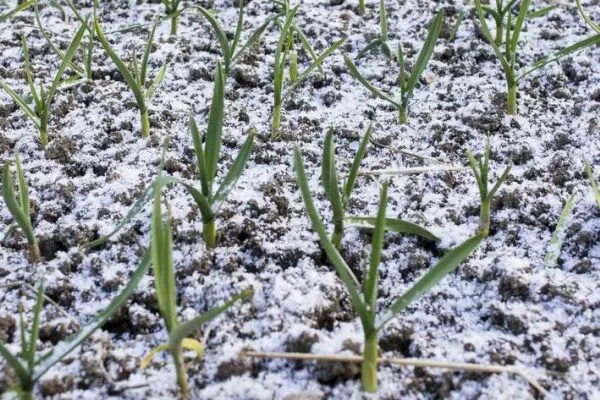
Planting winter garlic: timing
Usage winter garlic – a convenient and popular agricultural trick, thanks to which specialists and ordinary gardeners/summer residents note the following advantages:
- in autumn the seeds do not germinate, but in spring the sprouts appear very quickly;
- winter heads have a longer shelf life;
- the culture becomes more resistant to diseases and atmospheric influences;
- the yield increases, since the fertilizers applied during the winter fully nourish the soil, and then the plant;
- the gardener gets the harvest earlier;
- The heads grow larger, the cloves have a regular shape.
It's important to choose the "right" time to plant winter garlic. If you plant it too early, the seeds will germinate prematurely, which is completely undesirable (the sprouts don't tolerate even the slightest frost). If you plant it too late, the seedlings will freeze.
The average planting period for Central Russia and the Middle Belt is from September 25 to October 15. Accordingly, in the northern regions, it is approximately two weeks earlier, and in the southern regions, two to three weeks later.
If you still missed the sowing deadline, use this trick:
- Soak the planting material in a humate solution.
- Water the planting area with warm water.
- Moisten the sawdust with warm water as well.
- Mix them with garlic cloves in equal proportions.
- Place the container with this mass in a warm room for 2 days.
- Plant and mulch immediately.
When to cover garlic in different regions?
The key indicator for starting insulation work is the air temperature. It should be stable between 9-10 degrees Celsius. However, the beds should not be allowed to snow even after the first snow has fallen.
The period also depends on the region:
- In Siberia and the Urals. Winter arrives early in these regions, but is known for its consistent frosts and abundant snowfall. Therefore, garlic should be covered after September 15.
- In Central Russia and the Middle Belt. These regions of the country often experience sharp temperature fluctuations and high humidity in the fall. Therefore, covering is not done until mid-October.
- In the South. In the southern part of Russia, frosts arrive late, so November is considered the optimal time (the beginning or end depends on the current weather).
- In the Volga region. The exact dates depend on the location in the Volga region. In the Middle Volga region, this occurs in late October, while in the Upper Volga region, it occurs between the 10th and 20th of that month.
Why cover the beds?
The main reason for covering garlic is to eliminate the risk of freezing. However, there are other factors that influence gardeners' and farmers' willingness to cover their garlic:
- the risk of icing during a short-term thaw is eliminated;
- maintaining normal soil moisture levels, especially if there is no snow;
- there will be no over-watering in the spring when the snow melts heavily (the protective material will absorb most of the moisture);
- arrows do not form with sudden changes in temperature;
- Weeds will grow in much smaller quantities in early spring.
Additionally, covering garlic with natural materials improves soil fertility.
How to prepare garlic for winter shelter?
The preparatory activities are not complicated and consist of just a few steps.
Loosening
This procedure is important because it helps oxygenate the soil and eliminate weeds. However, loosening must be done carefully to avoid damaging the garlic seedlings. Agricultural experts recommend inserting a hoe or pitchfork to a depth of about 6 cm.
Watering
If there was sufficient rainfall this fall, there's no need to water your garlic plantings. However, if there was very little rain and the soil remains dry, apply moderate water. Water about a week before covering.
Fertilizer
Garlic only needs to be fertilized if you didn't apply fertilizer when planting the winter crop. In this case, wood ash, eggshells, tea leaves, or coffee grounds are the most appropriate fertilizers. Simply spread these ingredients in a thin layer over the garden bed.
Processing
Many pests, fungal spores, bacteria, and viruses that cause diseases easily survive winter frosts. Therefore, in early spring, they awaken and attack the crop. To prevent this, be sure to carry out autumn treatments. Use insecticides against pests and fungicides against diseases.
There is also a universal remedy that gardeners use:
- Add 1 tablespoon of dry copper sulfate to 10 liters of water.
- Mix thoroughly.
- Spray the soil with a spray bottle.
Materials and how to properly cover a garden bed?
Both natural and synthetic materials are used to cover garlic before winter. Each type of material has its own advantages and disadvantages, as well as characteristics that are important to be aware of in advance.
Agrofibre
Agrofibre is considered the best covering material for garlic. It can be simply laid on the beds, but experts recommend constructing a frame structure to ensure sufficient oxygenation above the garlic.
The structure is low—just knock together boards to form a frame and cover with agrofibre. Be sure to secure all sides along the edges (you can use stones, cinder blocks, or bricks, and cover with soil). Otherwise, the wind will blow the material away.
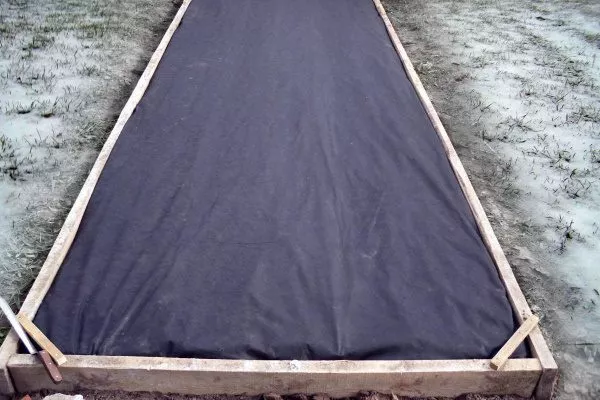
Benefits of using agrofibre for garlic:
- dries quickly when there is rain, so there is no ice crust on the surface;
- there is no need to remove the cover very early, since, unlike film, moisture will not accumulate inside the frame structure, condensation will not occur, and at the same time, the garlic will begin to produce green feathers, without fear of night and return frosts;
- excellent breathability;
- the material is not liked by pests and rodents;
- It is light in weight.
There is one drawback - you will have to spend money on the purchase.
- ✓ The density of agrofibre should be at least 60 g per 1 sq. m for effective protection from frost.
- ✓ For northern regions, additional covering with branches on top of the agrofibre is recommended.
The density of agrofibre for covering garlic should be 60 g per 1 square meter. If garlic is grown in the North, it is additionally covered with branches.
Application of peat
Another optimal natural material. However, it's not practical to use in southern regions, as the garlic will begin to sprout.
Advantages of the material:
- saturates the soil and plants with nutrients;
- not only retains heat, but also gives it off;
- completely environmentally friendly;
- maintains the required level of humidity;
- prevents the surface of the earth from drying out.
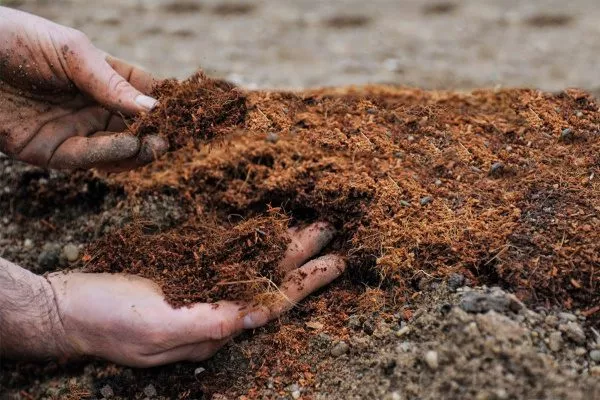
There are several disadvantages:
- high cost of raw materials;
- acidifies the soil (you will have to deacidify it with dolomite flour or lime);
- With excessively frequent thaws, peat becomes compressed, which contributes to the loss of its air permeability properties.
The optimal layer for garlic is 3 to 5 cm. Wood ash can be used as a substitute.
You can also mix peat with sand and ashThis option is ideal for cold climates.
What you need to do:
- Immediately after planting winter garlic, apply a 5 cm thick mulch of a mixture of wood ash and sand (use equal parts).
- During the sheltering period, sprinkle peat on top to a height of about 3 cm.
- Cover the top with agrofibre or spunbond.
- Then cover it with branches.
Using sawdust
Wood sawdust is also a natural material that retains heat well and is ideal for garlic cultivation.
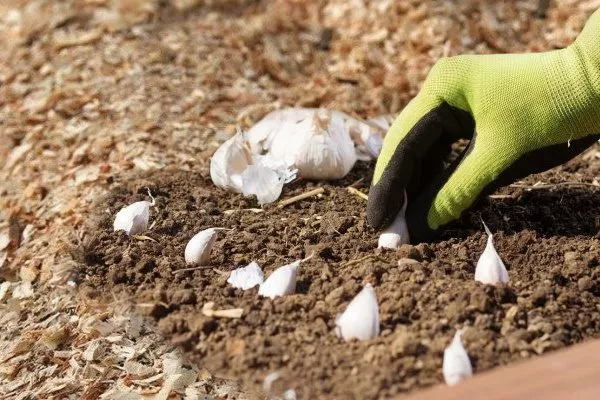
Advantages of covering materials:
- sawdust is available for free;
- breathable;
- absorbs excess moisture;
- not afraid of thaws.
The disadvantages include the following:
- If it rains too often, the level of air permeability decreases;
- the soil acidity will increase slightly;
- In the spring you will definitely have to clear the beds.
As with peat, the sawdust layer varies from 3 to 5 cm. The key is to remove the sawdust from the garden bed as early as possible, as the wood layer prevents the soil from warming up.
Fallen leaves and plant stems
This is a good natural material that's readily available to everyone. However, not all foliage can be used to cover garlic. For example, foliage collected from fruit trees is not recommended, as it may harbor garden pests, bacteria, and fungi. Maple, oak, or birch are the best choices. As for stems, they can be used from any plant (corn, etc.).
Every gardener has a lot of tops left over in the fall. You can start harvesting them in the summer, after radishes, turnips, cucumbers, and other vegetables have been harvested. The key is to allow the green parts of the vegetables to dry thoroughly.
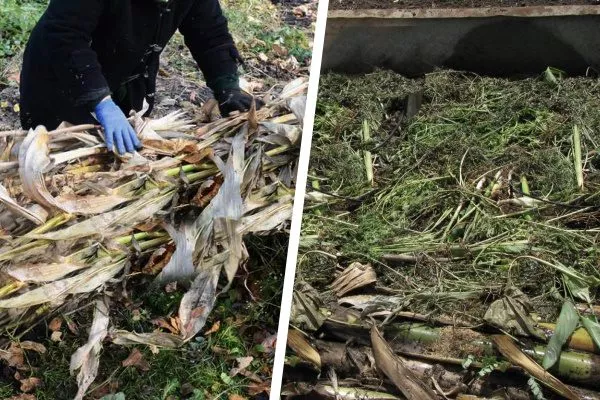
Advantages:
- naturalness of raw materials;
- retains heat well;
- excellent breathability;
- absorb moisture;
- the surface of the earth remains without a crust;
- In spring you can get humus, since rotted elements attract worms;
- for free.
Recommendation: to prevent the snow from pressing down the leaves too much (if there is a lot of it), throw branches on top.
Negative aspects:
- with sudden temperature changes and frequent thaws, the leaves will freeze;
- In strong winds the leaves may fly away (they need to be covered);
- If the winter is too rainy, the rotting process will begin;
- Mice and other rodents feed on greenery (even if it is dry).
The maximum layer of foliage for garlic is 5 cm, tops – up to 7 cm.
Branches of coniferous trees (spruce branches)
This method is advantageous because it maintains high air permeability in all weather conditions. Experienced gardeners recommend using branches with small twigs to ensure a better covering.
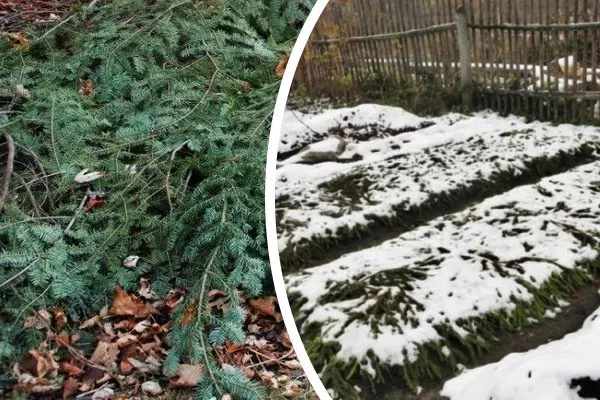
Other advantages:
- access is closed to cats and dogs that run around the winter garden;
- the smell of pine needles repels rodents and pests, and the antibacterial properties of spruce essential oil destroy pathogens;
- naturalness of raw materials;
- availability (branches are available in every village, but fir trees are harder to find);
- excellent protection from snow and moisture;
- no rotting occurs;
- can be used in all climate zones.
There is one drawback, and it relates to coniferous trees: slight acidification of the soil occurs.
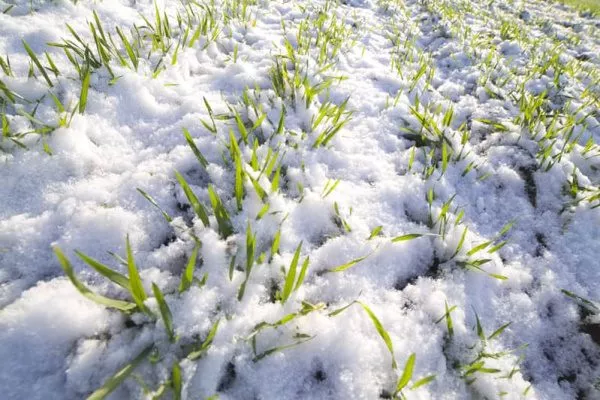
Snow
This method is only effective during snowy winters, but only if there's plenty of snowfall at the very beginning of frost. Otherwise, the garlic will need to be covered with another material.
In what cases is it not necessary to cover garlic?
There's no need to cover garlic when growing frost-resistant varieties. However, this applies primarily to southern regions. Even when planting cold-resistant varieties in the north or central part of the country, the crop will need to be insulated.
Tips and tricks for gardeners
To ensure that the cover truly retains heat and doesn't harm the garlic, pay attention to the recommendations of experienced gardeners:
- Whatever you use to insulate the beds, do not allow the layer to be thicker than 6-7 cm;
- strictly adhere to the timing of covering and removing materials in the spring;
- take weather conditions into account;
- Be sure to prepare the beds;
- To repel pests, add onion peels to the covering material.
Before deciding how to cover winter garlic, carefully familiarize yourself with the specifics of each material, check the winter weather forecast, and consider how comfortable you will be working with a specific cover. Don't forget the timing for your region.