
Sweet potatoes are a surprising vegetable that resemble potatoes in appearance but have a sweet flavor, making them popular in desserts. There are many varieties and types of sweet potatoes. Here are the most popular.
Dessert varieties of sweet potato
Sweet potatoes are characterized by high glucose and beta-carotene levels. This gives the flesh a rich yellow or even orange hue. The root itself is very juicy.
- ✓ Consider the climate conditions in your region. Some varieties require warmer climates, while others are more tolerant of cooler conditions.
- ✓ Pay attention to the soil type. Sweet potatoes prefer light, well-drained soil.
- ✓ Consider the purpose of cultivation: for desserts, choose dessert varieties; for potato replacement, choose fodder varieties.
Some people say that sweet potatoes have a pineapple, carrot, pumpkin, banana flavor, and are a bit reminiscent of chestnut.
| Name | Ripening period (days) | Pulp color | Yield (kg per bush) |
|---|---|---|---|
| Georgia Red | 90-100 | orange | 5 |
| Bayou Bell | 90 | orange | 3 |
| Garnet | 90-100 | orange | 4 |
| Kumara Red | 110-130 | yellow with an orange tint | 2 |
| Victory 100 | 90-100 | light | 3 |
| Burgundy | 100-110 | dark orange | 4 |
| Beauregard | 100-110 | orange | 5 |
| Betty | 120 | bright orange | 3 |
| Belvu | 110 | orange | 2 |
| Vardaman | 90 | orange | 2 |
| Caramel | 120-140 | orange | 3 |
Georgia Red
This mid-season, high-yielding variety is grown in Louisiana. Characterized by a short ripening period, it is ideal for planting in northern climates.
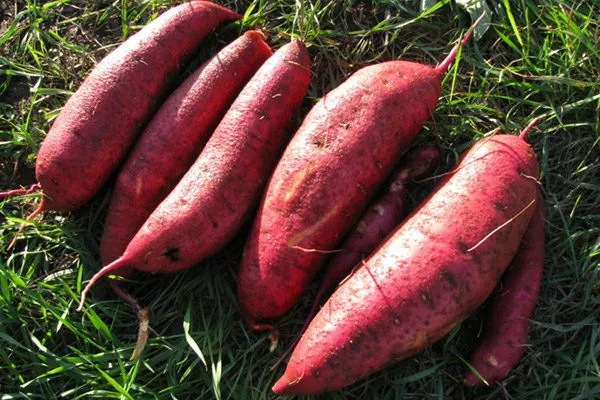
A vigorous plant with heart-shaped leaves, dark green with a reddish-purple tint. The root is round-oval in shape. The average tuber weighs 300-500 g. Up to 5 kg of root vegetables can be harvested from a single bush, and 200-400 centners per hectare.
The fruit's flesh is sweet, dry, fleshy, and juicy. The first seedlings appear within 2-4 weeks after planting the tubers.
Bayou Bell
The plant has long vines, growing up to 120 cm. The heart-shaped leaves, with small teeth, are dark green. The root vegetable has bright red skin and orange flesh. The fruits are elongated and the tubers are compactly arranged.
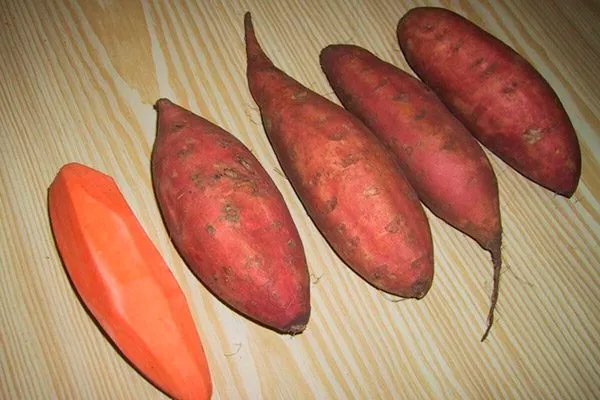
This high-yielding variety ripens in just 90 days. The fruit has a pleasant, moist flavor. It stores well, yet sprouts at a minimal rate. The flesh is crisp and juicy.
Garnet
An early-ripening variety, ripening 90-100 days after planting. The plant has long vines reaching 180-240 cm. The skin is raspberry-red and rough. The flesh is orange, sweet, and moist.
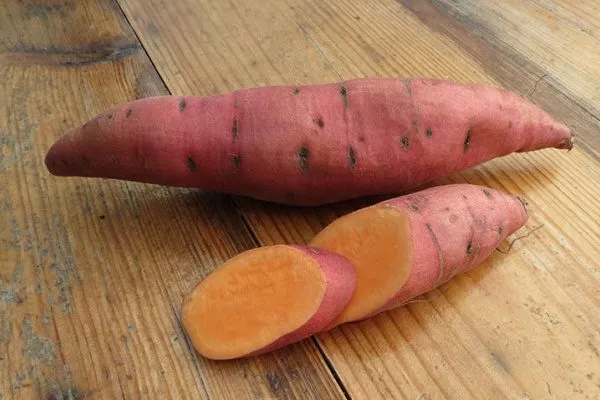
The plant has decorative, carved leaves. The variety flowers and is capable of producing seeds. Elongated roots are often produced. The flesh is sweet and has excellent shelf life.
Kumara Red
This variety is grown in New Zealand. The bushes grow to large sizes. The plant has dense vines and large leaf blades. The roots are elongated with rounded ends.
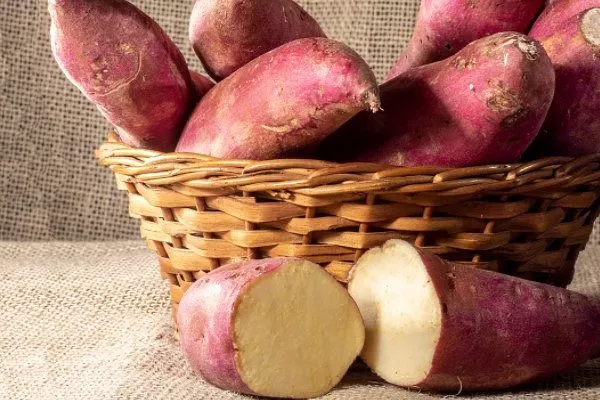
Sweet potatoes are characterized by a fairly long growing season—110-130 days. The root vegetable has dark red skin and yellow flesh with an orange tint. The skin is veined. The flesh is firm, starchy, and moderately sweet.
A distinctive aftertaste is noted. When cooked, a pumpkin flavor emerges. When raw, sweet potatoes are quite tart.
Victory 100
An early-ripening dessert variety that thrives in central and southern Russia. The bush is compact and not bushy, allowing for dense planting. The crop ripens in 90-100 days.
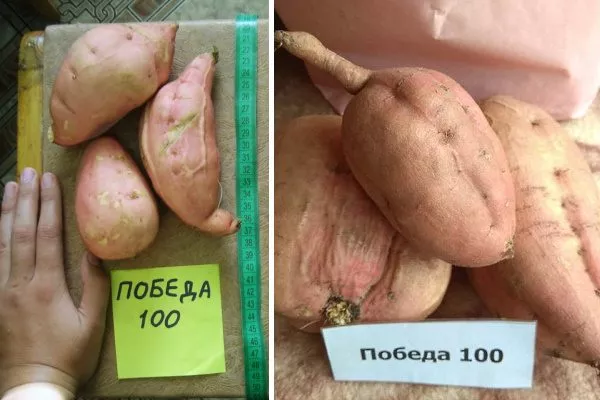
The fruits have light-brown skin and light-colored flesh. The roots have a smooth, even surface. The flesh is moderately sweet, with a flavor similar to bananas and nuts. The sweet potato is rounded and has no roughness.
Burgundy
Burgundy is a flowering sweet potato developed in Louisiana in 2004. The roots have dark red skin and deep orange flesh. Young leaves have a bronze tan that fades as they mature. Mature leaves have a pointed tip and a heart-shaped base, with slightly serrated edges.
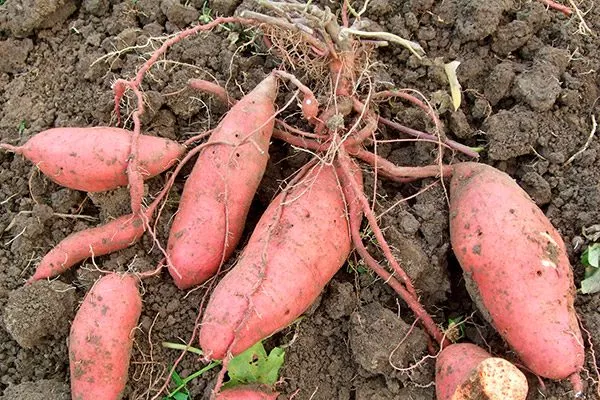
The root vegetable is pliable and very soft when cut, cutting easily and pleasantly. It contains a lot of milk, but when eaten raw, it is very tasty and sweet, reminiscent of an apple.
Beauregard
The Beauregard sweet potato variety was developed at Louisiana State University in the 1980s. It is considered a benchmark in the United States and one of the most widely grown varieties commercially.
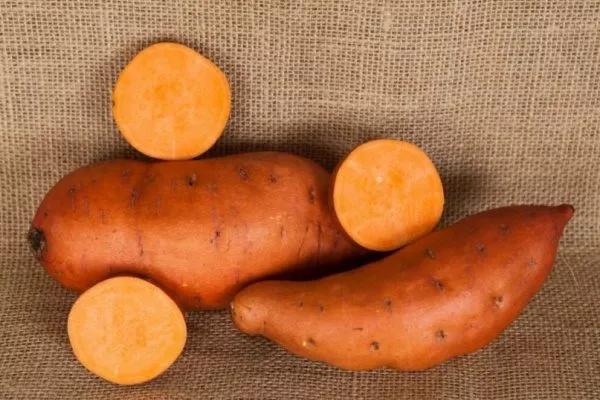
The fruits are evenly spaced, compactly arranged, and located at the base of the bush. The vines can reach up to two meters in length. Root crops can be grown in dense plantings, maintaining a distance of 20-25 cm.
The tubers have a beautiful shape. The skin is pink or copper-colored, as the variety comes in several varieties. The flesh is orange, sweet, and soft. The vegetable ripens in 100-110 days. When cut, the sweet potato is soft, pliable, and richly milky.
Betty
A dessert variety popular in the United States. Its short maturation makes it suitable for mid-latitudes. It produces sweet, pleasant-tasting tubers. The plant is medium-sized. The palmately lobed leaves are dark green with a reddish-purple hue.
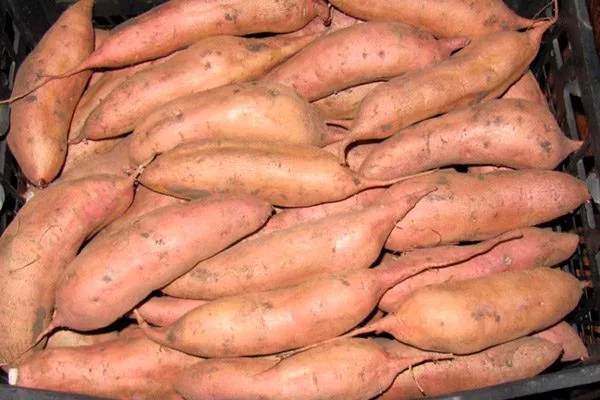
The ripening period is 120 days. The fruits have orange skin and bright orange flesh with purple veins. The roots are juicy and sweet. Each fruit averages 200-500 g. A single plant yields 1-3 kg.
Belvu
This variety has beautiful beige tubers with an attractive shape. Purple leaves with a green tint near the crown. The vines reach 1.5-2.4 m in length. The tubers take a long time to ripen. This is a high-yielding variety, maturing in 110 days.
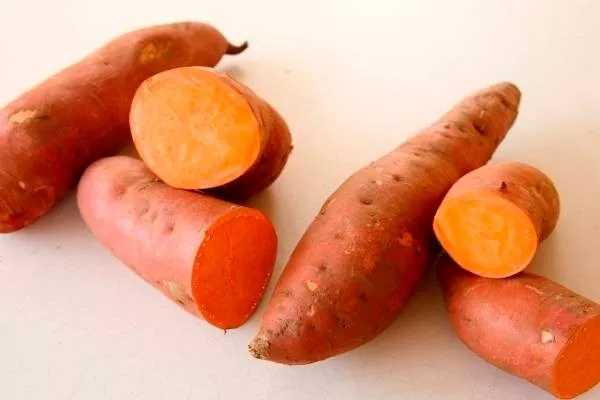
The vegetable has a beige skin and sweet, juicy, moist orange flesh. The flesh retains its color after heat treatment. This is a flowering variety that prefers sandy and clay soil. The fruits form smoothly even in heavy loam soils.
Sweet potatoes are soft and milky when cut. When raw, they're crisp, not sweet or starchy, and resemble carrots. When baked, they taste like boiled carrots.
Vardaman
The plant has long vines reaching up to 2.5 meters. Young leaves have a purple tan. This sweet potato is characterized by high yields. It is an early variety, maturing in 90 days. The tubers are compactly located under the bush, small in size, and have a uniform shape.
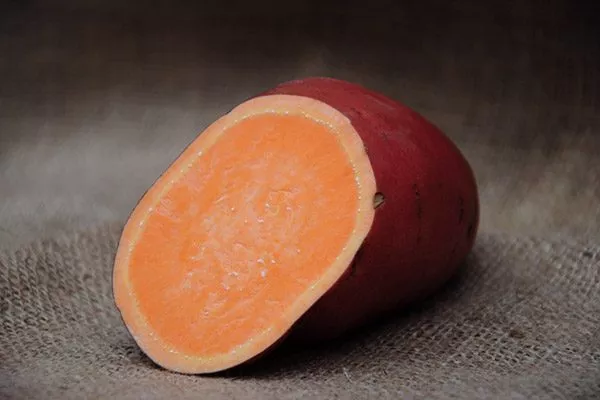
Sweet potatoes have brownish skin and orange flesh that's virtually sweet. The growing season lasts for about 100 days.
Sweet potatoes are soft and milky when cut. Fresh, they have a salty flavor, while baked sweet potatoes are sweeter with a fruity aroma and hints of cinnamon.
Caramel
A mid-season, high-yielding variety. This climbing variety has entire, heart-shaped, slightly funnel-shaped leaves, sometimes with a few teeth along the edges. The foliage is dark green. The stem and veins are the same color as the foliage.
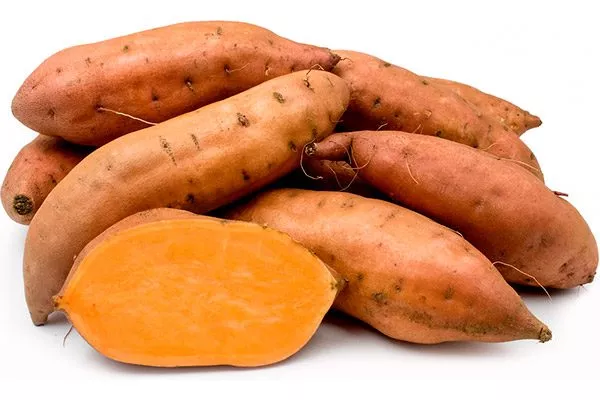
The tubers form somewhat sparsely but shallowly. The sweet potato is oval-spindle-shaped, with prominent veins. The skin is pale orange and slightly rough.
The root vegetables have dense, starchy, and savory flesh when raw, but when cooked, it becomes soft, medium-firm, low-starch, and slightly sweet. It takes on a rich orange color.
Sweet potato vegetable varieties
Sweet potatoes are characterized by a lower glucose content, making them less sweet than dessert varieties. In appearance, sweet potatoes are more similar to regular potatoes.
Can be grown in temperate and northern regions. The roots have light-colored flesh with slight pinkish, yellowish, or orange hues.
| Name | Ripening period (days) | Pulp color | Yield (kg per bush) |
|---|---|---|---|
| Japanese | 100-110 | pale yellow | 1.5 |
| Bushbuck | 110 | yellowish-cream | 2 |
| Purple | 110-120 | purple | 1.5 |
| Nutmeg | 120-140 | light | 2 |
| Bonita | 95-105 | light | 3 |
| White NBS | 95-100 | light | 3 |
Japanese
This variety was brought from the USA. It's a trailing variety indoors, but begins to bush out vigorously outdoors. It's capable of flowering and setting seed.
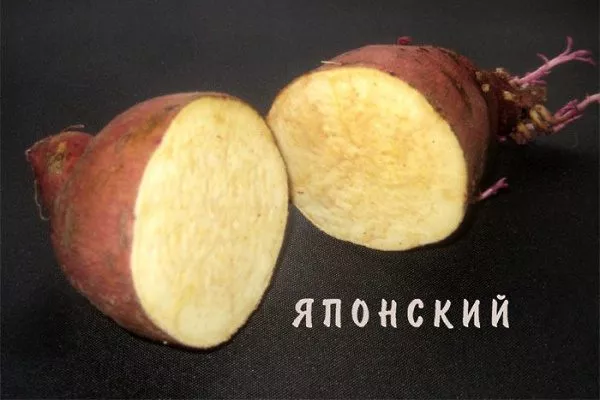
This early-ripening variety, however, is not a high-yielding one. The bushes grow large, with long shoots and large, serrated leaves of a dark green hue. The root vegetable has a pinkish skin and pale yellow flesh.
The growing season lasts approximately 100-110 days. The flesh is juicy, starchy, and tender, without coarse fibers. The flavor is more reminiscent of potato. It has a subtle aroma.
Bushbuck
This is a moderately productive variety with a growing season of up to 110 days. The bush averages 1.5 meters in diameter. The flowering plant produces large, uniform tubers with raspberry-colored skin that changes color during long-term storage. The skin is somewhat rough, so it's best to peel the vegetable before eating.
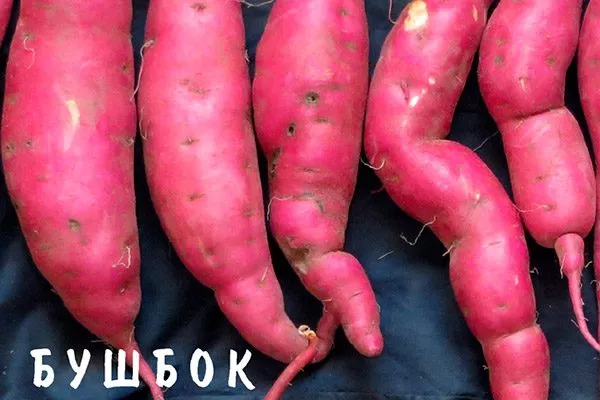
Sweet potatoes have yellowish-cream flesh that is juicy and soft. The core is slightly sweet and has a nutty flavor. On average, a single plant yields 1.5-2 kg.
Purple
An early-ripening variety derived from "Batatovye Kushchi." It is one of the most useful varieties, producing long vines up to 2.5 m. The plant has a green stem, but has a distinct purple pigmentation near the root rosette.
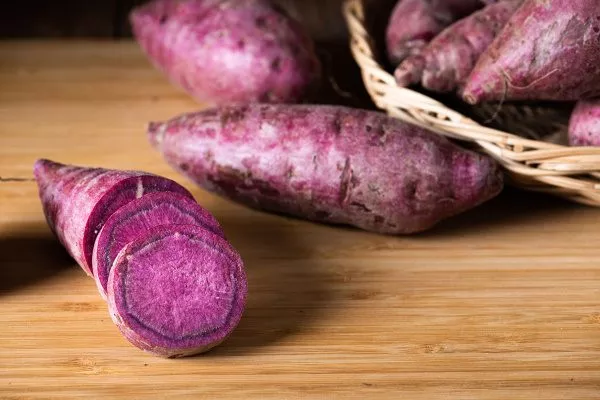
The leaves are trilobed. If the plant receives insufficient moisture, it scatters its crop. Active flowering and the possibility of seed setting are observed. The plant has very elongated roots. The growing season is 110-120 days. This variety has an average yield.
The skin and flesh are the same shade—purple. This color persists even when cooked. The flavor is not particularly sweet, but there's a subtle hint of chestnut.
Nutmeg
The variety's name is no coincidence, as sweet potatoes have a distinctive nutmeg flavor. You can enjoy the taste immediately after harvesting. The plant has a very strong vine, and its green leaves are heart-shaped.
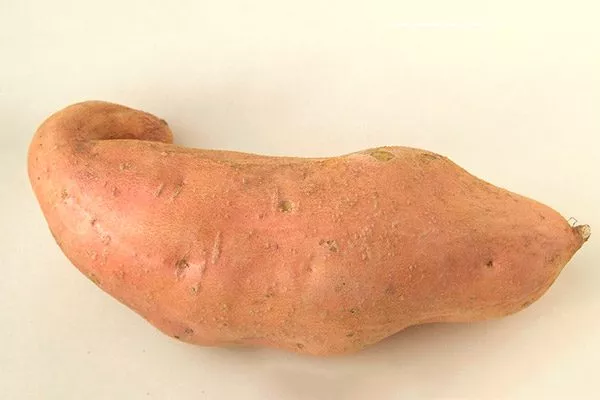
The tubers are quite large, oval, and resemble potatoes. The skin is brown, and the flesh is light. When cut, the sweet potato is firm and milky. When eaten raw, the flesh is dry, crumbly, and slightly sweet. This variety is fibrous, which is noticeable when cooked.
Bonita
The Bonita variety was developed in 2005 in Louisiana. Its growing season lasts 95-105 days. It is a high-yielding, heat-loving variety that produces 3-4 tubers, each with an elongated, spindle-shaped habit, in a loose cluster under the bush.
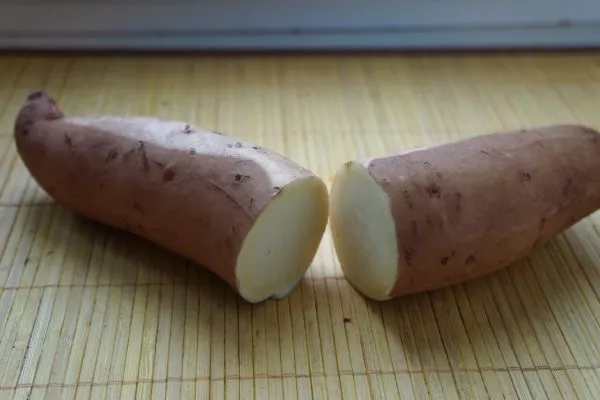
Young leaves are bronze-colored, while mature foliage is green with a pinkish, purple-tinged underside at the leaf base. Petioles and stems are green and hairless.
Sweet potatoes have smooth, light beige-pink skin. The flesh is light, juicy, and firm. It has a distinctive crunch and a slight sweetness. Raw sweet potatoes are not sweet, slightly sticky, and slightly milky. When baked, the flesh becomes moist and sweet.
White NBS (aka Sukhumi White)
This variety originated from the Central Novosibirsk Botanical Garden. It's an early, high-yielding variety that resembles a regular potato in appearance and taste.
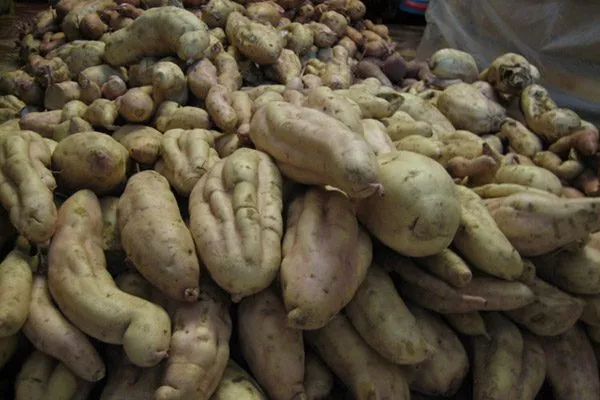
A vigorous plant with beautiful, slightly indented foliage. The leaves are lobed. Young foliage is bronze in color. The stems and petioles are greenish-pink. The plant does not flower.
The roots are elongated and tapered, with light-brown skin and light-colored flesh, almost white when raw, dense, crisp, starchy, and not sweet. The bush compactly forms an average of 3-4 elongated tubers of similar size. The growing season lasts 95-100 days.
The variety's advantages include moderate resistance to wireworms, good tuber storage, and rapid sprout development. Disadvantages include rodents' potential to gnaw on young shoots and tuber rot during germination.
Forage varieties of sweet potato
Sweet potatoes are characterized by a minimal sugar content, which is why they are often used as a potato substitute in various dishes. Sweet potatoes typically have light-colored flesh that becomes soft when cooked.
| Name | Ripening period (days) | Pulp color | Yield (kg per bush) |
|---|---|---|---|
| Druzhkovsky | 100 | white and yellow | 2 |
| Brazilian | 95-105 | yellow-beige | 3 |
| Indian | 120-140 | light | 2 |
| Tainung 65 | 110-120 | yellowish-cream | 3 |
| Vinnytsia pink | 120 | bright white | 2 |
| American beige sweet potato | 100-110 | yellow-cream | 3 |
Druzhkovsky
The Druzhkovsky sweet potato got its name from its location—the town of Druzhkivka in the Donetsk region. It was harvested in 2013.
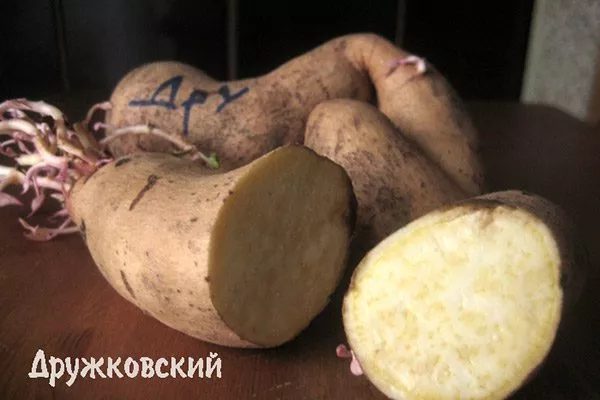
The plant produces several very large rootstocks per bush. The vines are quite long, not exceeding 1.5 m. The leaves are serrated. Abundant flowering and seed production occur. The growing season lasts approximately 100 days.
The roots have a reddish-pink skin that turns brown during storage. The flesh is white-yellow and moderately sweet. When cut, the sweet potato is crisp and brittle. When raw, it is starchy, with minimal sweetness.
Brazilian
Brazilian sweet potato is characterized by its undemanding nature. The variety tolerates less favorable climate conditions well and thrives in temperate climates.
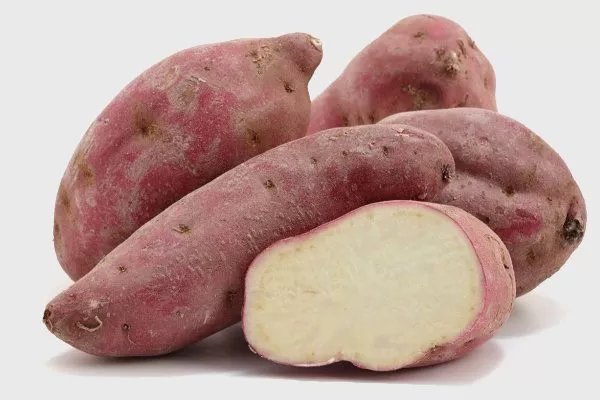
This is a fairly high-yielding variety, resistant to diseases and pests. The growing season lasts 95-105 days. The bush is quite vining, with no problems with emergence or germination.
The tubers have a pinkish-flesh skin and yellow-beige flesh with a mild flavor. The sweet potato is crispy when cut, has a rich milky texture, and is sticky to the hand. When raw, it resembles a potato, contains a lot of starch, and is moderately sweet. It darkens quickly after cutting.
Indian
The Indian sweet potato was brought from India in 2014 by cuttings. This late-ripening, high-yielding variety thrives in warm, humid conditions. It can be used for ornamental purposes due to its beautiful foliage, and will delight you with its delicious tubers in the fall.
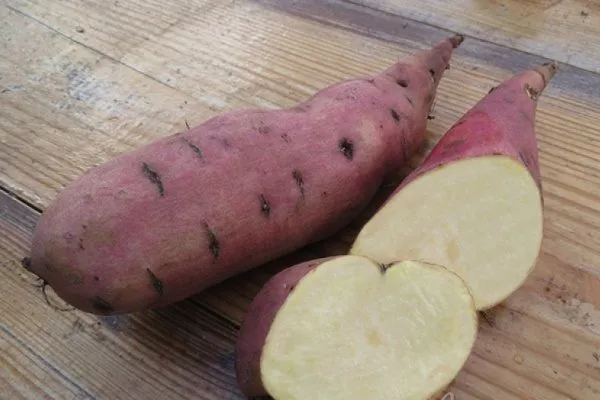
The bush is compact and heavily branched. The leaves are serrated and lacy, divided into seven long, narrow lobes. Young foliage has a purple-bronze hue, while the stems, petioles, and veins are green.
The roots are long and covered in pale pink skin. Sweet potatoes have light-colored flesh, which is juicy, slightly starchy, and moderately sweet, with a subtle nutty flavor. Cooking makes the flesh firmer, but does not add any sweetness.
Tainung 65
This high-yielding variety, bred in Asia and introduced in 2011, is characterized by a medium ripening period and low maintenance. A single, very large tuber or several smaller ones form under the bush.
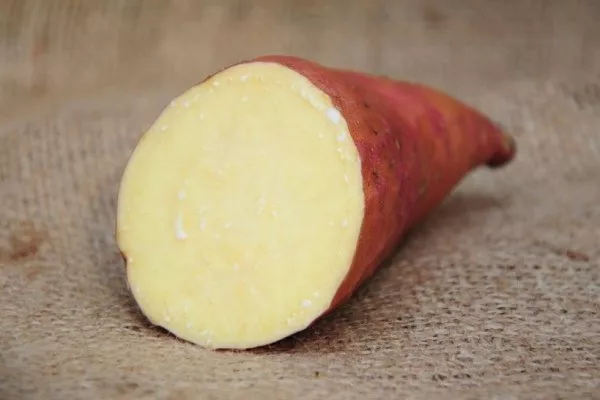
This is a climbing variety with slender, very long stems reaching up to 4 meters. The stems are virtually unbranched, sometimes twining around thin vertical supports. The leaves are graceful, ivy-shaped, with pink veins on the underside. Young leaves are bronze with a purple border. The plant does not flower.
The root vegetables have a smooth, pinkish-beige skin. When cut, the flesh is yellowish-cream. When raw, it is medium-firm, starchy, and slightly sweet. When cooked, the flesh becomes medium-firm, starchy, and sweet, turning yellow.
Vinnytsia pink
This is one of the most versatile varieties. Vinnytsia Pink Sweet Potato has roots covered in pale skin. It forms a fairly vigorous, vigorous bush with thick vines. When cooked, it resembles a regular potato, but with a sweet, pleasant flavor.
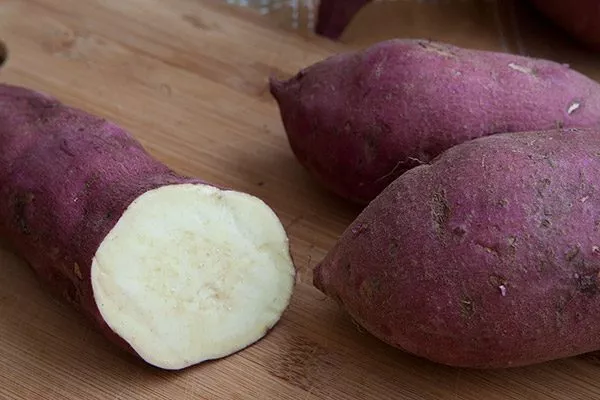
Some consider sweet potatoes to be minimally sweet, while others believe they are moderately sweet. When raw, the vegetable resembles a cabbage stalk without the bitterness. This is a high-yielding variety. The flesh is bright white and juicy. The tubers are elongated. The growing season is 120 days.
American beige sweet potato
This variety was brought from the United States. It forms a compact bush with three-toothed green leaves. This plant has long stems – 1.2-1.5 m. The growing season lasts 100-110 days.
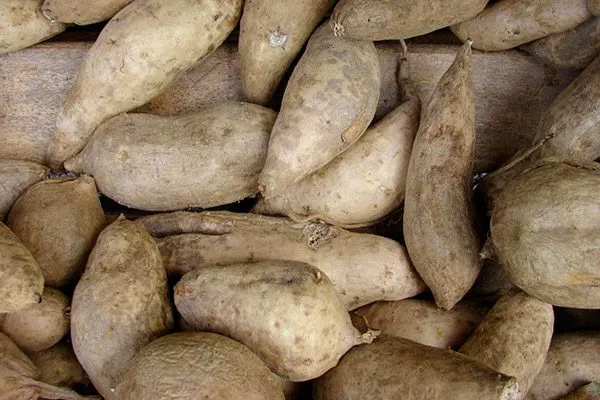
The root vegetables have a yellow-beige skin and yellow-cream flesh. Sweet potatoes have firm, starchy flesh with a sweet flavor. They are often used as a substitute for potatoes in dishes or as a complement to them.
Ornamental sweet potato varieties
Ornamental sweet potatoes typically grow no more than 40 cm tall, but the bush can reach up to 2 m in width. Many ornamental sweet potatoes do not flower, but are very popular due to their varied foliage, which is as visually appealing as the flowers.
All ornamental sweet potato varieties grow tall. They branch sparingly, but the vines grow up to 2.5 m. The plant grows quickly, does not flower, and the vines remain bare.
The most popular ornamental sweet potato varieties are presented:
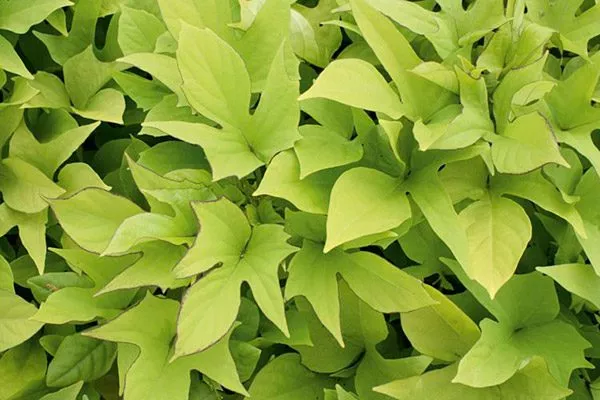
- Light Green. The maximum length of the vine is 1.5 m. It has numerous lateral branches, creating a voluminous "cap" of leaves. In midsummer, it begins to form delicate pinkish-hued funnels. After 24 hours, they wither. The leaves are large, deeply cut along the edges, and predominantly light green.

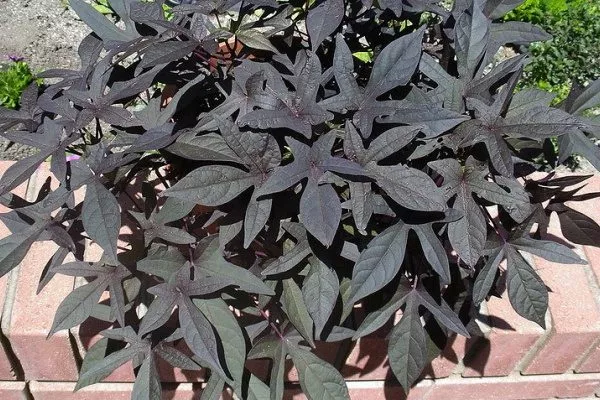
- Sweet Caroline Purple. The vine length varies between 1.8 and 2.5 meters. The leaf blades have serrated edges and five lobes. The foliage is colored purple-violet.
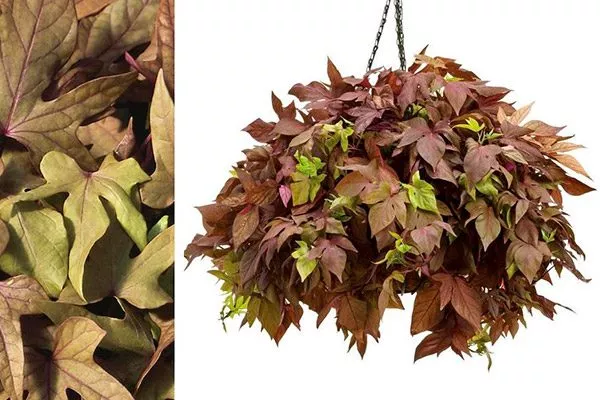
- Sweet Caroline Bronze. The description is similar to Sweet Caroline Purple, but the leaves are purple in color.
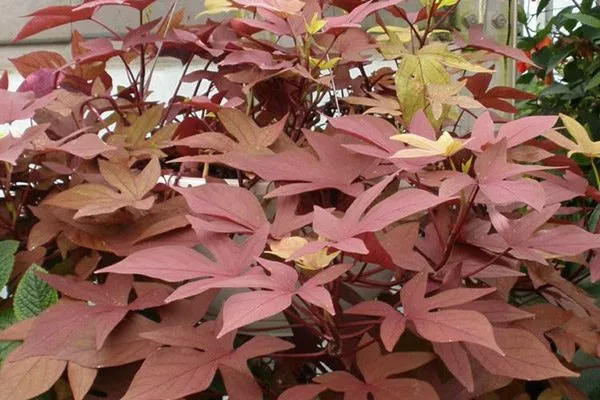
- Sweet Heart Red. The leaves resemble maple leaves, divided into lobes. When young, the foliage is brown, but with age, it acquires a green-purple hue.
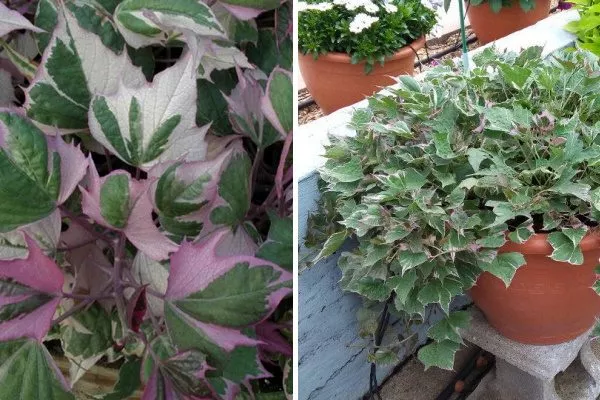
- Pink Frost. This variety displays a fantastic palette. The leaves create an abstract pattern of pink, green, white, and gray spots.
There are many varieties and types of sweet potatoes. Ornamental varieties can be used not only to decorate your garden but also to produce delicious root vegetables. If you love sweet potatoes, dessert varieties are perfect for you.