
The Giselle F1 eggplant is a domestic hybrid variety that has proven itself popular with our gardeners. This large-fruited hybrid is versatile and can be grown both outdoors and in greenhouses. Its glossy fruits are suitable for cooking and canning; they have excellent flavor and store well.
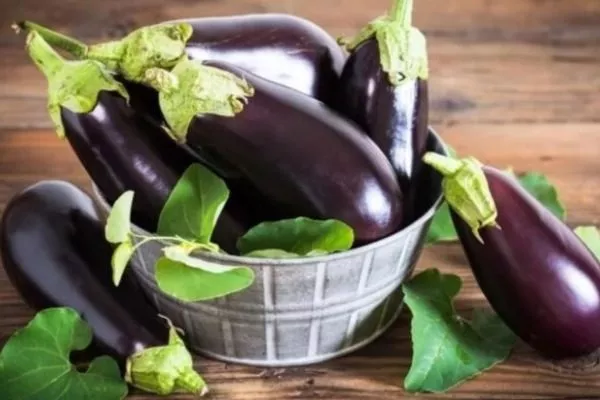
Description of the eggplant Giselle
The bush is vigorous, semi-spreading, yet fairly compact, with a well-developed root system. It can reach a height of 1.7-1.9 m. The central stem is erect. The bushes are moderately dense. The leaves are large, bright green, and thornless. The flowers have a lilac hue, reminiscent of potato flowers.
The Giselle eggplant produces large, smooth-surfaced fruits with a slightly spiky cap. The fruits contain a small number of seeds.
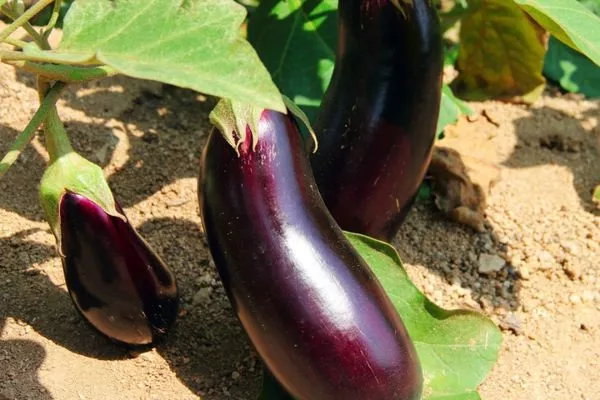
Brief description of fruits:
- Coloring: deep purple.
- Form: cylindrical.
- Surface: glossy.
- Length: 25-30 cm.
- Diameter: 6-7 cm.
- Pulp: dense.
- Pulp color: white.
- Weight: 300-400 g.
Characteristics
The Giselle eggplant has excellent agronomic characteristics, allowing it to be grown in various soil types and climatic conditions.
Main characteristics of the Giselle eggplant:
- Ripening periods. Belongs to the early-ripening group. From germination to harvest, it takes 110-120 days.
- Productivity. Indoors, the hybrid yields 10-14 kg of fruit per square meter, while outdoors it yields 7-8 kg. The average yield is 11.6-17.6 kg/sq. m.
- Cold resistanceIt is cold-resistant and capable of growing, developing, and producing fruit even in cool, short summers.
- Drought resistance. Tolerates short-term dry periods well without significant loss of productivity.
- Disease resistance. It has increased resistance to many diseases and viruses.
- Pest resistance. Average. Regular preventative treatments are necessary.
You will learn about other eggplant varieties and hybrids recognized by domestic gardeners as the best. Here.
Taste and application
The ripe fruit has a pleasant flavor, with mushroom notes and a distinctive aroma. The flesh is slightly oily, without stringiness, wateriness, or voids.
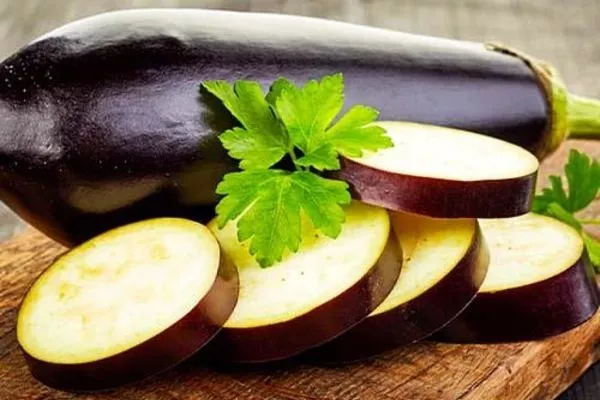
The fruit has versatile uses. Giselle eggplants are ideal for pickling and preserving, as well as for preparing a variety of appetizers, cold and hot dishes. The fruit can also be frozen, baked, and stuffed.
Pros and cons
The Giselle eggplant has both advantages and some disadvantages. It's a good idea to familiarize yourself with these before planting.
Landing
The Giselle hybrid, like eggplants in general, is grown exclusively from seedlings due to its high heat tolerance and long growing season. Eggplant seedlings can be purchased at the market, but they don't guarantee the variety, so it's safer to grow your own.
Seed preparation
The Giselle eggplant is a hybrid, so its seeds must be purchased annually from the grower. They are usually sold ready for planting—look for this information on the packaging. If the seeds are untreated, they must be prepared accordingly.
Features of preparing eggplant seeds for planting:
- All seeds are placed in a salt solution to test their germination. Poor specimens, empty and non-germinating, will float to the top. Good seeds will sink to the bottom.
- The seeds are disinfected for 20 minutes in a weak solution of potassium permanganate - this is necessary for disease prevention.
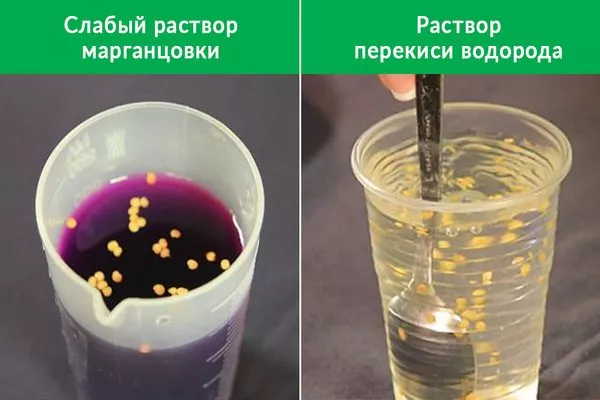
- To increase viability and growth strength, seeds are soaked in a growth stimulator, for example, in Epin, Zircon, or in a hydrogen peroxide solution.
After any treatment—in a saline solution, growth stimulator, etc.—the seeds must be washed with running water and dried.
Before planting, it's recommended to soak and germinate the seeds. Wrap them in damp cheesecloth and place them in a warm place. Regularly check to ensure the cheesecloth remains moist. The seeds will sprout in approximately 8-10 days, at which point they can be planted as seedlings.
Site selection and preparation
The Giselle eggplant grows best in warm, well-lit areas. Choose a planting site with good air circulation, but avoid drafts or strong, strong winds. The best soil for eggplant is light and loose, nutritious, breathable, and neutrally acidic.
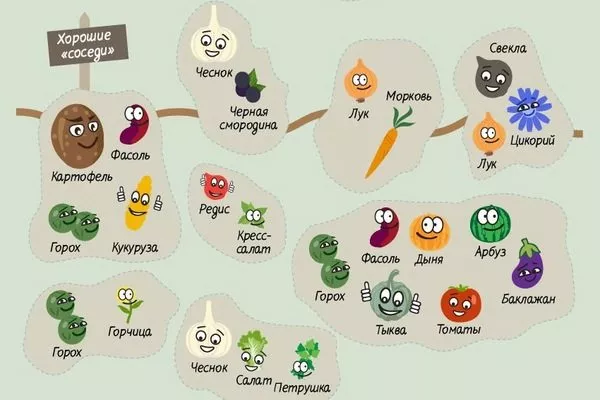
When planting eggplants, it's important to consider crop rotation rules. Suitable soils are those where pumpkins, legumes, onions, carrots, and cabbage were grown. Soils that were previously used for nightshades, such as potatoes, tomatoes, and peppers, are definitely unsuitable. Consider favorable crop neighbors when planning Giselle's planting.
Features of site preparation:
- The soil for planting eggplants is prepared in the fall. The area is dug deeply, adding organic fertilizers such as humus or compost at a rate of 4-6 kg per square meter.
- If the soil is acidic (pH below 5.5), deoxidize it by liming. Dolomite flour or wood ash can be used instead of lime. The dosage depends on the soil's acidity, but on average, it's 300 g per square meter. For low acidity, it's recommended to add high-moor peat to the soil.
- Two to three weeks before planting, the soil is dug over again, adding mineral fertilizers—30-40 g of superphosphate and 20-30 g of potassium sulfate. The soil is leveled and covered with black plastic to help the soil warm up faster.
Selection and preparation of planting containers
It's recommended to grow eggplants in individual containers that allow for easy transfer of the seedlings, including the root ball, without damaging their roots. Plastic cups, peat pots, and cassettes are all suitable. The optimal container size is 500-700 ml.
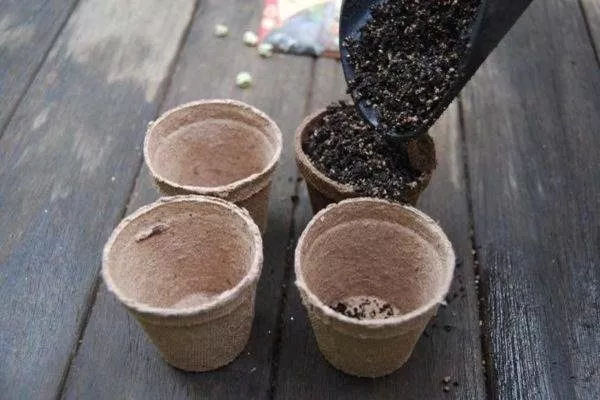
Before planting, wash containers with warm water and laundry soap or any other detergent. If used containers are used for growing seedlings, they should be disinfected to prevent the growth of pathogens that may have lingered on the container walls.
To disinfect containers, you can use a solution of potassium permanganate, vinegar, 3% hydrogen peroxide, a solution of salt and baking soda, formalin, bleach, or copper sulfate. After disinfection, thoroughly rinse the container with running water. If the planting container doesn't have drainage holes, they must be made to prevent water stagnation.
Substrate preparation
Eggplant seedlings can be grown in peat-humus pots—then you don't need to buy a growing medium. If you're using regular containers, fill them with a special growing medium—mixes from various manufacturers are available at farm stores.
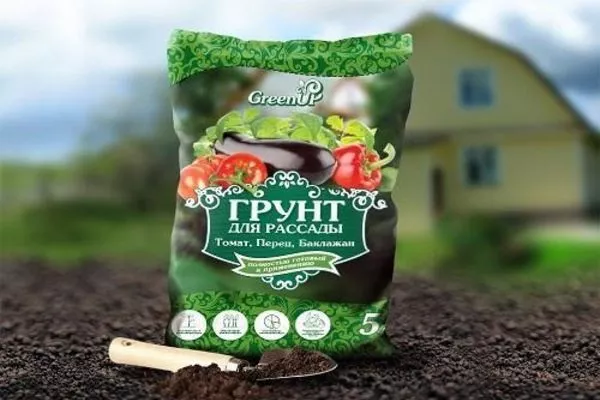
You can also grow seedlings in a homemade soil mixture. However, this requires several components. Growing eggplant seedlings requires neutral soil with a pH of 6.5-7.0.
Example of soil mixture:
- 2 parts humus;
- 1 part turf soil or high-moor peat;
- 1 part sand, semi-rotted sawdust (non-coniferous).
Homemade soil mixture is baked in the oven a couple of days before planting. This is necessary to kill insect pest larvae and pathogens. You can also disinfect the soil mixture by heating, baking, and freezing.
Sowing seedlings
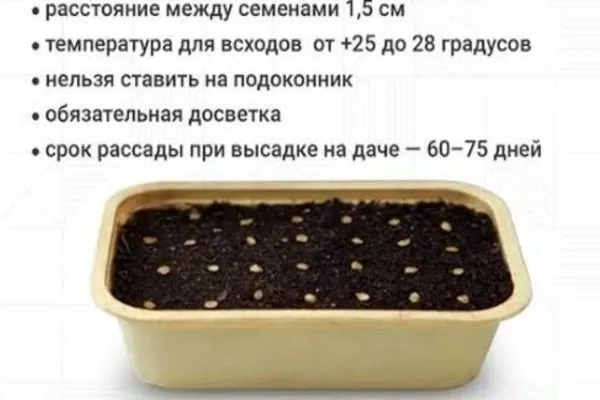
Giselle eggplant seedlings are sown in mid-February to early March; the exact timing depends on specific climate conditions. Sowing occurs 60-70 days before the expected planting in the ground, either indoors or outdoors; this is the time required for the seedlings to be ready.
Features of sowing eggplant Giselle for seedlings:
- Before sowing, moisten the soil with warm, settled water. A spray bottle can be used for this purpose.
- The soil is leveled and shallow holes (0.8-1 cm deep) are made into which the pre-sprouted seeds are placed. The seeds are then covered with soil or sand.
- The crops are covered with transparent film on top to create optimal conditions for germination.
- Until the eggplants sprout, the film is opened daily to ventilate the mini-greenhouse and prevent condensation.
As soon as the sprout rings become visible, the cover is immediately removed, otherwise the seedlings may overheat and die.
Caring for seedlings
Immediately after the seedlings emerge, the temperature in the room (or greenhouse) where the seedlings are grown is reduced to +15…+16 °C for several days to prevent the seedlings from stretching.
Features of further care of seedlings:
- Eggplants require short days of 10-12 hours. If natural light is insufficient, grow lights are used. They are placed 20-30 cm from the plants. During the day, the seedlings are shaded at midday. If the seedlings are growing on a windowsill, it is recommended to install screens on the windowsills to soften the light.
- Two to three weeks before planting, seedlings begin acclimating to fresh air by taking them outside every day. Initially, for 20-30 minutes, gradually increasing the time spent outdoors to 12-14 hours or more.
- Water the seedlings as needed, avoiding drying out, overwatering, and especially not stagnant water. Water the plants at the roots, taking care not to let any water drip onto the leaves.
- It's recommended to water the seedlings from above occasionally, using a sprinkler. However, the grow lights should be turned off during this time to prevent the plants from getting burned.
- The first feeding is done two weeks after the transplant, if any. Use a complex fertilizer containing nitrogen, phosphorus, and potassium. Apply it 2-3 hours after watering to avoid burning the roots.
Does the Giselle eggplant need to be pricked out?
Pricking out seedlings is done to transplant them into larger containers and to pinch out the central root to encourage branching. This procedure is not necessary for eggplants, as their roots are not pinched. Eggplants can be grown with or without pricking out, and both options have their pros and cons.

The disadvantages of transplanting stem from eggplant seedlings' sensitivity to transplantation and the peculiarities of their root system. If transplanted incorrectly, damage to the roots is possible, and eggplant roots are very delicate and difficult to restore. Furthermore, transplanting slows seedling growth by approximately two weeks.
It's also important to remember that transplanting is timely. If you rush and transplant seedlings at the cotyledon stage, they may die from stress. Another problem with transplanting eggplants is the difficulty of planting the seedlings at the exact level (depth) at which the seedlings were growing.
But there are also certain advantages to picking:
- If the plants were sown in shallow containers, they will have more room to develop roots when transplanted. In a larger container, the plants may not struggle to survive, and their growing conditions will be more comfortable.
- After proper picking, seedlings become stronger, and most importantly, they better tolerate transplanting to a permanent location and enter the fruiting phase faster.
How to properly transplant eggplants:
- the seedlings are watered with warm water to soften the substrate and facilitate the transplanting process;
- seedlings are transplanted together with the root ball using the transshipment method;
- transplantation is carried out into a substrate of a similar composition - so that the seedlings adapt faster;
- The transplanted seedlings are watered well and sprinkled with dry soil.
Optimal conditions for germination: temperatures of 27°C to 30°C. Seedlings will appear in approximately 8–10 days. At 20°C, germination takes 20 days, and germination rates decrease.
Transplanting
Eggplant seedlings are planted when they have 6-7 leaves. They are planted outdoors when the threat of frost has passed—in late May or early June. The exact planting time depends on climate and weather conditions. Eggplants can be planted under plastic 2-3 weeks earlier than in open beds.
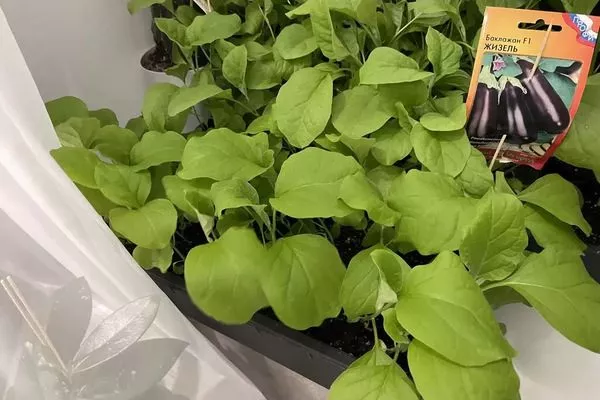
Features of planting eggplant seedlings Giselle:
- Optimal planting pattern: 30-35 x 60-65 cm.
- The recommended planting density in greenhouses is 4-5 plants per square meter. Higher planting density is acceptable in open ground.
- Add 200-300 g of nutrient-rich potting soil to pre-drilled holes—mix equal parts soil and humus. The holes should be 10-15 cm in diameter and 15-20 cm deep.
- Warm, settled water is poured into the holes - 1-3 liters.
- Once the water has been absorbed, the seedlings are moved into the holes so that they are slightly lower than their previous growing level. Transplanting is done by transshipment, taking care not to disturb the root ball. Peat pots are placed into the holes along with the seedlings.
- The empty space is filled with soil, compacted, and then watered. Once the water has been absorbed, the soil is mulched with peat, humus, etc.
When planting eggplant seedlings in open or closed soil, remember that growth stops at 15°C, and at 13°C, the plant dies. Read on to learn how to properly grow this vegetable crop in greenhouses. Here.
Care
Once planted in the ground, eggplants require regular care. The yield of the Giselle hybrid directly depends on regular and proper care. Eggplants require watering, fertilizing, and preventative and, if necessary, curative spraying.
Watering
Giselle eggplants should be watered regularly but sparingly, as overwatering negatively impacts the health of the roots and the plant as a whole. Use water at a temperature of 24 to 25°C. Use 4-6 liters of water per plant. The best times for watering are morning and evening.
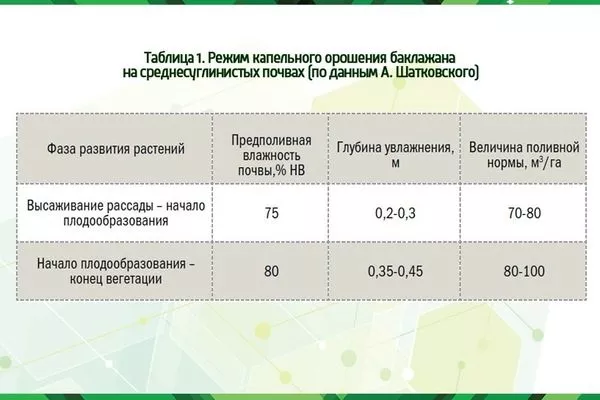
When temperatures drop, reduce the frequency and intensity of watering, as high humidity can lead to disease. Before flowering, eggplants are watered once a week; during flowering, fruit formation, and ripening, watering frequency doubles.
Loosening
After watering and heavy rains, loosen the soil in the beds while simultaneously removing weeds. Eggplants have shallow root systems, so loosening the soil should be done very carefully, without pushing the tool too deep.
Top dressing
Eggplants are fed every 2-3 weeks. The fertilizer composition depends on the growing season. During the flowering and fruiting stages, root feeding is applied.
Approximate composition and feeding regime:
- During flowering, ammophoska is added - 20-30 g per 10 liters of water.
- During fruiting - 60 g of urea, 60 g of superphosphate and 20 g of potassium chloride.
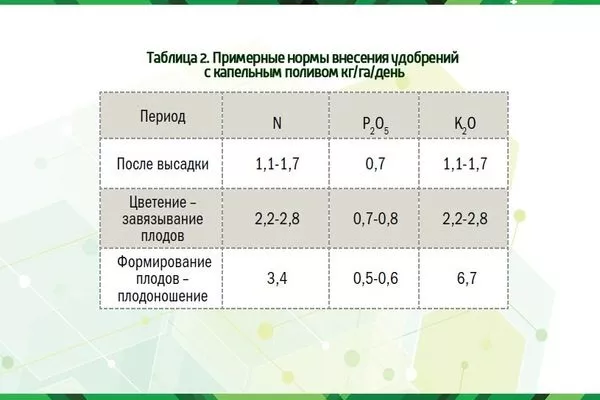
It's recommended to alternate mineral fertilizers with organic ones. For example, you can feed eggplants with a solution of wood ash (1 tbsp), mullein (1 l), and nettle (500 g)—dissolve the ingredients in 10 liters of water and let it steep for a week. You'll find a wealth of useful information on how and what to fertilize your crop with. Here.
Shaping and garter
When the plant reaches 25-30 cm, pinch off the top, leaving 3 to 5 strong shoots; all other shoots are removed. Subsequently, branches that do not bear fruit are removed. To ensure stability, the bushes are tied to supports or trellises.
Fighting diseases
The hybrid has strong immunity to diseases and pests, but under poor agricultural practices and unfavorable conditions, it can be affected by certain pathogens. The Giselle eggplant is most susceptible to late blight and moniliosis. You can find more details about eggplant diseases and how to treat them here. Here.
Various means are used to combat diseases:
- Folk remedies. You can spray the bushes with a solution of table salt (200 ml per 10 liters of warm water) or a garlic infusion (100 g of crushed garlic, pour 10 liters of water and let it steep for 24 hours). Spraying with these solutions is used primarily as a preventative measure. More effective treatments are required.
- Biofungicides. Bushes affected by fungal and bacterial infections are sprayed on the leaves, for example, with Fitosporin M, Alirin, Gamair.
- Chemicals. If plants are seriously affected, it is recommended to treat them with fungicides, for example, Quadris, Anthracnol, Topaz, Ridomil.
Chemical treatments should be stopped at least one month before the crop ripens.
Pest control
Eggplant Giselle can be affected by flea beetles, whiteflies, spider mites, and Colorado potato beetles.

To combat pests you can use:
- Folk remedies. For spraying, use decoctions of yarrow, chamomile, and tansy. Leave them to steep for three days, strain, and then add grated laundry soap. You can also use an infusion of wood ash (200 g per 10 liters of water) or a garlic solution (infuse 200 g of garlic in 1 liter of water, then top up to 10 liters).
- Biopreparations. Bushes affected by insects can be sprayed with "Bitoxibacillin", "Fitoverm", "Akarin", etc.
- Chemicals. They are used only for severe infestations. The choice of treatment depends on the pest. If the bushes are infested with spider mites, acaricides are used; otherwise, insecticides are used, such as Inta-Vir, Kortlis, and Tanrek.
Harvesting and storage
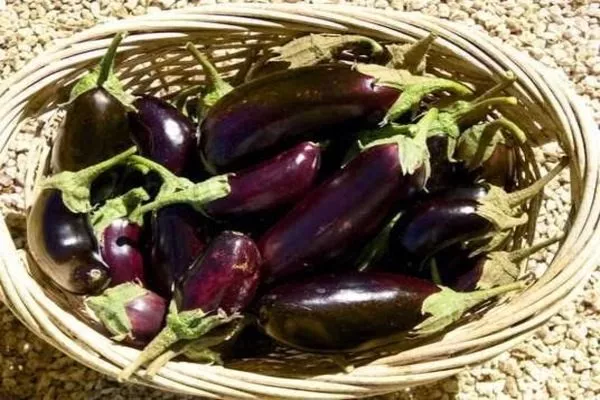
The harvest period begins in July and can last until September. If the fruits are overripe, they will lose their flavor. The ripeness of the fruit is indicated by their size and color—at least 20-25 cm in length and a deep purple color.
Eggplants should be stored in a cool, dark place at a temperature of 7 to 10°C and a humidity of 85-90%. They should not be exposed to light, as this will cause the formation of salts, which will impair their flavor. They can also be stored in the refrigerator or on the balcony, in dark packaging.
Reviews
The Giselle hybrid is an excellent choice for growing in private gardens or on a large scale. This eggplant is excellent for both eating and selling—its fruits have a beautiful marketable appearance and a wonderful flavor that unfolds when cooked, pickled, or marinated.