
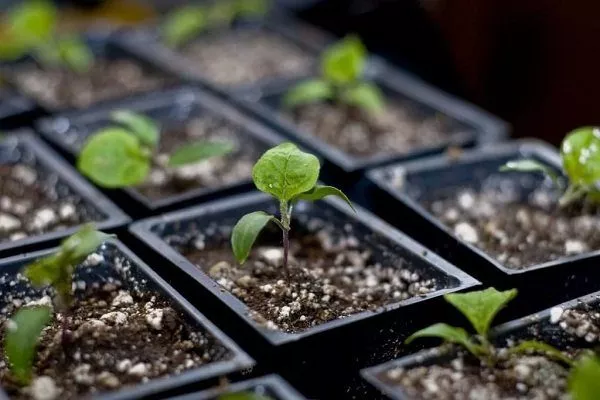
Growing eggplants from seedlings is the most reliable and fastest way to harvest. Let's learn about the different methods for growing seedlings, how to care for them, and which varieties are popular with our gardeners.
The best varieties and hybrids
All eggplants are divided into three types based on ripening time: early, mid-season, and late. Early-season eggplants have the shortest growing season and are recommended for growing in regions with short summers.
- ✓ Resistance to diseases typical for your region.
- ✓ Adaptation to climatic conditions (length of daylight hours, temperature fluctuations).
Popular varieties with different ripening periods:
- Early varieties. Relatively cold-hardy, they tolerate shade and high planting density well. Popular early-ripening varieties and hybrids:
- Amethyst. Ripening period: 95-115 days. Fruits are pear-shaped, weighing from 250 to 280 g. 6-7.5 kg of fruit grow per square meter.

- Dwarf 921. Ripening period: 110 days. Yield: 3.6 to 5.7 kg per square meter. Fruits are round-pear-shaped, weighing up to 300 g.
- Early 148. Ripening period: 110-148 days. 7-9 kg are harvested per square meter. The fruits are pear-shaped, weighing 180-200 g.
- Japanese dwarf. Ripens in 95-110 days. Fruit weight is 150-170 g. The fruits are cylindrical. Yield is 0.7 kg per 1 sq. m.
- Amethyst. Ripening period: 95-115 days. Fruits are pear-shaped, weighing from 250 to 280 g. 6-7.5 kg of fruit grow per square meter.
- Mid-season. Tolerant of dry air and irregular watering. Harvest time is longer than with early varieties. Popular varieties and hybrids:
- Goliath F1. Ripens in 120-130 days. The fruits are very large – from 650 to 1100 g. Yield is 14-16 kg per 1 sq. m.
- Epic F1. Ripens in 130-140 days. Fruits are oval-conical, weighing 210-230 g. Average yield is 5.5 kg per square meter.
- Diamond. Ripens in 115-150 days. Yields up to 7.5 kg per square meter. The fruits are long and cylindrical. Fruit weight is 90-170 g.
- Black beauty. Ripening period: 145 days. Fruit weight: up to 200 g, pear-shaped. Yield: 5-9 kg per square meter.
- Goliath F1. Ripens in 120-130 days. The fruits are very large – from 650 to 1100 g. Yield is 14-16 kg per 1 sq. m.
- Late. These varieties are more suitable for southern regions. They are resistant to adverse factors and diseases. The harvest is in late summer. Popular varieties:
- Mishutka. Ripening period is 130-140 days. The fruits are pear-shaped, shortened, weighing from 230 to 250 g. Up to 8.4 kg of fruit are harvested from 1 square meter.
- Torpedo. Ripening period: 130-140 days. Fruit weight: 150-200 g. Yield: up to 7.2 kg per square meter. Fruit shape: oblong.
- Sofia. A new variety. Ripening time: 135-145 days. Pear-shaped, round fruits weigh up to 900 g. Yield: 7.4-7.7 kg per square meter.
- Mishutka. Ripening period is 130-140 days. The fruits are pear-shaped, shortened, weighing from 230 to 250 g. Up to 8.4 kg of fruit are harvested from 1 square meter.
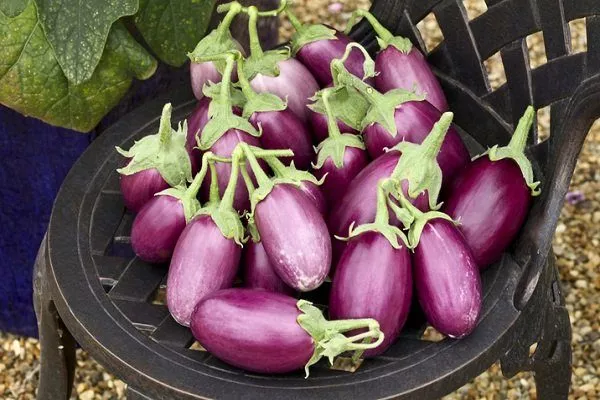
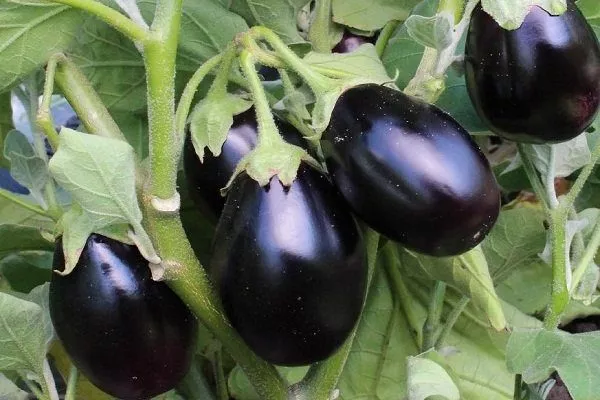
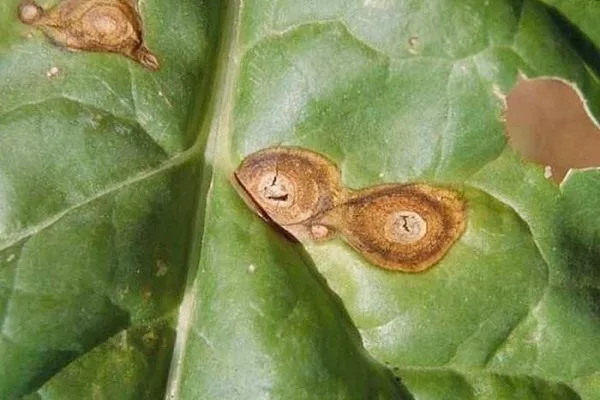
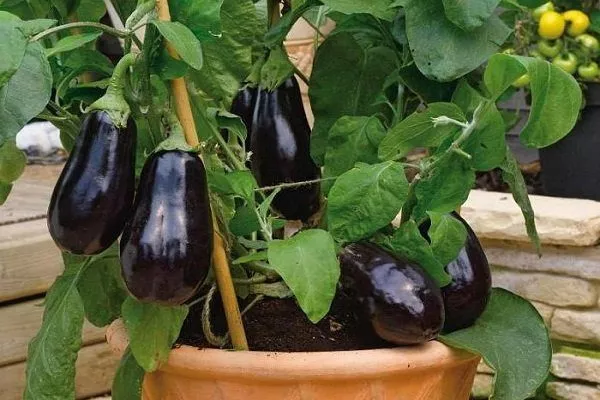
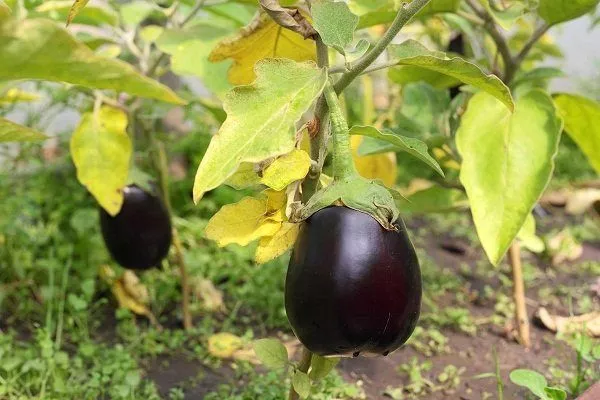
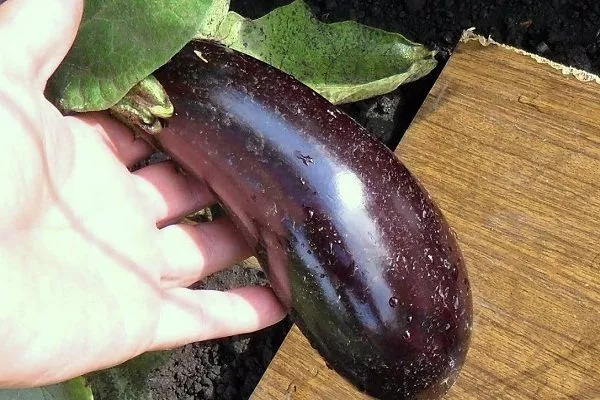
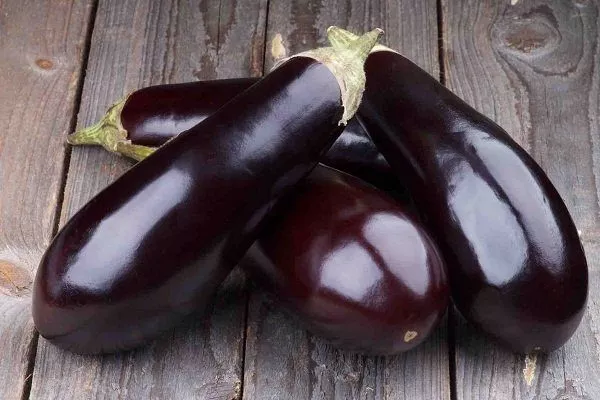
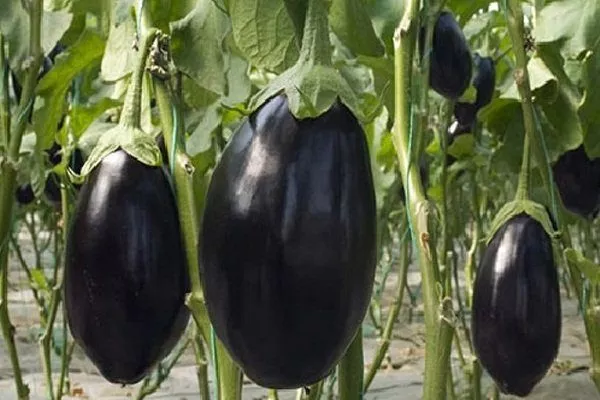
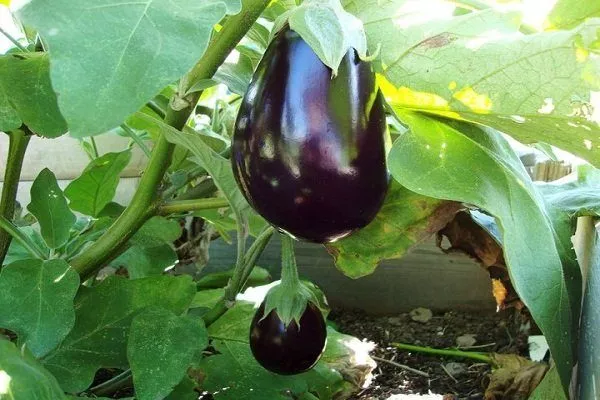
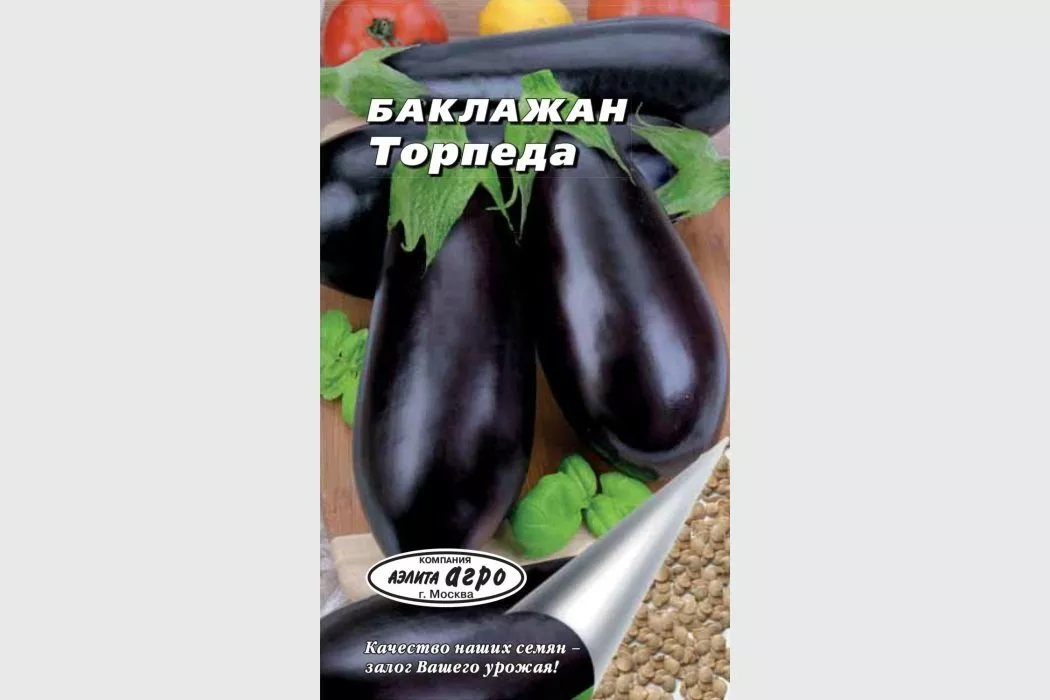
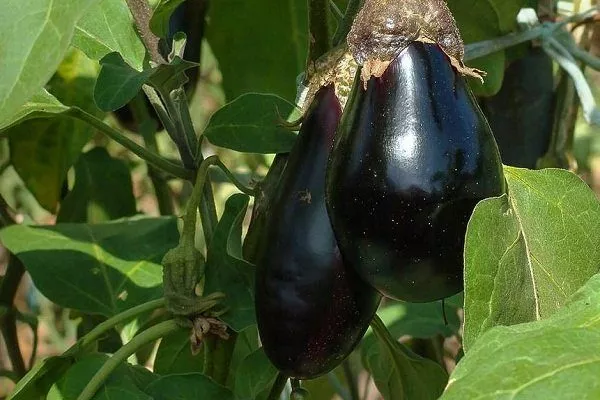
There are eggplant varieties created specifically for greenhouses - Fabina F1, Violet Miracle F1, Bagheera F1, Nutcracker F1, and for open ground - Orion F1, Eastern Express, Taste of Mushrooms.
When to plant eggplant seedlings?
Eggplants are very heat-loving, so when sowing seeds for seedlings, it is necessary to take into account the duration of seedling growth and the climate of a particular region.
If you sow the seeds too early, the seedlings will grow prematurely. The finished seedlings will be too cold to plant and will overgrow.
When determining the sowing time, consider whether the seedlings will be planted outdoors or indoors. Seedlings in a greenhouse are planted two weeks earlier.
Recommended deadlines for different regions:
- Central Russia and Moscow region. Greenhouse planting takes place in the first ten days of May, so seedling sowing begins in mid-February. If planting is planned for a later date, the sowing time is moved forward.
- Ural. The climate in this region is unpredictable, so there's no need to rush seedling planting. Return frosts can occur even in early June. Seedlings are planted no earlier than late May, so seeds for seedlings are sown from late February to mid-March.
- Siberia. Summer arrives late in this region. Seedlings are planted in mid-May to mid-June. The best time for sowing seeds is from the second half of February to mid-March.
- Leningrad region. The optimal period for sowing seeds is from mid-February to early March.
Seedlings ready for transplanting into a greenhouse or open ground should be 20-25 cm tall, have 7-8 leaves, and have strong roots. Seedlings should be 60 to 75 days old before planting.
Planting according to the lunar calendar in 2020
The lunar calendar, popular among gardeners, takes into account the influence of the lunar phases on the growth of vegetable and garden crops. It is believed that the waxing and new moon are favorable for plants that bear fruit above ground.
Days favorable for planting:
| Months | Favorable days (waxing and new moon) |
| February | 1-8, 23, 24-29 |
| March | 1-8,24, 25-31 |
| April | 1-7, 23, 24-30 |
| May | 1-6, 22, 23-31 |
| June | 1-4, 21, 22-30 |
| July | 1-4, 20, 21-31 |
Technology of growing eggplant seedlings
To grow strong and healthy eggplant seedlings, you need to properly prepare the soil and seeds. We'll learn how to choose high-quality planting material, how to process it, and what kind of soil is best for planting.
Choosing Eggplant Seeds When Buying
You can harvest eggplant seeds yourself, but it's easier to buy them at the store. To ensure you buy exactly what you need, carefully read the packaging.
It's not recommended to buy seeds at the market or from private sellers. Buy them from specialized stores. They're sold pre-treated and ready for planting.
What to look for when buying eggplant seeds:
- The packaging must indicate the full name of the variety/hybrid, as well as detailed information about the producer.
- When buying hybrids, choose first-generation varieties, labeled F1. They better withstand the vagaries of weather and have high immunity.
- Look at the date to avoid buying expired seeds.
- Manufacturers package seeds in different quantities. Some packets contain 10 seeds. The seed weight is usually listed on the packaging. Use this information to determine the amount of planting material. There are 250 seeds in 1 gram of eggplant seeds.
Soil preparation
Eggplant seedlings are planted in light, well-drained, neutrally acidic soils that are rich in nutrients and disinfected.
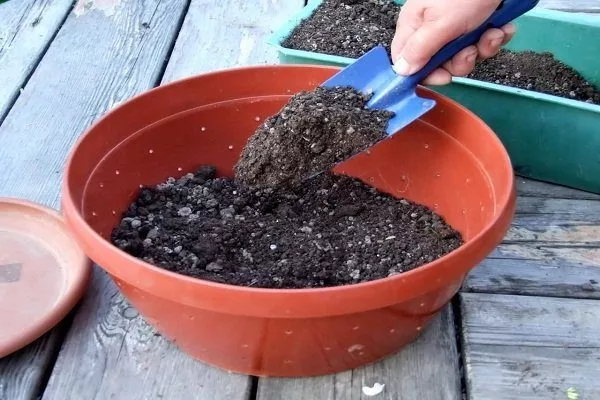
You must choose:
- Capacities. Seedlings can be grown in containers, cassettes, and individual cups. Eggplant seedlings do not transplant well, so it is recommended to plant them in individual containers.
Seedling containers should have drainage holes. The minimum container dimensions are 4 cm wide and high. The most convenient options are peat pellets, individual cups, and cassettes. - Priming. There are two options: buy a seedling substrate from a specialist store that contains all the necessary elements in the right proportions, or prepare the soil mixture yourself.
How to prepare soil for seedlings:
- The first version of the soil mixture:
- humus – 2 parts;
- turf soil or high-moor peat – 1 part;
- sand or semi-rotted sawdust (non-coniferous) – 1 part.
- Second variant of soil mixture:
- humus – 1 part, or high-moor peat – 2 parts;
- turf or leaf soil – 2 parts;
- sand – 0.5-1 part.
A few days before planting, the homemade soil mixture is baked in the oven to destroy insect pest larvae and pathogens.
Methods of soil mixture disinfection:
- warming up;
- calcination;
- scalding;
- freezing.
To stimulate the growth of beneficial microflora, biological preparations, such as "Baikal EM-1", are added to the soil.
Additional fertilizers are added to the soil, for each bucket:
- nitrophoska – 40 g;
- wood ash – 1 glass.
Before filling containers for seedlings with soil, they are scalded with boiling water or disinfected with a solution of potassium permanganate.
Seed preparation
Seeds that you harvest yourself, unlike store-bought ones, need to be prepared for planting.
- ✓ The need to warm up the seeds for awakening.
- ✓ The importance of treatment to prevent diseases.
How to treat eggplant seeds before planting:
- Warming up. To quickly awaken the seeds and bring them out of dormancy, place them in hot water (45 to 50°C) in a gauze bag for 3-5 minutes. This procedure will speed up germination.
- Etching. Seeds can be disinfected in a 1% potassium permanganate solution. Wrap them in gauze and soak them in the solution for 20 minutes. Then rinse under running water. Instead of potassium permanganate, you can treat the seeds in a biofungicide solution. Suitable options include Fitosporin-M, Gamair SP, and others. Disinfection helps prevent many diseases.
- Treatment with a growth stimulator. Eggplant seeds take a long time to germinate. Germination stimulants can speed up germination. To reduce the number of treatments, you can mix the stimulant with a biofungicide. Popular stimulants include Epin and Zircon. Micronutrients, such as Cytovit or Mikrovit, can also be added to the solution. After treatment, the seeds are washed and dried.
- Hardening. This is the final stage of seed preparation. The treated and dried seeds are kept at a temperature of 18–22°C during the day and refrigerated at 2–3°C at night. This procedure is repeated for 5–6 days.
Hardened seeds can be sown, or they can be germinated, which will cause the seedlings to appear even faster.
How to germinate seeds:
- Spread the seeds on a damp cotton napkin and place it in a shallow saucer;
- cover the seeds with a damp cloth and place the saucer in a warm place;
- When the seeds swell and sprout, move them to a dry litter, dry them and start sowing.
Seeds can only be collected from varietal eggplants. Hybrids cannot be propagated this way. If you want to plant hybrid eggplants, you must purchase their seeds.
Types of eggplant sowing
There are several methods for growing seedlings. Each gardener decides for themselves which method is more convenient—traditional or original.
Sowing eggplant seedlings in the traditional way
The traditional method of cultivation involves sowing seeds in soil, which is then used to fill seedling containers.
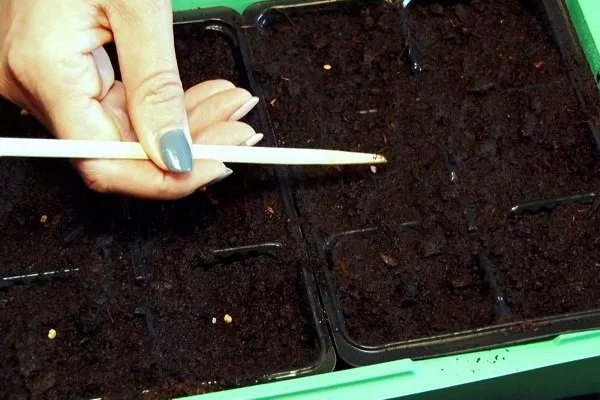
There are several options for sowing using the classical method:
- in separate glasses;
- in cassettes;
- in seedling boxes.
Planting order:
- Fill the containers with soil, leaving a 1.5-2 cm high rim. After watering, the soil will settle and will not wash away.
- Moisten the soil where you'll be sowing the seeds. It should be moderately moist. If the soil is too wet, the seeds risk suffocating and failing to germinate.
- Plant the seeds 1-2 cm deep. When planting in a separate container, place two seeds at a time for safety. When the seedlings emerge, pinch out the weaker seedling.
When sowing in boxes, you can create rows or use a trellis template with 8x8 or 6x6 cm nests. Place the seeds in the center of the nests. This sowing method avoids the need to transplant seedlings. - Cover the seeds with plastic wrap and place them in a warm place. The optimal temperature for seed germination is 26 to 28°C. Seedlings will appear in 5-10 days. Lower temperatures will prolong the germination period, and at 15 to 17°C, seedlings may not appear at all.
If planting is done in seedling boxes, the seeds are placed in rows at intervals of 2-3 cm.
When growing seedlings in boxes in the usual way - sowing in rows, at the stage of appearance of 2-3 true leaves, picking will be necessary.
Sowing in a "snail"
Creative gardeners have come up with the idea of planting seedlings in "snails." These "snails" are rolls of plastic film lined with toilet paper. Instead of film, you can use cut-up plastic bags, polyethylene foam, or isolon.
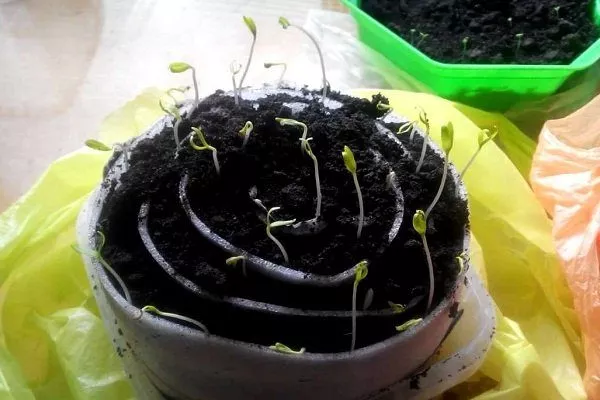
The order of sowing in "snails":
- Cut the film or other insulating material into strips. The strips should be 10-15 cm wide. The length of the strip will depend on the size of the plantings. Typically, the strips are 100-150 cm long.
- Lay the tape out on the work surface and add a 1-1.5 cm layer of soil onto it. Compact the soil slightly and roll the tape into a snail shape.
- Place the rolled-up "snail" upright and secure it with rubber bands. Add more soil if necessary and water it with warm water mixed with a growth stimulant. Once the soil settles, a half-centimeter-high border will form.
- Plant the seeds in a spiral pattern, spacing them 4-5 cm apart. For ease of placement, use a match. Its roughened head, dipped in water, easily catches the seeds, making it easy to pick them up and place them back in place.
- Using a match, press the seeds 0.5 cm deeper and cover them with soil.
- Place the "snail" in a transparent container and cover it with a plastic bag – this will create a mini greenhouse.
- Place the container in a warm place. Ventilate the seedlings daily, moisten them, and wait for the sprouts to emerge. When the first sprouts appear, immediately move the "snails" to a windowsill, closer to the light.
Growing seedlings in snails allows you to obtain strong seedlings without picking.
Sowing in boiling water
This is an express method for quickly obtaining seedlings. This growing method significantly accelerates seed germination.
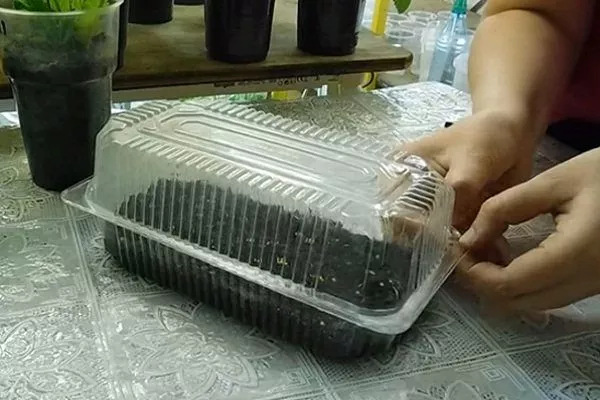
You will need:
- plastic container;
- soil mixture;
- boiling water - you can't use steep water, you need to wait a few minutes after the water boils.
Work order:
- Pour soil into the container. Level it to a depth of 3-4 cm.
- Scatter the seeds over the soil surface. You can arrange them in rows or in a checkerboard pattern. Don't bury the seeds too deeply—let them lie on the surface.
- Pour boiling water over the seeds. Don't overdo it—don't overwater. The soil should be moist, but not soaked.
- Cover the container and place it in a warm, bright place. Seedlings will appear in 3-4 days. If the seeds are high-quality, the germination rate can reach 100%.
In peat tablets without picking
The main advantage of growing seedlings in peat tablets is the absence of the need for picking, which damages the roots of seedlings when moving from one container of soil to another.
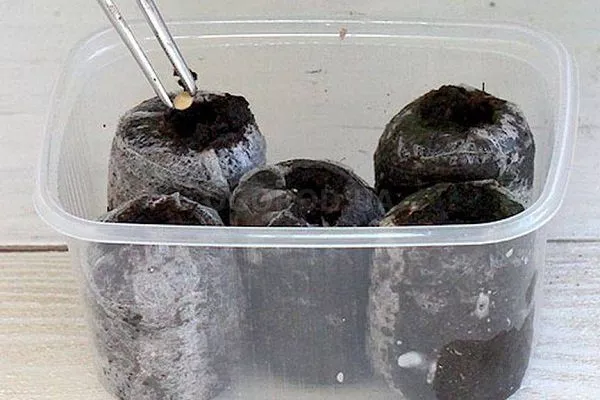
The disadvantage of this method is its expense. It's unlikely to be suitable if large quantities of seedlings are required.
What you will need:
- peat tablets;
- tray with lid.
A peat tablet is compressed peat enriched with micronutrients.
Sowing order:
- Place the tablets in the tray.
- Water each tablet. After a while, the peat tablets will swell and form barrel-shaped shapes. Once saturated with water, the tablets "grow," increasing their height by 5-6 times.
- The tablets have special indentations into which you place the seeds. Sprinkle the seeds with a thin layer of soil.
- Cover the tray with film or plastic lid.
- As soon as seedlings appear, move the container to the brightest spot. Moisten the tablets periodically and monitor the root system's development.
- When roots begin to emerge, the seedlings should be transferred to larger cups. Be sure to remove the film from the tablets so that it doesn't interfere with root growth.
- Take 300 ml cups and fill them with soil—either store-bought potting soil or homemade potting soil. Place the "barrel" with the seedlings on top of the soil and add soil around the perimeter. Plant the stems of the seedlings deep down to the cotyledons.
Sowing eggplants without soil
The soilless method of growing seedlings allows you to quickly and easily obtain any number of seedlings for transplanting. The seedlings are transferred to containers with soil without any damage.
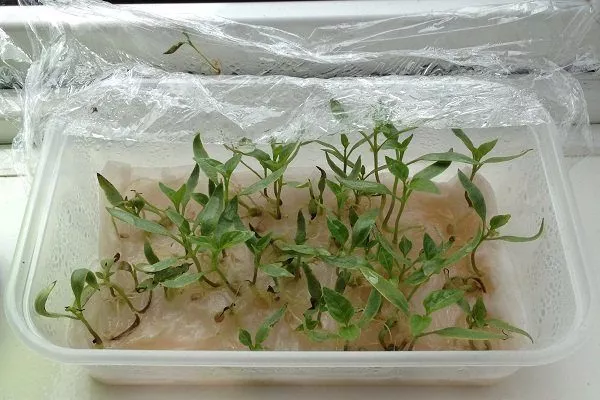
Advantages of the method:
- no soil is needed before the picking stage;
- space is saved due to compact plantings;
- you can germinate any number of seeds;
- The seedlings do not suffer from root rot and black leg.
The method also has its disadvantages;
- due to lack of light, the sprouts may stretch out excessively;
- When the first true leaves appear, the seedlings have to be transplanted into separate containers.
To grow seedlings without soil, you will need:
- plastic container;
- toilet paper - it is better to take white, without dyes;
- hydrogen peroxide solution – 2 tbsp. per 1 liter of water.
Sowing order:
- Fold the toilet paper into 8-10 layers and place it at the bottom of the container.
- Soak toilet paper in a solution of hydrogen peroxide.
- Use a toothpick to spread the seeds evenly over the paper. Press lightly to ensure good contact. You can arrange the seeds in rows or scatter them evenly—whatever works best for you.
- Sowing takes no more than a minute. No need to apply any fertilizer or spray on top. Cover the container with a lid and place it in a warm place. Once the seeds sprout, move the container to a light location, otherwise the seedlings will stretch out.
- Transplant the seedlings into individual cups. Gardeners promise a 100% survival rate.
When should you transplant eggplants?
Pricking out is an unsafe procedure that causes stress to seedlings. It's necessary in one case: when seedlings are planted too close together, causing them to interfere with each other.
As soon as the seedlings develop two true leaves, transplant them into individual cups or peat pots. If the seedlings become overgrown, they will take longer to adapt due to root damage, and development will be delayed by 2-3 weeks.
Dive order:
- 3-4 hours before transplanting, moderately moisten the soil in the boxes with seedlings.
- Fill individual planting containers with the same soil mixture in which the seedlings grew.
- Make a depression in the center of the container and place the seedling removed from the seedling box in it.
- Fill the voids with soil and compact it.
- Place the transplanted seedlings in a place protected from drafts.
Caring for seedlings
In general, caring for eggplant seedlings is the same as for all nightshade crops.
Lighting and temperature
Young eggplant seedlings are very demanding when it comes to light. For normal growth and development, they require 12 hours of daylight.
Helpful tips for lighting seedlings:
- If there is not enough light or the day is too short, turn on lamps – LED or fluorescent;
- Place containers with seedlings in the brightest place;
- periodically turn the cups with seedlings so that they do not lean to one side;
- If the weather is cloudy, do not turn off the lights during the day.
Eggplants are heat-loving and demanding. Recommended temperatures:
- before emergence – from +25 to +28°C;
- immediately after emergence – from +16 to +18°C;
- a few days after emergence – from +20 to +24°C.
Watering
Eggplant seedlings require a high watering regime. It's important to maintain a balance, neither overwatering nor allowing the soil to dry out. The amount and frequency of watering depend on how quickly moisture evaporates and the size of the seedlings—the older the plants, the more water they require.
Rules for watering eggplant seedlings:
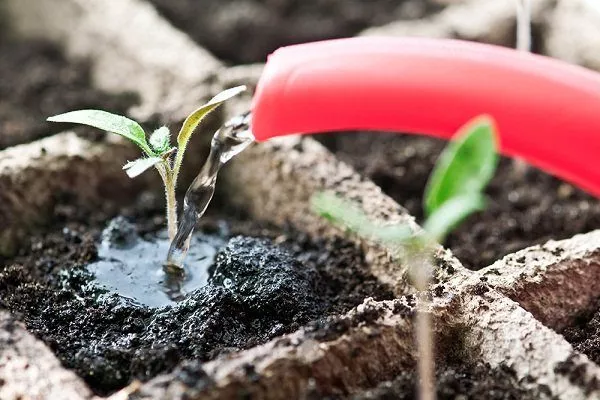
- for watering use only warm (+23…+25°C) and settled water;
- the best time for watering is early morning or evening;
- Water only at the roots.
Top dressing
Fertilizing seedlings begins when 2 or 4 true leaves appear, if grown without picking. If seedlings were pricked out, wait until 10 days after transplanting.
Feeding rules:
- The first time, seedlings are fed with a highly diluted solution to prevent root burns.
- For feeding, it is convenient to use complex fertilizers - "Agricola", "Fertika Lux", "Athlete" and others.
- If the seedlings are planted in a commercial substrate, then there is no need to fertilize them – it contains everything necessary to nourish the seedlings throughout their entire growing season.
- You can feed your seedlings with a homemade solution. For the first feeding, dissolve the following in 1 liter of water:
- potassium – 1 g;
- wood ash – 1 tsp;
- saltpeter – 0.5 tsp;
- superphosphate – 4 g.
- For the second feeding, use organic fertilizer. Apply it 10 days after the first feeding. How to feed seedlings with organic fertilizer:
- mix chicken manure - fermented or in granules, with water in a ratio of 1:15;
- Let the manure sit for 2-3 days and water the seedlings.
- A week before planting, fertilize the seedlings with superphosphate. For 5 liters of mixture, use:
- superphosphate – 35 g;
- potassium salt – 15 g.
- Instead of mineral and organic fertilizers, you can add "Potassium Humate." This fertilizer increases plant stress resistance and promotes root growth.
Living space
Eggplant seedlings require a certain amount of space to grow at all stages of cultivation.
Methods of providing living space:
- picking - seedlings are planted so that they do not interfere with each other;
- moving the cups with seedlings apart - as the seedlings grow, the intervals between the containers increase.
Prevention of seedling diseases
Most diseases that affect eggplant seedlings can be cured, but it is much more effective to prevent their occurrence.
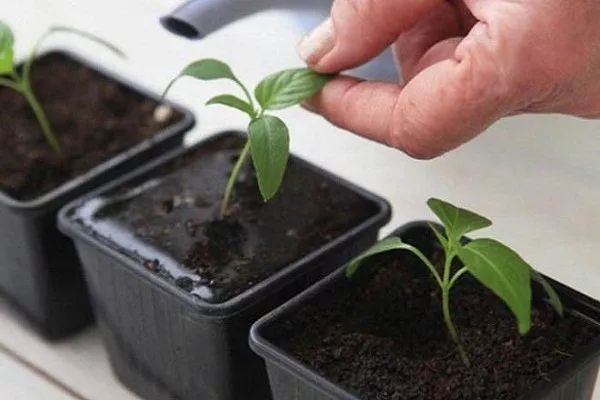
Preventive measures:
- Collect seeds only from healthy bushes. Disinfect them in a saturated solution of potassium permanganate for 30 minutes before planting.
- During the growing season, water the seedlings 2-3 times with a 0.5% potassium permanganate solution. The interval between treatments is 3 weeks.
- Spray the seedlings with milk diluted in water (1:10). After spraying, cover the plants with plastic wrap to prevent viral infection.
- During the growing season, apply 2-3 foliar feedings with solutions containing microelements.
- Disinfect seedling containers, tools and equipment with a 5% solution of potassium permanganate.
Mistakes and problems in cultivation
For beginning gardeners, growing seedlings often presents challenges. The main cause is poor agricultural practices.
The most common problems when growing eggplant seedlings:
- The seedlings stopped developing after picking. Don't worry too much and don't take any action. It takes 7-10 days for the seedlings to adjust to the new conditions and then begin to grow. Inexperienced gardeners often overwater and overfeed their seedlings, which can cause irreparable damage.
- Blackleg. A disease that occurs due to excess moisture. The disease begins with wilting of seedlings, later developing a thin band around the roots. Regular watering and spraying with Previkur can help prevent blackleg.
- Overcooling of the root system. If seedlings are kept on a cold windowsill, a large temperature difference develops between the root system and the above-ground part. This makes the seedlings look unhealthy and stunted. An insulating substrate can help remedy this.
- Mechanical damage to leaves. These can be caused by pests chewing on the leaves. It's necessary to inspect the seedlings and apply an appropriate insecticide. Mechanical damage can also occur due to lamps being placed too close.
- Why do eggplant seedlings stretch? There are several reasons for seedlings to stretch:
- little light;
- too high temperature;
- thickening of plantings;
- too much nitrogen fertilizer;
- the seeds were sown too early.
- What to do if seedlings turn yellow and wither? Yellowing leaves indicate a nitrogen deficiency. This problem can be solved by adding organic matter or a nitrogen-containing mineral fertilizer. Yellowing and wilting can also indicate improper care or disease.
- Why do leaves curl? Leaf curling occurs when watering regimens are improper, when using poor-quality water, or when there's an excess of potassium. Excessive lighting can also cause leaf curling. Avoid shining bright light on seedlings; instead, use diffused, moderate light.
- Why do seedlings turn blue? Seedlings may acquire a bluish tint for several reasons:
- phosphorus deficiency;
- copper deficiency;
- insufficient hydration;
- low temperatures.
You can also learn how to grow eggplant seedlings from the following video:
Growing eggplant seedlings is a painstaking task that requires constant attention and monitoring from the gardener. By following proper agricultural practices, you can prevent many problems and grow strong planting stock.