
Growing eggplants in greenhouses allows for high yields in even the harshest climates. Learn how to plant and grow eggplants in greenhouses and hotbeds, and which varieties are suitable for this purpose.
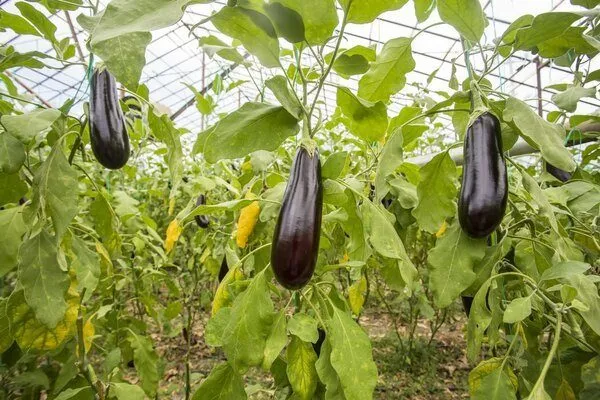
The best eggplant varieties for growing in a greenhouse
Almost any eggplant can be grown in a greenhouse, but it is more rational to plant varieties with a short ripening period.
Eggplant varieties and hybrids suitable for greenhouses must meet the following requirements:
- gradual yield, long fruiting;
- early or mid-early ripening period;
- good taste;
- high yield;
- immunity to diseases and pests;
- bush height – from 70 cm.
Tall bushes produce higher yields and allow for more efficient use of greenhouse space.
Popular greenhouse eggplant varieties:
- Bibo F1. An early hybrid. Reaches 1 m in height. Fruit is white and has excellent flavor. It weighs up to 500 g. It is resistant to fusarium rot and mosaic. Up to 4.8 kg of fruit can be harvested per square meter.

- Alenka. An early-ripening variety with green fruits. Weight: 350 g. Yield: 7.5 kg per square meter. The variety is productive and disease-resistant.
- Pink flamingo. A mid-early variety. Fruits are elongated, purple, weighing 250-450 g. Bush height is up to 2 m. Yield is up to 6 kg per square meter.
- Joker. An ultra-early, tall variety. Fruits are medium-sized, weighing 100-130 g. Ovaries are collected in clusters, with a single bush producing up to a hundred fruits. Yields are up to 8 kg per square meter.
- Viola di Firenze. A high-yielding variety of Italian selection with a mid-season ripening period. Fruits are oval, weighing up to 750 g. It does not tolerate temperature fluctuations well. Up to 10 kg of fruit can be harvested per square meter.
- Goliath F1. A tall, mid-early hybrid, reaching a height of 2.5 m. Fruits weigh over 1 kg. The fruits have a classic pear-shaped, dark purple appearance. Up to 9 kg of fruit can be harvested per square meter.
- Maksik F1. An early hybrid growing over 1 m tall. The fruits are pear-shaped and classic in appearance. The bushes are compact, and the fruits are small, weighing 150-200 g. The yield is high, reaching 10-14 kg per square meter.
- Boyarin F1. An early hybrid. Fruits are classic in appearance, weighing up to 450 g. Yields 6.5 kg per square meter. Resistant to temperature fluctuations. Requires pinching.
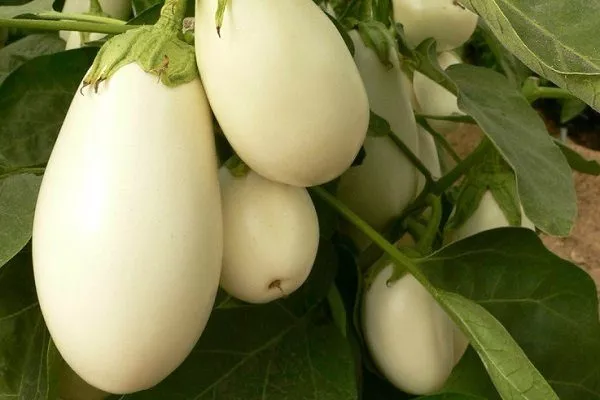
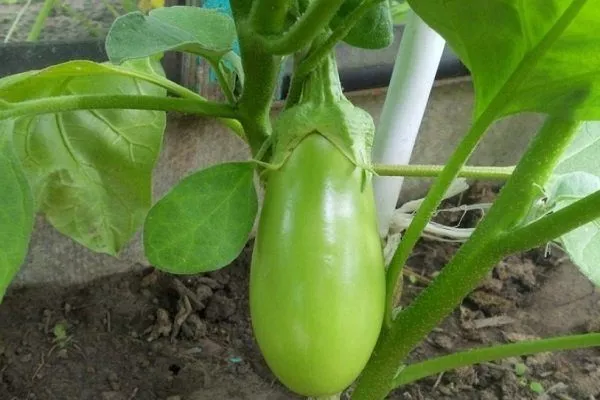

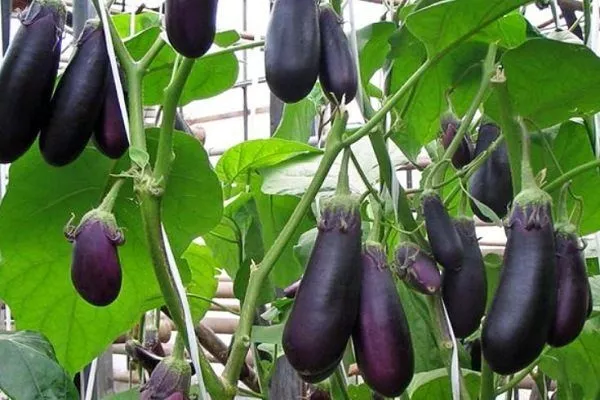
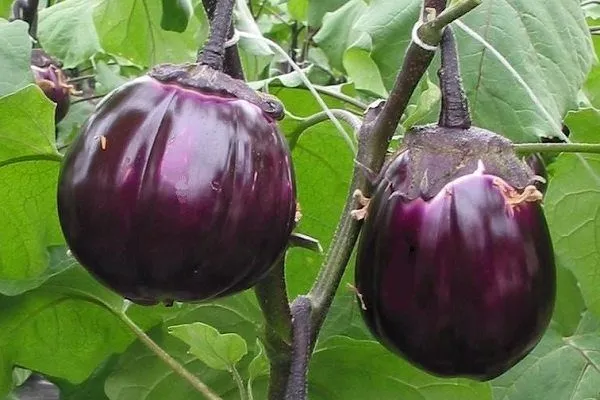
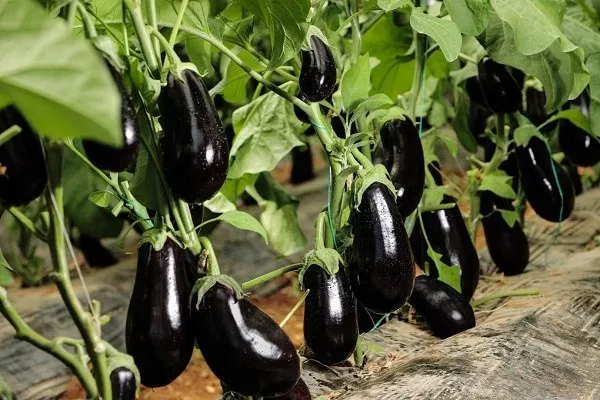
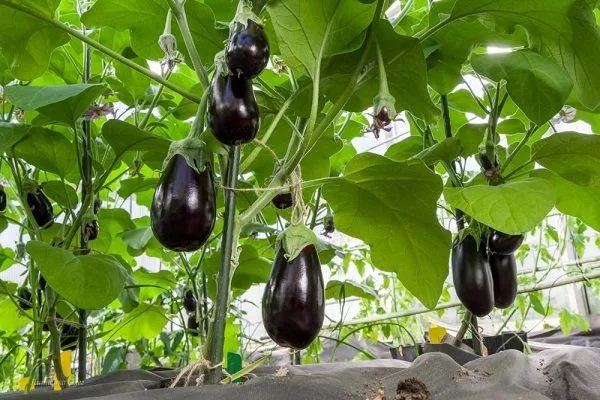
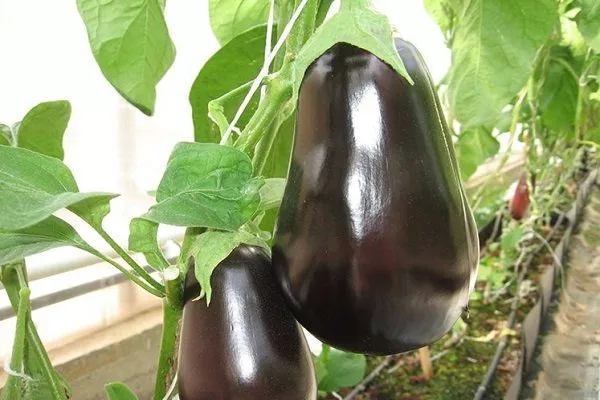
All these varieties are ideal for greenhouse cultivation, but can also be grown outdoors. The main thing is to provide them with support, as most greenhouse varieties grow tall.
Preparing the greenhouse before planting eggplants
Before beginning spring planting, the greenhouse and soil must be disinfected. Without this treatment, plants grown in greenhouses will become diseased and wither.
- Clean the greenhouse, removing all plant debris and garbage.
- Wash the greenhouse using appropriate solutions for different materials.
- Disinfect the greenhouse using the chosen method (sulfur checker, bleach, biological preparations).
- Prepare the soil: remove old soil, add organic fertilizers, and disinfect.
Cleaning and disinfection of the greenhouse
Greenhouse preparation begins with cleaning. Used materials are discarded, and all equipment is removed and thoroughly washed. Any new growth is removed, as it often harbors pathogens and insects.
How to wash a greenhouse:
- Wash glass or film with a regular soap solution.
- Wash metal parts with a hot vinegar solution.
- Clean polycarbonate with a solution of potassium permanganate.
- Dry the washed greenhouse by opening the doors wide.
Methods of disinfection of greenhouses:
- With a sulfur checker. This method is not suitable for greenhouse structures with metal elements; it is used only in greenhouses with wooden frames. How the treatment is performed:
- The gas emitted by the checker permeates the entire greenhouse space, penetrating into every crack.
- During the treatment with a checker, all tools must be in the greenhouse.
- The greenhouse is sealed hermetically for three days. Then it is thoroughly ventilated.
- With bleach. The solution is sprayed onto all structural elements. Chlorine can disinfect even highly contaminated soil. Particular care is taken to spray cracks and wooden structures.
The greenhouse can be treated with biological products. They are not as effective as sulfur checkers or chlorine, but they are safer. Biological products destroy pathogens and improve soil fertility.
Soil cultivation
Before planting seedlings, the soil in the greenhouse is prepared: the remains of last year's vegetation are removed, dug up, exposed plant roots are removed, and the soil is disinfected.
Soil disinfection is necessary to destroy pathogenic microorganisms and is carried out using one of the following methods:
- Chemical. Most often, bleach is used to disinfect soil. It is sprinkled dry over the surface of the soil and raked in.
Formaldehyde can also be used to kill bacteria and other microorganisms. This product prevents blackleg. After this treatment, cover the soil with plastic wrap for 24 hours. - Thermal. The soil surface is treated with hot steam using specialized equipment. A simpler option is to pour boiling water over the beds.
Subtleties of cultivation
To ensure eggplants thrive and produce a full harvest indoors, optimal growing conditions must be created and proper agricultural practices must be followed.
Greenhouse requirements
There are various indoor growing options for eggplants. The choice of design depends on the growing season.
Options for closed ground:
- Greenhouse. Suitable for warmer months, it's placed directly on the ground. Covering material—film or other transparent material—provides good protection from rain, wind, and cold.
- Greenhouse. It's suitable for growing eggplants year-round, provided there's heating. The greenhouse structures are built on a foundation and have a sturdy frame. The covering material is glass or polycarbonate. The following utilities are typically installed inside the greenhouse:
- lighting;
- irrigation system;
- heated floors, etc.
Eggplant varieties grown in greenhouses have tall bushes (1-2 m), so greenhouses and hotbeds are made quite high.
Suitable greenhouse shapes:
- gable;
- arched.
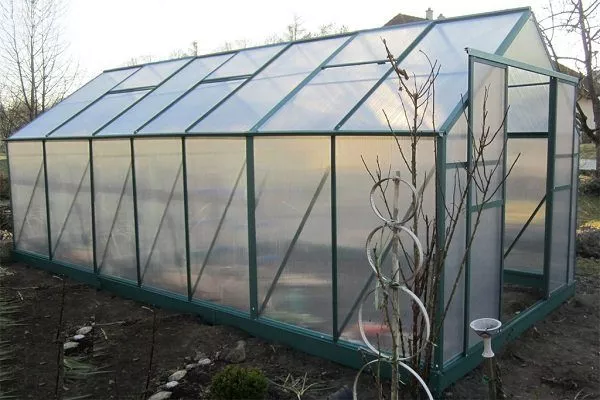
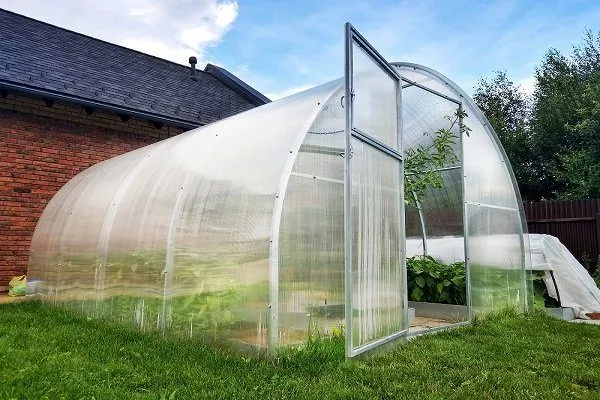
General requirements for greenhouses and hotbeds:
- Possibility of maintaining optimal microclimate and lighting. The optimal temperature is from +20 to +35 °C.
- Ease of plant care. The gardener should be able to freely enter the greenhouse structure, move around it, and have access to the plants without any problems. carry out watering, weeding and other manipulations.
- Reliability and resistance to atmospheric influences. They must withstand strong winds, scorching sun, rain and hail.
A hotbed is less stable than a greenhouse. It's a lightweight structure, so it's crucial to ensure its stability, otherwise it can be damaged by strong gusts of wind. The best covering material for a hotbed is agrofibre.
Soil requirements
The soil that has already been used in the greenhouse must be restored:
- remove the soil from the beds and place it in special sections - they can be located outside;
- mix depleted soil with organic fertilizers - humus, compost, etc.;
- periodically turn over the soil.
The biological method of soil restoration takes 2-3 years.
Features of soil preparation for seedlings:
- Eggplants grow well in light, nutritious soils. Highly acidic soils and heavy soils can cause root rot.
- Eggplant, like all nightshades, is very responsive to organic matter. The soil under the seedlings can be fertilized with any organic fertilizer—manure, humus, or compost.
- Fertilizers are applied to such a depth that it is closer to the roots.
- It is not recommended to add ash together with organic matter, as this mixture removes nitrogen from the soil.
- ✓ Soil pH should be between 6.0-6.5 for optimal nutrient absorption.
- ✓ The soil must be well-drained to prevent root rot.
Timing
Depending on the climate, the time for planting seedlings in a greenhouse varies from April to June. In warmer regions, eggplants are planted in April; in cooler climates, 1-2 weeks later.
When determining the timing of planting in a greenhouse, gardeners often focus on the date of the last frost – about two weeks must pass after this for the soil to warm up sufficiently – to +15 °C.
Seedlings can be planted in heated greenhouses much earlier than in hotbeds.
Landing plan
Eggplant is a sprawling plant that requires a certain amount of space to grow and develop. The height of its stem is smaller than the diameter of the plant.
Recommended landing scheme:
- distance between holes – 45 cm;
- planting is done in rows or in a checkerboard pattern;
- intervals between rows – 60 cm;
- planting depth – 15 cm.
Compatibility with other cultures
Greenhouses have limited space, so different crops often have to be planted too close together. This can be unfavorable, leading to decreased yields and increased disease incidence.
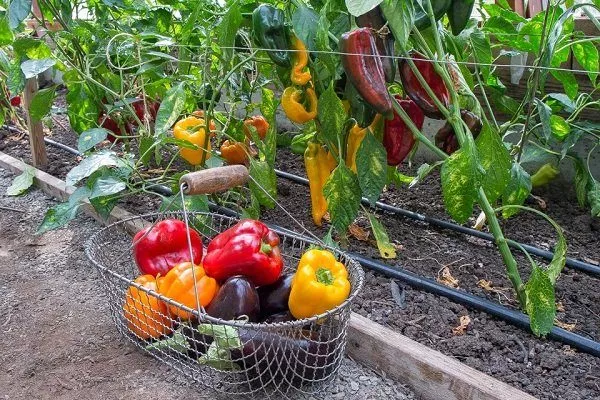
Favorable neighbors for eggplants:
- zucchini;
- cabbage;
- peas;
- green;
- sweet pepper.
Unwanted neighbors:
- Tomatoes and potatoes. They have the same pests as eggplants and suffer from the same diseases.
- Cucumbers. This crop shades the eggplant. Insufficient light results in a lack of fruit set. Cucumbers' high moisture requirements can lead to root rot.
To save space, you can grow the following directly in the spaces between eggplant bushes:
- green;
- legumes;
- melons.
Planting eggplant seedlings in a greenhouse
Water eggplant seedlings 1-2 hours before transplanting to make them easier to remove from their containers. Remove the plants with a clod of soil, being careful not to damage the roots. Transplanting begins in the evening.
The procedure for planting seedlings from individual cups:
- In greenhouse beds, make holes 20 cm deep.
- Throw a handful of humus and ash into each hole.
- Pour 2 liters of water into each hole, in which you have previously dissolved 2 crystals of potassium permanganate - the solution should be light pink.
- Once the water has soaked into the soil, place the seedling in the hole. Avoid planting too deeply to avoid damaging the roots. Place the seedling necks 1 cm deep.
- Cover the roots with dry soil and compact it with your fingers.
- Water the planted seedlings again.
If the seedlings were grown in peat pots, they are planted in the soil along with the container. The pot is placed in the hole, the soil around it is compacted, and watered—the plants are not subjected to any stress during transplantation.
Planting eggplant seeds in a greenhouse
Before growing eggplants in a greenhouse, you need to sow the seeds for seedlings. If you have a greenhouse, there's no need to grow seedlings indoors in cups; you can sow them directly into the ground.
Using grid stencils, seeds are sown directly into the places where they will grow.
Sowing order:
- Place a grid stencil with 6x6 or 8x8 cm cells on the soil.
- Place the seeds in the center of the cells, burying them 0.5 cm deep in the soil.
- The grown plants will not need to be pricked out or replanted.
Features of caring for eggplants in a greenhouse
To ensure that eggplants planted in a greenhouse thrive and bear fruit, it is necessary to create favorable conditions and provide proper care.
Irrigation: volumes, methods, timing
Eggplant is a moisture-loving plant that is sensitive to water stress. A lack of moisture causes the flowers to wilt.
Watering rules:
- For irrigation, use warm water heated to +25 °C.
- Water for irrigation is left to stand for 1-2 days.
- Eggplants should be watered only at the roots. Water should not fall on the leaves.
- The first time eggplants are watered is 5 days after transplanting into the greenhouse, then once a week.
- During fruit formation, the bushes are watered once every 3 days, and even more often in hot weather.
- It is recommended to water eggplants in the morning and loosen the soil in the afternoon.
- If the greenhouse is extremely hot, the paths between the beds are sprayed with cold water.
- The volume of water should be such that it saturates the soil to a depth of 20 cm.
The most convenient and effective method of watering a greenhouse is drip irrigation. Otherwise, water the plants using a watering can with a long spout.
Regular ventilation helps prevent high humidity in the greenhouse. Open the vents on only one side to prevent drafts.
Lighting
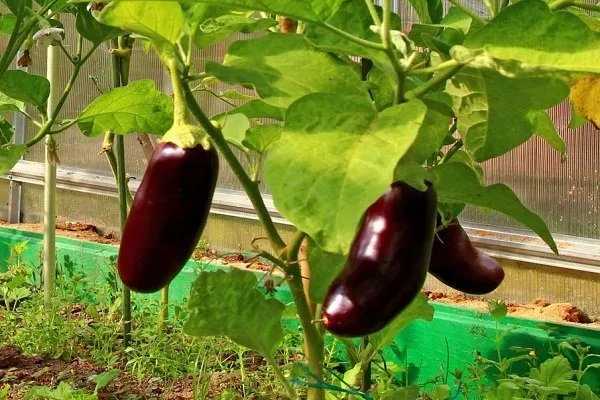
For eggplants to grow and bear fruit properly, they need 12-14 hours of daylight. Less daylight will stunt the plant's growth, while more will cause it to grow foliage and produce little fruit.
Eggplants love light and tolerate direct sunlight well without burning their leaves.
To ensure the required length of daylight, lamps are used:
- phytolamps or LED lamps – universal and economical;
- fluorescent – suitable for small greenhouses;
- Mercury - suitable for greenhouses of any size.
Temperature conditions
Eggplants are heat-loving and can easily withstand overheating, but to obtain high yields, it is important to maintain an optimal temperature regime.
Recommended temperatures:
- optimal daytime temperature – from +25 to +28 °C;
- minimum – +14 °C;
- maximum – +34 °C.
If daytime temperatures drop by 3-4 degrees, eggplants slow down their growth and flower buds go dormant.
To monitor the temperature in the greenhouse, install two thermometers. One at ground level, the other at the tops of the bushes.
Fertilizer and its proportions
Eggplants produce a lot of fruit and are very demanding when it comes to fertilizing. The need for a particular fertilizer is determined by the plant's appearance.
Features of fertilizing eggplants in a greenhouse:
- During the season, the beds are fertilized 3-5 times.
- You can fertilize the plantings with universal fertilizers for vegetables, which are sold in agricultural stores.
- The first time the fertilizer is applied 3 weeks after planting the seedlings.
- If plants bloom poorly, they are given foliar feeding - sprayed with a solution of boric acid.
- Until the ovaries appear, the plants are given complex fertilizers.
- During fruit setting, eggplants need potassium.
- When the first fruits appear, nitrogen-phosphorus fertilizers are applied. Organic fertilizers are applied sparingly during this period to avoid stimulating active green growth.
- During the fruiting period, it is useful to fertilize eggplants with ash and potassium sulfate.
How and when to fertilize eggplants in a greenhouse:
| Period | What to feed? |
| 2-3 weeks after planting | Apply a solution of azophoska to the roots: dilute 3 tablespoons in 10 liters of water. The recommended dose is 0.5 liters of solution per plant. |
| During flowering | Spraying with a solution of boric acid - 1 g of the preparation is diluted in 5 liters of hot water. |
| During the period of ovary formation | A solution of mullein (1:10) is added to the root; later, several more feedings are carried out at intervals of 2-3 weeks. |
| During fruiting | Double the nitrogen and potassium requirements. Use 6 tablespoons of azophoska per 10 liters of water. |
Folk remedies can be used to fertilize eggplants. For example, spraying with an infusion of mown grass or a yeast solution can be beneficial.
How does pollination occur?
Eggplants have bisexual flowers, so pollination should occur spontaneously. However, given the lack of wind in the greenhouse, which reduces pollination, it's helpful to regularly shake the plants or pollinate the flowers with a brush.
Mulching
Mulching helps maintain soil moisture at the required level, reduces the amount of watering and prevents many diseases.
You can mulch plantings with the following materials:
- straw;
- grass;
- sawdust;
- humus;
- rotted manure;
- peat.
Formation of bushes
Eggplant varieties grown in greenhouses are characterized by tall bushes. They require shaping and pinching.
Rules for forming bushes:
- The procedure begins when the bushes reach a height of 30 cm.
- Of all the stepsons, 2 strong ones are left and the rest are removed.
- They pick off the leaves that shade the fruits.
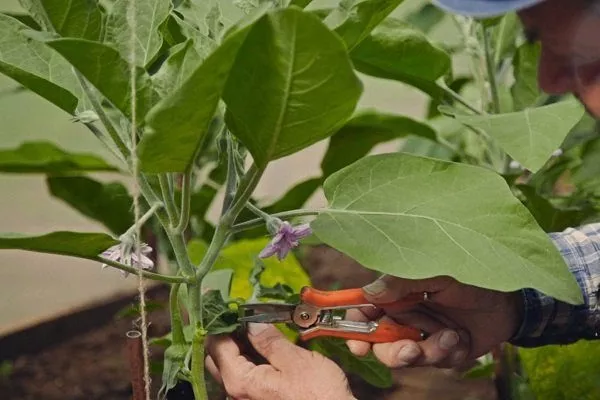
- The specifics of pruning vary depending on the variety. Some eggplants require pinching to encourage the growth of side shoots. Other varieties, on the contrary, require the removal of side shoots.
Tying to a support
Staking is essential for supporting the branches. The fragile branches of eggplants can break under the weight of the fruit. Staking is especially important for tall varieties, which grow up to 2 m in height.
The bushes are supported using a trellis made from wire and two stakes. The trellis is tied with twine in several places to prevent branches from breaking and shade the bushes.
Controlling diseases and pests in a greenhouse
Eggplants are affected diseases, typical of nightshade crops. In greenhouses, they are particularly susceptible to late blight, rot, anthracnose, and tobacco mosaic. Poor ventilation, high humidity, and sudden temperature fluctuations contribute to this.
Preventive and therapeutic measures help to cope with diseases:
- disinfection of the greenhouse and all equipment;
- during the growing season – sprinkling the beds with mustard powder;
- spraying plants with garlic and tobacco infusion;
- treatment with Fitosporin and Zircon.
Among the most dangerous and common eggplant pests are aphids, spider mites, Colorado potato beetles, whiteflies, and slugs. If any of these insects appear on the plants, immediately apply biological products such as "Strela."
Folk remedies also help combat insects, such as dusting and spraying with ash, treating with solutions of garlic and tomato tops, etc.
Harvesting and storage
If the care was carried out correctly, after a month you can pick eggplants.
Features of harvesting eggplants in a greenhouse:
- pick the fruits when they are slightly unripe;
- cut the fruits with pruning shears;
- cut off the fruits together with the stalk;
- Don't grow large eggplants - they become tasteless.
Eggplants are stored for no more than a month, during which time they must either be eaten or processed.
Storage rules:
- each fruit is wrapped in paper and placed in boxes;
- the best storage place is a basement or cellar;
- You can also place the fruits in plastic bags with holes for ventilation;
- the optimal temperature for storage is from +5 to +10 °C;
- The fruits can be frozen.
Potential difficulties when growing eggplants in a greenhouse
Eggplants are a demanding crop, and despite the optimal conditions created for them in greenhouses, problems often arise during cultivation.
Problems when growing eggplants in greenhouse conditions:
- Spots appear on the leaves. If they are not caused by a disease, then the probable cause is direct sunlight or close proximity to lamps.
- The shoots grow poorly after planting. For the first 10 days, the seedlings are taking root but not growing—this is normal. If they continue to fail to grow, you should feed them with Kornevin.
- The leaves turned yellow. Perhaps the watering regime or fertilizer dosage is incorrect, or the plant is affected by disease.
- The ovaries are falling off. This phenomenon is observed when there is a deficiency or excess of moisture.
- The bush is developing well, but there are few ovaries. The reason is an overdose of nitrogen fertilizers or lack of pruning.
- The bush blooms but does not bear fruit.Artificial pollination is required.
Tips and recommendations from experienced gardeners
Experienced vegetable growers and gardeners have recommendations for beginners who are starting to grow eggplants in greenhouses.
Helpful tips:
- Thin out the bushes regularly – this will improve their ventilation.
- If a diseased plant appears, remove and destroy it immediately.
- When the air temperature drops, reduce the amount of watering.
- When spraying crops with toxic preparations, wear glasses, a respirator and gloves.
Tips for growing eggplants in a greenhouse can also be found in the following video:
Reviews from gardeners
Thanks to greenhouses and hotbeds, heat-loving eggplants can be successfully grown in regions with harsh climates. To achieve high yields when grown in greenhouses, it's important not only to follow proper agricultural practices but also to select the right varieties.