
The Valentina F1 eggplant is a productive, early-ripening hybrid of Dutch selection. Our gardeners love it for its delicious fruits and low-maintenance nature. Let's learn about all the characteristics of this variety, how to grow it in your garden, and how to achieve high yields.
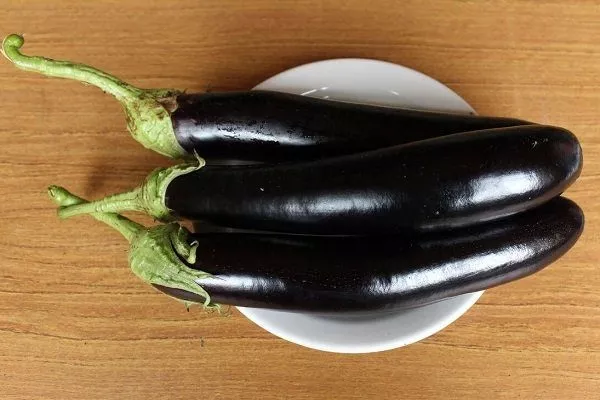
Valentina eggplant has no bitterness
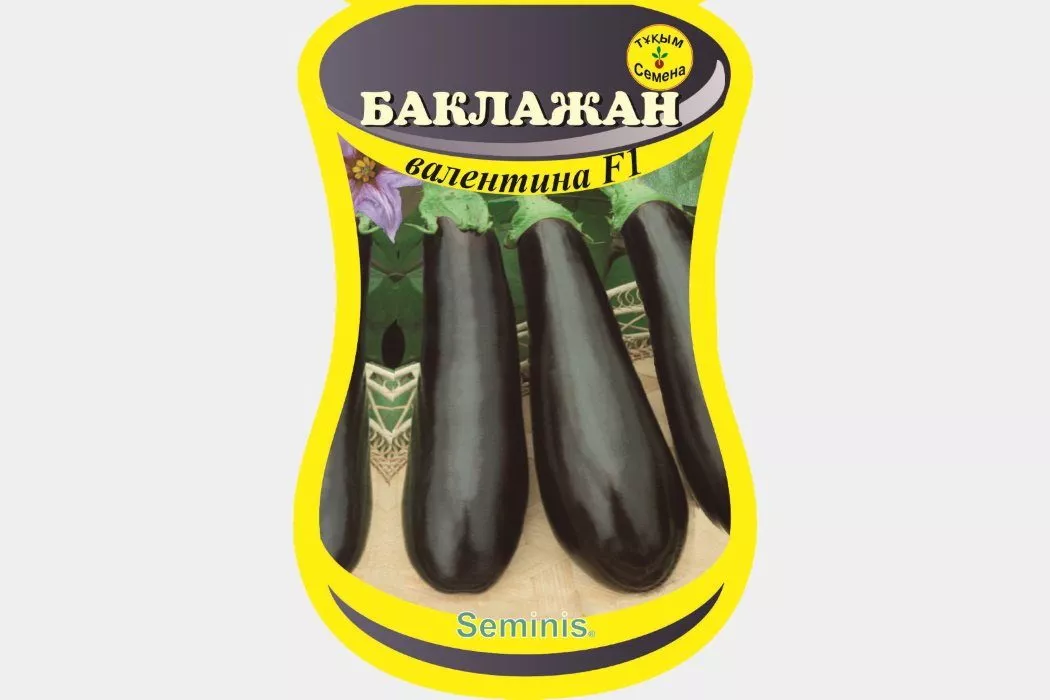
Eggplant Valentina
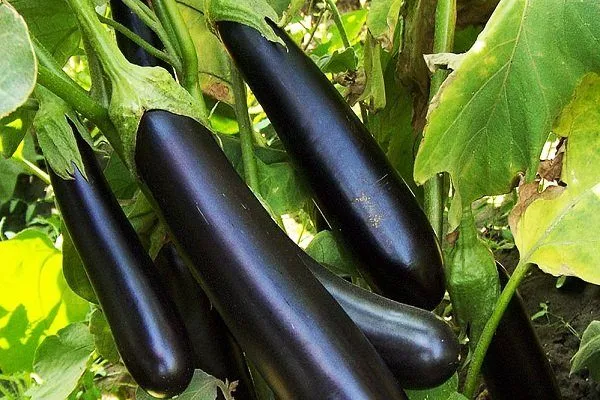
Valentina eggplants are stored well.
Hybrid characteristics
The Valentina hybrid was developed by the Dutch company MONSANTO HOLLAND BV. It was entered into the Russian State Register in 2007. It is suitable for growing in private gardens, both in open and closed ground.
Description of the plant
The Valentina variety is classified as a medium-sized or tall eggplant. The plants have strong, upright stems and large flowers.
Description of the Valentina F1 eggplant bushes:
- semi-spreading;
- height – 80-90 cm;
- pubescent, light purple stems;
- medium-sized leaves, notched at the edges;
- Flowers are white-violet, 3-4 cm in diameter.
Fruit
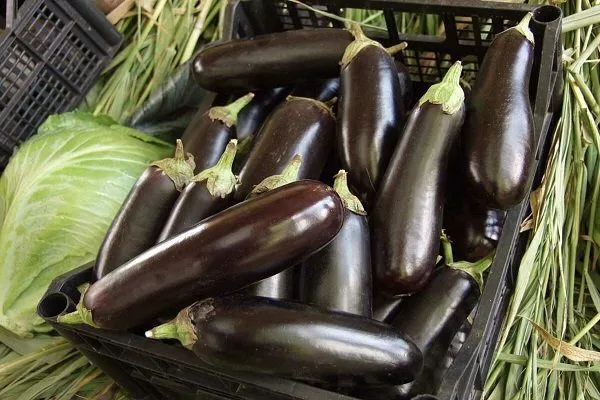
The fruits of the Valentina F1 eggplant have a traditional appearance for this crop.
Fruit characteristics:
- shape – drop-shaped, elongated;
- length of ripe fruit – 20-26 cm;
- thickened, the lower part of the fruit reaches 5 cm in diameter, the upper part – 4 cm;
- average fruit weight – 200-250 g;
- the skin is thin, shiny, easy to peel;
- the flesh is creamy white, with small seeds;
- The taste of the pulp is pleasant, without bitterness.
Productivity and fruiting
The Valentina F1 eggplant is an early-ripening variety. The fruits ripen 60-75 days after planting. In temperate climates, the first eggplants are harvested in July. The maximum fruit weight is 300 g.
Yield of eggplant Valentina F1:
- in open ground – 2.8-3 kg per 1 sq. m;
- in greenhouse conditions – up to 5 kg per 1 sq. m.
Scope of use
Fruits picked at the stage of technical ripeness are used:
- In cooking. They are boiled, fried, stewed, baked.
- For blanks. Eggplants are prepared in different ways: they are dried, frozen, canned, and pickled.
Resistance to diseases and pests
This Dutch variety is highly resistant, but can be susceptible to pests and diseases under unfavorable growing conditions. In high humidity, the hybrid is susceptible to fungal attacks, but is resistant to tobacco mosaic.
The variety can be attacked by pests:
- aphid;
- Colorado potato beetles;
- spider mite;
- slugs.
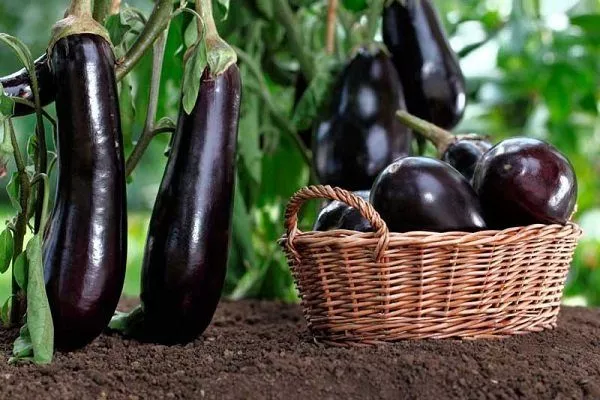
The advantages and disadvantages of the Valentina eggplant
The Dutch hybrid has many advantages, which is why our gardeners grow it.
Pros:
- Adaptability to various weather conditions. The hybrid reliably withstands adverse external influences, not reacting to cold or heat by dropping buds and flowers.
- High yield.
- Undemanding to growing conditions.
- Due to the small number of seeds, the fruits have a delicate structure.
- The fruits are of the same size.
- Good transportability.
- High shelf life. Fruits stored in a cool, dry place can last for up to a month without significant loss of appearance or flavor.
The variety has no obvious drawbacks. Some gardeners may dislike the following:
- Fruit shape. Eggplants grow quite thin, but many prefer pear-shaped eggplants, with a thicker base.
- Fruit flavor. Not all gardeners are satisfied with the hybrid's flavor. "Valentina" is also unpopular with those who prefer fruits with large seeds.
Features of planting and growing the variety
It's recommended to grow eggplants using seedlings. This method produces strong, vigorous plants and an early harvest—the first fruits are harvested as early as mid-summer.
Soil preparation
Eggplant seedlings It's best to grow it in a special soil mixture, which is sold in agricultural stores. If desired, you can prepare the soil yourself.
- ✓ The pH level should be between 6.0-6.5 for optimal absorption of nutrients.
- ✓ The soil must be sterilized to prevent seedling diseases.
To prepare the soil for seedlings, mix in equal parts:
- compost or humus;
- peat;
- sand;
- fine sawdust or perlite.
Ash is added to the thoroughly mixed mixture - 1 cup per bucket, or saltpeter - 10 g. The soil is also enriched with urea - 1 tablespoon of fertilizer is dissolved in 10 liters.
Timing
The exact time for planting seeds depends on the growing region. When choosing a sowing date, consider the time of planting and the length of time the seedlings will be growing. It takes approximately two months from sowing to seedling maturity.
In regions with a temperate climate, sowing seeds for growing eggplant seedlings is carried out from the second half of February to mid-March.
Sowing seeds without germination
Eggplant seeds don't need to be germinated. However, they can be disinfected with hydrogen peroxide or a growth stimulator.
Eggplant seedlings are grown in individual containers. Pricking out is avoided, as seedlings have very delicate root systems and transplanting can damage them. Therefore, seeds are sown directly into pots or trays rather than in larger containers.
The order of sowing seeds:
- Fill the pots with the prepared mixture or purchased potting soil. Do not compact the soil.
- Make small indentations in the center of the pot. Plant the seeds at a depth of 1-1.5 cm.
- Place only one seed in each hole.
- Water the crops and cover with soil.
- Cover the pots or cassettes with transparent material and place in a warm, well-lit room.
- Maintain the temperature during the day at +26 to +28 °C, and at night at +15 to +16 °C.
Caring for seedlings
Eggplant crops require daily care – maintaining air temperature and soil moisture, feeding the growing seedlings on time, and providing the correct lighting conditions.
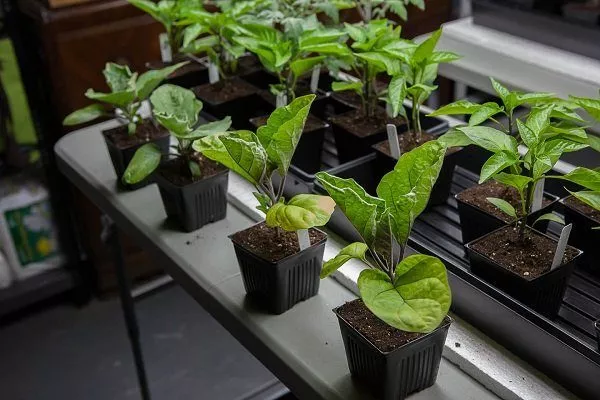
Temperature conditions
When growing any seedlings, including eggplant, the ambient temperature changes depending on their age.
Temperature regime features:
- For 14-15 days after sowing, maintain the temperature at +26 …+28 °C.
- When seedlings emerge, the film or glass is removed, the pots are moved closer to the light, and the temperature is reduced to 23–25°C. This restriction helps prevent the seedlings from becoming elongated.
- Night temperatures should be +15…+16 °C.
- On cloudy days, it is recommended to lower the daytime temperature by 2–3 °C.
Daylight hours
Seedlings require long days. If there's not enough sunlight, supplement with artificial lighting.
Features of the light mode:
- For lighting, it's advisable to install special phytolamps with a red-blue light spectrum, which is beneficial for plants. With these lamps, seedlings can be grown even in dimly lit rooms.
- Daylight hours should be 10 hours.
Watering
Seedlings require regular watering. The key principle of seedling watering is consistency, which should be tailored to the soil's condition.
Watering rules:
- water for irrigation should be heated to +20 °C;
- the soil is moistened as it dries out, the average frequency of watering is once every 2 days;
- Excess moisture is unacceptable - seedlings may get black leg disease.
When watering, it is recommended to use antifungal preparations - "Fundazol" or "Gauspin".
Top dressing
If the seedlings are grown in a fertile, well-fertilized soil mixture, they may not require additional fertilizer. Otherwise, they will need additional feeding.
- The first feeding is 10 days after emergence - with a urea solution (10 g per 10 l of water).
- The second feeding is done 2 weeks after the first – with a complex mineral fertilizer.
- The third feeding is a week before planting in the ground - with potassium fertilizers to strengthen the root system.
How to feed seedlings:
- Water the plant 2-3 times with a Kristalin solution. To prepare the solution, dilute 6-8 g of the product in 10 liters of water.
- Dissolve 30 g of superphosphate and 10 g of urea in a bucket of water and water the seedlings with the prepared solution.
Transplanting seedlings
Two weeks before planting the seedlings outdoors, they begin hardening off by taking them outside. Initially for 20 minutes, the duration of these "walks" is increased each day, gradually building up to several hours.
Hardening is necessary for plants to improve their adaptation to new conditions – sunlight and sudden temperature changes.
Seedlings ready for transplanting should have at least 5 true leaves. The seedlings should be 20-25 cm tall. Another sign that the seedlings are ready is the appearance of buds.
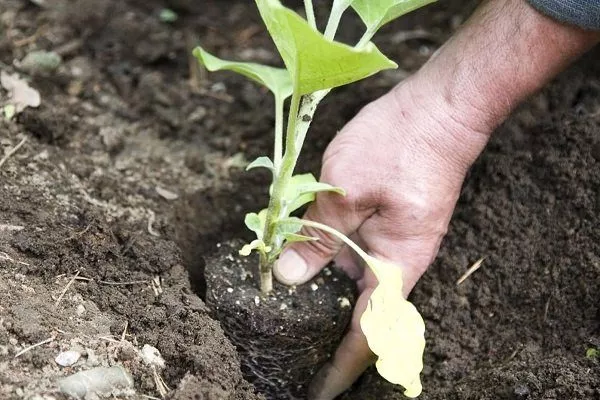
The procedure for transplanting seedlings into the ground:
- Prepare the planting site. This should be a well-lit area where legumes or melons were previously grown. Dig it over and fertilize with superphosphate (30-50 g per square meter), wood ash (1 cup per square meter), and potassium sulfate (15-20 g per square meter).
- Dig holes for the seedlings, spaced 25-30 cm apart. If the soil is clayey, add a handful of sand to the holes. Leave 60-70 cm between adjacent rows. The holes should be 15 cm deep.
- Before planting, water the holes – approximately 500 ml per hole.
- Place the seedling in the hole. Press it deep down to the cotyledon leaves, cover with soil, and compact it lightly.
- Water the plants again and mulch them with dry grass or pine needles. Instead of natural mulch, you can use dark plastic film, placing it between the rows.
It is recommended to transplant eggplants into open ground in the evening in calm weather.
To avoid excessive foliage growth, it's important to follow the correct dosage when fertilizing eggplants with mullein infusion. Apply no more than 500 ml of the solution per plant (200 ml of mullein infusion diluted in 10 liters of water).
Growing in a greenhouse
In regions with cool summers, eggplants are not planted in open ground, but in unheated greenhouses or film shelters.
Features of growing eggplants in a greenhouse:
- Eggplants "Valentina" are planted in greenhouses from approximately May 10 to 20.
- The planting pattern is similar to open ground – 60x30 cm.
- The bushes are watered only with warm water 2 to 4 times a week.
- After watering, the soil must be loosened, trying not to damage the roots.
- It is recommended to mulch the soil.
- Three weeks after planting, the plants are fertilized. The best option is to water them with a Kemira Universal solution. Prepare the solution by diluting 1 tablespoon of the solution in 10 liters of water. The recommended watering rate is 500 ml per plant.
- Organic or mineral fertilizers are used for fertilizing. Recommended organics include wood ash, fermented grass and weed solution, and diluted manure.
- When the ovaries appear, half are removed, leaving the largest ones. This will speed up the ripening of the fruit and make them larger.
- The greenhouse is regularly ventilated to prevent the eggplants from suffocating. The "Valentina" variety is very resilient and can withstand adverse conditions, including high temperatures. The plants will retain their ovaries, but the fruits will be small.
- The greenhouse must maintain optimal humidity—no more than 70%. If the greenhouse is damp, pollen from the flowers will not be able to move, and yields will decrease.
Caring for eggplants in open ground
The Valentina hybrid is unpretentious and requires only standard care. It's important to provide the plant with the minimum necessary growing conditions—warmth, water, and nutrition.
Eggplants are grown outdoors only in regions with warm summers, such as southern Russia. In temperate climates, it is recommended to plant them in greenhouses or under plastic covers.
The optimal temperature for eggplant growth and development is between 28 and 30°C. At lower temperatures, the crop's development lags.
Watering and fertilizing
Watering eggplants – a necessary agricultural measure on which the development of the plant and its yield directly depend.
Watering rules:
- The first time planted eggplants are watered no earlier than 5 days after planting.
- Water the eggplants at the roots.
- The best time for watering is morning.
- Water temperature from +26 to +28 °C.
- The frequency of watering in open ground is 2-4 times a week.
Fertilizing is combined with watering to avoid burning the plant roots.
Feeding schedule:
- Two to three weeks after transplanting into open ground, fertilize the eggplants with Kemira or Rastvorin. Dissolve 1 tablespoon of fertilizer in a bucket of water. The recommended amount of fertilizer per plant is 500 ml. Any organic fertilizer can also be used.
- At the budding stage, add phosphorus and potassium. Dissolve 1 tablespoon of potassium sulfate and 1.5 tablespoons of ammonium nitrate in a bucket of warm water.
- During fruit set, add a nitrogen-phosphorus "cocktail." Dissolve 25 g of superphosphate and potassium salt in 10 liters of water. Adding wood ash—1 cup per square meter—is also a good idea.
- A month before harvesting, plants are given dissolved superphosphate and potassium salt – 1 tablespoon of each component is diluted in a bucket of water.
Soil care
After each watering, the soil must be carefully loosened. Eggplants have roots quite close to the surface, so loosening the soil must be done with extreme caution.
After loosening, the soil is mulched with humus, dry grass or other suitable material.
Bush formation
The Valentina F1 eggplant is characterized by tall, fairly spreading plants. However, they don't require any special pruning; minimal care is sufficient.
Recommended:
- Tie the bushes to supports - pegs.
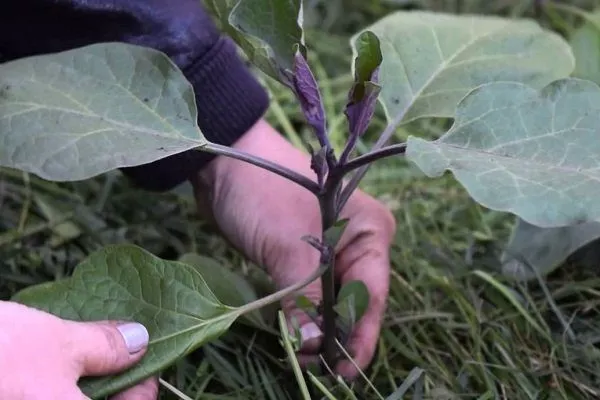
- Carry out sanitary pruning – tear off dried leaves and shoots.
Prevention of diseases and pests
The Valentina hybrid is resistant to viruses, but can be affected by fungal diseases.
Recommended for prevention purposes:
- Treatment with Fitosporin or Zircon to prevent fungal infection.
- Spraying wood ash on the soil will repel slugs.
It is recommended to plant plants with a strong scent between the beds, such as calendula or marigolds.
Diseases and pests
Under unfavorable growing conditions and without preventative measures, even a resistant hybrid can be affected by diseases (viral and bacterial) and pests.
Possible diseases of the Valentina hybrid:
- Late blight. It is accompanied by the appearance of brown spots on the leaves. Over time, the spots spread to the shoots and fruits, causing the plant to die. To prevent the disease, eggplants are sprayed with copper-containing fungicides, such as Bordeaux mixture, copper sulfate, copper oxychloride, and others.
- Black bacterial spot. Symptoms include the appearance of black spots with a yellow border. Fruit becomes covered with ulcers. Treatment is by spraying the plants with "Fitoflavin-300."
- Gray rot. It appears in high humidity. Leaves become covered with gray spots. Spraying with Horus helps eliminate the disease.
The most dangerous pests:
- Whitefly. Small butterflies whose larvae suck the plant's sap. Watering with "Aktara" at the roots is recommended.
- Aphid. Spraying with a solution of ash and laundry soap helps get rid of it. Several treatments are necessary. In case of widespread infestation, use "Iskra," "Strela," and other pesticides.
- Colorado beetle. Spraying with Corado and Aktara is recommended. Beetles can be collected by hand.
- Spider mite. If pest infestations are small, remove cobwebs and damaged plant parts. Spraying with an ammonia solution is recommended.
Harvesting and storage
The fruits are harvested as they ripen. They are picked when they reach technical maturity, when the skin turns a deep purple hue. A ripe fruit should be 20-25 cm long.
Recommendations for collection and storage:
- Begin harvesting the fruit at the end of July, as it ripens. Carry out the bulk harvest when the cold weather sets in.
- Cut the fruits with pruning shears.
- Store harvested fruits in a cool place. Shelf life is 1 month.
- Don't pick green eggplants—they're inedible, just like overripe ones. Their flesh is bitter, and the seeds become tough.
- Pick the fruit every few days, preventing it from becoming overripe. If the skin of the fruit has become dull or pale, it's overripe. It's essential to pick it, otherwise the formation of new fruit will slow down.
Tips from experienced vegetable growers
There's nothing complicated about growing Valentina F1 eggplants, but there are secrets that will help you get a bountiful harvest while avoiding losses.
Tips from experienced gardeners:
- After transplanting the seedlings into the greenhouse, don't rush to water them. Let them sit for 5-6 days.
- When watering, pour at least 500-1000 ml of water under one bush.
- Water the plants only with warm water. Pour the water at the roots, avoiding contact with the leaves.
- Sprinkle ash scattered on the soil with water – pests cannot stand the smell of wet ash.
- Eggplants thrive with low-growing greens like dill, sorrel, and garlic. However, they shouldn't be planted next to tomatoes. Both eggplants and tomatoes are members of the nightshade family, and their proximity harms each other. They suffer from the same diseases and have the same insect enemies.
Reviews from gardeners
The Dutch hybrid "Valentina" performs well in our climate. This variety successfully combines low maintenance with high yields. With minimal care, you can get 3-5 kg of high-quality and delicious eggplants per square meter.