
Sowing eggplant seedlings requires a responsible approach. The harvest depends on the correct timing and subsequent care of the seedlings. We'll explain how to grow high-quality eggplant seedlings further in this article.
When to sow eggplant seedlings?
The date for sowing eggplant seedlings depends on:
- Climate of the growing region.The colder the weather, the later the work is carried out.
- Features of the crop variety.Pay attention to the dates specified by seed manufacturers on the packaging. Adherence to these dates determines the quality of the seedlings and the final harvest.
- Method of subsequent cultivation. Greenhouse cultivation involves earlier sowing of seeds for seedlings.
- ✓ Consider not only the regional climate, but also the microclimate of your site, which can vary significantly.
- ✓ To accurately determine the sowing date, use data on the average soil temperature at a depth of 10 cm, which should be at least 15°C for eggplants.
Seedlings are ready for planting in their permanent location 55-60 days after sowing. Choose the optimal time for sowing seeds based on this information.
In central Russia, if you're growing eggplants in a greenhouse, sow the seeds in the second ten days of February. If you're growing them outdoors, sow the seeds for seedlings in early spring.
Experienced gardeners recommend using the moon's phases as a guide when choosing the date to sow eggplant seeds for seedlings. The waxing moon is the best time for this. Planting is not recommended during the new moon or full moon. The "Lunar Calendar for Gardeners" will help you determine the recommended sowing dates.
Selecting a seedling container
Any container is suitable for growing eggplant seedlings. These include wooden or plastic boxes without gaps, cut-down plastic canisters and bottles, containers and cups, as well as special peat or coconut cassettes, pots, and tablets.
Wash reusable containers with laundry soap or scald them with boiling water. To prevent fungal diseases of eggplant seedlings, treat the containers with any fungicide (Fitosporin, a weak solution of potassium permanganate, etc.).
Soil preparation
Eggplants grow well in light soils with a neutral pH. They tolerate slightly acidic soil. To sow seeds for seedlings, purchase ready-made soil mixes or prepare the soil yourself. To do this, prepare the necessary components and mix them in the correct proportions. The following table will help you do this without errors:
| Mixture component | Proportions | Preparation |
| Turf | 1 | clear out the trash |
| Sand | 0.25 | sift through a sieve and calcine |
| Coconut fiber | 0.5 | chop |
| Sawdust | 0.5 | Pour boiling water over the small sawdust and dry it |
| Peat | 2 | remove large fragments, chop and soak in warm water |
| Lime | 0.25 | sift through a sieve |
- ✓ Adding perlite or vermiculite to the soil will improve its aeration and water-holding capacity.
- ✓ Using vermicompost in the soil will increase its nutritional value and promote healthy growth of seedlings.
Another, less rich in composition, option for planting mixture is soil made from:
- chernozem – 2 parts;
- purchased land – 2 parts;
- river sand – 1 part.
In this case, mix the ingredients and then water the soil with a pink solution of potassium permanganate or bake it in the oven at 200°C for 15 minutes. This prevents possible diseases and pest attacks, whose larvae may be present in the soil.
Preparing seeds for sowing
Preparing seeds for sowing includes the following set of activities:
- Selection of seeds.Purchase seeds from reputable sellers. Pre-processed and packaged seeds are ideal. They require no additional preparation and are ready to plant. When choosing, consider the variety and the availability of seeds in your region.
- Calibration. Sort through any seeds that haven't been prepared by the supplier. Keep only the largest and healthiest specimens.
To check for shelf life, place them in a 3% saline solution. Remove any seeds that float to the surface—they are empty, without an embryo. Collect the seeds that settle to the bottom, rinse with clean water, and dry them to restore their flowability. - Warming up.Place the seeds in a cloth bag. Heat it on a radiator at 50-52 degrees Celsius (122-132 degrees Fahrenheit) for 25 minutes. If the radiator is too hot, place several layers of cheesecloth under the bag. After heating, soak the seeds in cold water for 3 minutes.
- Hardening. Place the soaked seeds in a cool place, where the temperature remains between 0 and 1 degrees Celsius. After 48 hours, dry the seeds.
- Disinfection.Disease prevention consists of soaking the seeds in a pale pink, 1% potassium permanganate solution for 15 minutes. If the procedure is continued longer, the seeds may be chemically burned and spoiled. A shorter disinfection time will not yield the desired positive results.
- Stimulating growth. Soak the seeds in a solution of Epin, Kornevin, Zircon, or other stimulating agents. The soaking time and solution concentration are specified in the instructions for the products. This will help ensure uniform germination in a shorter time.
Methods for sowing eggplant seedlings
Grow eggplant seedlings There are several possible methods: using soil or soil-replacing materials, with or without subsequent picking. Let's look at each method in more detail.
The traditional way
This is the most commonly used method of growing seedlings. It can be done with or without transplanting.
With subsequent picking
This method involves sowing seeds in a common seedling container. To do this:
- Fill the container to the brim with planting soil. Water the soil. This will help the soil settle, and the space left at the edge will prevent soil from washing away during subsequent care of the seedlings.
- Make small furrows up to 1 cm deep. Leave at least 3 cm between rows.
- Place the seeds in rows, leaving 1-2 cm between them. Cover with soil and moisten the surface using a spray bottle.
- Cover the container with plastic wrap, removing it once the seedlings emerge. Ensure adequate ventilation and soil moisture.
- After true leaves appear on the seedlings, they are planted in separate containers.
Without picking
To avoid transplanting, sow seeds directly into individual containers or leave at least 4x4 cm between seeds in a shared seedling tray. The sowing process is identical to the traditional method.
Sowing without soil
You can grow eggplant seedlings without using soil. The key is to transplant the young plants into disposable containers as quickly as possible, otherwise, due to a lack of nutrition and comfortable growth, they will become weak and unsuitable for further cultivation.
Sowing in sawdust
This planting method involves the following steps:
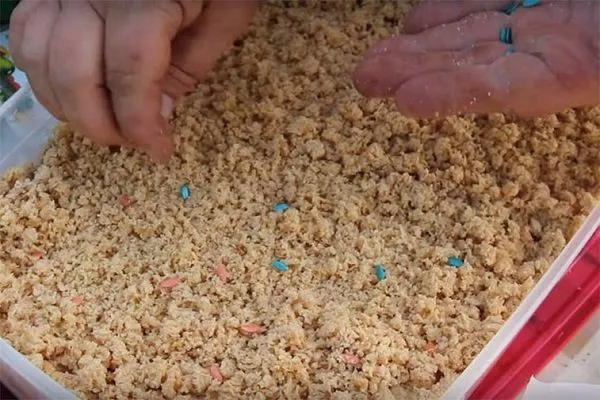
- Pour boiling water over the fine sawdust, let it sit for 5-7 minutes, and drain the water. This will remove excess esters from the wood residue.
- Pour sawdust into a container to a depth of 3-4 cm, add warm water until it reaches the middle of the layer, and let the wood swell for 2-3 hours. Stir the substrate periodically.
- Place the seeds on the surface of the moistened "soil," pressing them in slightly. Maintain a 1.5 x 1.5 cm planting pattern. You can sprinkle the seeds with a thin layer of shredded damp wood, or you can leave it out. In this case, mist them with water twice daily from a spray bottle.
- Cover the container with plastic or glass and put it in a bright, warm place.
- After true leaves appear, transplant the seedlings into separate cups.
Sowing on toilet paper
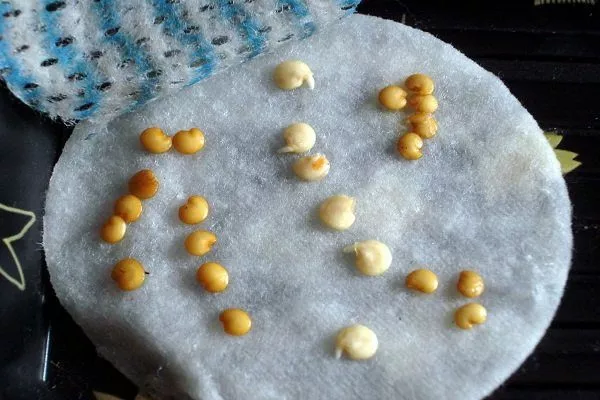
Several layers of toilet paper soaked in water with growth stimulants added can replace soil during the initial stages of growing eggplant seedlings. Place the seeds on the surface, then cover with another layer of paper. Moisten the seedlings with a spray bottle. Then, follow the same care as above.
Sowing in boiling water
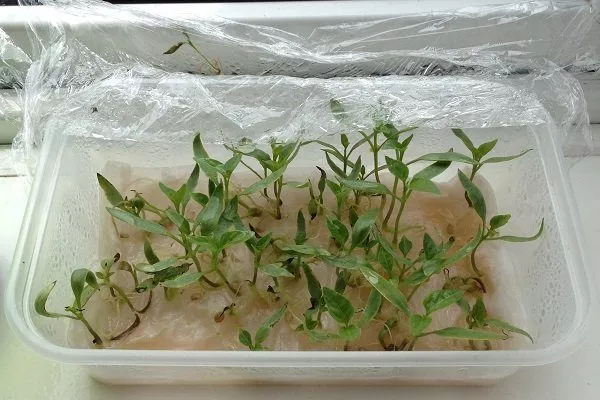
This method requires a plastic container with a clear lid. Sowing the seeds follows these guidelines:
- Fill the container with soil to a depth of 4 cm.
- Distribute the seeds over the surface of the soil, keeping a distance of 1-2 cm between them.
- Without covering the seeds with soil, pour boiling water over them. Be careful not to wash away the seeds or burn yourself.
- Cover the container with a lid and place it in a warm place. The first shoots will appear in 3-4 days.
Sowing seeds in a snail
The snail method of sowing eggplant seeds for seedlings has proven itself to be a popular method. Polyethylene or a thin floor covering can be used as the base for the "snail."
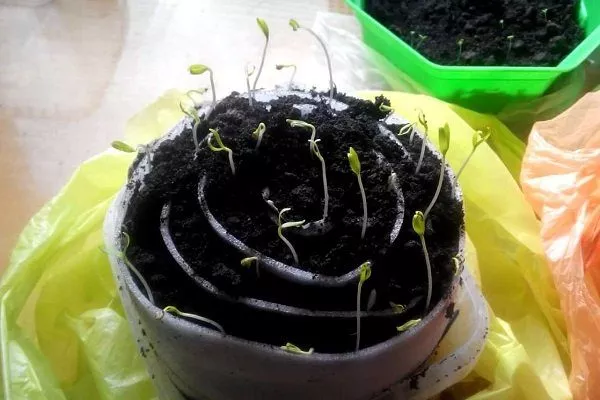
Sowing seeds:
- Cut the polyethylene into strips 10 cm wide. The length of the base depends on the number of seeds being sown, but 70-100 cm is considered the optimal length.
- Lay out the strip and pour a 1-1.5 cm thick layer of planting soil onto its surface. Lightly compact the soil.
- Roll the ribbon like a swirl. Secure it with rubber bands.
- Place the "snail" vertically in the container and pour warm water over the soil. When the soil settles, there should be about 50 mm of space left above the edge of the film. If this edge is higher, add more soil inside the "snail."
- Place the seeds in a spiral pattern, pressing them lightly into the soil. A wooden skewer is helpful. Space the seeds about 4-5 cm apart. If the distance is smaller, the seedlings will need to be transplanted later.
- Place a transparent plastic bag on top of the “snail” and place the crops in a warm, bright place.
Air the seedlings daily. Moisten the soil regularly, preventing a dry crust from forming on the surface. Once the seedlings emerge, remove the plastic bag.
It's possible to use a soil-free method. In this case, replace the soil with several layers of toilet paper soaked in growth activators or a weak fertilizer solution.
How to plant eggplants in peat tablets?
Choose sowing eggplants in peat pellets when you need to grow particularly valuable vegetable varieties or when the number of seedlings does not exceed 20-30 roots. For larger-scale cultivation, this method is rarely used due to its inconvenience.
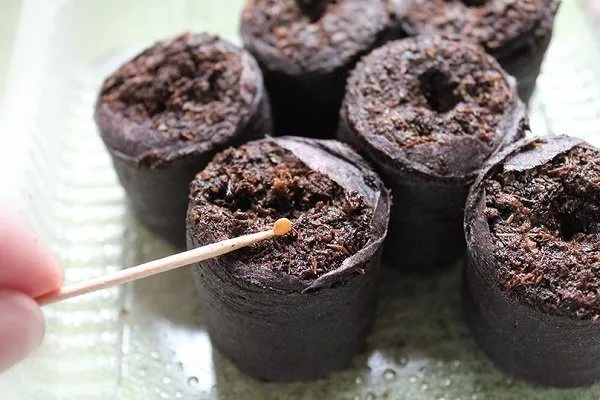
Planting seeds:
- Place the tablets in a deep tray and fill it with warm water. Let them swell.
- Place 1 eggplant seed in the center of each tablet and gently press it with your fingers, pushing it inward.
- Place the tray with tablets in a warm, bright place.
Gently add water to the container every 1-2 days to allow the moisture to be absorbed into the peat. Do not allow the tablets to dry out. As the seedlings grow, increase the distance between the tablets to ensure the plants develop safely without interfering with each other.
When planting seedlings in their permanent location, be sure to cut the tablet's mesh "corset." This will allow the root system to develop actively, speeding up adaptation.
The advantages of growing seedlings in this way are:
- A combination of neutral, light soil and an optimal amount of nutrients.
- Tablet diameters range from 2.5 to 7 cm.
- No need to pick seedlings.
- Unlimited shelf life of tablets.
Features of care after sowing until seedlings emerge
Without proper care, it's impossible to grow healthy, strong seedlings. Following planting guidelines is only half the battle. Now, create the necessary conditions for the seedlings to grow and develop.
Lighting
Seeds need light even before germination. Adequate illumination helps seedlings emerge faster and more uniformly. Eggplants require at least 12 hours of daylight per day. Therefore, in cloudy weather, use additional light sources (growth lamps, fluorescent lamps, etc.).
Temperature
Eggplant seeds require temperatures between 21 and 26°C to germinate. Once solid seedlings emerge, reduce the temperature to 16°C for 5-7 days to stop stem growth but promote root development. The optimal temperature for seedlings is 23-25°C.
Humidity
Eggplants are sensitive to fluctuations in air humidity. Growing seedlings requires maintaining the humidity at 60-80%. Use humidifiers or place containers of water near the seedlings to increase the air humidity. A damp cloth hung over radiators also increases the humidity in the room.
Avoid allowing the soil to dry out or become overwatered. It should be kept moderately moist at all times.
When and how to transplant eggplant seedlings?
Pricking out seedlings involves transplanting them into separate containers for each root. In the case of eggplants, trimming the main root is not necessary. This process is carried out when the plants have developed 2-4 true leaves.
Picking eggplants:
- Water the seedlings in the common box, let the soil soak well, leaving the containers for 2-3 hours after watering.
- Prepare individual cups. Fill them with potting soil and moisten it.
- As you dig each plant out of its container, place it, root ball included, into its own pot. Hold the seedling by the stem, not the leaves.
- Plant the plant deep down to the cotyledon leaves. Firm the soil lightly.
Transplanted eggplants can be watered 3-4 days after transplanting. During this time, protect the plants from direct sunlight to help them adapt. Maintain a temperature of 18-20 degrees Celsius for the first three days.
For more information on sowing eggplant seedlings, watch the following video:
Growing eggplant seedlings requires responsibility and diligence. With the right sowing date, proper seed preparation, and proper care, the seedlings will grow strong and high-quality.