
Growing eggplants outdoors has become possible in various regions of Russia thanks to new cold-resistant varieties. This cultivation method allows for high yields while saving on greenhouse construction. Learn how to plant and grow eggplants without cover and how to achieve high yields.
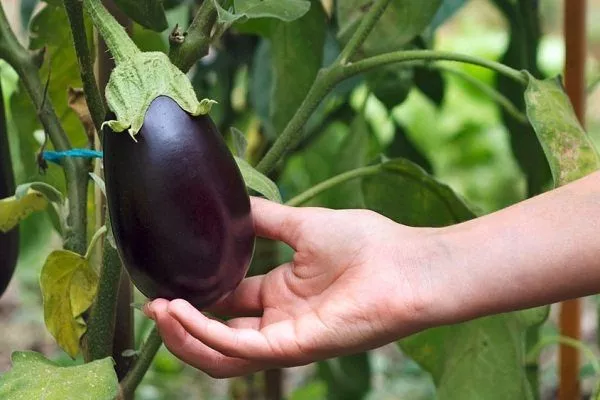
Where can you grow eggplants without cover?
Eggplants, unlike many other vegetable crops, require special growing conditions.
- ✓ Soil pH should be between 6.0-6.5 for optimal nutrient absorption.
- ✓ The soil must be enriched with organic matter by at least 4% to ensure the necessary structure and nutrition.
Basic requirements for eggplant growing conditions:
- fertile and loose soils;
- elimination of even short-term frosts;
- minimum temperature at +20 °C, at lower temperatures the crop slows down its development;
- minimum daylight hours – 12 hours;
- Regular watering - if there is not enough moisture, the bushes shed their ovaries and buds.
In Siberia
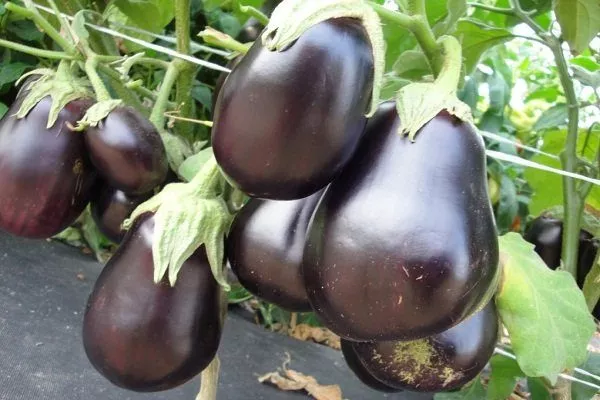
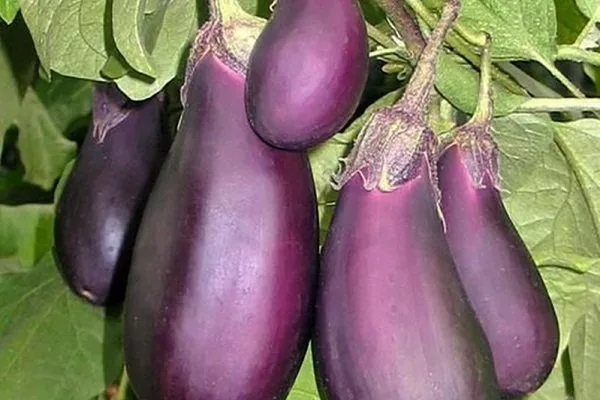
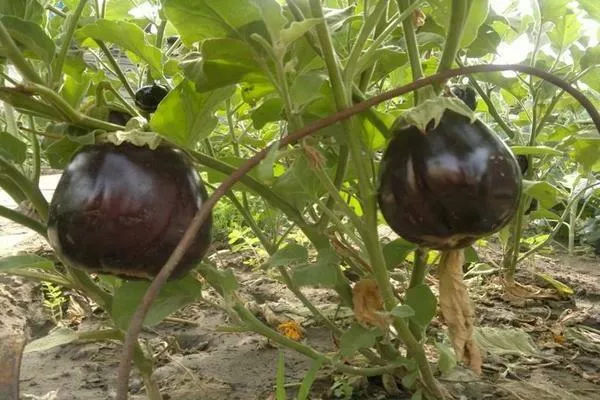
In Siberia, it's virtually impossible to grow common eggplant varieties intended for warmer climates. However, through selective breeding, hybrids have been developed that boast increased cold tolerance and early maturity. These varieties can be grown not only in the Krasnodar Krai or Crimea, but also in Siberia.
Popular varieties for growing in the Siberian region:
- "Nutcracker";

- Robin Hood;
- "Purple Miracle";
- "King of the North";
- "Dwarf Early";
- "The Big Oaf" and others.


In the Urals
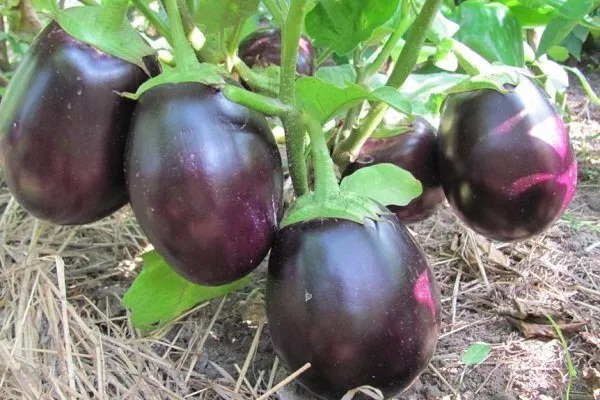
Growing eggplant in the Urals is very difficult – the conditions here are completely unfavorable for this crop. However, local vegetable growers and gardeners manage to cultivate varieties and hybrids that mature in up to 95 days.
Suitable varieties for the Urals:
- "Diamond";
- "Joker";
- "Snow";
- "Leader";
- "Mowgli" and others.
In the Moscow region
In the Moscow region, eggplants are grown using seedlings. Planting of seedlings begins no earlier than mid-May to avoid the return of spring frosts.
Popular eggplant varieties for the Moscow region:
- "Albatross";
- "Romantic";
- "King of the North";
- "Taste of mushrooms";
- "Agate";
- "Giselle" and others.


Planting in open ground
Growing eggplants is only possible in regions with warm summers long enough for the fruit to ripen.
Eggplants grow well after cabbage, cucumbers, carrots, onions, zucchini, garlic, beans, or peas. It is not recommended to plant this crop after potatoes, tomatoes, peppers, and physalis.
Optimal timing
Eggplant seedlings are planted in open ground when the weather outside becomes consistently warm.
Conditions for planting seedlings:
- the soil warmed up to +18 °C;
- consistently warm air temperature and the exclusion of recurrent frosts.
The optimal time for planting seedlings in open ground for regions with a temperate climate is early June.
Selecting and preparing soil
The most suitable soils for growing eggplants are sandy loam and loamy soils. They can also grow in heavier soils, but only after proper preparation.
Preparing heavy soils for planting eggplants:
- Add a bucket of humus and peat to each square meter of the area.
- To improve the soil structure, add coarse river sand to it (3 buckets per 1 sq. m).
Preparing the soil for planting:
- In the fall, dig up the area to the depth of a shovel blade.
- Add fertilizer when digging. In the fall, you can use fresh manure – 1 bucket per 1 square meter; in the spring, use only well-rotted manure.
- When the snow melts and the soil dries well, loosen and level it with a rake.
- In poor soils, you can add additional mineral fertilizers. Per 1 square meter: 1 tablespoon each of superphosphate and potassium sulfate, 1 teaspoon of urea, and 2 cups of wood ash.
The plot for eggplant planting is usually prepared in the fall. However, if this isn't possible, all preparatory work is postponed until spring, 2-3 weeks before planting.
How to choose seeds?
Eggplant seeds can be purchased at specialty stores or collected independently. The latter method is only suitable for varieties; hybrids cannot be propagated this way.
How to choose seeds in the store:
- By ripening time. In a climate favorable for eggplants, varieties with any ripening period can be grown—from early to late. However, the further north you go, the shorter the ripening period should be. In northern regions, only early-ripening varieties are grown.
- By type of cultivation. In unfavorable climates, eggplants are grown only in greenhouses and hotbeds. When purchasing seeds, pay attention to the information on the growing method—whether they're for open ground or indoors.
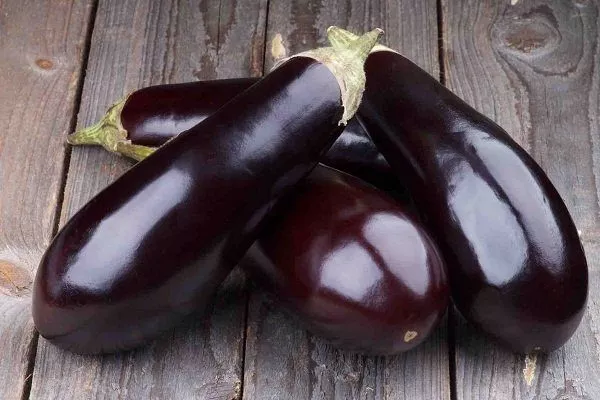
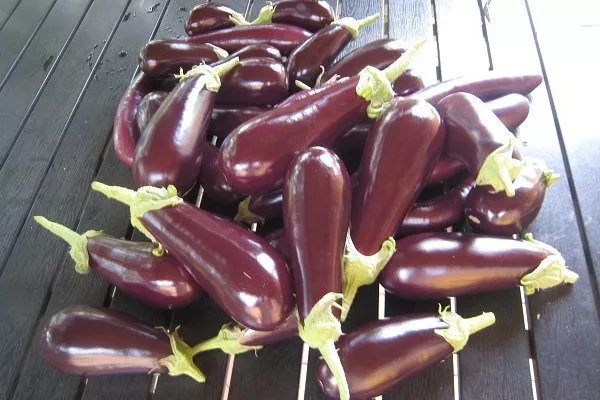
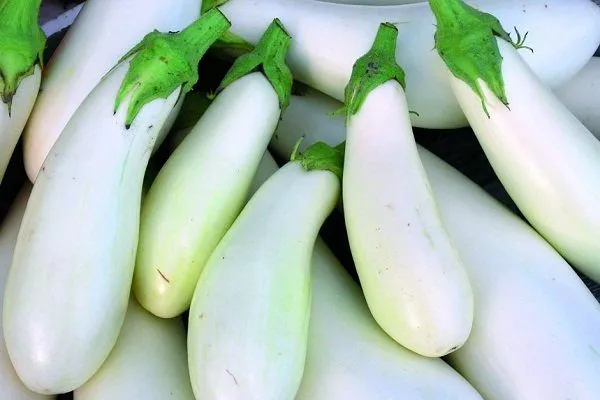
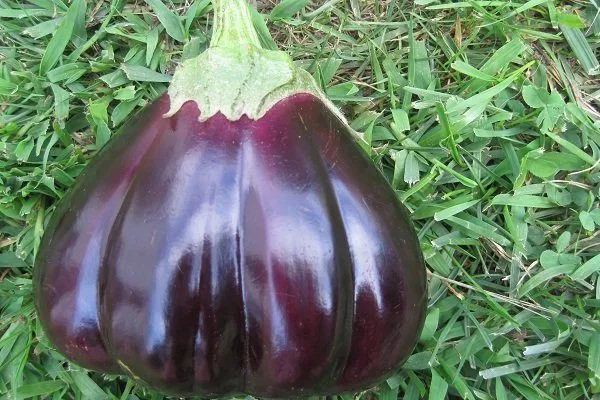
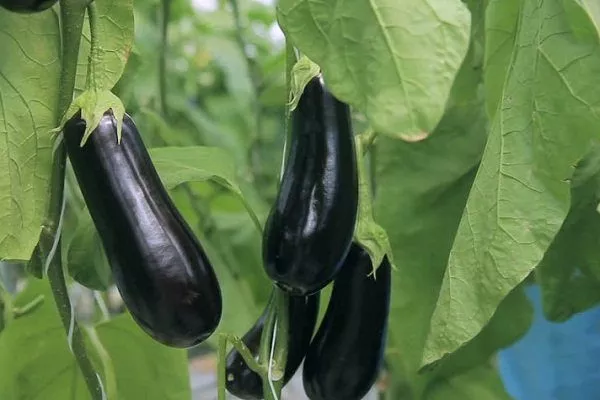
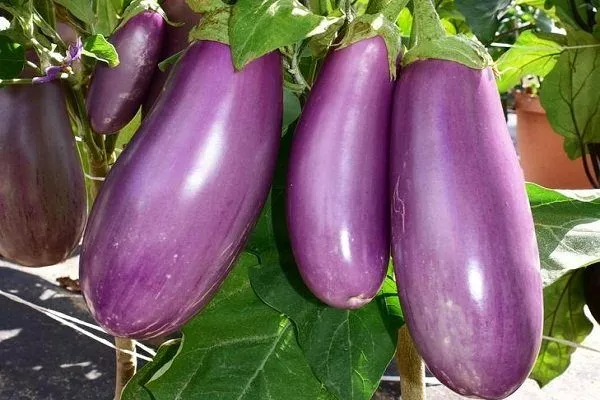
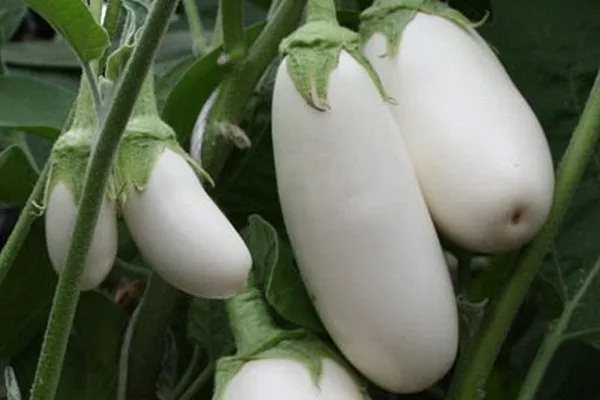
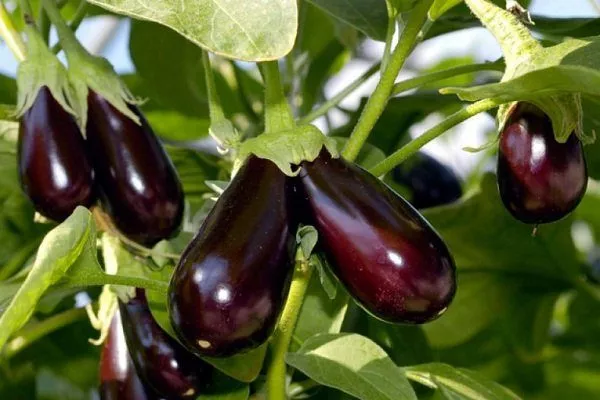
- By appearance. The weight, shape, color, and size of the fruit can be judged by the photographs on the seed packets. Varieties with round and oblong fruits, white, purple, brown, and even orange fruits are available.
- By the number of seeds in the package. Different manufacturers package their seeds differently. Sometimes they only pack 10 seeds per packet.
- By germination. Before planting, be sure to check the seeds for germination. Wrap several seeds in wet cheesecloth and soak them in warm water for 24 hours. Spread the seeds on the cloth and moisten them regularly. If more than 50% of the seeds sprout within 5 days, the seedlings are ready for planting.
How to choose seedlings?
Selecting high-quality eggplant seedlings that are healthy and strong is very difficult. This crop tolerates transplanting less well than other plants. That's why eggplants should be grown in individual pots.
Gardeners who don't trust store-bought seedlings grow their own. This takes about 70 days, but it guarantees high-quality planting material.
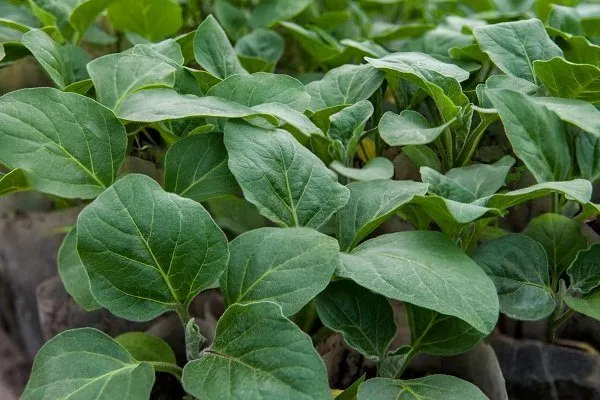
Signs of high-quality seedlings:
- thick stem – from 0.5 cm in diameter;
- height – about 20 cm;
- number of leaves – 7-8 pieces;
- emerging adventitious shoots are visible;
- The presence of flowers is welcome.
Planting eggplant seedlings in open ground
When the seedlings reach the required vegetative stage and temperature conditions become favorable, they can be planted in the ground.
Transplantation procedure:
- Dig holes in the prepared beds. The distance between holes depends on the eggplant variety; for spreading eggplants, leave wider intervals. On average, the distance between adjacent plants should be 30-40 cm, and between rows, 60 cm.
- Water the holes generously. Add 1 to 3 liters of water to each.
- Place the seedling into the hole along with the root ball. Be careful not to damage the roots during transplanting.
- Place the seedling deeper and cover it with soil up to the first leaves. Firm the soil with your hands and apply mulch. You can use peat, dry grass, or straw.
It is recommended to plant eggplants in a checkerboard pattern - this pattern allows the bushes to grow without shading each other.
Planting eggplant in open ground with seeds
The main challenge in growing eggplants in most regions of Russia is their heat requirements and long growing season. The crop takes 100 to 160 days to mature. Therefore, seeded eggplants are grown primarily in the south of the country.
Eggplant seeds are sown outdoors when the weather becomes consistently warm. These conditions typically occur no earlier than May 20-30.
Seeds to be sown in open ground are calibrated, disinfected, and soaked in a growth stimulator. Immediately before sowing, the seeds are soaked in purified water for 24 hours.
Once you have prepared the seeds, sow them into the soil:
- In a garden bed that has been loosened and prepared for sowing according to all the rules, make furrows 4-5 cm deep.
- Place the seeds in the furrows. Place 2-3 seeds together, spaced 20 cm or more apart—the distance between adjacent plants depends on the variety.
- Cover the furrows with soil and water them using a rain nozzle.
- After a week, when the sprouts appear, pinch off the weak ones and leave the strong ones.
How to properly care for the crop?
Eggplants are demanding when it comes to growing conditions, but they don't require any special care. It's important to water them regularly, feed them, and protect them from pests.
Lighting
Eggplants require 12 hours of daylight. If the light is less than 12 hours, the plant slows down, does not develop, and fruit does not form.
Light exposure for more than 12-14 hours is also not allowed. If daylight hours are too long, eggplants begin to grow excessively, preventing flowers and fruit from forming. Therefore, always have a covering material on hand to help limit the light reaching the plants.
Temperature conditions
Eggplants require a specific temperature regime for vigorous growth and fruit formation. When temperatures drop below a certain minimum, plant development stops.
Optimum temperatures:
- soils – from +16 to +18 °C;
- daytime – from +18 to +24 °C;
- night – from +15 to +18 °C.
Today, producers offer varieties that can grow and develop normally at an average daily air temperature of +15 °C.
The culture is extremely negatively affected by:
- prolonged drizzling rains;
- a drop in temperature to +12 °C leads to the shedding of flowers and ovaries.
If the temperature drops below 12°C, the plant dies. To protect eggplants from death, during cold spells, water the plants with warm water or cover them with a covering material.
Watering
Eggplant is a moisture-loving crop. Proper watering is essential for both overall plant development and yield.
- ✓ Water for irrigation should be settled and heated to a temperature of at least +25°C to prevent stress in plants.
- ✓ Watering should be done early in the morning or late in the evening to minimize evaporation.
Rules for watering eggplants:
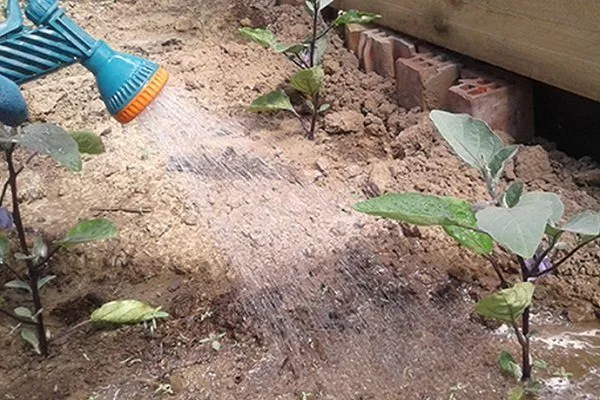
- Plants are watered only with warm water. In the south, water can be heated by the sun. In other regions, irrigation water is heated artificially. The optimal water temperature is 25°C.
- Eggplants are never watered from above, only at the roots. Water getting on the leaves is extremely detrimental to the plant's health.
- If eggplants are grown from seedlings, the first watering should be done 10-12 days after planting. In hot and dry weather, the first watering should be done 7-8 days later.
- The soil should be kept moist at all times, but humidity should not exceed 65-70%. Eggplant roots do not tolerate high soil moisture.
- Once the plant enters the flowering and fruiting phase, watering becomes more frequent, increasing the amount of water given to the plant. The soil should be moistened to a depth of 20 cm. Water the plantings every 5-6 days.
Top dressing
Eggplants bear fruit vigorously, yielding between 3 and 6-7 kg per plant, depending on the variety. Full fruiting is impossible without regular fertilizing. Fertilizing frequency: once every 2-3 weeks.
How to feed eggplants:
- First feeding. Fertilizing is performed at the root. It is carried out 10 days after transplanting the seedlings into the soil. The appearance of the first new leaf on the bush serves as a guideline for fertilizing. A nitrogen-containing fertilizer is applied.
Suitable products for the first feeding include Kemira, Kristallin, Rastvorin, and Effekton. Use 30-40 g per bucket of water. The recommended solution for one plant is 1-1.5 liters. Ammophos can be used instead of these fertilizers: dilute 150 g in a bucket of water. - Second feeding. This is done two weeks after the first feeding. A mixture of wood ash and mineral fertilizer (nitroammophoska or nitrophoska) is applied. 20-25 g per bush.
The second option is an infusion made from bird droppings. Steep 2-3 kg of droppings in a bucket of water. After 2-3 days, strain the infusion and dilute it in 10-15 liters of warm water. Use 1-1.5 liters of solution per plant. - Third feeding. During the flowering phase, eggplants are given nitrophos, nitrophoska, or diammonium phosphate at a rate of 40 g per square meter. During this period, the plants are sprayed with preparations containing microelements and solutions of fermented herbs. Boric acid can also be used for spraying. Dissolve 2 g of the preparation in 10 liters of hot water.
Given the repeated harvesting process, it's a good idea to support eggplant fruiting. After the first or second harvest, it's recommended to feed the plants with phosphorus-potassium fertilizers.
Weeding
In eggplant beds, the soil should always be loosened and moist. Crust formation and weed growth are unacceptable.
Loosen the soil carefully to avoid damaging the roots located close to the surface. Loosening is done on the second day after watering. At the same time, hilling is performed by raking the soil up toward the stem.
Formation of bushes
Low-growing and dwarf eggplants don't require shaping or structure. Other varieties—medium-sized and tall—are shaped when they reach a height of 25-30 cm.
Forming bushes cannot be postponed, as removing large shoots will injure the plant and may cause disease and even death.
How to shape bushes:
- Inspect the central stem. Remove the side shoots located in the leaf axils, down to the first bud. On underdeveloped plants, you can even remove the first bud. This procedure promotes active stem and root development, flower formation, and ovary formation. Side shoots in eggplants grow slowly, so they should be removed once every two weeks.
- On early and mid-season varieties that produce many ovaries, remove 20-25% of the flowers. This is necessary if the eggplants grow large, weighing over 250 g. Too many flowers will result in smaller and underdeveloped fruits.
- Mid- and late-season varieties are typically tall, with numerous spreading branches. Train these plants with 1-2 or 3 stems. Leave one ovary on each branch, pinching out the remaining ones, or better yet, carefully trimming them with pruning shears.
When properly formed, a tall bush produces 5 to 8 large fruits.
Garter
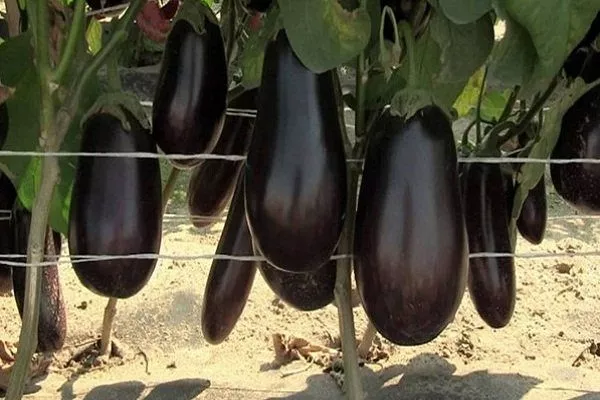
Tall eggplant bushes are tied to trellises. This trellis-like method prevents mutual shading between plants.
Features of gartering eggplants:
- The plant is tied up near each branching – this is the most fragile part of the stem, which often breaks under the weight of the fruit.
- Trellis are made from twine stretched across the garden bed in several layers. The twine is secured to stakes installed at the beginning and end of the row.
Harvesting and storage
There are two stages of eggplant ripeness: biological and technical. The former are ripe but still tasteless, while the latter are fit for consumption.
Only ripe eggplants are harvested—those in a state of technical ripeness—while overripe and unripe ones are not suitable—they are tasteless.
Features of harvesting and storing eggplants:
- Unlike many crops, eggplants should not be picked before they are ripe and tasty.
- Eggplant harvesting begins 30-40 days after flowering has finished.
- The fruits should become glossy and reach their varietal growth.
- The fruits are cut with pruning shears. After cutting, a stalk approximately 2 cm long should remain.
- Eggplants don't keep for long. They last about a month. They are stored in cellars. It's recommended to wrap each eggplant in paper and place it in boxes. You can also store eggplants in plastic bags.
Under favorable storage conditions and regular sorting, the fruits can be stored for up to two months.
Pest and disease control
Eggplants are most often affected by fungal diseases, and their main pest is the Colorado potato beetle. The most effective methods of disease and pest control are preventative.
The most common diseases and pests of eggplants:
| Diseases/pests | Symptoms/nature of the lesion | How to fight? |
| Blackleg | A fungal disease that causes the root collar to darken and become constricted. The plant wilts and dies. | There is no cure. Prevention involves disinfecting the soil with bleach—200 g diluted in 10 liters of water. Affected plants are uprooted and burned. |
| Late blight | The fungus attacks leaves, stems, and fruits, causing rusty spots with a green border to appear on them. | Spraying with a 0.2% solution of copper sulfate or another copper-containing preparation. |
| Black bacterial spot | The bacteria attack all parts of the plant, causing small black spots to appear. | They observe crop rotation, destroy plant residues after harvesting, and disinfect the soil. |
| Mosaic | The virus causes mosaic-like discoloration on leaves and yellow spots on fruits. | The seeds are disinfected by soaking them in 20% hydrochloric acid for 30 minutes. All equipment is also disinfected. |
| Spider mite | It sucks the juices out of the plant. The leaves become spotted and then dry out. The yield drops. | Spray with an onion or garlic solution, adding a spoonful of liquid soap. |
| Aphid | It feeds on plant juices and is found on leaves, stems, and flowers. | Spraying with malathion or kelthane. |
| Colorado beetle | The larvae eat all parts of the plant. | Plant beetle-repellent plants, such as marigolds, along the beds and spray with insecticides. |
| Slugs | They eat leaves, gnaw on stems and even fruits. | Sprinkle the spaces between the rows with slaked lime, tobacco dust or wood ash. |
Spraying with insecticides and fungicides is carried out before and after flowering. Treatment is prohibited during flowering and fruiting.
Tips from experienced gardeners
To grow large quantities of eggplants, beginners should learn the secrets of agricultural technology from those who know their way around eggplants.
Helpful tips:
- Plant insect-repellent plants between the eggplant beds.
- Grow eggplants in warm beds. In the fall, dig a trench, fill it with waste, and cover with soil. In the spring, plant the seedlings in a warm, nutritious substrate. This bed can be used for three years.
- The plant doesn't transplant well. Avoid sowing seedlings in large containers to avoid picking them. It's best to skip picking and sow the seedlings in individual cups.
- Eggplants require consistently moist soil, so mulching is essential. Regular grass, straw, or sawdust can be used as mulch. Mulch will prevent the bed from drying out and reduce water consumption.
For information on growing eggplants outdoors, watch the following video:
The best way to grow eggplants outdoors is from seedlings, which guarantees a harvest. For each region, it's important to choose the right planting time and variety that can thrive in specific weather conditions.