
How to properly water eggplants? To answer this question, you need to learn more about the different irrigation methods and the specifics of soil moisture at different stages of the growing season. This article will cover this, along with watering frequency requirements and ways to make the process even more beneficial for your plants.
Water requirements for irrigation
The following criteria are identified:
- Temperature. It's best to use lukewarm, sun-warmed liquid. Ideally, 23-25 degrees Celsius.
- Structure. Hard, chalky water is not suitable. Ideally, use rainwater or water that has been left to stand for 1-2 days.
- ✓ Use water with a pH of 6.0-6.5 for optimal nutrient absorption.
- ✓ Avoid water with high chlorine content; allow it to stand for at least 48 hours before use.
How often should you water eggplants?
Eggplants do not require too frequent watering, as this can lead to changes in the soil structure and the appearance of fungus.
The frequency depends on weather conditions:
- Heat. Repeat the procedure at least once every 3 days.
- Rains. As the soil dries out.
- Neutral climate. It is necessary to add liquid once a week.
There should be about 2 liters of water per plant.
Irrigation methods
There are three main irrigation methods. Each has its own advantages and disadvantages.
Using a watering can
This involves manually watering plants using a container that typically holds about 10 liters of water. This amount of liquid is sufficient for 1 square meter of plantings.
What you need to know:
- Plus. Allows you to combine watering with fertilizing. To do this, water is mixed with fertilizer.
- Minus. More effort is required and time is consumed.
It is better to remove the nozzle from the watering can.
Watering with a hose
System requirements:
- Temperature control. Water from an artesian well may be too cold and should therefore be avoided.
- Pressure. It should be small so as not to damage fragile plants.
- Nozzle. It is better to purchase a sprayer with small holes.
- Way. You cannot direct the flow of liquid at the plants themselves; it is better to take care of irrigating the root zone.
Peculiarities:
- Advantage. Save time, cover a larger area.
- Flaw. The hose can damage plants. It's recommended to place glass bottles along the edges of the plot to act as barriers.
Drip irrigation system
To do this, you'll need to purchase a special tape with holes for water supply. These allow the water to flow directly to the plant roots, moistening the soil at a distance of 50 cm and to a depth of 30 cm. The system should be installed between two rows of eggplants.
- ✓ Make sure that the water pressure in the system does not exceed 1.5 atmospheres for uniform distribution.
- ✓ Check the holes in the tape for blockages every 2 weeks.
What to look out for:
- Positive point. Watering is virtually effortless. Plants receive moisture with equal frequency and in equal quantities.
- The negative side. It will require a financial investment. However, with careful use, such an installation can last 4-5 seasons.
Watering at different stages of vegetation
Each stage of growth has its own soil moisture requirements. It's important to pay attention to these to avoid damaging your plants.
First shoots
Among the main requirements:
- Way. This is done at the root of the seedling. Care must be taken to ensure the stems and leaves are dry.
- Volume. The soil should be kept slightly moist. Too much moisture can lead to the development of fungal diseases.
- Tools.A watering can is used to water the seedlings very carefully. It's important to avoid damaging the plants.
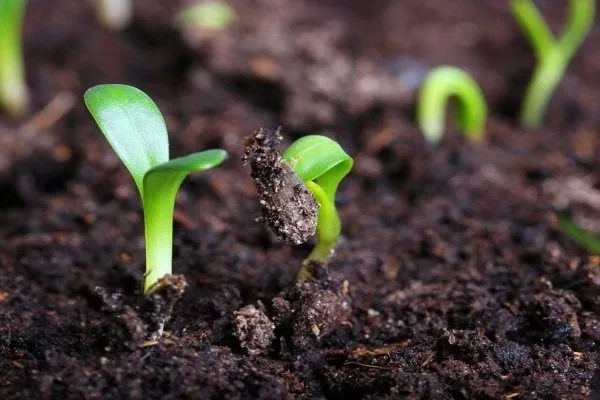
Covering the seedlings with glass or transparent film will help reduce their need for water. Move the cover slightly twice a day to ensure adequate oxygen supply.
After planting the seedlings in a permanent place
Before planting, the beds should be thoroughly moistened. Water regularly until the eggplants are fully established. During this time, avoid allowing the soil to dry out. Apply approximately 3 liters of water per plant.
Flowering phase
Among the recommendations:
- Temperature. It should be close to the soil in the garden bed.
- Caution. Avoid getting liquid on the ovaries and flowers to prevent them from falling off.
- Quantity. Plants require approximately 4-5 liters of water.
The period of formation and growth of fruits
To get a good harvest, you need to follow these recommendations:
- carry out irrigation only in the morning hours;
- the liquid should moisten the soil to a depth of about 25 cm;
- take care of the correct water temperature;
- apply 4-5 liters per bush.
How to water eggplants correctly?
There are several features of watering this crop:
- The right time. Avoid watering during the middle of the day when the sun is shining brightly. As moisture evaporates, the risk of wilting increases. The best time is from morning until midday, when the heat is not yet as intense.
- Do not wet the leaves. When water hits the surface of greenery, the risk of fungal diseases increases. Therefore, sprinkling irrigation should be avoided.
- Creating grooves. Make small furrows around the bush and then add water into them. This will improve water absorption.
You can learn about the key features of proper eggplant watering by watching the video below:
There are also differences in watering requirements under different conditions.
In the greenhouse
What information should you learn:
- Way. The drip irrigation method is mainly used.
- Time. Water can be added in the morning or late in the evening.
- Frequency. The frequency is determined individually. Typically, it's the same as for standard watering. However, if the leaves begin to dry out, you should increase the frequency.
- Temperature. It is better to take liquid that has been left to stand in a greenhouse for 1-2 days.
- Humidity. Avoid excessive humidity indoors, as it negatively impacts plant health. Ventilate the room more frequently.
In open ground
The frequency and amount of watering depend on weather conditions. Avoid overwatering or overdrying the soil. Young plants should be watered approximately every seven days. During the flowering phase, watering is reduced slightly and increased during the ripening period.
Special watering and fertilizing
There are several recipes that will help moisten the beds and provide vegetables with the necessary nutrients:
Ammonia solution. How to cook:
- Take 3 tablespoons of alcohol.
- Pour in 10 liters of water.
- Pour 2-3 liters under the root of each plant.
Tea infusion. Instructions:
- Take a glass of used loose tea leaves.
- Pour in 5 liters of hot water.
- Let it brew for 1-2 days.
- Strain.
- Use for root watering.
Herbal feeding. What you need:
- Collect plantain, chickweed, nettle, dandelion and other herbs.
- Chop thoroughly.
- Pour 1 kg of grass with 10 liters of water.
- Leave for a week until the fermentation process begins.
- Strain.
- Use 500 ml for each bush.
Potassium nitrate. Method of preparation:
- Take 30 g of saltpeter.
- Add 10 g of superphosphate.
- Pour in 10 liters of water.
- Mix thoroughly.
- Use 2-3 liters for each plant.
This recipe helps strengthen eggplants and save them from wilting.
Infusion of eggshells. The steps are as follows:
- Take the shells from 10 eggs.
- Chop thoroughly.
- Pour in 5 liters of heated water.
- Let it brew for 2 days.
- Strain.
- Pour 1-2 liters onto each bush.
The water contains calcium, which is necessary for the growth and strengthening of plants.
How to reduce plants' need for moisture?
There are several secrets that will help reduce the frequency of irrigation:
- Selecting soil. Eggplants are best grown in loose, sandy soils. This will help increase drought tolerance.
- Use of fertilizers.If you dig a small trench around the bush after planting, add fertilizer, and then water it, this will have a positive effect on the development of vegetables and help them retain moisture longer.
- Mulching. The space between the rows should be mulched using sawdust or eggshells.
Watering eggplants isn't particularly difficult. The key is to choose the right method, keep water requirements and watering frequency in mind, and follow the instructions. Special recipes will help make the plants even healthier and stronger. This is the only way to achieve a truly good harvest.