
Eggplants are a demanding crop that requires regular feeding for full growth and fruiting. Let's learn what nutrients this vegetable requires and when they are recommended for application.
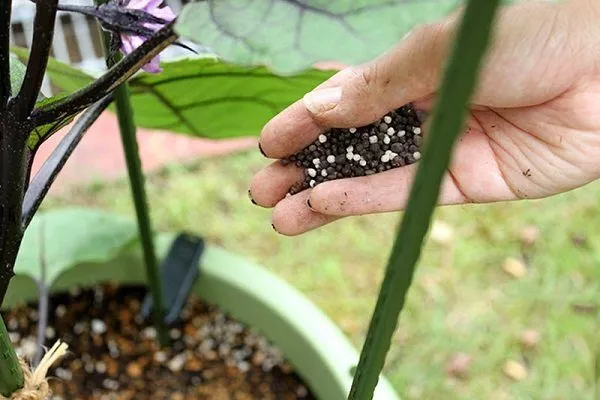
What nutrients do eggplants need?
In order to fully develop and bear fruit, eggplants require a certain set of nutrients.
- ✓ The optimal soil temperature for planting eggplant seedlings should be at least +18°C.
- ✓ The distance between plants when planting should be 40-50 cm, and between rows - 60-70 cm to ensure sufficient ventilation and lighting.
Micro- and macroelements required by eggplants:
- Nitrogen. It stimulates active growth of green mass. If nitrogen is deficient, plant growth lags, fruit ovaries develop slowly, and fruit ripening is delayed. If there's an excess of this element, eggplants become overweight, with plants actively growing green mass and few flowers.
- Potassium. Increases the plant’s immune capacity and resistance to temperature changes.
- Phosphorus. Promotes the development and strengthening of roots and ovaries. Accelerates fruit ripening.
- Boron, manganese, iron. They have a positive effect on the taste of fruits, promote flower formation, and increase yields.
A deficiency of a particular element can be determined by the leaves – they are more sensitive and delicate in eggplants than in other crops.
Signs of nutrient deficiency:
- The leaves have turned yellow at the edges, the growth of the entire plant has slowed down – there is not enough potassium.
- The leaves rise upward, the plant sheds its flowers, the fruits do not develop – phosphorus is needed.
- The leaves are wilted, and first the lower ones turn yellow, then the rest. The plant is experiencing a nitrogen deficiency.
Timing of eggplant fertilization
When growing eggplants, even fertile soils require nutrients. After planting the seedlings, fertilize them 3-4 times. In poor soils, the frequency of fertilization increases.
Fertilizers are applied based on the plant's vegetation stage, rather than on the calendar or specific dates.
Eggplant Fertilization Schedule:
- After the dive. This is the first application of fertilizer, which is carried out during the seedling growth stage. If the seedlings are grown without transplanting, nitrogen and potassium fertilizers are applied when two true leaves appear.
- Before transplantation. Regardless of whether the seedlings are to be planted in open or closed soil, they are fertilized 8-10 days before transplanting with nitrogen, potassium, and phosphorus.
- After landing. Fertilize 2-3 weeks after planting, not earlier. Plant roots are not yet fully adapted to the new environment and are unable to fully absorb nutrients. Fertilize with nitrogen, potassium, and phosphorus.
- Budding. Fertilize during fruit set or flowering. At least 10 days should pass after the last application of fertilizer. Fertilize only with phosphorus and potassium.
- Fruiting. Fertilize with phosphorus and potassium.
Methods of applying fertilizers
Eggplants, like most crops, are fertilized in two ways: root feeding and spraying. Let's learn how these feedings are carried out and what to prioritize.
Root
Most eggplant fertilization is done using the root method.
Features of applying fertilizers under the root:
- Fertilizers are given in the form of solutions.
- Fertilizing is combined with watering to prevent root burn. Water the plants first, then add the dissolved fertilizer.
- When applying fertilizer, do not allow the solution to come into contact with the above-ground parts of the plants.
- The best time to apply fertilizer to the roots is morning or evening.
Foliar
Foliar feeding is used when a quick effect on eggplant bushes is required.
Features of foliar feeding:
- Fertilizer is supplied to plants by spraying.
- Solutions for foliar feeding should have half the concentration of analogs for root application.
- To treat one adult plant, approximately 1 liter of dissolved fertilizer is required.
Not all fertilizers are suitable for foliar feeding of eggplants. Plants can be sprayed with boric acid, ash solution, Agricola, and Kemira.
What fertilizers do they use?
Eggplants are fed with various types of fertilizers, which differ in their composition, mode of action, cost, environmental friendliness, and other properties.
Organic
Organic fertilizers have a positive effect not only on the development of eggplants, but also on the condition of the soil.
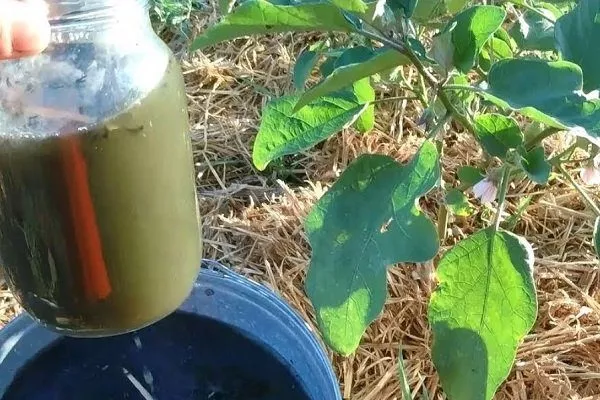
The most popular organic fertilizers:
- Manure solution. Manure is mixed with water in a ratio of 1:10, bird droppings – 1:20. The solution is left to infuse for one week.
- A solution of manure and grass. Place the chopped weeds in a large container and pour in a solution of manure and water (1:1:10). Add 50 g of wood ash to 1 liter of solution. Let it sit for one week. Before use, dilute with water (1:3). Apply 1 liter of solution to each eggplant plant.
It is not recommended to feed vegetable crops with fresh manure, as it is too concentrated and will cause excessive growth of green mass. This will also inhibit fruit development.
Eggplants can also be fed with humus, compost, and ready-made organic fertilizers such as Bioton, Gumi-Omi, and others.
Minerals
The main feature of mineral fertilizers is their high concentration, and a serious drawback is their ability to accumulate in plant fruits.
When choosing a mineral fertilizer, consider the following factors:
- stage of plant vegetation;
- the need for a specific element is determined by the appearance of the plant;
- soil characteristics.
The most effective and affordable fertilizers:
- Ammonium nitrate. It is used as a nitrogen fertilizer for seedlings. It can be combined with potassium sulfate for nitrogen-potassium nutrition, and with rock phosphate for nitrogen-phosphorus nutrition. Ammonium nitrate is mixed with superphosphate immediately before application.
Fertilizer must not be combined with urea. - Urea (carbamide). It is used to apply nitrogen. Foliar application is permitted. It is best applied separately from other mineral fertilizers. Urea can be added to manure solution to increase the nitrogen content, but mixing it with ash is not recommended.
- Ammonium sulfate. Suitable for spring fertilization, as it contains a high amount of easily digestible nitrogen. Do not combine with potassium nitrate or superphosphate. Mixing with manure is permitted. Ammonium sulfate should be added to the manure solution immediately before application to the soil.
- Potassium nitrateUse during flowering. Contains potassium (13%) and nitrogen (45%), so is not suitable for application during fruit ripening. Do not mix with other mineral nitrogen sources, manure, or ash. It can be combined with superphosphate, but only immediately before application.
- Superphosphate. An excellent source of phosphorus, it is used only in soils with normal acidity. In acidic soils, use monosodium phosphate or monopotassium phosphate.
- Potassium sulfate. An effective potassium fertilizer. It can be applied at any stage of the growing season. It can be combined with any nitrogen-containing fertilizers; it can be added to manure, ash, and superphosphate. Dissolved potassium sulfate can be added to rock phosphate, but the mixture must be used immediately; it cannot be stored.
Complex
Complex mineral fertilizers contain all the substances and microelements necessary for the development of eggplants.
The most popular complex fertilizers:
- Kemira Universal;
- "Ideal";
- "Agrocola-forte" and others.
When feeding eggplants with complex fertilizers, it is important to strictly adhere to the dosage, since an excess of nutrients is just as harmful to plants as a deficiency.
Folk remedies
Many gardeners use folk remedies to fertilize eggplants. They are readily available, inexpensive, and, unlike chemicals, do not lead to the accumulation of harmful substances in the fruit.
How to prepare fertilizers using folk recipes:
- Ash. This is the most common folk remedy, applied both on its own and as part of various fertilizers. How to prepare an ash solution:
- Dissolve 500 g of ash in a bucket of water;
- First, pour 2 liters of hot water over the ash, then add cold water, bringing the volume to 10 liters;
- let it brew for 24 hours;
- filter the infusion and apply it under the root;
- For foliar feeding, double the amount of water.
- Iodine. This pharmaceutical preparation is used to treat eggplant seedlings. It not only enriches the plants with beneficial microelements but also kills pathogenic microorganisms. How to use iodine:
- dissolve 2 drops of regular iodine in 3 liters of water;
- Water the seedlings at the roots with the resulting solution.
- Yeast. You can use:
- Regular yeast. Dissolve 1 kg of yeast in 5 liters of warm water. Let it sit for 24 hours. Before using, dilute with water at a ratio of 1:10.
- Dry yeast. Dissolve one sachet in a bucket of water. Add 2 tablespoons of sugar to help the solution ferment. Let it steep for 2 hours.
- Banana solution. This fertilizer enriches plants with potassium. Here's how to use it:
- pour water (3 l) over the peels of 2-3 bananas;
- let the banana peel steep for 2 days;
- Water the plants with the filtered solution.
- Herbal infusion. It's made from nettle, dandelion, plantain, and lawn grass. How to prepare a green infusion:
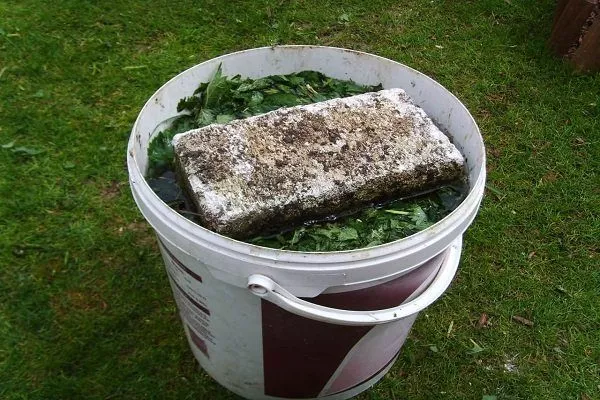
- mix the crushed herbal mass with water (1:2), cover with a lid and place in the sun to enhance fermentation;
- after a week, strain the infusion and use it for root feeding, diluting it with water 1:5;
- application rate: 1 liter of solution per bush.
- Compost tea. This natural fertilizer increases soil fertility and improves the flavor of fruits. To prepare this fertilizer, you'll need a compressor. Here's how to prepare the mixture:
- in 3 liters of water, dissolve 10 ml of any sweetener - syrup, molasses, fructose, sugar, kvass wort;
- add 70 g of mature compost;
- Place the compressor tubes in water and turn on the aeration system for about a day;
- Use the prepared tea within 4 hours of preparation.
- A solution based on bread and yeast. This versatile solution boosts plant immunity and stimulates growth. Here's how to prepare the solution:
- mix the ingredients - yeast, ash, mown grass, slaked lime, bird droppings and black bread;
- Leave the mixture for 6-7 days, then dilute with water and water the plantings.
Fertilizer application scheme
Eggplants are fertilized according to a specific schedule. During each growing season, the vegetable receives the nutrients it needs.
- 2-3 weeks before planting, add rotted manure or compost to the soil at a rate of 5-6 kg per 1 m².
- Carry out deep digging of the soil to a depth of 25-30 cm to improve its structure and aeration.
- A week before planting, apply a complex mineral fertilizer according to the instructions on the package.
Fertilizing eggplant seedlings
To grow strong and healthy eggplant seedlings, they need to be fed several times.
How to feed seedlings:
- First feeding. Apply 2-3 weeks after germination. Dilute manure (1:10) and ash (1 tablespoon) in water. Apply 4 liters of solution per square meter.
- Second feeding. This is carried out two weeks after the first. Dissolve 70 g of superphosphate and 25 g of calcium chloride in 10 liters of water. Apply 2 liters of solution per square meter.
- 7-10 days after picking. If you're transplanting seedlings, add a weak solution of manure after transplanting – 1 tablespoon per 10 liters of water. Alternatively, fertilize the seedlings with urea – add 1 teaspoon of the product per bucket of water. Add wood ash – 1 teaspoon per individual pot.
You can also use commercial products. Eggplants can be fertilized with, for example, Kemira Universal, Rastvorin, or Kornevin. Pour the solutions under the roots, avoiding contact with the leaves.
Fertilizing after planting in open ground
Fertilizers are applied 12-14 days after planting the seedlings in a permanent location.
The purpose of the first feeding after transplantation:
- activate plant growth;
- adapt seedlings to new conditions;
- promote the development of the root system.
You can use complex fertilizers, such as Kornevin, Rastvorin, etc. – they not only promote plant growth, but also have a positive effect on the formation of ovaries.
The first feeding in a permanent location should contain nitrogen, phosphorus and potassium.
How to feed eggplants:
- mix the ingredients - superphosphate (80 g), urea (30 g) and potassium nitrate (30 g);
- dissolve the mixture in 10 liters of water;
- Water the plants at the roots with the resulting solution.
At the initial stage of cultivation, before flowering, you can also add:
- yeast feeding;
- boron, iron, manganese (for flowering).
Fertilizer during flowering
During the flowering stage, eggplants need potassium and phosphorus fertilizers the most. Mineral fertilizers can be added, but experienced gardeners prefer to use organic fertilizers at this stage, such as manure or herbal infusion.
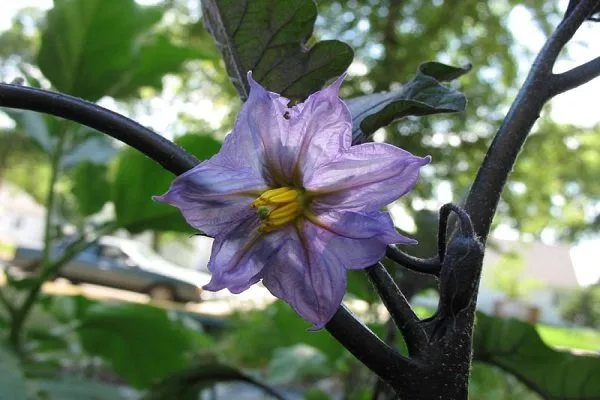
Fertilizing options for eggplants during flowering:
- Nettle infusion. It contains calcium, nitrogen, and potassium in an easily digestible form. Other herbs can be used instead of nettle. Dilute the fermented solution with water before use. The recommended dose per plant is 1 liter of infusion.
- Mullein solution. Dissolve 1 kg of mullein in a bucket of water. Add 100 g of wood ash. Use 1 liter of solution per plant. Bird droppings can be used instead of mullein, but use half as much—500 g per bucket of water.
- Gumi-Omi. This safe substance is used in organic farming. It contains composted chicken manure, as well as balanced amounts of P, N, K, sodium humate, and the trace elements copper and boron.
- Recipe 1.Dissolve potassium sulfate (15 g), urea (15 g) and superphosphate (30 g) in 10 liters of water.
- Recipe 2. Dissolve 10-15 g of superphosphate, potassium salt and ammonium nitrate in a bucket of water.
During the period of fruit ripening
As the fruit begins to ripen, eggplants need potassium, phosphorus, boron and iron most of all.
Options for fertilizing during fruiting:
- Superphosphate. Dilute 40 g of fertilizer in 10 liters of water.
- Potassium sulfate. Dilute 1 tbsp of the preparation in 10 liters of water.
- Chicken manure. Dilute 1 kg of manure and 4 tablespoons of nitroammophoska in 10 liters of water.
Water the eggplants at the roots with the resulting solutions – 1 liter per 1 plant.
Many gardeners, during the fruiting stage, prefer organic foods and traditional recipes. For example, when the fruit is ripening, it's beneficial to feed eggplants with an infusion of chopped herbs, fermented for 2-3 days.
Feeding rules
To achieve the expected effect from fertilizing, it is necessary to follow the principles of eggplant nutrition.
Eggplant nutrition guidelines:
- Eggplants are fertilized several times during the growing season. The vegetable requires nutrition at all stages of its growth, from seedling to ripening.
- Good fruiting is possible only on properly fertilized soils.
- The greatest effect from fertilizing is achieved by alternating organic and mineral fertilizers, applied according to the plant's needs at each specific stage. Organic substances not only nourish the plants but also loosen the soil. Mineral fertilizers, thanks to their high concentration, quickly saturate the eggplants with essential nutrients.
- Foliar feeding is rarely used. Eggplants, with their delicate leaves, do not tolerate spraying with aqueous solutions well. Such treatments are used only when absolutely necessary and in poor soils.
- All fertilizers are applied in strict dosages. Exceeding the recommended dosage is detrimental to plants.
- If a deficiency or excess of any element is detected, its content is immediately adjusted. For example, if there's excess nitrogen, the beds are watered with an ash or superphosphate solution, while if there's a deficiency, urea or a mullein solution is quickly added.
- On poor soils, fertilizing is carried out every 10 days.
- When applying fertilizers to the roots, do not allow the composition to come into contact with the leaves.
For information on eggplant fertilizing methods, watch the following video:
Proper eggplant nutrition is the key to high yields and large fruits. Timely application of fertilizers not only ensures the plants' full development but also helps them cope with environmental challenges.
Thank you so much for the detailed information; I learned a lot. I was especially impressed by the traditional recipes. I'll definitely be using them this year.