
Organic fertilizers are an important part of eggplant care, providing the plants with essential nutrients and improving soil quality. Using various components helps maintain plant health, stimulate growth and fruiting, and improve resistance to disease and stress.
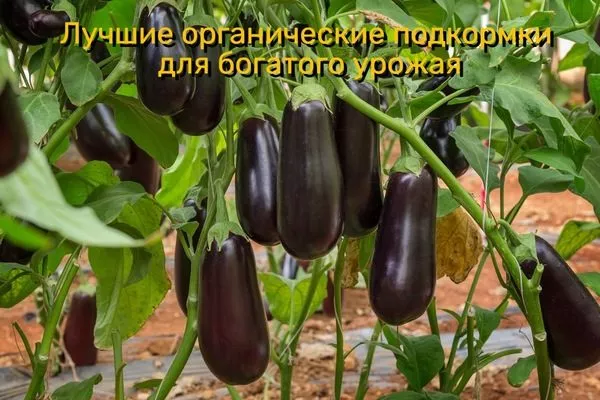
Schedule of organic fertilizing for eggplants
Eggplants are heat-loving and nutritionally demanding plants. To ensure strong plants and a stable harvest, it's important to regularly apply organic fertilizers throughout all stages of the growing season. Organic fertilizers improve soil structure, promote root development, and make the fruit more delicious and environmentally friendly.
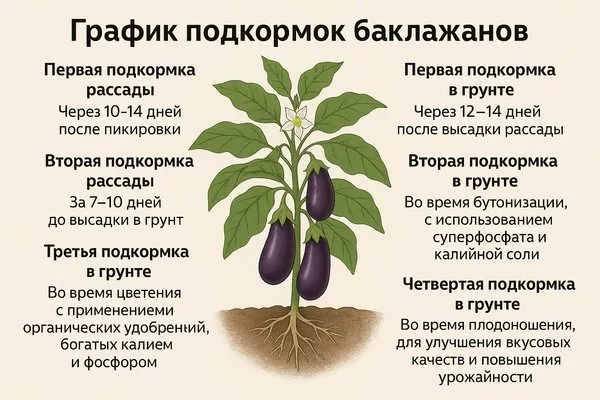
Fertilize eggplants during the following periods:
- before landing;
- 10-14 days after planting seedlings;
- during active growth of the leaf rosette;
- before flowering;
- during mass flowering and fruit setting;
- 2-3 weeks after the start of fruiting;
- after the first wave of harvest.
Regularly rotating organic fertilizers and adhering to fertilizing schedules will help you grow healthy, abundantly fruiting plants. Read on to learn how to properly fertilize your vegetable crop. Here.
Types of organic fertilizers for eggplants
For healthy growth and development of vegetables, a balanced diet is essential. Organic matter not only nourishes plants but also improves soil structure, enhances microflora, and helps develop a strong immune system in plants. There are several types of organic matter.
Infusion of chicken manure and dung
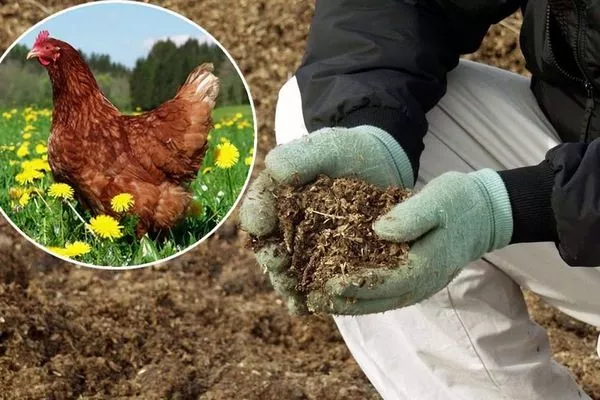
A complex infusion based on manure and chicken manure combines the nutritional benefits of two types of organic matter. This fertilizer has a powerful stimulating effect on eggplant growth, especially during the growing and fruiting periods:
- ensures rapid growth of green mass due to nitrogen;
- enhances the formation of buds and ovaries;
- improves the quality and size of fruits;
- activates soil microflora;
- increases overall resistance to disease and stress.
Preparation of infusion:
- Mix 1 part rotted manure (cow or horse) and 1 part chicken manure (fresh or dry).
- Dilute the mixture in 20 parts water (approximately 20 liters of liquid per 1 kg of mixture).
- Stir and leave for 5-7 days in the shade, stirring daily.
- Dilute 1:2 with water before use.
- Water at the roots (not on the leaves), into previously watered soil, 0.5-1 liter per bush.
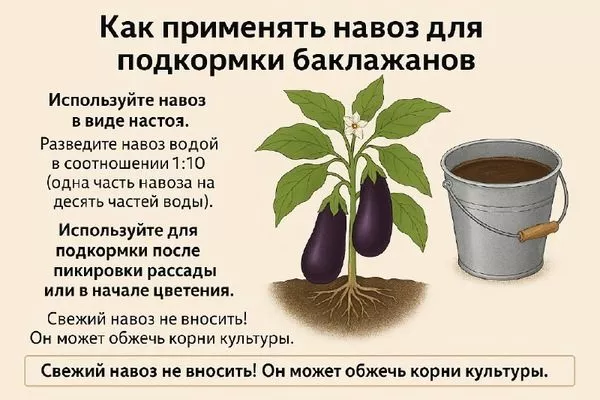
Apply fertilizer 2 weeks after planting seedlings, before flowering, and during fruiting. Apply no more than once every 2-3 weeks.
Infusion of nettle, dandelion and other green fertilizers
Nettle before it begins to bloom is an excellent option for making liquid green fertilizer, but it's far from the only one. It can easily be replaced with other plant components:
- mown weeds;
- green manure.
Spicy herbs will help enhance the protective properties of the fertilizer:
- mint;
- thyme;
- calendula.
The basic method for preparing an infusion of nettle and green mass:
- Fill a bucket or barrel halfway with chopped herbs.
- Fill with water, leaving about 10-15 cm at the top for fermentation.
- Cover with a lid and place in a warm place.
- Leave for 7-14 days until fermentation is complete (the mixture will begin to foam and acquire a characteristic smell).
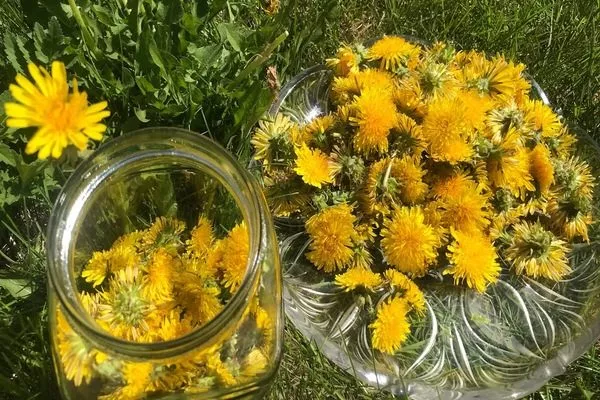
Features of dandelion infusion:
- Place the leaves and flowers tightly into the container, leaving about 15 cm to the edge.
- Add water to the top, cover and leave for about 2 weeks.
- Strain the finished infusion, dilute with water (usually 1:10) and use for root watering or foliar treatment.
You can make a fertilizer from spicy and medicinal herbs (mint, yarrow, calendula, chamomile). This infusion not only nourishes eggplants but also helps boost their immunity, repel pests, and inhibit fungal growth thanks to essential oils and biologically active substances.
How to cook:
- Fill the container halfway with chopped herbs: cut stems and leaves of chamomile, calendula, yarrow.
- Fill with water to the top, leaving a little space for fermentation (about 10 cm).
- Cover with a lid or cloth and leave in a warm place for 7-10 days. Stir the infusion 1-2 times a day.
- When the solution darkens and develops a characteristic odor, it's ready. Strain and dilute with water in a 1:5 ratio.
Ash
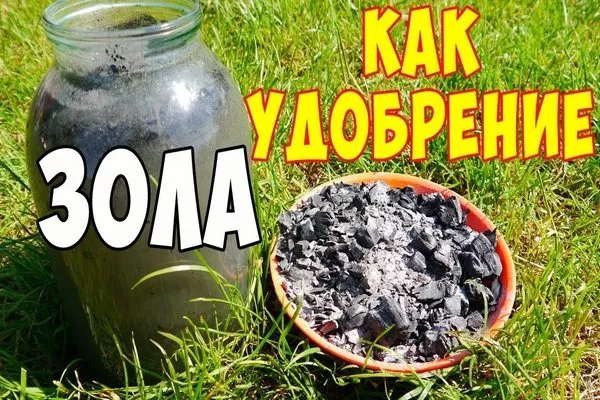
This affordable and effective fertilizer is considered the foundation of organic care. It not only nourishes but also protects eggplants from pests, diseases, and soil acidification. Ash is a natural substitute for potassium-phosphorus fertilizers and is rich in essential elements:
- calcium;
- potassium;
- phosphorus;
- magnesium;
- iron;
- zinc;
- gray;
- copper;
- molybdenum and other microelements.
It supports the activity of beneficial soil microflora, including nitrogen-fixing bacteria.
How to prepare ash infusion:
- Dissolve 500 g of ash in 10 liters of water.
- Let it brew for 2 days, stirring occasionally.
- Before use, drain the liquid, leaving the sediment, and dilute in another 10 liters of water.
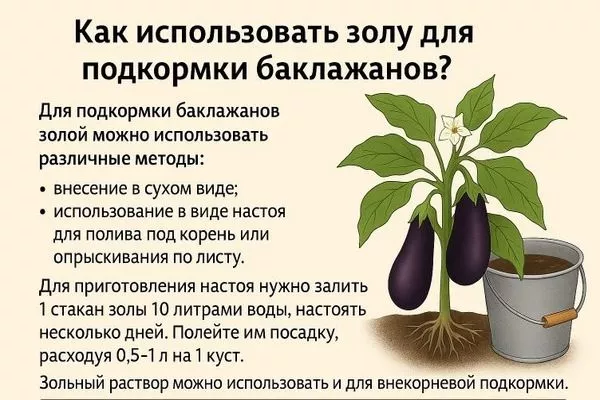
Alternative uses:
- Quick infusion: 200 g of ash per 10 liters of water, leave for 3-5 hours.
- Long infusion: 20 g of ash per 1 liter of water, leave for 7 days, then dilute 1:3.
- In dry form: Sprinkle 60-80 g over the soil surface per 1 sq. m.
How to use:
- under one plant – 500 ml of infusion;
- with a tight fit - 1-3 liters per 1 sq. m.
Iodine
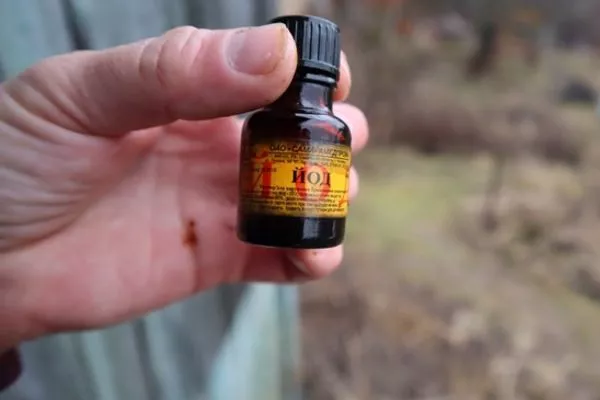
This micronutrient promotes active plant growth, strengthens their defenses, and accelerates fruit ripening. For feeding, prepare a weak solution: 1-2 drops of iodine per 10 liters of water – use to spray the plants.
Boric acid solution
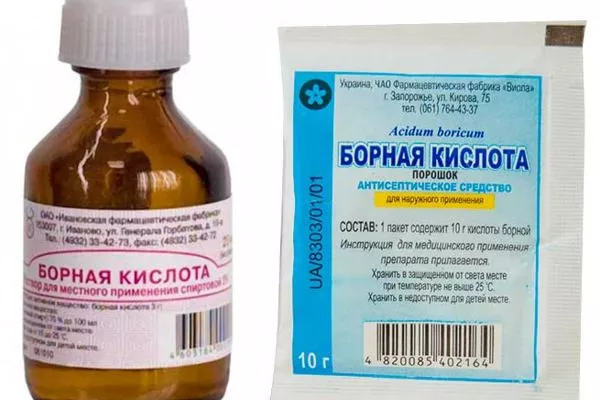
Boric acid is essential for ovary formation. Boron is not an essential nutrient, but its role is particularly significant. It improves pollination, reduces ovary drop, and stimulates their development.
Directions for use:
- Dissolve 1-2 g of boric acid (on the tip of a knife) in a small amount of hot water.
- Bring the volume up to 10 l.
- Spray the bushes on flowers and ovaries early in the morning or in the evening.
Usually 1-2 treatments per month are enough.
Banana peel infusion
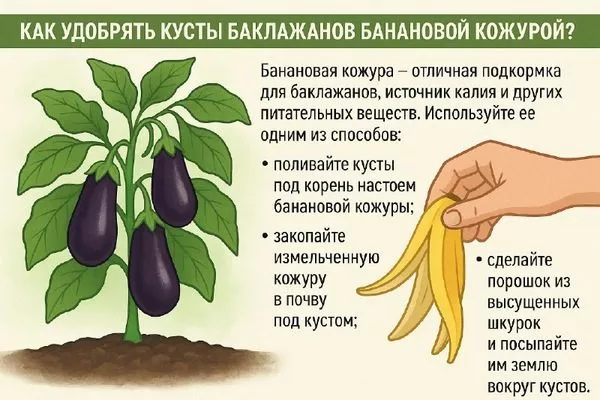
The potassium content promotes the development of a strong and powerful root system, resulting in stronger and healthier eggplant seedlings. The peel also contains important micronutrients for plant growth:
- phosphorus;
- manganese;
- iron;
- calcium.
Step-by-step instructions:
- Pour warm water over the peel – 2 liters.
- Infuse for 1-2 days for fresh and 3-5 days for dry peel.
Be careful not to let the infusion ferment. Use 1 liter per plant.
Yeast infusion
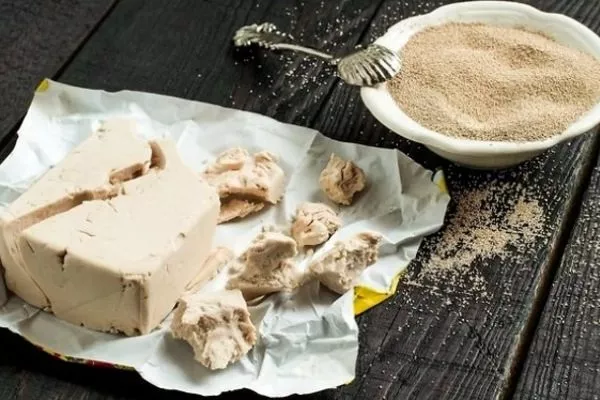
Distiller's yeast is often used for feeding due to its availability, but baker's yeast—fresh pressed or dry—provides the greatest benefit. It contains beneficial substances and acts as a powerful growth stimulant:
- improve soil microflora;
- accelerate the decomposition of organic matter;
- stimulate root development.
This is a natural alternative to chemical growth stimulants and a great way to revive plants. Read on for more information on how to help wilting eggplant bushes. Here.
Basic recipe:
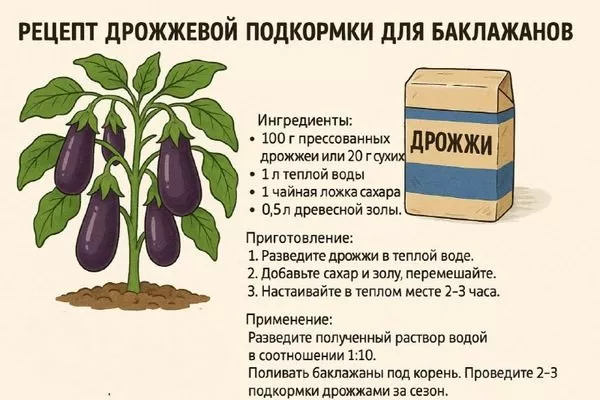
- Dissolve 100 g of fresh pressed or 30 g of dry yeast in 10 liters of warm water.
- Add a little sugar, jam or honey to activate fermentation.
- When active fermentation begins (after about 2-3 hours on a warm day), dilute the starter with water in a proportion of 2 liters per 10 liters of water and use it for feeding.
Alternative recipes:
- 10-12 g dry yeast + 5 l water + 100 g sugar (or jam), after fermentation dilute 200 ml of infusion in 1 l water.
- 100 g of pressed yeast + 1-2 kg of dry bread + 100 g of sugar per 10 l of water (working solution 1:5).
- 100 g yeast + 3 l water + 100 g sugar, dilute 20 g in 10 l water.
- Infuse 200 g of pressed yeast per 1 liter of water until activated, then pour into 10 liters of water, use in a proportion of 2 liters of infusion per 10 liters of water.
Use yeast nutrient during the peak fermentation phase – immediately after preparation.
Comfrey infusion
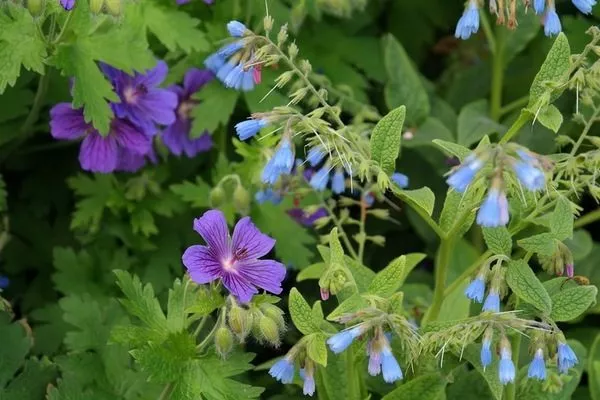
Comfrey is a unique plant with the natural ability to extract potassium from deep soil layers and store it in its leaves. This makes the infusion an excellent liquid fertilizer with a high potassium content.
How to cook:
- Fill a non-metal container (bucket, barrel) with chopped comfrey leaves and stems about 2/3 full.
- Fill with water to leave some space before the edge.
- Cover with a lid, but leave a small gap for gases to escape. Let it ferment at room temperature for 10-15 days.
Dilute the concentrate with water at a ratio of 1:10 (1 liter of infusion per 10 liters of water). Use for root watering.
Compost
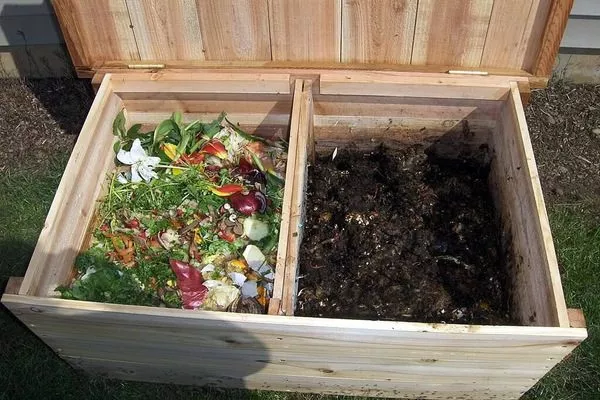
Contains a full range of nutrients, improves soil structure, and promotes the development of beneficial microflora. Compost helps retain moisture in the soil and provides plants with all the necessary nutrients for healthy growth and abundant fruiting. Read on to learn how to make it correctly. Here.
How to use:
- Apply when preparing beds in autumn or spring, mixing with soil at a rate of 3-5 kg per 1 sq. m.
- When planting seedlings, add a small amount of compost to the planting hole (about 500 g).
- During the season, you can make a top dressing in the form of a compost infusion: pour 1 part with 5 parts water, leave for 3-5 days and water the plants at the roots.
Onion peel infusion
A micronutrient-rich, fungicidal product that provides young plants with essential nutrients and helps protect them from disease.
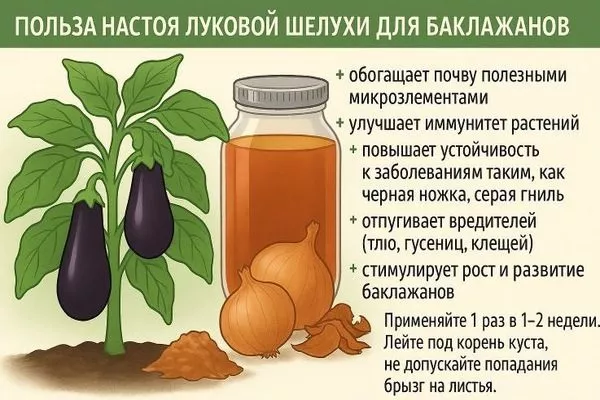
Use the peels from 4-5 onions. Pour 1 liter of boiling water over them and let them steep for 24 hours. The resulting solution should be the color of strong black tea. For nutrition, water each bush with approximately 300 ml of the infusion. Repeat this procedure every 10 days or alternate it with other folk remedies.
Eggshell
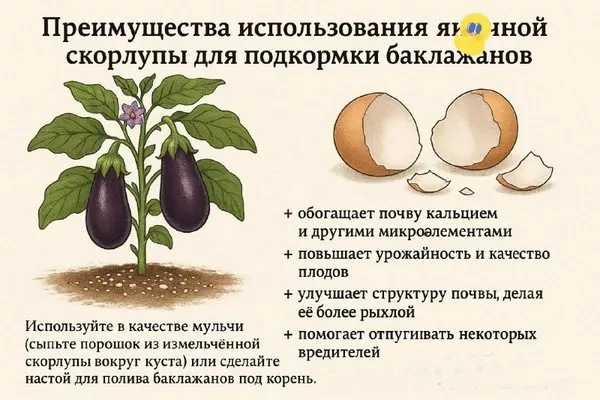
Eggshell infusion is a rich source of calcium, essential for healthy growth and strengthening the immune system of eggplant seedlings.
It's easy to prepare:
- Pour boiling water over the shells of 10 eggs in a three-liter jar up to the neck.
- Let it brew for a week.
- Before use, strain the infusion and use for watering.
A "magic" cocktail for plant nutrition
Today, you can find numerous recipes on the internet for complex organic substances, often referred to as "magic balms" or super-fertilizers, originally intended for eggplants.
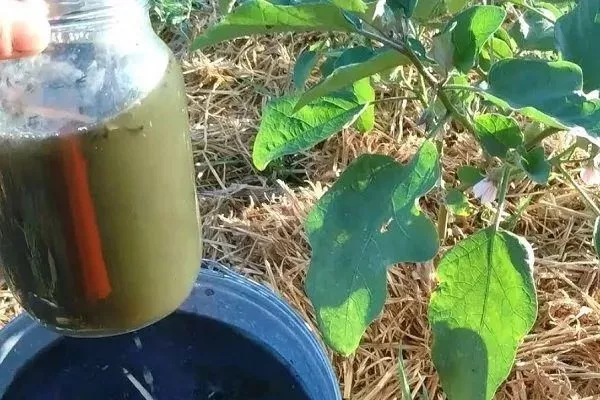
Every summer resident usually has their own version of this “magic cocktail,” which is not surprising – it’s hard to make a mistake.
The composition includes 5 main ingredients:
- green manure (nettle, dandelion, bluegrass, vetch, etc.);
- yeast (preferably pressed baker's yeast, but dry or alcohol yeast will also work);
- ash (sunflower or any other);
- chicken manure, cow dung, compost or humus;
- dairy products (whey, milk, kefir, yogurt).
Basic recipe for 10 liters of water:
- 3-4 kg of chopped greens;
- 500 g of mullein or similar organic matter;
- 200 g of ash;
- 100 g yeast;
- 200 ml of dairy product.
Place all ingredients in a container, add water, mix thoroughly, and leave covered for two weeks to ferment. Dilute the finished infusion 1:10 before using.
For larger volumes (for example, a 200 l barrel), increase the amount of ingredients proportionally.
Application:
- per bush – 1 l;
- per 1 sq. m – 5 liters
Mistakes in eggplant fertilization and their consequences
Beginning gardeners often encounter problems when growing vegetables. These can be easily resolved if you approach the challenges responsibly.
Overdose of fertilizers
Excessive fertilizing, especially with nitrogen, can cause serious problems for eggplants.
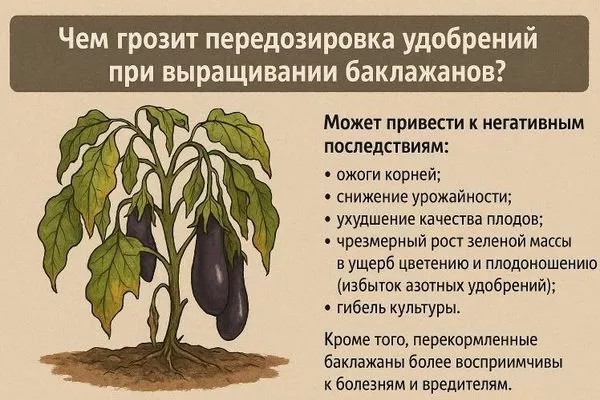
The main signs of an overdose:
- burns on leaves and roots;
- slow plant growth;
- excessive formation of green mass to the detriment of flowering and fruiting;
- increased susceptibility to diseases and pests;
- reduction of the shelf life of fruits.
Incorrect application time
Fertilizing at the wrong time can be harmful to eggplants. Excessive nutrients in the early stages of development stimulate excessive foliage growth, which reduces flowering and fruiting.
Fertilizer incompatibility
Some substances, when mixed, enter into chemical reactions and form insoluble compounds that plants cannot absorb.
What should not be mixed:
- Nitrogen fertilizers with alkaline substances. Ammoniacal forms of nitrogen (ammonium nitrate, ammonium sulfate) are incompatible with ash, lime, and dolomite flour. When they combine, ammonia is released, causing a significant loss of nitrogen.
- Superphosphate with urea (carbamide). When used together, ammonia is released, which reduces the content of available nitrogen.
- Potassium salt and nitrate with superphosphate. It is better to apply these fertilizers separately, since together they form poorly soluble compounds.
Pros and cons of organic eggplants
Organic fertilizers are one of the best ways to support eggplant health and provide them with nutrients, ensuring a bountiful harvest. They improve soil structure, promote the development of beneficial microflora, and provide plants with balanced nutrition without the risk of chemical overload.
Organic fertilizers are an excellent way to improve eggplant growth and increase productivity. Following the correct application schedule and combining these fertilizers will help avoid mistakes and provide the plants with everything they need at the right time. Using proven recipes, you'll be able to grow healthy, strong plants with a bountiful, high-quality harvest.