
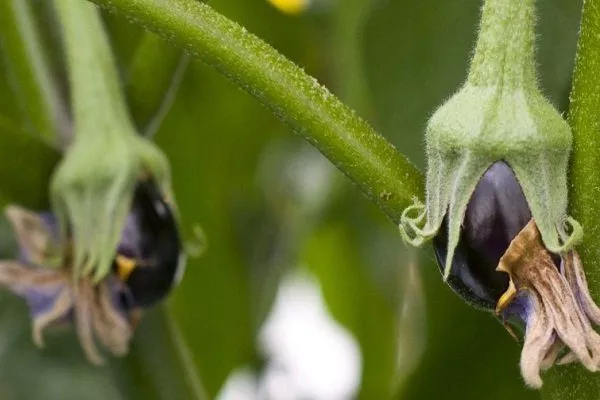
Eggplants are heat-loving plants that require special attention. Any violation of agricultural practices will result in flower drop, resulting in a lack of fruit set and a reduced yield. However, carelessness isn't the only cause. Natural factors (changes in temperature, humidity, etc.) must also be considered to preserve the inflorescences.
The boarding deadlines were violated
Early-sown seeds will produce seedlings ready for transplanting before the optimal outdoor temperature reaches 15°C (59°F). Plants won't die, but their growth will be stunted, and any flowers or ovaries that appear will fall off.
For successful development and fruiting, eggplants require a temperature of at least +28 degrees.
Late sowing will prevent the seedlings from becoming sufficiently strong and ready for transplantation. The eggplant will have to expend energy growing during the period when it should be setting fruit. This will cause the eggplant to shed its flowers.
To sow seeds for seedlings in a timely manner, first determine the variety based on the ripening period from emergence to full maturity:
- 90–120 days - early ripening;
- 120–140 days - mid-season;
- 140 and longer - late.
- ✓ Resistance to temperature changes.
- ✓ Lighting requirements.
- ✓ Ripening times adapted to the growing region.
Next, the planting time needs to be adjusted based on the climate characteristics of a particular region:
- southern regions — seeds for seedlings are sown in February, the seedlings are taken out into open ground in the second half of April;
- middle zone — sowing in late February – early March, planting seedlings in the ground in late May – early June.
- Urals and Siberia - sowing in early March, transferring to the ground in early June.
If you plan to sow seeds into open ground, you need to wait until the soil warms up to 12 degrees Celsius (55 degrees Fahrenheit) at half the depth of a spade. There should be no risk of late frost, otherwise the seedlings will die. To ensure the survival of the sprouts, provide the seedlings with reliable protection from the cold.
Sudden weather changes
Heat-loving eggplant requires high temperatures to thrive. However, excessive heat (above 30 degrees Celsius) can cause problems:
- pollen becomes sterile;
- buds and flowers fall off;
- the leaves are drying out.
A sudden cold snap causes the plant to pause its development. And if the eggplant has already bloomed, it will begin to shed its buds, devoting energy solely to maintaining its vitality.
To prevent the vegetable from being damaged during growth due to sudden weather changes, it is customary to grow it in greenhouse conditionsThis method allows for temperature control. The following measures are taken to achieve this:
- regular ventilation;
- mulching;
- whitening;
- placing containers with water in greenhouses (the liquid accumulates heat during the day and releases it at night).
During prolonged cold rains, eggplants are guaranteed to shed their buds and fruit. To prevent this, it's recommended to spray the plants with a calcium nitrate solution (1/2 tablespoon per 10 liters of water).
Unsuitable microclimate
The microclimate in a greenhouse is very important for eggplants. Any changes in the environment will affect the plant's health.
To prevent flowers from falling off, you need to control the following parameters:
- Air humidityEggplant pollen is very heavy. When damp, it gains weight and clumps together, losing its quality. The flowers fall off. The optimal humidity for growing eggplants is no higher than 65%.
- DraftsIf a strong draft occurs during ventilation, it stresses the plant. Flower loss is a common reaction to such situations.
- Insufficient lightingEggplants require direct sunlight for good growth and development. It is recommended to grow them in a glass greenhouse. They transmit light better than film or polycarbonate greenhouses.
Incorrect watering
Eggplants are moisture-loving plants. However, overwatering is harmful to the vegetable. Excess water will compact the soil, restricting oxygen access to the roots. This will lead to wilting of leaves, falling of buds and ovaries.
Watering should be done infrequently and generously—no more than twice a week, using 40–50 liters of water per square meter. After watering, it is recommended to mulch the soil under the bushes and ventilate the greenhouse.
Air humidity is also important. If it exceeds 80%, the pollen becomes heavy, clumps together, and doesn't fall onto the pistil. If humidity drops below 50%, pollen, even if it does fall onto the pistil, is unable to germinate. The plant sheds its empty flowers.
To correct the situation, measures are being taken:
- regular ventilation of the greenhouse;
- in low humidity conditions - spray in the morning with water with the addition of stimulants and boric acid.
Deficiency or excess of nutrients
Growing eggplants in the middle latitudes requires not only compliance with agricultural technology rules, but also regular feeding certain microelements. Flower drop indicates a deficiency of certain nutrients for the plant:
- Nitrogen. This macronutrient helps all nightshade family crops grow green mass. The larger the leaves, the better they absorb sunlight.
Nitrogen fertilizers are only needed during stem and leaf growth. They should be stopped during flowering, otherwise all the nutrients will be lost to the foliage, and the flowers will fail to set and eventually fall off. - Phosphorus. Fertilizing with phosphorus-containing fertilizers will significantly strengthen the root system and promote the growth of the above-ground portion of the vegetable. A deficiency in phosphorus prevents the roots from supplying sufficient micronutrients to the plant, resulting in stunted growth and wilting or curling of the leaves.
- Bora. Flowers may drop due to boron deficiency. Other signs include leaves and stems becoming brittle and deformed over time, as well as flowers and fruits. If a deficiency occurs early in the plant's development, growth slows.
To remedy this, eggplants are treated with a boric acid solution (5 g per 10 liters of water). They are also fertilized with boron-rich fertilizers three times a season.
- ✓ The NPK ratio should correspond to the plant growth phase.
- ✓ The presence of microelements, especially boron, is critical during the flowering period.
Lack of pollination
Eggplants grown in greenhouses are especially prone to flower drop. Reasons:
- Lack of Pollination. Although eggplants are self-pollinating, wind or insects are needed to transfer pollen from one flower to another, and these are often unavailable in greenhouses. Barren flowers dry up and fall off.
- Pollen loses its fertilizing ability. This occurs due to improper greenhouse temperature conditions. Pollen becomes sterile and fails to germinate. Optimal temperatures for pollination are between 20 and 30 degrees Celsius.
You can pollinate eggplants by hand. Use a cotton swab or soft brush to collect pollen from the stamens of a newly opened flower and transfer it to the pistil. This method allows you to pollinate the flower with your own pollen.
It is recommended to spray the plants with the following preparations when buds appear:
- Gibbersib;
- Bud;
- Ovary.
These are fruiting stimulants. They contain the hormone gibberellin. During natural pollination, it is produced naturally and promotes ovary development. However, under closed growing conditions, the hormone is not produced in sufficient quantities, causing barren flowers to fall off.
This video explains in detail why eggplant flowers fall off:
Extra inflorescences
Ideally, there shouldn't be more than 15 fruits on a single plant. Otherwise, the plant won't have enough energy to nourish them and grow fully. By shedding its flowers, the plant naturally limits the amount of fruit it can produce in the future.
If the plant refuses to shed its flowers on its own, the gardener will have to help it. To ensure each bush produces large fruits, only the largest buds are left on it, and the rest are removed. This also applies to the shoots. They are pinched back, leaving only three or four of the strongest.
Your own seeds
Harvesting seeds yourself is a labor-intensive undertaking. Therefore, home-grown seeds are often of poor quality. Subsequently, improper conditions during harvesting, drying, and storage will prevent the plant from developing vigorously. The eggplant will attempt to survive by shedding its flowers, which it considers unnecessary waste.
It's best to purchase seeds from a reputable producer or breeding station. They are carefully selected by variety, tested, and prepared for planting.
Pests
Eggplant is susceptible to insect pests. Spider mites pose the greatest threat. They become active during flowering and cause flower and fruit drop.
The presence of spider mites is easy to detect. The outer surface of the leaf becomes covered in a marbled pattern, while the inner surface is covered in a web. The plant should be treated with insecticides (Fitoverm or Fufanon) according to the package instructions.
Also dangerous are:
- WhiteflyInsects accumulate on the inner surface of leaves and suck out the plant's sap. To eliminate the pests, sticky traps made of yellow cardboard coated with Vaseline, honey, or rosin are hung around the plantings.
- AphidIt settles in colonies on any above-ground plant surfaces, feeding on sap. It becomes active during prolonged periods of high humidity and heat.
Aphids can be controlled with insecticides or by morning treatment with an ash solution. To do this, dissolve 200 g of the ash solution in 10 liters of hot water, let it steep for 24 hours, strain, and add liquid soap.
Measures to increase ovaries
Many gardeners use a trick when growing eggplants: they install a trellis in the garden bed, with the plant's stems climbing upward. During flowering, they gently shake the trellis every day. This helps the pollen move from flower to flower.
To ensure good growth and fruit set in your eggplants, follow these recommendations:
- At the first sign of fallen flowers, spray the plants with a boric acid solution.
- Hand pollinate and attract insects to the greenhouse.
- Control humidity/temperature levels or use budding and setting products.
- In case of cold weather and prolonged rains, feed the plants at the roots with calcium nitrate 0.0 7%;
- Support weakened bushes with immunomodulators.
The capricious eggplant often loses its flowers. Typically, the natural rate of barren flowers is 40% of the total, so there's no reason to panic. However, if the flower drop rate is excessive, taking timely measures, as recommended, will help preserve the harvest.