
The Marzipan eggplant is a domestic hybrid that emerged relatively recently. It is easy to grow, has good commercial qualities, and can be grown in a variety of climates. Its unique feature is that it requires ample sunlight, which is essential for the fruit to fully ripen.
Who developed the variety and when?
The hybrid was developed by the Moscow seed company “Russian Garden”, which is located in Shchyolkovo.
Description of the Marzipan hybrid
The main advantage of Marzipan eggplant is its lack of bitterness, which is very important for many cooks. Its appearance is characterized by the following characteristics:
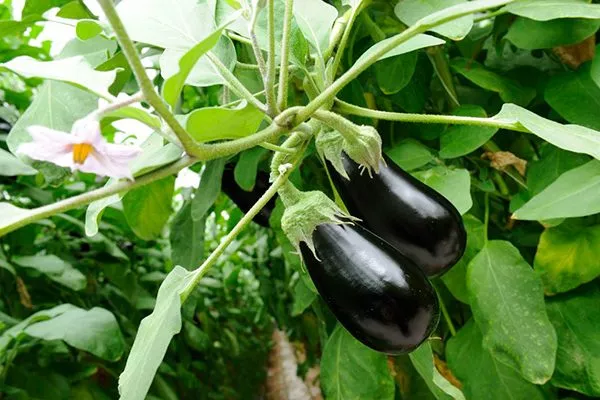
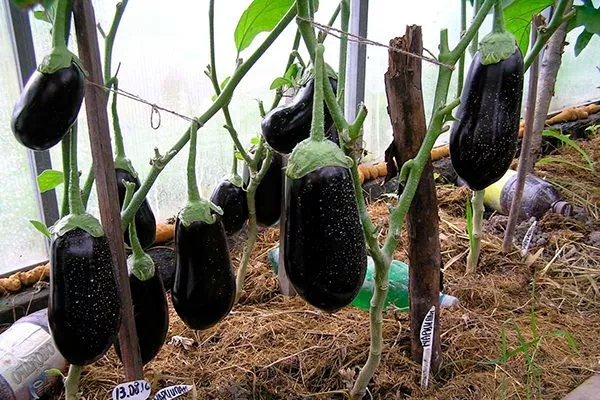
- Bushes. They are considered vigorous for eggplants, reaching a height of 90-100 cm. The branches are thin and easily broken, so they need to be tied up. The central shoot is upright, but the lateral stems branch and droop downward. The leaves are standard green, large, and matte. They are slightly hairy, making them feel rough to the touch.
- Peduncles. They are located singly or in small inflorescences.
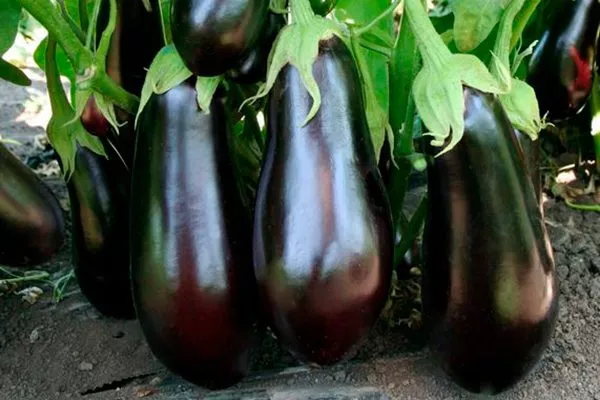
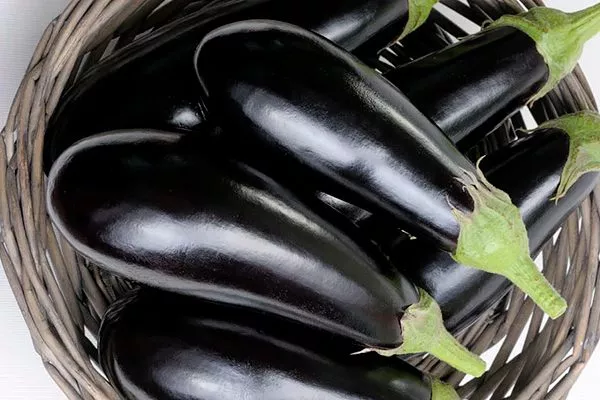
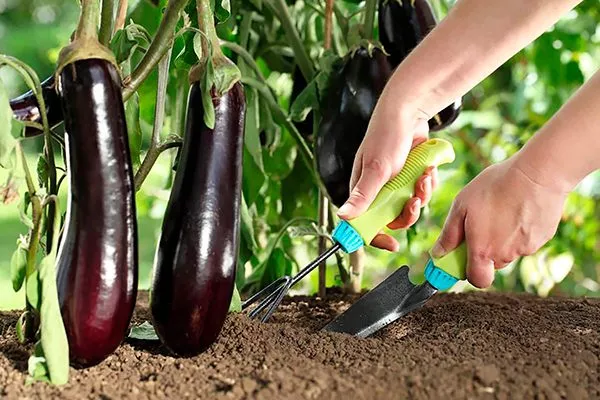
- Fruit. Elongated, pear-shaped and large in size, their weight varies from 300 to 1000 g, and their length from 8 to 15 cm. The average diameter is 10 cm. The skin is dark purple, shiny and dense.
- Pulp. Firm yet juicy in texture. Creamy white in color, with small, few seeds.
Characteristics of the variety
Eggplants are grown both in open ground and in greenhouses or under plastic cover. The plants easily adapt to both cold and drought, but they do not tolerate shade or partial shade. In this case, ovaries will not form, and the flowers will fall off.
Growing regions
The variety is adapted to a variety of climates, making it considered universal. However, in northern regions, a heated greenhouse is required.
Productivity and fruiting
The yield is average: 1.5 to 4 kg per bush, depending on the growing location—more fruit is produced in a greenhouse. The ripening period is also average: from sowing to harvest, it takes 120-130 days. No more than three bushes can be planted per square meter.
Application of fruits
The hybrid is versatile—it can even be eaten pickled (without heat treatment), as the flesh has no bitter aftertaste. Eggplants can be fried, boiled, baked, frozen, and canned.
Advantages and disadvantages of the variety
Gardeners and experts note the advantages and disadvantages of the variety.
Growing seedlings
Marzipan eggplants are grown from seedlings. This applies to all regions except the southern ones – in warmer climates, the seeds can be planted directly in open beds. Here's a brief overview of the rules and requirements:
- Sowing dates. Seeds should be sown for seedlings 50-55 days before transplanting into open ground, so the exact timing is determined by weather and climate conditions.
- Planting stages. Since hybrid vegetable seeds are purchased rather than collected from your own garden, there's no need to prepare them. However, it's important to do the following:
- prepare a substrate from 1 part turf soil and 2 parts humus;
- place it in a container with holes;
- plant the seeds 1-1.5 cm deep;
- moisten with a spray bottle;
- cover with film.
Critical parameters for successful cultivation- ✓ Optimum soil temperature for seed germination: +25-28°C.
- ✓ The need to use growth stimulants to improve seed germination.
- Growing seedlings before picking. The seedlings should be kept at a temperature of 25-28 degrees Celsius. The film is removed periodically for ventilation, and the soil is watered.

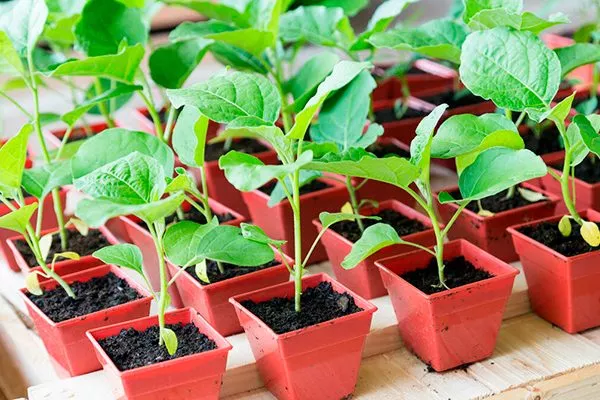
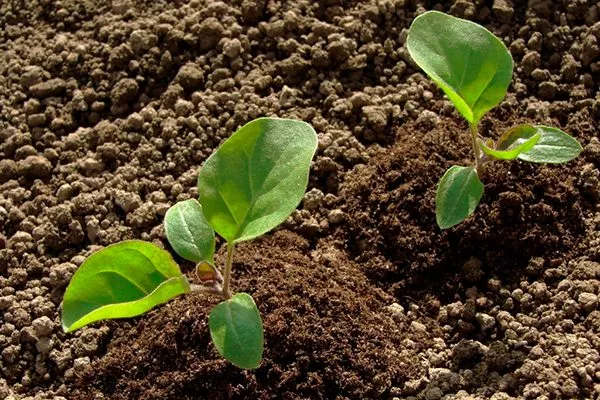
- Picking eggplants. The seedlings are transplanted into individual containers once 2 or 3 true leaves have formed. To do this, moisten the substrate beforehand. On the day of transplanting, remove the seedlings and transfer them to new pots, which should be at least 10 x 10 cm in size.
- Fertilizing and watering seedlings. Young bushes are watered before the soil surface begins to dry out, but this variety requires special attention when fertilizing. The first application is made 15 days after transplanting, using potassium and nitrogen. The second application is made a couple of weeks later, using superphosphate and potassium salt mixed with manure and wood ash.
Planting/transplanting eggplants in open ground
Before planting seeds or transplanting seedlings into open beds or a greenhouse, first prepare the area. Then, begin the following tasks:
- Choose the sunniest location possible, free from drafts.
- Remove all debris from the area and dig up the future beds.
- Spread humus or compost at a rate of 10 kg per 1 sq. m.
- The day before planting, loosen the soil again and water the ground generously.
- Dig planting holes to the size of the root system or make furrows 2-2.5 cm deep.
- Deepen the seeds or seedling bushes.
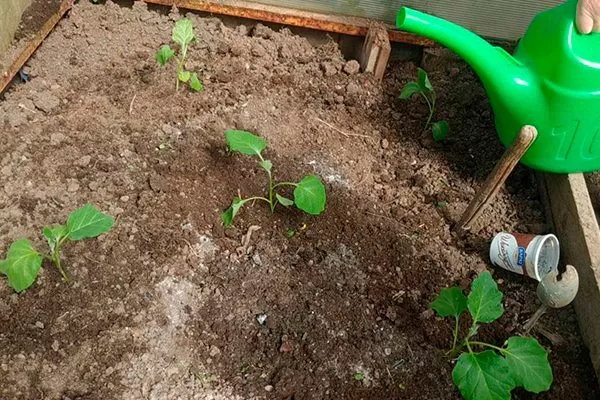
- Cover with soil and water.
Care Features
It's hard to say that caring for Marzipan eggplants is standard, as there are some nuances that are important to follow. These include fertilizing, cultivating a tall plant, and disease/pest control.
- Top dressing. The first fertilizing is done one week after transplanting into open ground. The bushes require potassium chloride and urea with the addition of superphosphate. Subsequently, fertilizer is applied once every two weeks. Other applications during the growing season include:
- specialized preparations – Kormilets, Senor Tomato and Ideal;
- ammonium nitrate, but only without urea and at the very beginning of summer;
- ammonium sulfate – used to increase green mass;
- phosphorus-based products – needed during flowering;
- calcium nitrate – applied before flowering, saturates the soil with nitrogen and potassium;
- Potassium sulfate – used after flowering.
- Watering. Avoid allowing the soil around the trunk to become eroded or stagnant. This is detrimental to this hybrid, which tolerates drought better than overwatering. Using water straight from the tap is strictly prohibited; it should be at room temperature. Otherwise, diseases will develop and the buds will fall off.
- Formation of a bush. Pruning rules depend on growing conditions:
- In the greenhouse. The plant grows rapidly under these conditions, so to ensure a good harvest, remove 1/3 of the central stem a week after transplanting. Periodically, prune out weak shoots, leaving the strongest ones.
It's important to remove flowers and ovaries if they form excessively, as the fruit will be larger. Due to high humidity in the greenhouse, leaves from the lower tier are trimmed. - In open ground. It's strictly forbidden to remove the lower leaves, otherwise the soil will dry out too much. Ten to fifteen days after repotting, trim all the top branches to keep the bush looking neat and to encourage the formation of lateral stems. Only the strongest side shoots are left; the rest are tucked under the base.
- In the greenhouse. The plant grows rapidly under these conditions, so to ensure a good harvest, remove 1/3 of the central stem a week after transplanting. Periodically, prune out weak shoots, leaving the strongest ones.
Pest and disease control
Eggplant Marzipan, like all nightshade crops, is sometimes susceptible to pests and diseases. What to watch out for:
- Late blight. It manifests itself as rusty spots on the green foliage. If it rains, the leaves will rot and become coated with a film. If the weather is dry, they will fall off. Bordeaux mixture is used for treatment.
- Blackleg. This most often occurs during the seedling growth period or after transplanting into a greenhouse, where humidity levels are high (requiring more frequent ventilation). A sign is blackening of the lower part of the trunk. To avoid this problem, disinfect tools and soil, and monitor humidity.
- Mosaic. This is a viral infection that causes patterns to form on the leaves. A solution of laundry soap and water is suitable for treatment.
- Aphids and spider mites. They are easy to spot, but you will have to fight them with chemicals and ash solution.
- Treat with Bordeaux mixture in early spring to prevent late blight.
- Use ash solution to prevent the appearance of aphids and spider mites.
Harvesting and storage
For cooking and processing, pick fully ripe fruits, but if you plan to store them for a long time, harvest them 1-2 weeks before they reach technical maturity. Eggplants should not be pulled or twisted; they are cut with sharp pruning shears or a knife.
Eggplants should be stored in a cool environment—at temperatures between 0 and 2-3 degrees Celsius. A refrigerator or cellar with a humidity level of at least 85% is ideal; otherwise, the flesh will dry out and the skin will wrinkle. To preserve the fruit for 90 days, follow these steps:
- Place the fruits on a tray in the cellar;
- After two to three weeks, wrap each eggplant in paper;
- place on a straw bed in 1 layer, having first sorted the harvest;
- cover with burlap.
Tips and recommendations for growing
Growing eggplants isn't always easy for beginners, so pay attention to these important details:
- young bushes are afraid of sunburn, so they need to be shaded at first;
- Before transplanting seedlings, harden the plants by taking them outside;
- Don’t worry if the bushes stop growing immediately after transplanting – they are adapting and taking root;
- If the skin of the vegetables is pale, remove some of the foliage so that the eggplants receive enough light;
- To prevent cracks from appearing, water moderately;
- If the leaves start to curl for no reason, feed the bushes with potassium;
- Never spray with root feeding fertilizers - they have a high degree of concentration for green mass;
- When applying fertilizer, moisten the soil first.
Reviews of growing Marzipan eggplant seedlings
The Marzipan eggplant is a popular vegetable, and can be grown in any region of Russia, either in a greenhouse or in the open ground. It requires plenty of light and tolerates waterlogging. However, it produces a good harvest of large eggplants, which can be canned, frozen, or used in any dish.